America built smart cars on dumb road funding
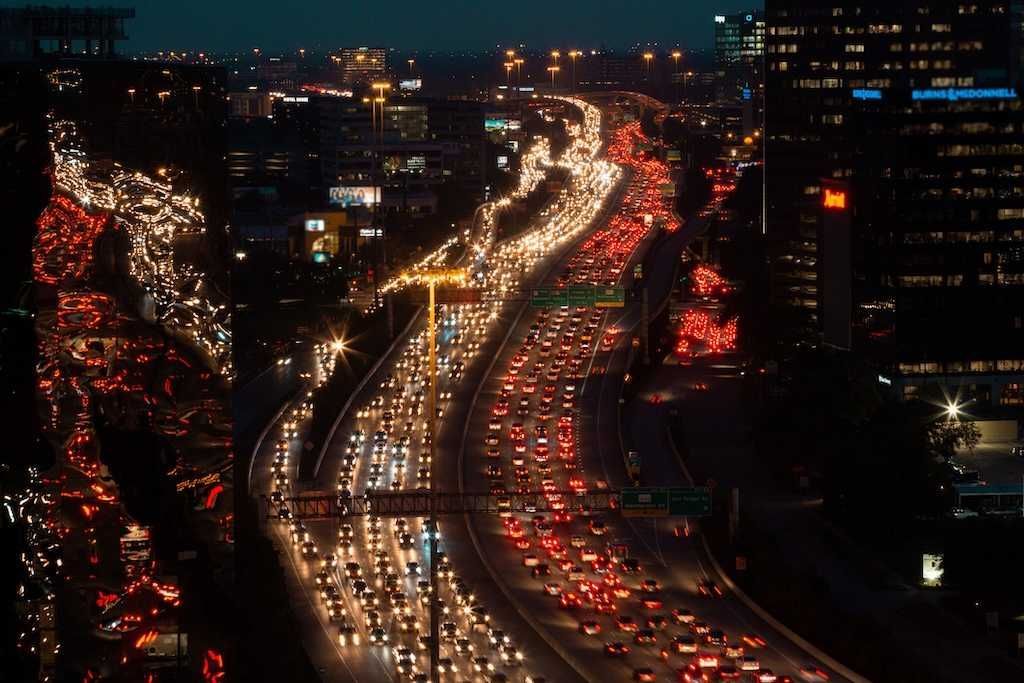


On Friday, in an open letter to the 119th Congress, I joined more than 100 economists and public policy experts from universities, think tanks, and businesses across the country urging practical reform of the Highway Trust Fund. Our message is straightforward: Congress can — and should — take incremental, bipartisan steps now to put the fund on a stable, sustainable path.

The Highway Trust Fund long embodied a simple user-fee compact: People who use the roads pay for them. That bargain delivered predictable funding and reinforced fiscal discipline.

Congress has repeatedly patched the shortfall with transfers from the general fund, which papers over the problem while weakening the principle that made the system durable.

Now the system is fraying. Fuel taxes have not kept pace with inflation, rising construction costs, or improved fuel efficiency. Electric and hybrid vehicles — a growing share of the fleet — often contribute little or nothing through fuel taxes. Congress has repeatedly patched the shortfall with transfers from the general fund, which papers over the problem while weakening the principle that made the system durable.

Congress does not need to solve every long-term challenge in one bill. It can make meaningful progress in the next surface transportation reauthorization, which lawmakers must pass by Sept. 30.

First, lawmakers should reinforce the user-pay principle by ensuring all road users — including drivers of electric and hybrid vehicles — contribute a fair share through transparent, enforceable mechanisms. Fairness demands no less. When some users effectively get an exemption, the burden shifts to everyone else or to taxpayers at large.

Second, Congress should improve price sensitivity. Heavy commercial vehicles impose disproportionate wear and tear on highways and bridges. User fees should better reflect vehicle weight and road impact. That change would improve fairness and send clearer economic signals about infrastructure costs. A system that reflects actual use and damage is more rational — and more defensible.

Third, legislators should evaluate a transition from per-gallon fuel taxes to mileage-based user fees. A well-designed road-usage charge would ensure payments reflect miles driven and vehicle characteristics.

Any transition must preserve the core user-pay principle while avoiding disproportionate burdens on low-income households, small businesses, and farmers. State pilot programs show mileage-based systems can protect privacy and maintain public trust. Congress should build on that experience rather than delay modernization.

Fourth, Washington should reduce reliance on general-fund bailouts and set clearer expectations for revenue reform in the next major reauthorization cycle. Temporary patches undermine fiscal responsibility and create uncertainty for state planners and private investors.

RELATED: Trump is getting the job done for American truckers
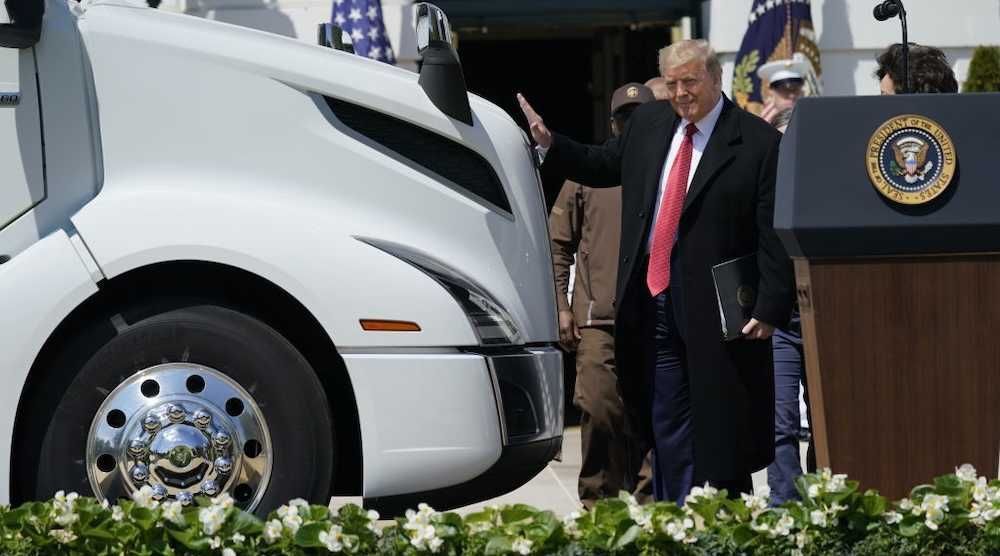
Photo by Chris Kleponis/Polaris/Bloomberg via Getty Images

Revenue reform alone will not secure the system. Transportation infrastructure now depends on digital systems that guide vehicles and manage logistics. America’s economy relies heavily on GPS-enabled positioning and timing. Disruptions to systems overseen by the U.S. Department of Transportation would ripple across freight networks, emergency services, and daily commutes.

China and Russia have shown the capability to interfere with satellite systems and GPS signals. A prolonged outage would cost billions of dollars per day. Vehicles sold in the U.S. should incorporate tested backup positioning technologies to guard against such threats.

Supply-chain security also demands attention. Chinese firms such as BYD and CATL dominate global battery production. The concentration of manufacturing — and embedded telematics — in companies subject to influence by the Chinese Communist Party raises legitimate concerns about espionage and strategic vulnerability.

The U.S. should expand domestic battery production and charging infrastructure, reducing dependence on foreign-controlled systems that can compromise data security and resilience.

Finally, Congress should pursue sensible federal deregulation to reduce the needlessly high cost of transportation projects — and require state and local partners to do the same. Streamlined permitting, faster reviews, and fewer duplicative requirements would stretch every Highway Trust Fund dollar and deliver projects faster.

These proposals are not partisan. They are practical steps rooted in fiscal responsibility and national security. A stable source of funding for roads is not merely a budget issue; it is essential to economic competitiveness, national mobility, and public safety. By reinforcing the user-pay principle, modernizing revenue mechanisms, protecting digital infrastructure, and strengthening supply chains, Congress can signal a shared commitment to safeguarding America’s transportation future.

The 119th Congress has an opportunity to restore the Highway Trust Fund’s integrity. Lawmakers should seize it.

Duffy Threatens To Pull $75 Million In Road Funds After PA Gave An Alleged Terrorist A CDL

Non-domiciled CDL licenses should expire when the license holder’s time in the U.S. expires. PennDOT extended the dates, U.S. DOT says.
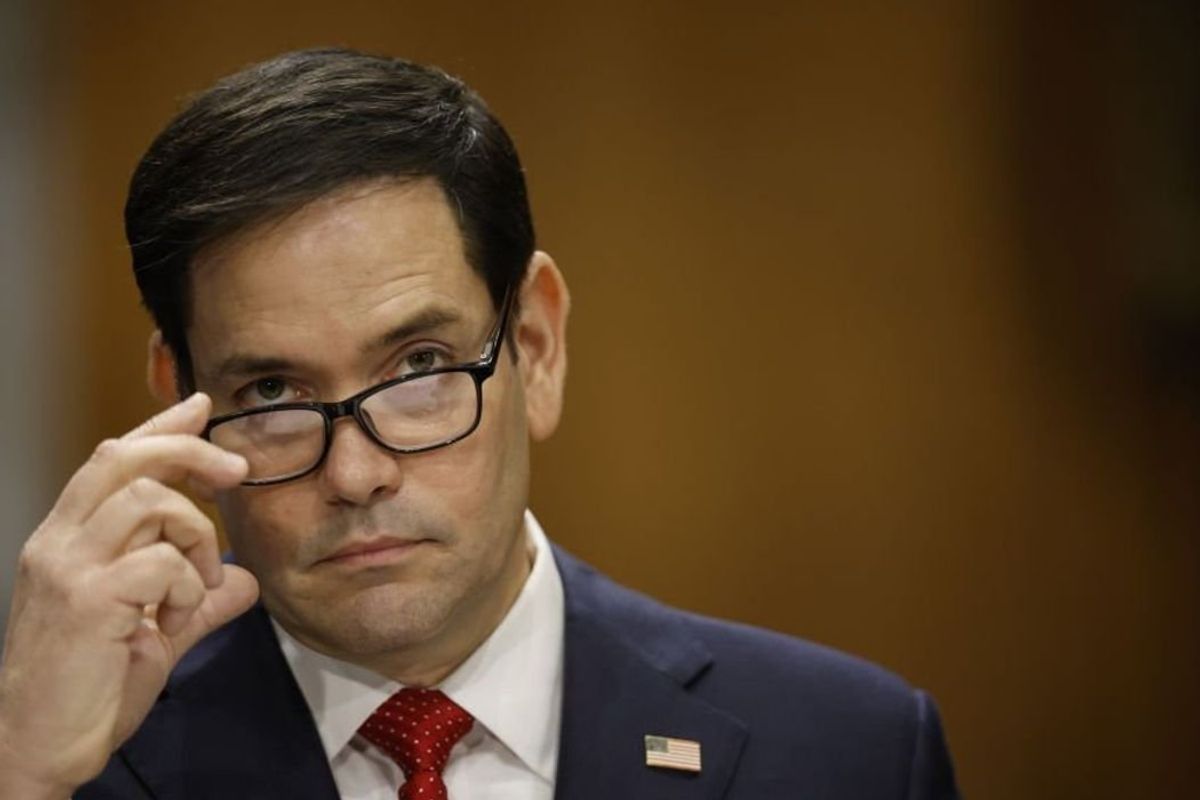
Rubio takes action to prevent more foreigners from 'endangering American lives' with big rigs


Secretary of State Marco Rubio announced on Thursday that his department was immediately pausing all issuance of worker visas for commercial truck drivers.

"The increasing number of foreign drivers operating large tractor-trailer trucks on U.S. roads is endangering American lives and undercutting the livelihoods of American truckers," wrote Rubio.

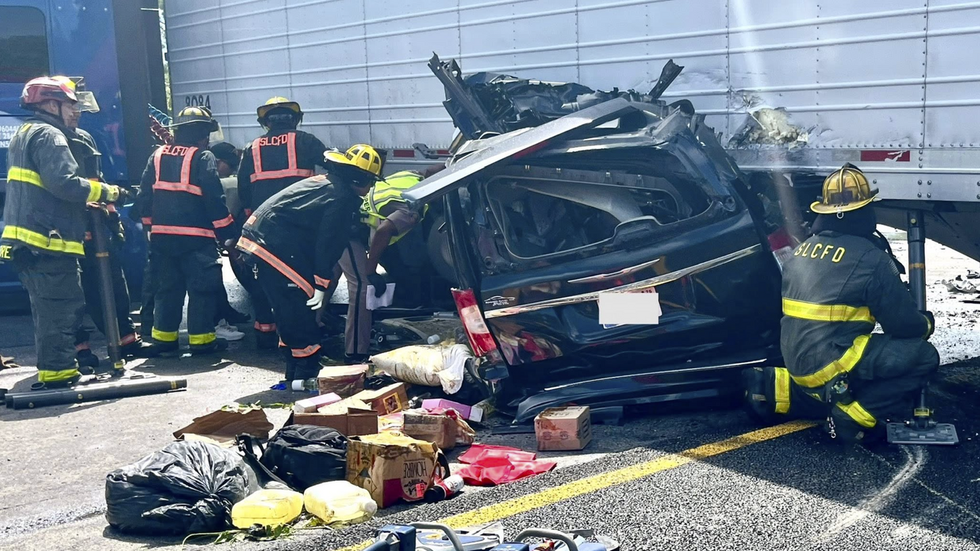
Concerns over foreigners driving big rigs on American roads came to a head on Saturday after Harjinder Singh, a 28-year-old illegal alien from India, allegedly killed three people on the Florida Turnpike near Fort Pierce while driving a tractor-trailer.

According to the Florida Department of Highway Safety and Motor Vehicles, "It is evident that the driver of the commercial semi-truck recklessly, and without regard for the safety of others, attempted to execute a U-turn utilizing an unauthorized location. As a result of his actions, the three occupants of the minivan are now deceased."

Singh, who has been charged with three counts of vehicular homicide, reportedly stole into the country in 2018 and, despite getting fast-tracked for deportation by the first Trump administration, managed to stick around.

U.S. Secretary of Transportation Sean Duffy announced on Tuesday that the Federal Motor Carrier Safety Administration launched an investigation into the crash.

RELATED: 'A more direct solution': State Department rolls out key strategy to prevent foreigners from overstaying their welcome

Image source: St. Lucie County Sheriff's Office
The U.S. Department of Transportation has confirmed that Singh was granted a regular full-term commercial driver's license in Washington State on July 15, 2023. Almost exactly a year later, Singh was issued a limited-term/non-domiciled commercial driver's license in Democrat Governor Gavin Newsom's California.

While Singh was issued a speeding ticket by New Mexico State Police in July, the DOT indicated that there is no indication that an English language proficiency assessment was conducted, despite the requirement being in effect since June 25.

During his post-crash Federal Motor Carrier Safety Administration interview, Singh flunked the ELP assessment, providing correct responses to only two of 12 verbal questions and only accurately identifying one of 4 highway traffic signs.

"If states had followed the rules, this driver would never have been behind the wheel and three precious lives would still be with us," said Duffy. "This crash was a preventable tragedy directly caused by reckless decisions and compounded by despicable failures. Non-enforcement and radical immigration policies have turned the trucking industry into a lawless frontier, resulting in unqualified foreign drivers improperly acquiring licenses to operate 40-ton vehicles."

'The increasing number of foreign drivers operating large tractor-trailer trucks on U.S. roads raises serious concerns for public safety.'

The transportation secretary vowed to use every tool at his disposal to hold the offending states and bad actors accountable, stressing that "the families of the deceased deserve justice."

A DOT spokesperson confirmed in a statement to Blaze News that Duffy's department has combined efforts with its partners in the Departments of Homeland Security and State Department "to keep our roads safe."

"This administration is pulling every lever to deliver on President Trump’s promise to keep the American people safe and restore common sense in our country," said the DOT spokesperson. "Foreign drivers must be able to comply with American rules on American roads. That’s common sense."

While America's roads fall under Duffy's purview, Rubio has the ability to prevent foreign nationals from coming to the U.S. for the purpose of driving big rigs.

A State Department spokesperson told Blaze News that "detecting and preventing entry of individuals who pose a threat to U.S. national security or public safety is critical to protecting Americans in our homeland."

RELATED: Trump admin raises the bar for who can become a US citizen

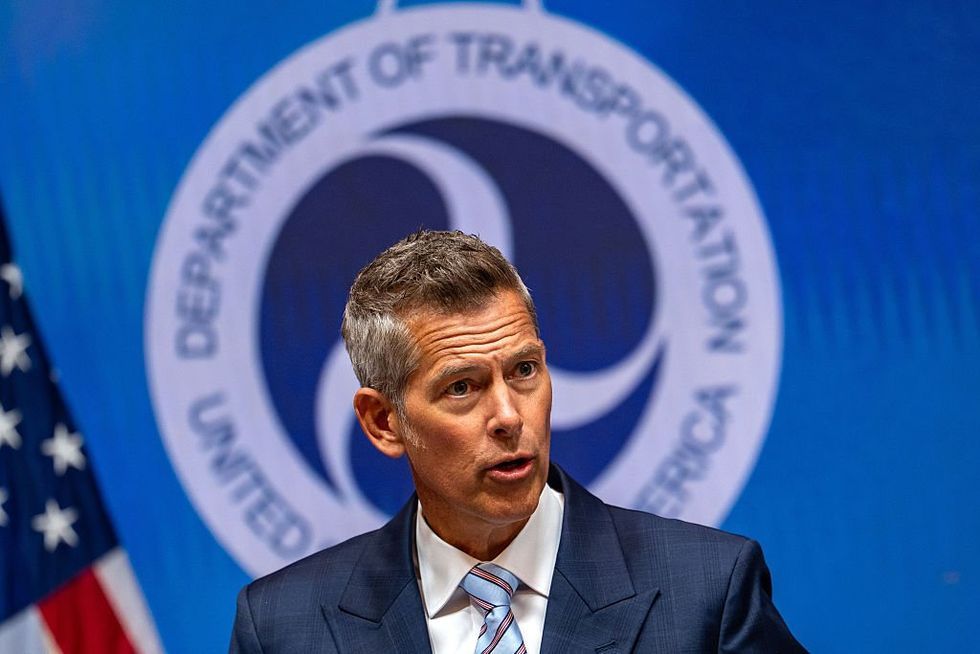
Transportation Secretary Sean Duffy. Photographer: Kent Nishimura/Bloomberg via Getty Images

"The increasing number of foreign drivers operating large tractor-trailer trucks on U.S. roads raises serious concerns for public safety and threatens the livelihoods of American truckers," continued the spokesperson. "We are taking this action to protect American lives and safeguard U.S. national security and foreign policy interests."

With the safety of American citizens in mind, the State Department will not — for the foreseeable future — process work visas for applicants who seek to operate commercial trucks in the U.S. This pause will afford the Departments of State, Labor, and Homeland Security time to consider and make necessary updates to their relevant screening and vetting protocols.

The pause in visa processing applies to applicants of all nationalities who seek to operate commercial trucks in the H-2B, E-2, and EB-3 visa classifications.

Applicants who do not presently hold valid visas will undergo thorough vetting. Those who fail to make the cut will have their petitions returned to U.S. Citizenship and Immigration Services or be denied a visa.

"The Department will take all necessary steps to protect public safety, including on America’s roads," said the State Department spokesperson.

Like Blaze News? Bypass the censors, sign up for our newsletters, and get stories like this direct to your inbox. Sign up here!

Higher Taxes On Home Deliveries Are The Last Thing Americans Need Right Now

The last thing struggling Americans need is anything that makes life more inconvenient or expensive. These proposals are unfair and counterproductive.

Top 10 Worst Things Biden’s Expensive, Partisan Infrastructure Bill Will Do

Republicans are hesitant to endorse Biden's plan, which is filled with Democrat goals and talking points. Here are the top 10 worst things it will do.

Buttigieg’s Idea To Tax How Much You Drive Isn’t About Revenue, It’s About Control

Beneath the supposed good reason they give for changing how drivers are taxed is the real reason they want the change: driving offers people too much freedom.