The winning message is the one pro-lifers keep avoiding


Many conservatives still treat the fall of Roe v. Wade as a decisive victory. The four years since have looked more like a warning.

States passed more pro-life laws. Abortion numbers still climbed as chemical abortions expanded. Republicans hold Congress and the White House, yet their best legislative win amounted to defunding Planned Parenthood for a single year — while Washington toys with expanding IVF mandates and even hints at becoming more “flexible” on the Hyde Amendment.

When the pro-life movement treats its own argument as too radioactive to say plainly, moderates still aren’t convinced — and the base stops listening.

The biggest losses didn’t come from legislatures. They came from voters.

Across the country, abortion-rights activists have used ballot initiatives to write a “right to abortion” into state constitutions. Once voters approve those amendments, courts use them to bulldoze state pro-life laws. The trend will continue unless the anti-abortion movement rethinks its messaging — fast.

Blue states predictably enshrined abortion rights. Red and purple states did too. Voters in Missouri, Montana, and Arizona backed abortion amendments. Colorado, New York, and Maryland did as well.

In 2024, abortion ballot measures passed in seven states and failed in three. Florida stopped an amendment only because state law requires a 60% supermajority. Nebraska rejected one by 51%. South Dakota defeated its measure with 59%. All three states backed President Donald Trump by larger margins than that.

Another wave of initiatives is coming this year. Nevada voters will decide whether to provide the second affirmative vote needed to add an abortion amendment they approved in 2024. Virginia, where Democrats control state government, will vote on an abortion amendment as well. Idaho voters may consider an abortion statute that lawmakers can later amend or repeal. Arkansas could vote on a measure to make the state constitution easier to amend, which would almost certainly tee up an abortion amendment fight soon after.

The pro-life movement keeps walking into these battles with a losing playbook.

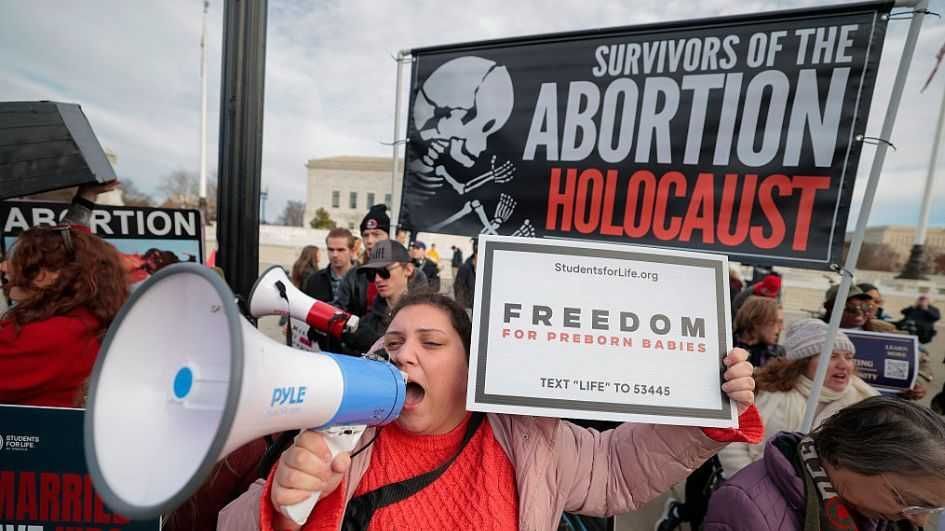
Many pro-life groups center their messaging on women who get abortions rather than the babies murdered by abortion. They assume the issue primarily drives Democratic turnout. They want to “compete” by shifting to softer language about women’s health, hoping to win moderates on neutral ground.

That approach doesn’t persuade moderates, and it often fails to mobilize the pro-life base.

Take Arizona. The pro-life coalition opposing Proposition 139 called itself “It Goes Too Far.” One of its yard signs read: “Protect Women’s Health.” It didn’t even mention abortion.

Arizona voters re-elected Trump with 52% of the vote. They also approved Proposition 139 with nearly 62%. That’s the same margin New York voters gave their own abortion amendment.

RELATED: MAHA is sick: RFK’s FDA is drifting the wrong way

Jordan Vonderhaar/Bloomberg via Getty Images

Ohio followed the same pattern. Pro-life groups launched “Protect Women Ohio” to oppose Issue 1, which passed with nearly 57% of the vote in 2023. The messaging leaned on parental rights and transgender issues — as if linking Issue 1 to other debates would broaden the opposition.

Instead, the coalition blurred the point. Issue 1 appeared in an off-year election, one year after Roe fell. Progressive voters turned out. Conservatives stayed home.

Afterward, activists who knocked doors against Issue 1 told the same story: Pro-life voters felt confused. The campaign avoided the central issue, then wondered why the people most likely to vote against abortion never felt compelled to show up.

Abortion amendments raise other policy questions. They touch parental consent, conscience protections, and medical regulation. But the core reason to oppose them remains simple: Abortion murders babies. Pro-life messaging that refuses to say that out loud shouldn’t expect to win.

A blunt moral argument does two things that “women’s health” slogans don’t. It keeps the debate centered on what abortion is. It also activates the voters needed to defeat these measures — voters who will turn out when they understand their ballot could save lives.

Conservatives face a familiar temptation in a culture that punishes conviction: soften the message for short-term gains. Electoral politics requires prudence. It doesn’t require self-censorship. When the pro-life movement treats its own argument as too radioactive to say plainly, moderates still aren’t convinced — and the base stops listening.

If Republicans want to win ballot fights and build lasting cultural renewal, they need to speak with moral clarity. Until they do, they’ll keep losing these amendments — and babies will keep dying because of it.

Norma McCorvey: Reluctant Jane Roe who answered to higher judge


Eight years ago this month, Norma McCorvey died in a Texas nursing home, far from the cameras and courtrooms that once made her the most famous anonymous woman in America. There were no placards, no protests, no press.

She may be gone, but her name endures. The world knew her as “Jane Roe,” the plaintiff whose case redrew the legal landscape and reshaped the conscience of a nation.

Her story reflects a familiar pattern: individuals raised to symbolic status, then discarded once the moment passes.

Her beginnings weren’t marked by power, but by poverty and disorder. Born in rural Louisiana and raised in Texas, she grew up in a home shaped by absence and anger. Her father left early. Her mother battled alcoholism. Punishment was common; tenderness was rare. By adolescence, she had run away, fallen into petty crime, and entered state custody. Order came through institutions rather than through a steady home. Survival, not stability, shaped her youth.

Adulthood brought little relief. She married at 16 and left soon after. Her first child was taken and adopted by her mother. A second was placed for adoption. By 21, she was pregnant again — alone and impoverished, with few options and little guidance.

Alone and impoverished

Texas law allowed almost no abortions. Friends suggested that she claim rape to qualify. The claim failed. Through a chain of referrals, she met two young attorneys seeking a pregnant woman willing to challenge the statute. She agreed. She wanted an abortion. Instead, she became the primary figure in a legal battle she neither directed nor fully understood.

The case moved slowly. She never attended the hearings. She gave birth and placed the baby for adoption. When the Supreme Court ruled in 1973, she wasn’t celebrating. She later said the decision meant little to her at the time. The country changed. Her circumstances did not.

Yet the ruling transformed American life. Abortion became both a protected right and a permanent point of conflict. Clinics multiplied. Protest lines formed. The decision that bore her pseudonym ushered in a legal order under which millions of unborn children would be terminated. In the first half of last year alone, even after the overturn of Roe v. Wade, nearly 600,000 abortions occurred, averaging more than 3,000 each day. The scale is sobering.

An unexpected turn

In the years that followed, McCorvey worked around abortion clinics and publicly supported abortion rights. She spoke for the cause and lived within its orbit, lifted and used by larger forces.

Public relevance did not bring private peace. Her personal life remained unsettled. Addiction, loneliness, and fractured relationships followed her into middle age.

Then, in the mid-1990s, an unexpected turn.

While working at a Dallas clinic, she encountered pro-life volunteers who spoke with steady kindness. They addressed her not as a symbol but as a person. Conversation replaced confrontation. One day, she paused before a poster showing fetal development. The image stayed with her.

Soon after, she left her job.

RELATED: Bernard Nathanson: Abortion architect who found mercy in Christ

Sydney Morning Herald/Antonio Ribiero/Getty Images

Won by love

In 1995, she was baptized into evangelical Christianity in a backyard swimming pool. In her 1997 memoir "Won by Love," McCorvey described the experience as a turning point, one that reshaped both her public advocacy and her private life.

Three years later, she entered the Catholic Church, a decision widely covered at the time by both secular and religious press. Her public stance changed. She described her role in Roe v. Wade as the greatest mistake of her life. She marched, protested, and testified, urging Americans to reconsider what the nation had embraced.

Her conversion drew admiration from some and skepticism from others. In a 2020 documentary, "AKA Jane Roe," previously recorded interviews surfaced in which McCorvey suggested that financial incentives had influenced aspects of her pro-life advocacy.

The claims reignited debate over the sincerity of her conversion. Friends and clergy who knew her well disputed that account, describing a woman who prayed daily and took her faith seriously. The tensions remain unresolved. Human lives rarely fit neat narratives.

What remains clear is that her life traced a restless search for belonging and forgiveness. She was not a simple figure. At times blunt and belligerent, at others wounded and weary, she carried deep contradictions. She stood at the center of a historic decision, often seeming invisible within it.

Familiar terrain

Her story reflects a familiar pattern: individuals raised to symbolic status, then discarded once the moment passes. She served as a standard-bearer and later a cautionary tale — celebrated, contested, and set aside. Rarely was she treated as a person.

For Christians, this terrain is not unfamiliar. Scripture offers no flawless heroes, only flawed men and women redirected by grace. David fell. Peter denied. Paul persecuted. Grace did not erase their past; it changed their course.

No honest telling can minimize the consequences of Roe v. Wade. The decision reshaped law, medicine, and family life. McCorvey’s participation in that moment remains a grave part of her legacy.

Yet Christian faith insists that no life lies beyond redemption. The gospel does not deny sin; it denies that sin has the final word.

In her later years, friends described a woman quieter and gentler, less concerned with public approval and more attentive to eternity. She spoke of regret. She spoke as someone who looked back on what she had represented and felt the weight of it.

Eight years on, Norma McCorvey’s life resists easy telling. History will continue to debate her. Movements will continue to claim her. In the end, judgment belongs to God, who sees what no one else can.

The hottest part of this message isn’t political


My Ash Wednesday message for 2026 comes with an assist from the recently deceased Jesse Jackson.

In 1977 — just four years after the Supreme Court’s Roe v. Wade ruling — he wrote:

Even if one does take life by aborting the baby, as a minister of Jesus Christ I must also inform and/or remind you that there is a doctrine of forgiveness. The God I serve is a forgiving God. The men who killed President John F. Kennedy and Dr. Martin Luther King Jr. can be forgiven. Everyone can come to the mercy seat and find forgiveness and acceptance. But — and this may be the essence of my argument — suppose one is so hard-hearted and so indifferent to life that he assumes there is nothing for which to be forgiven. What happens to the mind of a person, and the moral fabric of a nation, that accepts the aborting of the life of a baby without a pang of conscience? What kind of a person, and what kind of a society, will we have 20 years hence if life can be taken so casually? It is that question — the question of our attitude, our value system, and our mindset with regard to the nature and worth of life itself — that is the central question confronting mankind. Failure to answer that question affirmatively may leave us with a hell right here on earth.

Obviously, I can’t know where Jackson’s heart finally landed when his Maker came for him. But if you’re shocked that he ever wrote something like that — given his later career as a Democrat presidential candidate — take it as a cautionary tale about cutting deals with the spiritual forces of this world.

Unlike Jackson — who, by all appearances, grew less bold as he chased worldly gain — we must become bolder, no matter the cost.

Jackson went from writing one of the strongest arguments you’ll ever read against casual abortion to serving, in effect, as a son of Moloch. That turn required choices: the old temptation to “be like God,” to treat gifts and platforms as personal property, to barter them for worldly influence. And after making that bargain, he ended up with an affair, a child out of wedlock, and a political career that finished in disgrace.

We love to play God. We love to fancy ourselves “the people we’ve been waiting for,” as Barack Obama once put it. And in the process, many start to believe — through misplaced worship and inflated self-regard — that no God exists at all.

Believe me, I know. I’ve stood on the edge of that same abyss. I’ve asked myself the stupid question: Is the stove really too hot to touch?

Maybe it is. Maybe it isn’t. But hell is hotter.

By God’s grace, I remembered — in my own season of spiritual dying — that I am a sinner who needs mercy before I became too proud to believe God and His truth didn’t exist. So the things of heaven are on my horizon as I prepare for a once-in-a-lifetime trip to Israel and await the birth of my second grandchild.

RELATED: ‘Force of nature’: President Trump responds to the death of Jesse Jackson

Photo by David Hume Kennerly/Getty Images

I chose Easter in the end. But all of us, at some point, play Good Friday roulette with our salvation because we know God is merciful and mercy triumphs over judgment. True — but mercy does not cancel judgment.

Christians have argued for 2,000 years about whether a person can lose salvation. Fine. But the goal of the faithful should include this: Stop living like we exist to keep that argument going. Do you even narrow road, bro?

Finish your race, my friends. The consequences of not doing so are eternal.

So unlike Jackson — who, by all appearances, grew less bold as he chased worldly gain — we must become bolder, no matter the cost. That leap of faith is the toll for walking the narrow road. That is discipleship.

Let your yes mean yes and your no mean no. Thus saith the Lord.

Conservative Law Firm Picks Up Dobbs Litigator To Fuel More Supreme Court Victories

A key member of the legal team that convinced the Supreme Court to overrule Roe v. Wade has joined a new law firm to pursue a broader range of appellate and Supreme Court victories. Erin Hawley told The Federalist in a Zoom call Tuesday she’s joining Lex Politica to chair its Supreme Court and appellate […]

Virginia Gov. Spanberger Claimed She Was A Moderate But Is Governing As A Radical

Former Democrat congresswoman Abigail Spanberger ran a Virginia gubernatorial campaign presenting herself as a centrist candidate. On the campaign trail, she incessantly cited her ranking as the most bipartisan member of Virginia’s congressional delegation. She declared her focus on kitchen table issues: “affordability and housing, health care and energy, real challenges, and a desire to […]

How pro-life groups are misleading you on abortion numbers


Since Roe v. Wade was overturned nearly four years ago, countless pro-life organizations have pushed new regulations on abortion. Many of those same groups have rushed to declare victory, claiming that conservative states are now “abortion-free.”

But when pro-life organizations declare any state “abortion-free,” they celebrate a victory that does not exist — and drastically overstate the impact of pro-life laws.

The preborn babies murdered under the cover of our laws deserve more than semantic victories. They deserve equal protection.

These claims don’t just mislead. They undermine the cause these organizations claim to champion.

Exaggerating victories

The claim that some states are “abortion-free” isn’t rare. It has become standard messaging.

Students for Life published a map three years ago declaring that 14 states are now “abortion-free.” Frank Pavone, who leads Priests for Life, has made the same claim about Mississippi. National Right to Life called Kentucky “abortion-free” as recently as last summer. LifeNews has become notorious for amplifying inflated or misleading abortion claims from pro-life groups at the state level.

These declarations suggest abortion has been eliminated in these states. The reality says otherwise.

Pro-life leaders do not make clear that in every state labeled “abortion-free,” abortions remain legal for women who want to kill their preborn babies.

Many conservative states shut down abortion clinics and imposed penalties on providers. At the same time, those states wrote explicit exemptions into law protecting women from prosecution for willfully obtaining abortions.

That wasn’t a mistake. Pro-life organizations crafted and promoted that policy.

Self-induced abortions

Legal immunity for women who murder their preborn babies created a massive loophole. It also opened the door to a surge in self-induced abortions.

Women in “abortion-free” states can order abortion pills online from telehealth providers operating under shield laws in blue states or from overseas providers.

In many cases, it remains perfectly legal to order these pills, possess them, and use them at home. The scale of this practice — even in conservative states — is staggering.

Consider Kentucky, which National Right to Life called “abortion-free.”

In Kentucky, more than 2,800 women in 2024 received mail-order abortion pills through telehealth providers alone, according to data from the Society of Family Planning.

That does not include the more than 4,300 Kentucky women who traveled to other states for abortions in 2024, according to the Guttmacher Institute. It also does not capture self-induced abortions outside the formal medical system.

Kentucky is not an outlier.

RELATED: How a pro-life law in Kentucky lets mothers get away with murder

Carl Lokko via iStock/Getty Images

When all available data is considered, the 14 conservative states that have banned or mostly banned abortion — the same states pro-life groups often call “abortion-free” — saw at least 250,000 preborn babies murdered in 2024.

That number represents a sharp increase from the 181,000 abortions recorded in those states in 2019.

In other words, pro-life laws have not created states with fewer abortions. They have created states where abortion has shifted away from clinics and toward self-induced abortions at home — abortions that remain legal for the mother who commits them.

How can abortion increase while pro-life organizations claim success? Because many have misrepresented what they mean by “abortion-free.”

When these groups say “abortion-free,” they mean abortion clinics have closed. They do not mean abortions have stopped. It’s like calling a city “crime-free” because the district attorney refuses to prosecute criminals. The semantics conceal the reality.

Opposing abolition

Even more troubling, major pro-life organizations often oppose the bills that would actually abolish abortion.

When lawmakers introduce equal protection bills — proposals that would make abortion illegal for everyone, including pregnant mothers — pro-life organizations often mobilize against them.

This has happened dozens of times across the country. The reasoning stays consistent: Pro-life groups insist women are victims of abortion and should not face legal consequences, even when they deliberately order abortion pills and self-induce abortions at home.

When pro-life groups oppose equal protection bills and then claim their states are “abortion-free,” they don’t merely exaggerate. They sabotage.

Everyday anti-abortion Americans hear “abortion-free” and assume the fight is over. Activism slows. Political pressure fades. Donations and support shift elsewhere. Meanwhile organizations that should be pressing for equal protection instead suppress the only laws that would actually end abortion.

In the meantime, abortion continues unabated — simply moved from clinics to living rooms.

The pro-life establishment has redefined victory to fit what it has achieved, not what it claims to seek. It has declared victory over a substitute target — abortion clinics — while the killing of preborn children continues through abortion pills and interstate travel.

RELATED: Why the pro-life movement fails without a Christian worldview

wildpixel via iStock/Getty Images

Demanding honesty

Americans who oppose abortion deserve honesty from the organizations claiming to represent them.

If abortion can still be performed legally in a state through mail-order pills, that state is not “abortion-free.” If abortion numbers rise rather than fall, victory has not arrived. If pro-life groups oppose laws that would make abortion illegal for everyone, they owe the public an explanation.

Abolishing abortion requires equal protection under the law: making the killing of any human being illegal for everyone, without exception or compromise.

Until major pro-life organizations support that principle, their claims of creating “abortion-free” states remain not just premature but dishonest.

The preborn babies murdered under the cover of our laws deserve more than semantic victories. They deserve equal protection — and Americans who oppose abortion deserve leaders honest enough to admit when that goal remains unmet.

Nash Keen’s life proves the unborn deserve the law’s protection


Nash Keen holds the Guinness World Record for the most premature infant to survive outside the womb. Born at just 21 weeks’ gestation, Nash’s story forces us to grapple with an unsettling reality: In 29 states and Washington, D.C., the law would have permitted his abortion for at least another week.

At 21 weeks, abortionists commonly use dilation and extraction. Many call it a dismemberment abortion, and the term fits. The procedure requires pulling the child apart.

We’ve made real progress since the Dobbs decision. Thirteen states, including my home state of West Virginia, protect life from the moment of conception.

A Sopher clamp — a metal tool with sharp, serrated jaws — grasps a limb, the torso, or the head. The abortionist twists and tears the body piece by piece. The child has a beating heart and can feel pain. Arms and legs are ripped from the torso. The spine snaps. The skull is crushed so it can pass through the cervix. Blood and tissue are suctioned out. Then the abortionist reassembles the remains on a tray to confirm nothing is left behind.

This barbarity happens tens of thousands of times each year in the United States.

Consider the contrast. At 21 weeks, doctors and nurses fought to keep Nash alive. At the same stage of development, in other hospitals and clinics across the country, medical professionals ended the lives of other babies.

What separates those children? No coherent answer exists because no meaningful difference exists. Every child — born and unborn — bears God-given dignity and deserves the protection of our laws.

This year, Nash will turn 2. His survival, as rare as it is, reveals why so many Americans fight for life — and why we will win.

I plan to do everything I can to protect the most vulnerable among us. That’s why I’m proud to co-sponsor the Life at Conception Act, which aligns federal policy with scientific reality: Life begins at conception, and the law should protect it.

Policymakers must also do more to support mothers and fathers raising children. If we aim — as we should — to end abortion, our laws must protect the unborn and make it easier to raise a family in America.

RELATED: New York caves on forcing nuns and churches to fund abortion after knockout SCOTUS ruling

Photo by JOSEPH PREZIOSO/AFP via Getty Images

That’s why I have introduced legislation to give low-income families more flexibility to choose the child-care option that fits their situation.

I have also introduced legislation to eliminate marriage penalties that discourage single parents from marrying.

And I have also introduced a bill to close a loophole so women who choose not to return to work after giving birth cannot be forced to reimburse an employer for health insurance premiums from the year they delivered.

Similarly I support legislation that would hold fathers accountable for pregnancy costs as part of child support. I supported expanding the Child Tax Credit in the One Big Beautiful Bill Act, and I advocate extending the credit to cover the months of pregnancy.

We’ve made real progress since the Dobbs decision. Thirteen states, including my home state of West Virginia, protect life from the moment of conception. In Congress, the One Big Beautiful Bill Act finally defunds big-abortion providers.

The fight has only begun. As long as I’m in public service, I will work to protect every life from the moment of conception — and to ensure federal policy puts the American family first.

Trump urges GOP to be ‘flexible’ on Hyde, but it’s a massive blunder — and not just for life issues


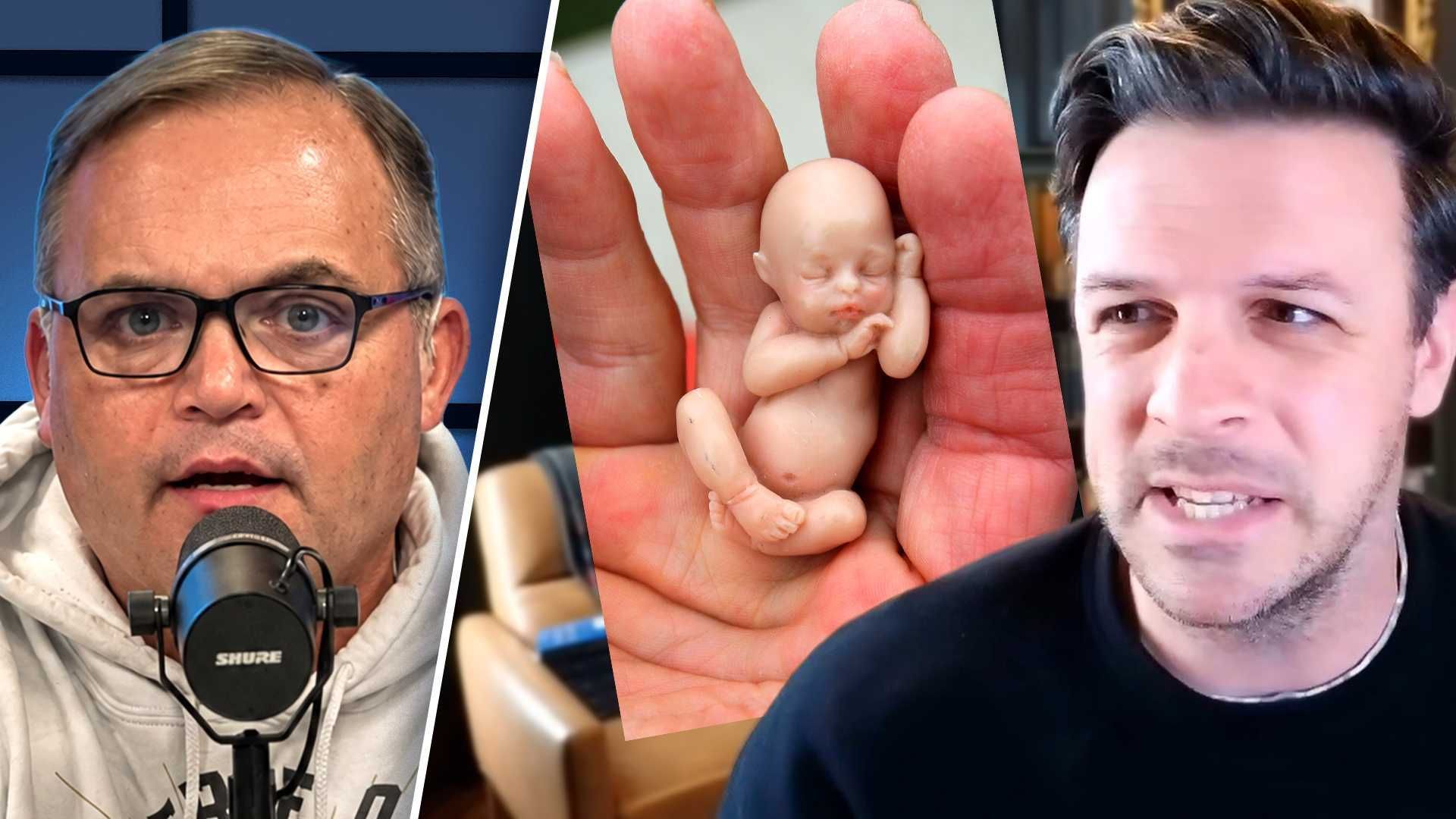
During his speech at the House GOP retreat on January 6, President Trump suggested that Republicans need to be “a little flexible” on the Hyde Amendment — which prevents taxpayer dollars from funding the majority of abortions — to get a health care compromise passed where Republicans could win politically on lowering premiums.

The mere suggestion enraged pro-life America, which sees the Hyde Amendment as the only firewall preventing taxpayer dollars from directly funding the slaughter of the unborn.

On this episode of the “Steve Deace Show,” Deace speaks with one of Iowa’s top evangelical and political voices, Bob Vander Plaats, on why bending on Hyde could collapse the GOP coalition heading into 2026 midterms.

“There are two lasting victories of the pro-life movement,” says Deace.

One of them is the overturning of Roe v. Wade, and the other is the Hyde Amendment.

While Deace and Vander Plaats give President Trump the win for the overturning of Roe v. Wade, as he appointed the Supreme Court justices who took up the case, they condemn his suggestion to soften on Hyde as a catastrophic loss in the fight for life.

But on top of ethics, it doesn’t make sense politically.

“President Trump understands better than anything [that] the taxpayer funding of abortion is not a winning issue for Democrats. This is one of those 70% issues where people don't want your tax dollars going to fund abortions. So why not land on your convictions when it's politically correct as well? Don't negotiate on this thing,” says Vander Plaats.

Any Republican politician dreaming of running for president in 2028, he warns, would be wise to stay far away from the Hyde issue.

“This will just not only blunt your campaign, this will decimate your campaign,” he cautions.

To compromise on Hyde will only further demoralize the conservative base, which already struggles to turn out for special elections and off-year elections — even in red areas the GOP should win, adds Deace, as the right sadly lacks the kind of boots-on-the-ground apparatus that Democrats excel in mobilizing during any election.

“We don't need to be giving our base less reason to vote right now,” he says.

If Republicans want to at least keep the House and prevent Democrats from embarking on an “impeaching palooza,” there are “three kinds of voters” they must inspire to show up for midterms: the MAHA voter, the “Theo Von/Joe Rogan voter who thinks the whole system is corrupt,” and the “traditional conservative,” pro-life voter.

Deace predicts that of the three groups, only MAHA is pleased right now. The Von/Rogan voters are entirely “off the reservation” because they no longer believe that Trump will actually drain the swamp. And the conservative pro-life voter base is teetering on the edge of giving up.

If compromises are made on the Hyde Amendment, this group will almost certainly not show out for midterms.

To hear more of Deace and Vander Plaat’s conversation, watch the video above.

Want more from Steve Deace?

To enjoy more of Steve's take on national politics, Christian worldview, and principled conservatism with a snarky twist, subscribe to BlazeTV — the largest multi-platform network of voices who love America, defend the Constitution, and live the American dream.

How a pro-life law in Kentucky lets mothers get away with murder


Melinda Spencer allegedly took abortion pills, ended the life of her unborn son, and buried his remains in a shallow grave in her backyard.

Yet a law in Kentucky exempting women from prosecution after obtaining an abortion — a law supported by the most influential pro-life organization in the state — appears to have prevented prosecutors from holding Spencer accountable for murder.

If a state refuses to make murder illegal for everyone, then some human beings will remain unprotected by design.

According to court documents cited by local media, Spencer, 35, told Kentucky State Police that the child “was not her boyfriend’s, and she did not want him to find out she was pregnant with another man’s baby.”

To conceal the pregnancy, Spencer allegedly ordered abortion pills online, intending to end the life of her unborn child without medical supervision.

Police say Spencer took the pills the day after Christmas, placed her deceased son in a light bulb box, and buried him in a shallow grave in her backyard. An autopsy determined the child was around 20 weeks’ gestation at the time of his death.

Initially Spencer was charged with first-degree fetal homicide, abuse of a corpse, concealing the birth of an infant, and tampering with physical evidence.

This week, however, Kentucky prosecutors dropped the homicide charge — not because they doubt that Spencer intentionally caused the death of her unborn child but because Kentucky law explicitly prohibits prosecuting a pregnant woman who murders her own unborn child.

— (@)

Miranda King, the prosecutor overseeing the case, acknowledged this limitation directly. In a public statement, she explained that the relevant statute “prohibits the prosecution of a pregnant woman who caused the death of her unborn child.” Spencer still faces the remaining, lesser charges.

King made clear that this frustrating outcome was not her preference.

“I sought this job with the intention of being a pro-life prosecutor but must do so within the boundaries allowed by the Kentucky state law I’m sworn to defend,” she said. “I will prosecute the remaining lawful charges fully and fairly.”

Kentucky is widely regarded as a conservative state with strong pro-life laws. Many Americans assume abortion was effectively banned there after the Supreme Court overturned Roe v. Wade in 2022. This case exposes how incomplete that assumption is.

RELATED: Why the pro-life movement fails without a Christian worldview

jcphoto via iStock/Getty Images

Kentucky’s leading pro-life advocacy organization, Kentucky Right to Life, has long supported laws that shield women from criminal liability for abortion. In practice, this ensures that abortion remains legal for women, even if clinics are closed.

In 2021, Kentucky Right to Life joined more than 70 other pro-life organizations in signing a national letter declaring opposition to “any measure seeking to criminalize or punish women” who obtain abortions.

Since then, the organization has opposed multiple abolition bills that would have established equal protection under the law for unborn children — specifically because such legislation would allow for the prosecution of mothers who willfully procure abortions.

Addia Wuchner, Kentucky Right to Life’s executive director, opposed an abolition bill in 2023 on the grounds that it might expose mothers to criminal charges. She took the same position last year, arguing that women are victims of coercion by the abortion industry.

That framing has deadly consequences.

RELATED: ‘Massive betrayal’: Republicans, pro-life groups push back on Trump's call to loosen key abortion restriction

Photo by Mandel NGAN / AFP via Getty Images

Following Spencer’s arrest, Wuchner publicly expressed sympathy for the accused, describing Spencer as likely being “on her own” and calling that “probably the greatest tragedy,” before adding that “of course ... a child’s life was lost.”

The ordering is revealing. The alleged murder of a child was treated as secondary to the emotional state of the alleged murderer. Empathy displaced justice and accountability.

— (@)

There are cases in which women are coerced into abortions under genuine duress. But coercion cannot be presumed as a universal explanation. By all available evidence, Spencer appears to have acted deliberately. Kentucky law nevertheless forecloses full accountability — and ensures that the central act in this case cannot be adjudicated as homicide.

Since the Supreme Court overturned Roe, states like Kentucky have continued to see record abortion levels, largely through self-managed chemical abortions ordered online. Laws that categorically exempt women from prosecution guarantee this outcome.

If a state refuses to make murder illegal for everyone, then some human beings will remain unprotected by design. And when that exemption applies even in cases involving concealment, burial, and admitted intent, justice becomes impossible by statute.

So long as that remains the case, women who willfully kill their unborn children in Kentucky will continue to get away with murder.