Inside the Langley showdown over JFK and MK-Ultra secrets


On May 13, 2026, CIA senior operations officer James Erdman III appeared under subpoena before the Senate Homeland Security and Governmental Affairs Committee. He was testifying despite his agency's objections.

Erdman had recently led an investigation for Director of National Intelligence Tulsi Gabbard’s “Director’s Initiatives Group” into COVID-19 origins, anomalous health incidents, and UFOs. What he told the senators was explosive.

‘We just want to clear the air. We did not take back documents.’

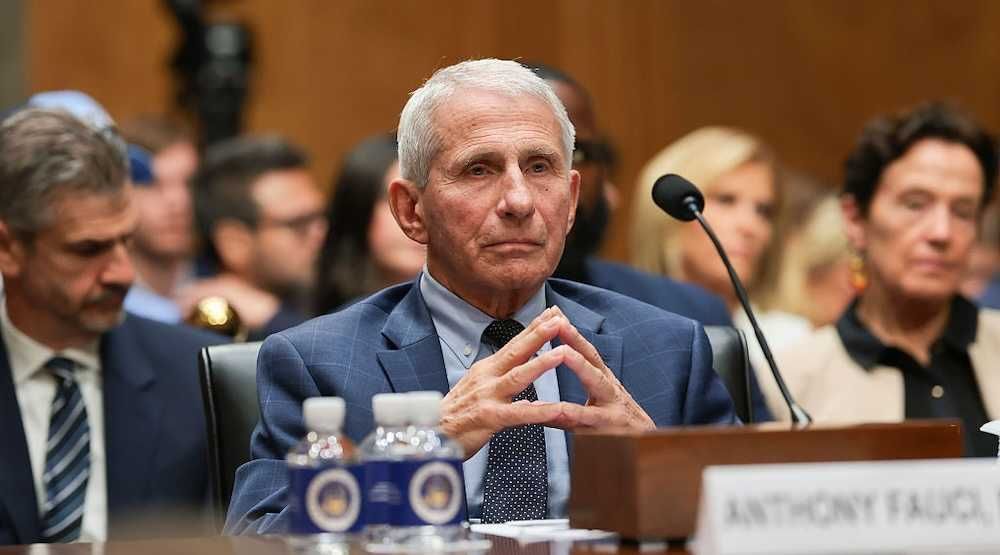
"Dr. Fauci's role in the cover-up was intentional," Erdman testified. He said Fauci had steered the intelligence community's COVID-origins analysis by supplying “a conflicted list of curated subject matter experts,” several of whom co-wrote the paper dismissing the lab-leak theory.

Inside the CIA, Erdman said, six of the seven technical experts involved in a COVID relook favored a lab-leak conclusion. Management changed the assessment anyway in what he called a "middle-of-the-night anonymous rewrite."

Then came the allegation that set House members on fire.

"The CIA illegally monitored the computer and phone usage of DIG personnel, their investigations, and contact with whistleblowers," Erdman said. "When the DIG ceased operations, the CIA took back 40 boxes of JFK and MK-Ultra files being processed for declassification by DNI Gabbard."

Senator Ron Johnson (R-Wis.) read aloud a statement the CIA had just released calling the hearing "dishonest political theater." Then he turned to Erdman. "I have years and years and years of built-up frustration of agencies like the CIA, Department of Justice, the FBI, HHS, snubbing our oversight, giving us the big middle finger," Johnson said.

Rep. Anna Paulina Luna (R-Fla.), chairwoman of the House declassification task force, called the episode “an internal coup.” She and Rep. Eric Burlison (R-Mo.) took to social media demanding that the files be returned. Within a day, the CIA invited them to headquarters.

On May 14, Burlison and Luna stood before the Memorial Wall at CIA headquarters in Langley, Virginia, its 141 stars carved into white marble for officers who died in the line of duty.

They had surrendered their phones. No aides were allowed, no notepads, no recording devices. If anyone later disputed what was said, there would be no way to prove it.

They were led up an elevator to the top floor and through narrow, winding hallways. Burlison was struck by how ordinary it felt: a sterile cubicle farm straight out of a “Dilbert” cartoon.

The meeting was supposed to be with CIA Director John Ratcliffe. Instead, they were met by the agency's archivist, a woman in her late 50s who oversaw two football fields' worth of paper files.
RELATED: Fauci's agency backed an experiment aerosolizing lethal Ebola — then he panicked about what it exposed about vaccination

Anna Moneymaker/Getty Images

Ratcliffe, they were told, was “out of pocket.” They later learned he was in Cuba.

“We just want to clear the air,” the archivist began. “We did not take back documents.”

In the CIA's telling, when President Trump ordered the JFK records released, Gabbard's team showed up unannounced and demanded them. The CIA objected to the files leaving in the team's personal cars and insisted on moving them in its own secure vans.

About 300 boxes were handed over, the CIA said, while 42 were at another location being processed. When those were ready, according to the agency, it notified the DNI's office.

Burlison saw the irony. The CIA was telling the office that oversees it that it could not be trusted with the files.

“You do recognize that there's a point of friction between the CIA and the ODNI,” he told them, “and there's a reason ODNI came in without informing you that they were coming? There’s clearly a level of mistrust between the two organizations.”
RELATED: Deep-staters at FBI framed Trump firing Comey as a Russian op — then apparently worked to cover their tracks

Kevin Dietsch/Getty Images

They acknowledged it. They also agreed that the CIA spokesperson’s public attacks were unacceptable.

“The way they conducted themselves in the meeting was almost like they were a kid caught doing something wrong,” Burlison told me afterward, "and were profusely apologetic, and desperately trying to figure out, 'How do we de-escalate the situation?'"

Burlison left without a clear answer about what was in those 42 boxes or whether the CIA had pulled them before Gabbard's team could review them. The CIA also said there were 11 more boxes the DNI would never be allowed to see because they contained tradecraft secrets.

He wasn't interested in de-escalating.

Two and a half months later, Luna told me the CIA had located the files and placed them in line for declassification.

But it took a whistleblower defying his own agency, a Senate subpoena, and two members of Congress walking into Langley to get there.

If the task force doesn't survive November, who will make that walk next time?

Editor’s note: This article is excerpted from “Book of Secrets: Congress Tries to Find the Truth About the Deep State,” by Kent Heckenlively (Permuted Press).

EXCLUSIVE: Jack Smith’s Team Ignored Attorney-Client And Speech Or Debate Privileges To Get Trump

When Smith appears before the Senate Judiciary Committee, he should be pushed to explain why he failed to ensure his team adopted and applied proper filter protocols
Ron Johnson amplifies voices of vaccine-injured Canadians in COVID reckoning


For years, Canadians who say they were seriously injured by COVID-19 vaccines have sought recognition from their government. This week, some of them are getting the opportunity to tell their stories on Parliament Hill — with a powerful U.S. senator joining them.

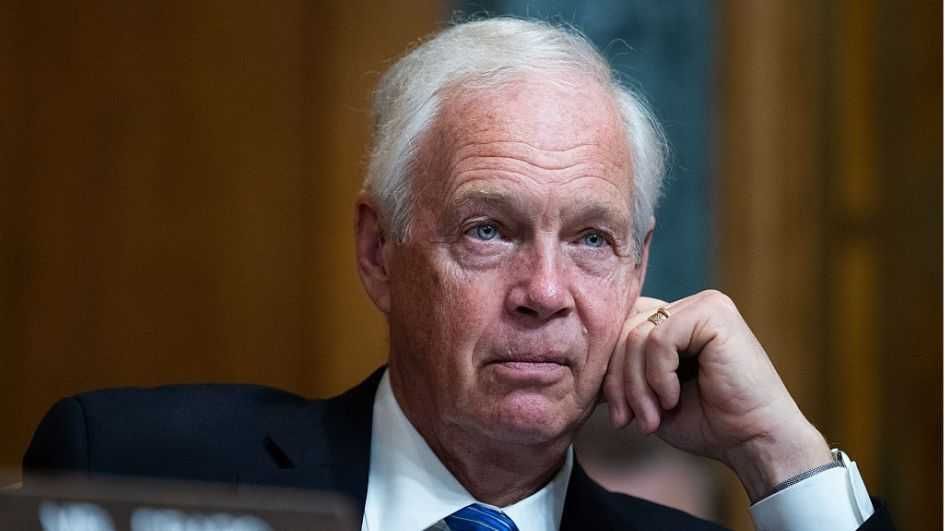
Sen. Ron Johnson (R-Wis.), chairman of the Senate Permanent Subcommittee on Investigations and one of Washington's most persistent critics of the government's pandemic response, appeared Tuesday at the opening of the Allison Inquiry in Ottawa.

'By the time the COVID vaccines obtained their emergency use authorizations, the cartel was firmly in control of the narrative.'

The four-day inquiry is chaired by Conservative Member of Parliament Dean Allison and organized with the Covid Testimony Association. Its stated purpose is to hear testimony from Canadians who attribute serious injuries to COVID-19 vaccination. It is being held on Parliament Hill, although it is not an official parliamentary inquiry.

Questioning the narrative

Johnson opened his testimony by questioning fundamental elements of the public health response to COVID-19, including the treatment of natural immunity and doctors who advocated early treatment.

“Haven't we always believed that early disease detection prompts early treatment and produces better outcomes? Why was that fundamental tenet of medicine not only ignored but sabotaged?” Johnson asked. “Why were frontline doctors who had the courage and compassion to treat COVID patients from the start of the pandemic censored, vilified, and had their careers destroyed?”

“How could health officials deny the effectiveness of natural immunity when approximately half of the people testing positive for COVID were asymptomatic?” he continued. “Isn't that a sign that your natural immunity is preventing you from getting ill?”

Johnson's war

Johnson has been pursuing many of the same questions in Washington as chairman of the Senate Permanent Subcommittee on Investigations.

In April, the subcommittee released a 38-page interim report alleging that FDA officials failed to act on a newer data-analysis method that identified previously undetected safety signals that the agency's existing methodology had failed to detect.

The investigation drew renewed attention in July as Johnson's committee continued examining how federal officials handled reports of possible vaccine side effects and whether potential safety signals were adequately disclosed to the public. Later that month, Johnson requested transcribed interviews with Dr. Anthony Fauci and four former FDA officials about their roles in the pandemic response, including vaccine safety and efficacy

In August, Johnson's investigation obtained Fauci's government-issued cell phone, containing more than 34,000 text messages and 500 voicemails. Johnson and Sen. Rand Paul (R-Ky.) subsequently began releasing material from the phone as part of their continuing investigation into the government's pandemic response.

Follow the science?

Johnson brought that investigation to Ottawa on Tuesday, where he used his appearance at the Allison Inquiry to deliver a broader indictment of the pandemic response.

“By the time the COVID vaccines obtained their emergency use authorizations, the cartel was firmly in control of the narrative,” Johnson said, using his term for the government agencies, pharmaceutical companies, media organizations, and technology companies he blames for suppressing dissent during the pandemic.

He recalled slogans including “follow the science,” “safe and effective,” and “no one is safe until everyone is safe.”

“Which, by the way, if the vaccines were that effective, why would you care whether somebody else is vaccinated?” Johnson asked. “I mean, it never made sense to me. ... These phrases were used ad nauseam to bludgeon the public into submission.”

RELATED: Glenn Beck is right about Canada's descent into tyranny — and it began with attacking one basic freedom

NurPhoto/Getty Images

From 'injury' to 'impact'

Canada does have a federal program to compensate people who have suffered serious and permanent injuries following vaccination. The Vaccine Injury Support Program began in 2021 and was initially administered by a third party before being taken over by the Public Health Agency of Canada.

The program itself has faced scrutiny. PHAC terminated its contract with the original administrator after an audit found serious problems with its handling of claims. The agency subsequently took over administration of the program and renamed it the Vaccine Impact Support Program in April.

The Allison Inquiry says it received more than 1,400 applications from people willing to testify about alleged vaccine injuries.

Johnson also alleged that federal regulators failed to adequately investigate vaccine safety signals.

“A few months into the vaccine rollout, my investigations have shown that the FDA and CDC were not doing sincere safety surveillance,” he said. “And it appears this willful ignorance was a worldwide phenomenon.”

What about Dr. Tam?

That question of what Canadian health authorities knew eventually brought the hearing to Dr. Theresa Tam, Canada's former chief public health officer.

During questioning, Conservative MP Ellis Ross asked Johnson whether Tam's name had surfaced in the millions of pages of federal documents obtained by his investigation.

“I've not heard of Dr. Tam. I may have, but, you know, the name didn't register,” Johnson replied. “What I will do is I'll have that as a search term with the emails and texts and I'll see. We'll check it out.”

Johnson then addressed his staff, telling them to add Tam's name to their searches.

“We'll put that in. We'll see if there's any [mentions],” he said.

Johnson went on to say his investigators were finding what he described as “a great deal of cooperation between Fauci and federal health officials and Chinese officials,” but said he was not yet prepared to disclose specifics.

“As we get more and more information, we'll start releasing that,” Johnson said. “We kind of got to put the whole package together, but stay tuned on some of those things.”

'I'm trying to be nice': Trump piles pressure on Thune over SAVE America Act


Trouble likely awaits a budget resolution tied to the SAVE America Act as it heads to the stubborn upper chamber of Congress.

On Wednesday, the House passed a $95 billion budget resolution, 216-214, carrying with it important incentives for states to pass the SAVE America Act, alongside funding for Iran-related operations and farm aid.

'It's like the Senate is a place that you send things when you want them to die.'

The $95 billion package includes $73 billion for defense and intelligence funding, $12 billion for agricultural aid, and $10 billion in election-related funding for states, a key aspect of the SAVE America Act.

The bill itself is five primary issues: voter ID, proof of citizenship to register, an end to universal mail-in ballots, and bans on transgender athletes in women's sports and transgender surgery for minors.

The SAVE America Act is now sitting with a Republican-controlled Senate that is in apparently no rush to deal with it.

Trump ramped up his pressure campaign against Senate Majority Leader John Thune (R-S.D.) at a Georgia rally Wednesday, urging supporters to flood Thune's office with calls demanding action on passing the budget bill and, eventually, the SAVE America Act.

RELATED: House narrowly passes SAVE America Act as rider to trillion-dollar spending bill

Kevin Dietsch/Getty Images

He credited Johnson and the House for doing their part, but blamed the Senate for the holdup: "It's like the Senate is a place that you send things when you want them to die."

“We’re not going to take this any longer. … I’m trying to be nice; I’m trying to be really nice,” Trump added.

Rep. Andy Ogles (R-Tenn.) also suggested on X that Thune should "step aside" if he won't act.

Politico's reporting from inside the GOP conference shows the resistance runs well past the three sitting holdouts — Sens. Susan Collins (R-Maine), Lisa Murkowski (R-Alaska), and Thom Tillis (R-N.C.).

A source familiar with the matter told Blaze News that Thune is prioritizing the continuing resolution to avoid another shutdown and that the budget resolution is in reserve.

Asked Wednesday how close he was to 50 votes, Thune said only, "Good question."

By Thursday, he was blunter: "I can't count to 50 right now on a budget resolution."

Per Politico, Sen. John Kennedy (R-La.) told reporters Wednesday he doesn't expect Thune to take it up at all; Sen. John Cornyn (R-Texas) isn't sure the votes exist in the first place; and newly named Budget Chairman Ron Johnson (R-Wis.) said there has been no formal conversation yet.

Thune himself has asked colleagues, "Is the juice worth the squeeze?"

Reconciliation needs only a simple majority, as opposed to the 60-vote threshold for passing bills into law. Even so, the bill has failed twice — once in April and again in June — with Collins, Murkowski, Tillis, and Mitch McConnell (R-Ky.) voting no alongside every Democrat both times.

RELATED: New Jersey's noncitizen voter blame game doesn't add up — literally

Win McNamee/Getty Images

Earlier this month, Speaker Johnson called the package "our best shot" at 50 votes plus Vice President JD Vance as the tiebreaker. For now, McConnell's indefinite absence drops the vote count to 99, meaning Republicans need a plain majority. One holdout flipping to yes still passes it outright, while an abstention reopens a possible 49-49 tie, putting Vance's tiebreaker back in play.

Only if all three hold firm does the package fail.

Asked directly at Tuesday's weekly Senate GOP leadership press conference whether the House's reconciliation push is more than an academic exercise, Thune demurred: "We'll see ... what they get done this week and what it all consists of."

He confirmed the Senate would "hold" any budget resolution the House sends over — but specifically as a fallback to fund the government, not to advance the SAVE America Act.

"I hope that's not necessary," he said, noting he's already having "productive conversations" with Democrats on a separate funding deal to carry the government past the November election.

Like Blaze News? Bypass the censors, sign up for our newsletters, and get stories like this direct to your inbox. Sign up here!

New Docs Support Allegations That Jack Smith’s Team Violated Constitution In Get-Trump Probe

With this evidence only now coming out, one must wonder what other rights the special counsel’s office trampled.

Docs: Democrat Special Counsel Jack Smith Spied On, Lied To Congress

An executive agent spying on members of a legislature not only violates the Constitution but is a hallmark of authoritarian states.

Senate RINOS Too Busy Scolding Trump To Pass Voter ID Bill

Four Republicans -- guess who? -- joined Democrats Tuesday in passing a resolution telling Trump to pull U.S. troops out of Iran War.
GOP Senator Questions Biden Officials’ Handling Of COVID Vaccine Safety Tracking

'I think that because of the FOIAs we may have asked FDA to stop sending these'

GOP Senators: Nuke The Filibuster, Pass The SAVE America Act

Sen. Ron Johnson sees it as a kind of golden rule in dealing with nasty Dem politics: Do unto others before they do unto you.

Senate Begins Show Debate On SAVE America Act

Former White House Chief of Staff Mark Meadows says the alleged support by some Senate Republicans is 'disingenuous at best.'