In the wake of SPLC indictment, Christopher​ Rufo recalls the first time it came after him


Last week, the Southern Poverty Law Center was indicted by a federal grand jury on 11 counts of wire fraud, false statements to a bank, and conspiracy to commit money laundering for allegedly using over $3 million in donor funds to secretly pay informants inside extremist groups like the KKK.

On this episode of “Rufo and Lomez,” Christopher Rufo and Jonathan Keeperman, both of whom have been targets of the SPLC, trade stories and discuss the significance of these indictments.

The SPLC, says Rufo, “is this amazing story of the organized left creating this phantasm of the radical right and then fighting that phantasm that they themselves have created.”

The powerful role the SPLC has inhabited on the left, says Keeperman, hinges on telling liberals “who the bad guys are” and thus who they are “allowed to hate.”

But it goes further than just slapping damning labels on conservative individuals and organizations.

If the SPLC targets you, it proceeds to attempt to “ruin your reputation, ruin your ability to earn a living, and then send out [its] goons by proxy and by arms' distance to physically hurt you if you show up anywhere in public,” alleges Rufo, citing the SPLC’s targeting of American political scientist and scholar Charles Murray, who suffered both professionally and personally after the advocacy group labeled him an extremist.

Rufo keenly recalls the first time the SPLC targeted him.

In the early 2020s when he was on his anti-critical race theory campaign, he found himself in the organization’s crosshairs, and it genuinely frightened him.

“I felt the fear,” he admits.

“You have this sense like, OK, I better fight hard because these people are trying to knock me off the board altogether — ruin my reputation, ruin my ability to support my family.”

Rufo’s fight proved successful. “I was able to kind of rebuff those initial challenges and actually kind of boomerang them and turn them into a badge of honor, a fundraising appeal to my supporters. ... I was able to get them to retract certain claims that they were making against me to show in essence that I was able to make them back down,” he recounts.

That was just the first attack though.

Over the last few years, there have been over “a dozen” attacks on Rufo, but they no longer elicit the same fear as the first time.

“You actually develop a kind of immunity through exposure,” he says, calling the recent charges against the SPLC “both shocking and not shocking.”

“It's both a blow to their effectiveness, but it's also just really another nail in the coffin.”

To hear more, watch the full episode above.

Want more from Rufo & Lomez?

To enjoy more of the news through the anthropological lens of Christopher Rufo and Lomez, subscribe to BlazeTV — the largest multi-platform network of voices who love America, defend the Constitution, and live the American dream.
The third way: Navigating AI’s knife edge


When it comes to the impending AI takeover, two main camps of belief get the most attention: those who welcome technological singularity, believing it will deliver humanity into a utopia of universal basic income, freedom, and prosperity, and those who deeply oppose it, fearing it will render humanity useless and usher in the apocalypse.

But is there a middle ground — a reasonable center that embraces the good AI offers but opposes the dystopia it threatens?

BlazeTV hosts Christopher Rufo and Jonathan Keeperman believe there is.

On a recent episode of “Rufo & Lomez,” the duo spoke with Samuel Hammond, an artificial intelligence researcher at the Foundation for American Innovation, about the “sweet middle ground” of artificial intelligence.

Hammond acknowledges the dual nature of artificial intelligence. “It's the thing that's going to build us all-new efficient defended software, but also in the meantime enable hackers to hack that software; it's a thing that will discover new drugs but also create new viruses. And to be able to hold both those realities in your mind is incredibly taxing.”

In the same way that the Industrial Revolution created both wealth and the administrative and welfare states, so the AI takeover will have both benefits and drawbacks, he says.

Keeperman inquires about the regulatory measures being taken by AI developers to mitigate the potential damage.

Hammond admits that regulation is difficult because of the sheer scope of AI. Like electricity, “it’s this massive umbrella term,” he says.

“The areas where people have legitimate concerns are easier to gerrymander, right? It's things like designing novel bioweapons or very powerful, autonomous malware that could hack into your program and go rogue. These things are difficult to keep in a box,” he explains.

On the upside, however, “getting to advanced AI first will have major national security implications.”

“The fact that we have a friendly U.S.-based company that built a system like Mythos first that could, in principle, hack into all these different critical pieces of infrastructure is an incredible fortune for us, right?” says Hammond, noting that this allows the U.S. to “patch up and harden [its] systems” before other countries reach the same capabilities.

On the other hand, the U.S. government currently has little control over the companies that are leading AI development.

As of now, these companies “are being benevolent with their use of this and certainly have the intentions to try to be sort of trustworthy and good stewards of this technology, but as a matter of state governance, do we actually have any greater control over this technology than, let's say, China?” Keeperman asks.

Hammond admits that we’re on precarious terrain.

“I think of us as sort of on this knife edge between a Chinese-style panopticon or some kind of anarchy where things kind of fall apart,” he says, advocating for a “third way.”

“We need a strong state to enforce property and contract and our rights, but that state can't be completely divorced from rule of law,” he says. At the same time, however, “democracies have committed genocide,” whereas “private corporations just want to maximize shareholder value.”

In the end, Hammond urges us to reject both utopian dreams and apocalyptic fears in favor of a pragmatic middle course: building institutions strong enough to govern AI’s immense power, yet constrained enough to prevent it from becoming a tool of tyranny or disorder.

Want more from Rufo & Lomez?

To enjoy more of the news through the anthropological lens of Christopher Rufo and Lomez, subscribe to BlazeTV — the largest multi-platform network of voices who love America, defend the Constitution, and live the American dream.
Rufo report confirms: Yes, illegal aliens are receiving FREE sex-change procedures in Newsom’s California


On April 16, BlazeTV host and independent journalist Christopher Rufo published a shocking report titled “California Provides Sex-Change Procedures to Homeless Illegal Aliens.”

“It feels like one of those stories that is like right-wing Mad Libs, where you take all of the most intense right-wing trigger words, you smash them into a sentence. But in this case, it's not imaginary. It's all real,” he says.

On this episode of “Rufo & Lomez,” Rufo and co-host Jonathan Keeperman break down the shocking details of the report, react to the on-the-ground footage, and discuss how California voters have become so morally submissive that they now tolerate — and fund — even the most absurd and humiliating policies.

Rufo begins by playing a video clip of his co-author and City Journal colleague Jonathan Choe interviewing a homeless illegal immigrant from Mexico who identifies as a transgender woman and calls himself Jacqueline.

The man confirms that he received both hormones and breast implants for free in California via Medi-Cal.

“Even though you're undocumented, you can get it,” he said, adding that he’s “waiting” for bottom surgery.

According to Rufo’s reporting, Jacqueline is one of many homeless illegal aliens living in San Francisco’s publicly funded shelters who have received such procedures at the expense of the California taxpayer. On-the-ground interviews and video also confirmed that word is spreading south of the border, encouraging trans-identifying migrants to come for these free procedures.

“[Choe] actually went to a number of homeless shelters in San Francisco, and at each homeless shelter, he found transgender illegal migrants who told him very directly, ‘We're here to get hormones, breast implants,’ and, as Jacqueline says, ‘bottom surgery,”’ says Rufo.

He then plays a second video featuring another transgender-identifying illegal alien named Lyca — a biological male from Honduras who says he came to the United States explicitly to take advantage of the taxpayer-funded benefits that will pay for his transition. He candidly admitted that Medi-Cal is currently paying for his hormone therapy.

Both Rufo and Keeperman agree that California voters have become so afraid of moral backlash that they’re now greenlighting policies that are abjectly insane.

“The California taxpayer is in a findom relationship with the state,” says Keeperman.

A financial domination relationship is a BDSM kink in which a submissive person gives money or gifts to a dominant person without expecting sexual favors in return. Like other related kinks, the submissive party seeks gratification through humiliation.

Keeperman argues that this same twisted dynamic is at play between the California government and its constituents.

“If you live in California and you're, like, a good secular cosmopolitan lib … the moral decision-making is incredibly difficult. … Every decision, every behavior, every utterance is freighted with meaning and the potential for sort of catastrophic loss, or you'll be accused of being immoral,” he explains.

“They’ve reached total fatigue, and the state just makes these demands of them — like you have to support on tax day the surgeries for transgender illegals — and they're comforted by this because it's like this relief,” Keeperman adds.

Rufo agrees. “The California voter is in a completely submissive moral position. It will accept any moral demand, any moral imposition, any moral cost.”

“California voters have essentially given a blanket yes, and then the layer of activists, administrators, and fanatics within the California state government processes the paperwork, so that in the end, trans illegals are getting free castration surgeries in San Francisco,” he continues.

Keeperman counters, “But the thing is, it's not just that it's yes to anything; it's yes to things that are the most humiliating and the most extractive and the least practically or pragmatically productive.”

“So it's not like they're pining for, you know, efficient infrastructure and public transportation. I mean, I'm sure they say they want that, but that's not what gets done,” he continues. “What gets done instead is this kind of stuff, which is just facially absurd.”

Rufo says the reason genuinely beneficial initiatives, like improved public transportation, never actually happen is because “building train tracks is hard,” while “cutting the penises off of illegal migrants” isn’t.

“As I discovered in a previous story in Oregon — I imagine the same is happening now in San Francisco — they've actually developed surgical castration robots, and they can castrate,” he says, "and in a single operating room, they can do two of these castrations per day now using these castration robots.”

To learn more, watch the episode above.

Want more from Rufo & Lomez?

To enjoy more of the news through the anthropological lens of Christopher Rufo and Lomez, subscribe to BlazeTV — the largest multi-platform network of voices who love America, defend the Constitution, and live the American dream.
Domestic fraud > Iran war: Christopher Rufo says crushing blue-state scams is the GOP’s political winner


On April 3, BlazeTV host Christopher Rufo released an investigative report in City Journal documenting fraud in the state of California under current Democrat Gov. Gavin Newsom. According to his team’s research, California lost at least $180 billion to fraud and improper payments in programs like Medi-Cal (California's Medicaid), unemployment insurance, and general welfare since Newsom took office in 2019.

Rufo believes targeting domestic fraud is a fool-proof “political winner” for the Trump administration — certainly more than the Iran war, which he says is “at best a 50/50 issue.”

“Portraying Minnesota and New York and California and other bastions of blue governance as havens of outright fraud, ripping off taxpayers, seems like the kind of domestic policy agenda — along with immigration, along with a couple of other issues — that can be a winner, both substantively ... but also politically,” he tells “Rufo and Lomez” co-host Jonathan Keeperman.

Keeperman wholeheartedly agrees: “[Domestic fraud] is such a good thing for us to be focusing our attention on, not just because it's a huge problem that we need to eradicate from our public life and is creating all sorts of downstream pathologies that are making everyday life just more difficult for ordinary Americans, but because it also demonstrates ... the problems of democratic governance.”

The best part is that large-scale fraud isn’t even that difficult to uncover.

“A guy like Nick Shirley just takes a camera, finds some public documentation, and just goes and knocks on some doors, and you can uncover that easily hundreds of millions, if not billions, in fraud,” he says, “and so yes, this is the best message for the GOP and for Republicans going forward.”

The mass exodus of people from California, Keeperman argues, is evidence that domestic issues are what people care about most.

“California has, despite being one of the nicest places to live in the country, has net out domestic migration and has had net out domestic migration for the last decade, if not longer,” he says.

“People are voting with their feet on this, and so yes — this is all just to say [domestic fraud] is an obvious winner.”

Rufo confirms Newsom’s direct role in California’s out-migration.

“There's two stats that we came across in this reporting that I think are really important,” he says.

“Under Gavin Newsom, the state's population has declined by 0.2%, which is the first time that California's population has declined ever since it became a state ... but at the same time that the population declined, Medicaid spending ... for low-income people doubled.”

“And so you have the population going down and then the health care expenses under Medicaid doubling,” he explains, pointing out the vicious cycle of fraud money flowing to unions, which funds politicians, who expand the system even more.

The result, Rufo says, is a two-tiered society. The combination of astronomical taxes and high cost of living creates a population where residents are either “rich enough where it doesn't really matter” or “poor enough where it doesn't really matter because you have every part of your life subsidized.”

“I think that's why people are saying, ‘I'm out,”’ he says.

To hear more of the conversation, watch the episode above.

Want more from Rufo & Lomez?

To enjoy more of the news through the anthropological lens of Christopher Rufo and Lomez, subscribe to BlazeTV — the largest multi-platform network of voices who love America, defend the Constitution, and live the American dream.
Trump-endorsed Steve Hilton blows open California’s $400 billion fraud machine in gubernatorial bid


Between sky-high taxes, radical left-wing policies, and staggering levels of fraud, California has turned into such a nightmare that droves of people are leaving every year.

But one man believes he can save the Golden State from its downward trajectory: Steve Hilton.

The British-born conservative commentator is the former senior adviser to U.K. Prime Minister David Cameron, an ex-Fox News host of "The Next Revolution," a Silicon Valley entrepreneur, and a Republican candidate for California governor in 2026. Recently endorsed by President Trump, Hilton is leading several polls against a crowded field, including Democrats and fellow Republican Chad Bianco.

On a recent episode of “Rufo and Lomez,” he joined BlazeTV host Christopher Rufo to expose the depth of California’s depravity and share his plan for a statewide overhaul.

“California today is what you get when the Democrats get everything they want,” says Hilton.

The results of 16 years of unchallenged Democrat rule speak for themselves:

“We have now today in California the highest poverty rate in the country (tied with Louisiana), the highest unemployment rate of all 50 states, the highest cost of living. Everything is the most expensive here: gas, electric, groceries, housing costs — everything,” he lists.

“U.S. News and World Report ranked California 50th out of 50 states for opportunity; WalletHub ranked us as 50th out of 50 for affordability. Chief Executive Magazine [ranked] California 50th out of 50 states for business climate,” Hilton continues, noting that this is “not the end of the list.”

After years of paying “the highest taxes for the worst results,” a “real revolution” is beginning to catch fire, he says. Even though the thought of California — one of the deepest blue states on the map — being run by a Republican governor feels like a pipe dream to many, Hilton believes the state government’s failures are so catastrophic at this point that a red victory is now feasible.

“I really think that this year we could get a major upset and you'll see a Republican governor elected in November,” he says.

Rufo is thrilled at the prospect of a Republican governor in California for many reasons but especially when it comes to the shocking amount of fraud that’s been exposed under current Democrat Gov. Gavin Newsom.

“Depending on how you calculate the numbers [and] which programs you include, at the very low end, we had something like $180 billion lost to fraud under Newsom. At the very high end, I think you had something like $400 billion lost under Newsom,” he says, referencing his recent City Journal reporting.

“The scale of these numbers is almost difficult to comprehend. Can you walk us through what you found and what you think the true extent of the fraud is now?” he asks.

Hilton, who launched the investigative initiative CAL DOGE (intentionally modeled after Elon Musk’s federal department), says that what his team has uncovered using just public records, audits, and whistleblower tips is already shocking.

He gives two examples.

“When cannabis was legalized in California through Proposition 64, they said the taxes will go towards substance abuse prevention. Well, we tracked the money down — $370 million of that parceled out in tiny grants to 500+ nonprofits,” says Hilton.

“And when you look at what they do by checking their websites and their annual reports, what do they do? Democrat political activity — registering voters, organizing in the community, all that kind of stuff.”

Hilton’s second example comes from California’s “climate fund.”

Since 2015, the state has allocated $100 million per year to installing solar panels on low-income apartment buildings. However, CAL DOGE found that the program's own official reports show that only $72 million was actually spent on installing solar panels.

“$928 million, again, goes to all these Democrat political organizations,” says Hilton.

“They take money from the taxpayer and say it's going for some nice purpose that you think is going to be good, and then it all gets parceled up going to this network of nonprofits that then do things that help the Democrat political machine ... and the scale of it is massive,” he adds, noting that CAL DOGE’s range for state fraud is between “$312 billion” and “$425 billion over five years.”

“How can we break that system?” Rufo asks.

To hear Hilton’s answer, watch the video above.

Want more from Rufo & Lomez?

To enjoy more of the news through the anthropological lens of Christopher Rufo and Lomez, subscribe to BlazeTV — the largest multi-platform network of voices who love America, defend the Constitution, and live the American dream.
Fertility has a silent assassin — and it’s everywhere


After a decades-long decline, America is now in the throes of the worst fertility crisis in our nation’s history. A record number of people are not having children.

The big question is why?

Certainly the answer is multifaceted, but there’s one undeniable driver behind America’s as well as nearly every other country’s declining birth rates, says Lyman Stone, senior fellow and director of the Pronatalism Initiative at the Institute for Family Studies: the iPhone.

On this episode of “Rufo & Lomez,” Christopher Rufo and Jonathan Keeperman speak with Stone about how our most pervasive technology is wrecking the world’s fertility numbers.


While there are many drivers behind globally declining birth rates — infertility issues, financial difficulties, a genuine desire to have fewer children, and even a desire to have no children at all — iPhones, says Stone, are “little sterilization boxes that we all carry in our pockets.”

But it’s not a literal sterilization — “The research suggests that the radiation from them is actually harmless,” Stone says — but rather a social sterilization.

“[Smartphones] change how we socialize together. ... Social media replaces in-person interaction; reading stuff online replaces in-person interaction, replaces intermediation in the physical world,” he explains.

“Increasingly, it's not just that people have fewer babies; they have fewer first kisses; they have fewer one-night stands; they have fewer dinner parties; they have fewer every kind of social interaction ... and so as social media and cell phones are just killing life together,” he adds.

This isn’t just speculation either. The data shows a major decline in face-to-face interaction starting in 2008 — just one year after the first iPhone hit the market.

Before 2008, fertility rates across the world would ebb and flow depending on a variety of circumstances, but following the invention of the iPhone, they’ve stayed consistently low, Stone explains.

The social isolation caused by the iPhone has resulted in a decline in marriage rates, which directly impacts birth rates.

Interestingly, statistics show that people who do marry young are having the amount of children they desire.

“There's no gap between desired fertility and actual fertility on average for people who marry before age 26,” says Stone.

Further, countries that have “religious prohibitions” on iPhone usage for extended periods of the day have also maintained higher birth rates.

“So Israel with Shabbat or Muslim countries, where we know from cellphone data everybody turns off their cell phone for 20 minutes five times a day ... still have high fertility,” says Stone.

iPhones, he explains, essentially turn off “the part of our brain that's supposed to know your tribe and recognize your tribe and really want to have sex with your tribe.”

Simultaneously, it supplies “an endless stream of porn” to keep people sexually satiated without producing children.

To hear more about the factors behind the world’s declining birth rate, watch the full interview above.

Want more from Rufo & Lomez?

To enjoy more of the news through the anthropological lens of Christopher Rufo and Lomez, subscribe to BlazeTV — the largest multi-platform network of voices who love America, defend the Constitution, and live the American dream.
Latest assassination attempt on Trump barely made headlines — desensitized America or wise media silence?


On Sunday, February 22, 21-year-old Austin Tucker Martin, who authorities say breached the secure perimeter of President Trump’s Mar-a-Lago resort armed with a shotgun and a gas can, was reportedly shot and killed by the United States Secret Service. President Trump was not at his Florida residence at the time of the incident.

Christopher Rufo, BlazeTV co-host of “Rufo & Lomez,” has been surprised by the lack of public outrage about this third assassination attempt on President Trump.

“What I found so fascinating is that this story, which in any other time period in American history would be a huge national story [and] dominate headlines, seemed to pass through the news without much of a blip,” says Rufo.

But this story should be of interest to everyone, he argues, not only because “anyone who is attempting an assassination against the president of the United States represents a fundamental threat to the political order,” but also because there seems to be a strange and dangerous pattern at play.

Both Thomas Matthew Crooks, who shot President Trump in the ear at his Butler, Pennsylvania, rally back in July 2024, and Austin Martin have some striking similarities, Rufo suggests.

Both were “bookish, young, white men, glasses, had some trouble, you know, fitting into the kind of high school social order. ... The reporting indicated that at least at some point in their recent past they were pro-Trump or pro-MAGA. Then they have, for whatever reason, some psychological break, and they end up trying to assassinate the president,” he explains.

“The evidence to me suggests that online radicalization is at least a significant part of this.”

But co-host Jonathan Keeperman thinks there’s another factor fueling the recent political violence: the “copycat effect.”

Once people “see someone doing something that is getting attention, the attention-seeking person then will just go copy that same behavior because what they actually want, what they're actually after, is that kind of attention,” he says.

“And so by ignoring these people, by pushing them out of the headlines, we're actually preventing more of this from happening in the future,” he suggests.

Keeperman also ponders the possibility that by trying to sleuth around and identify what’s fueling these acts of political violence we’re actually doing more harm than good.

“We're in a fallen world with fallen people, and they're lunatics, and they commit violence, and it's terrible, and it's tragic. But maybe, actually, our insistence that there's something more to mine from this ... or there's some meaning beyond just the fact that they're lunatics, is itself a kind of conspiratorial delusion that we're enacting in order to make sense of what is otherwise insensible,” he posits.

But Rufo isn’t convinced that attention-seeking or unpredictable lunacy is the root of the political violence we’re seeing. To hear his counterargument, watch the full episode above.

Want more from Rufo & Lomez?

To enjoy more of the news through the anthropological lens of Christopher Rufo and Lomez, subscribe to BlazeTV — the largest multi-platform network of voices who love America, defend the Constitution, and live the American dream.
Harmeet Dhillon is going to WAR against DEI


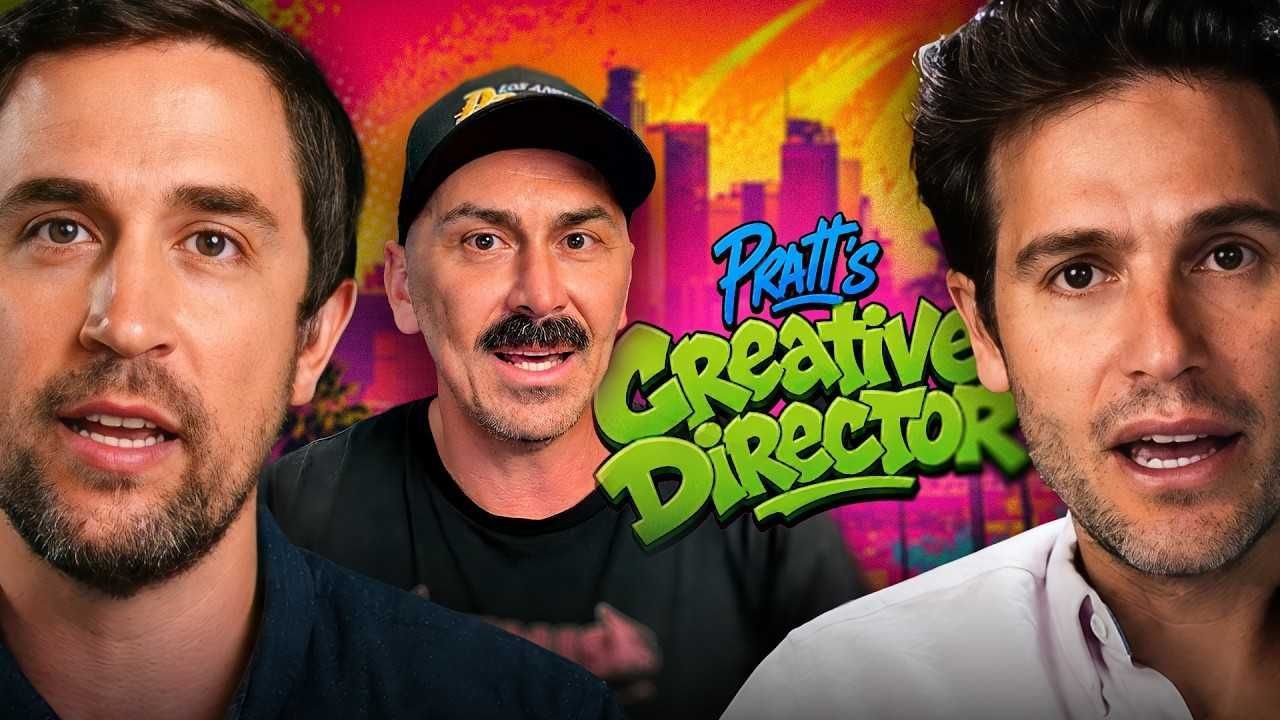
A major philosophical shift is under way inside the U.S. Department of Justice’s Civil Rights Division — and much of it is thanks to Assistant Attorney General Harmeet Dhillon.

Dhillon tells BlazeTV hosts Christopher Rufo and Jonathan “Lomez” Keeperman on “Rufo & Lomez” how she’s moving the agency away from diversity, equity, and inclusion-driven enforcement and toward a return to colorblind equality under the law.

“You’re bringing a totally different theory of civil rights law to the Department of Justice,” Rufo tells Dhillon. “This can’t be easy.”

“It is a very daunting task and, frankly, when I raised my hand in response to the president’s request to do this job, I knew it was going to be one of the more difficult jobs here in the DOJ because historically the Civil Rights Division has been a place that doesn’t really change very much from administration to administration,” Dhillon says.


The reason, Dhillon explains, is that “the lawyers who choose to make their careers doing civil rights work typically, historically, have been from a leftist perspective.”

“And that isn’t necessarily bad. I mean, there was a point in time in our country when we passed a lot of these civil rights laws in the 1960s, where we had rampant discrimination against African-Americans and other people and even against women to a degree,” she tells Rufo and Lomez.

“But way past the time that many of these historical ills have been corrected by our society, with or without the intervention of the Civil Rights Division, people have viewed it as their mission to continue to push the boundaries further and further out to the left,” she says.

This has posed one of the biggest issues for Dhillon in her war against DEI.

“The truism from the Reagan era is that personnel is policy. And so one of the biggest challenges we had here was, how are we going to implement the president’s agenda with personnel who don’t want to do that,” she explains.

“I actually had ... a relatively smooth transition into our mission because early on ... I issued memos to all the different sections here in the Civil Rights Division ... letting them know that we are going to be changing our focus here to implementing the president’s agenda, consistent with the civil rights statutes in the Constitution,” she continues.

“And that simple step, sometimes just one or two paragraphs of a memo to a few dozen lawyers, caused more than half of them to quit right away,” she adds.

Then, when an early retirement program at the DOJ was implemented, another several dozen took advantage of the program and quit.

“We were down about two-thirds of the manpower here in the Civil Rights Division. And so, then the challenge became how to do the big job of rightsizing our civil rights agenda and making it consistent with the president’s agenda,” she explains.

While she admits that it was difficult at the outset, she’s “happy to say that we’ve gotten past all of that.”

“We’ve hired a bunch of great people, young and old, here in the Civil Rights Division, who are very willing to work with us in doing the work that you’ve seen in the headlines,” she adds.

Want more from Rufo & Lomez?

To enjoy more of the news through the anthropological lens of Christopher Rufo and Lomez, subscribe to BlazeTV — the largest multi-platform network of voices who love America, defend the Constitution, and live the American dream.
White culture exists — and America is losing it


Jeremy Carl, Trump-appointee and author of “The Unprotected Class,” faced a grilling at the United States Senate when Sen. Chris Murphy (D-Conn.) tore into his beliefs on “white identity.”

“You’re now retreating to ethnic identity. You don’t speak about ethnic identity. You speak about white identity. So tell me the values that stitch together white identity and that make it different than black identity,” Murphy asked.

“I would say that the white church is very different than the black church in terms of its tone and style on average. Foodways could often be different. Music could be different, if you look at the Super Bowl halftime show, which was not in English this year,” Carl explained.

Murphy responded, “So our ability to access white churches or white food or white music is being erased?”


“I am concerned with the majority common American culture that we had for some time, that through particularly mass immigration, I think has become much more balkanized, and I think that weakens us,” Carl said.

BlazeTV host Jonathan “Lomez” Keeperman is of the mind that Carl is right.

“On second viewing, I mean, I watched this live, and by the way, in the context of this hour-long Senate hearing, he was just getting grilled from all directions ... he was being accused of anti-feminism, he was being accused by [Sen.] John Curtis of Utah [R] for not being, like, sufficiently loyal to Israel. And then there was this white thing,” Lomez tells BlazeTV co-host Christopher Rufo on “Rufo & Lomez.”

“And I think what we saw there was him a little bit stumbling through the answer, but it’s actually the right answer. I mean, he gives the right answer, the specific details,” Lomez continues.

Lomez points out that there are different parts of American culture, and different races have their own piece.

“I’m not saying this, by the way, just to please a liberal listener. It’s all true, OK? This is all deeply embedded in our culture and the common culture as well, but it is predominantly what we might call 'white,'” he explains.

“When you turn on Netflix or something, or like Hulu, or just turn on the TV, there’s BET. There’s Black Entertainment Channel, and there’s black stories to enjoy with your family on Hulu, and then there’s Asian stories, and you know, you get the whole diaspora of all these different groups,” he continues.

“There’s no white channel, there’s no white story section ... because ... that is the baseline culture that these other things are kind of orbiting around and existing within. And what Jeremy is suggesting here is that we are losing that common culture. We are losing that common white culture,” he adds.

Want more from Rufo & Lomez?

To enjoy more of the news through the anthropological lens of Christopher Rufo and Lomez, subscribe to BlazeTV — the largest multi-platform network of voices who love America, defend the Constitution, and live the American dream.

Christopher Rufo drops bombshell report on $26B ‘No White Men’ program — Trump SBA issues quick response


Last week, BlazeTV host and investigative journalist Christopher Rufo, alongside Manhattan Institute Director of Research Judge Glock, published a report titled “No White Men Need Apply,” which pulled back the curtain on the Small Business Administration’s 8(a) program.

Despite functioning under the current Trump administration, Rufo and Glock discovered that the program has been awarding government contracts based on race, gender, and social disadvantage — a stark contradiction to the administration’s vows to abolish DEI.

“The Small Business Administration’s 8(a) program,” Rufo says, is “a $26 billion slush fund for government contracts that are available to every identity group except for one: white men.”

“We blew the whistle on this and made the case that this was a corrupt program” and “totally in violation of the president’s stated principles against DEI,” Rufo says.

The reaction from SBA and White House officials was surprisingly humble.

“I got a call from the SBA administrator, Kelly Loeffler. I got a call from a number of people at the White House, some of whom were a bit annoyed that we had brought this scandal to public attention, but all of whom recognized, ‘Yep, we’ve dropped the ball on this. It’s totally unjust. We’re going to take action,”’ Rufo recaps.

And they clearly meant it because just two days after their conversation, Loeffler posted the following announcement to X:

— (@)

Rufo says, “It’s not a perfect solution. I think the program should be abolished, but it’s at least a step in the right direction.”

But his co-host, Jonathan Keeperman, has questions.

“Is it the case that they’re not just abolishing this whole thing because, as Washington is, there’s just too many people who are sort of dependent on this, some of whom might even be Republicans or friendly to the administration?”

Are we playing the game of, “Look, we know this is bad, but these are our friends, and sometimes in politics, you just got to sort of weigh the cost of alienating people over here versus the cost of kind of just letting these not great things kind of continue because ... that’s just the friction of Washington, D.C.?” he asks.

“From my reporting on this, the White House had contemplated just unilaterally winding down the program, declaring it unconstitutional, and taking it to the courts,” Rufo says. “From what I heard from a number of people is that the White House lawyers, Department of Justice said, ‘Hey, you can’t do that. It’s a statutory program. You have to release regulations, go through public comment, do the whole song and dance.”’

“So actually, the action was stalled, from what I’ve been told, for a number of months in kind of legal limbo, and only because we published this story were they able to start getting that policy process moving again,” he contines.

However, there is also, he says, “an element of kind of long-standing corruption and complicity from Republicans” at play.

He gives the example of Alaska, which receives a disproportionate amount of the SBA’s 8(a) contract money, the majority of which is funneled into companies owned by Alaskan natives.

Many of these companies, however, subcontract the actual work to non-native (usually white-run) companies. To abolish the program would anger Alaska native groups, which are both politically and economically powerful in the state.

According to Rufo’s sources, Senator Dan Sullivan (R-Alaska), for example, has “made it known throughout the administration, ‘We need to keep this cash flowing,’ because he’s dependent.”

“Tribes are pretty powerful in a state like Alaska ... and other red states where there are big tribal populations. They have big lobbying operations. They have big political organizations, a network of businesses, casinos, constructions, contracting, etc.,” Rufo says, “and so there is an element of what I think is legal corruption — even in red states, even with Republican politicians — where they keep this disastrous program alive.”

Regardless, the Trump administration promised to uproot DEI, and Rufo intends to hold them to it.

“It’s been a year. You guys have to get rid of this,” he says.

Even though the SBA is now “letting white men into the program,” Rufo fears that “it will still heavily favor the other groups,” thus allowing the cancer that is DEI to live on.

“The only truly morally defensible position is to get rid of it. And so, I think they should blow it up. I think they should go nuclear,” he urges.

To hear more about Rufo’s investigation into SBA’s 8(a) program, watch the video above.

Want more from Rufo & Lomez?

To enjoy more of the news through the anthropological lens of Christopher Rufo and Lomez, subscribe to BlazeTV — the largest multi-platform network of voices who love America, defend the Constitution, and live the American dream.