The Lawless Zone In Madison Is A Preview Of America Under Socialism
 To them, this is what socialism looks like — suspending the rule of law to ensure that their desired outcome is achieved.
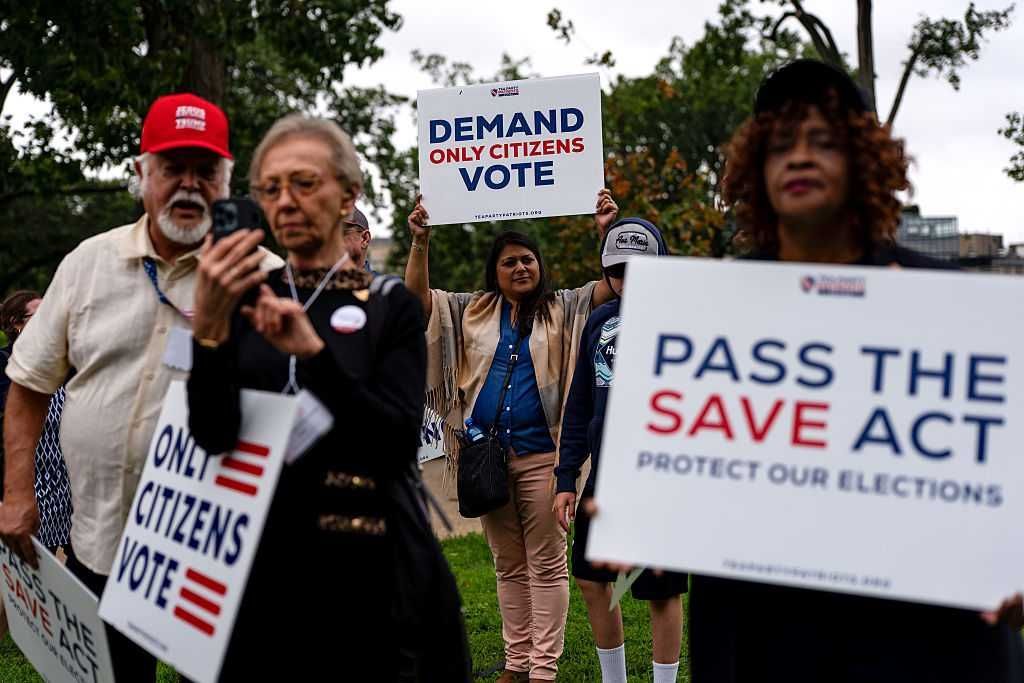
Latino voters overwhelmingly support requiring government-issued photo ID to vote.
A Poll conducted by Pew Research Center confirmed that 82% of Latino voters in the United States approve such a requirement. The SAVE Act would codify the popular supermajority opinion on voter identification into law, but while the House has passed it multiple times, it has stalled in the Senate.
As citizens, Latinos want to protect the democratic republic that has blessed their lives so richly.
It should be no surprise that Latino voters support the key feature of the SAVE Act.
First, immigrant voters highly value their citizenship and the right to vote that it conveys to them. It takes at least seven years of legal presence in the U.S. to become a citizen, and those who have gone through that process value what they learned and who they became in the process.
They are proud and patriotic and zealous to preserve the system they have adopted and mastered. They do not take their rights as citizens lightly, and they do not want noncitizens to vote. Second, immigrant voters highly value the rule of law, which they recognize as the main thing that makes the United States what it is — the best place in the world to work and build a prosperous and free life.
While writing my book, “The New Pilgrims: How Immigrants are Renewing America’s Faith and Values,” I interviewed many immigrants who specifically explained that they moved to America for the purpose of coming under the rule of law. They understand that no justice, no equal protection under law, is possible without it.
They can also articulate how lawlessness and cheating undermine prosperity in their home countries. They understand that the land of the free and home of the brave persists because of America’s deep cultural commitment to obeying the law. They understand how illegal voting would undermine the very thing they value most about life in America.
Third, Latino immigrants, whether they are here legally or illegally, do not want noncitizens to vote in our elections. While the vast majority of illegal immigrants in America lead disciplined lives characterized by arduous labor, careful observance of the law, and moral practices such as church attendance, Latino immigrants recognize that there is a criminal element among many new immigrants that they do not want to empower in the United States.
Many of the most vulnerable illegal immigrants fled to the United States to get away from such people in their countries of origin. They do not want to risk arrest, imprisonment, or deportation by voting illegally, and they certainly do not want the criminal element to do so.
Hispanic immigrants in the United States who have become citizens have a terrific record of success in building the American dream of prosperity and freedom.
RELATED: Where is the outrage over our stolen birthright?
Many current U.S. government officials and members of Congress illustrate spectacular success stories of immigrants and children of immigrants from Latin America: Marco Rubio, Ted Cruz (R-Texas), Bernie Moreno (R-Ohio), and Maria Elvira Salazar (R-Fla.), not to mention Sonia Sotomayor, Alex Padilla (D-Calif.), Luz Rivas (D-Calif.), and many others on both sides of the aisle.
Stories from industry, business, education, the military, the clergy, and every institution and profession in our society offer a literally never-ending story of Latino success in America. The system works beautifully for those who pay the price to become citizens and raise their children to love our country.
As citizens, Latinos want to protect the democratic republic that has blessed their lives so richly.
Latino voters are not a monolith. They voted for the Republican and Democrat presidential candidates in nearly equal numbers in 2024. In future elections, they will vote for the candidates that best represent their values and support them in Congress.
It’s time for both Democrat and Republican senators to represent the overwhelming Latino opinion and vote to pass the SAVE Act now, while there is still time to rescue America’s political integrity.
Editor’s note: This article was originally published by RealClearPolitics and made available via RealClearWire.
Former President Barack Obama’s latest appearance on Stephen Colbert’s late-night show had it all, from thinly veiled critiques aimed at the current presidency and the Republican Party to alien skepticism.
And BlazeTV host Pat Gray wasn’t impressed, pointing out that the applause throughout the interview sounded “fake.”
“I’ve never seen that in an interview with the president before,” he notes.
In the interview, Obama told Colbert that “the presidential center is nonpartisan” before immediately pivoting to concerns about Republicans and Donald Trump.
“The reason I want to mention that is because I’m worried about the Republican Party, not just the Democratic Party,” Obama told Colbert, while Gray listens and scoffs.
“When I was president, people would ask me, ‘Well, what change would you like to see in Washington?’” Obama told Colbert. “I’d say, ‘I’d love a loyal opposition. I’d love a Republican Party that was conservative in some ways, that didn’t agree with me on a whole bunch of stuff, but believed in rule of law.'”
“We’re going to have to do some work to return to this basic norm, and we probably now have to codify it,” he explained. “The White House shouldn’t be able to direct the attorney general to go around prosecuting whoever.”
“The idea is that the attorney general is the people’s lawyer, it’s not the president’s consigliere, right?” Obama asks.
Obama went on to explain that “we can’t overcome the politicization of the criminal justice system” to another round of “fake” applause.
Colbert then asked Obama about aliens, to which Obama replied that for the people “that still think that we’ve got little green men underground somewhere,” there’s no need to speculate because “the government is terrible at keeping secrets.”
“This idea of conspiracy theories, if there were aliens or alien spaceships or anything under the control of the United States government that we knew about, seen, photographs, what have you, I promise you, some guy guarding the installation would have taken a selfie with one of the aliens and sent it to his girlfriend,” he said.
“Do you wish they were real?” Colbert asked Obama.
“I actually do,” he responded.
Executive producer Keith Malinak isn’t buying it, commenting, “Never denied it.”
To enjoy more of Pat's biting analysis and signature wit as he restores common sense to a senseless world, subscribe to BlazeTV — the largest multi-platform network of voices who love America, defend the Constitution, and live the American dream.
In a truly free nation, 10 things must be present, says Glenn Beck: “rule of law,” “free, fair, and regular elections,” “protection of individual rights,” “separation of powers,” “independent judiciary,” “a free press and open information,” “civilian control of the military,” “protection of minority rights,” “economic freedom and property rights,” and “a culture that values freedom.”
When weighed against these standards, Canada, he argues, is the opposite of free.
To prove his case, he lists 20 recent examples of how Canada has abandoned these core pillars of freedom.
In 2021, Canadian Parliament learned that a top-security lab scientist had sent live Ebola samples to the Wuhan Institute of Virology and worked with the Chinese military on biological weapons research. Parliament demanded the documents four times, but the Liberal Party repeatedly blocked access, sued to prevent disclosure, delayed, and even triggered a snap election to shut down the probe.
“That's rule of law being violated and separation of powers being violated,” says Glenn.
Three years after the lab scandal, the auditor general uncovered roughly $400 million in clear corruption. The Liberals in Parliament immediately shut down further investigation and discussion.
“Accountability, independent oversight — violated,” Glenn notes.
Following Prime Minister Justin Trudeau’s resignation in 2025, a tiny elite group (just 0.33% of Canadians) installed Mark Carney as prime minister. During this period, the House of Commons suspended operations for eight months, leaving the country ruled entirely by executive orders with zero parliamentary debate, votes, or oversight.
“No oversight, no debate, no votes. Where's your representation? Separation of powers? That's not a democracy. That's ruled by fiat,” Glenn warns.
The Canadian Security Intelligence Service confirmed that China interfered in both the 2019 and 2021 federal elections by financially backing 11 candidates. Trudeau was informed but took no action.
“That's free and fair elections out the window,” he states.
A Liberal member of Parliament publicly encouraged people to claim a Chinese Communist Party bounty placed on a Conservative candidate. No charges or consequences followed.
“Equal application of the law — violated,” says Glenn.
In subsequent voting, 121 mail-in ballots were left uncounted, Elections Canada printed incorrect postal codes on envelopes (creating a 327-vote swing favoring the Liberals in one riding), and data errors distorted results. Additionally, five MPs switched to the Liberal Party within five months, conveniently giving the Liberals a two-seat majority.
“Democracy by design, or is it democracy by manipulation?” he asks.
The government invoked the Emergencies Act against the 2022 Freedom Convoy truckers’ protest. They froze bank accounts of participants and their financial supporters nationwide. Two federal courts, including the Court of Appeal, unanimously ruled the action unjustified, illegal, and a direct breach of charter rights. The government continues to appeal despite the court rulings.
“That's a silencing of free speech and assembly and property rights” as well as an abandonment of “judicial authority and rule of law,” Glenn emphasizes.
Bill C-18 (Online News Act) required Google and Meta to pay Canadian news outlets for simply linking to their content. Meta responded by blocking all news on Facebook and Instagram for Canadian users. This gave the government indirect control over what information reaches the public.
“Free press, information flow — controlled,” he asserts.
Bill C-11 (Online Streaming Act) placed platforms like Netflix, YouTube, and Spotify under federal regulation, imposing Canadian content quotas and DEI requirements. This allows the state to influence what people watch, listen to, and create.
“That's [violating] speech” and “cultural expression influenced by the state,” Glenn declares.
The government maintained the carbon tax even though two-thirds of Canadians opposed further increases. They removed the visible consumer tax but quietly kept hidden regulations and industrial carbon taxes that raised fuel prices. They also attempted an outright 100% electric vehicle sales mandate by 2035 before switching to indirect emissions rules that achieve the same goal.
“Transparency? There's none there,” he observes.
“Property rights? Optional.”
Ontario’s Bill 212 gives the provincial government power to fast-track highway projects, override local bylaws, and quickly remove property owners from their land.
“No property rights,” Glenn reiterates.
In Waterloo, authorities used confidential NDAs and threats of forced expropriation to seize 770 acres of prime farmland for an undisclosed “mega site.” Local farmers only learned about it after the deal was done.
Glenn calls it yet another violation of property rights.
In New Brunswick, a judge deliberately shortened a convicted criminal’s sentence to prevent his deportation, prioritizing the man’s skills over proper enforcement of immigration law.
It’s a clear violation of “equal justice,” he argues.
Toronto city council approved government-operated grocery stores that would avoid paying the same taxes as private businesses, allowing them to undercut regular competitors.
“Fair market violation,” Glenn notes.
In rural New Brunswick, forced municipal mergers led to sudden property tax increases of 50% to 60% on homeowners.
British Columbia is shifting toward a permission-based economy where residents must obtain government approval for routine activities (such as selling eggs or offering riding lessons) or face fines up to $50,000 per day.
“Economic freedom? Gone,” Glenn concludes.
The government banned approximately 2,500 types of firearms previously owned legally. The buyback program was labeled “voluntary,” but citizens were warned they could face jail time for keeping their lawfully purchased guns past the deadline.
“[Are] there any property rights?” he asks.
Medical Assistance in Dying was introduced in 2016, and safeguards were removed in 2021. By 2024, over 22,500 people requested it and nearly 16,500 received it — accounting for 5.1% of all deaths that year. Since legalization, more than 76,000 Canadians have died through the program. It is now the fourth leading cause of death among adults and is increasingly offered for treatable conditions like back pain or mental health issues, while patients wait an average of 28 weeks for regular medical care.
“When the state controls your health care and offers death as a solution to its own failures, you're no longer a citizen. You're a cost center,” Glenn warns.
The “Combating Hate” bill (C-9) is advancing in Parliament. It introduces vague new criminal penalties for “hate” that could potentially outlaw religious beliefs, peaceful protests, and political dissent.
“There's no freedom of speech there,” he stresses.
A former Google executive proposed a $500,000 “exit tax” on educated Canadians who choose to leave the country, effectively charging people for the right to emigrate.
“Isn’t that a Berlin wall of sorts?” asks Glenn.
All considered, Canada is no longer a free nation; and it’s no democracy either. “It's a managed oligarchy with democratic trappings,” he warns.
And if America isn’t careful, she will fall into the same dystopia.
“Now recognize America, this is your future,” says Glenn. “We are already letting unelected bureaucrats and activists and judges rewrite the rules.”
“If we allow and tolerate foreign interference and media capture; if we accept that the government can freeze your bank account for protesting, seize your farm for progress; if we trade liberty for equity, safety, and Canadian content, we're going to wake up in the morning in exactly the same place.”
To enjoy more of Glenn’s masterful storytelling, thought-provoking analysis, and uncanny ability to make sense of the chaos, subscribe to BlazeTV — the largest multi-platform network of voices who love America, defend the Constitution, and live the American dream.
America has always protected lawful protest. It has never protected persecution. Some communities now blur that line on purpose, and anyone who cares about civil rights, religious freedom, or the rule of law should be alarmed.
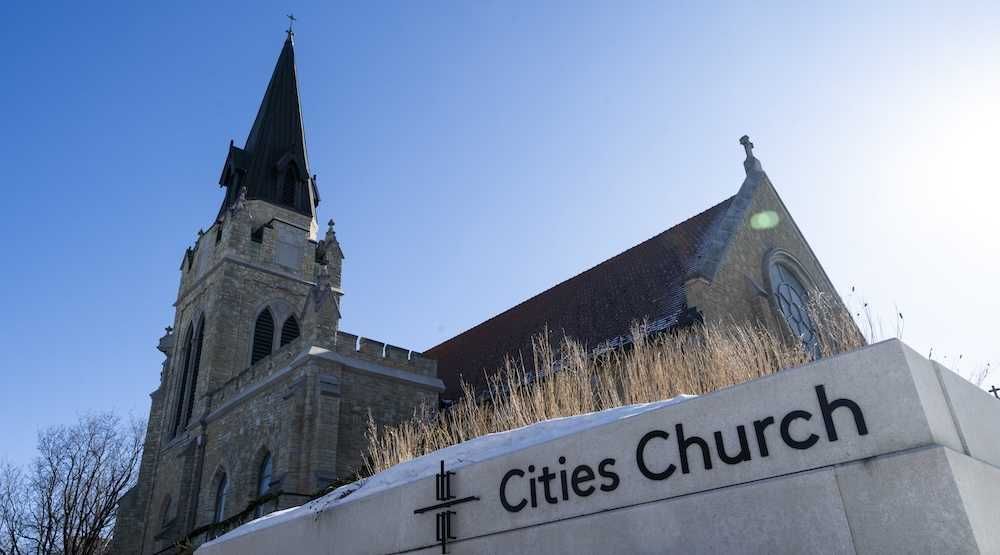
Most recently, agitators stormed Cities Church in Saint Paul, near Minneapolis, during a worship service to protest U.S. Immigration and Customs Enforcement raids around the Twin Cities. Federal authorities, including the Department of Justice, are investigating the incident under civil rights laws that protect religious exercise at places of worship. Several people, including journalists present, have been arrested or charged in connection with the disruption.
You don’t need to agree with the worshippers in Minnesota or California to defend their rights. Civil liberties mean nothing if they apply only to causes we like.
This wasn’t an isolated incident. Peaceful worshippers have faced unlawful harassment before.
Last year, in March and September, Christian and Jewish worshippers in Southern California gathered peacefully to pray, sing, and express deeply held religious beliefs about Israel and the Jewish people. They came to worship. A coordinated campaign of intimidation met them instead: blocked entrances, screaming mobs, bullhorns blaring sirens, graphic signs aimed at children, physical assaults, and targeted harassment designed to make worship impossible.
First Liberty Institute filed a detailed federal complaint describing how the disruptors planned and coordinated these attacks and then celebrated them afterward. They registered for church events under fake names, infiltrated the Mission Church, screamed accusations of “genocide” and “Nazism” at Jewish and Christian worshippers, and resisted removal. Outside, others blocked exits and forced families — including children and seniors — to run a narrow gauntlet just to reach their cars.
At another interfaith service, agitators surrounded vehicles, jumped on worshippers’ hoods, laid dolls in driveways while calling Jewish guests “baby-killers,” and blared sirens for hours to drown out prayer and preaching.
That conduct is flatly illegal. It is also a transparent attempt to cloak intimidation in the First Amendment.
The First Amendment does not authorize people to physically interfere with worship, intimidate attendees, or use force and coercion to silence beliefs they despise. Congress recognized that principle when it passed the Freedom of Access to Clinic Entrances Act. Sen. Orrin Hatch (R-Utah) made sure the law would protect religious exercise at places of worship from exactly this kind of obstruction. When mobs block entrances, assault worshippers, or deliberately prevent services from being heard, they break the law.
RELATED: When worship is interrupted, neutrality is no longer an option
These incidents also reveal something darker: the targets and the motive.
The worshippers were Christians and Jews united by shared religious convictions about Israel. For Jewish attendees, support for Israel is not a political slogan; it is woven into faith, daily prayer, and identity. For Christian congregations, support for the Jewish people flows from sincerely held theological beliefs. Targeting those beliefs through harassment and violence is religious discrimination.
History shows where this road can lead. When officials tolerate intimidation against one disfavored group, it spreads. Our complaint documents a surge in anti-Semitic attacks nationwide since Oct. 7, 2023, along with a widening hostility toward anyone who publicly stands in solidarity with Jews. Persecution works the same way every time: isolate the target, then punish anyone who refuses to abandon the target.
The aftermath should chill every American. The complaint alleges that organizers vowed to continue, posted videos on public Code Pink channels boasting about their actions, and shared images of worshippers online to expose them to further harassment. Churches canceled events. Interfaith groups struggled to find safe venues. Ordinary people began to fear worship in their own communities.
The Free Exercise Clause means little if mobs can intimidate Americans into silence inside their own sanctuaries.
RELATED: A protest doesn’t become lawful because Don Lemon livestreams it
On Monday, victims of this harassment will testify before President Trump’s Religious Liberty Commission. The commission plans to issue a detailed plan to protect religious liberty in coordination with the 250th anniversary of the Declaration of Independence.
You don’t need to agree with the worshippers in Minnesota or California to defend their rights. Civil liberties mean nothing if they apply only to causes we like. The moment we excuse intimidation because we sympathize with a protest’s message, we abandon equal freedom under the law.
Courts now have an opportunity — and an obligation — to draw a firm line. Peaceful protest belongs at a respectful distance, not inside sanctuaries. Reasonable debate belongs in the public square, not enforced through threats, coercion, and attempts at injury. If mobs get to decide who may worship freely, no one is safe.
“Who will rid us of this meddlesome philosopher?”
Arizona State University hopes the Arizona Supreme Court will. I’m confident that my case against required diversity, equity, and inclusion training raises issues far larger than one professor or one ideological program. Fundamental questions about employee rights, public accountability, and the rule of law hang in the balance.
If I succeed in showing that ASU bears legal responsibility — and that employees can hold it accountable — the implications reach far beyond one HR program.
Why would the largest state university in the country defend mandatory DEI training in court? Why would it spend thousands — likely tens of thousands — defending its “inclusive communities” training, a program that teaches employees about the alleged moral and social failures of “whiteness” and “heteronormativity”?
The answer defies common sense. Yet ASU presses forward. In doing so, it has turned what many dismiss as a culture-war skirmish into an employment-rights case with statewide consequences.
Most people hear “DEI” and instantly map the political lines. This case deserves a different reaction. Required ideological training should make any employee — left, right, or indifferent — pay attention.
First, the training relies on racial essentialism. It instructs ASU employees to view themselves and others primarily through skin color, then assigns moral weight and collective guilt on that basis.
Second, it attacks traditional Christian moral teaching, especially marriage as the union of a man and a woman.
Either flaw should have pushed administrators to retire the program long before I raised formal objections.
A third issue should unite every employee, regardless of where they stand on DEI: ASU treated this as an employment matter. The university did not admit error, revise the program, and move on. It hired Perkins Coie to defend racial essentialism. Yes, Perkins Coie — the firm widely associated with the Hillary Clinton-era Steele dossier controversy. ASU employs a full team of in-house attorneys. Why pay a nationally prominent and politically charged firm to defend a training program many already viewed as controversial — and, I argue, unlawful?
ASU’s posture gets stranger. The university has since taken down the required training, yet it continues paying lawyers to defend it in court. When this ends, Arizona lawmakers and taxpayers will want a number: How much did ASU spend on legal fees, and which administrators approved the contracts?
RELATED: Feds probe ASU for racial bias — will other universities be held accountable?

ASU’s legal strategy aims at dismissal. The university claims I lack standing. Put plainly, ASU argues that an employee cannot hold his public employer accountable for violating state law. At that point, the dispute stops being about DEI and becomes about every employee in Arizona. If ASU wins at the Arizona Supreme Court, employees across the state lose a crucial tool for legal accountability.
Professors to my political left may sneer at my critique of DEI. They should still worry about the precedent.
Imagine a scenario pulled from their nightmares: A future administration takes over ASU and imposes mandatory ideological training from the opposite end of the political spectrum — required ICE-themed training, or MAGA-themed training. If that training violated Arizona law, those same professors would demand the right to sue. ASU’s argument would bar them. This case concerns enforceable employee rights, not just contemporary politics.
ASU’s first bid to dismiss the case failed. A lower court rejected the university’s argument. ASU appealed, and the appellate court sided with the university. That posture put the case on a path to the Arizona Supreme Court.
RELATED: A gay whistleblower just punked Colorado’s DEI machine

Two facts matter here. The Arizona Senate and the state representative who authored the law I claim ASU violated have filed an amicus brief supporting my position. Their message is simple: A public employee has standing to hold a public employer accountable for breaking the law. The statute prohibits the kind of racial blame and collective guilt that ASU’s training promoted. The principle should not require explanation: Don’t assign moral fault to entire groups based on skin color.
So why does ASU defend this?
Because ASU does not view this fight as one training module that can be swapped out and forgotten. Race-based blame sits near the center of the contemporary left’s approach to education. If I succeed in showing that ASU bears legal responsibility — and that employees can hold it accountable — the implications reach far beyond one HR program. ASU’s initiatives aimed at combatting “whiteness” would come under scrutiny. Its embedded social justice goals face legal challenge and public examination. Students could follow with suits over race blame in a “decolonized curriculum.”
“Who will rid us of this meddlesome philosopher?” ASU really hopes the Arizona Supreme Court will.
Every employee in Arizona should watch what happens next. The outcome will determine whether public institutions answer to the law — or whether employees must comply silently, no matter what ideology administrators impose from above.
America again stands on the edge of betrayal, watching mobs assault federal officers while judges call it “restraint.”
This is not new. Between 1876 and 1878, the same script played out as those sworn to uphold the law were branded as tyrants and those undermining it claimed the mantle of freedom. When the federal government lost the will to enforce its own laws, violence filled the vacuum.
After the Civil War, Republican coalitions in the South — freedmen, poor whites, and Northern reformers — were crushed by white Democrats who called themselves “Redeemers.” They promised “home rule” but delivered a racial caste system enforced by terror and political exclusion.
The Redeemers invoked ‘home rule’ to dismantle Reconstruction. Today’s Democratic left invokes ‘human rights’ to paralyze national defense.
The last obstacle to that counterrevolution was federal protection of black voters. During the disputed 1876 election, President Ulysses S. Grant stationed troops at polling sites across the South to deter fraud and Ku Klux Klan violence. Democrats in South Carolina vowed to “wade in blood knee-deep” if necessary to reclaim power.
Those troops were the only shield between freedmen and their former masters. But in the Compromise of 1877, federal forces were withdrawn to buy political peace. Reconstruction governments collapsed, schools for freedmen closed, and voting rights vanished. As W.E.B. Du Bois wrote, “The slave went free; stood a brief moment in the sun; then moved back again toward slavery.”
Southern Democrats soon made that withdrawal permanent. Wrapping themselves in the rhetoric of liberty and “local control,” they pushed the Posse Comitatus Act of 1878, criminalizing use of the Army for domestic law enforcement except when Congress expressly authorized it.
The narrative was set: Federal troops at the polls meant “tyranny”; “home rule” meant “harmony.” In truth, the act cemented the collapse of Reconstruction and led to the birth of Jim Crow, which paralyzed federal defense of civil rights for nearly a century.
RELATED: Stop pretending Posse Comitatus neuters the president
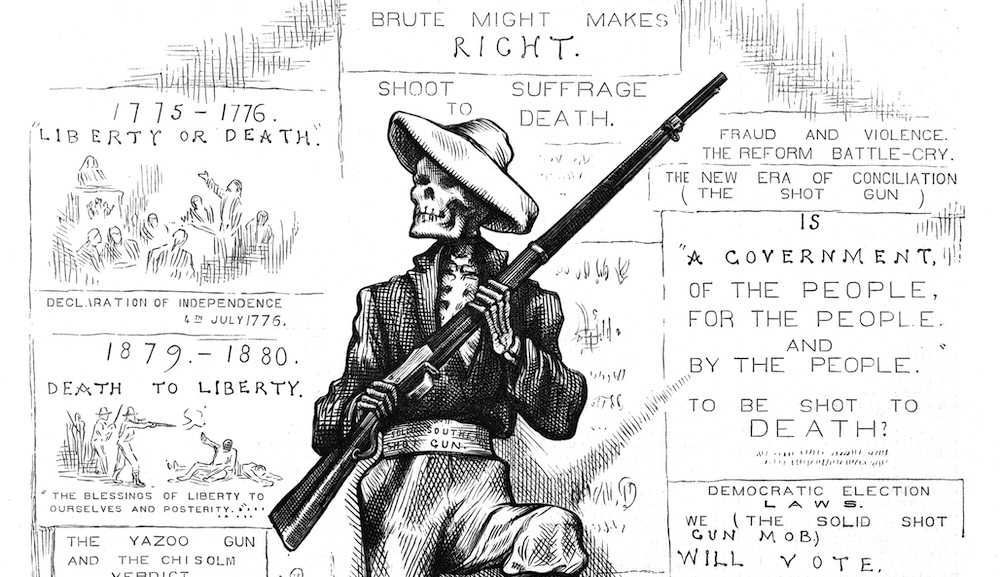
Debates over the Posse Comitatus Act dripped with moral inversion. Southern Democrats like Rep. John Atkins of Tennessee and William Kimmel of Maryland denounced President Rutherford B. Hayes as a “monarch” who preferred bullets to ballots. Federal soldiers protecting black voters were smeared as bloodthirsty brutes and “tools of despotism.”
In that twisted language, enforcing the law became tyranny, while mob rule became freedom.
It was early information warfare: delegitimize the protectors, vindicate the aggressors, and freeze lawful authority into submission.
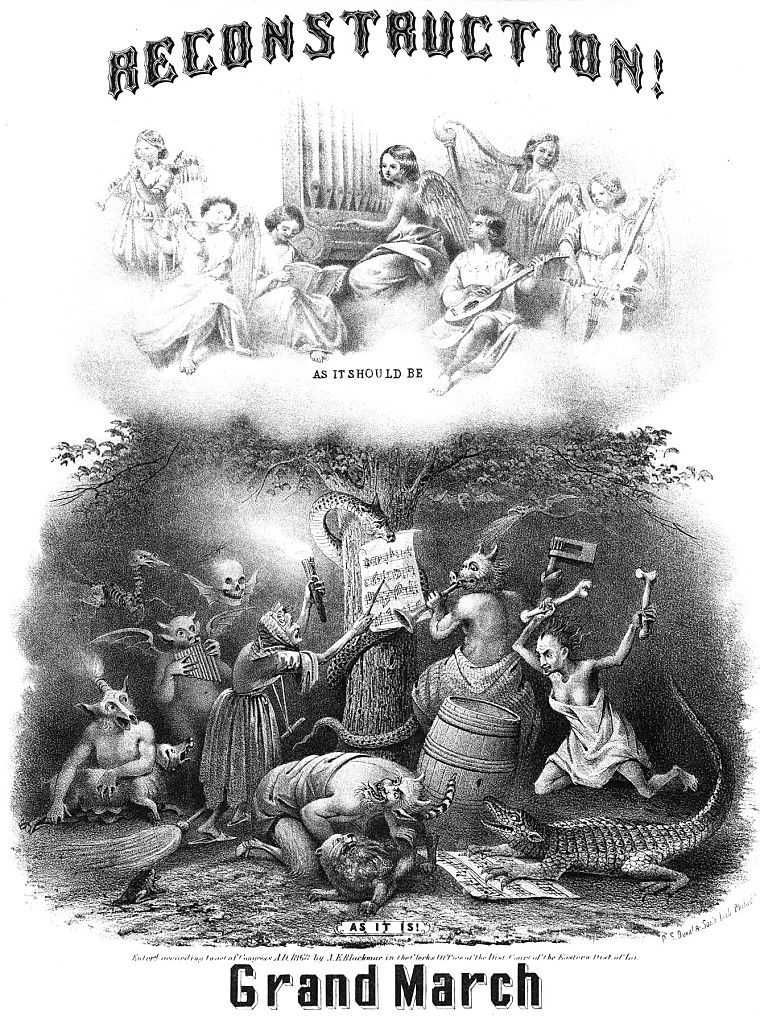
A century and a half later, the pattern repeats. Democrats, left-wing activists, and their media allies now use essentially the same language to delegitimize immigration enforcement. ICE and Border Patrol agents, upholding laws passed by Congress, are branded as “fascists.” Federal defense of government facilities is denounced as “militarization.”
Judges cite the Posse Comitatus Act to block National Guard deployments meant to protect ICE offices from violent assaults. In Illinois, U.S. District Judge April Perry ruled that deploying the Guard could “add fuel to the fire that they started,” claiming no evidence of impending “rebellion.” The ruling came days before No Kings Day demonstrations.
The Department of Homeland Security had extended fencing around its Broadview facility after earlier attacks — rioters hurling fireworks, bottles, and tear gas while local officials looked away. When the DHS finally reinforced its defenses, the courts ordered them torn down.
Since June, ICE and Border Patrol have endured shootings, arson attempts, and coordinated ambushes. In Dallas, a sniper targeted an ICE field office. In suburban Chicago, federal agents were rammed and pinned by cartel-linked drivers before returning fire. Local police en route to assist were told to stand down.
Within hours, left-wing outlets and activist networks declared the clash proof of “authoritarianism.” The strategy is deliberate: manufacture chaos, provoke a lawful response, then cite that response as evidence of tyranny.
This is a textbook reflexive control operation — using perception to paralyze power. The Redeemers of 1878 called federal troops “despots” and “usurpers.” Their descendants call federal agents “fascists.” The aim is identical: Erode public trust in lawful authority and make enforcement politically impossible.
Then, as now, the real fight centers on citizenship itself.
In the 19th century, freed black Americans embodied the principle that allegiance and equality before the law, not race or birth, define membership in the republic. That ideal shattered the old Southern order, so Redeemers destroyed it.
Today, citizenship threatens a different order — the globalist one. Citizenship implies borders, duties, and distinctions. So progressives seek to redefine it as exclusionary or immoral. Illegal aliens become “newcomers.” Enforcing the law becomes oppression. The federal obligation to protect citizens morphs into a liability.
What began as Redeemer propaganda has evolved into a post-national orthodoxy: Sovereignty is shameful, and the citizen must yield to the “world citizen.” The result is the same — federal paralysis, selective law enforcement, and mobs empowered by moral cover.
RELATED: A president’s job is to stop the burning if governors won’t
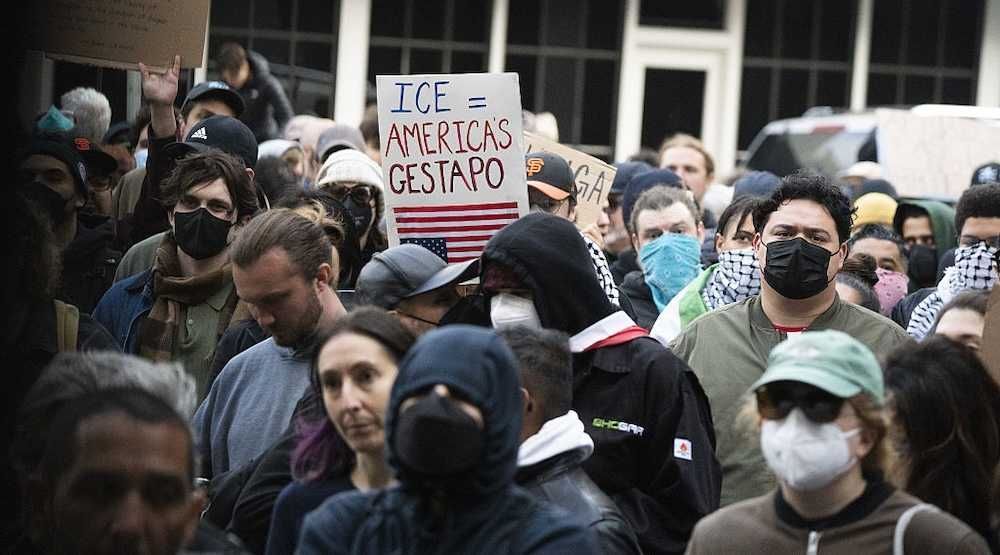
The parallels are precise. The Redeemers invoked “home rule” to dismantle Reconstruction; today’s left invokes “human rights” and “de-militarization” to paralyze national defense.
The Posse Comitatus Act was never a sacred constitutional barrier — it was a political tool of retreat. Then it left freedmen defenseless; now it hinders protection of federal agents, citizens, and borders. By turning law into spectacle and restraint into virtue, it leaves our republic unguarded.
History teaches a blunt lesson: Retreat invites terror. When the state retreats, mobs rule. When courts mistake optics for justice, defenders become defendants. The same moral inversion that once enslaved men through “home rule” now threatens to enslave the republic through lawfare.
To survive, America must recover what it lost in 1877 — the courage to act as a nation. Withdrawal is not peace. Compromise, in this instance, is not order. The freedman of this century is the American citizen himself — and the question, once again, is whether the nation that freed him will defend him.
Last week, a Turning Point USA student at Arizona State University found an Antifa recruitment brochure on campus. It looked like a fourth-grader’s art project, leading some to suspect it might have been a class assignment — perhaps an attempt by a sympathetic professor to portray Antifa as “not all that bad.” But the flyer included a real Instagram handle, suggesting a more deliberate effort than a student prank.
So what exactly is Antifa, and why does it still find support among radical professors?
At first glance, “Antifa,” short for “anti-fascism,” seems harmless or even virtuous. After all, who would oppose being against fascism? But the real question is: What does Antifa mean by “fascism”?
Fascism and communism are rival branches of the same ideological tree — the radical left.
Historically, Italian dictator Benito Mussolini coined the term “fascism,” defining it as the belief that “everything is in the State, nothing outside the State, nothing against the State.” Fascism was a form of totalitarian national socialism that made the state the highest authority in human life. Every other institution — church, family, business, education — was expected to exist only under state control. Far from being a right-wing ideology, as popular myth holds, fascism emerged from the revolutionary left.
Fascists and communists share more than they admit. Both demand total control of society under the pretense of “fixing” human problems. The difference lies in scale. Fascists exalt the nation; communists exalt the world.
The easiest way to spot a communist is to find the professor shouting loudest about “fascism.” The two are rival branches of the same ideological tree — the radical left. Both trace their roots to the French Revolution and Marxism, in sharp contrast to the liberty-born ideals of the American Revolution.
Jean-Jacques Rousseau, the philosophical father of modern revolution, claimed humans are born good but “everywhere in chains.” Evil, he said, began with private property. Those who own property define crime, allowing them to oppress everyone else. His cure was the “general will” — the supposed collective will of the people expressed through the state. Every new tyrant since has claimed to know exactly what that will demands.
Georg Wilhelm Friedrich Hegel built on Rousseau with his idea that history advances through conflict, a process he called the “dialectic.” Karl Marx stripped Hegel’s theory of its spiritual elements and turned it into the “materialist dialectic.” To Marx, all history is a struggle over material resources and capital. Religion, morality, and family were mere disguises for economic power.
This logic birthed the Marxist slogan “Workers of the world, unite!” and set the stage for revolutions in Russia and Germany. When fascists in Germany blocked the communist uprising, Antifaschistische Aktion — Antifa — was born.
Modern Antifa isn’t formally descended from the 1930s German movement, but its ideology hasn’t changed. The group still defines itself by opposition, not by principle.
Antifa claims to fight “oppression,” yet it chooses its targets selectively. Members denounce slavery from centuries past but ignore the slave markets that still operate in parts of Africa and the Middle East. Their real enemy isn’t tyranny — it’s the West, capitalism, and Christianity.
That’s why Antifa allies with any movement hostile to Western civilization, even those far more oppressive than what Antifa claims to resist. Members excuse such alliances by insisting those groups were “forced” into brutality by Western influence. In Antifa’s worldview, “oppression” means “whiteness,” “heteronormativity,” and Christianity. Belief in personal responsibility, hard work, or the rule of law — the very foundations of ordered liberty — become systems of oppression.
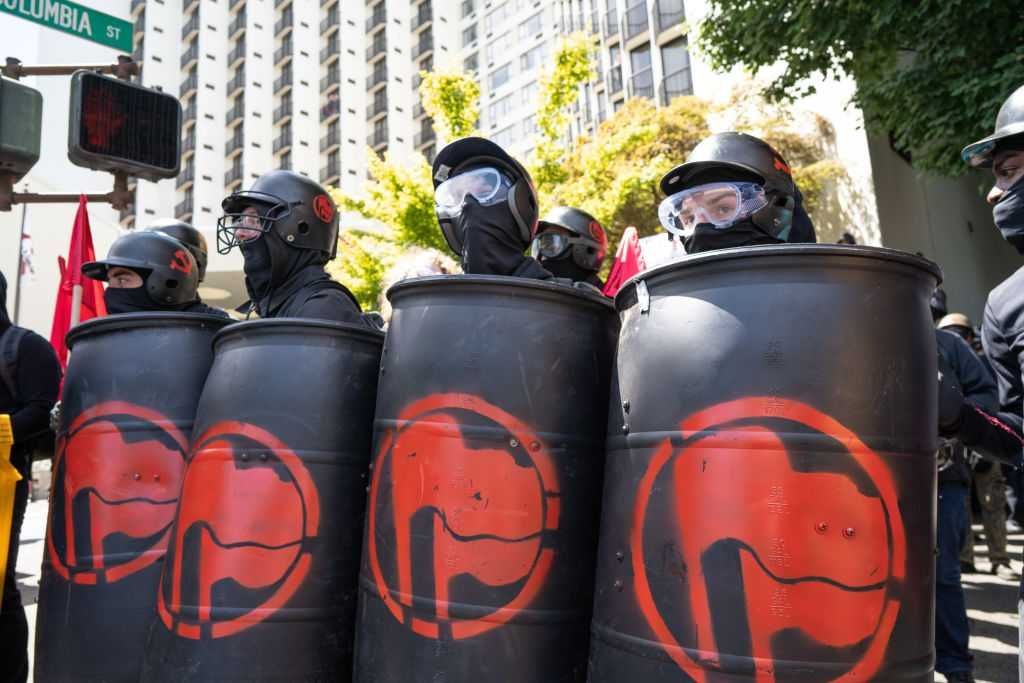
Antifa rejects reform in favor of perpetual revolution — viva la revolución! Its adherents champion “direct action,” not dialogue. Their tactics include doxxing, counter-rallies, vandalism, and physical intimidation — all designed to silence opponents by fear, not reason. Logic itself, they argue, is a “tool of oppression.” The result is an ideology that devours itself: incoherent, emotional, and rooted in will, not intellect.
Fascists and communists may fight each other, but they share one deeper hatred — the hatred of God.
A Hispanic Christian friend of mine pursuing a degree in Latin American studies once told me his professor said, “Ché su Cristo” — Ché as Christ. To this professor, revolutionary violence was redemptive. For many radicals, Ché Guevara is the true messiah; salvation comes not through grace but through destruction.
They don’t debate ideas — they annihilate opponents. That’s why they despise people like Charlie Kirk. He represented everything they can’t: clear reasoning, coherent argument, and defense of the American Revolution’s principles — limited government, ordered liberty, and faith in God.
The American Revolution recognized that the state is not supreme. It is one institution among others — family, church, and business, each with its own God-given role. The state’s proper duty is limited: to punish wrongdoing and protect the innocent. That vision of ordered liberty is written plainly into the Constitution’s preamble.
America’s founders built a republic — a government under law, lex rex — “the law is king.” They believed that God’s law, revealed in both nature and Scripture, provides the moral order that makes true freedom possible.
At its core, Antifa’s ultimate enemy isn’t any human institution — it is God Himself. Whether its adherents are atheists or occultists, they view God as the oppressor because He gives law. Their rebellion echoes Lucifer’s ancient creed: “Do what thou wilt.” Saul Alinsky, in “Rules for Radicals,” openly admired Lucifer as the arch-rebel. Antifa’s devotion to the sexual revolution and the LGBTQ+ movement flows from the same impulse: the rejection of divine order in favor of self-will.
Fascists and communists may fight each other, but they share one deeper hatred — the hatred of God. Both reject the idea that rights come from a Creator and that moral law defines justice.
America stands in opposition to both. Our republic rests on the conviction that God endows every person with rights and that government exists to protect — not replace — the moral order rooted in divine law. No state can perfect humanity. Salvation from sin and death comes only through Christ.
That makes Christianity, not Marxism or fascism, the true enemy of tyranny.
As we defend Christian truth in public life, we must do so with discernment, knowing that our opponents’ hatred runs deeper than politics. It is spiritual. And when they finally drop the mask of “tolerance” and “niceness,” they reveal exactly what they’ve always been.
When they tell you who they are and what they hate — believe them.
 Former Milwaukee County Judge Hannah Dugan is avoiding prison time despite being found guilty of obstructing ICE agents after Clinton-appointed Judge Lynn Adelman decided that Dugan is a “good person upset by immigration enforcement in this country.” Dugan was convicted last year after ICE agents showed up to the Milwaukee County courthouse to detain 31-year-old […]
 If anyone's evoking 'personal hostility,' it's rogue judges allowing their animus toward Trump to steer the outcome of cases before them.

 www.theblaze.com
 www.theblaze.com
 www.theblaze.com