America’s elites trusted global trade. Japan trusted reality.


“Moshitora,” Japanese shorthand for “what if Trump?,” first emerged in the run-up to the 2016 U.S. election, as policymakers and business leaders in Tokyo tried to make sense of an unpredictable candidate.

The phrase resurfaced in early 2024 as Donald Trump’s campaign regained momentum. This time, it carried more than curiosity. It reflected strategic caution and genuine unease. What would a second Trump presidency mean for Japan’s security, its economic ties, and its role in the Indo-Pacific?

The US-Japan alliance has entered a new phase that looks beyond defense alone.

The question mattered bigly. Since former Prime Minister Shinzo Abe’s assassination in 2022, Japan has had to manage its alliance with Washington without the personal rapport Abe cultivated over decades. Trump’s first term had already shown how quickly supply chains could become instruments of strategic power and how fast economic policy could merge with national security.

For decades after the Cold War, Western policymakers assumed deep trade ties would soften geopolitical tensions. If nations became economically intertwined, conflict would grow too costly to sustain. That assumption collapsed. Supply chains did not reduce rivalry. They became tools of leverage instead.

Technology, once treated mainly as an engine of economic growth, became a strategic asset. Materials long confined to commodity markets — lithium, cobalt, nickel, and rare earths — moved to the center of national security planning.

The consequences reached far beyond trade policy. Industries once taken for granted became strategic pressure points. Governments began to see commercial flows not as neutral exchanges, but as levers of power. Control over production, processing, and access could shape the balance of global influence.

Trump’s first administration accelerated that reckoning. Washington had to confront dependencies it had ignored for too long. Over the next several years, policymakers turned instinct into structure. Alliances no longer looked like military arrangements alone. They began to function as economic security networks built around trusted supply chains, resilient manufacturing, and reliable access to critical materials.

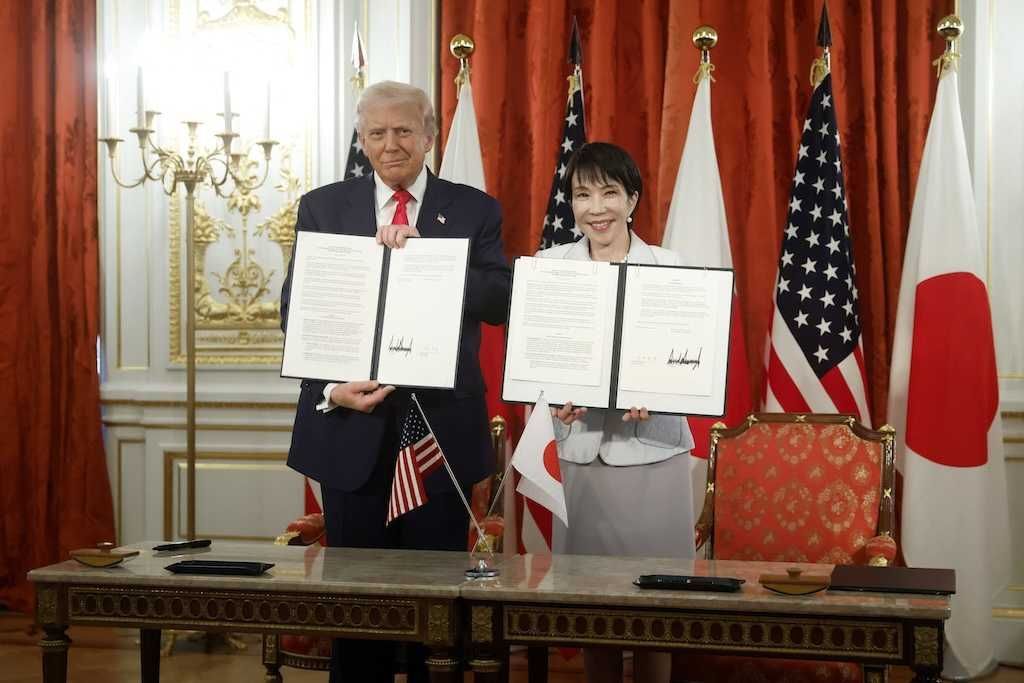
The results are now visible. In October 2025, the U.S. and Japan signed a framework to secure supply chains for rare earths and critical minerals, with the stated goal of reducing dependence on China’s dominant processing capacity.

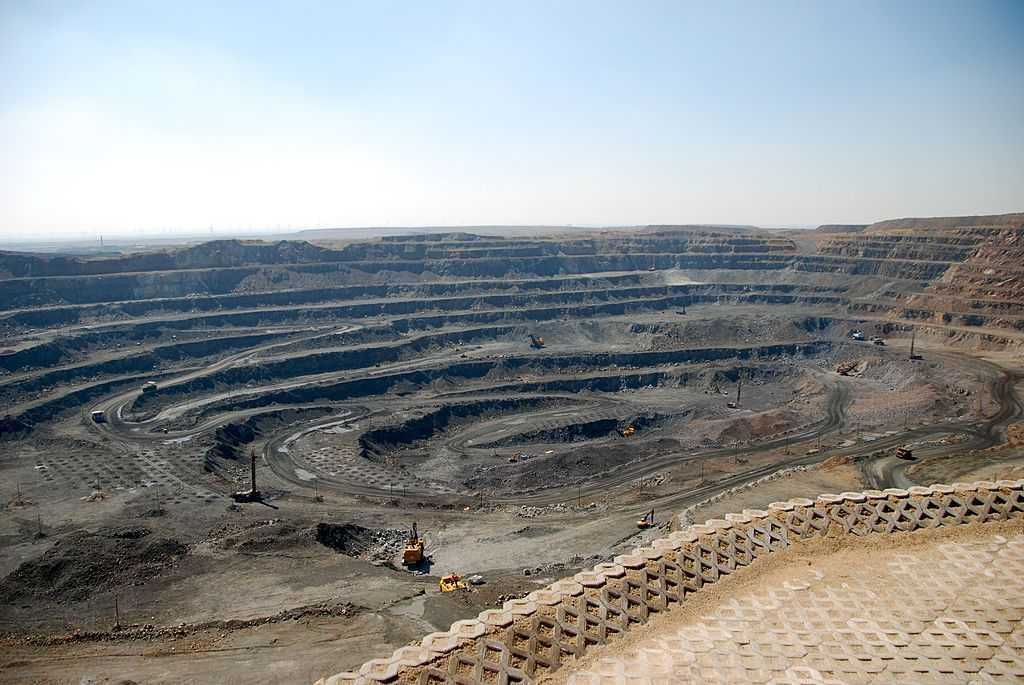
Africa shows the stakes even more clearly. In early 2026, Glencore entered a nonbinding agreement with the U.S.-backed Orion Critical Mineral Consortium to sell 40% of its Mutanda and Kamoto copper and cobalt mines in the Democratic Republic of Congo.

RELATED: China is arming itself with minerals America refuses to mine
Bert van Dijk / Getty Images

These mines rank among the world’s largest producers of metals essential to next-generation technologies. The deal aims to diversify supply beyond China’s orbit.

Across Africa, Washington has deepened partnerships to strengthen supply chains for essential commodities, while Japan has pursued its own ties with resource-rich nations.

These efforts go beyond securing raw materials. They concern industrial resilience, strategic autonomy, and influence over the technologies that will define the next era of power. Countries now face a hard question: Who offers long-term commitment, and who merely shows up to extract what it needs?

Japan’s approach reflects foresight. Its economic security policies — diversifying supply chains, investing in semiconductors, and deepening ties with African and Southeast Asian resource producers — show a clear understanding that industrial capacity underwrites national power. In some respects, Tokyo saw this shift coming before Washington did.

The U.S.-Japan alliance has entered a new phase that looks beyond defense alone. Who will build together, mine together, and secure the industrial base behind technological competition? The choices nations make now will help determine which economies and militaries remain resilient enough to compete in the years ahead.

“Moshitora” began as a phrase about a single American election. Its return in 2024 looks, in hindsight, like a warning Japan had already begun to heed. The question now is whether Washington will answer with the same clarity, persistence, and long-term vision.

A Decade Since The Golden Escalator Ride That Changed Politics Forever

One would be hard pressed to find a man more photographed in the decade since that fateful ride

With Shinzo Abe’s Death, Japan And Taiwan Have Lost A Strong Advocate

Former Japanese Prime Minister Shinzo Abe was assassinated Friday. With his death, the region's peace and security face more uncertainty.

'Pathetic reporting': 'Defund NPR' trends after conservatives blast National Public Radio for 'shameful smear' of assassinated Shinzo Abe


There was a flood of calls to "defund NPR" in Twitter reactions to a now-deleted tweet from National Public Radio that demeaned former Japanese Prime Minister Shinzo Abe on the day that he was assassinated.

In the wake of the assassination of Abe, NPR smeared the close ally of the United States as a "divisive arch-conservative."

On Friday morning, the official Twitter account for NPR tweeted, "Former Japanese Prime Minister Shinzo Abe, a divisive arch-conservative and one of his nation’s most powerful and influential figures, has died after being shot during a campaign speech Friday, in western Japan, hospital officials said."

There was a major backlash to the tweet – which caused NPR to delete the post.

\u201cA now-deleted tweet from NPR\u2026\u201d
— Kimberly Ross (@Kimberly Ross) 1657284787

However, NPR followed the controversial tweet with another post on Twitter that painted the assassinated former prime minister as an "ultranationalist."

"Shinzo Abe, the former Japanese prime minister and ultranationalist, was killed at a campaign rally on Friday. Police tackled and arrested the suspected gunman at the scene of an attack that shocked many in Japan.”

\u201cShinzo Abe, the former Japanese prime minister and ultranationalist, was killed at a campaign rally on Friday.\n\nPolice tackled and arrested the suspected gunman at the scene of an attack that shocked many in Japan. https://t.co/YpyEIM2Cim\u201d
— NPR (@NPR) 1657281144

There was a barrage of Twitter reactions calling to defund NPR – which is partially funded by U.S. taxpayers. "Defund NPR" was a trending Twitter topic on Friday.

Conservative advocacy organization ForAmerica: "This is disgusting. Defund NPR."

Rep. Ronny Jackson (R-Texas): "It's ENRAGING that taxpayer funded @npr would say such TERRIBLE things about Shinzo Abe. He was one of America’s STRONGEST defenders, so it’s not surprising that liberal NPR would post this. NPR is government-funded anti-American propaganda. Time to end this garbage & DEFUND NPR!"

Former president of Radio Free Asia Steve Yates: "Absolutely shameful smear of a positively transformational leader and one of America's best friends and allies. Such a long-tenured PM certainly united more than he divided. He was a reformer and defender of democratic Japan, and of the free world."

Former New York State Assemblyman Dov Hikind: "Shinzo Abe won his elections by large margins. But NPR calls him an 'ultranationalist' and divisive! That’s some pathetic reporting, even for NPR."

Chairman of the Georgia Republican Party David Shafer: "NPR deleted its first tweet calling Shinzo Abe a 'divisive arch conservative' and then posted this tweet calling him an 'ultranationalist.' As if he were Tojo or Itagaki and not the four-time elected leader of a modern democracy. May he rest in peace."

Journalist Erielle Davidson: "NPR referring to Japan’s most popular PM, who won his elections by large margins, as 'divisive' indicates the inability of media outlets to genuinely report any longer. Everything is a mural for their projection. So pathetic and so sad."

Conservative commentator Steve Cortes: "We taxpayers fund this propaganda. Time to defund NPR & PBS."

AI expert Dr. Eli David said in a now-deleted tweet: "What a disgusting eulogy by NPR. Abe was the greatest postwar prime minister of Japan."

Editor Brandon Morse: "Time to defund @NPR. Tired of taxpayer dollars going to a communist propaganda playground."

Journalist Hank Campbell: "To the far left the middle always looks like the far right so this @NPR tweet is on brand. But should all Americans be paying taxes so NPR can make everything about their hatred? Including the assassination of Japan's longest-serving prime minister?"

National security adviser for Sen. Ted Cruz (R-Texas) Omri Ceren: "The people who write words at America's elite media institutions can't hear how abnormal and inappropriate they sound, because everyone they know talks like they do."

Communications professional Natalie Johnson pointed out that NPR eulogized Fidel Castro with a far more glowing account than the one written for Abe.

"One of the most prominent international figures in the last half of the 20th century, Castro inspired both passionate love and hate. Many who later lost faith in him can remember how they once admired the man who needed just a dozen men to launch the Cuban Revolution," NPR complimented Castro following his death in November 2016.

\u201cNPR describing Fidel Castro vs. NPR describing Shinzo Abe posthumously.\u201d
— Natalie Johnson (@Natalie Johnson) 1657284871

NPR also had a much more adulatory description of Qasem Soleimani – commander of the Quds Force, a division of the Islamic Revolutionary Guard Corps that the Pentagon has designated as a Foreign Terrorist Organization.

"Qasem Soleimani, who was assassinated Friday in Baghdad in a U.S. airstrike, was at once both the shadowy commander of covert Iranian forces and a revered celebrity in an anti-American alliance that crosses sectarian lines across the Middle East," NPR wrote in January 2020.

"Known for his quiet demeanor and short stature, Soleimani exuded charisma and an intelligence that even his enemies came to respect," the left-leaning outlet gushed of the Iranian military leader "responsible for the deaths of hundreds of American and coalition service members and the wounding of thousands more,” according to the Pentagon.

It wasn't only NPR to disparage Abe on the day he was murdered.

The Associated Press claimed that Abe left a "divided legacy."

The AP previously praised socialist leaders after their deaths. The AP described Hugo Chavez as a "fiery Venezuelan leader" and said Fidel Castro "defied the US for 50 years."

\u201cSpot the difference\u201d
— Eric Cunningham (@Eric Cunningham) 1657282247

CBS Mornings called Abe a "polarizing figure," a "right-wing nationalist," and "conservative" whose "political opinions were controversial."

\u201c.@CBSMornings trashes Shinzo Abe hours after his assassination, calling him "a polarizing figure," "right-wing nationalist, and conservative" whose "political opinions were controversial"\u201d
— Curtis Houck (@Curtis Houck) 1657284834

Biden uses Shinzo Abe assassination to make political point about 'gun violence': 'The stupidest thing he has ever said'


President Joe Biden was sharply criticized Friday for using the assassination of former Japanese Prime Minister Shinzo Abe as an occasion to denounce "gun violence."

Abe, Japan's longest-serving premier, was shot and killed while speaking at a campaign event in the city of Nara. The assassin used a homemade gun.

What did Biden say?

Nearly 12 hours after Abe was shot and almost six hours after officials confirmed Abe had died, Biden released a statement commemorating Abe, whom Biden worked with as vice president.

"I am stunned, outraged, and deeply saddened by the news that my friend Abe Shinzo, former Prime Minister of Japan, was shot and killed while campaigning. This is a tragedy for Japan and for all who knew him," Biden said.

"I had the privilege to work closely with Prime Minister Abe. As Vice President, I visited him in Tokyo and welcomed him to Washington. He was a champion of the Alliance between our nations and the friendship between our people," he continued. "The longest serving Japanese Prime Minister, his vision of a free and open Indo-Pacific will endure. Above all, he cared deeply about the Japanese people and dedicated his life to their service. Even at the moment he was attacked, he was engaged in the work of democracy."

But it was the last part of the statement that drew intense criticism because Biden used the moment to mention "gun violence."

While there are many details that we do not yet know, we know that violent attacks are never acceptable and that gun violence always leaves a deep scar on the communities that are affected by it. The United States stands with Japan in this moment of grief. I send my deepest condolences to his family.

The inclusion of "gun violence" is particularly jarring because Japan imposes strict anti-gun laws, thus making gun violence in Japan almost nonexistent.

What was the reaction?

Biden was accused of "hijack[ing]" Abe's tragic death for "political expedience," which was described as "governing by Twitter."

  • "Calling the assassination of a major world leader 'gun violence' is governing by Twitter. Just the dumbest f***ing thing for a president to say," Noam Blum reacted.
  • "Joe Biden says that assassinating Shinzo Abe is a problem of 'gun violence.' This is perhaps the stupidest thing he has ever said, and that is saying something," Ben Shapiro said.
  • "Abe's death is a tragedy for democracy and capitalism around the world, and Biden's decision to hijack his death for domestic political expedience is more than malicious. It's moronic," conservative writer Tiana Lowe wrote.
  • "Say what you will about the Biden admin. You can call them crass, petulant, childish, self-indulgent, tone-deaf, etc. You can say they neurotically fixate on partisan battles at the expense of American statesmanship and interests.But you can't deny their message discipline," Omri Ceren, national security adviser for Sen. Ted Cruz (R-Texas), said.
  • "God, what garbage," writer David Harsanyi reacted.
  • "Extremely cringe to work in 'gun violence' given the fact that Japan nearly completely prohibits gun ownership," writer Brad Polumbo said.

NPR Smears Assassinated Shinzo Abe As ‘Divisive Arch-Conservative’ After Glowing Obit For Fidel Castro

When NPR used the assassination of conservative former Japanese Prime Minister Shinzo Abe to smear him as a “divisive arch-conservative,” it reminded readers that its name might be more accurately spelled out as National Propaganda Racket than National Public Radio. “Former Japanese Prime Minister Shinzo Abe, a divisive arch-conservative and one of his nation’s most […]

Editor Daily Rundown: Former Prime Minister Shot, Killed At Campaign Rally

BREAKING OVERNIGHT… ASSASSIN GUNS DOWN JAPAN’S SHINZO ABE… Former Japanese Prime Minister Shinzo Abe Shot Dead During Speech   Former Japanese Prime Minister Shinzo Abe was reportedly shot Friday during a campaign speech for a Japanese liberal Democratic Party candidate in the city of Nara. He later died from the injuries, according to multiple reports. […]

Taiwan’s Best Hope Of Defense Will Come From Japan, Not The U.S.

Taiwan needs defense, but the Biden Administration, who has no political will for military confrontation, will be no help.