The scientists are coming for your afternoon nap
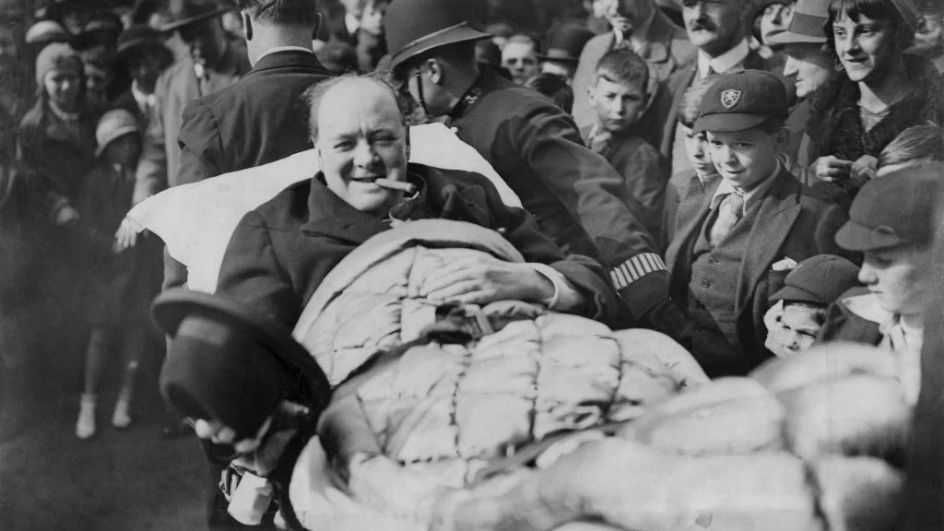


Winston Churchill helped lead Britain through the Second World War, wrote millions of words, and won the Nobel Prize in literature. He also took a nap every afternoon.

And he didn't simply doze off in an armchair. He got undressed and climbed into bed, equipped with custom-fitted beeswax earplugs to shut out the bustle of wartime London. His naps were sacrosanct, even as the demands of running a country at war frequently kept him working well past midnight.

There's even a technique called the 'nappuccino': Drink a cup of coffee immediately before a short nap, so the caffeine starts working around the time you wake up.

"Nature has not intended mankind to work from eight in the morning until midnight without that refreshment of blessed oblivion," he wrote in his wartime memoir "The Grand Alliance."

The British Bulldog would probably have had little patience for the latest headlines warning that daytime napping may be linked to dementia.

Dementia danger?

The warnings follow a new study from Johns Hopkins researchers involving 995 Americans ages 65 and older. Researchers examined their napping habits and tracked them for up to a decade. Those who napped most days or every day had a 48% higher relative hazard of developing dementia than those who rarely or never napped.

That's a sufficiently alarming figure to make anyone think twice about an afternoon snooze. But a closer look at the findings offers some reassurance to those of us who enjoy one.

People who fell asleep unintentionally had a 39% higher relative hazard of dementia. Those who deliberately chose to nap, however, showed no statistically significant association with dementia after the researchers adjusted for other factors.

The study also found an association for naps lasting 30 minutes or less, so the findings aren't an unqualified endorsement of the power nap. Nor can the researchers say whether napping contributes to dementia or whether the changes associated with developing dementia make people sleepier during the day.

For now, at least, the recliner can stay.

Churchill's second day

Churchill regarded his afternoon nap as indispensable to getting through the day. And he had little patience for half measures.

As he explained to Walter Graebner, a Time-Life executive who worked with him on his war memoirs, the proper way to nap was to take off your clothes, get into bed, and sleep. No dozing in a chair with your shoes on.

He also rejected the notion that an afternoon rest meant accomplishing less. He believed his routine effectively gave him a day and a half for every ordinary day.

Churchill's sleeping habits were unconventional even by the standards of men who worked late. He often conducted business from bed in the morning, took his afternoon nap, and returned to work deep into the night. The beeswax earplugs were no legend, either: The International Churchill Society reported that a pair, along with the plaster casts used to make them, were auctioned in 2012.

Of course, Churchill's habits don't prove that napping is healthy. His prodigious consumption of alcohol and cigars hardly makes him a model for preventive medicine. But nobody could accuse the man of being lazy.

RELATED: Apparently, we need experts to teach us how to walk now

Icon Sportswire/Getty Images

Sleep like a soldier

Soldiers have a reputation for being able to sleep almost anywhere, whenever the opportunity presents itself. It's a useful ability in a profession where a missed night's sleep can have rather more serious consequences than a sluggish afternoon at the office.

The U.S. Army even has a name for the practice: tactical napping.

According to guidance from the Walter Reed Army Institute of Research, tactical naps are brief periods of sleep intended to restore and sustain military readiness. Soldiers are encouraged to nap before anticipated sleep deprivation and during extended operations when circumstances permit.

The trick is to nap before you're exhausted, not just after. Walter Reed recommends finding somewhere dark, quiet, and comfortable and allowing yourself time to shake off the grogginess afterward. There's even a technique called the "nappuccino": Drink a cup of coffee immediately before a short nap, so the caffeine starts working around the time you wake up.

NASA has also studied the benefits of a well-timed snooze. In an experiment involving long-haul airline pilots, those given the opportunity to rest slept for about 26 minutes on average and subsequently performed better and remained more alert than pilots who stayed awake.

Lead researcher Mark Rosekind later put the improvements at 34% in performance and 54% in physiological alertness.

Twenty-six minutes of sleep and a measurable improvement in the ability to do your job. How's that for a productivity hack? No cold plunges, carefully timed sun exposure, or adaptogenic mushrooms required.

Permission to nap

Frequent, unexplained daytime sleepiness can be a sign of inadequate nighttime rest, a sleep disorder, medication effects, or an underlying medical condition. Nor can a nap make up for consistently failing to get enough sleep at night.

But there's a considerable difference between repeatedly falling asleep when you don't intend to and deliberately setting aside a little time to rest.

For most healthy adults who find naps useful, 20 to 30 minutes in the early afternoon is a reasonable place to start. Nap too late and you may interfere with nighttime sleep. Sleep too long and you risk waking up groggy.

And if you need a more dignified justification than simply being tired, tell your colleagues you're following the example of Winston Churchill and the United States Army.
The wellness industry has a pill for everything — but how many actually work?


I like to stay fit, which means I spend a fair share of my life dodging supplement ads that follow me across the internet like demented pigeons. Open YouTube and a square-jawed influencer explains why his morning requires 17 capsules, three powders, and something harvested from a mountain reachable only by yak.

Every week brings a new miracle molecule. Last week it sold longevity. This week, telepathy. Next week, immortality.

This is the tragic comedy of wellness culture. We obsess over optimization while ignoring the obvious.

Then there is the cult of optimization, embodied by Bryan Johnson, the man who turned his own body into the priciest science project in operation. Johnson's regimen reportedly involves constant blood testing, endless biometric tracking, and enough pills to stock a pharmacy. He once had a liter of his teenage son's plasma pumped into his veins and shipped his own down to his 70-year-old father. The biomarkers showed nothing, so he stopped.

Yet even Johnson recently revealed that he has autoimmune gastritis, a chronic disease in which, as he put it, "my stomach is eating itself." After years of measuring almost everything measurable, biology still found a way to surprise him

Ordinary people may not have the means to go to the extremes Johnson does, but they have absorbed the same basic message: that health is something you buy rather than something you build.

Pill-pilled

You see it at any gym. A middle-aged accountant arrives with a supplement stack heavier than his dumbbells. A retiree keeps a cupboard that resembles a chemistry bench. Someone winded by a single staircase swallows enough capsules each morning to rattle when he walks.

Our ancestors built civilizations and survived brutal winters without starting each day on a fistful of tablets. Plenty of them died young, taken by infection or a tooth gone septic. But many of the chronic diseases now filling supplement advertisements were far less common than they are today. Their greatest threats came from outside the body. Ours are increasingly self-inflicted.

But some supplements still earn their place. A recent review of the evidence offers a useful reminder that health runs far simpler than the industry selling it wants us to believe.

The point isn't that supplements never work. It's that they work best when they correct an actual deficiency.

The review focuses on older adults, the group most likely to develop genuine nutritional shortfalls. Appetite fades with age. Medications interfere with absorption. Bad teeth turn eating into a chore, and illness complicates the rest.

In those cases, targeted supplementation helps.

B is for boring

Vitamin B12 is the clearest example. Deficiency becomes more common with age and can lead to fatigue, nerve damage, and even anemia. Vitamin D matters for people who rarely see the sun or face a higher risk of fractures. Folate has its uses. Calcium and magnesium help when the diet falls short. Omega-3 supplementation may also benefit some people, particularly those who consume little oily fish.

Notice the pattern. The supplements that earn their keep are the incredibly boring ones.

Nobody films a breathless video about correcting a documented B12 deficiency. No fjord-gazing influencer hawks a luxury magnesium subscription against a slow-motion sunrise. Common sense doesn't trend.

RELATED: My new hack for a long, healthy life? Getting married

Universal/Getty Images

Meat is medicine

The most striking finding in the review involves protein.

For all the noise about exotic compounds and futuristic blends, many older adults simply don’t eat enough of it. That gap accelerates muscle loss and costs them their independence. A chicken breast and a good steak may do more for healthy aging than an entire shelf of capsules.

This is the tragic comedy of wellness culture. We obsess over optimization while ignoring the obvious.

Supplements promise something modern people desperately want: the feeling that health can be outsourced to a purchase rather than earned through habit.

No mystery

The body isn't nearly as mysterious as the wellness industry pretends. Sleep still does the heavy lifting. Resistance training still preserves muscle. A sensible diet still outperforms most supplement stacks. Protein still matters more than almost anyone admits.

These points are rather dull. They flatline on a podcast and resist packaging into a $90 tub. Nobody gets rich selling a balanced breakfast. No influencer films a viral hit called "The Shocking Secret of Eating Enough Protein."

The supplement market thrives because basics bore us and shortcuts seduce us. People would rather believe longevity hides inside a capsule pulled from a rare plant than accept that the answer involves lifting heavy things, eating enough protein, and getting to bed at a sensible hour.

So the market keeps ballooning on the promise that health can be bought instead of built.

Dig in

Sometimes a supplement is the right call. A confirmed deficiency deserves treatment. Certain medical conditions demand it. But the evidence keeps arriving at a conclusion that borders on anticlimactic.

For most people without a documented deficiency, more pills don't buy better health.

The foundations stay stubbornly old-fashioned, which is exactly why nobody can sell them back to you at a markup.

After years of being told health demands endless powders and concoctions, the answer turns out to be almost insultingly plain.

The miracle formula was never in the bottle. It was on the dinner plate all along, quietly waiting while the wellness industry invented another miracle.

A Guide To Watching The World Cup For Those Too Lazy To Do Anything Else

A comfortable couch and pillow is all you need to enjoy World Cup soccer. Enjoy the extra sleep, and hope for a scoreless game for maximum pleasure.

California Republicans move to end daylight saving time — America’s dumbest tradition


Every March, without consent, the federal government steals an hour of sleep from hundreds of millions of people. Every November, it hands the hour back, as if that settles the debt. It doesn’t. The damage is already done. The bodies counted. The fender-benders filed with insurance.

This is the absurdity of daylight saving time: a policy dressed up as convenience that functions, in practice, as a twice-annual public health hazard. Two states — Hawaii and Arizona, apparently the adults in the room — do not participate.

The trade: preventable deaths in exchange for slightly earlier winter sunsets. It’s not a close call.

The carnage is well documented and almost comically avoidable. Heart attacks spike in the days after the spring shift. Strokes climb. Traffic fatalities rise during that first fog-brained week, when reaction times slow to something approaching drunk driving. Workplace injuries surge. Emergency rooms fill.

Physiological shock

The mechanism isn’t mysterious. The human body is exquisitely calibrated to light cycles, and ripping away an hour mimics the physiological shock of being flung across time zones overnight. Stress hormones spike. Melatonin craters.

The body’s rather elegant machinery gets jammed with a wrench — annually, on a schedule — by people who will never be held responsible for any of it.

If a pharmaceutical company produced a drug with this side-effect profile, the FDA would pull it from the market within a week.

Classroom chaos

Children absorb the worst of it. After the spring shift, school buses roll before sunrise, hauling kids whose biology insists it’s still the middle of the night. Adolescents — already sleep-deprived by group chats and the algorithmic abyss of TikTok — get hammered hardest. Attention fractures. Memory slips. Impulse control dissolves.

The classroom after the time change looks less like a learning environment and more like a hostage situation.

Billions get poured into fixing education, while a mandated sleep disruption quietly picks its pockets twice a year. The policy eats the investment. Test scores dip, classrooms destabilize, and learning suffers.

All to preserve someone’s evening tee time.

Mental health follows the same logic. Circadian misalignment fogs the mind. It destabilizes mood, amplifies anxiety, and deepens depressive episodes.

The human standard

Standard time — anchored to the sun rather than legislative preference — flips that script. Earlier morning light stabilizes serotonin, steadies metabolism, and synchronizes human rhythms with the environment humans actually evolved under.

The benefits aren’t philosophical. They’re measurable, reproducible, and stubbornly indifferent to the opinions of state legislators.

Enter California’s Senate Bill 1197.

What makes this legislation notable — beyond its merits — is who is championing it: Republican senators who actually read the research.

Not a talking point. Not a culture-war signal. Just data, reviewed and acted upon.

In a political climate where bipartisan cooperation on health policy feels about as common as a lobbyist who forgot to file paperwork, a group of Republican legislators looked at the peer-reviewed evidence on sleep disruption, cardiovascular events, traffic fatalities, and childhood cognition and reached the obvious conclusion: This is stupid, and we should stop doing it.

RELATED: Trump 'fully on board' with legislation to make daylight saving time permanent, senators say

Photo by SAMUEL CORUM/AFP via Getty Images
Votes are in

California voters agreed back in 2018. Legislative inertia is the only thing standing between the state and sanity.

The science here isn’t complicated, contested, or politically inconvenient. Even Sacramento should be able to handle that.

The economic case is just as compelling. Productivity losses from post-shift disruption cost tens of billions nationally every cycle. Sick days multiply. Error rates climb. Health care spending ticks upward.

Sleep debt correlates with obesity, metabolic disorders, and long-term cognitive decline — costs that don’t show up in the week of the shift but accumulate quietly across years.

Opponents of the bill will likely invoke evening leisure — longer summer nights for golf, grilling, gender-reveal parties, and so on — as if that justifies annual cardiac events and crashed school buses.

An obvious trade

Standard time still delivers long summer evenings. Sunset in Los Angeles in late June arrives around 8 p.m. under standard time. Nobody’s barbecue is getting canceled. Nobody’s constitutional rights are being trampled.

The trade: preventable deaths in exchange for slightly earlier winter sunsets. It’s not a close call.

The federal government could authorize a national fix tomorrow. Congress has simply chosen not to. In the meantime, California’s bill offers a replicable model: well researched, cross-partisan, and focused on whether a policy actually helps people rather than whether it polls well in October.

Pass S.B. 1197. Encourage every statehouse still running this cruel charade to follow.

The science on this one isn’t contested or nuanced. It’s stacked, overwhelming, and pointing in one direction.

Let noon mean noon. Let light arrive when it’s supposed to. And let people sleep without the government scheduling their insomnia.

3 healthy habits to bring you closer to God in 2026


As Christians, when we consider New Year’s resolutions, we often think about reading the Bible more, praying more often, or maybe getting more involved in our church. Those are all wonderful things worthy of pursuing.

Rather than taking time to expound on those, however, I’d like to commend three other resolutions that may not make the usual lists.

Our bodies and souls are integrally connected, and each significantly influences the other.

These are practical — maybe even commonsensical — but given the times in which we live, they’re easy to neglect, with the result that we flourish less than we could.

1. Practice attention management

We hear a great deal about time management these days, but rarely about attention management. Americans spend multiple hours each day on their phones, with teens devoting more than nine hours(!) and adults more than four hours daily. We’re awash in a sea of texts, emails, videos, games, and alerts. If we’re not careful, these can become an endless series of distractions that divert our attention from more important things.

They can also subtly mold us in the shape of the secular culture that produces much of what we consume. As theologian Jason Thacker writes, “Following Jesus in a digital age requires ... having our eyes wide open and seeing how technology is subtly shaping us in ways often contrary to our faith. We need to learn how to ask the right questions about our relationship with technology, examining it with clear eyes grounded in the Word of God.”

It takes some intentionality to guard our hearts from the often counter-Christian messages coming through our screens, but we have to make it a priority because “everything [we] do flows from” our hearts (Proverbs 4:23). We can use technology in many beneficial ways, but we must also “examine everything” and “hold firmly to that which is good” (1 Thessalonians 5:21) while avoiding obstacles to our spiritual growth.

2. Get more sleep

There’s an old saying among pastors that “sometimes the most spiritual thing you can do is take a nap.” After all, we’re not just souls or minds, but also physical beings, by God’s design. Christians are sometimes tempted to view our physical nature in a negative light, but this reflects a Gnostic view that sees the spiritual as good and the material as bad or inferior. This is alien to Scripture, however, which tells us that we are “fearfully and wonderfully made” (Psalm 139:14). As John W. Kleinig argues in his book "Wonderfully Made: A Protestant Theology of the Body":

The body matters much more than we usually imagine it does. It matters because it locates us in time and space here on earth. It matters because we live in it and with it. It matters because through it we interact with the world around us, the people who coexist with us, and the living God who keeps us physically alive in it.

Our bodies are temples of the Holy Spirit (1 Corinthians 6:19). In order to keep them healthy and functioning properly, adults need between seven and nine hours of sleep each day. A lack of sufficient sleep can lead to heart disease, hormonal imbalances, reduced immune response, and a lack of mental focus, among other problems.

Since blue light from our phone and computer screens can make it harder to get deep, restful sleep, this is another good reason to limit screen time, especially close to bedtime.

Get enough sleep, and you’ll likely notice greater energy, optimism, and an increased capacity to exhibit the fruit of the Spirit (Galatians 5:22-23). Our bodies and souls are integrally connected, and each significantly influences the other.

3. Cultivate friendships

Even before the Covid-19 pandemic, half of U.S. adults reported feelings of loneliness, with 58% worrying that no one in their life knows them well. We live in a hyper-individualistic society that often views other people as obstacles to our personal agendas. Yet God designed us to live in close connection with other humans, especially fellow believers. The writer of Hebrews instructed his readers not to give up “meeting together, as some are in the habit of doing, but encouraging one another” (Hebrews 10:25). Like Christians in the early church, we should “[devote ourselves] to ... fellowship” (Acts 2:42).

Since we’ve been noting how some of these resolutions affect our physical health, it’s remarkable that chronic loneliness is more dangerous than smoking 15 cigarettes a day! Thus, author Justin Earley observes that “friendship will make or break your life.” We can see the wisdom of God’s statement in Genesis that “it is not good for the man to be alone” (Genesis 2:18).

RELATED: 6 ways I'm using 2026 to deepen my relationship with God

Heritage Images/Getty Images

The quality of our friendships also makes a big difference. We’ve all seen groups of people sitting together in some public place, not interacting with one another, but engrossed in their phones. “This is what community often looks like in the digital age,” writes pastor Jay Kim. “Lonely individuals falling prey, over and over again, to the great masquerade of digital technology” that lulls us “into a state of isolation via the illusion of digital connection.”

As Kim goes on to note, while we can communicate digitally, we can only commune in person. Communication is about the exchange of information, while communing involves the exchange of presence. Communing is the more difficult task because it “requires more of us: more of our attention, empathy, and compassion.”

So this year, I encourage you to practice attention management, get enough sleep, and intentionally look for opportunities to begin new friendships and deepen old ones. It will take some deliberate effort, and every relationship will have growing pains, but the greater depth of fellowship will be worth it. As a saying often attributed to 18th-century evangelist George Whitefield goes, “No man is the whole of himself. His friends are the rest of him.”

A version of this essay originally appeared in the Worldview Bulletin Substack.

​This Idaho family is perfecting the good night's sleep


You spend, for argument’s sake, a full third of your life sleeping. Anything you spend 33% of your life doing is obviously very important, even if you aren’t fully conscious when you’re doing it.

And yet people are still surprised when I tell them they could revolutionize their health if they just took their bedtime habits a little more seriously.

These pillows are as American as apple pie.

Consider testosterone, the master male hormone, which men have to thank for libido, muscle mass, drive, and a willingness to put themselves in harm’s way to save a cute little kitten when no one else will. Most of a man’s testosterone is produced at night, so if a man doesn’t sleep properly, he’ll produce less testosterone.

One study, by a researcher called Plamen Penev, showed that if older men double their sleep from four to eight hours a night, they can double their testosterone levels. Just like that. I don’t think there’s another health intervention a man could make that would have such a drastic effect on his hormonal health.

There are many different things you can do — simple things — to improve the quality of your sleep. You can turn off your electronic devices a few hours before bed and start to darken your home, to simulate the natural diurnal rhythms that have governed sleep since time began. You can take a hot shower or bath before bed to lower your core temperature. Really: Doing that can send you off to the land of Nod up to half an hour earlier.

You can change your bedding, too. Of course you want to be comfortable, and if your bedding is itchy or too thick, you won’t be and you won’t sleep. But an under-appreciated aspect of your choice of bedding is whether or not it contains harmful chemicals.

Lab mice sleep on corn-cob bedding. A study showed that corn contains a substance that mimics the “female” hormone estrogen, and so lab mice get a huge dose of artificial estrogen while they sleep, through their skin. Enough, in fact, that it can interfere with reproduction and even make them sterile.

RELATED: Is your home trying to kill you?

Mirrorpix/Getty Images

There haven’t been many studies of the effects of bedding on human health, but we have every reason to believe most bedding, which is made of synthetic fibers and laced with nasty chemicals like fire retardants, is having a negative effect on our health. Dermal contact — through the skin — is one major route for harmful substances to enter the body, and if you have your face buried in a pillow that’s soaked in fire retardant, you’re inhaling that stuff all night long. Do you want to inhale fire retardant all night long?

But help is at hand. The Woolshire, a wonderful little family business up in Idaho, is making the most amazing organic virgin-wool pillows — not a single synthetic fiber or harmful chemical in sight — and what’s more, the company is doing so in a way that benefits its local community and the nation.

All Woolshire pillows are handmade, using antique American machinery and local wool that’s milled in one of the longest-running wool mills in the country, in Montana. These pillows are as American as apple pie.

Wool is a superior material, and not just for pillows. It makes you wonder why we ever stopped using it. I’ll let the good people at the Woolshire explain:

“Wool is naturally flame retardant, self-cleaning, and temperature regulating. It retains its loft, is moisture-wicking, and it is very cozy. It has been used by humans for its incredible properties since the Stone Age.”

The Woolshire currently offers two products: its signature Woolshire pillow, with a variety of different fill depths, and a child’s pillow. I’m told the company will be expanding soon to offer other products, including a travel pillow, a prototype of which I’m lucky enough to own.

All my pillows are now Woolshire pillows, and, honestly, I’ve never slept better.

(Oh, and before you go to the website and order the best pillows money can buy, and then have the best night’s sleep of your life, take this promo code with you. Enter REN at checkout and get 10% off your order. Thank me later.)

Cancer patients are younger than ever — and this doctor knows why


Cancer was once a disease that was mostly reserved for older populations, but that’s no longer the case. Diagnoses of the disease have skyrocketed among young people in the United States in the past 10 to 20 years.

Functional integrative physician and medical director of Cancer Center for Healing and Center for New Medicine Dr. Leigh Erin Connealy has the answer as to why that is.

“There’s a study that shows the increase in specifically colorectal cancer for young people,” Allie Beth Stuckey tells Connealy. “It used to be that was a type of cancer reserved for very old people, really, all types of cancer used to be more just an old-person problem. But that’s becoming less and less true.”

Connealy knows that much of the answer lies in what we consume.

“They’re not eating the right foods. They’re eating foods with lots of chemicals and toxins and seed oils, and you know, most of them are probably deficient in vitamins and minerals,” she explains.

But it’s not just seed oils and toxins.

“Parasites, all bugs, can contribute to the scenario of cancer,” Connealy explains. “And so, American doctors don’t think you can have parasites, because we have this clean, sterile, society, right?”

“But of course not,” she continues, explaining that commonly consumed food, like sushi, contains parasites.

“It’s something that, you know again, is one of the contributing causes to cancer. So, you know, cancer isn’t just one disturbance. It’s the perfect storm that’s creating this chaotic environment,” she says.

Unfortunately, doctors in the American medical system aren’t trained to address problems at the source.

“Doctors are taught a very indoctrinated version of medicine,” Connealy says. “In medical medical you’re taught how the body works, then the pharmacology that you use on the diagnosis you’re making, and then you may need surgery in some cases if it’s a diseased organ.”

While doctors aren’t taught to address the food patients are eating or the toxins they surround themselves with, they also aren’t taught to address stress levels.

“I’ve never met a patient where the doctor told the patient they need to change their eating and they need to address their stress,” she adds.


Want more from Allie Beth Stuckey?

To enjoy more of Allie’s upbeat and in-depth coverage of culture, news, and theology from a Christian, conservative perspective, subscribe to BlazeTV — the largest multi-platform network of voices who love America, defend the Constitution, and live the American dream.

Daylight Savings Is A Scam

Americans don’t get more daylight. Plants don’t enjoy an extra hour of sunshine. The only difference it makes is to harm our health.

One-third of US adults don't get enough sleep, putting them at risk of serious health consequences


Americans are not getting enough sleep, which could have serious consequences for their health.

One in three American adults is not getting enough sleep — defined as seven or more hours a night — per a study recently conducted by the Centers for Disease Control and Prevention (CDC), Axios reported.

A press release from the CDC regarding the study states, "More than a third of American adults are not getting enough sleep on a regular basis, according to a new study in the Centers for Disease Control and Prevention (CDC) Morbidity and Mortality Weekly Report."

The press release continued to indicate that this study was the first of its kind and documented the sleep habits of Americans across the country.

It said, "This is the first study to document estimates of self-reported healthy sleep duration (7 or more hours per day) for all 50 states and the District of Columbia."

The study found that rates of "healthy sleep duration" were lower among Native Hawaiians/Pacific Islanders, non-Hispanic blacks, multiracial non-Hispanics, and American Indians/Native Alaskans.

Non-Hispanic whites, Hispanics, and Asians tended to get more sleep.

Lower portions of adults reported getting at least seven hours of sleep a day in states located in the southeastern region of the country and adults in the Appalachian Mountains. These areas have the highest prevalence of obesity and other chronic health conditions in the country.

Reportedly, over time, not getting enough sleep on a regular basis can drastically increase a person's risk of experiencing heart disease, strokes, and cancer.

Medical research has also linked insufficient sleep to obesity, depression, anxiety, heart failure, and dementia.

Lack of sleep is also directly tied to increases in an individual's health care costs and poor job performance. Employees who do not get enough sleep are much more likely to be unfocused at work, miss work, or get injured while on the job.

The CDC's study even found that people who said they were unable to work or were unemployed had lower reported rates of healthy sleep duration than employed respondents did.

Healthy sleep duration was also highest among people who received at least one college degree.

Francesco Cappuccio, a heart health and sleep expert at the University of Warwick, said, "Sleep is not a dead state. It's like pressing the 'save' button on a computer"

While we sleep, our bodies repair tissue, organize our thoughts, and consolidate memory.

14 Things Women Can Do To Rise Above Body Positivity Lies And Become Their Best Selves

Women deserve more than to be sold a bill of goods marketed as 'body positivity' that promises fullness but delivers frustration.