Why does the administrative state hate people who work for a living?


The Trump administration has made Main Street a central priority — and limiting the reach of the Corporate Transparency Act’s Beneficial Ownership Information rule was one of its best decisions so far. The rule required small businesses to hand over sensitive ownership data to the Treasury Department’s Financial Crimes Enforcement Network, under threat of heavy fines and criminal penalties. Large corporations were mostly exempt.

After small-business owners and pro-business lawmakers protested, the administration moved quickly. In March, it issued an interim rule exempting U.S. small businesses and citizens from the reporting mandate. Treasury then opened a public comment period to shape a final rule. That comment window closed five months ago, and yet the final rule still hasn’t arrived.

The administration must not allow deep-state bureaucrats and bad actors to stall this reform. Small businesses need clarity and relief — now, not after another election cycle.

Small-business owners want the exemption locked in for good — not left vulnerable to reversal by a future administration. Ohio Republican Rep. Warren Davidson’s Repealing Big Brother Overreach Act, with nearly 200 co-sponsors, aims to make that exemption permanent. But some lawmakers say they can’t codify until Treasury finalizes the rule. The delay is holding back certainty for millions of entrepreneurs.

Many of those same business owners also want FinCEN to purge the personal data they already submitted before the exemption took effect. With hacking and misuse always possible, they’re demanding the government delete the information it never should have collected.

FinCEN Director Andrea Gacki acknowledged the concern during a congressional hearing. “Along with the resolution of this rule, we also intend to resolve questions around the data that we have collected and dispose of data that is no longer legally required,” Gacki said.

A purge appears to be on the table — but without urgency from Treasury, the data remains at risk.

Gacki told Congress the rule would be finalized “in the upcoming year.” Whether that means 2025 or 2026 is anyone’s guess. The longer the Treasury Department drags its feet, the closer we get to the midterms — and the less likely Congress is to act in time.

Brian Reardon, president of the S Corporation Association, put it bluntly: “Intentions are well and good, but we need action. Sixteen million small businesses filed their owners’ personal information under the old rules. The only way to protect that information is to purge the database now.”

RELATED: Europe shows us what happens when bureaucrats win

wassam siddique via iStock/Getty Images

The National Federation of Independent Business agrees. NFIB’s Josh McLeod said, “President Trump was right to call BOI egregious, invasive, and an economic menace. Unfortunately, a future administration can simply rewrite this burdensome mandate back into existence. Small businesses urgently need the Trump administration and Congress to repeal the CTA and destroy the data.”

Small businesses remain the backbone of the U.S. economy. Reducing legal uncertainty and lifting needless regulatory burdens should stay at the top of Congress’ agenda. Finalizing the CTA BOI rule — and permanently securing the exemptions for small businesses and citizens — is an easy, commonsense win for Main Street.

The Trump administration must not allow deep-state bureaucrats and bad actors to stall this reform. Small businesses need clarity and relief — now, not after another election cycle.

Colorado’s Zoning Tyrants Go To War Against A Christian-Owned French Bakery

Is it truly in the county’s best interest to destroy a thriving business and a cherished community hub simply to enforce its zoning ordinance?

Main Street’s silent plea: Exempt us from the next tariffs


President Donald Trump just keeps proving his critics wrong.

This week, he announced a trade deal with the European Union that will bring in $1.35 trillion in new investment just days after securing $550 billion from Japan. The U.S. Treasury has pulled in a record-breaking $150 billion in tariff revenue this year. New GDP figures show the economy growing faster than inflation.

A rebate, carve-out, or full exemption would show Trump responds to market realities with precision.

Trump has reason to celebrate. But he also knows tariffs can hurt. In February, he warned about the pain tariffs might cause consumers and businesses. More recently, he backed Missouri Republican Sen. Josh Hawley’s proposal to send at least $600 in tariff rebate checks to working-class Americans.

That same logic should apply to the people who sign their paychecks: small business owners.

Since the government-imposed COVID restrictions, small businesses have faced brutal headwinds. The National Federation of Independent Business reports weak job creation plans. Bank of America says hiring costs are down but entrepreneurs are leaning harder on credit cards just to stay afloat due to tighter markets.

To ease the burden, the U.S. Chamber of Commerce has urged the Trump administration to create an automatic exemption from new tariffs for small businesses. These companies don’t have the cash reserves or supply chain flexibility to absorb cost hikes. They can’t just retool overnight. The Chamber also called for exemptions for any business that proves tariffs would threaten American jobs or that imports goods not produced domestically — like coffee or bananas.

That pitch should resonate with Republicans. America’s 34.8 million small businesses provide nearly half of all U.S. jobs and created 70% of new ones between 2019 and 2024. They make up 98% of all manufacturers, with payrolls topping $278 billion.

And they lean Republican. Last fall, small business owners favored Trump’s economic policies over Kamala Harris’ by 32 points. Five of the top 20 importing states — Michigan, Georgia, Pennsylvania, North Carolina, and Wisconsin — are swing states where small businesses are watching closely.

Democrats know it, too. They’ve already started highlighting tariff-related struggles in their appeals to Main Street voters. According to the FedEx Small Business Trade Index, one-third of all imports and exports come from small businesses. Two-thirds of small and midsize business leaders say imports are vital to their domestic operations. The National Retail Federation recently flagged the impact of tariffs on the nation’s 15.5 million retail workers.

Trump understands something his critics don’t: The economy depends on balance — between tariffs, taxes, incentives, and regulation. Targeted relief for small businesses fits perfectly with his broader economic vision.

It complements the SBA’s Made in America Manufacturing Initiative, which cut $100 billion in red tape, and the One Big Beautiful Bill Act's tax reforms that let domestic producers write off depreciation and R&D costs.

RELATED: Trump says he’s considering ‘a little rebate’ for Americans from tariff revenue

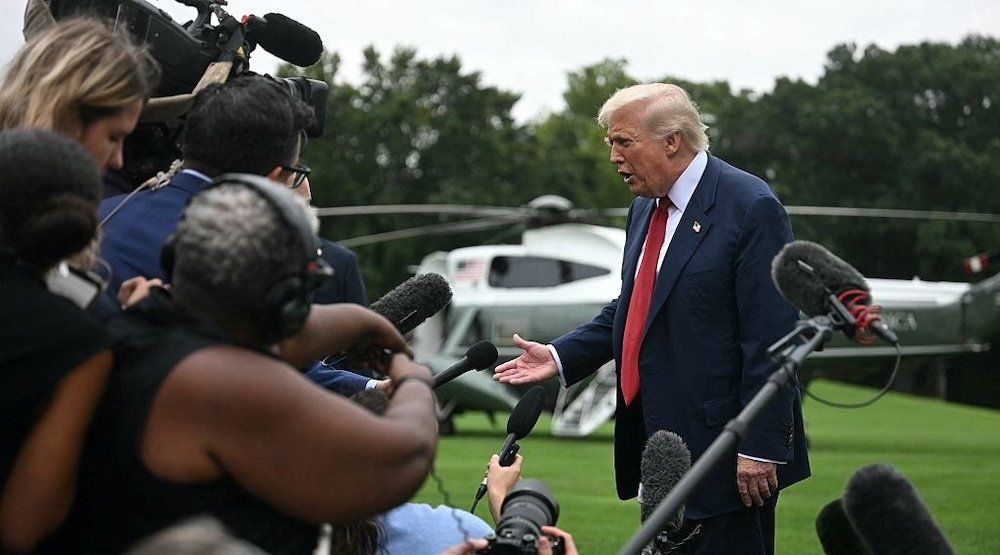
Photo by JIM WATSON/AFP via Getty Images

Sure, Trump could fold a small business rebate into Hawley’s legislation. But exemptions work faster — and speed matters when you’re operating on razor-thin margins. That’s why Chamber of Commerce CEO Suzanne Clark is right: Small businesses need relief now, not months from now — if and when Congress acts.

A rebate, carve-out, or full exemption would show Trump responds to market realities with precision. It would give small businesses breathing room to shift toward domestic suppliers. And it would help Republicans tie a policy win to the pro-growth momentum already under way.

Foreign onshoring, U.S. reshoring, and renewed consumer confidence are already reshaping the economy. Strategic relief for small businesses could help seal the deal — and give Republicans even more to smile about in 2025.

Going Soft On Illegal Labor Is A Betrayal Of American Workers Like My Family

Competitors blew past my parents like they were standing still, mostly thanks to the stream of cheap, illegal labor my parents refused to tap into.

One big, beautiful bill — one big, back-loaded disaster


Republicans have a bad habit of passing major legislation without thinking through the consequences. The “one big, beautiful bill” suffers from one big, ugly dose of shortsightedness. It’s an ambitious package loaded with short-term tax cuts and spending increases, followed by a cliff’s-edge drop into fiscal and political chaos just three years down the road.

That’s right. The expiration dates baked into the bill all but guarantee a showdown with Democrats during the 2028 election season, with Trump still in the White House, handing them enormous leverage and setting up Republicans for another round of fiscal self-sabotage.

Another fiscal cliff in the making

To keep the bill’s official price tag under control, drafters built in a series of sunset provisions. The goal: Limit the Congressional Budget Office’s estimate to just three years of deficits, even though they fully intend to extend those policies later. That gimmick allows Republicans to pretend the bill adds “only” $3 trillion to the national debt.

Republicans just built a bomb — and they are poised to hand over the detonator to their political enemies at the worst possible time.

But the policies don’t just disappear in 2028. If history is any guide — see the Bush and Trump tax cuts — most of the expiring provisions will be renewed. And when that time comes, Republicans will argue that these are now “current law” and therefore don’t count as new spending. It’s baseline budgeting sleight of hand, and everyone in Washington knows it.

Let’s look at what’s on the chopping block at the end of 2028:

  • $320 billion in extra defense and immigration spending
  • A larger standard deduction for all taxpayers
  • A $500-per-child bonus tax credit
  • A deduction for auto loan interest
  • $1,000 “Trump accounts” for newborns
  • A higher standard deduction for seniors
  • Exemptions from tax on overtime and tips
  • Immediate expensing for business structures

On top of that, several key business tax provisions — 100% bonus depreciation, enhanced interest deductions, and the R&D credit — will expire in 2029. That timing coincides with the possibility of a Democrat retaking the presidency, leaving Republicans with even less control over what happens next.

According to the Committee for a Responsible Federal Budget, extending the 2028-2029 provisions would add another $2 trillion to the national debt. That would push total costs above the original Trump tax cuts. And it would come just as the U.S. confronts mounting interest payments and an economy likely in no condition to absorb more debt.

A perfect storm in ’28

The timing couldn’t be worse. Democrats are already poised to take back the House in 2027. The GOP’s majority is razor-thin, and Democrats sit just a few seats away from regaining control. If recent special elections offer any clues, the midterms won’t be kind to Republicans.

That means Trump will likely face a Democrat-controlled House in 2028, as his administration scrambles to extend the bill’s most popular provisions: child tax credits, overtime and tip exemptions, baby accounts, business deductions, and elevated defense and homeland security spending — all of it set to disappear just as voters head to the polls.

Trump won’t want to campaign on tax hikes or cuts to defense and border security. He’ll push to renew the provisions — and Democrats will know it. They may agree with many of these policies, but they’ll still demand concessions, knowing Trump has no choice but to deal.

RELATED: I was against Trump’s ‘big, beautiful bill’ — Stephen Miller changed my mind

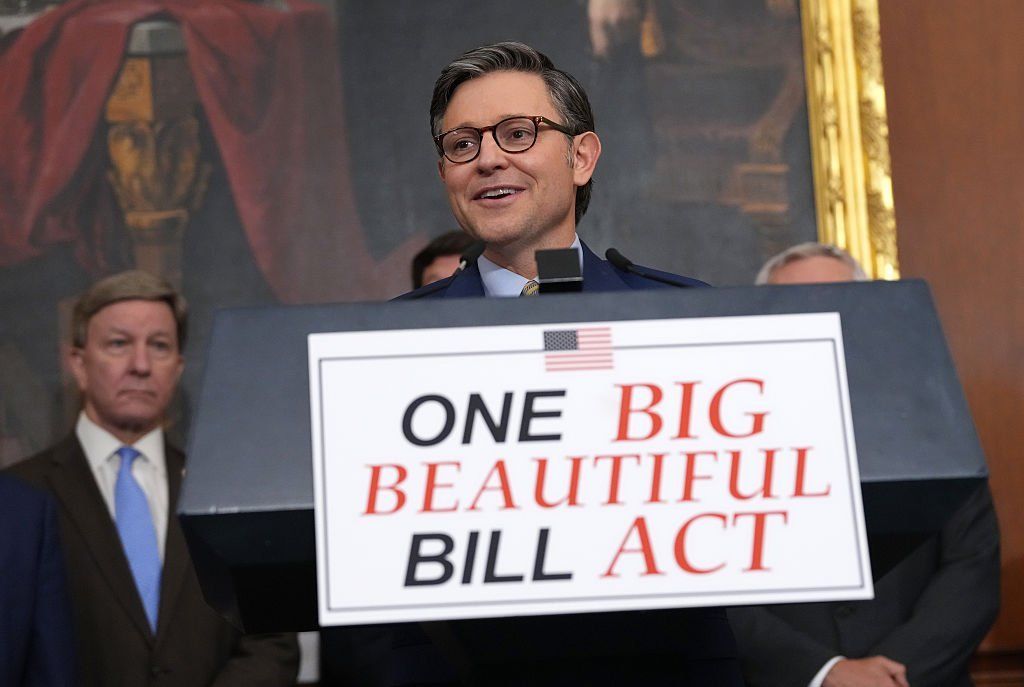
Photo by Kevin Dietsch/Getty Images

Expect ransom demands. Democrats could insist on undoing the repeal of Green New Deal policies. They might push to roll back modest Medicaid reforms included in the bill. They could demand changes to immigration enforcement or extract new spending commitments, especially if the economy continues to falter. Nothing would be off the table.

In short, Republicans have given Democrats the upper hand in a high-stakes negotiation just as Trump is trying to shape his legacy and tee up a successor. They didn’t just walk into the trap — they built it.

Lessons not learned

Republicans keep making the same mistake. Rather than structurally reforming the federal government, they pass short-term tax cuts and temporary spending increases while pretending deficits don’t matter.

This bill could have tackled the cost of health care, the explosion of federal spending, or the burden of inflation. It could have included structural reforms to entitlements, energy, or higher education. Instead, the GOP opted to pass a tax cut bill that tries to game the budget window.

If they believe growth will eventually offset the deficit — fine. But in that case, why not go all in? Make the cuts permanent. Expand them. Flatten the code and eliminate more deductions. Build a case for supply-side reform rather than hiding behind fiscal gimmicks.

Instead, they did the opposite. They chose a politically popular mix of spending and tax breaks and timed it to explode during an election that will determine Trump’s legacy, hoping no one would notice.

The bottom line

The one big, beautiful bill doesn’t reduce spending. It doesn’t rein in the bureaucracy. It doesn’t fix the structural problems crushing the middle class. It temporarily cuts taxes while baking in a debt explosion and surrendering future negotiating power to Democrats.

If Republicans think deficits don’t matter, they should at least have the courage to admit it. If they think Trump’s policies will spark enough growth to pay for themselves, then make those policies permanent. But don’t pretend to care about fiscal restraint while quietly handing the next Congress a multitrillion-dollar mess.

Republicans just built a bomb — and they are poised to hand over the detonator to their political enemies at the worst possible time.
Want a recession? Kill this business deduction and wait


When President Donald Trump returned to office in January, nearly everyone in his circle agreed on the top priority: renewing the 2017 Tax Cuts and Jobs Act. Without action, a crushing 22% tax hike looms, threatening to undo the economic gains of the past decade.

Extending the tax reform would also give businesses and investors the long-term stability they need to plan, expand, and hire.

Repealing the C-SALT deduction would hammer small businesses — the backbone of the American economy.

Instead, the administration has sent mixed signals. Daily shifts in tariff policy have rattled markets and injected uncertainty into every sector of the economy. Investors are jittery. Business leaders are holding back. And analysts are already warning of a potential recession.

These mistakes make it even more important to switch the focus to the tax package. The Trump administration should stop talking about tariffs and focus, along with Congress, on stabilizing markets and laying the foundation for economic growth by getting taxes down.

C-SALT: A conservative’s dream

The Tax Cuts and Jobs Act delivered everything conservatives had long demanded: 100% expensing for business property, a 21% corporate income tax rate, and a child tax credit that rewarded work. It stood as the defining achievement of Trump’s first term. Making it permanent could help revive the pre-COVID economic boom.

But lawmakers must resist the temptation to gut the law’s pro-growth provisions to fund unrelated priorities. That includes rejecting the misguided push to repeal or limit the corporate state and local tax deduction, known as C-SALT.

Debates about the individual SALT deduction cap have dominated headlines in Washington. Some reforms to that cap may make sense. But individual SALT and C-SALT are not the same issue, and they shouldn’t be treated as interchangeable.

C-SALT promotes growth by preventing double taxation on businesses. It lets employers reinvest earnings, stay competitive, and create jobs. Rolling it back would hit business owners hard, slow hiring, and weaken America’s edge in the global economy.

Policy groups like Americans for Tax Reform and the Tax Foundation agree: Gutting C-SALT would put long-term growth at risk — and betray the core economic agenda that fueled Trump’s first-term success.

For businesses, state and local taxes are an operating expense. If businesses lose the ability to deduct these taxes, they will be paying taxes on taxes.

Small businesses pay the price

Repealing the C-SALT deduction would hammer small businesses — the backbone of the American economy. Many already struggle under heavy corporate, state, and local tax burdens, especially in rural and Republican-leaning states. Removing this deduction would force them to shoulder a disproportionate share of the pain.

No serious conservative case exists for eliminating or capping the C-SALT deduction. Some Republicans seem confused, conflating C-SALT with the personal SALT deduction, which overwhelmingly benefits wealthy taxpayers in high-tax blue states. But they are not the same. As the Tax Foundation notes, capping C-SALT won’t “reduce distortive tax benefits or enhance state competition” the way a cap on the personal SALT deduction might — because corporate and individual tax systems function differently.

In 2023, American businesses paid nearly $1.1 trillion in state and local taxes. Stripping away their ability to deduct those taxes from federal corporate income tax amounts to a massive tax hike — potentially hundreds of billions of dollars over the next decade.

That kind of tax increase would erase much of the economic progress since the 2017 tax law was passed. It would punish the very job creators conservatives claim to champion.

Lawmakers in Congress — especially Republicans who support free enterprise and pro-growth tax reform that spurs economic growth — should focus on restoring and making permanent the 2017 Tax Cuts and Jobs Act’s tax cuts without jeopardizing the benefits that the C-SALT deduction provides for American businesses of all sizes.

If Congress Doesn’t Preserve Trump’s Tax Cuts, Small Businesses Will Suffer

This president of a warehouse and trucking company warns that if Congress lets tax cuts expire, small businesses like hers could face devastating setbacks.
Florida follows DOGE’s lead with sweeping regulatory cuts


As the CEO of a regional chamber of commerce, I hear from business owners every day about the overwhelming burden of red tape that slows them down, saps their resources, and often discourages them from expanding or even starting in the first place. Simply put, we need a regulatory framework in government that allows businesses to thrive, not struggle under a mountain of ever-changing and inconsistent regulations. One of the most valuable business commodities is time — and time is money.

While Florida has built a reputation as one of the freest states in the nation, our regulatory framework still raises unnecessary barriers to economic growth. Florida ranks 13th in the Cicero Institute’s assessment of state administrative procedure laws, showing significant room for improvement in how we regulate businesses.

We can ensure that Florida remains a place where entrepreneurs can build, innovate, and succeed without the government standing in their way.

The numbers speak for themselves. With 170,321 regulatory restrictions, Florida is the 11th most burdened state in the nation — placing us alongside states notorious for overregulation, such as Massachusetts, Illinois, and California. These excessive rules don't just create headaches for business owners; they slow innovation, reduce job opportunities, and drive up costs for everyday Floridians.

Florida House Bill 305 would modernize the state’s regulatory system, ensuring we deliver real relief for businesses while keeping necessary protections in place.

We’re at a turning point. President Trump’s victory came with a clear mandate to shrink the size of government. At the federal level, Elon Musk and the Department of Government Efficiency are diving deep into uncovering a trove of wasteful spending. We have always prided ourselves on being the free state of Florida, a place that no one could ever confuse for the incompetent and reckless federal government — or California and Illinois.

With President Trump and the DOGE leading the charge to make government leaner and more efficient, states like Florida have a prime opportunity to lead, cut waste, and give the people more opportunities to succeed.

HB 305 tackles these challenges head-on by setting clear limits on bureaucratic overreach. Government agencies will no longer be able to establish regulations without explicit statutory authority. This change prevents bureaucrats from expanding their power through vague interpretations of the law, ensuring that only the legislature — accountable to the people — sets the rules that businesses must follow.

The bill would also mandate cost-benefit analysis for all proposed regulations, ensuring that every rule must prove its benefits outweigh its costs. Arbitrary thresholds will no longer determine which regulations face scrutiny. Instead, agencies must conduct retrospective reviews four years later to confirm that their rules deliver as promised.

To prevent outdated and redundant regulations from piling up, HB 305 institutes automatic reviews and sunset provisions. Regulations will not remain on the books forever — they will expire after eight years unless reviewed and deemed necessary to ensure Florida's regulatory code remains modern, relevant, and efficient.

Transparency is another key pillar of this legislation. All regulatory documents, data, and justifications will be available to the public online in machine-readable formats to empower businesses and citizens to access and easily understand the rules that impact their lives and livelihoods.

While we have necessary regulations on the books to guard public health and safety, HB 305 is designed to preserve essential protections while eliminating unnecessary and outdated red tape. By enacting these reforms, Florida can fully align its policies with our pro-freedom, pro-growth principles.

Florida has led the way in breaking free from heavy-handed government policies that stifle innovation and opportunity. Now is the time to take the next step by modernizing our regulatory system. With HB 305, we can ensure that Florida remains a place where entrepreneurs can build, innovate, and succeed without the government standing in their way.

‘Waste, fraud, and abuse’ hype masks the real issue: Entitlement bloat


It’s the oldest trick in Republicans' playbook: They campaign on cutting spending and shrinking government, but when it comes time to pass actual legislation, they increase spending instead. To distract from that reality, they point to “waste, fraud, and abuse.”

Listen closely to all the hype about the DOGE — the Elon Musk-inspired, unofficial Department of Government Efficiency — and you’ll find nobody proposing to eliminate or structurally reform any major programs. Instead, leaders are giving Americans the impression that we can solve our inflation and debt crisis by trimming foreign aid, selling vacant buildings, and slashing overpayments in programs where waste and fraud are features, not bugs. This time must be different.

Cute messaging about egregious wasteful spending, which offends no corporate or individual constituency, will not solve the current crisis.

On the upside, an unprecedented conservative media campaign, led by Musk, has spotlighted wasteful spending and the need for cuts. On the downside, despite all the social media buzz, no one has presented a serious plan to reduce, eliminate, or restructure the key programs driving deficits and inflation. In fact, in December's budget bill, Musk and Donald Trump backed an additional $110 billion in deficit spending without using any so-called wasteful programs as offsets.

Recycling the idea of cutting “waste, fraud, and abuse” — “no, really this time!” — might have worked before the $7 trillion COVID-19 debt bomb. But it won’t dent the $1.2 trillion in annual money printing needed to service the debt’s interest. Telling Americans we can achieve fiscal solvency simply by cutting painless waste, reducing foreign aid, or making government more “efficient” sets us up for failure.

The only way to curb inflation is to level with Americans about the real source of the problem: consensus spending by both parties, not the “waste, fraud, and abuse” they keep blaming. Either we cut those programs or accept inflation — no middle ground. The silver lining is that inflation’s bite has created a mandate to make a trade-off: We can end dependency on certain programs if we muster the political will.

We don’t need an AI tool or a latter-day Manhattan Project to figure out how to balance the budget. We already know what must be done; the challenge lies in devising the right messaging and political will to enact it.

The federal budget isn’t a mystery. According to the Congressional Budget Office, fiscal year 2025 will bring another $2 trillion deficit, with $7 trillion in spending and $5 trillion in revenue — and that’s before factoring in any expansion of Donald Trump’s first-term tax cuts. The CBO projects $1.1 trillion in interest on the debt, but those figures have repeatedly been revised upward.

The 10-year outlook appears even bleaker, especially once we factor in the CBO’s unrealistic revenue projections, its consistent underestimates of spending, and its failure to account for major catastrophes — such as COVID-19, the Great Recession, or annual weather disasters — that always push deficits beyond expectations. For example, while the CBO estimates the $7 trillion budget will only rise to $10.3 trillion by the end of the 10-year window, our spending has already doubled over the past decade, largely because of COVID-19.

What, then, drives our $7 trillion budget for fiscal 2025? Let’s break down the major government expenditures.

The “untouchables” of our budget make up the overwhelming majority of the tab. Social Security, Medicare, military, and veterans’ programs (both discretionary and mandatory), plus interest on the debt, total more than $5.2 trillion of the $7 trillion budget. Several hundred billion dollars of Medicare is offset by user premiums, bringing the net “untouchable” spending closer to $5 trillion. Yes, one could shave off some Pentagon waste and address Social Security and Medicare overpayments, but tightening eligibility would spark a political backlash that Trump may not want.

No hidden stockpile of “waste, fraud, and abuse” exists to eliminate. The only way to lower the deficit is to target the remaining $2 trillion, which includes discretionary spending and nonuniversal entitlement programs such as Medicaid, food stamps, and housing.

Republicans will also need to devolve education, agriculture, transportation, and energy spending to the states. They must eliminate housing subsidies and mortgage giants like Freddie Mac and Fannie Mae. In other words, they must convince the American people that the choice is between dependency programs or permanent stagflation and unaffordability. Cute messaging about egregious wasteful spending, which offends no corporate or individual constituency, will not solve our current crisis. Honesty remains the only viable path forward.

Republicans should craft their reconciliation bill to fully repeal the Green New Deal and all climate regulations, reset discretionary spending to pre-COVID-19 levels, and enact welfare reform stronger than the 1996 measure. Some commentators falsely claim Social Security and Medicare are the only paths to reducing deficits, neglecting the many “other mandatory spending” programs that are not universal. Coupled with substantial health care reforms to lower consumer costs, this approach offers the only realistic way to address inflation.

Congress cannot focus solely on tax cuts this time. Yes, lawmakers should extend the 2017 tax cuts and add targeted cuts to spur small-business growth, but unlike in 2017, the primary emphasis should be on curbing government spending. A frank discussion about the true nature of these expenditures is essential to meet the mandate of lowering inflation at long last.

GOP’s growth meal: Appetizers ease regs, main course drives jobs


If policymakers want strong results, history and economic reality identify small businesses as the catalyst for growth. As a new Republican Congress and the incoming Trump administration view their menu of options, it’s imperative they view things from an appetizer and main-course perspective. The main course is bonus depreciation and access to capital, and the appetizers are reducing regulatory burdens, taming government overreach, lowering energy costs, and finding skilled and qualified workers.

The new Trump administration and the GOP-led Congress must serve up the appetizers and main course to fuel new record growth. Here’s what that meal might look like.

The appetizers

The increase in onerous regulations imposed by local, state, and federal governments is generating louder, justified complaints from small businesses. By April 2024, the cost of federal regulations had ballooned to $1.47 trillion. These rising costs are stifling small businesses. According to the October 2024 jobs report and downward revisions in new job creation, employment is weakening across the U.S. economy.

Industries are feeling the regulatory squeeze, and small businesses are suffering — especially in the wooden pallet industry. Ninety percent of all goods in the United States come into contact with a wooden pallet at some point. Regulatory burdens on the forest-products industry, such as reduced availability or higher costs of environmental permits, directly lower the supply of wood and increase its cost. And because wood pallets are manufactured, businesses in this sector must navigate OSHA oversight, air-quality permits, and trucking-related regulations. Customer-related rules, such as the Food Safety Modernization Act, also pass additional costs to pallet manufacturers.

If President Trump and congressional Republicans implement a comprehensive strategy, they could ignite a surge in economic growth the likes of which we’ve never seen.

Easing regulations would help small businesses lower their costs, enabling many to reinvest those savings in new plants, equipment, and workers.

The Trump administration should aggressively reduce the costly regulatory burdens on small businesses through executive actions. These actions should include initiatives to lower energy costs, which would further reduce expenses for small businesses. For manufacturing companies, lower costs would allow them to redeploy capital toward modernizing plants and fostering innovation.

Businesses, particularly small businesses, are struggling to attract new workers. Increased investment in career and technical education at the federal and state levels is essential. Such investment will help create future pipelines of skilled, motivated, and qualified workers.

The tooling and machining industry, which includes thousands of small to medium-sized precision machining manufacturers, serves a wide range of sectors, including aerospace, ordnance, defense, medical, space, electronics and semiconductors, oil and gas, automotive, and more. The lack of a skilled and qualified workforce remains the top challenge and limitation for precision machining.

The main course

The pathway to long-term economic and jobs growth is permanent write-offs for capital expenditures that include both plants and equipment.

To jump-start growth, a 100% bonus provision for plants and equipment for the first year followed by a consistent allowance for plants and equipment in the following years is essential. A heightened level of capital investment gets factories moving, makes small businesses more competitive, and drives higher employment levels and long-term growth.

In a “2 Way Community” conversation with Mark Halperin, Scott Bessent, founder and chief investment officer of Key Square Group and Donald Trump’s nominee to lead the Treasury Department, indicated that “100% expensing for equipment is on the table as part of the extension of the Trump Tax Cuts and Jobs Act Job.” He also expressed support for “a limited life for structures that can also be expensed by 100%.”

Small businesses in the landscaping and fertilizer industries, for example, would be in a better position to invest in newer technologies and expand their production and distribution capacities.

Small businesses also have increasing capital requirements associated with the drive to automation, the high costs of machinery, and the need for research and development. To remain competitive, small businesses must also have an R&D tax credit available to them. Small businesses operating in the crane, rigging, and heavy transport sector will be able to invest in new cranes and other equipment and have the capacity to grow their businesses.

Every small business must have access to capital. New legislative and regulatory efforts must increase access to capital through streamlined small-business lending. Because 38% of small businesses that fail do so due to lack of capital, there must also be a renewed commitment to community banks, which are essential for small businesses to access capital. Bessent has also expressed support for this idea.

Making the 2017 Tax Cuts and Jobs Act permanent and adding these additional incentives will change the game and launch a new wave of economic growth. Several key provisions are already expiring or will be phased out at the end of 2025. Expensing for business investments, research and experimentation deductibility, pass-through deductions, and a reduction of the estate tax concludes on December 31, 2025. These are important and should be continued.

Small businesses have historically driven economic recovery and prosperity. If President Trump and congressional Republicans implement a comprehensive strategy, they could ignite a surge in small-business activity and economic growth the likes of which we’ve never seen.