Exclusive: FIFA Threatened with Lawsuit for Seizing Jewish Fan's Israeli Flag at World Cup Match While Permitting Palestinian and Iranian Flags

The Los Angeles soccer fan who had his Israeli flag forcibly confiscated by event staff during a recent World Cup match at Los Angeles's SoFi stadium says he is prepared to sue the FIFA soccer organization for violating his civil rights and endangering his family's safety before a crowd of rabid pro-Palestinian fans, according to a document preservation letter sent late Wednesday and obtained exclusively by the Washington Free Beacon.

The post Exclusive: FIFA Threatened with Lawsuit for Seizing Jewish Fan's Israeli Flag at World Cup Match While Permitting Palestinian and Iranian Flags appeared first on .

Why Aren’t Any World Cup Players Taking A Knee For Henry Nowak?

The England squad may play in whites, but they certainly don’t play for them anymore. And they absolutely, definitely, don’t kneel for them.

England's World Cup team puts Christian faith first


When England begins its World Cup run against Croatia in Dallas today, millions of fans will be watching every move, hoping that Thomas Tuchel’s side can win the Three Lions' their first title since 1966.

Such a victory would make good on the squad's famous rallying cry, "It's coming home." For a growing number of England’s stars, however, it's a heavenly home that keeps them driven to excel.

Guéhi returned for the next match wearing the same rainbow armband but with a different motto: 'Jesus loves you.'

The phenomenon was on display in March when defender Marc Guéhi captained England for the first time in a friendly against Senegal. After the match, Guéhi posted a message on Instagram thanking God for the milestone: “Thank you to the Most High.” It was entirely in keeping with a player who has previously written “I love Jesus” and “Jesus loves you” on his captain’s armband and who has spoken openly about putting God at the center of his life.

Guéhi is hardly alone.

God Squad

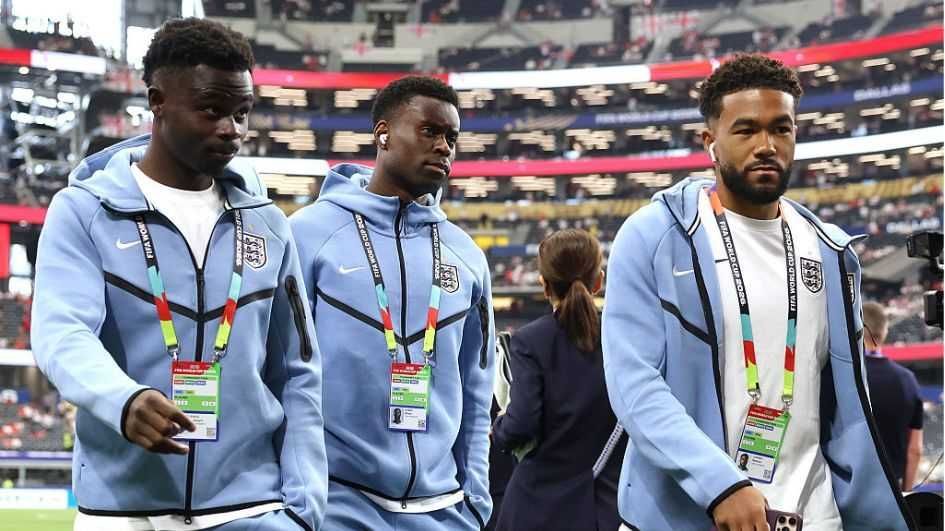
England’s current squad includes a cluster of openly Christian players — including midfielder Eberechi Eze and forwards Ivan Toney, Noni Madueke, and Bukayo Saka — whose habits of praying together and speaking publicly about their beliefs have earned them nicknames such as the “God Squad” and the “Bible Brothers” in parts of the British press.

To American audiences, the phenomenon may come as a surprise. The enduring stereotype of English football is one of raucous supporters, celebrity culture, and the hooliganism that scarred the game’s reputation decades ago. Yet beneath the surface, Christianity has become a visible and accepted part of life for many elite players.

Saka, one of England’s biggest stars, has made his faith central to his public identity. His Instagram bio identifies him as “#GodsChild,” and in interviews, he has spoken about reading the Bible every night and relying on prayer before matches. "God’s plan is perfect so I can go on the pitch and know that God has my back,“ he has said, explaining that his faith allows him to play with freedom rather than fear.

RELATED: Brazil sends off its World Cup team in the most Catholic way possible

Jordan Bank/Getty Images

Prayer on the pitch

The story, however, extends well beyond England’s national team. Across the Premier League, an increasingly visible Christian fellowship has emerged among players from different clubs and nationalities. Arsenal, in particular, has attracted attention for a number of openly Christian stars.

One of them is Saka's England teammate Madueke. After scoring against Bayern Munich last season, his first words to reporters were: “I just want to thank my Lord and Savior Jesus Christ.” Explaining the bond he shared with his Christian teammates (there are "about 10 of us," he estimated), he told the New York Times: “We believe we have God fighting for us."

Arsenal defender Jurrien Timber regularly posts Bible verses before matches and has earned the nickname “Pastor Timber.” “For me, it is a way of life, my faith,” he told the Athletic. “I try to live by it. We pray before games because we have a few Christians in our team, which is amazing. It brings unity and understanding because you kind of live the same life.”

Football fellowship

According to reporting by the Religion Media Centre, roughly half of Premier League clubs engage with Christian ministries, while about 80% have access to chaplaincy support. Those chaplains are not there to discuss tactics or team selection. Instead, they provide pastoral care — meeting players and staff through injuries, family crises, contract disputes, loneliness, and the intense psychological pressures of professional sports.

As Rev. Graham Daniels, a former professional footballer who now leads the organization Christians in Sport, wrote earlier this month, "At a time when many Christians feel increasingly isolated in their workplaces, there is something deeply encouraging about believers opening the Scriptures together in football clubs up and down the country."

For players like Guéhi, faith is more than private devotion. It is something to be expressed publicly, even at personal cost.

In 2024, Guéhi was serving as captain of Crystal Palace during the Premier League’s annual LGBTQ Rainbow Laces campaign, in which players are encouraged to wear rainbow armbands. Guéhi wore his, but wrote “I love Jesus” on it for a match against Newcastle United. After the Football Association reminded the club that its rules prohibit religious messages on playing equipment, Guéhi returned for the next match wearing the same rainbow armband but with a different motto: “Jesus loves you.”

Although the FA again contacted Crystal Palace to reiterate the regulations and Guehi faced the prospect of disciplinary action, the governing body ultimately declined to take formal action against either the player or the club.

Imported faith

The prominence of openly Christian players also reflects the increasingly international makeup of English football. Many stars with African and Caribbean family backgrounds have brought traditions of public worship, prayer, and church involvement into dressing rooms, where such expressions might once have been unusual. Prayer circles before kickoff and post-match thanksgiving have become familiar sights rather than oddities.

None of this, of course, means the Premier League has become a religious institution. It remains one of the world’s most commercialized and closely scrutinized sporting competitions. But beneath the billion-dollar television deals and transfer fees lies a quieter story: Bible studies, pastoral mentorship, and players who openly credit Jesus Christ with sustaining them through triumph and disappointment alike.

Five Things We Learned Watching the World Cup on American Soil

Warning: This articles contains graphic soccer-related language and imagery that most Americans should find offensive and upsetting. Please consider the nature of the material before proceeding.

The post Five Things We Learned Watching the World Cup on American Soil appeared first on .

Japanese soccer fans show Texas what being a good foreign guest actually looks like


Japan managed to sneak out a tie against the Netherlands after falling behind twice in a World Cup match on Sunday, but it was the Japanese fans who went viral after the game.

Making the trip to watch their team at AT&T Stadium in Arlington, Texas, fans saw a late goal in the 89th minute earn Japan a 2-2 draw against its Dutch opponents. After the game, though, Japanese fans truly went to work.

'Return it the way you found it.'

Viral videos from all over the stadium quickly hit the internet, showing the Asian visitors whipping out blue garbage bags and methodically cleaning up their sections of the stadium.

The fans first used the bags as a way to celebrate their team, raising them in the air and letting them ripple like a wave until impressing the world by using the same bags to gather garbage later on.

"There's a Japanese culture ... which means we should be cleaner [than when] we came here," a fan told Singapore outlet CNA. "So this is our mindset and this is very obvious that we are to clean up the stadium and that will [showcase] our good Japanese culture."

RELATED: Japan is close to finding cure for rare disorder that devastates children

KDFW reported on comments from a Japanese teacher who further explained why the fans were all acting in unison.

"Japanese sports fans at world events who clean up the stadium are behaving much the same way they did when they learned how to enjoy sports as school boys and girls," said Koichi Nakano, a politics and history teacher at Sophia University in Tokyo, Japan.

A popular Japanese phrase apparently embodies the idea: "Tatsu tori ato wo nigosazu," which reportedly means "return it the way you found it."

RELATED: Brazil sends off its World Cup team in the most Catholic way possible

L-R: Charlotte Wilson/Getty Images; Michael Steele/Getty Images

Beloved NFL quarterback Jameis Winston was also among the Japanese crowd cleaning up the garbage. At 6'4", Winston stuck out like a sore thumb in the crowd of fans, but seeking no attention, he grabbed a blue bag and helped the Japanese supporters with their mission.

The New York Giants quarterback happened to be in that section of the stadium while reporting on the game for Fox Sports and decided to join in.

Japan's next game is Sunday at 12:00 a.m. ET against Tunisia, taking place at Estadio BBVA in Guadalupe, Mexico, where the Japanese fans will most likely show up their Tunisian counterparts.

Like Blaze News? Bypass the censors, sign up for our newsletters, and get stories like this direct to your inbox. Sign up here!

European Soccer Fans Are Falling In Love With American Culture And It’s The Best Thing On The Internet

With America's 250th anniversary on the horizon, these Europeans remind us how lucky we are to be here.

My 1990 World Cup sticker book — and a glimpse of football's simpler past


It was 1990, and I was in my final year of middle school. The Ultimate Warrior had just defeated Hulk Hogan at WrestleMania VI, Bon Jovi was poisoning the airwaves, and bubblegum still held its flavor.

The law of the jungle was merciless. The concrete schoolyard was just a warm-up for the clique wars to come — if you weren’t smoking Marlboro Reds or rocking Nike Air Max 90s, you didn’t stand a chance. If your parents picked you up in the "wrong" car, it was reputational suicide.

Back then, footballers looked like real blokes — sweaty, scruffy, and rough. Take Peter Beardsley: magic on the pitch, but no one was swapping stickers for his smile.

Summer break was just a few weeks away. While everyone else seemed ready to spend six weeks climbing trees, aimlessly riding their bikes from dawn till dusk, staring awkwardly at girls they liked, or searching for dead bodies in the woods, I had other plans.

Fever pitch

That summer, my true obsession was the Italia 90 World Cup sticker album — a glossy shrine to footballing glory, celebrating a tournament set in Italy and far more engrossing than my favorite comics. To top it off, England had an all-star lineup and, for once, stood a good chance of reliving the glory days of ’66, when we routed the Germans. I set myself a a mission worthy of Pelé himself: to fill every page with those adhesive, elusive footballers. Forget superheroes and cliff-hangers — completing that album was the only epic saga that mattered to this 11-year-old boy.

Mark Leech/Offside/Getty Images

Everyone wanted Maradona or one of the coveted shiny stickers. We devised what I can only describe as a unique system of exchange. Forget Wall Street; this was playground economics at its rawest. We would huddle around while each of us cycled through our spares, chanting “got, got, got,” until someone finally shouted, “NEED!”

The true value of a sticker seemed to rise in direct proportion to the volume of that shout — sometimes it seemed like it could be heard in the next city. The whole system was rooted in supply and demand, but deals were sweetened with chocolate, soda, or the promise of a date with someone’s older sister.

Mullet over

The Soviet Union was in its death throes. This was the era before German reunification. Although the Berlin Wall had technically fallen — famously serenaded by "Knight Rider’s" very own power balladeer, David Hasselhoff — Germany still played as West Germany in the World Cup.

For all the horror associated with the communist regime, the most haunting images in my young mind were those notorious mullets — that and the East German female athletes, so heavily doped on steroids that they looked more like men than women.

March Leech/Offside/Getty Images

Flicking through my album, the West German squad looked less like a football team and more like a group of metalheads heading to a Mötley Crüe concert. Still, some of our own lads were sporting that same achy-breaky hair — most famously Chris Waddle, who blasted the ball over the bar in England’s semifinal defeat against West Germany. Proof, if ever it was needed, that mullets make you miss penalties.

RELATED: The best pub in England might be this Norwich backstreet boozer

The Fat Cat pub

Blokes at work

This tournament’s sticker book hit the shelves at the end of April, ahead of the World Cup kicking off in North America — a whopping 980 stickers for obsessives to collect. The game has changed since those halcyon days — both financially and, perhaps most bizarrely, aesthetically.

Today, pampered millionaire footballers seem to look perma-tanned and Botoxed, more suited to the red carpet than the muddy touchline. Back then, footballers looked like real blokes — sweaty, scruffy, and rough. Take Peter Beardsley: magic on the pitch, but no one was swapping stickers for his smile. For Americans, imagine pulling a Don Mossi Topps card — bags of talent, but not much glamor.

L-R: Peter Beardsley, Don Mossi. Shaun Botterill/Betmann/Getty Images

Patience and hope

Of course, my mission failed spectacularly. I didn’t complete the album in a month. In fact, I never completed it. But maybe that was the point. I belonged to the last generation to grow up without the internet, when patience and hope were virtues and instant gratification had yet to rear its head. Now we’re kept constantly distracted, our attention fought over by algorithms, notifications, and endless scrolling.

Our sticker quests were slow-burn adventures, each new pack a lesson in anticipation, disappointment, and the long game. Trading and collecting weren't just a playground pastime; they were a rite of passage, a physical reminder of a slower world where you couldn’t always have it all, all at once.

I am giving some serious thought to picking up the 2026 album. But this time round, the sticking point isn’t patience; it’s money. With 48 teams and nearly 1,000 stickers to collect, completing the book is now estimated to cost at least £1,000, ($1,400) to complete. As tempting as it is to rekindle my childhood love affair, I may have to sit this one out. Still, I did get the Maradona sticker — maybe not a complete album, but a complete memory.

NYC is falling apart — but Mamdani is busy making soccer cheap


Mayor Zohran Mamdani may not care to save New York City residents from himself, but he does apparently care about making soccer tickets more affordable.

And BlazeTV host Sara Gonzales is not having it.

“We’re teaming up with the nation’s two-time champions to make soccer more affordable for everyone. And that's why we just made 1,000 $5 tickets for the May 9 home game available, starting now,” Mamdani announced in a promotional video.

“The city of New York is crumbling at his feet, and he’s obsessing about possibly the worst sport in the world — soccer. That’s what you get. That’s what you get for electing a Muslim commie — 90 minutes of disappointment,” Gonzales comments.


“When you look into his history, it’s not the first time he’s talked about trying to make soccer cheaper,” she adds, playing a clip of Mamdani talking about the sport yet again.

“I had a New Yorker the other day come up to me and ask me if there was any way I could help him get World Cup tickets because he was saying that the cost that he saw for a game was $600. Right? This is increasingly out of reach,” Mamdani said.

“We have made what used to be a working-class game into a luxury experience. And there are too many for whom it doesn’t matter where the World Cup is being played in the world. They know where they’re going to watch it. It’s TV,” he continued.

“And we want to ensure that there are more experiences available,” he added.

“Who cares?” Gonzales asks, confused. “Why soccer? Why? Why are you so obsessed with soccer?”

Mamdani also brought up the cost of World Cup tickets on a podcast appearance, telling the interviewers that tickets can get up to $6,000.

“It is absurd,” he said.

“Why not pick an American sport? Football? No, he’s got to do the soccer thing,” Gonzales says, noting he even boasted about holding a meeting with the FIFA president on his social media.

“Just an idea, OK? Focus on the things the people of New York City actually care about,” she continues. “He is about to bankrupt the entire city.”

Want more from Sara Gonzales?

To enjoy more of Sara's no-holds-barred takes on news and culture, subscribe to BlazeTV — the largest multi-platform network of voices who love America, defend the Constitution, and live the American dream.

Mamdani Chooses Soccer Over America’s Birthday

Many have described New York City mayor Zohran Mamdani as a terrorist-supporting communist who hates America. His defenders dispute this characterization, but the evidence keeps piling up against them.

The post Mamdani Chooses Soccer Over America’s Birthday appeared first on .

Who's to blame for the un-American ban on tailgating at the World Cup?


Parking lots may be a no-go zone for fans in World Cup host cities in the U.S. this summer.

The FIFA 2026 World Cup will see 11 U.S. cities host games, utilizing the plethora of professional-tier stadiums across the country. Several of these stadiums, however, will have a ban on the American tradition of tailgating.

'Site-specific restrictions may be imposed.'

Of the 11 cities, four are reportedly banning the pregame festivities that often enhance the fan experience ahead of events. Boston's host city committee has announced a ban at Gillette Stadium in Foxborough, Massachusetts, and a ban at New Jersey's MetLife Stadium was confirmed by local outlets.

Philadelphia's Lincoln Financial Field and Arrowhead Stadium in Kansas City, Missouri, will enforce bans, too, according to Bleacher Report and the Big Lead.

In response to the bans, a FIFA spokesman told Blaze News that the soccer organization has no formal prohibition on tailgating.

"FIFA does not have a formal policy that restricts tailgating (eating and drinking around parked cars in stadium areas)," the spokesman said.

"However, site-specific restrictions may be imposed in alignment with host city public safety authorities in certain venues based on local regulations," he added. "Additional fan information for all FIFA World Cup 2026 matches will be communicated in advance of the tournament."

RELATED: Faith, 'divine journey,' and Trump will ensure unforgettable World Cup, island nation's soccer president says

Jim McIsaac/Getty Images

With seven other U.S. venues up in the air, FIFA did not respond to requests for an exhaustive list of which stadiums are enforcing a tailgate ban.

At the same time, the White House provided the following response when asked about the bans on the American tradition:

"The FIFA 2026 World Cup will no doubt be one of the greatest and most spectacular events in the history of mankind, attracting millions of fans from around the world to 11 host cities across America," White House spokesman Davis Ingle told Blaze News.

"This will be a monumental event that requires close coordination between the Trump administration, FIFA, and all of our great federal, state, and local partners. President Trump is focused on ensuring that this is not only an incredible experience for all fans and visitors, but also the safest and most secure in history."

Parking restrictions

Not only has tailgating been banned at Gillette Stadium, dubbed "Boston Stadium" for the purpose of the tournament, but parking will be severely limited. Radio station WRKO reported that stadium parking will be reduced to just 25% capacity at 5,000, while WBZ radio noted that round-trip train tickets to Foxborough will be $80, four times the typical $20 for NFL games.

The story is the same for MetLife Stadium, where the New Jersey hosting committee says parking will be prohibited. According to NJ.com, nearby parking is already sold out at $225 per space.

Understanding the parking restrictions appears to be a case of reading between the lines.

When asked about tailgating and parking enforcement around BC Place in Vancouver, Canada — one of two Canadian World Cup venues — a committee spokesman revealed that typical stadium parking will be taken up by FIFA.

"Many parking lots immediately adjacent to BC Place Vancouver will be occupied by FIFA for stadium-specific activities for the duration of the tournament," communications manager David Harrison told Blaze News.

Similarly, a New Jersey host committee spokeswoman told NJ.com that parking would be limited at MetLife because the lots will be in use for other functions, like enhanced security and portions "dedicated to fan engagement."

RELATED: Unpaid bill has Foxboro refusing to grant license for World Cup games at Gillette Stadium

Barry Chin/The Boston Globe/Getty Images

Tailgating policy remains up in the air for the following U.S. venues: Mercedes-Benz Stadium in Atlanta; AT&T Stadium in Arlington, Texas; NRG Stadium in Houston; SoFi Stadium in Los Angeles; Hard Rock Stadium in Miami; Levi's Stadium in Santa Clara, California; and Lumen Field in Seattle.

Vancouver police told Blaze News that tailgating is not typical for their stadium, as it exists in their downtown area, but there is no designated place for fans to do so either.

Estadio Azteca, a host venue in Mexico City, did not respond to requests for comment.

Like Blaze News? Bypass the censors, sign up for our newsletters, and get stories like this direct to your inbox. Sign up here!