The Obamacare subsidy fight exposes who Washington really serves


The failure of both Democrat and Republican plans to extend or partially replace enhanced Obamacare subsidies offers a clear lesson: Escaping an entitlement trap almost never happens.

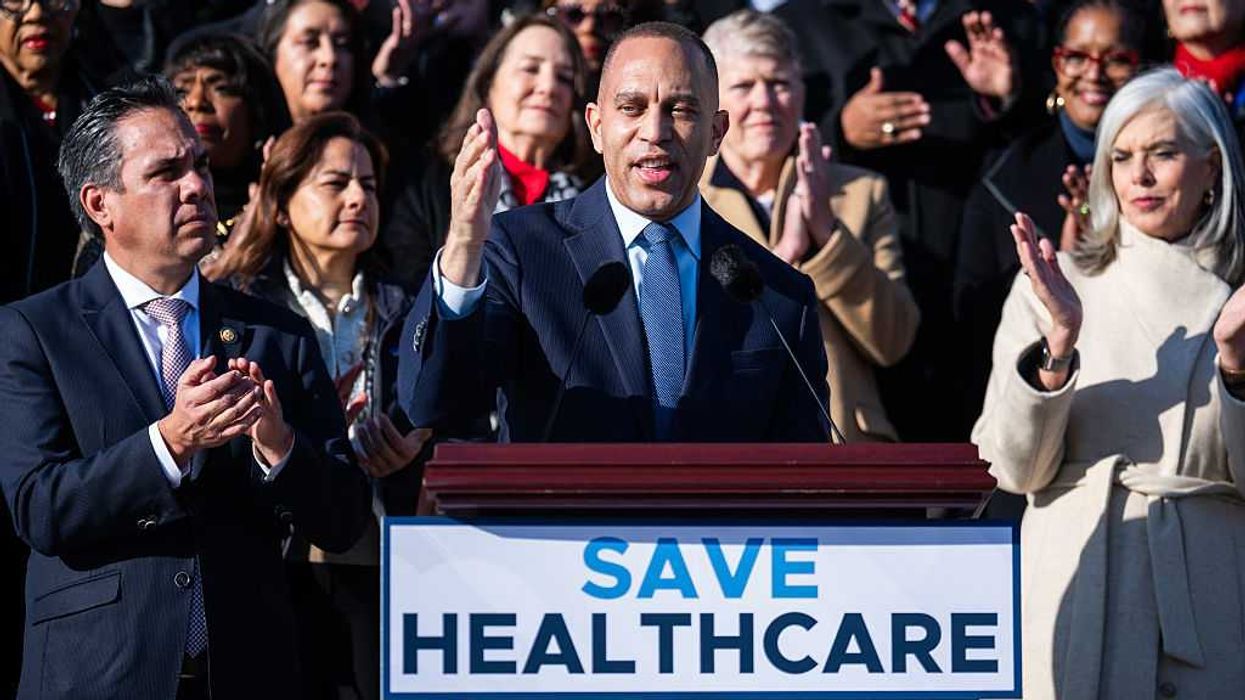
Yes, the House of Representatives on Thursday voted to extend the COVID-era Affordable Care Act subsidies that expired at the end of 2025. Seventeen Republicans even joined a unanimous Democratic Caucus in voting for the extension. But Senate Majority Leader John Thune (R-S.D.) said Republicans have “no appetite” for an extension — at least not without reforms.

Republicans remain an impediment to the necessary reforms and are working hand in hand with Democrats to bring on economic collapse. Time is not on our side.

The reality is, once government creates a welfare entitlement, logic and sustainability exit the conversation. Politicians do not debate whether to grow the program. They argue only over how much to increase spending and how to disguise the costs. That pattern now governs the fight over enhanced Obamacare subsidies.

Why the premise never gets challenged

When the Senate rejected a nearly identical bill in December, the Wall Street Journal reported that Congress faces “no clear path for aiding millions of Americans facing soaring Affordable Care Act insurance costs next year.”

The Journal’s framing accepts the entitlement premise without question. It treats “aiding millions” as morally self-evident while ignoring the coercion necessary to fund that aid. Government assistance does not materialize from thin air. It transfers responsibility, money, and risk from one group of Americans to another.

Once imposed, that transfer only grows.

Both rejected plans would have sent more taxpayer money to insurers than the ACA already guarantees. With no deal in sight, the Journal observed last month that hope for extending the subsidies is fading. That assessment may be accurate politically, but an extension does not deserve hope. It deserves scrutiny.

How entitlement politics works

Democrats want Republicans to extend an expansion they never voted for of a program they never supported. Republicans respond by proposing modest adjustments to reduce political damage without challenging the underlying structure.

Rep. Max L. Miller (R-Ohio), who voted for the bill, summarized the dilemma perfectly. “I just want to make this abundantly clear: This is a Democratic piece of legislation. It is absolutely horrific. Now, it is the best alternative to what we have at the moment.”

That is how entitlement traps operate.

For decades, big-government advocates have followed a reliable strategy. They create a benefit for a defined group, allow costs to spiral, then dare the opposition to take something away from a newly entrenched constituency. When the moment arrives, those who claim to favor limited government retreat or propose cosmetic reforms that leave the core system untouched.

That dynamic explains why the country remains locked into the socialist ratchet, the uniparty routine, and a political class that acts as tax collector for an ever-expanding welfare state.

RELATED: Democrat senator makes stunning admission about Obamacare failures

Photo by Chip Somodevilla/Getty Images

Trapped voters, trapped taxpayers

Entitlements squeeze the nation from both sides. They trap recipients by discouraging work and mobility, and they trap taxpayers by locking future governments into permanent obligations.

The Affordable Care Act stands as one of the most powerful modern examples of this system. The law forced millions into government-regulated insurance markets while guaranteeing insurers a growing pool of subsidized customers. The result was predictable: higher costs, deeper dependency, and a massive political constituency invested in permanent expansion.

Not a single Republican voted for the ACA. They understood what the law would do. Democrats passed it anyway, and it worked exactly as designed.

Who Obamacare was really built to serve

As Connor O’Keeffe has argued at Mises Wire, federal health care policy has long served industry interests. Government interventions channel money toward providers, pharmaceutical companies, and insurers under the guise of helping patients.

Obamacare accelerated that process by mandating coverage and expanding what insurers must provide, driving demand and cost growth in tandem. Once people rely on government assistance to afford insurance, any reduction becomes politically unthinkable.

Republicans now scramble to avoid electoral consequences. House Speaker Mike Johnson says the GOP will advance health care proposals without extending subsidies, yet many lawmakers privately admit that only an extension prevents immediate pain ahead of the 2026 midterms.

That admission exposes the trap. Spending limits become cruel. Taxpayer costs disappear from the conversation. Only the next premium increase matters.

Why conservatives keep losing

History explains where this leads. Entitlement debates almost always end with higher spending. Political power depends on payments to voters. Reducing benefits means losing elections.

Progressives act decisively when in power. Conservatives obsess over procedure and restraint, even as the administrative state grows unchecked.

Last week alone offered two examples. The House overturned President Trump’s March 2025 executive order blocking collective bargaining for over a million federal employees, with 20 Republicans joining Democrats. Even Franklin Roosevelt opposed public-sector unions. Modern conservatives could not summon the resolve to block them.

On the same day, Indiana Republicans declined to redraw their congressional map despite the risk of losing the House and triggering impeachment proceedings against Trump. They clung to unwritten norms while their opponents prepared to exploit the outcome.

RELATED: If conservatives will not defend capitalism, who will?

Leontura via iStock/Getty Images

This pattern defines conservative failure. Republicans manage decline. They preserve a decaying system rather than reverse it.

Donald Trump broke from that habit. A former Democrat, he understands power. Win elections, then act. Trump restored a political energy absent on the right for decades.

His approach to entitlements focuses on restraining growth outside Social Security while expanding private-sector freedom to increase economic output. The goal is not austerity. It is to shrink government’s share of the economy by growing everything else faster.

Reform or collapse

That strategy may succeed or fail. It remains the only alternative to collapse. Without reform, federal spending and debt will overwhelm the system within a decade, possibly sooner. Borrowing costs will explode. Inflation will surge. Control will vanish.

The United States approached that danger under unified Democrat control and Joe Biden’s autopen in 2021 and 2022. Voters halted the slide by electing Republican majorities and returning Trump to the White House.

Trump failed to drain the swamp in his first term, largely because congressional Republicans refused to legislate when they had the chance. In his second term, he has advanced reforms through executive action. Congress has responded with delay and timidity.

The country will escape the entitlement trap one way or another. Reform can arrive through disciplined growth and economic expansion, or through collapse driven by massive overspending.

With their conservative approach to governance, Republicans remain an impediment to the necessary reforms and are working hand in hand with Democrats to bring on that collapse. Time is not on our side.

The country that mocks America’s ‘culture of death’ has embraced one of its own


Canada loves to lecture America about compassion. Every time a shooting makes the headlines, Canadian commentators cannot wait to discuss how the United States has a “culture of death” because we refuse to regulate guns the way enlightened nations supposedly do.

But north of our border, a very different crisis is unfolding — one that is harder to moralize because it exposes a deeper cultural failure.

A society that no longer recognizes the value of life will not long defend freedom, dignity, or moral order.

The Canadian government is not only permitting death, but it’s also administering, expanding, and redefining it as “medical care.” Medical assistance in dying is no longer a rare, tragic exception. It has become one of the country’s leading causes of death, offered to people whose problems are treatable, whose conditions are survivable, and whose value should never have been in question.

In Canada, MAID is now responsible for nearly 5% of all deaths — 1 out of every 20 citizens. And this is happening in a country that claims the moral high ground over American gun violence. Canada now records more deaths per capita from doctors administering lethal drugs than America records from firearms. Their number is 37.9 deaths per 100,000 people. Ours is 13.7. Yet we are the country supposedly drowning in a “culture of death.”

No lecture from abroad can paper over this fact: Canada has built a system where eliminating suffering increasingly means eliminating the sufferer.

Choosing death over care

One example of what Canada now calls “compassion” is the case of Jolene Bond, a woman suffering from a painful but treatable thyroid condition that causes dangerously high calcium levels, bone deterioration, soft-tissue damage, nausea, and unrelenting pain. Her condition is severe, but it is not terminal. Surgery could help her. And in a functioning medical system, she would have it.

But Jolene lives under socialized medicine. The specialists she needs are either unavailable, overrun with patients, or blocked behind bureaucratic requirements she cannot meet. She cannot get a referral. She cannot get an appointment. She cannot reach the doctor in another province who is qualified to perform the operation. Every pathway to treatment is jammed by paperwork, shortages, and waitlists that stretch into the horizon and beyond.

Yet the Canadian government had something else ready for her — something immediate.

They offered her MAID.

Not help, not relief, not a doctor willing to drive across a provincial line and simply examine her. Instead, Canada offered Jolene a state-approved death. A lethal injection is easier to obtain than a medical referral. Killing her would be easier than treating her. And the system calls that compassion.

Bureaucracy replaces medicine

Jolene’s story is not an outlier. It is the logical outcome of a system that cannot keep its promises. When the machinery of socialized medicine breaks down, the state simply replaces care with a final, irreversible “solution.” A bureaucratic checkbox becomes the last decision of a person’s life.

Canada insists its process is rigorous, humane, and safeguarded. Yet the bureaucracy now reviewing Jolene’s case is not asking how she can receive treatment; it is asking whether she has enough signatures to qualify for a lethal injection. And the debate among Canadian officials is not how to preserve life, but whether she has met the paperwork threshold to end it.

This is the dark inversion that always emerges when the state claims the power to decide when life is no longer worth living. Bureaucracy replaces conscience. Eligibility criteria replace compassion. A panel of physicians replaces the family gathered at a bedside. And eventually, the “right” to die becomes an expectation — especially for those who are poor, elderly, or alone.

RELATED: ‘Stone-cold communism’: Canadian government seizes hospice center when staff refuses to allow euthanasia

Photo by Graham Hughes/NurPhoto via Getty Images

The logical end of a broken system

We ignore this lesson at our own peril. Canada’s health care system is collapsing under demographic pressure, uncontrolled migration, and the unavoidable math of government-run medicine.

When the system breaks, someone must bear the cost. MAID has become the release valve.

The ideology behind this system is already drifting south. In American medical journals and bioethics conferences, you will hear this same rhetoric. The argument is always dressed in compassion. But underneath, it reduces the value of human life to a calculation: Are you useful? Are you affordable? Are you too much of a burden?

The West was built on a conviction that every human life has inherent value. That truth gave us hospitals before it gave us universities. It gave us charity before it gave us science. It is written into the Declaration of Independence.

Canada’s MAID program reveals what happens when a country lets that foundation erode. Life becomes negotiable, and suffering becomes a justification for elimination.

A society that no longer recognizes the value of life will not long defend freedom, dignity, or moral order. If compassion becomes indistinguishable from convenience, and if medicine becomes indistinguishable from euthanasia, the West will have abandoned the very principles that built it. That is the lesson from our northern neighbor — a warning, not a blueprint.

No, Socialized Medicine Wouldn’t Have Saved United Healthcare’s CEO

Leftists such as Sen. Elizabeth Warren and Rep. Alexandria Ocasio-Cortez are playing a dangerous game.

Expect Big Changes To U.S. Health Policies After The Election

If current trends continue, the typical American family will spend 40 percent of its income on health care by 2030.

Italy Offered Free Care To Disabled Baby Indi, But Britain’s Socialized NHS Is Refusing To Let Her Live

Indi Gregory, an 8-month-old, terminally ill child, was sentenced to death by an English High Court judge Wednesday.

While Media Paint Newsom As ‘Moderate,’ He’s Advancing Socialist Health ‘Care’ In California

Legislation Newsom recently signed into law would take new steps to foist a single-payer health care system on Californians.

Critically understaffed Canadian hospital network may hire unvaccinated health care workers after thousands were fired during pandemic


Thousands of health care workers were fired in Canada for their refusal to comply with government vaccine mandates. While most provinces have since dropped their vaccine requirements, many hospitals continue to require continued compliance.

One struggling Ontario hospital network is, however, contemplating prioritizing patient care over vaccine requirements in hopes of attracting more talent.

What are the details?

In March, the province of Ontario, home to the city of Toronto and the nation's capital of Ottawa, lifted the requirement for health care settings and hospitals to enforce COVID-19 vaccination policies.

CTV News reported that notwithstanding this change in tack, Ontario hospitals continue to enforce their own mandates, along with hospitals in British Columbia and Nova Scotia. Accordingly, health care workers still need to be vaccinated.

For the South Bruce Grey Health Centre health network, which serves nearly 44,000 people, this may prove untenable.

SBGHC has been struggling with staffing issues for a long time.

In October, the health network announced that one of its rural hospital's emergency rooms would be closing down, adding that health staffing in the province would likely "remain a challenge for the foreseeable future."

At the time, SBGHC stated the "pool of available nurses is very limited."

This staffing problem has only worsened.

The health network's ICUs are flooded with flu cases and vaccinated COVID-19 patients. All four of its rural hospitals have suffered ER closures. COVID-positive health care workers have had to stay on the job.

Ivy Bourgeault, an associate professor at the University of Ottawa, told CTV's "Your Morning Tuesday" that "many people are grasping at straws in order to keep their hospitals open."

Mandy Dobson, interim director of clinical services at SBGHC, indicated in a memo obtained by CTV News that the health network is now reviewing its COVID-19 vaccination policy.

A survey was attached to Dobson's memo asking staff what they thought about the possibility of allowing unvaccinated workers to help restore order and lighten the load.

Anne Laxton, a mother of three and registered nurse with over 12 years' experience, applied to work for SBGHC but was rejected on account of her vaccination status.

At a townhall meeting in October, Laxton noted that owing to a dearth of information about the vaccines at the time of their initial roll-out, she was unable to give informed consent.

Despite having worked through the worst of the pandemic, she was barred from returning to work in January on account of her refusal to comply with the vaccine requirement.

Laxton went instead to work in a nearby pub.

"I know there are some people who are worried about people like me, but I have worked in the pub without a mask. I have served my [former] coworkers in the pub without a mask and they kept sitting there, eating and drinking ... but I cannot go to work with them," said Laxton.

After explaining to a room full of people suffering on account of the health care worker shortage why there was at least one fewer nurse to help them, some began to shout, "Hire her, hire her!"

SBGHC is reportedly the only hospital network in the province considering hiring unvaccinated workers.

Desperate but stubborn

True North indicated that Ontario fired at least 1,665 health care workers. The number of health care professionals sacked nationwide was close to 10,000.

The Ottawa Citizen reported that when the conservative Ontario government considered forcing 140 hospitals and other public sectors to re-hire unvaccinated workers earlier this year, the Ontario Hospital Association told the government not to interfere.

Anthony Dale, head of the OHA, said, "Government interference on hospital decisions regarding health-care worker vaccinations would create significant disruption when hospitals are taking extraordinary measures to respond to the fourth wave."

The vice president of organizational effectiveness at Ottawa's Queensway Carleton Hospital claimed that returning unvaccinated health care workers to the hospital "may increase the risk of transmission to patients and staff, and would amplify our staffing shortages."

Registered Nurses’ Association of Ontario CEO Doris Grinspun said, "99 per cent of nurses do not want to work next to a nurse that is not fully vaccinated."

CTV News noted that studies show vaccination does not stop COVID-19 infections or transmissions and that alleged protection in the vaccinated wanes after three months.

Canada’s Euthanasia Culture Previews What’s To Come On America’s Deadly Medicare Trajectory

Democrats support socialized medicine systems like those in Canada. Do they also support pressuring people into euthanasia to save money?

How Democrats’ Push To Expand Government Health Care Leaves The Neediest Americans Behind

Democrats have for the past decade placed the needs of able-bodied adults ahead of individuals with disabilities like Chase Brown.

12-Year-Old Archie Battersbee Dies After UK Authorities End Care Against Parents’ Wishes

NHS officials overturn parents’ rights, putting them before court proceedings that amount to a real-life death panel for vulnerable children.