If You Didn’t Get A Great Education, It’s Never Been Easier To Repair It
 Those of us in the majority of Americans who have been deprived of an excellent education have never had more opportunities to remediate ourselves.
I might have talked myself out of a job this week. I teach philosophy at Arizona State University, and the university wants to position itself as a leader in the AI revolution. I remain skeptical about AI’s ability to replace a humanities professor. Because of that skepticism, I signed up for what ASU called its AI Challenge.
My project involved what I called the “AI Dialogues.” I used ASU’s version of ChatGPT to hold Socratic-style dialogues, prompting Chat to reply as a given philosopher. I conducted dialogues with Chat as Aristotle, Hume, Marx, and even Lucifer. My students evaluated these exchanges to see how well Chat performed.
We can avoid the toil of learning to be wise — but we cannot avoid the need for it.
Chat could draw on public information and represent each thinker with reasonable accuracy. It also showed another trait: It wanted to please. It often leaned toward whatever it believed I wanted from the debate.
How does that work me out of a job? ASU now provides an AI that professors can customize for individual courses by uploading syllabi and course materials. Students can ask basic questions and receive answers that save me from writing emails that begin with, “Did you read the syllabus?” They can also ask what we covered in class and get quick explanations of key concepts and questions.
When I told my students about this feature, I asked them what they need me for at this point. I was joking — a little.
My classes depend on Socratic discussion. It is conceivable that ASU could project a realistic AI image of me at the front of the classroom and have it ask and answer questions with students. Maybe the only remaining edge is the “personal touch” of a real professor in the room. Even that could vanish if tuition becomes tiered: Students might pay less for “AI Anderson Socrates” than for the in-person version. Add one of Elon Musk’s Optimus robots made to look like Anderson, and I’m in trouble.
Musk has been talking for months about how the AI revolution is upending the myth we have told for six decades about university education. The myth, he says, promised an escape from toil. Students were told a degree was the path to an air-conditioned job that avoids heavy lifting and involves spreadsheets.
But spreadsheets are exactly what AI does better than humans. The new John Henry isn’t competing to pound railroad spikes; he’s competing to calculate data. No human can keep up with a microprocessor.
In Musk’s view, jobs that involve toil become the “safe” jobs, while many degree-based jobs disappear — replaced by technicians who keep AI running while it calculates taxes, diagnoses medical problems, and writes legal paperwork. The university-educated track no longer looks like the safe route. Universities now compete not just with fewer students due to demographic decline, but with an increasingly outdated product that students may stop buying.
The problem is worse than Musk lets on. The first jobs on the chopping block might be “numbers jobs,” but Elon has also said he plans to produce 100 million Optimus robots in 10 years. If so, even many physical jobs may not remain protected from automation.
One version of this future says we enter a utopia: Food is plentiful, toil disappears, and we cash our basic income checks — though an AI could do even that for us. We end up living in “Wall-E.”
RELATED: Almost half of Gen Z wants AI to run the government. You should be terrified.
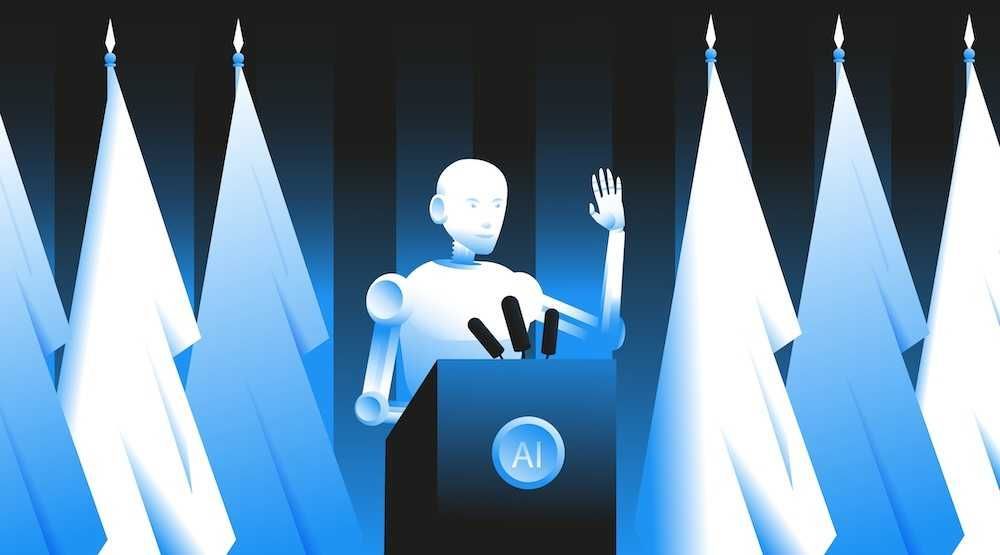
The more dystopian version looks like sci-fi depictions of AI overlords controlling humans as property — “The Matrix.” Or worse: Like Ultron, super-AI robots decide we must be exterminated to save us from ourselves and protect the planet. We build our own worst enemy.
Whichever future arrives, Musk may have highlighted something about human nature. We avoid suffering like toil. We build machines to avoid toil. And yet we uniquely need toil.
God introduced toil in the Garden of Eden after Adam sinned. Because of sin, we could no longer live in a paradise without toil. We must suffer and strive for our daily bread. History has been divided ever since between those who try to avoid suffering altogether and those who see suffering as a call to repent before God. AI is only the newest version of the philosopher’s stone.
Can I really be replaced by an AI philosophy instructor? I’m not worried.
What AI cannot do, in its counterfeit attempt to replace humans, is serve as an example of how to suffer well to attain wisdom. The Hebrew definition of wisdom is “skillful living.” Being told, “Here is an AI that can simulate skillful living,” is not the same as learning from a human who is actually skillful.
Students will still need to learn how to be wise themselves. A human professor who has actually done this will remain the gold standard that AI can only imitate. We can avoid the toil of learning to be wise — but we cannot avoid the need for it.
I am the Turning Point USA faculty adviser at Arizona State University. As a philosophy professor, what Charlie Kirk was doing stood out to me immediately. It also stood out to the ideologue professors who didn’t like being questioned. That’s why they tried to stop him.
Charlie did something no one thought possible. He walked into the heart of the modern university — where the left claims to hold the keys to knowledge — and did what their professors should have been doing all along: He asked questions. He challenged assumptions. He demanded clarity. He gave logical arguments.
Charlie wasn’t there to score points or win applause. He cared about students’ souls.
He was the American Socrates.
Like the Athenian philosopher, Charlie confronted those who claimed to be wise. He took questions — hundreds of them — on camera for all to see. Students asked about gender, economics, faith, and politics. He asked if they could rationally defend their views.
Again and again, Charlie turned the tables, and we saw that the content of the leftist classroom is irrational.
On gender ideology, he exposed what I call the “transsexual heresy,” showing students that reality — not ideology — defines what it means to be a man or a woman. He warned against letting confusion dictate truth. Objective reality matters, and he ensured that students knew it. The mentally ill should not be able to dictate to the rest of us what reality is. And anyone who doesn’t know basic things, such as the difference between a man and a woman, isn’t ready to teach students.
On economics, he dismantled Marxist clichés students had absorbed from their professors, showing that personal responsibility — not socialism — is the bedrock of human flourishing. They came at him with Rousseau, stating that private property and “the system” force the “oppressed” to live lives of crime. In one video, a student told him the poor and marginalized have to become criminals, and Charlie demolished this by simply asking if they have free will. It was brilliant, and everyone watching knew it.
On Christianity, he confronted the narrative that faith is merely patriarchy and white supremacy in disguise. The background narrative is that these professors hate the Bible. Professors had planted these lies in the minds of students to prevent them from reading it.
An untold multitude of students had their faith shipwrecked by such professors while their parents paid the tuition. The unbelieving profs thought they had sufficiently salted the ground and planted tares in the field. Charlie tore them out, root and branch, preparing the ground for the gospel itself to be heard.
And that’s why the professors despised him.
I’ve been in those faculty meetings. I’ve heard professors laugh about “deconstructing” the faith of Christian students. I’ve watched them assign books praising witchcraft while condemning Christianity as “oppressive.” I’ve seen them try to ban Charlie Kirk from speaking on campus by declaring him a “white supremacist.”
ASU “honors faculty” successfully prevented him from speaking at the honor college even while they held events on the benefits of witchcraft — while the outlet Jezebel bragged about hiring “Etsy witches” to hex him. If the witches hated him this much, it tells the good guys he was on to something.
The spiritual battle lines could not be clearer.
Charlie wasn’t there to score points or win applause. He cared about students’ souls. He stood in the breach against professors who see students not as young men and women searching for truth, but as recruits for their ideological crusades. He laughed at the degree programs that promised jobs for students such as “radical advocate.” He was there because he believed those students were worth saving from the godless ideologies peddled in classrooms.
When Charlie was murdered, some on the left rushed to say, “Let’s all calm down.” There is no moral equivalency here between the right and the left. Yet the left is the one who heated it up by calling him a white supremacist. The left controls the American university, where conservatives and Christians are called “fascist white supremacist patriarchs worse than Hitler” all day and night.
Where was that call for calm after George Floyd’s fentanyl overdose? Violence erupted. Cities burned. Professors excused it all. They used class time to tout Black Lives Matter.
But you won’t see TPUSA students burning cities BLM-style. They will do what Charlie taught them: Use logic and reason to expose falsehoods. Like the students of Athens after Socrates’ death, they will remember the example of the man who confronted their professors — and won.
And those professors will live knowing they were weighed in the balance and found wanting. They are the baddies.
Before his execution, Socrates told his accusers they would face a heavier judgment than the one they inflicted on him. They killed him to silence him. But his death only proved their ignorance and wickedness. They were unable to give an account to explain themselves and were exposed as living the unexamined life.
The same is true here.
Charlie’s death will not silence him. It will amplify his example. Students will keep questioning. They will expose the foolishness of professors who despised Charlie’s example. And those radical professors will carry the shame of knowing they tried to cover ignorance with hatred.
RELATED: Why Charlie Kirk’s assassination will change us in ways this generation has never seen

As a Christian pastor, I know Charlie saw that souls were at stake. Charlie publicly professed Christ to be his savior, and the ideological professors know it also. They saw students giving their souls in faith to Christ rather than John Money and hated it.
Now those professors think Charlie is silenced, but they must live with their own darkness. They can repent — or they will live in that darkness forever and face the judgment of God. The blood of martyrs has always been the seed of revival.
May the Lord use Charlie’s life — and yes, even his death — to raise up a generation of students who love truth, pursue wisdom, and refuse to bow to the false gods of the modern university. Let’s question godless professors to reveal to everyone watching that they don’t know clear truths about God and what is good.
Charlie Kirk was the American Socrates. The leftist professors hated him for it. And they will never escape the questions he taught a generation to ask.
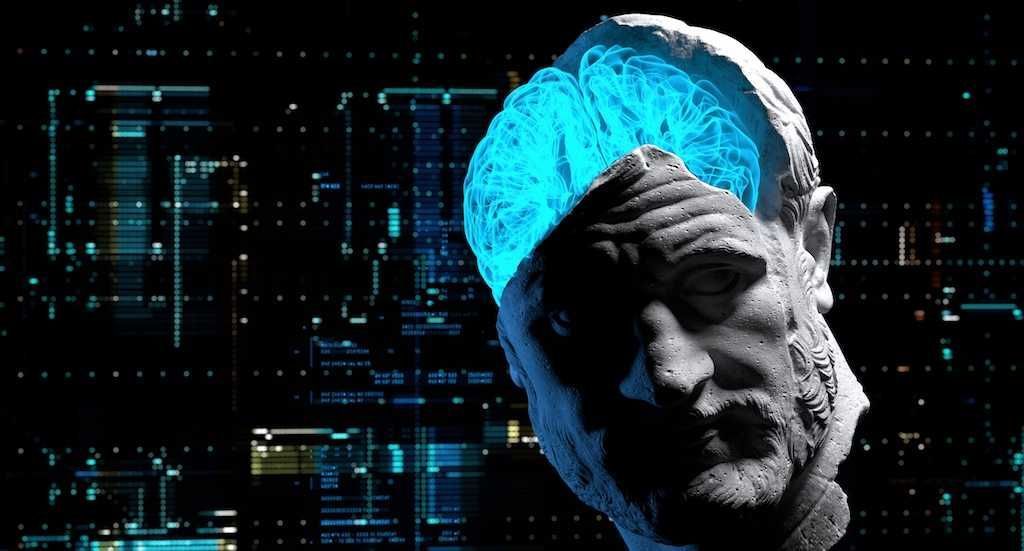
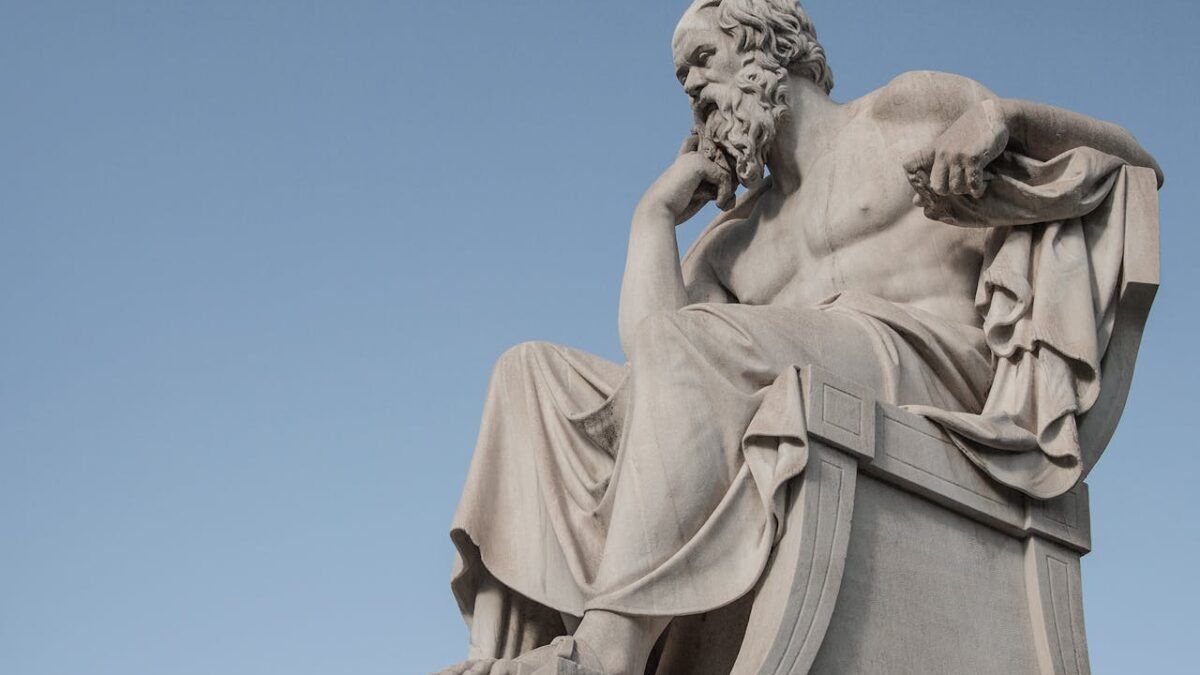 History rarely affords such exact parallels. The spirit, the calling, and the mission of Socrates was almost exactly that of Charlie Kirk.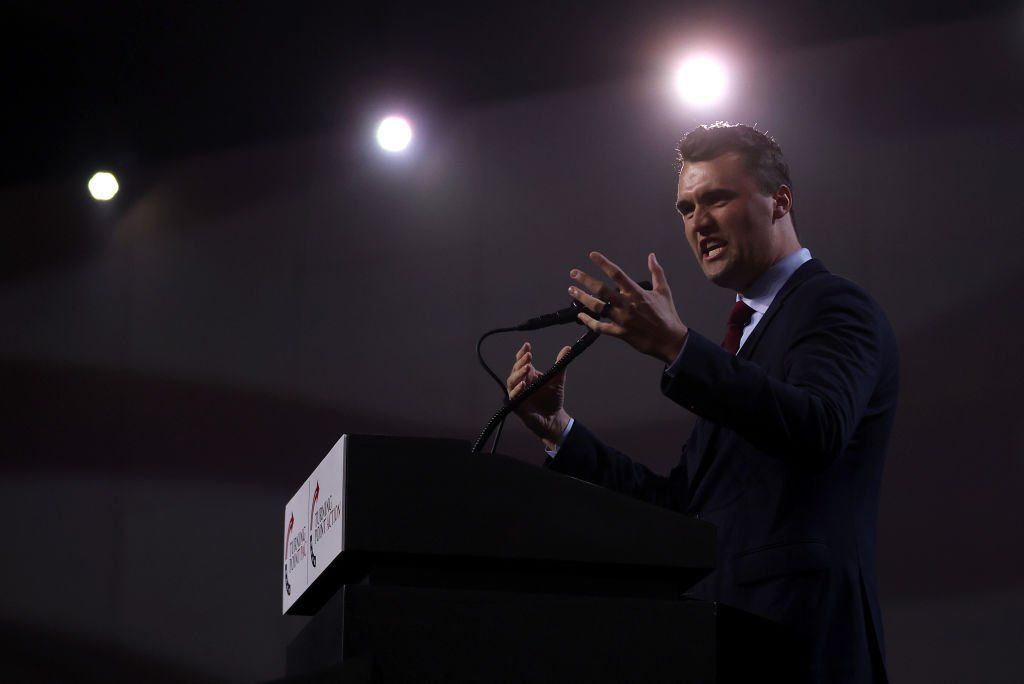
 Everyone knows college campuses have been ideological cesspits for years, but the Oct. 7 response is our chance to burn them to the ground.
 Socrates tells the jury that actions born of the fear of death are the most blameworthy, and our world today is in desperate need of that message.
 Conservatives cornered in spaces of conformist ideology would do well to master the powerful rhetorical weapon of Socrates.
 www.theblaze.com
 www.theblaze.com