Crypto Billionaire Taps Scandal-Tarred Crypto Critic To Meddle in GOP Primaries

The crypto billionaire and Democratic megadonor Chris Larsen is pouring millions into Republican primaries through the Invest in Tomorrow Coalition, a PAC devoted to climate activism led by the scandal-plagued former executive director of the Sierra Club, Michael Brune. The two are strange bedfellows: Brune has branded crypto, the industry in which Larsen made a fortune, a "climate catastrophe" that facilitates "money laundering and fraud."

The post Crypto Billionaire Taps Scandal-Tarred Crypto Critic To Meddle in GOP Primaries appeared first on .

China is building power. America is still debating it.


The U.S. Department of Energy recently announced that it is turning old federal land — including Cold War uranium sites, closed military facilities, and other public parcels — into part of the physical backbone of America’s artificial intelligence buildout, pairing new data centers with the power generation needed to run them. The projects could also create new domestic jobs.

Critics will focus on the benefits to big technology companies. The larger issue is harder to dismiss: Energy security is national security. The country that can build and power the next generation of AI infrastructure will hold an enormous economic and strategic advantage.

Whatever disagreements Americans have over individual energy sources, China is not waiting for us to resolve them.

That means the United States cannot afford an ideological energy policy. Whether the resource is natural gas, nuclear power, solar, battery storage, or the critical minerals needed to build advanced technologies, domestic supply should be treated as a strategic asset.

AI is already changing the scale of America’s power needs. Data centers alone could soon consume as much electricity as the entire country of Malaysia. Advanced manufacturing is returning to American soil and will require still more reliable power.

The military is modernizing with increasingly energy-intensive technology as well. As retired U.S. Air Force Lt. General David Deptula argued in the Washington Post, data itself has become a strategic military asset. The countries that lead the next generation of AI will need more than talented engineers and sophisticated algorithms. They will need the infrastructure to power the entire ecosystem.

China understands this. Beijing has spent years pursuing an aggressive all-of-the-above energy strategy. It continues to build coal plants while investing heavily in solar, nuclear power, hydropower, and battery storage. Whatever disagreements Americans have over individual energy sources, China is not waiting for us to resolve them.

The Energy Department’s plan is therefore a timely step. It creates opportunities to pair new power generation with the infrastructure that will consume it. But if America intends to win the AI race, policymakers across the political spectrum will have to go further and remove unnecessary obstacles to new energy supply.

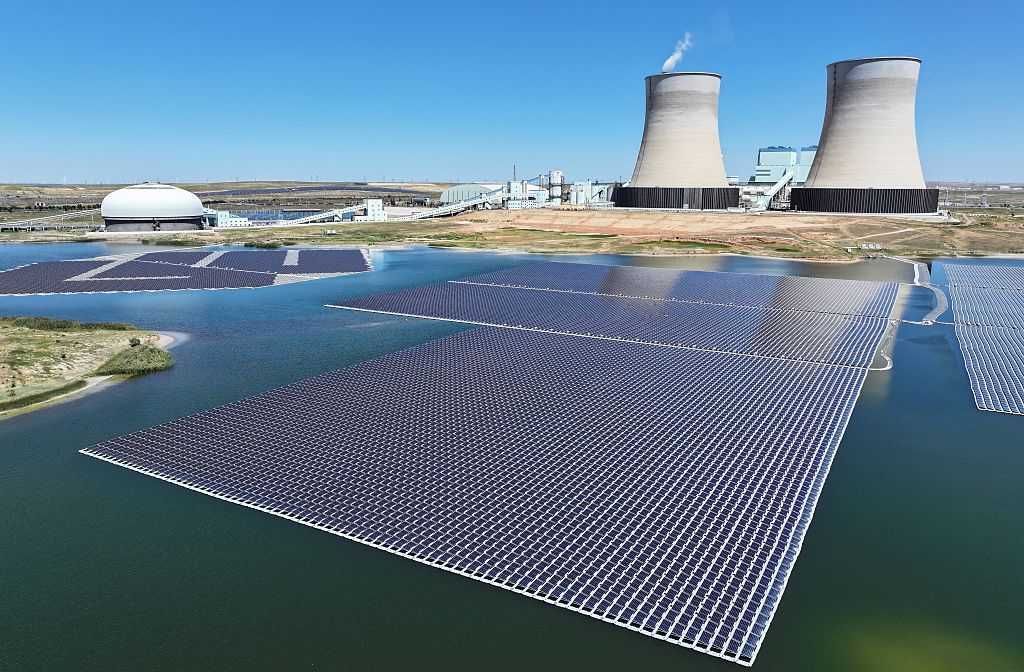
Solar power, for example, has been the fastest-growing source of new U.S. electricity generation for five years running. In 2025, the United States added 43 gigawatts of new solar capacity, enough to power over 32 million homes. Where permitting and regulatory barriers needlessly delay viable projects, Washington should remove them.

RELATED: Water, watts, and workers: 3 persistent myths about AI and data centers

Jim West/UCG/Universal Images Group/Getty Images

The same urgency should apply to critical minerals. The United States has spent years allowing dependence on foreign supply chains to deepen even as minerals became indispensable to batteries, electronics, defense systems, and energy infrastructure. Domestic mining and processing cannot expand at the speed national security demands if projects spend years trapped in permitting and regulatory limbo.

This is not an argument for replacing traditional energy with newer technologies. It is an argument for abundance. Oil and gas remain essential. Nuclear power can provide large amounts of reliable electricity. Solar and storage can add capacity quickly in the right places. Critical minerals underpin all of them. The strategic question is not which source wins an ideological contest. It is whether America can produce enough energy, reliably and affordably, to meet the demands ahead.

China is already acting on that logic. The United States should do the same. The next phase of economic and military competition will be shaped not only by who invents the best technology, but by who can build the plants, mines, transmission, data centers, and generation needed to deploy it at scale.

The Energy Department’s announcement is a good start. Now we need to make abundance the policy: build more, permit faster, secure domestic supply chains, and stop treating energy sources as political footballs.

America will need all the reliable energy it can produce, however we can produce it. The country that powers the future will have a much better chance of leading it.

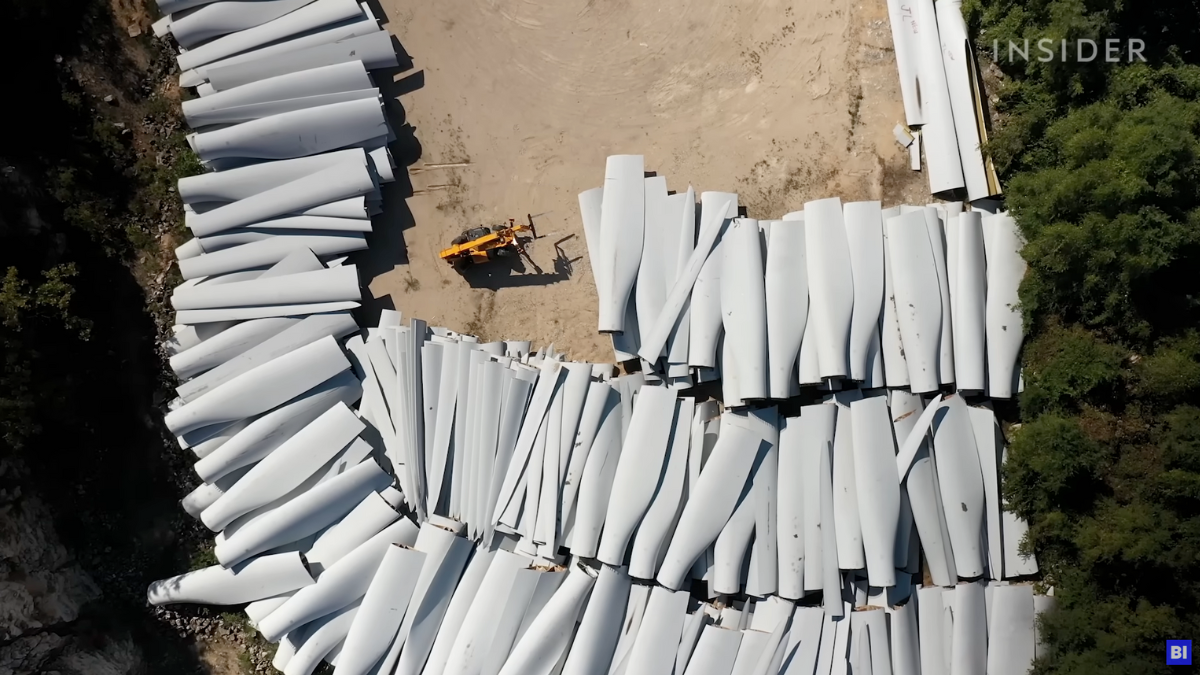
‘Green Energy’ Is Quietly Polluting A Landfill Near You

'You can’t reuse turbines, and there are now thousands upon thousands of blades just sitting there in warehouses already ... It’s an environmental disaster.'

Spain and Portugal went dark for 12 hours — America could easily be next


When I visited in Europe earlier this month, a massive blackout had just struck Spain and Portugal — the largest in either country’s history. Sixty million people across the Iberian Peninsula and parts of southern France lost power and communication for 12 hours. It was a total system collapse. And if America doesn’t wake up, we’re heading for the same fate.

This wasn’t just some fluke or freak weather event. It was a disaster years in the making, baked into the very structure of Spain and Portugal’s energy policies — policies championed by radical environmentalists and now echoed by the Democratic Party here at home.

Over-reliance on wind and solar leads to blackouts and economic chaos and puts us at the mercy of our adversaries.

Spain and Portugal are the poster children of Europe’s so-called green energy revolution. Just before the blackout, Spain’s energy infrastructure was a mixture of up to 78% solar and wind, with only 11% nuclear and 3% natural gas. Spain gutted its base-load energy sources — nuclear, hydro, and gas — in favor of wind turbines and solar panels. The result was an electrical grid as flimsy as a house of cards.

Predictably, the U.S. media ran interference. Reuters insisted that the blackout wasn’t the fault of renewable energy but instead blamed the “management of renewables.” That’s like saying a building collapse isn’t the fault of bad materials, just bad architecture. Either way, it still falls down.

Set up to fail

“Renewable” power sources are unreliable by nature. Solar doesn’t work when the sun doesn’t shine. Wind turbines don’t spin when the air is still. And when these systems fail — and they inevitably do — you need consistent, dispatchable backup. Spain doesn’t have that. In the name of “saving the planet,” the Spanish government heavily taxed nuclear plants until they became unprofitable, then shut them down altogether.

As Spanish economist Daniel Lacalle put it: “The blackout in Spain was not caused by a cyberattack but by the worst possible attack — that of politicians against their citizens.”

And yet, not far away, parts of southern France that were affected by the same blackout recovered quickly. Why? Because France has wisely kept its nuclear power intact. In fact, nuclear power provides 70% of France’s electricity. Say what you want about the French, but they got that part right.

What happened in Spain and Portugal is not a European problem — it’s a cautionary tale. It's a flashing red warning light for the United States. The Democrats' Green New Deal playbook reads exactly like Europe’s: Phase out fossil fuels, demonize nuclear power, and vastly expand wind and solar — all while pretending this won’t destabilize our grid.

Look at California. In 2022, the state experienced rolling blackouts during a heat wave after years of shutting down nuclear and natural gas plants. Gov. Gavin Newsom (D) had to scramble to bring those “dirty” plants back just to keep the lights on.

Even back in 2017, the U.S. Department of Energy warned that over-reliance on renewables threatens grid stability. But the Biden administration ignored it and dove headlong into the disastrous waters of green energy.

AI’s imminent energy demand

Former Google CEO Eric Schmidt recently told Congress that artificial intelligence is expected to consume up to 99% of our total electricity generation in the near future. Think about that — 99%. Add to that the left’s obsession with mandating electric vehicles, and the demand on our already fragile grid becomes unsustainable.

Try running all of that — AI data centers, EV charging stations, and the basic needs of 330 million people — on wind and sunshine. It’s impossible. Until someone invents a clean, infinite power source that works 24/7, we need nuclear, natural gas, and yes, maybe even coal.

This isn’t the first time a green energy fantasy has ended in blackouts. In 2016, 1.7 million Australians lost power due to wind farm fluctuations. In 2017, Germany’s trillion-dollar experiment with renewables nearly collapsed its grid. In 2019, more than a million Brits lost power after a lightning strike overwhelmed their renewables-heavy system.

These aren’t isolated events. This is a pattern. When energy policy is driven by ideology instead of engineering, people suffer.

Here’s a dirty little secret the climate cult doesn’t want you to know: Renewables lack something critical called inertia. Traditional base-load sources like nuclear and gas provide the physical inertia needed to keep a grid stable. Without it, a minor disruption — like a cloudy day or a sudden drop in wind — can trigger a cascading blackout.

Worse, restarting a power grid after a blackout — what’s called a “black start” — is significantly more challenging with renewables. Nuclear and natural gas plants can do it. Wind and solar can’t.

While it doesn’t appear that this was a cyberattack, it easily could have been. Renewable-heavy grids rely on inverters to convert DC to AC — and those inverters are vulnerable. Major flaws have already been discovered that could allow hackers to remotely sabotage the voltage and crash the grid. The more we rely on renewables, the more we invite foreign actors like China and Russia to exploit those vulnerabilities.

Save the grid!

So what’s the takeaway from the Spain-Portugal blackout?

First, we need to stop demonizing nuclear energy. Spain still plans to shut down all of its nuclear plants by 2035 — even after this catastrophe. That’s insane. Nuclear is safe, is clean, and provides the base-load power and inertia a modern grid needs.

Second, we must preserve and expand our natural gas infrastructure. When renewables fail — and they will — gas is the only backup that can be scaled quickly and affordably.

Third, we need to fortify our power grid against cyber threats. If our electricity goes down, everything else follows — banking, transportation, communication, water. We’re talking about national survival.

Green energy has a role in the future. But it’s not the savior the left wants it to be. Over-reliance on wind and solar leads to blackouts and economic chaos and puts us at the mercy of our adversaries.

The blackout in Spain and Portugal should be a wake-up call. If Democrats turn our grid into their ideological jungle gym, the lights will go out — literally. We can’t afford to play roulette with our power supply.

America’s energy strategy must be based on reliability, security, and reality — not political fantasy. If we fail to recognize that, we’ll soon be the ones stuck in elevators, stranded on trains, and left in the dark.

Want more from Glenn Beck? Get Glenn's FREE email newsletter with his latest insights, top stories, show prep, and more delivered to your inbox.
Trump Energy Secretary Tells Europeans To Ditch 'Climate Alarmism' and Embrace Natural Gas as Nations Face Widespread Blackouts

Energy Secretary Chris Wright implored European nations to reject "climate alarmism" and instead reembrace natural gas and nuclear power as parts of the continent continue to face widespread grid blackouts.

The post Trump Energy Secretary Tells Europeans To Ditch 'Climate Alarmism' and Embrace Natural Gas as Nations Face Widespread Blackouts appeared first on .

Even With Subsidies, Solar Panels and Other Green Home Upgrades Take Years To Pay Off, WaPo Admits

Even with generous subsidies, green retrofits such as solar panels and heat pumps take anywhere from 8 to 48 years to pay off for homeowners, according to a Washington Post analysis released Monday.

The post Even With Subsidies, Solar Panels and Other Green Home Upgrades Take Years To Pay Off, WaPo Admits appeared first on .

GOP sellouts fight to keep Biden’s Green New Deal cash flowing


The American people overwhelmingly rejected Joe Biden’s presidency. His signature legislative agenda, the Green New Deal, subsidizes inefficient energy sources while driving up costs for affordable, reliable alternatives. This policy enriches a select few at the expense of taxpayers, who essentially fund their own economic suicide. Unfortunately, a group of lukewarm Republicans — whose donors profit from these terrible subsidies — are working to keep them in place.

The Green New Deal should be the first target for repeal through budget reconciliation. Since Republicans hesitate to cut individual welfare programs, eliminating corporate welfare for the most expensive energy scheme in U.S. history is the obvious alternative — especially since it passed through reconciliation in the first place.

Trump should make it clear to Republicans: Undoing Biden’s presidency requires fully dismantling his signature legislative achievement. The green grift must end.

Yet a group of 21 House Republicans, likely backed by others unwilling to go on record, now oppose rolling back these subsidies. Because of course they do.

Without directly mentioning Biden, the legislation, or the fact that these credits amount to corporate welfare rather than “tax incentives,” these Republicans urged Ways and Means Committee Chairman Jason Smith (R-Mo.) to take a “targeted and pragmatic” approach to tax code changes.

“Countless American companies are utilizing sector-wide energy tax credits — many of which have enjoyed broad congressional support — to invest in domestic energy production and infrastructure for both traditional and renewable sources,” wrote the 21 House members, led by Rep. Andrew Garbarino (R-N.Y.), in a March 9 letter. “Both our constituencies and the energy industry remain concerned about disruptive changes to the nation’s energy tax structure. Many of these credits were enacted over a ten-year period, allowing energy developers to plan with these incentives in mind.”

In simpler terms, they want to preserve massive subsidies for solar, wind, electric vehicles, and “carbon capture,” which could cost up to $1.2 trillion. Knowing these terms carry negative connotations for Trump voters and the president himself, they instead framed their request as support for “energy production,” as if referring to oil, gas, and coal.

“To meet President Trump’s campaign promises of reviving manufacturing and strengthening domestic energy production, we need an all-of-the-above approach,” Garbarino said in an interview. “These credits have helped make that happen.”

An unbalanced strategy

Unlike natural energy sources, which do not rely on government subsidies to serve consumers, solar and wind power cannot survive without them — an admission the industry itself has made. These industries require constant government support while policymakers simultaneously impose burdens on fossil fuels, forcing businesses to adopt unreliable alternatives.

Wind power, in particular, depends on a factor entirely beyond human control — the wind itself. Texas poured billions into subsidizing wind energy and made its grid increasingly reliant on it, only for it to fail when it was needed most during the Great Texas Freeze of 2021. This year, Texas grid operators had to postpone maintenance on power plants to generate more coal and natural gas after wind production dropped by 18% due to low wind conditions in February.

In short, the so-called “all-of-the-above” energy approach is not a balanced strategy. Fossil fuels repeatedly bail out wind and solar when they fall short — but never the other way around.

Far from free money

The push for unreliable energy schemes has become so indefensible that the industry is now shifting its messaging. Instead of emphasizing climate change, it now frames itself as a driver of job creation. In December, Reuters reported that the solar industry had rebranded its pitch to the Trump administration, promoting itself as a “domestic jobs engine that can help meet soaring power demand” while avoiding any mention of climate change.

This strategy aims to lure more Republicans into supporting green energy subsidies. Given the geographic distribution of these projects, about 80% of the subsidies tied to the Green New Deal scam have gone to Republican congressional districts.

But these subsidies are far from free money. Funding them requires taking on more debt, driving inflation, while backing energy schemes that are impractical, environmentally questionable, and a poor use of land.

Climate fascism continues to be a loser for Democrats. In a recent poll, 84% of respondents said the cost of living and inflation mattered more than addressing climate change. This is a winning issue for Republicans — but only if Trump takes a hard stance against RINOs who enable these subsidies.

Courts have already blocked his efforts to terminate them through executive action, meaning only Congress can fully repeal them. Trump should make it clear to Republicans: Undoing Biden’s presidency requires fully dismantling his signature legislative achievement. The green grift must end.

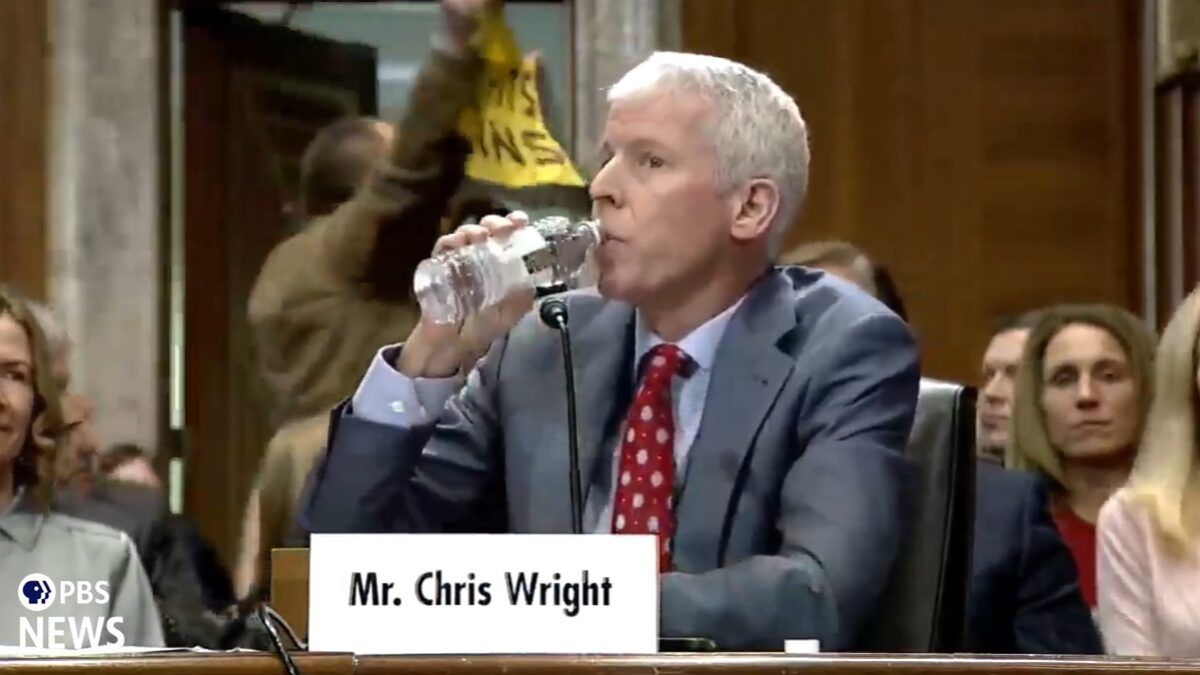
Climate Protestors Disrupt Chris Wright Hearing For Energy Secretary

Any honest examination of the Los Angeles wildfires indicts incompetent government leadership rather than climate change.

As Appalachians Languish, CBS Moderators Minimize Deadly Hurricane Helene With Climate Change Question

CBS seemingly cares little about its Appalachian viewers; debate questions hardly mentioned Hurricane Helene.

Federal Investigators Expand Probe of Biden's Energy Loan Program

The chief watchdog office for the Department of Energy is expanding its probe of the Biden administration's $400 billion energy loan program ahead of the presidential election, according to a government contracting notice.

The post Federal Investigators Expand Probe of Biden's Energy Loan Program appeared first on .