Oil Matters In Venezuela, But Not For The Reason Democrats Think

Oil isn’t just a commodity anymore. It’s a strategic weapon.
How data centers could spark the next populist revolt


Everyone keeps promising that artificial intelligence will deliver wonders beyond imagination — medical breakthroughs, massive productivity gains, boundless prosperity. Maybe it will. Maybe it won’t. But one outcome is already clear: If data centers keep driving up Americans’ electricity bills, AI will quickly become a political liability.

Across the country, data center expansion has already helped push electricity prices up 13% over the past year, and voters are starting to push back.

Handled correctly, AI can strengthen America. Handled poorly — by letting data centers overwhelm the grid and drive families toward energy poverty — it will accelerate decline.

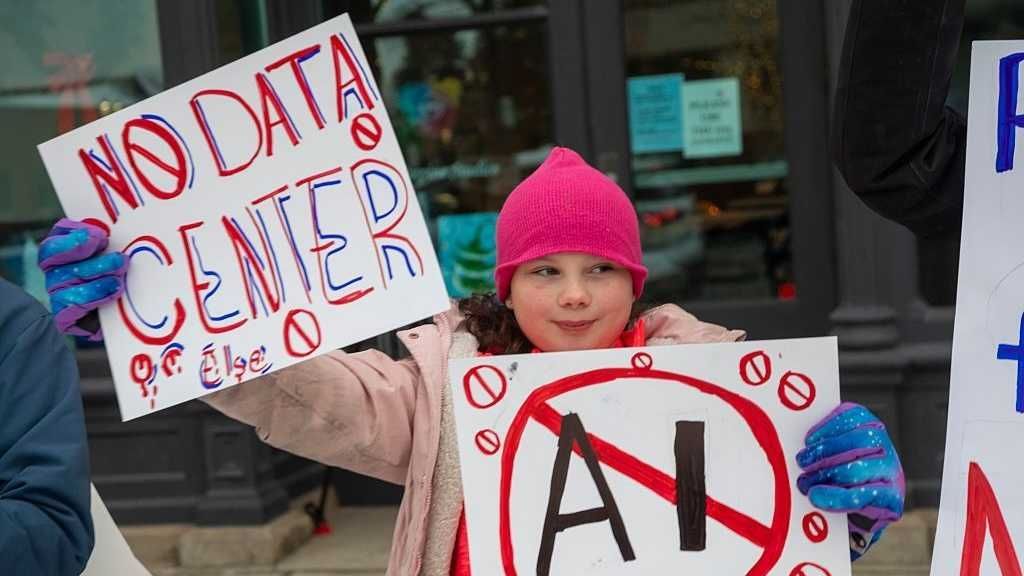
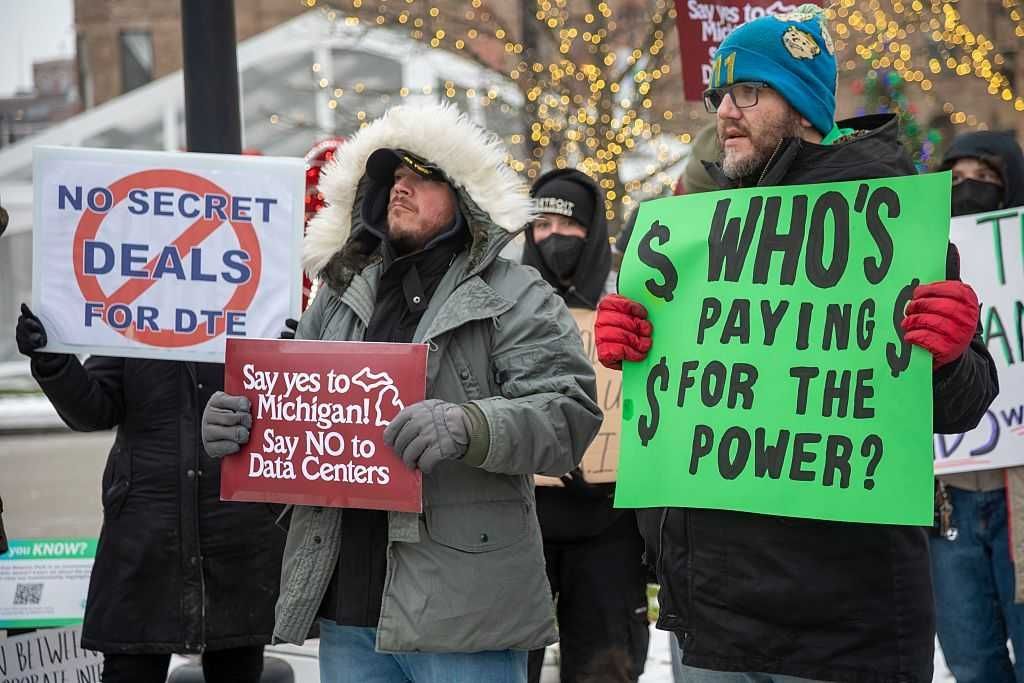
In recent months, plans for massive new data centers in Virginia, Maryland, Texas, and Arizona have stalled or collapsed under local backlash. Ordinary Americans have packed town halls and flooded city councils, demanding protection from corporate projects that devour land, drain water supplies, and strain already fragile power grids.

These communities are not rejecting technology. They are rejecting exploitation. As one local official in Chandler, Arizona, told a developer bluntly, “If you can’t show me what’s in it for Chandler, then we’re not having a conversation.”

The problem runs deeper than zoning fights or aesthetics. America’s monopoly utility model shields data centers from the true cost of the strain they impose on the grid. When a facility requires new substations, transmission lines, or transformers — or when its relentless demand drives up electricity prices — utilities spread those costs across every household and small business in the service area.

That arrangement socializes the costs of Big Tech’s growth while privatizing the gains. It also breeds populist anger.

A better approach sits within reach: neighborhood battery programs that put communities first.

Whole-home battery systems continue to gain traction. Rooftop solar panels, small generators, or off-peak grid power can recharge them. Batteries store electricity when it’s cheap and abundant, then release it when demand spikes or outages hit. They protect families from blackouts, lower monthly utility bills, and sometimes allow homeowners to sell power back to the grid.

One policy shift should become non-negotiable: Approval for new data centers should hinge on funding neighborhood battery programs in the communities they impact.

In practice, that requirement would push tech companies to help install home battery systems in nearby neighborhoods, delivering backup power, grid stability, and real relief on electric bills. These distributed batteries would form a flexible, local energy reserve — absorbing peak demand instead of worsening it.

RELATED: Your laptop is about to become a casualty of the AI grift

Photo by: Jim West/UCG/Universal Images Group via Getty Images

Most importantly, this model reverses the flow of benefits. Working families would no longer subsidize Big Tech’s expansion while receiving nothing in return. Communities would share directly in the upside.

Access to local land, water, and electricity should come with obligations. Companies that consume enormous public resources should invest in the people who live alongside them — not leave residents stranded when the grid buckles.

Politicians who ignore this gathering backlash risk sleepwalking into a revolt. The choice is straightforward: Build an energy system that serves citizens who keep the country running, or face their fury when they realize they have been sacrificed for someone else’s high-tech gold rush.

Handled correctly, AI can strengthen America. Handled poorly — by letting data centers overwhelm the grid and drive families toward energy poverty — it will accelerate decline.

We still have time to choose. Let’s choose wisely.

‘Green Energy’ Is Quietly Polluting A Landfill Near You

'You can’t reuse turbines, and there are now thousands upon thousands of blades just sitting there in warehouses already ... It’s an environmental disaster.'
Home solar isn’t woke — it’s conservative common sense


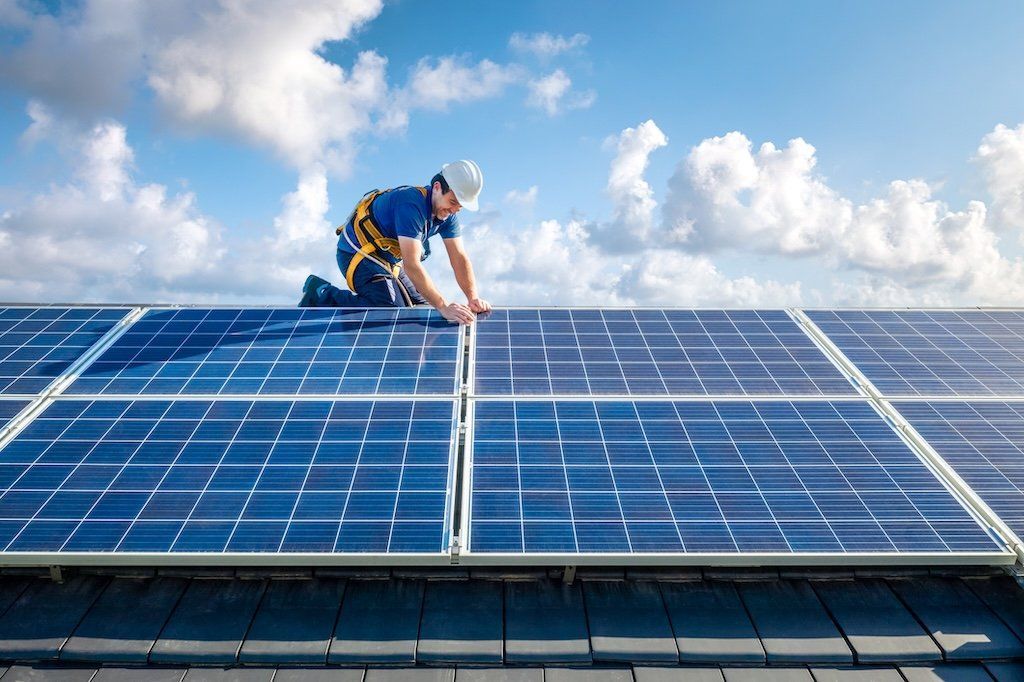
Four Republican senators have taken an unexpected but welcome stand for American energy independence. They sent a letter to Majority Leader John Thune (R-S.D.) urging him to protect the investment tax credit, a key program that helps American families install rooftop solar panels and battery storage systems. They join 21 House Republicans who signed a similar letter defending energy freedom for U.S. homeowners.

As a lifelong conservative, I’m glad to see it. The ITC isn’t a government handout. It’s a tax credit that helps homeowners cover the up-front cost of installing solar panels and battery backups. It empowers Americans to generate their own power, lower their energy bills, and reduce reliance on bloated utilities. Since its creation nearly two decades ago, every president — Democrat and Republican, including Donald Trump — has supported it.

The investment tax credit puts power — literally and figuratively — back in the hands of individuals while reducing America’s dependence on foreign energy.

But some in Congress want to kill the ITC. That would be a costly mistake, especially as tariffs and other pressures push prices higher. Eliminating the ITC would put rooftop solar and home batteries out of reach for most families.

Without these tools, more Americans will remain tied to an aging, overburdened electric grid — just as demand surges and threats like wildfires, blackouts, and cyberattacks multiply. It would also expose families to the unchecked rate hikes of monopoly utilities and weaken a policy that has fueled job growth in red states like Texas and Florida, where home solar is booming.

The conservative case for the ITC is straightforward. Conservatives believe the tax code should reward behavior that strengthens the country — buying a home, raising a family, investing in a small business. Generating your own electricity during a grid failure should be no different.

During blackouts in Texas, wildfires in California, and hurricanes in Florida, families with solar and batteries kept the lights on when it mattered most. They didn’t wait on utility companies or FEMA. They had peace of mind because they had power.

And as we saw after Hurricane Milton, it’s often conservative, Trump-voting communities that land last on the disaster recovery list.

Monopoly utilities, backed by state regulators, have no incentive to treat customers fairly. At best, they see us as ATM machines. Last year, Pacific Gas and Electric hiked rates, tacked on new fees, and raked in $2.2 billion in profits. Millions of Californians have no choice but to pay up — unless they generate their own power.

Backing the ITC isn’t a betrayal of conservative values. It’s a reaffirmation of them. It puts power — literally and figuratively — back in the hands of individuals while reducing America’s dependence on foreign energy.

I applaud the Republicans in Congress who have taken a stand for the ITC. More should join them. Because defending the ITC isn’t just good policy.

It’s good for America.

Gov. Stitt Partnering With Denmark On Pointless ‘Green’ Energy Plans Will Only Hurt Oklahomans

Oklahoma's deal with Denmark will result in thousands more acres of Oklahoma farmland lost to wind turbines and solar panels.
Why is deep-red Oklahoma paving the way for Biden’s Green New Deal?


Oklahoma hasn’t had a single county vote for a Democratic presidential candidate in 24 years. Every statewide elected official is a Republican, and the GOP holds overwhelming 4-1 majorities in both legislative chambers. Former President Donald Trump carried the state by 35 points. Despite this staunchly conservative profile, Oklahoma’s Republican leadership is allowing vital farmland and ranchland to be used for foreign land acquisitions tied to solar and wind energy projects. This move comes even as Oklahomans rejected the administration behind the Green New Deal. So what gives?

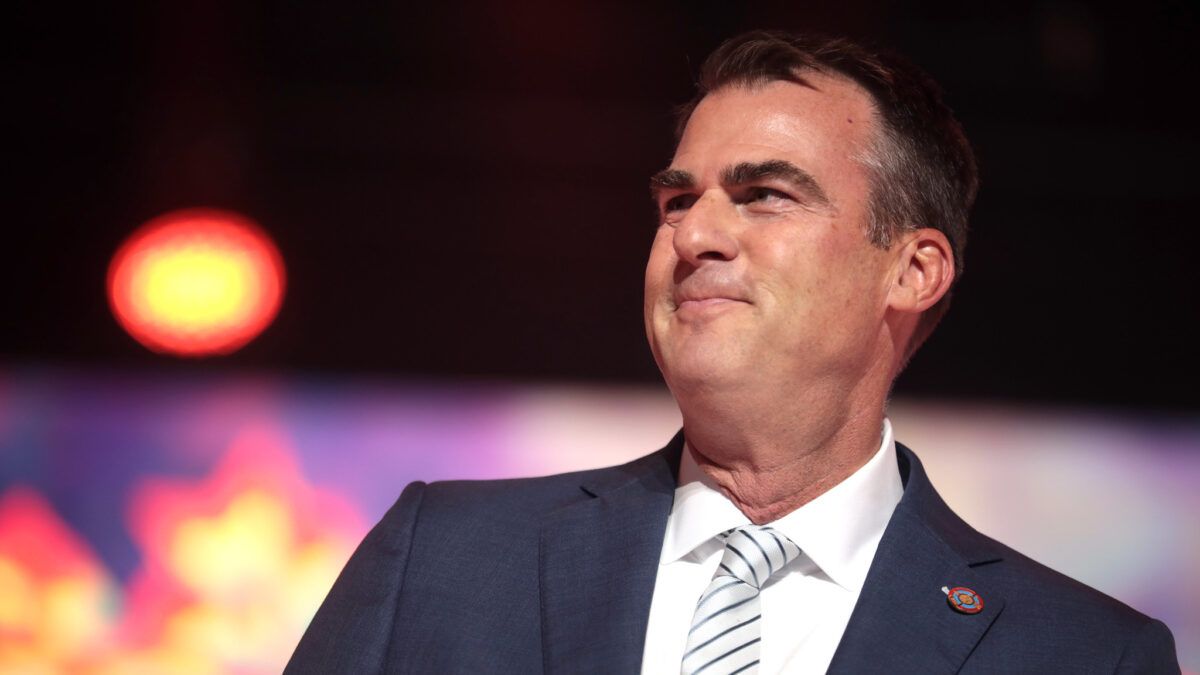
Last week, Oklahoma Governor Kevin Stitt announced an agreement with Denmark’s ambassador, granting a Danish company the ability to purchase large sections of land in Payne County. The company plans to build solar, wind, and biomass energy projects, along with transmission lines across farmland and ranchland in the heart of Oklahoma. Stitt’s enthusiasm for these projects highlights his broader push for Green New Deal-style energy initiatives under the guise of creating jobs in the state.

The green energy agenda is a force multiplier of stupidity, jeopardizing both energy reliability and food security.

“Just signed a historic memorandum of understanding between Denmark and Oklahoma,” a giddy Stitt announced. “The partnership will focus on developing affordable and reliable energy for our communities. Oklahoma fuels the world!”

He’s right. Oklahoma has enough oil and gas to fuel much of the world. The trouble is the memorandum he signed does not promote reliable energy. Instead, it prioritizes inefficient and heavily subsidized forms of energy, such as solar and wind, that depend on unsustainable land acquisitions, misdirect resources like cattle feed, and harm the local environment. Additionally, the memorandum emphasizes the “decarbonization” of the aviation industry — a goal that directly contradicts his stated support for oil and gas as part of an “all of the above” energy strategy.

The agreement with Denmark focuses on two key elements under the broader banner of promoting “economic growth and sustainability.” The first involves constructing solar and wind farms on pristine landscapes. The second includes building transmission lines, methanol plants, and data centers powered by these renewable energy sources, situated in areas designated as “national interest electric transmission corridors.”

After public pressure, Stitt on Wednesday joined other commissioners of the Land Office in voting to reject the solar project. A complementary green energy project on the agenda was approved to move forward, however. The vote saw support from the governor, lieutenant governor, and agriculture secretary, while conservative state Auditor Cindy Byrd cast the lone dissenting vote. This project is set to return for final approval by March 2025 in a public vote by the commissioners.

The transmission corridors associated with this plan should concern all Americans, not just Oklahomans. Expanded under the Biden infrastructure bill, National Interest Electric Transmission Corridors now give the Federal Energy Regulatory Commission authority to overrule local governments on power line placement to facilitate the delivery of solar and wind energy. The proposed corridor would stretch from northwest Oklahoma to Little Rock, Arkansas, ranging from four to 18 miles in width and 645 miles in length. This development would likely require eminent domain, seizing critical croplands and ranchlands for biofuels, solar, wind, and carbon capture projects.

The result? Higher food and fuel costs, all to support unreliable and expensive energy, instead of utilizing Oklahoma’s abundant oil and gas resources, which require less invasive infrastructure and preserve farmland. It is the most anti-environmental idea imaginable.

Beyond the land-grab, the push for “e-SAF” and biofuels diverts land away from fruit and vegetable farming and redirects cattle feed toward fuel production. These fuels rely on subsidies and mandates to remain viable, despite being neither wanted nor necessary. This misallocation of resources increases cattle feed costs for ranchers and endangers their land. In the process, the green energy agenda is a force multiplier of stupidity, jeopardizing both energy reliability and food security.

Green grifters often tout wind and solar power as some innocuous natural source that can power anything on-site. Reality is far different. These energy sources require vast amounts of land for transmission lines, as users are typically far from the “natural” energy source. This setup demands extensive high-voltage infrastructure sprawling over areas larger than many countries. The ongoing need for repairs, replacements, and upgrades makes the system costly and unsustainable. No rational policymaker with good intentions could have devised such an idea.

Democrats understand that embedding the Green New Deal in red states is key to transforming America. According to the New York Times, 80% of green energy projects have been allocated to Republican districts. This distribution has led many shortsighted Republicans to pretend to oppose the law while quietly working to cement it.

In an interview with theTimes, Barack Obama’s first chief of staff, Rahm Emanuel, highlighted the importance of expediting transmission lines to implement the Green New Deal, which he described as “primarily built around decarbonization investments” and reinforced by Biden’s infrastructure bill. Emanuel sees this as a strategy for Democrats to make a political comeback. Ironically, deep-red state governors like Stitt appear to be working diligently to aid this effort.

Red states need an energy revolution that avoids overregulating viable energy sources while refusing subsidies for those that cannot sustain themselves. Solar and wind energy projects should no longer consume vast amounts of land.

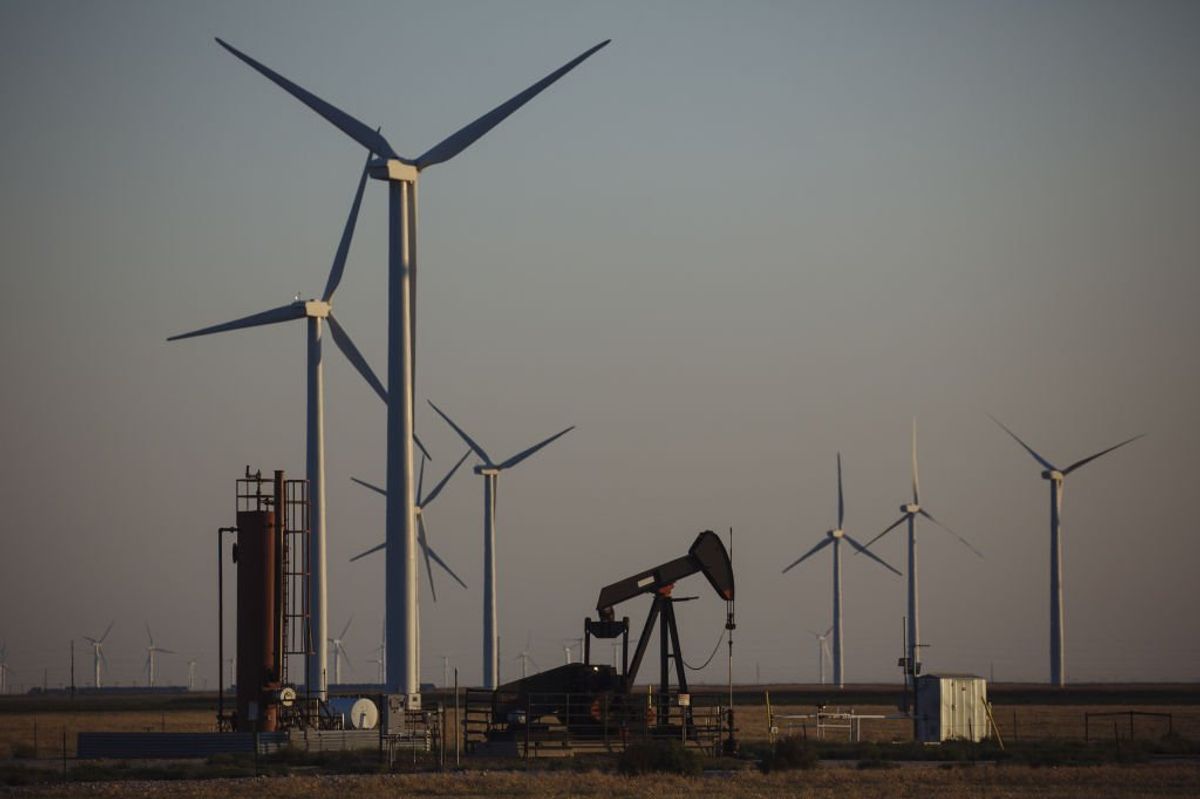
For example, the picturesque area around Lake Eufaula in Eastern Oklahoma is set to host 900 turbines, which will include some of the tallest windmills in the world. This misuse of resources and land sacrifices our heartland for a harmful lie built on unsound energy practices.

If deep-red states cannot reject the Green New Deal — an agenda as destructive as it is unpopular — it might signal that Democrats, not Republicans, are successfully building a permanent political majority in this country.

How China’s Flood Of Cheap Exports Boosts Its Economy And Kills Ours

Unless the Biden administration takes action, China Shock 2.0 will cause more harm to the U.S. economy than the last one.

House Fails To Overturn Biden’s Veto Of Bill Repealing Tariff Exception For Chinese Solar Panels

'It’s disgusting that Biden’s actions would shield Chinese solar companies,' said Rick Scott