Make mandatory minimums great again


When victims’ advocates push for mandatory minimum sentences, the leniency lobby instantly howls about “judicial discretion.” In theory, that's right: In a just society, judges should have the freedom to weigh every case, tailoring sentences to fit the crimes.

But America doesn’t live in that society. We live in an era when violent crime floods major cities and leftist judges treat predators like misunderstood poets. In this environment, mandatory minimums aren’t cruel — they’re the only remaining safeguard for victims and the public.

It’s not enough to share viral videos of street mayhem. Lawmakers must change the laws.

Recent headlines show what happens when liberal judges turn mercy into malpractice.

  • Charlotte’s revolving door: North Carolina Magistrate Judge Teresa Stokes released Decarlos Brown Jr., the alleged murderer of Ukrainian refugee Iryna Zarutska, despite his long arrest record. Her supervisor, Judge Roy Wiggins, then released Paulette Gibson, accused of stabbing two people, on just $20,000 bail — despite 15 prior arrests.
  • Fifty arrests and counting: Herbert Jordan of Charlotte, arrested Oct. 16 for assaulting a woman, had 50 prior arrests, including 10 attacks on women since 2020. He had been released just weeks earlier on $3,000 bond for another violent assault. The judge’s response this time? Raise the bond to $5,000.
  • A juvenile menace: A 15-year-old in Charlotte was reportedly arrested 111 times since 2023 — 55 vehicle thefts, 45 break-ins, multiple gun charges — and yet was released again. Police say his phone contained searches like “what is the charge for killing an officer?” and “what is capital murder?”
  • D.C.’s “rehabilitate, not punish” justice: In the District of Columbia, two teens who beat a man nearly to death during a carjacking spree were sentenced to probation. Judge Kendra D. Briggs, a Biden appointee, said her job was “to rehabilitate, not to punish.” D.C. U.S. Attorney Jeanine Pirro announced Monday that she would bring federal assault charges.
  • Florida’s near-fatal leniency: In Orange County, 23-year-old Jacoby Vontrell Tillman allegedly choked a jogger unconscious because he “wanted to know what it was like to choke someone out.” He had prior arrests for attempted murder and sexual assault, yet Judge Elaine Barbour released him on a $9,500 bond — over objections from even a left-wing prosecutor.
  • Las Vegas, 2023: Jonathan Lewis Jr., a white 17-year-old, was stomped to death by a mob of black juveniles outside Rancho High School. Prosecutors later downgraded second-degree murder charges to voluntary manslaughter and moved the case to juvenile court. The killers could be free within a few years.

These cases represent thousands of similar stories nationwide: repeat violent offenders cycling through the system, juvenile thugs shielded from real punishment, and judges who treat consequences as optional.

From ‘over-incarceration’ to under-protection

For more than a decade, both parties have joined the bipartisan delusion that America’s problem is “over-incarceration.” The result? A generation of politicians dismantled the tough-on-crime gains of the 1990s and early 2000s under the false promise of “criminal justice reform.”

Yes, some defendants have received unjustly harsh sentences. Yes, political prosecutions and overzealous prosecutors exist. But for every offender punished too severely, dozens walk free after attacking, raping, or killing. The imbalance grows worse each year.

RELATED: The city that chose crime and chaos over courage

BeyondImages via iStock/Getty Images

This “leniency-industrial complex” has replaced accountability with excuses. Its apostles treat crime as a symptom of social failure, not individual evil. Meanwhile, victims — especially women and the poor — pay the price for their moral vanity.

Time to rewrite the rules

America doesn’t need another debate about “equity” in sentencing. It needs a crime-control revolution that restores deterrence and puts fear back where it belongs — in the hearts of criminals.

That means tightening judicial discretion, strengthening mandatory minimums for repeat and violent offenders, and ending the revolving door for juvenile predators.

It’s not enough to share viral videos of street mayhem. Lawmakers must change the laws. The public’s patience — and the nation’s safety — won’t survive another decade of judicial compassion for the cruel.

‘The Suicide Squad’: How Democrats keep blowing themselves up


Donald Trump, now in his second term, has executed a political masterstroke — cornering Democrats into the unpopular side of nearly every 80/20 issue. From transgender athletes in women’s sports and the DOGE to the airstrike on Iran’s nuclear sites, he’s boxed them in. But Trump isn’t the Democrats’ biggest threat. Their worst enemy is themselves — and the radical candidates they continue to put forward.

The truth is that the left has always flirted with the absurd. Leftists rant that the rich must “pay their fair share,” but can’t define what “fair” means. They champion equity over equality and preach that government handouts — not markets — will lift the poor and working class. This worldview teeters between naivete and madness.

The Democratic Party isn’t just drifting — it’s accelerating toward the cliff. And no one pushed the Democrats. They drove themselves.

Then came 2018, when “the Squad” stormed Congress and dragged the party from the edge of absurdity into full-blown lunacy.

Alexandria Ocasio-Cortez — raised in a comfortable New York suburb — rebranded herself as “Alex from the block” in the Bronx. Ilhan Omar of Minnesota dismissed 9/11 as “some people did something” and still won a seat in Congress. Rashida Tlaib of Michigan was censured — by both parties — for chanting “from the river to the sea” after Hamas massacred Jews on Oct. 7, 2023. In 2020, Jamaal Bowman of New York joined their ranks and was later caught on video pulling a Capitol fire alarm to delay a budget vote. His excuse? He thought it would “unlock a door.”

Some Squad members have lost re-election bids, but the core group marches on, peddling the Green New Deal, defunding police, and attending Fighting Oligarchy rallies via private jet.

Meanwhile, Soros-backed prosecutors decriminalize shoplifting, eliminate cash bail, and release repeat offenders. These are not policy missteps — they are self-inflicted wounds. And Republicans couldn’t ask for better material.

Enter Zohran Mamdani — the 33-year-old Democratic Socialist running for New York City mayor. His platform makes Bernie Sanders look centrist.

Mamdani wants to defund police, make New York a sanctuary city, and jack up the minimum wage to $30 an hour. He calls for rent freezes, free buses, and city-run grocery stores — as if the Soviet model didn’t already prove that government-run markets lead to scarcity and dysfunction.

RELATED: Vance on Mamdani: ‘Who the hell does he think that he is?’

Photo by Kenny Holston/The New York Times/Bloomberg via Getty Images

Even more alarming is his plan to “shift the tax burden” from homeowners in the outer boroughs to “richer and whiter neighborhoods.” That’s not policy — that’s race-based redistribution.

And his foreign policy? Mamdani wants to “globalize the intifada.” That’s a genocidal rallying cry, and New York’s Jewish community should treat it like the five-alarm fire it is.

So can the Democrats still correct course? Can the party of JFK and FDR find its footing again?

One glimmer of sanity remains: Sen. John Fetterman of Pennsylvania. Despite his hoodie-and-shorts aesthetic, to say nothing of the stroke that nearly killed him in 2022, he has emerged as a lonely voice of reason. He has called out the party’s excesses. But will anyone listen? Or will the Democrats toss him aside for failing the purity test?

The Democratic Party isn’t just drifting — it’s accelerating toward the cliff. And no one pushed the Democrats. They drove themselves.

Philly DA’s 2-tier justice system demands federal scrutiny


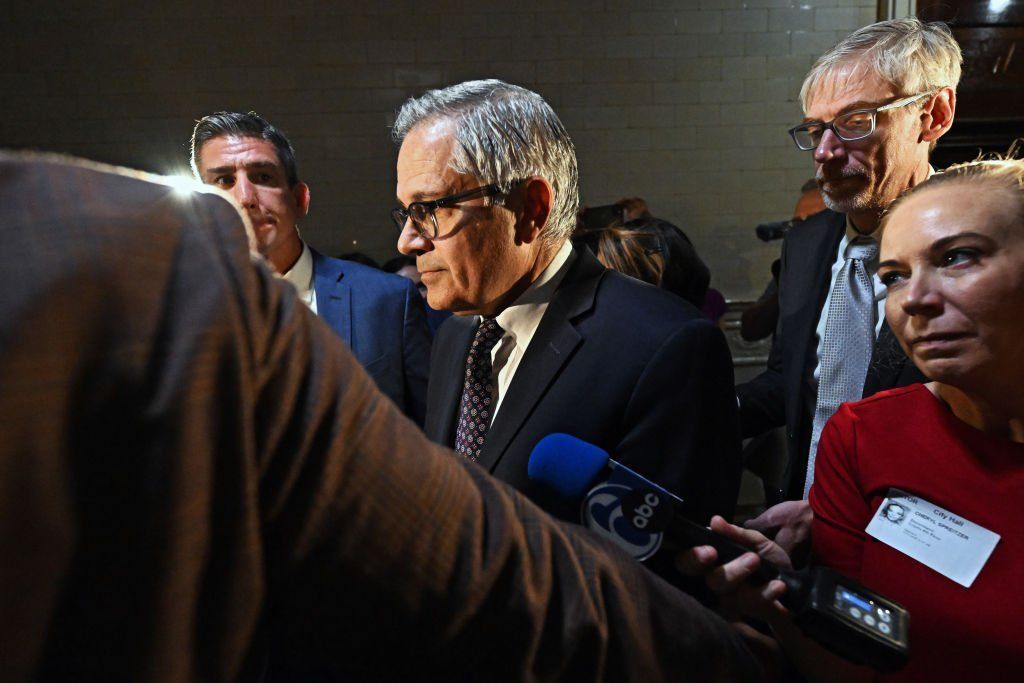
Philadelphia District Attorney Larry Krasner calls himself a progressive reformer, but his policies — especially those that give illegal aliens special treatment in criminal cases — endanger public safety and weaken the rule of law.

Because of that threat, the Immigration Reform Law Institute has asked Attorney General Pam Bondi and the Justice Department to investigate Krasner and these reckless practices. By pushing for “immigration-neutral” outcomes instead of equal justice, Krasner not only corrupts the legal process but also puts Philadelphia residents in harm’s way.

By shielding illegal aliens from the legal consequences of serious offenses, Krasner’s policies risk making an already dangerous situation even worse.

Krasner’s policies reflect a larger movement bankrolled by billionaire George Soros, who has poured millions into electing progressive prosecutors across the country. In 2017, Soros funneled nearly $1.7 million through the Philadelphia Justice and Public Safety PAC to help Krasner win the Democratic primary.

This effort fits into Soros’ broader goal of installing district attorneys who push ideological agendas at the expense of public safety. Cities like Los Angeles, Chicago, and San Francisco followed the same pattern, where Soros-backed prosecutors — such as the now-departed George Gascón, Kimberly Foxx, and Chesa Boudin — adopted similar lenient policies toward illegal aliens.

These prosecutors frequently reduce charges or seek lighter sentences to shield noncitizen defendants from deportation, creating a two-tiered justice system that favors illegal immigrants over American citizens.

Krasner’s strategy hinges on the Office of Immigration Counsel, created in 2018 and staffed at taxpayer expense by Stephanie Costa. Her job: help prosecutors reduce “immigration consequences” for noncitizen defendants, even in serious criminal cases.

Records obtained by IRLI show that in 2023, former immigration counsel Caleb Arnold advised on cases involving migrants charged with rape, robbery, strangulation, aggravated assault, and vehicular homicide.

Krasner claimed in 2018 that the office would assist only with “low-level offenders who pose no threat to public safety.” The facts tell a different story. Arnold frequently helped broker plea deals or reduce charges — deliberately avoiding convictions that trigger mandatory deportation. These interventions bypass federal immigration law and keep dangerous individuals in the community, raising the risk of repeat offenses.

RELATED: California prioritizing illegal immigrants over DUI victims — where was their ‘due process’?

Photo by Justin Sullivan/Getty Images

Krasner’s leniency carries obvious risks. When prosecutors reduce charges for illegal aliens to help them avoid deportation, the justice system fails to hold offenders fully accountable — potentially encouraging more crime. A noncitizen charged with rape, for example, might receive a downgraded charge, dodge immigration enforcement, and remain in Philadelphia with the opportunity to reoffend.

This policy puts criminal defendants’ interests above public safety, especially in a city already struggling with violent crime. From 2019 to 2021, robberies and aggravated assaults on Philadelphia’s SEPTA transit system surged by more than 80%. Critics point to Krasner’s soft-on-crime agenda as a driving force behind that surge.

By shielding illegal aliens from the legal consequences of serious offenses, Krasner’s policies risk making an already dangerous situation even worse.

Krasner’s use of immigration status in sentencing decisions also raises questions about fairness and discrimination. The Justice Department recently launched an investigation into Hennepin County, Minnesota, for factoring race into prosecution decisions — signaling a broader crackdown on unequal enforcement. Krasner deserves the same level of scrutiny.

By giving noncitizens special treatment, Krasner discriminates against U.S. citizens. His approach turns justice into a two-tiered system, where punishment hinges not on the crime but on the defendant’s nationality. That violates the foundational principle that justice should be blind.

Krasner’s defenders may claim his policies protect vulnerable communities, but shielding violent offenders from deportation doesn’t protect anyone. It weakens trust in the justice system, demoralizes law enforcement, and endangers the very communities Krasner claims to serve. Victims — regardless of immigration status — deserve a system that values accountability over ideology.

Backed by Soros money and executed through a taxpayer-funded immigration counsel’s office, Krasner’s policies represent a dangerous departure from the prosecutor’s core mission: enforce the law and protect the public. Federal authorities must step in to restore equal justice and uphold the principle that no one — citizen or not — stands above the law.

How California’s crisis could lead to a big political shift


California’s wide range of problems — including declining schools, widening inequality, rising housing prices, and a weak job market — shows the urgent need for reform. The larger question is whether there exists a will to change.

Although the state’s remarkable entrepreneurial economy has kept it afloat, a growing number of residents are concluding that the progressive agenda, pushed by public unions and their well-heeled allies, is failing. Most Californians have an exceptional lack of faith in the state’s direction. Only 40% of California voters approve of the legislature, and almost two-thirds have told pollsters the state is heading in the wrong direction. That helps explain why California residents — including about 1.1 million since 2021 — have been fleeing to other states.

California needs a movement that can stitch together a coalition of conservatives, independents, and, most critically, moderate Democrats.

Unhappiness with the one-party state is particularly intense in the inland areas, which are the only locales now growing and may prove critical to any resurgence. More troubling still, over 70% of California parents feel their children will do less well than they did. Four in 10 are considering an exit. By contrast, seniors, thought to be leaving en masse, are the least likely to express a desire to leave.

In some ways, discontent actually erodes potential support for reform. Conservative voters, notes a recent study, are far more likely to express a desire to move out of the state; the most liberal are the least likely. “Texas is taking away my voters,” laments Shawn Steel, California’s Republican National Committee member.

New awakenings

Given the demographic realities, a successful drive for reform cannot be driven by a marginalized GOP. Instead, what’s needed is a movement that can stitch together a coalition of conservatives, independents (now the state’s second-largest political grouping), and, most critically, moderate Democrats.

Remarkably, this shift has already begun in an unlikely place: the ultra-liberal, overwhelmingly Democratic Bay Area. For years, its most influential residents — billionaires, venture capitalists, and well-paid tech workers — have abetted or tolerated an increasingly ineffective and corrupt regime. Not only was the area poorly governed, but the streets of San Francisco, Oakland, San Jose, and other cities have become scenes of almost Dickensian squalor.

Over the past two years, tech entrepreneurs and professionals concerned about homelessness and crime worked to get rid of progressive prosecutor Chesa Boudin. Last year, they helped elect Dan Lurie, scion of the Levi Strauss fortune, as mayor, as well as some more moderate members to the board of supervisors. Lurie, of course, faces a major challenge to restore San Francisco’s luster against entrenched progressives and their allies in the media, academia, and the state’s bureaucracy.

Similar pushbacks are evident elsewhere. Californians, by large majorities, recently passed bills to strengthen law enforcement, ditching liberalized sentencing laws passed by Democratic lawmakers and defended by Gov. Gavin Newsom (D). Progressive Democrats have been recalled not only in San Francisco but also in Oakland (Alameda County) and Los Angeles, with voters blaming ideology-driven law enforcement for increasing rates of crime and disorder.

Critically, the liberal elites are not the only ones breaking ranks. Pressure for change is also coming from increasingly conservative Asian voters and Jews — who number more than 1 million in the state and largely are revolted by the anti-Semitism rife among some on the progressive left. Protecting property and economic growth is particularly critical to Latino and Asian immigrants — California is home to five of the 10 American counties with the most immigrants — who are more likely to start businesses than native-born Americans.

These minority entrepreneurs and those working for them are unlikely to share the view of progressive intellectuals, who see crime as an expression of injustice and who often excused or even celebrated looting during the summer of 2020. After all, it was largely people from “communities of color” who have borne the brunt of violent crime in cities such as Los Angeles, Oakland, and San Francisco. Minorities also face special challenges doing business here due to regulations that are especially burdensome on smaller, less capitalized businesses. According to the Small Business Regulation Index, California has the worst business climate for small firms in the nation.

The shift among minority voters could prove a critical game-changer, both within the Democratic Party and the still-weak GOP. In Oakland, for example, many minorities backed the removal of Mayor Sheng Thao (D), a progressive committed to lenient policing in what is now California’s most troubled, if not failed, major city.

Latinos, already the state’s largest ethnic group, constituting about 37.7% of the workforce, with expectations of further growth by 2030, seem to be heading toward the right. In the last presidential election, Trump did well in the heavily Latino inland counties and won the “Inland Empire” — the metropolitan area bordering Los Angeles and Orange Counties – the first time a GOP presidential candidate has achieved this in two decades.

Back to basics

After a generation of relentless virtue-signaling, California’s government needs to focus on the basic needs of its citizens: education, energy, housing, water supply, and public safety. As a widely distributed editorial by a small business owner noted, Californians, especially after highly publicized fire response failures in Los Angeles earlier this year, are increasingly willing to demand competent “basic governance” backed by a “ruthless examination of results” to ensure that their government supports “modest aspirations” for a better life.

California once excelled in basic governance, especially in the 1950s and '60s under Democratic Gov. Edmund G. “Pat” Brown. The state managed to cultivate growth while meeting key environmental challenges, starting in the late 1960s, most notably chronic air pollution. In what is justifiably hailed as a “major success,” California helped pioneer clean air regulatory approaches that have vastly reduced most automotive tailpipe emissions as well as eliminated lead and dramatically cut sulfur levels.

All of this starkly contrasts with the poor planning, execution, and catastrophist science evoked to justify the state’s climate agenda. Even Pat Brown’s son, former Gov. Jerry Brown (D), recognized that California has little effect on climate. Given the global nature of the challenge, reducing one state’s emissions by cutting back on industrial activities accomplishes little if those activities move elsewhere, often to locations with fewer restrictions such as China and India.

Rather than focusing on “climate leadership,” Sacramento needs to tackle the immediate causes of record out-migration, including sluggish economic growth and the nation’s highest levels of poverty and homelessness. The great challenges are not combatting global temperature rises but the housing crisis and the need to diversify the economy and improve the failing education system. As these problems have often been worsened by climate policies, there seems little reason for other states and countries to adopt California’s approach as a model.

halbergman via iStock/Getty Images

Fixing housing

California now has the nation’s second-lowest home ownership rate at 55.9%, slightly above New York (55.4%). High interest rates that have helped push home sales to the lowest level in three decades across the country are particularly burdensome in coastal California metros, where prices have risen to nearly 400% above the national average. The government almost owned up to its role in creating the state’s housing crisis — especially through excessive housing regulations and lawfare on developers — earlier this year when Newsom moved to cut red tape so homes could be rebuilt after the Los Angeles fires.

Current state policy — embraced by Yes in My Backyard activists, the greens, and unions — focuses on dense urban development. Projects are held up, for example, for creating too many vehicle miles traveled, even though barely 3.1% of Californians in 2023 took public transit to work, according to the American Community Survey. As a result, much “affordable” development is being steered to densely built areas that have the highest land prices. This is made worse with mandates associated with new projects, such as green building codes and union labor, that raise the price per unit to $1 million or more.

A far more enlightened approach would allow new growth to take place primarily outside city centers in interior areas where land costs are lower and where lower-cost, moderate-density new developments could flourish. These include areas like Riverside/San Bernardino, Yolo County (adjacent to Sacramento), and Solano County, east of San Francisco Bay. This approach would align with the behavior of residents who are already flocking to these areas because they provide lower-income households, often younger black and Latino, with the most favorable home ownership opportunities in the state.Over 71% of all housing units in the Inland Empire are single-family homes, and the aggregate ownership rate is over 63%, far above the state’s dismal 45.8% level.

Without change, the state is socially, fiscally, and economically unsustainable. California needs to return to attracting the young, talented, and ambitious, not just be a magnet for the wealthy or super-educated few.

More than anything, California needs a housing policy that syncs with the needs and preferences of its people, particularly young families. Rather than being consigned to apartments, 70% of Californians prefer single-family residences. The vast majority oppose legislation written by Yes in My Backyard hero Democratic state Sen. Scott Wiener banning single-family zoning in much of the state.

Investment in the interior is critical for recreating the old California dream for millions of aspiring households, particularly among minorities who are being driven out of the home ownership market in the coastal metropolitan areas. The only California metropolitan area ranked by the National Association of Realtors as a top 10 pick for Millennials was not hip San Francisco or glamorous Los Angeles, but the more affordable historically “redneck” valley community of Bakersfield.

The numerous housing bills passed by Sacramento have not improved the situation. From 2010 to 2023, permits for single-family homes in California fell to a monthly average of 3,957 units from 8,529 during 1993-2006. California’s housing stock rose by just 7.9% between 2010 and 2023, lower than the national increase (10.3%) and well below housing growth in Arizona (13.8%), Nevada (14.7%), Texas (24%), and Florida (16.2%).

A more successful model can be seen in Texas, which generally advances market-oriented policies that have generated prodigious growth in both single-family and multi-family housing. This has helped the Lone Star State meet the housing needs of its far faster-growing population. A building boom has slowed, and there’s been some healthy decrease in prices in hot markets like Austin. Opening up leased grazing land in state and federal parks — roughly half the state land is owned by governments — could also relieve pressure on land prices. Until California allows for housing that people prefer, high prices and out-migration will continue into the foreseeable future.

Ultimately, California has room to grow, despite the suggestions by some academics that the state is largely “built out.”In reality, California is not “land short,” either in its cities or across its vast interior. Urbanization covers only 5.3% of the state, according to U.S. Census Bureau data, while parks, agricultural land, deserts, and forests make up the bulk of the area.

Diversifying the economy

Even Jerry Brown has remarked that the “Johnny one note” tech economy the state’s tax base depends on could stumble. This would reduce the huge returns on capital gains from the top 1% of filers, who now account for roughly half of all state income tax revenues. This overreliance may be particularly troublesome in the era of artificial intelligence, where tech companies may continue to expand but have less need for people. Indeed, San Francisco County, which boasts many tech jobs, experienced the nation’s largest drop in average weekly wages, 22.6%, between 2021 and 2022.

To expand opportunity and, hence, its tax base, California has to make more of the state attractive to employers. The best prospects, again, will be in inland areas.Today, when firms want to build spaceships, a clear growth industry where California retains significant leadership, as well as battery plants and high-tech and food processing facilities, they often opt to go to Nevada, Arizona, Tennessee, and Texas. Given lower land and housing costs, San Bernardino and Riverside Counties, as well as spots on the Central Coast, should be ideally situated to compete for those jobs.

The current economic pattern creates a situation where AI developers, elite engineers, and venture capitalists may enjoy unprecedented profits, but relatively little trickles down to the mass of Californians. Not all Californians have wealthy parents to subsidize their lifestyle, and few are likely to thrive as AI engineers. To address the dilemmas facing the next generation of Californians, the state needs to focus not just on ephemera, software, and entertainment but on bringing back some of the basic industries that once forged the California dream. In this way, President Trump’s policies could actually help the state, particularly in fields like high-tech defense and space.

In the 1940s, California played a key role in the American “arsenal of democracy.” Today, it could do the same, not so much by producing planes and Liberty ships, but drones, rockets, and space-based defense systems. Indeed, there are now discussions of reviving the state’s once-vaunted shipbuilding industry that buoyed the economy of Solano County — something sure to inspire the ire of the Bay Area’s rich and powerful environmental lobby.

Photo by Gina Ferazzi/Los Angeles Times via Getty Images

Improving education

Climate and environmentalism are not the only barriers to California’s revival. No problem is more pressing and consequential than the state’s failure to educate California’s 5.9 million public school children. In fiscal year 2023-2024, California will spend about $128 billion on K-12 public education — an amount exceeding the entire budget of every other state except New York. Despite this level of spending, about 75% of California students lack proficiency in core subject areas based on federal education standards.

Two out of three California students do not meet math standards, and more than half do not meet English standards on state assessments. Overall, less than half of California public school students performed at or above grade level for English language arts (reading, writing, etc.), while only 34.62% met or exceeded the math standard on the Smarter Balanced 2023 tests. The failures are particularly clear among minority students. According to the latest California testing results, only 36.08% of Latino students met or exceeded proficiency standards for English language arts. Only 22.69% met or exceeded proficiency standards in math. Latino students, for example, in Florida and Texas do somewhat better in both math and English, even though both states spend less per capita on education than California.

Not surprisingly, many parents object to a system where half of the state’s high school students barely read at grade level. One illustration of discontent has been the growth of the charter school movement. Today, one in nine California schoolchildren attend charter schools (including my younger daughter). The state’s largest school district, the heavily union-dominated Los Angeles Unified School District, has lost roughly 40% of its enrollment over two decades, while the number of students in charters grew from 140,000 in 2010 to 207,000 in 2022.

In addition to removing obstacles to charters, homeschoolers are part of the solution. California homeschool enrollment jumped by 78% in the five-year period before the pandemic and in the Los Angeles Unified School District by 89%. Equally important, some public districts and associated community colleges, as in Long Beach, have already shifted toward a more skills-based approach. Public officials understand that to keep a competitive edge, they need to supply industrial employers with skilled workers. This is all the more crucial as the aerospace workforce is aging — as much as 50% of Boeing’s workforce will be eligible for retirement in five years. In its quest for relevance, Long Beach’s educational partnership addresses the needs of the city’s industrial and trade sectors.

This approach contrasts with the state’s big push to make students take an ethnic studies course designed to promote a progressive and somewhat anti-capitalist, multicultural agenda. They will also be required to embrace the ideology of man-made climate change even if their grasp of basic science is minimal. A “woke” consciousness or deeper ethnic affiliations will not lead to student success later in life. What will count for the students and for California’s economy is gaining the skills that are in demand. You cannot run a high-tech lathe, manage logistics, or design programs for space vehicles with ideology.

More to come

Conventional wisdom on the right considers California to be on the road to inexorable decline. Progressives, not surprisingly, embrace the Golden State as a model while ignoring the regressive, ineffective policies that have driven the state toward a feudal future.

Yet both sides are wrong. California’s current progressive policies have failed, but if the state were governed correctly, it could resurge in ways that would astound the rest of the country and the world. Change is not impossible. As recent elections showed, Californians do not reflexively vote for progressives if they feel their safety or economic interests are on the line.

If change is to come in California, it may not be primarily driven by libertarian or conservative ideologies but by stark realities. Over two-thirds of California cities do not have any funds set aside for retiree health care and other expenses. Twelve of the state’s 15 large cities are in the red, and for many, it is only getting worse. The state overall suffers $1 trillion in pension debt, notes former Democratic state Rep. Joe Nation. U.S. News and World Report places California, despite the tech boom, 42nd in fiscal health among the states. This pension shortfall makes paying for infrastructure, or even teacher salaries, extraordinarily difficult at the state and local levels.

Without change, the state is socially, fiscally, and economically unsustainable, even if a handful of people get very rich and the older homeowners, public employees, and high-end professionals thrive. California needs to return to attracting the young, talented, and ambitious, not just be a magnet for the wealthy or super-educated few.

This can only happen if the state unleashes the animal spirits that long drove its ascendancy. The other alternative may be a more racial, class-based radicalism promoted by the Democratic Socialists of America and their allies. They have their own “cure” for California’s ills. We see this in debates over rebuilding Los Angeles, with progressives pushing for heavily subsidized housing, as with the case of the redevelopment of the Jordan Downs public housing complex, while seeking to densify and expand subsidized housing to once solidly affluent areas like the Palisades.

California has survived past crises — earthquakes and the defense and dot-com busts — and always has managed to reinvent itself. The key elements for success — its astounding physical environment, mild climate, and a tradition for relentless innovation — remain in place, ready to be released once the political constraints are loosened.

Fifty years ago, in her song “California,” Canada-reared Joni Mitchell captured the universal appeal of our remarkable state, not just its sunshine, mountains, and beaches, but also how it gave its residents an unprecedented chance to meet their fondest aspirations. Contrasting her adopted home with the sheer grayness of life elsewhere, she wrote, “My heart cried out for you, California / Oh California, I’m coming home.”

Editor’s note: This article was originally published by RealClearInvestigations and made available via RealClearWire.
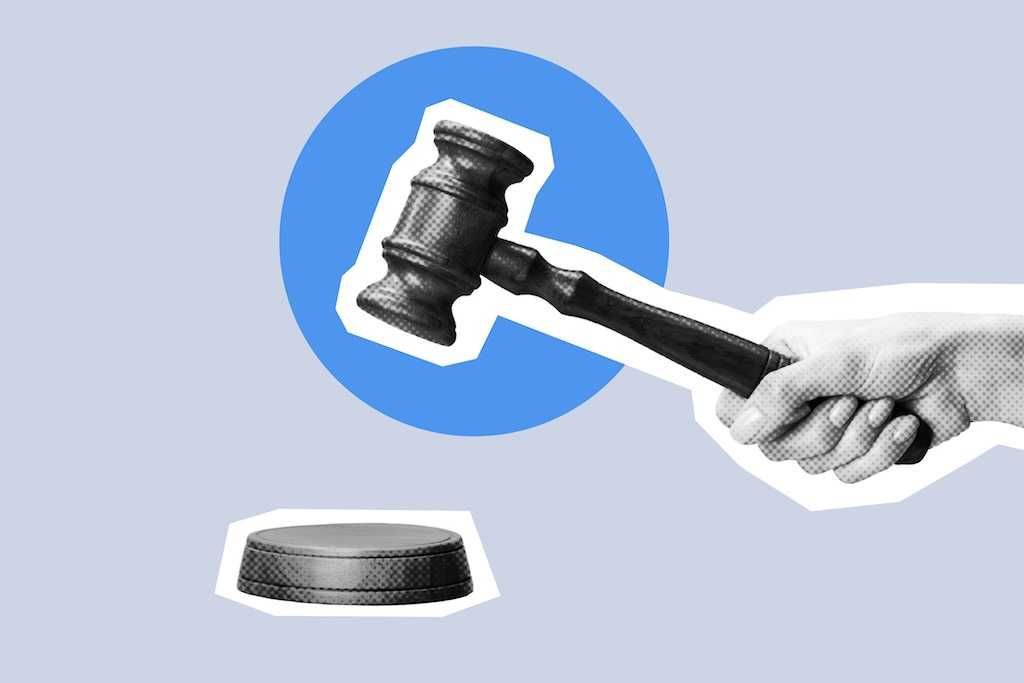

Soros-linked former prosecutor who allegedly mismanaged funds while in office reportedly dodging subpoena from state auditor


The state auditor of Missouri has yet to complete a years-long audit of the St. Louis Office of the Circuit Attorney because he cannot seem to locate Kim Gardner, the radical, Soros-linked former circuit attorney who allegedly mismanaged funds while in office.

The audit of Gardner's office began in 2021 under former Missouri Auditor Nicole Galloway, a Democrat, as part of a citywide audit initiated by the St. Louis Board of Aldermen, the AP reported. The audit has since continued under Republican State Auditor Scott Fitzpatrick, who assumed office last year.

"She knows there are questions that only she can answer. She knows she has the answer that the people of St. Louis deserve, but to date, not only has she made no effort to respond to our requests, it appears that she’s willfully evaded our many efforts to obtain information that only she can provide."

Having received tens of thousands of dollars for her campaign from an organization with ties to George Soros, Gardner was first elected to office in 2016 and then re-elected in 2020. She abruptly resigned in May 2023, as Blaze News previously reported, following mounting criticism from elected officials and the public.

"The most powerful weapon I have to fight back against these outsiders stealing your voices and your rights is to step back," Gardner said at the time. "I took this job to serve the people of the City of St. Louis, and that's still my North star."

Even with Gardner out of office, Fitzpatrick has continued his office's investigation into the circuit attorney's office under Gardner. He claims he has found evidence of "inappropriate expenditures" and "mismanagement" of funds and wants Gardner to give her version of events, but thus far, she has evaded all his attempts to contact her, KDSK reported.

Fitzpatrick claimed that in the past several months, his office has made daily phone calls, contacted Gardner's associates, and attempted to serve her with a subpoena on multiple occasions, all to no avail. The Missouri auditor believes that Gardner has deliberately avoided his office's attempts at contact.

"Kim Gardner knows we’re trying to finish the audit," he said at a press conference on Monday. "She knows there are questions that only she can answer. She knows she has the answer that the people of St. Louis deserve, but to date, not only has she made no effort to respond to our requests, it appears that she’s willfully evaded our many efforts to obtain information that only she can provide."

"It’s important that Kim Gardner be made to answer for her time as circuit attorney one way or another," Fitzpatrick continued. "It’s now clear that Kim Gardner does not want to answer for her time as circuit attorney."

Fitzpatrick stated that he has enough material to complete the audit, but he hopes Gardner will provide "additional clarity." He noted that Gardner did partially cooperate with an audit-related subpoena in 2023 before she left office, providing some of the requested documents but not others. The audit has so far cost taxpayers an estimated $188,000.

On Monday, the AP attempted to reach Gardner for comment at "cell numbers believed to be associated" with her but did not receive an answer.

While in office, Gardner was accused not only of financial mismanagement but of neglecting her responsibilities to prosecute criminals. In 2020, she infamously brought charges against Mark and Patricia McCloskey, a white couple who armed themselves to protect their property against a mob of Black Lives Matter agitators. Republican Gov. Mike Parson later pardoned them.

As circuit attorney, Gardner had also refused to take cases from dozens of police officers who allegedly made racist or Islamophobic comments on social media.

Like Blaze News? Bypass the censors, sign up for our newsletters, and get stories like this direct to your inbox. Sign up here!

Why is the 'greatest serial murder ever in American history' being COVERED UP?!


Not sure if you’ve noticed, but our culture has become rather apathetic when it comes to death. It seems we can’t even begin to process a tragedy before the next one strikes … and then the next one.

“We have this culture of death,” says Daniel Horowitz. “We become mind-numb robots at a time of the internet where we should know more than ever,” and yet “we know less than ever; we care about less than ever.”

“We’re gonna talk about a story that should be the greatest crime story of our lifetime, and I’m not exaggerating,” he says – a story that is “probably the greatest serial murder ever in American history.”

What’s perhaps most disturbing, however, is the fact that so few people know about this story.

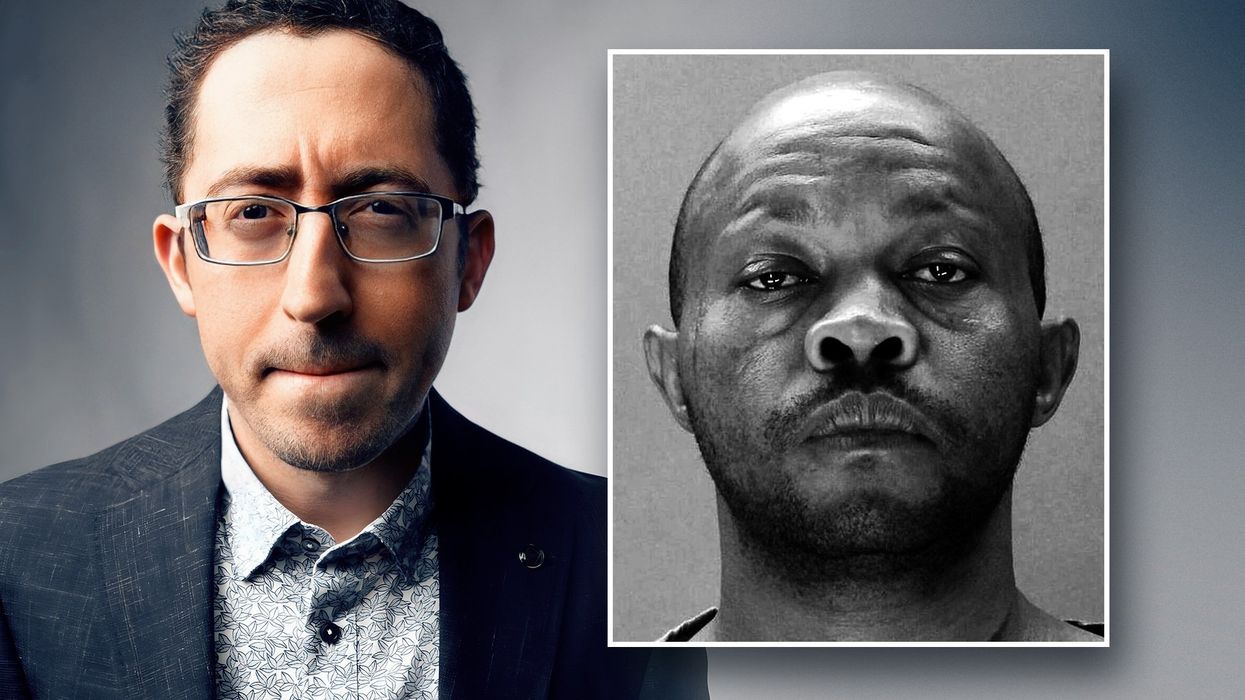
Between the years of 2016 and 2018, Kenyan national Billy Chemirmir was accused of smothering 22 elderly women to death and stealing their jewelry in several different senior centers across the Dallas metroplex.

But there are likely dozens more who died at Chemirir’s hand – victims who will never receive the justice they are owed.

Despite loads of evidence – DNA, blood, stolen jewelry, break-ins, and suspiciously proximate deaths – Chemirmir’s killing spree went on for two years, but “nothing was done security-wise … [or] in terms of police investigators,” Horowitz explains.

It wasn’t until an alleged victim miraculously survived Chemirmir’s attacks that he was finally identified.

However, Chemirmir has only been convicted of two murders and has now escaped the death penalty. Collin County, a notoriously conservative division, “will not seek the death penalty” despite the fact that “they caught the guy a million times over with every form of evidence you can imagine,” says Horowitz.

“This implicates jailbreak; it implicates the lack of death penalty; it implicates our criminal alien problem we have; it implicates the lack of regard for the lives of our seniors – ageism against older people; and frankly also implicates racism, because particularly the older generation is viewed as mainly white and they’re expendable,” says Horowitz.

What’s even more upsetting is that these tragic deaths could have been avoided.

The crime began long before Chemirmir went on his murderous rampage. He was granted a tourist visa in July 2003 from Kenya but became an illegal alien when he overstayed his visa by several years. Somehow, Chemirmir was able to obtain a green card through a marriage that was likely fake, all while living illegally in the United States.

“Just from an immigration standpoint alone, this guy should have been out,” says Horowitz. According to the law, “anyone who remains [in the U.S.] illegally is not only deported but barred from re-entering the country for ten years, but they liberally created this loophole in law and allowed him to remain.”

Further, before the killings began, Chemirmir was indicted on three separate occasions for DWIs and charged with causing bodily injury to his girlfriend.

“This man should have been deported many times over,” Horowitz says.

But he wasn’t, and that’s just the tip of the iceberg. It gets so much worse.

Joining Horowitz on the show are Ellen French House and Cheryl Pangburn, the daughters of two of Chemirmir’s victims.

Together they discuss “the most unbelievable story of all time.”

To hear it, listen to the podcast linked below.

Want more from Daniel Horowitz?

Subscribe to BlazeTV — the largest multi-platform network of voices who love America, defend the Constitution, and live the American dream.

Breaking: Soros-backed St. Louis prosecutor resigns after being accused of neglecting her office for years


St. Louis Circuit Attorney Kimberly Gardner resigned on Thursday after years of accusations that she willfully neglected the duties of her office.

Gardner announced her resignation in a letter to Republican Gov. Mike Parson of Missouri, in which she did not reference any of the criticism her office faced but instead said she was resigning in order to deter Republicans from appointing a special counsel in her stead.

"The most powerful weapon I have to fight back against these outsiders stealing your voices and your rights is to step back," she wrote. "I took this job to serve the people of the City of St. Louis, and that's still my North star."

Missouri Attorney General Andrew Bailey was the most recent to publicly berate Gardner. He responded to her resignation by demanding that Gardner not delay in leaving the office.

“There is absolutely no reason for the Circuit Attorney to remain in office until June 1st. We remain undeterred with our legal quest to forcibly remove her from office," he said in a statement to KMOV-TV.

"Every day she remains puts the city of St. Louis in more danger," he added. "How many victims will there be between now and June 1st? How many defendants will have their constitutional rights violated? How many cases will continue to go unprosecuted?”

Lt. Gov. Mike Kehoe also released a statement excoriating Gardner.

“Kim Gardner’s decision to resign as the St. Louis Circuit Attorney is a major step forward in restoring the rule of law in St. Louis. This is the only decision she has made during her tenure with which I agree," Kehoe wrote.

"Dysfunction in the St. Louis Circuit Attorney’s office, and Kim Gardner’s unwillingness to take violent crime seriously, has hindered St. Louis for years. This resignation is long overdue. Further, Kim Gardner should never run for this office again," he added

Gardner's office had struggled after numerous high-profile circuit attorneys resigned in protest. On Wednesday, her office was also dealt a tragic blow when another assistant circuit attorney died in a car accident with several other vehicles.

She was first elected as circuit attorney in 2016 and re-elected in 2020. She received tens of thousands of dollars in campaign contributions from a group funded by left-wing billionaire George Soros.

Gardner made headlines when she filed charges against a St. Louis couple who were filmed pointing their guns at Black Lives Matter protesters in order to protect their property.

Here's more about Gardner's resignation:

Kim Gardner resigns: St. Louis Circuit Attorney to step down June 1 www.youtube.com

Like Blaze News? Bypass the censors, sign up for our newsletters, and get stories like this direct to your inbox. Sign up here!

'This is about the rule of law and about justice': Missouri AG makes good on ultimatum, moves to fire Soros prosecutor Kim Gardner


Republican Missouri Attorney General Andrew Bailey gave St. Louis circuit attorney Kim Gardner until high noon Thursday to resign or be removed. Since Gardner — a Democrat with a reputation for politically motivated prosecutions and going lax on criminals — refused to step down, Bailey is now making good on his ultimatum and taking the next steps to give Gardner the boot.

What are the details?

Bailey said in a press conference early Thursday afternoon, "The circuit attorney has failed to prosecute cases that are pending in her jurisdiction. These are cases she charged but then allowed to languish and have sat and resulted in eventual dismissals or failure to prosecute."

"She has a constitutional, statutory, and moral obligation to stay in contact with victims of crime and has failed to do so," noted Bailey.

The Missouri AG added that Gardner has "neglected her duties by failing to charge new cases referred to her by the St. Louis Metropolitan Police Department."

These three behaviors "constitute a continued pattern of failure to discharge her duties and office, and represent neglect under the statutes and warrant removal," he added.

\u201cMissouri Attorney General Andrew Bailey's press conference on St. Louis Circuit Attorney Kim Gardner\n https://t.co/P6CfpQMVvN\u201d
— FOX2now (@FOX2now) 1677176247

Bailey's office has started the process of filing a petition quo warranto, reported Fox News Digital. This legal mechanism will enable Bailey to oust Gardner should he successfully demonstrate to a judge that the Soros-backed prosecutor has neglected her duties.

"This is about a quantum of evidence that demonstrates her failure to prosecute cases, failure to inform and confer with victims in cases and failure to file new cases that are referred by law enforcement agencies," said Bailey.

The St. Louis Post-Dispatch noted that in the event Gardner is removed, Missouri Gov. Mike Parson (R) will appoint a replacement.

TheBlaze previously reported that Bailey's ultimatum came largely in response to the public outcry over the reported destruction of a teen athlete's legs by an accused robber whom the Soros-backed prosecutor kept out of jail.

Bailey noted that "instead of protecting victims, Circuit Attorney Gardner is creating them. My office will do everything in its power to restore order, and eliminate the chaos in St. Louis caused by Kim Gardner’s neglect of her office."

16-year-old volleyball player Janae Edmondson of Tennessee was in town for a volleyball tournament and was looking forward to playing Division II volleyball in college. Her dreams and her legs were crushed after a man freed from jail with pending robbery charges allegedly hit her while driving 20 mph over the limit and failing to yield, reported the St. Louis Post-Dispatch.

Were it not for her father's military training and quick triage efforts, it is unlikely Edmondson would have survived at all.

21-year-old Daniel Riley was reportedly the man behind the wheel of the speeding car.

Riley was supposed to be under house arrest while out on bond for a 2020 robbery and armed criminal action. He violated his bond at least 50 times, including seven times in February. Gardner failed to put him back in jail.

"The ongoing failures of the Circuit Attorney’s office — with regard to the individual involved in this case as well as a litany of other cases that have not been brought to justice — are unforgiveable," said Jason Hall, CEO of Greater St. Louis Inc., the region's premier business organization.

Missouri Senate President Pro Tem Caleb Rowden said that Gardner "is incompetent and grossly unfit to hold her office."

St. Louis Mayor Tishaura O. Jones, a Democrat, said that the Soros-backed prosecutor had "lost the trust of the people."

Gardner attempted to displace blame, saying in a statement Wednesday, "Bond violations and decisions do not solely rest on the shoulders of prosecutors. ... In this matter, prosecutors asked on several occasions for higher bonds, and those requests were denied."

Mayor Jones: Kim Gardner has 'lost trust of the people' youtu.be

Like Blaze News? Bypass the censors, sign up for our newsletters, and get stories like this direct to your inbox. Sign up here!

Teen athlete's legs mangled in encounter with man Kim Gardner kept out of jail, prompting Missouri AG to demand the Soros prosecutor's resignation by high noon


Republican Missouri Attorney General Andrew Bailey has given St. Louis Circuit Attorney Kim Gardner until high noon Thursday to resign or be removed. This ultimatum comes amid outcry over the reported destruction of a teen athlete's legs by an accused robber whom the Soros-backed prosecutor kept out of jail.

Bailey minced no words about his reason for seeking the Democrat attorney's resignation: "Instead of protecting victims, Circuit Attorney Gardner is creating them. My office will do everything in its power to restore order, and eliminate the chaos in St. Louis caused by Kim Gardner’s neglect of her office."

Gardner, the Soros-backed attorney who cut loose BLM rioters in 2020 and sought to punish Mark and Patricia McCloskey for having attempted to defend their home, has a long history of going lax on criminals and seeking politically motivated prosecutions.

The last straw appears to be the maiming of a 16-year-old volleyball player, Janae Edmondson of Tennessee, who had been looking forward to playing Division II volleyball in college. She had one leg mangled and the other severely damaged after a man freed from jail with pending robbery charges allegedly hit her, reported the St. Louis Post-Dispatch.

Fox News Digital indicated that Edmondson was visiting St. Louis with her family for a volleyball tournament. A driver going 20 mph over the limit failed to yield and struck Edmondson in downtown St. Louis around 8:40 p.m. The victim was pinned between two cars and ultimately had both legs amputated.

21-year-old Daniel Riley was reportedly the man behind the wheel of the speeding car.

According to the Post-Dispatch, Riley was supposed to be under house arrest while out on bond for a 2020 robbery and armed criminal action. He violated his bond at least 50 times, including seven times in February. Gardner failed to put him back in jail.

Jeff Wismer, the assistant director at Middle Tennessee Volleyball Club, told KMOV, "A wonderful kid with a great smile, a three-sport athlete. ... She has lost both limbs below her waist, so for us, how do you find words to explain our sorrow? We really can’t."

Following the incident, there has been significant backlash, with many St. Louis residents and businesses alleging it could have been avoided had Gardner done her job properly.

"This crime was as preventable as it is tragic," said Jason Hall, CEO of Greater St. Louis Inc., the region's premier business organization. "While this tragedy may serve as a turning point in the efforts to strengthen public safety, it only highlights the lingering issues that have gone unaddressed for far too long. We need immediate action. These issues are not new, and solving them requires all of us stepping up and coming together as one metro to develop a regional strategy to reduce crime and strengthen public safety."

Hall added, "The ongoing failures of the Circuit Attorney’s office — with regard to the individual involved in this case as well as a litany of other cases that have not been brought to justice — are unforgiveable."

Bailey evidently agreed, demanding Gardner's resignation Wednesday evening and noting, "If she refuses, she will face immediate removal proceedings in the form of a writ of quo warranto brought by our office."

\u201cWe are giving Kim Gardner until noon tomorrow to resign. If she refuses, she will face immediate removal proceedings in the form of a writ of quo warranto brought by our office.\u201d
— Attorney General Andrew Bailey (@Attorney General Andrew Bailey) 1677114038

Missouri Senate President Pro Tem Caleb Rowden said that Gardner "should resign or I will systematically and aggressively work with my colleagues in the #MOLeg to ensure her incompetence isn’t putting more lives in danger. The people of #STL deserve better and Missouri deserves better," adding that "Gardner is incompetent and grossly unfit to hold her office."

\u201cKim Gardner is incompetent and grossly unfit to hold her office.\n\nShe should resign or I will systematically and aggressively work with my colleagues in the #MOLeg to ensure her incompetence isn\u2019t putting more lives in danger. \n\nThe people of #STL deserve better and Missouri\u2026\u201d
— Caleb Rowden (@Caleb Rowden) 1677072476

Gardner was denounced by members of her own party as well.

St. Louis Mayor Tishaura O. Jones, a Democrat, said that the Soros-backed prosecutor had "lost the trust of the people."

Former Missouri Attorney General Eric Schmitt previously highlighted how "Kim Gardner has an abysmal record in prosecuting violent crime, has recently released and been complicit in the release of dozens and dozens of inmates who have been charged with violent crimes, and has a record of making politically motivated decisions not based on the law."

Gardner is the radical prosecutor who originally charged Mark and Patricia McCloskey in 2020 with felonies after they defended their home from BLM protesters who had demolished a fence and trespassed onto their property. The BLM trespassers were not prosecuted.

While she sought to punish the McCloskeys for defending their home, Gardner alternatively saw fit to release at least 36 BLM rioters arrested on suspicion of trespassing, burglary, causing property damage, stealing, and assault.

The Soros-backed attorney was later removed from the case against Mark McCloskey after Circuit Judge Thomas Clark II indicated that improper fundraising emails by Gardner's campaign infringed on the McCloskeys' right to a fair trial.

Gardner was accused in 2020 of traveling across the country and world on a criminal justice reform organization's dime without reporting it, in apparent violation of city and state law.

City Journal reported that Gardner was also reprimanded and fined by the Missouri Supreme Court for being untruthful during a failed prosecution of a political rival. Gardener "admitted to failing to produce documents and failing to correct misstatements during the course of the investigation."

St. Louis' homicide rate (per 100,000) skyrocketed from 64.5 in 2019 to 87.2 in 2020 under Gardner's watch. According to Neighborhood Scout, St. Louis ranks 1 (with 100 being the safest) on the crime index. The likelihood of becoming a victim of a violent crime under Gardner's watch is 1 in 67. The likelihood of becoming a victim of a property crime is 1 in 18.

Missouri Senate leader calls for Kim Gardner's resignation youtu.be

Like Blaze News? Bypass the censors, sign up for our newsletters, and get stories like this direct to your inbox. Sign up here!