‘Birthright senatorship’ betrays America First


A few weeks ago, Americans celebrated the 250th anniversary of the Declaration of Independence — our formal rejection of hereditary rule and political power by birthright.

Now South Carolina Republicans are being asked to embrace precisely that principle in a Senate primary.

South Carolina does not need another half-century of political inheritance. It needs a genuine changing of the guard.

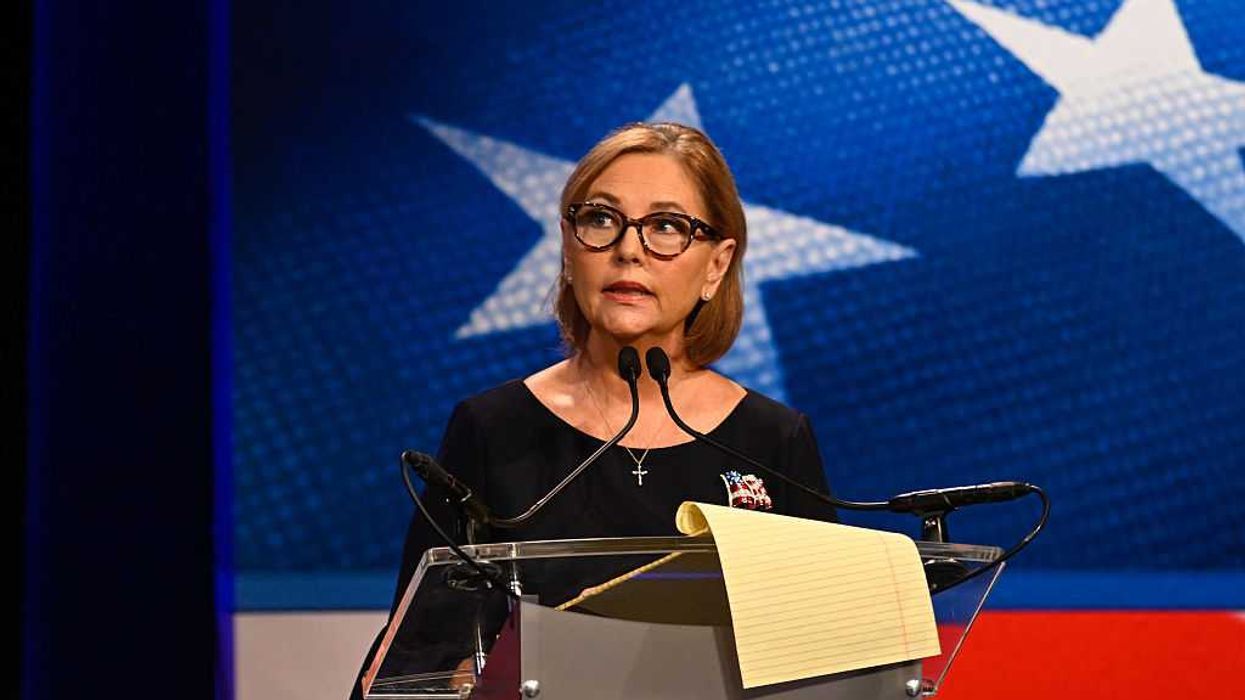
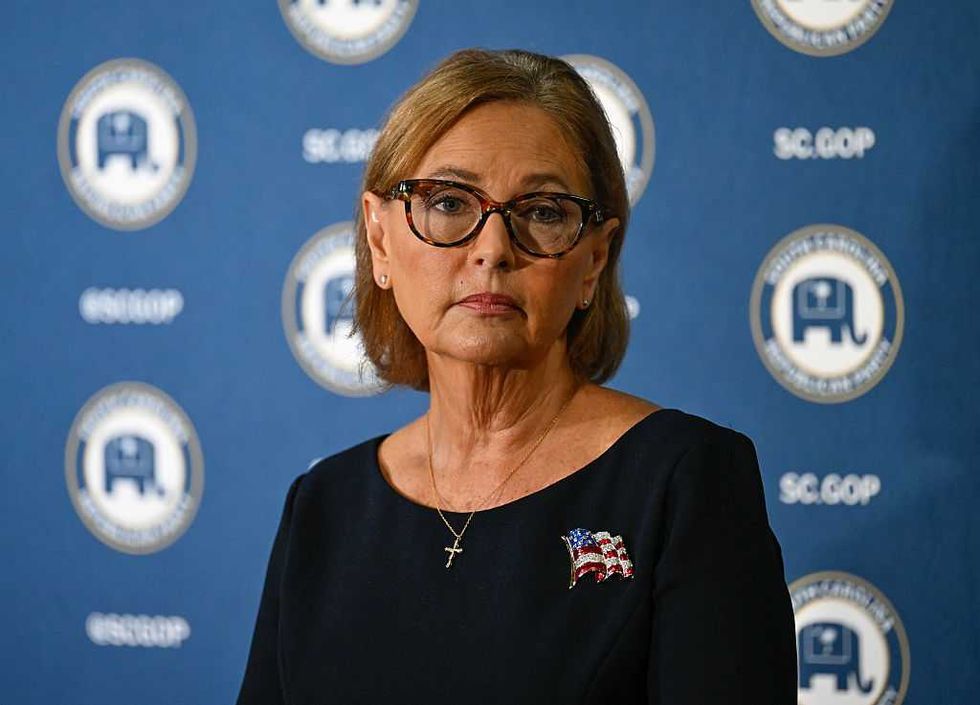
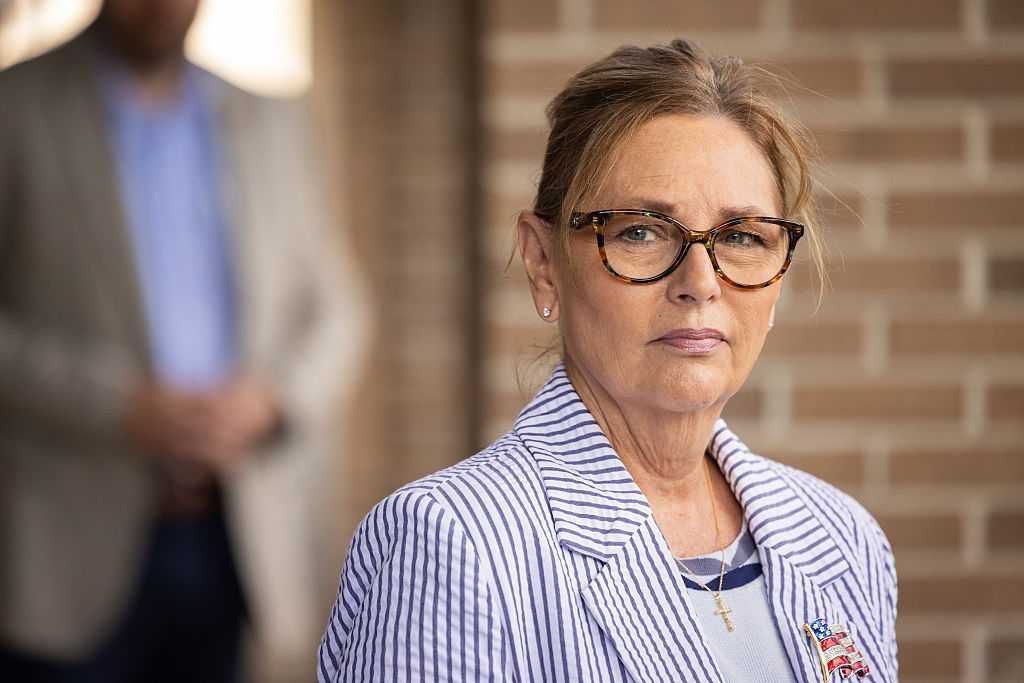
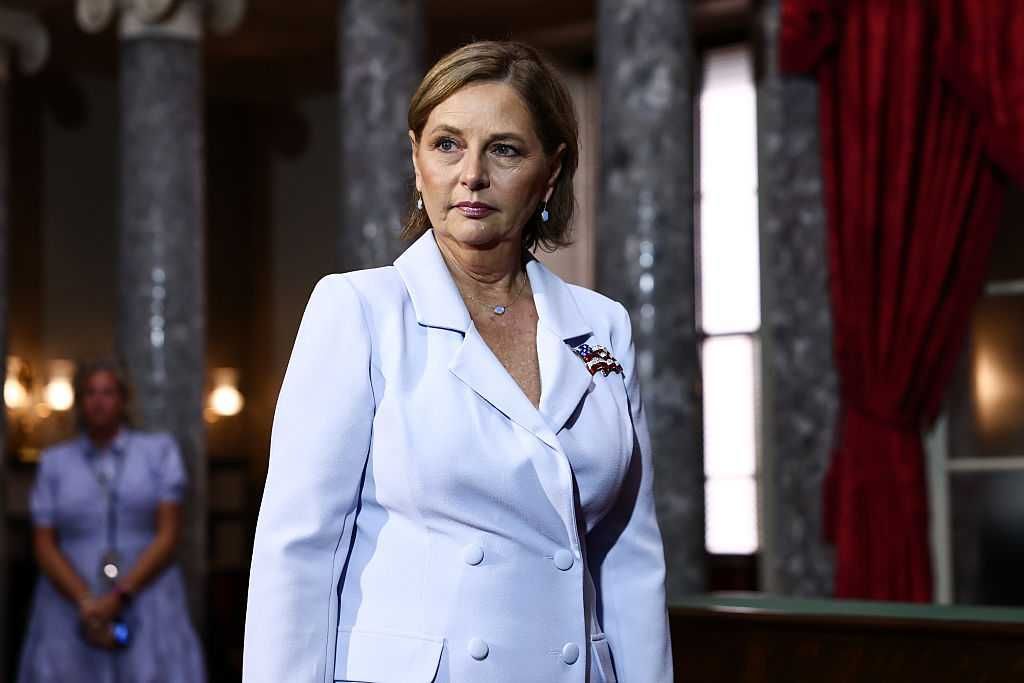
After initially saying Darline Graham Nordone would hold her late brother Lindsey Graham’s U.S. Senate seat only temporarily while the state prepared for a special election, President Trump encouraged her to seek a full six-year term. She agreed.

This candidacy began with a promise that proved disposable. A lie. Nothing about it has improved since.

Nordone’s central qualification is obvious: She is Lindsey Graham’s sister. Her campaign amounts to “birthright senatorship” — an inherited claim on public office dressed up as party unity.

America First voters were promised an assault on the swamp: entrenched power, donor networks, insider dealing, and political advancement based on access rather than merit. They were not promised a new hereditary class with Senate seats passed from one family member to another.

To borrow Graham’s own words from the Brett Kavanaugh confirmation fight, this is a sham, and South Carolinians should see through the charade.

Graham’s speech during that battle was one of his finest moments in the Senate. It may have helped save Kavanaugh’s nomination. It did not create a family title to the office Graham held.

His sister is not entitled to inherit his seat because he died in office.

The proposed Graham dynasty is especially offensive because this seat has already been dominated by two men since 1956: Strom Thurmond and Lindsey Graham. South Carolina does not need another half-century of political inheritance. It needs a genuine changing of the guard.

Most voters cannot leave their children a lucrative career, much less a seat in the United States Senate. Public office is not family property. It belongs to the people, who are supposed to choose among candidates with records, ideas, and qualifications of their own.

Nordone has no meaningful public record in politics or policy that would justify elevation to one of the nation’s most powerful offices. What fills that void instead is support for diversity, equity, and inclusion programs; a career inside federally subsidized state bureaucracy; and an endorsement from Rep. Jim Clyburn, the South Carolina Democrat whose support revived Joe Biden’s 2020 presidential campaign.

RELATED: The internet makes monsters and saints before the body is cold

Blaze Media Illustration

None of that recommends her to voters who were told they were dismantling the old order.

For years, South Carolina politics has been dominated by the Haley-Graham cocktail circuit: polished Republicans who chased dragons abroad while much of their state declined beyond the comfortable enclaves of Charleston and Columbia.

Graham’s death was tragic. His foreign-policy views were often badly out of step with America First voters, but no decent person wished for his sudden passing. He deserves mourning and respect.

His sister does not deserve a coronation.

The Republican Party should be especially wary of this arrangement because its voters have spent a decade rebelling against political dynasties. They rejected the Bushes, resisted the Clintons, and rallied behind Trump in part because he attacked a system in which the right surname, donor list, or social circle mattered more than accountability.

A Truth Social post should not be enough to transform blood relation into political legitimacy. Neither should the swift organization of party officials, donors, and consultants eager to preserve their access.

If Nordone wants the seat, she should earn it on the strength of her own record and convictions. So far, she has offered neither. Her campaign asks voters to treat kinship as qualification and temporary appointment as entitlement.

That is the political world America First was supposed to destroy.

South Carolina Republicans should refuse to build a Graham dynasty in the name of draining the swamp. They should reject birthright senatorship and choose a senator rather than accept an heir.

A ‘tribute’ or the best choice? Lindsey Graham’s Senate seat becomes a family heirloom.


Following the sudden passing of Senator Lindsey Graham, South Carolina Governor Henry McMaster (R) has officially appointed Graham's younger sister, Darline Graham, to finish out the remainder of his term in Washington.

The decision is backed by an endorsement from President Donald Trump.

“I recommended, to Governor Henry McMaster, Lindsey Graham’s wonderful sister, Darline, to serve as interim Senator from the Great State of South Carolina. This would be a fabulous tribute to Lindsey, who loved her dearly!” the president wrote in a post on Truth Social.

However, BlazeTV host Pat Gray isn’t sure that a U.S. Senate seat is something to be passed down as a "tribute.”


“I don’t want a fabulous tribute to Lindsey Graham. It should be somebody who would make a great senator. If she’s the one, that’s fine,” he says. “But is she the one?”

“Conservative, smart, capable. That’s what you want. ... It wasn’t Lindsey’s seat to own and then hand off to a family member,” he adds.

“Well, it kind of was,” Jeff Fisher argues.

“That’s the way those Senate seats have been. That’s why John Cornyn was so shocked that he got booted,” Fisher continues.

“That’s the way we treat it, but it’s not that way. It’s not that way. And we need to stop treating it as such,” Gray says.

And in a speech, Gov. McMaster announced the appointment of Darline to Graham’s seat.

“Today under the law, it’s my duty to and honor to name someone to serve in the place of this irresistible man — this irreplaceable man,” the governor said, correcting himself.

“Lindsey took care of his little sister in years long departed. It’s my honor to ask his little sister, Darline Graham, to finish his work for him now,” he added.

“So, I guess she’s got a duty to serve,” Gray comments, adding, “but he never said anything about her being the best candidate for that position.”

Want more from Pat Gray?

To enjoy more of Pat's biting analysis and signature wit as he restores common sense to a senseless world, subscribe to BlazeTV — the largest multi-platform network of voices who love America, defend the Constitution, and live the American dream.

Lindsey Graham’s sister enters Senate race following Trump endorsement


Less than a week after joining the Senate to fill her brother’s seat, the sister of the late Sen. Lindsey Graham has decided she will run for a full term.

“I’ve made a decision,” Sen. Darline Graham (R-S.C.) told Fox’s Sean Hannity in an interview posted to X on Monday. “I’m in.”

'I feel like I can do it.'

Graham said she reached the decision after spending time in prayer and consulting with her family.

“I have been praying a lot, talking to my family. But with the love of my family, with the support of his staff, I know I’m a hard worker. I learned that from Lindsey. He cared about the people of this state. I’ve worked for almost 30 years for the people of this state. I feel like I can do it,” she expressed.

President Donald Trump publicly endorsed Graham on Friday, urging her to enter the race.

“I asked Darline, for the Good of our Nation, to run for the U.S. Senate in the Special Republican Primary on Tuesday, August 11, 2026," Trump wrote.

“Darline, who comes from an absolutely incredible family, has been a WINNER all of her life and, should she accept, has my Complete and Total Endorsement in the Special Election for U.S. Senate in South Carolina,” he added.

RELATED: Glenn Beck warns: Lindsey Graham’s death exposes something very dark in America

Graham was sworn into the Senate Tuesday, a day after she was appointed by South Carolina Gov. Henry McMaster (R) to serve out the remainder of her brother’s term, which concludes in January.

Trump also weighed in on that decision, posting on Truth Social, "I recommended, to Governor Henry McMaster, Lindsey Graham’s wonderful sister, Darline, to serve as interim Senator from the Great State of South Carolina. This would be a fabulous tribute to Lindsey, who loved her dearly!"

Lindsey Graham died on July 11 at age 71 of an aortic dissection, according to a preliminary finding from the medical examiner, after what the late senator's office initially described as a "brief and sudden illness."

The filing deadline for the special election is July 28, with several Republican candidates having already declared their candidacies, including Reps. Russell Fry and Ralph Norman, as well as businessman Mark Lynch.

The Republican nominee will go on to face Democrat Annie Andrews in the November general election.

Like Blaze News? Bypass the censors, sign up for our newsletters, and get stories like this direct to your inbox. Sign up here!

How one lowered flag carried me home


McAllister, Montana, does not take long to drive through. We have a post office, a cabinet shop, and an empty lot where the old bar and restaurant once stood.

Yet there it was. The American flag hung at half-staff.

Somewhere between the Carolina foothills and a tiny town in southwest Montana, I was reminded that no matter how far life carries us, the places that formed us never quite let us go.

It was not for someone from Montana. It was for a boy from upstate South Carolina.

Standing in the parking lot of that tiny post office, I found myself thinking that southwest Montana might as well be another country from the red clay, pines, and dogwoods of northwest South Carolina.

Yet one lowered flag carried me back more than 2,000 miles, leaving me with an unexpected ache for both places.

Lindsey Graham’s passing felt different. There had been no long illness, no farewell tour, no gradual retreat from public life. He worked until the end. One day, he was in the middle of the nation’s business. The next, the flag in our little Montana town flew at half-staff for a man whose life began just a few miles from mine.

Washington knew him as a senator. The world knew him as a fixture on Sunday morning news programs, in committee hearings, and on diplomatic missions halfway around the globe.

Upstate South Carolina knew him simply as Lindsey.

Our paths crossed long before I could have imagined standing beside a lowered flag in a small Montana town thinking about him.

He grew up in Central. I grew up in nearby Anderson. We may even have been born in the same hospital.

When Lindsey first ran for Congress, my sister worked on his campaign. His district included my parents’ home. For a time, his sister lived only a few doors from them. Years later, one of my four brothers worked closely with him through the State Department on matters involving Qatar, Jordan, Saudi Arabia, and other countries.

RELATED: The internet makes monsters and saints before the body is cold

Kevin Dietsch/Getty Images

The first time I met Lindsey personally was at Walter Reed Army Medical Center, where my wife, Gracie, had been invited to sing for wounded warriors. We shared dinner that evening with Sen. Chuck Grassley (R-Iowa) and his wife, along with Montana’s Conrad Burns.

At one point, Lindsey laughed and said he and I could carry on a conversation without anybody needing subtitles.

After meeting several members of my family over the years, he ran into my parents somewhere back home, shook his head with that familiar grin, and asked, “How many of y’all are there?”

That was Lindsey. For all the demands placed on him, he remembered people.

We disagreed on more than a few things over the years. Some of those disagreements mattered. But disagreement is not the same thing as dismissal.

Somewhere along the way, we have forgotten that.

In an era when too many public careers seem measured by growing fortunes and lucrative opportunities after leaving office, Lindsey’s modest estate told a different story. Whatever history ultimately concludes about every vote he cast or every position he took, it is difficult to argue that he entered public life to enrich himself.

He seemed to take the title literally.

It was public service in the truest sense of the phrase.

Whether one agreed with him or not, Lindsey’s work ethic was undeniable. He left behind a reputation far larger than his estate.

Lindsey Graham died with his boots on.

Only hours earlier, he was still in motion — meeting with allies, working with foreign leaders, talking with colleagues, and carrying the responsibilities that had defined most of his adult life.

Then, almost in an instant, the meetings ended, the phones stopped ringing, and the man who had spent a lifetime helping shape history took his place within it.

Flags across America have been lowered. Soon, they will be raised again. The mail will be sorted. Ranchers will stop by the post office. Life will continue, as it always does.

But standing there in the parking lot of our little post office, I closed my eyes and sighed.

I was not thinking about Washington or the halls of power. I was thinking about upstate South Carolina.

RELATED: Consider the lilies — and one old Montana fir

Photo courtesy of Peter Rosenberger

I was thinking about the red clay my mother could never keep her five sons from tracking into the house. Boiled peanuts from a roadside stand. A sticky, hot Carolina afternoon with pine trees swaying just enough to remind you there was a breeze after all.

I was thinking about familiar voices, familiar roads, and a local boy from Central who somehow found himself helping shape the course of a nation without ever quite losing the cadence of home.

The United States lost a man who served first in uniform, then in the House of Representatives, and finally in the Senate.

South Carolina lost a son.

And somewhere between the Carolina foothills and a tiny town in southwest Montana, I was reminded that no matter how far life carries us, the places that formed us never quite let us go.

I suspect Lindsey Graham never heard of McAllister, Montana.

But that flag outside a tiny post office quietly testified that McAllister, along with countless other towns across America, paused to honor him.

The GOP’s 2028 ticket math is already brutal


The ink will not even be dry on the final 2026 midterm ballots before Washington turns to the next race: the battle for the White House in 2028.

Election Day ends November 3. By the morning of November 4, the campaign for America’s next president will already be under way.

There is one rule every VP nominee must follow: Do not become the story. The job is to amplify the presidential candidate, not compete with him.

The biggest names — Vice President JD Vance and Secretary of State Marco Rubio among them — will dominate early speculation. But the more interesting question may be the second spot on the ticket.

Vice presidential picks are no longer afterthoughts. Gone are the days when running mates were chosen simply to “balance the ticket.” Today’s contenders are expected to serve as attack dogs, media stars, policy messengers, fundraising powerhouses, and trusted governing partners.

They must energize the base, reassure swing voters, and be ready to step into the Oval Office if necessary.

Which running mate gives the Republican nominee the greatest advantage?

The answer will not be about geography alone. It will be about chemistry, fundraising, media skill, governing experience, and the ability to help win the handful of battleground states likely to decide another close election.

Several Republicans are already generating early speculation.

Andy Ogles — Tennessee, 11 electoral votes

Ogles belongs at the top of the watch list.

The Trump-endorsed Tennessee congressman has built a reputation as one of the House’s most outspoken conservatives, championing limited government and an unapologetic defense of Trump-era policies.

Ogles pairs an easygoing manner with hard-line positions. He has become a familiar figure in congressional battles over immigration, federal spending, election integrity, and cultural issues.

As chairman of the House Homeland Security Subcommittee on Cybersecurity and Infrastructure Protection, Ogles also works on an issue likely to grow more important in future campaigns.

Tennessee is safely Republican, so his value would lie less in changing the Electoral College map than in energizing conservatives across other states.

Byron Donalds — Florida, 30 electoral votes

Donalds combines strong media skills with a compelling personal story and growing national recognition.

Frequently mentioned as a leading contender in Florida’s 2026 gubernatorial race, the Florida congressman has become one of the Republican Party’s most visible communicators. Supporters argue that his appeal extends beyond the party’s traditional coalition, making him one of the GOP’s fastest-rising figures.

With Florida’s 30 electoral votes already central to any Republican path to the White House, Donalds would bring both state-level strength and national media reach. His New York roots also have some Republicans wondering whether he could help the party make inroads with voters in the Northeast.

Sarah Huckabee Sanders — Arkansas, 6 electoral votes

Sanders brings executive experience and years in the national spotlight.

The Arkansas governor first became a national figure as White House press secretary, then returned home to lead a reliably Republican state. Her familiarity with the Trump movement, fundraising network, and communications experience continue to make her a frequently mentioned possibility for a future Republican ticket.

Arkansas’ six electoral votes are not in doubt. Sanders’ value would come from her executive résumé, conservative credibility, and ability to speak directly to the Trump coalition.

Her appearances at high-profile fundraising events, including in Palm Beach, have only fueled speculation about her national ambitions.

Tim Scott — South Carolina, 9 electoral votes

Scott has built his national profile around economic opportunity, education, faith, and conservative policy priorities.

After his 2024 presidential campaign, the South Carolina senator remains a respected figure within the party and has continued expanding his national profile.

South Carolina’s nine electoral votes are safely Republican. Scott’s appeal would lie less in delivering his home state than in his optimistic message, donor network, and ability to broaden the ticket’s tone without abandoning conservative priorities.

RELATED: Trump to address declassified intel revelations about 2020 foreign interference: Report

Anna Moneymaker/Getty Images

The Trump name may not be leaving the stage

Another variable remains impossible to ignore: the Trump political brand.

Donald Trump Jr.’s name continues to circulate among supporters and commentators as a potential future candidate. Although he has repeatedly said he is focused on advancing the America First movement rather than seeking office himself, his national profile, fundraising network, and loyal following keep him in nearly every early conversation about 2028.

Unlike many political heirs, Trump Jr. has spent years campaigning across the country, building relationships with conservative activists, appearing regularly in conservative media, and becoming one of the Republican Party’s most recognizable surrogates.

Whether he ultimately seeks the presidency, accepts a vice presidential nomination, or remains one of the party’s most influential campaign voices, his involvement would almost certainly keep the Trump family’s political movement at the center of Republican politics.

There is one rule every VP nominee must follow: Do not become the story. The job is to amplify the presidential candidate, not compete with him.

In a country where elections are often decided by razor-thin margins in a handful of battleground states, even a small advantage can mean the difference between victory and defeat.

The New York Times Treated Lindsey Graham Worse Than It Did A Literal Terrorist

South Carolina Sen. Lindsey Graham died unexpectedly on Saturday from a heart condition at the age of 71. Graham, a retired Air Force officer who served more than two decades in the Senate, was influential in the Republican Party on foreign policy, election integrity, and national security. The New York Times chose to remember him […]

Lindsey Graham's sister appointed to serve out the rest of his term in the Senate


The United States has a new senator after the sudden and unexpected death of Lindsey Graham, a Republican senator for South Carolina.

Graham's term will be finished out by his sister, Darline Graham Nordone, who was appointed by Republican South Carolina Gov. Henry McMaster.

'To Lindsey, I miss you more than I can even put into words. But I'm going to do this. I got it.'

Nordone accepted the appointment in a news conference Monday with McMaster in Columbia, South Carolina.

"I want to thank the governor for selecting me to serve the remainder of Lindsey’s term," she said. "It is such an honor. Lindsey has always been there for me, and now I will be there for him."

Graham's death was announced early Sunday morning.

"It is such a privilege to get to finish some of his important work, and I promise to work hard over the next several months to support the president and carry forward the efforts of my brother on behalf of the citizens of South Carolina and the United States," Nordone continued.

"I know Lindsey thought the world of his staff and colleagues, and with their support, I feel confident. I think this is what Lindsey would have wanted, and I plan to honor him in this way," she said.

"Now, to Lindsey, I miss you more than I can even put into words. But I'm going to do this. I got it. Thank you."

Long before his decades-long career in the Senate, Graham lost his mother and father within 15 months in his early 20s. He took on the role of raising and caring for his sister, who was 13 years old at the time. He later became her legal guardian.

"Lindsey assured me that he was going to take care of me, he was going to be there for me," she said about her brother in 2014. "He never let me down. Never. I don't see how he did it, to take on the responsibility of raising a little sister."

A preliminary medical report found that Graham died of an aortic dissection caused by arteriosclerotic cardiovascular disease.

RELATED: Lindsey Graham and Elon Musk feuded over Ukraine and electric car subsidies

Graham had been a vocal opponent of President Donald Trump but became an ally of his after he won the presidency.

"Senator Lindsey Graham, one of the greatest people and Senators I have ever known, is dead!" Trump wrote in a post on social media. "He was always working, and was a true American Patriot. Lindsey will be greatly missed!!!"

Like Blaze News? Bypass the censors, sign up for our newsletters, and get stories like this direct to your inbox. Sign up here!

Trump names his pick for Sen. Graham's seat — and it's not who you'd expect


President Trump said Monday he has a pick in mind to fill the late Sen. Lindsey Graham's Senate seat — and it's not a rising Republican star or a familiar name from Congress.

Trump wants South Carolina Gov. Henry McMaster (R) to appoint the late senator's sister, Darline Graham Nordone. Graham became the legal guardian of Nordone in his early 20s after their parents died within months of each other, and the two remained close for the rest of his life.

'This would be a fabulous tribute to Lindsey, who loved her dearly!'

Graham died Saturday night at 71, likely of an aortic dissection, the medical examiner said, following what his office initially described as a "brief and sudden illness." His death prompted a scramble among Republicans for the seat.

Trump posted on Truth Social, "I recommended, to Governor Henry McMaster, Lindsey Graham's wonderful sister, Darline, to serve as interim Senator from the Great State of South Carolina. This would be a fabulous tribute to Lindsey, who loved her dearly!"

Under state law, McMaster has sole authority to name an interim replacement, and that appointee would likely have a leg up in the special primary on Aug. 11 to fill Graham's spot on the November ballot, if he or she decides to run.

RELATED: Lindsey Graham dead at 71

LOGAN CYRUS/AFP/Getty Images

However, Nordone is unlikely to seek the seat herself. So if McMaster selects her, the special primary would be locked in as the real contest for the nomination while still keeping the seat in Republican hands until the new Congress convenes Jan. 3.

McMaster's office has not committed to a pick, saying only that its focus "at this time" is on honoring Graham's life and service. McMaster is expected to hold a press conference at 4 p.m. ET Monday, where he may address the vacancy directly.

Like Blaze News? Bypass the censors, sign up for our newsletters, and get stories like this direct to your inbox. Sign up here!

Here's how the power vacuum will be filled following Lindsey Graham's death


Sen. Lindsey Graham (R-S.C.) won the Republican nomination for a fifth term in the U.S. Senate, securing 56.8% of the vote in the June 9 Republican primary election. The 71-year-old lawmaker died, however, on July 11 — allegedly as the result of an aortic dissection caused by arteriosclerotic cardiovascular disease.

Action must now be taken to ensure that Republicans have a champion to oppose Democrat Senate candidate Annie Andrews in the Nov. 3 general election.

'There will be time to decide.'

State law holds that in the case of a vacancy in the office of a U.S. senator from death, Gov. Henry McMaster (R) — who said in a statement that Graham "is irreplaceable" — can appoint a replacement to serve until Jan. 3 following the next succeeding general election, meaning the GOP can maintain its slight voting edge in the Senate.

Since Graham was facing re-election, there will be a special primary election to replace him on the ballot.

According to state law, the one-week filing period for this special primary election opens the second Tuesday after the death — July 21 — and the special primary election must be conducted on the second Tuesday immediately following the close of the filing period, which would land on Aug. 11.

RELATED: Lindsey Graham dead at 71

Gov. Henry McMaster (R). Kayla Bartkowski/Getty Images

"A runoff, if necessary, must be held two weeks after the first [special] primary," says state law. "The nomination must be certified not less than two weeks before the date of the general election. If the nomination is certified two weeks or more before the date of the general election, that office is to be filled at the general election."

President Donald Trump told NBC News' "Meet the Press" on Sunday that he had somebody in mind to replace Graham but declined to volunteer the name.

"I have somebody that I think would be great, but I don't want to say it now because it's just, you know, it's too soon with Lindsey," said Trump. "I don't want to even talk about anybody, but I do have somebody that I think is really good."

Sen. Tim Scott (R-S.C.) told "Meet the Press" that "there are at least one or two Congress members that I would expect Henry McMaster, our governor, to consider," but that regardless of who is named as the temporary appointment, "an open primary process would be in the best interest of South Carolinians."

In terms of contenders in such a race, Rep. Joe Wilson (R-S.C.) has made it clear that he is not game.

Wilson noted on Sunday morning that while he had spoken to Trump about Graham, he had assured the president that his "goal is to remain in the House to keep his two-vote majority for the American people."

Failed South Carolina gubernatorial candidate Nancy Mace, on the other hand, appears open to throwing her hat in the ring, telling CNN that "there will be time to decide" whether she'll consider running for the now-vacant seat.

A source familiar with the matter told CNN that Rep. Ralph Norman — a congressman once widely regarded as a possible challenger to Graham — is also "open to considering a run"; however, Norman has expressed uncertainty.

Lt. Gov. Pamela Evette is another name that has been floated in media reports as a contender. A source in her camp told NBC News that Evette received "dozens of phone calls and texts" encouraging her to jump into the race. Evette ran for governor but lost in the GOP primary runoff last month.

Like Blaze News? Bypass the censors, sign up for our newsletters, and get stories like this direct to your inbox. Sign up here!

Lindsey Graham dead at 71


Republican United States Senator LIndsey Graham who turned 71 two days ago on July 9 and who served in the Senate for over two decades died overnight according to a statement from his office.

"On the evening of Saturday, July 11, U.S. Senator LIndsey Graham passed away from a brief and sudden illness," the statement read. "Senator Graham's family appreciates prayers at this time and asks for privacy during this incredibly difficult period."

'He was always working, and was a true American Patriot. Lindsey will be greatly missed!!!'

Graham, born in Central, South Carolina on July 9, 1955 and received a law degree from the University of South Carolina. In 1982, Graham joined the U.S. Air Force as an officer in the Judge Advocate General's Corps. He served on active duty until 1989, in the guard from 1989 until 1995, and as a member of the Air Force Reserve after that until 2015. He left the reserve having achieved the rank of colonel.

Graham served stateside during the first Gulf War in legal support of departing troops. He served in Iraq briefly during the war on terror in both Iraq and Afghanistan and received a Bronze Star for his service.

For most of his career, after leaving active duty military service, Graham has been involved in politics. He was first elected to the South Carolina House of Representatives in 1992 from Oconoee county. Shortly after, in 1994 he was elected to South Carolina's third congressional district.

After four terms in the house, Graham was elected to replace Strom Thurmond (R) as the U.S. senator from South Carolina. Thurmond had been in office since 1954.

Graham was a strong supporter of an interventionist foreign policy. He was an advocate for U.S. financial support for Ukraine in its war with Russia and had visited the nation shortly before his passing. Graham was also a proponent of military intervention all across the Middle East, including the recent conflict with Iran.

Graham was a longtime friend of fellow Republican Senator John McCain of Arizona and supported his campaigns for president of the U.S..

After running for president himself in 2016, Graham became a staunch ally of his opponent in that race President Donald Trump.

Trump in a statement on Truth Social wrote, "Senator LIndsey Graham, one of the greatest people and Senators I have ever known, is dead! He was always working, and was a true American Patriot. Lindsey will be greatly missed!!!"

Graham was never married and leaves no children.