‘Birthright senatorship’ betrays America First


A few weeks ago, Americans celebrated the 250th anniversary of the Declaration of Independence — our formal rejection of hereditary rule and political power by birthright.

Now South Carolina Republicans are being asked to embrace precisely that principle in a Senate primary.

South Carolina does not need another half-century of political inheritance. It needs a genuine changing of the guard.

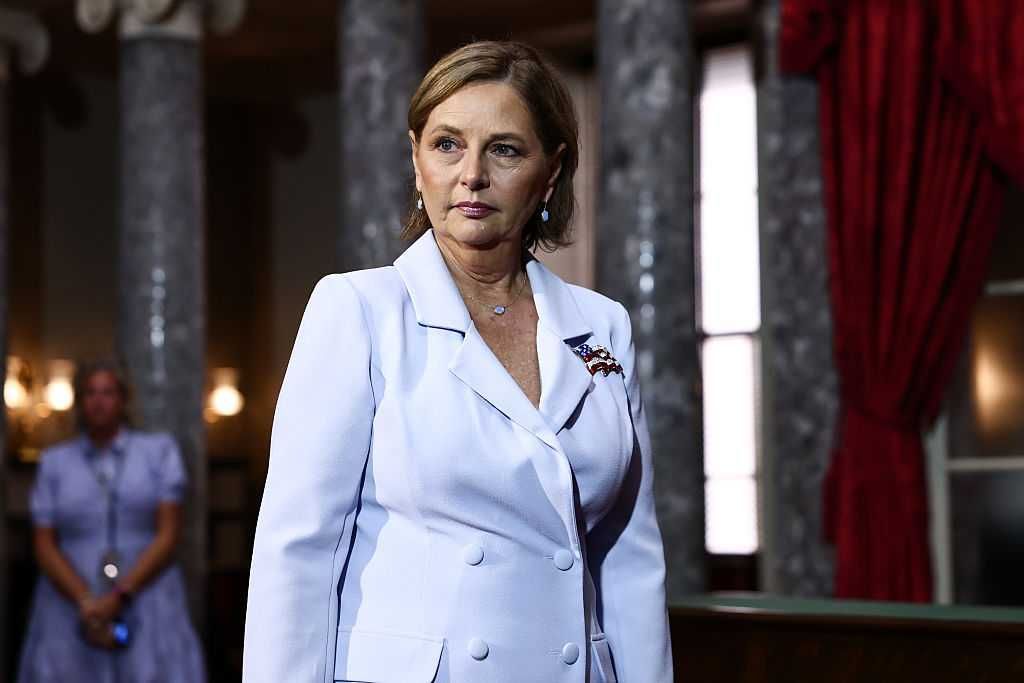
After initially saying Darline Graham Nordone would hold her late brother Lindsey Graham’s U.S. Senate seat only temporarily while the state prepared for a special election, President Trump encouraged her to seek a full six-year term. She agreed.

This candidacy began with a promise that proved disposable. A lie. Nothing about it has improved since.

Nordone’s central qualification is obvious: She is Lindsey Graham’s sister. Her campaign amounts to “birthright senatorship” — an inherited claim on public office dressed up as party unity.

America First voters were promised an assault on the swamp: entrenched power, donor networks, insider dealing, and political advancement based on access rather than merit. They were not promised a new hereditary class with Senate seats passed from one family member to another.

To borrow Graham’s own words from the Brett Kavanaugh confirmation fight, this is a sham, and South Carolinians should see through the charade.

Graham’s speech during that battle was one of his finest moments in the Senate. It may have helped save Kavanaugh’s nomination. It did not create a family title to the office Graham held.

His sister is not entitled to inherit his seat because he died in office.

The proposed Graham dynasty is especially offensive because this seat has already been dominated by two men since 1956: Strom Thurmond and Lindsey Graham. South Carolina does not need another half-century of political inheritance. It needs a genuine changing of the guard.

Most voters cannot leave their children a lucrative career, much less a seat in the United States Senate. Public office is not family property. It belongs to the people, who are supposed to choose among candidates with records, ideas, and qualifications of their own.

Nordone has no meaningful public record in politics or policy that would justify elevation to one of the nation’s most powerful offices. What fills that void instead is support for diversity, equity, and inclusion programs; a career inside federally subsidized state bureaucracy; and an endorsement from Rep. Jim Clyburn, the South Carolina Democrat whose support revived Joe Biden’s 2020 presidential campaign.

RELATED: The internet makes monsters and saints before the body is cold

Blaze Media Illustration

None of that recommends her to voters who were told they were dismantling the old order.

For years, South Carolina politics has been dominated by the Haley-Graham cocktail circuit: polished Republicans who chased dragons abroad while much of their state declined beyond the comfortable enclaves of Charleston and Columbia.

Graham’s death was tragic. His foreign-policy views were often badly out of step with America First voters, but no decent person wished for his sudden passing. He deserves mourning and respect.

His sister does not deserve a coronation.

The Republican Party should be especially wary of this arrangement because its voters have spent a decade rebelling against political dynasties. They rejected the Bushes, resisted the Clintons, and rallied behind Trump in part because he attacked a system in which the right surname, donor list, or social circle mattered more than accountability.

A Truth Social post should not be enough to transform blood relation into political legitimacy. Neither should the swift organization of party officials, donors, and consultants eager to preserve their access.

If Nordone wants the seat, she should earn it on the strength of her own record and convictions. So far, she has offered neither. Her campaign asks voters to treat kinship as qualification and temporary appointment as entitlement.

That is the political world America First was supposed to destroy.

South Carolina Republicans should refuse to build a Graham dynasty in the name of draining the swamp. They should reject birthright senatorship and choose a senator rather than accept an heir.
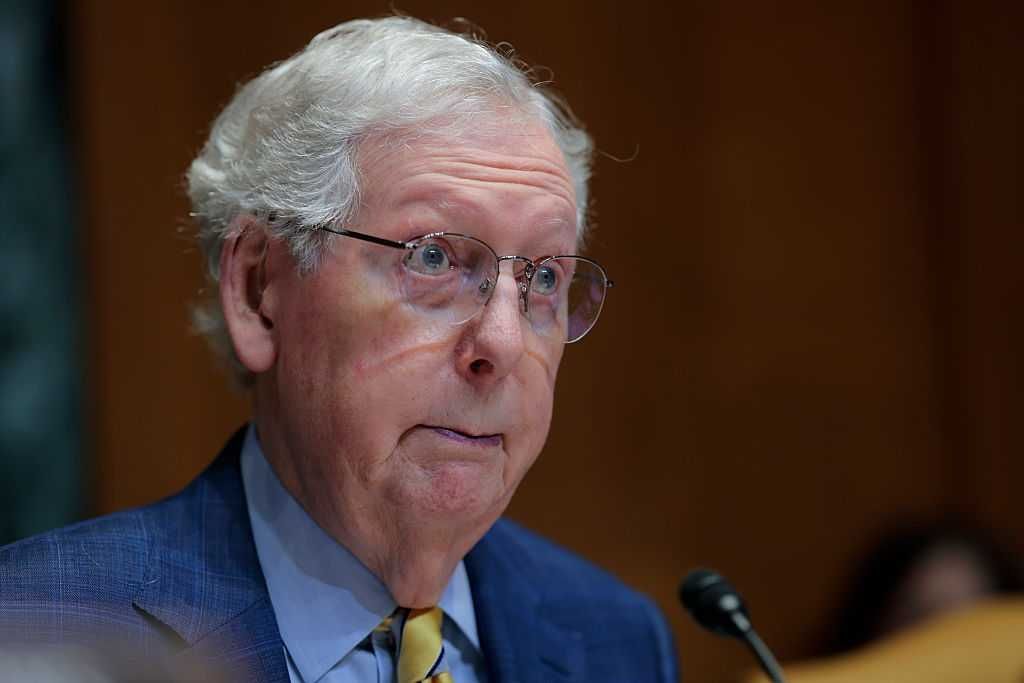
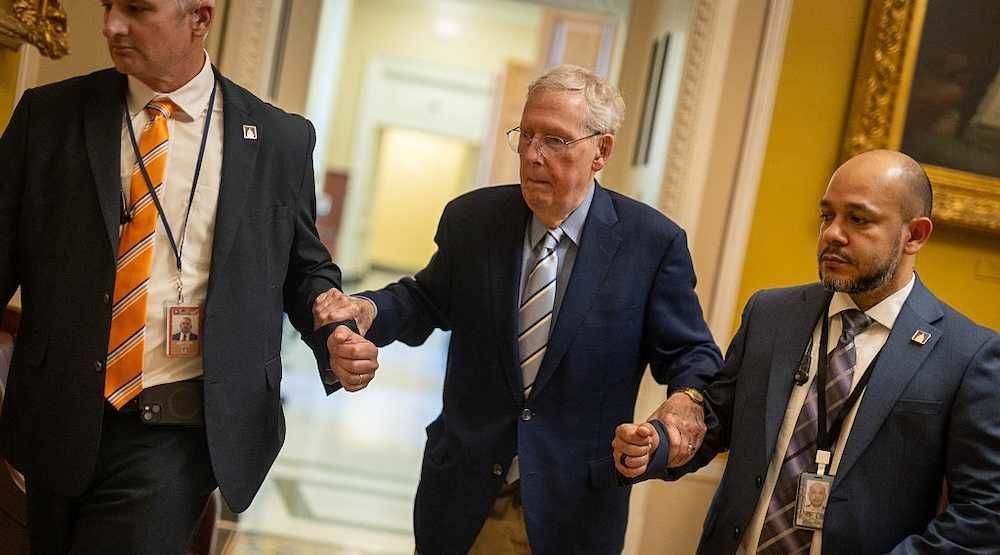
Mitch McConnell’s replacement might be chosen in court first


Senator Lindsey Graham (R-S.C.) died suddenly Saturday night. May he rest in peace, and prayers and condolences to his family.

His death has understandably focused attention on the mechanics of filling vacancies in the U.S. Senate. That process is governed by state law, though authorized by the federal Constitution.

The public deserves better than confident assertions resting on incomplete analysis.

South Carolina law is clear, though somewhat complicated. Republican Governor Henry McMaster appoints an interim senator to serve until the end of the current term on January 3, 2027. But because Graham had already won the Republican nomination for the general election scheduled in November, a special primary will be held on a compressed timetable to choose a new nominee.

Complicated, yes. But clear.

Kentucky is another story.

Attention has inevitably turned there because of lingering questions about Sen. Mitch McConnell’s health and his announcement that he will not seek re-election. That has prompted speculation about what would happen if his seat became vacant before his term expires.

Unfortunately, much of the commentary has confidently asserted propositions that are, at best, only partially true.

One widely repeated claim is that Kentucky’s governor would appoint a replacement, but only from a list of three names submitted by the departing senator’s political party. That was once accurate. It is no longer.

Another confidently asserted claim is the opposite: that the governor has no appointment authority because the Kentucky legislature abolished it in 2024. That conclusion may ultimately prove correct as a statutory matter, but it is not nearly as obvious as many commentators suggest.

Kentucky law is murkier than the headlines acknowledge.

Until 2024, the answer was straightforward. Kentucky law expressly authorized the governor to appoint an interim U.S. senator while requiring him to choose from a list of three nominees submitted by the departing senator’s political party. That unusual compromise preserved partisan continuity while limiting gubernatorial discretion.

RELATED: Kentucky governor makes unusual request as mystery deepens over Mitch McConnell’s health

Nathan Posner/Anadolu/Getty Images

But in 2024, the Republican-majority General Assembly repealed that statute over Democrat Gov. Andy Beshear’s veto.

That much is undisputed.

From that repeal, however, many commentators have leaped to the conclusion that the governor now possesses no appointment authority at all. That does not necessarily follow.

The 2024 legislation replaced the old Senate-specific appointment statute with provisions requiring a special election to fill the vacancy. That plainly reflects the legislature’s desire that the people — not the governor — ultimately choose the senator.

But a special election does not answer a different question: Who, if anyone, occupies the office in the meantime?

Here is where the analysis becomes more complicated.

Kentucky still has a general vacancy provision stating that where “there is no other provision of law for the filling of a vacancy in any office,” the governor shall fill the vacancy by appointment.

Does a statute requiring a future special election constitute “another provision of law” for filling the vacancy? Or does it merely prescribe how the office will ultimately be filled, leaving the temporary vacancy to the general appointment statute?

Reasonable lawyers can disagree.

Those insisting that the governor has no appointment authority argue that the legislature plainly intended to eliminate interim appointments altogether. They point to the purpose of the 2024 law and contend that allowing even a temporary appointment would frustrate that objective.

That is a serious argument. But it is not the only one.

The legislature repealed the Senate-specific appointment statute. It did not repeal the general vacancy statute. Courts ordinarily avoid finding repeals by implication and instead try to harmonize statutes whenever possible.

One could therefore read the two provisions together: The general vacancy statute supplies temporary occupancy of the office, while the election statute governs the permanent replacement.

Whether Kentucky courts would accept that interpretation is another question.

Nor is the statutory question the only uncertainty. The Kentucky Constitution contains vacancy provisions that some commentators believe independently constrain the legislature’s ability to eliminate the governor’s appointment authority. No court has squarely resolved how those provisions interact with the 17th Amendment and the legislature’s 2024 revisions.

In addition, the claim that the rule changes if a vacancy occurs before Aug. 3 rather than after is incorrect. That trigger date applies only “if the unexpired term will not end at the next succeeding annual election.” If the unexpired term will end at the next succeeding annual election, as it would with McConnell’s seat, the Kentucky Constitution provides that “the office shall be filled by appointment for the remainder of the term.”

That brings us back to the deeper question: Is Kentucky’s constitutional appointment authority preempted by the 17th Amendment?

RELATED: Outrage erupts after sitting member of Congress found in dementia living care home after being missing for months

Al Drago/Bloomberg/Getty Images

The 17th Amendment permits state legislatures to authorize temporary gubernatorial appointments, but it does not require them to do so. It assigns that discretionary decision to the legislature.

Whether that assignment preempts a contrary state constitutional provision remains an open question.

That means Kentucky faces multiple unresolved legal issues, both statutory and constitutional.

Perhaps Kentucky courts would conclude that the 2024 legislation successfully eliminated every form of interim appointment.

Perhaps they would conclude that the general vacancy statute remains available until the special election.

Perhaps they would hold that the Kentucky Constitution independently authorizes the governor to make a temporary appointment.

Or perhaps a state or federal court would hold that the Kentucky Constitution is preempted by the 17th Amendment, which gives the legislature discretion over whether to authorize temporary gubernatorial appointments pending a special election.

The point is not that any one of those answers is certainly correct. The point is that no court has decided any of these questions.

That makes the confident pronouncements now appearing in news stories and television commentary premature.

There is an irony here. The legislators who sought to make Senate succession more democratic may instead have created uncertainty at the precise moment when certainty matters most.

If a vacancy occurred tomorrow, the first contest might not be between rival candidates at the ballot box. It might be between rival lawyers in the Kentucky Supreme Court.

The public deserves better than confident assertions resting on incomplete analysis. When the law is genuinely unsettled, intellectual honesty requires saying so.

Kentucky’s Senate vacancy law deserves that honesty. So do the citizens who may one day depend on it.

Virginia Democrats get bad news about legally dubious gerrymandering effort


The Virginia Supreme Court heard arguments on Monday in Scott v. McDougle, a case initially brought before Tazewell County Circuit Judge Jack Hurley Jr. that could determine whether Old Dominion ultimately adopts a gerrymandered map that would all but guarantee that 10 out of the state's 11 congressional seats go to Democrats in the upcoming midterm election.

On April 21, Virginia voters passed the redistricting referendum, but the next day, Hurley blocked certification of the result, ruffling the feathers of Democrats who eagerly want to see the result certified.

Hurley ruled in January that the constitutional amendment that ended up on the April 21 ballot was unlawful. He then declared on April 22 in a related case about the constitutional amendment — Koski v. Republican National Committee — that:

  • the Virginia General Assembly illegitimately usurped the powers of the Virginia Redistricting Commission;
  • the legislation that prompted the special election for the amendment violated the submission, timing, and form of laws clauses of the Virginia Constitution; and
  • "any and all votes for or against the proposed constitutional amendment in the April 21, 2026, special election are ineffective."

The judge granted the Republican plaintiffs in the Koski case a permanent injunction against certification, noting that they "will be irreparably harmed absent permanent injunctive relief because of the numerous violations of the constitutional amendment process and because Congressmen [Ben] Cline and [Morgan] Griffith would be irreparably harmed by their districts changing at this juncture."

On April 24, Virginia Attorney General Jay Jones (D) filed a motion for an emergency stay of Hurley's order in the Koski case.

The Virginia Supreme Court delivered Jones and other Democrats bad news on Tuesday, denying them their coveted emergency stay.

RELATED: Virginia Supreme Court seems skeptical about Democratic gerrymandering

Graeme Sloan/Bloomberg/Getty Images

Former Republican Virginia AG Ken Cuccinelli said in response to the court's rejection of the Democratic motion that "in the 'tea leaves' category, this is as positive a 'tea leaf' as one might imagine" with regard to the Scott case.

Cuccinelli said that if the Virginia Supreme Court "thought they would let the referendum stand, then logically they would have lifted the injunction on counting & certifying the votes."

Virginia Del. Wren Williams (R) wrote, "The same Supreme Court that allowed the referendum to go forward in March, so voters could be heard, has now declined to override a final judgment finding the constitutional amendment process defective. Strong signal that process matters in Virginia."

Like Blaze News? Bypass the censors, sign up for our newsletters, and get stories like this direct to your inbox. Sign up here!

Will the Iran war tip the scales in the race to replace MTG?


The special election to replace former Republican Rep. Marjorie Taylor Greene of Georgia could have a lot more to do with foreign policy than candidates initially anticipated.

Greene's falling out with President Donald Trump marked a major fracture within the GOP, prompting a special election to fill her seat on Tuesday. Apart from the typical party distinctions, foreign policy could be the deciding factor between the Democrat and Republican nominees vying to represent Georgia's 14th congressional district.

'He has gone insane, and all of you are complicit.'

Democratic nominee Shawn Harris has taken a harsh stance against the ongoing war in Iran, which has become increasingly unpopular with voters, while Republican nominee Clay Fuller has remained a supporter of the conflict.

The horseshoe theory about the political spectrum seems to be in full swing as Greene's increasingly critical remarks about the war and the Trump administration more broadly seem to echo Harris' positions far more than Fuller's.

RELATED: This scandal-ridden Democrat just got one step closer to being expelled from Congress

ELIJAH NOUVELAGE/AFP/Getty Images

Days before the special election, Greene doubled down on her criticism of the war, condemning Trump's Easter ultimatum to Iran.

"Everyone in his administration that claims to be a Christian needs to fall on their knees and beg forgiveness from God and stop worshipping the President and intervene in Trump’s madness," Greene said in a response to Trump's post threatening to attack civilian infrastructure like power plants and bridges. "I know all of you and him and he has gone insane, and all of you are complicit."

"Trump threatening to bomb power plants and bridges hurts the Iranian people, the very people Trump claimed he was freeing," Greene added. "On Easter, of all days, we as Christians should be reminded that the son of God died and rose from the grave so that we can be forgiven once and for all of our sins. Jesus commanded us to love one another and forgive one another. Even our enemies."

RELATED: Veterans slam Democrat candidate for allegedly fudging military record

Drew Angerer/Getty Images

Greene has refrained from endorsing either candidate, although Fuller has secured support from Trump. While an endorsement from Trump would typically all but guarantee the candidate's success, especially in a rural, red district in Georgia, Harris narrowly outperformed his Republican challenger in March.

In a crowded 17-candidate race, Harris brought in 37% while Fuller finished with 35%. The candidates' respective numbers were likely affected by the many candidates who no longer qualify for Tuesday's election. It should also be noted that a Trump-endorsed Greene beat Harris by nearly 30% back in 2024.

Like Blaze News? Bypass the censors, sign up for our newsletters, and get stories like this direct to your inbox. Sign up here!

Democrats’ latest victory in deep-red Mar-a-Lago district offers bleak midterm forecast


Republicans are facing yet another brutal electoral loss after Democrat Emily Gregory sailed through her special election in a deep-red district.

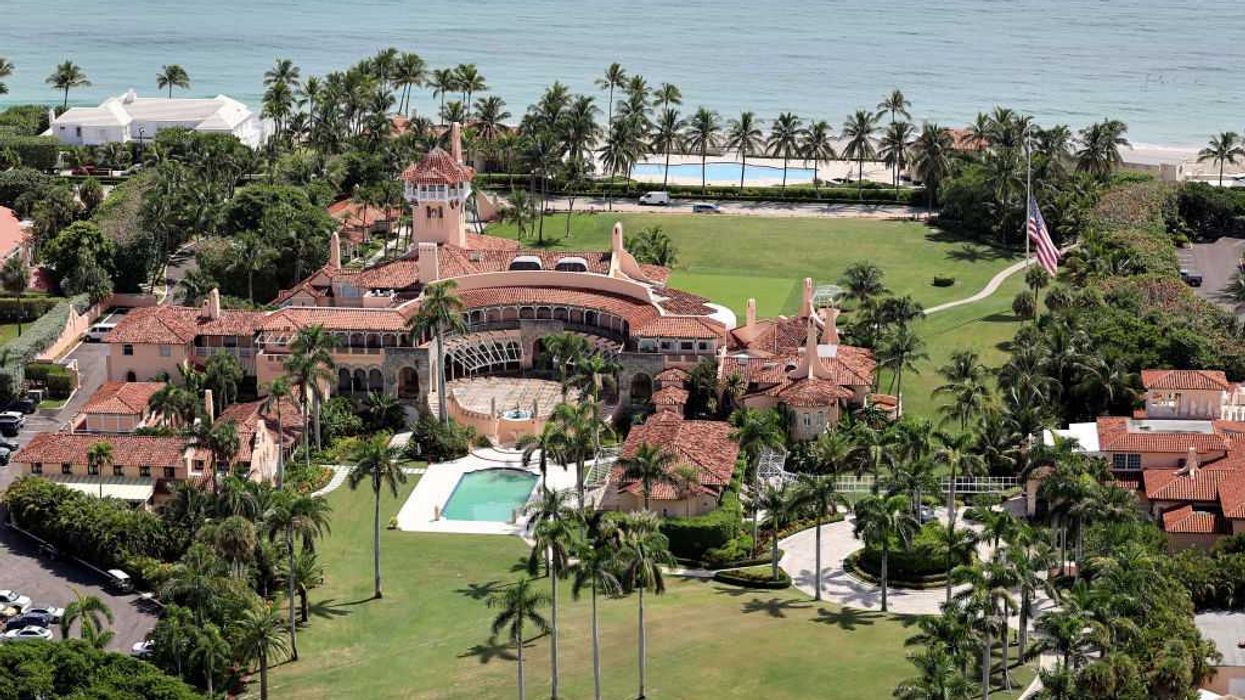
Gregory was elected to represent the 87th district in the Florida House Tuesday night, securing 51.2% of the vote while her Republican opponent, Jon Maples, won just 48.8% of the vote. This district, which includes President Donald Trump's Mar-a-Lago estate, was previously held by Republican Mike Caruso.

Republicans have not flipped a single Democrat-held seat since Trump was elected.

Caruso, who vacated his seat in August to become Palm Beach County clerk of the circuit court and comptroller, won the seat by 19 points in 2024. Similarly, Trump won the district by 11 points in the 2024 presidential election.

Gregory's victory is hardly an outlier. Since Trump was elected in November 2024, Democrats have managed to flip dozens of seats in key elections and have come uncomfortably close to defeating other Republicans in deep-red districts.

RELATED: Republican defends congressional airline perks as cost-savings for Americans

Photo by Joe Raedle/Getty Images

In 2025 alone, Democrats flipped 25 state Senate and House seats previously held by Republicans out of the 119 seats that were up for grabs through special or regular elections. Democrats flipped 13 seats in the Virginia House of Delegates alone and another five seats in the New Jersey General Assembly, even breaking a supermajority in Mississippi.

Democrats flipped another nine seats, including local elections in Iowa, Pennsylvania, Texas, Mississippi, Georgia, New Hampshire, and Arkansas.

With Gregory's victory Tuesday night, Democrats have successfully flipped 29 seats previously held by Republicans.

RELATED: Jesse Jackson Jr.'s political comeback fails miserably after he served prison time

Photo by Andrew Harnik/Getty Images

In contrast, Republicans have not flipped a single Democrat-held seat since Trump was elected in November 2024, offering a bleak forecast for the GOP going into the 2026 midterms.

Like Blaze News? Bypass the censors, sign up for our newsletters, and get stories like this direct to your inbox. Sign up here!

'Nobody's history is perfect': Democrat Muhammad Casim loses election in historically blue district


In a major upset, a Republican has finally made an inroad in what was once considered a safe Democratic county in Virginia.

Democratic candidate Muhammad "Sef" Casim lost a special election for a vacant seat on the Prince William Board of County Supervisors to Republican Jeannie LaCroix following a precipitous loss of support from his own party.

'I want to make clear that the foolishness of my actions during my college days did not translate then, and most definitely does not indicate now, any prejudice or hatred I hold towards the Black community.'

On March 10, LaCroix received 1,694 (43.73%) of the votes compared to Casim's 1,436 (37.07%). Democrat Pamela Montgomery, a write-in candidate who launched her campaign barely one week before the election, drew from Casim's votes, though how many is unclear, according to WJLA.

Casim faced calls from his own party to back out of the race after past social media posts, which he described as "offensive to the Black community," resurfaced during his campaign.

RELATED: 'So pathetic': Virginia governor nailed with backlash over response to possible terror attack at Old Dominion

Chair at-Large Deshundra Jeffersonpwcva.gov
Prince William County Republican County Chairman Jacob Alderman called for the immediate withdrawal of support for Casim, posting screenshots of many of Casim's past posts and reposts, which he described as "a disturbing pattern of racist, misogynistic, antisemitic, anti-Christian, and anti-American views."

The posts, which come from X, all appear to be from over a decade ago, with many of them dated between 2012 and 2015.

Posts include Casim allegedly writing or reposting other accounts saying: “Never call a tiger ‘tigga.’ Only tigers can call themselves ‘tigga’”; “This girl’s fav match going on, No dangerous Hindu male”; “the person below is a dirty slut”; and "Heading ot [sic] VCU in the morning with my N***a."

Casim wrote an apology on Facebook on February 28: "Nobody’s history is perfect and I am no exception. 14 years ago I had made social media posts that were disrespectful and posted a reference to my friend using a term that is quite frankly, offensive to the Black community. There is no excuse for this and I deeply apologize. I want to make clear that the foolishness of my actions during my college days did not translate then, and most definitely does not indicate now, any prejudice or hatred I hold towards the Black community."

Potomac Local reported that several Democratic elected officials called on Casim to step away from the race over the "racist, xenophobic, and misogynistic" remarks.

Prince William Board of County Supervisors Chair Deshundra Jefferson issued a separate statement on March 2 criticizing Casim's past remarks — and his apology. “I am deeply disgusted by the past comments Sufiyan Casim made — as well as his lack of responsibility and accountability. No apology should start with the words, ‘Nobody’s history is perfect and I am no exception,’ as it dismisses the pain that one’s words have caused,” Jefferson stated.

LaCroix will assume the role of Woodbridge District supervisor following the election upset, which was triggered after former Supervisor Margaret Franklin won election to the Virginia House of Delegates 23rd District in January.

Like Blaze News? Bypass the censors, sign up for our newsletters, and get stories like this direct to your inbox. Sign up here!

Battle over MTG's former seat goes unresolved on election night — but Trump-backed Republican tastes victory


Former Rep. Marjorie Taylor Greene (R) called it quits and left office on Jan. 5, leaving Georgia's 14th congressional district up for grabs.

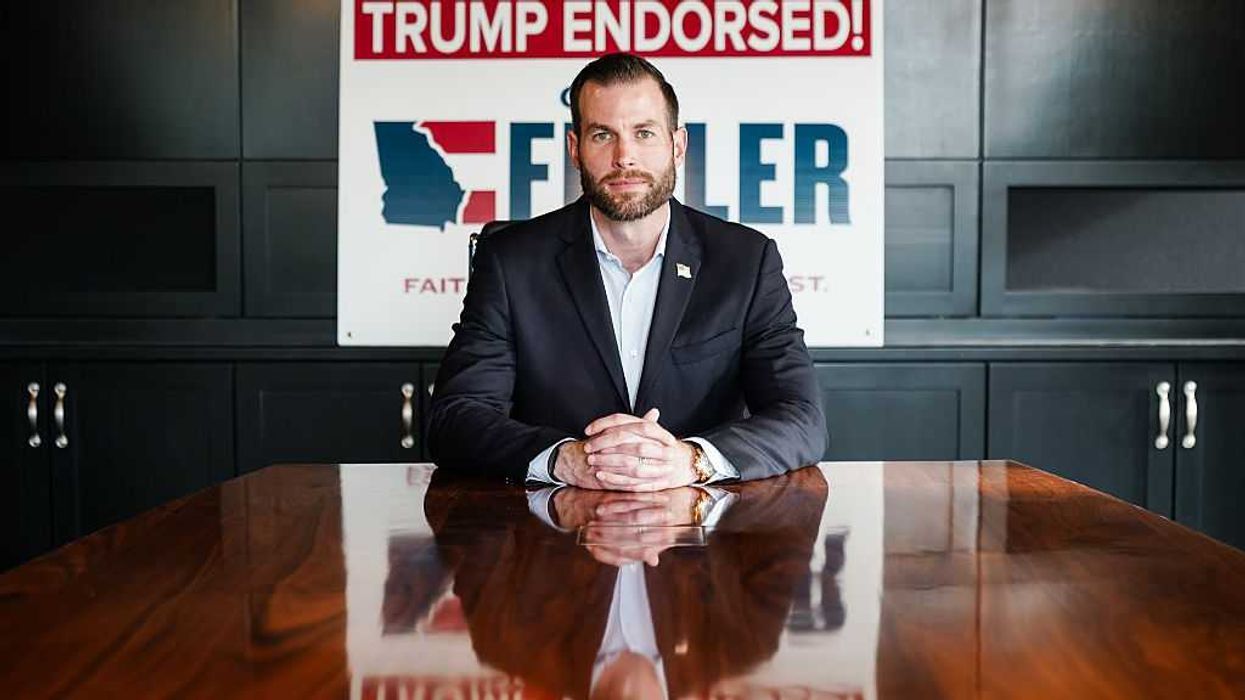
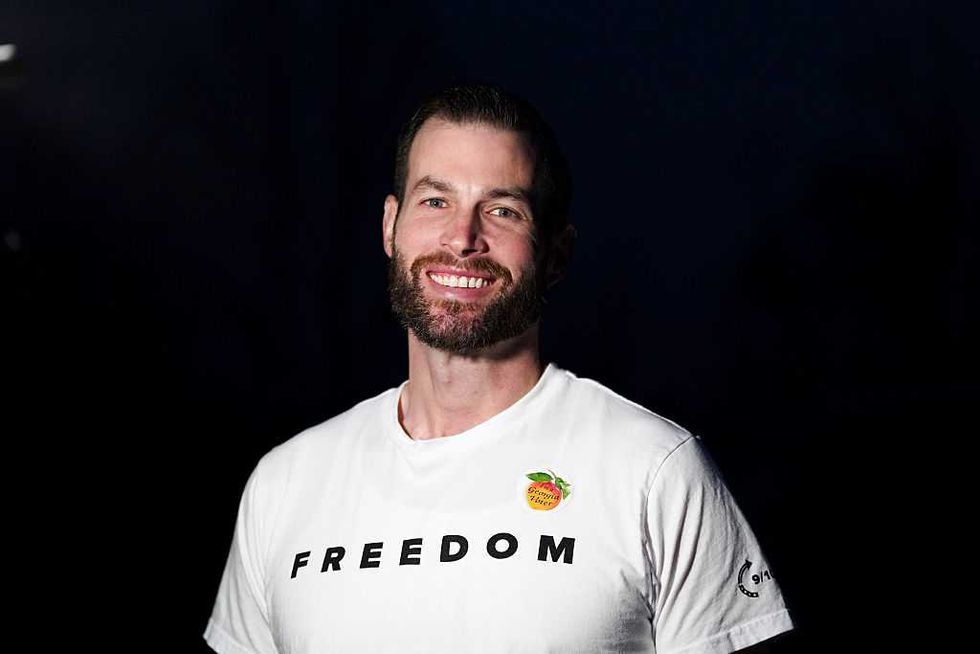
Shawn Harris — a Democratic retired brigadier general who was previously defeated by Greene in a landslide — attempted to take the seat in Tuesday's free-for-all special election. He was, however, thwarted by Clay Fuller, a hard-nosed Republican who served in the Air National Guard and left his role as district attorney to run for Congress.

'TOO BIG TO RIG.'

With over 95% of the votes in as of Wednesday morning, Fuller — whom President Donald Trump characterized as an "America First Patriot" in his endorsement last month — had secured 34.9% of the total vote, reported the Associated Press.

Trump's pick handily outperformed over 10 other Republican contenders, including former Georgia state Sen. Colton Moore, who identified himself on the campaign as "Trump's #1 Defender for Georgia's 14th Congressional District." Moore received 11.6% of the vote.

The other Republican candidates couldn't crack 5%.

Harris, alternatively, managed to secure 37.3% of the vote.

As neither Harris nor Fuller reached the necessary 50% plus one vote to take the district outright, they are headed to a head-to-head runoff election on April 7 where Trump's pick won't have to compete with fellow Republicans.

RELATED: Illegal alien allegedly voted in 2024 federal election, when Trump and Kamala were on the ballot

Photo by Megan Varner/Getty Images

Fuller told reporters at his election night watch party, "I would describe this as an outright win."

"We know that the endorsement from President Trump made a difference in this race, and we're going to go and win it," continued the candidate. "I think it's time that the Republican vote unites and gets a representative to Capitol Hill as soon as possible."

Trump noted just before midnight, "Congratulations to Clay Fuller, of Georgia’s 14th Congressional District, on getting such a high percentage of the vote with 12 Republicans running. We want to make the next vote 'TOO BIG TO RIG.' Clay will be a GREAT Congressman — HE WILL NEVER LET YOU DOWN!"

Notwithstanding his opponent's performance in a crowded Republican field, Harris claimed, "This race isn't over."

"Momentum is real. The coalition is growing," continued Harris. "Let’s finish what we started."

Like Blaze News? Bypass the censors, sign up for our newsletters, and get stories like this direct to your inbox. Sign up here!