'Trust your instincts': Our journey parenting a child with autism


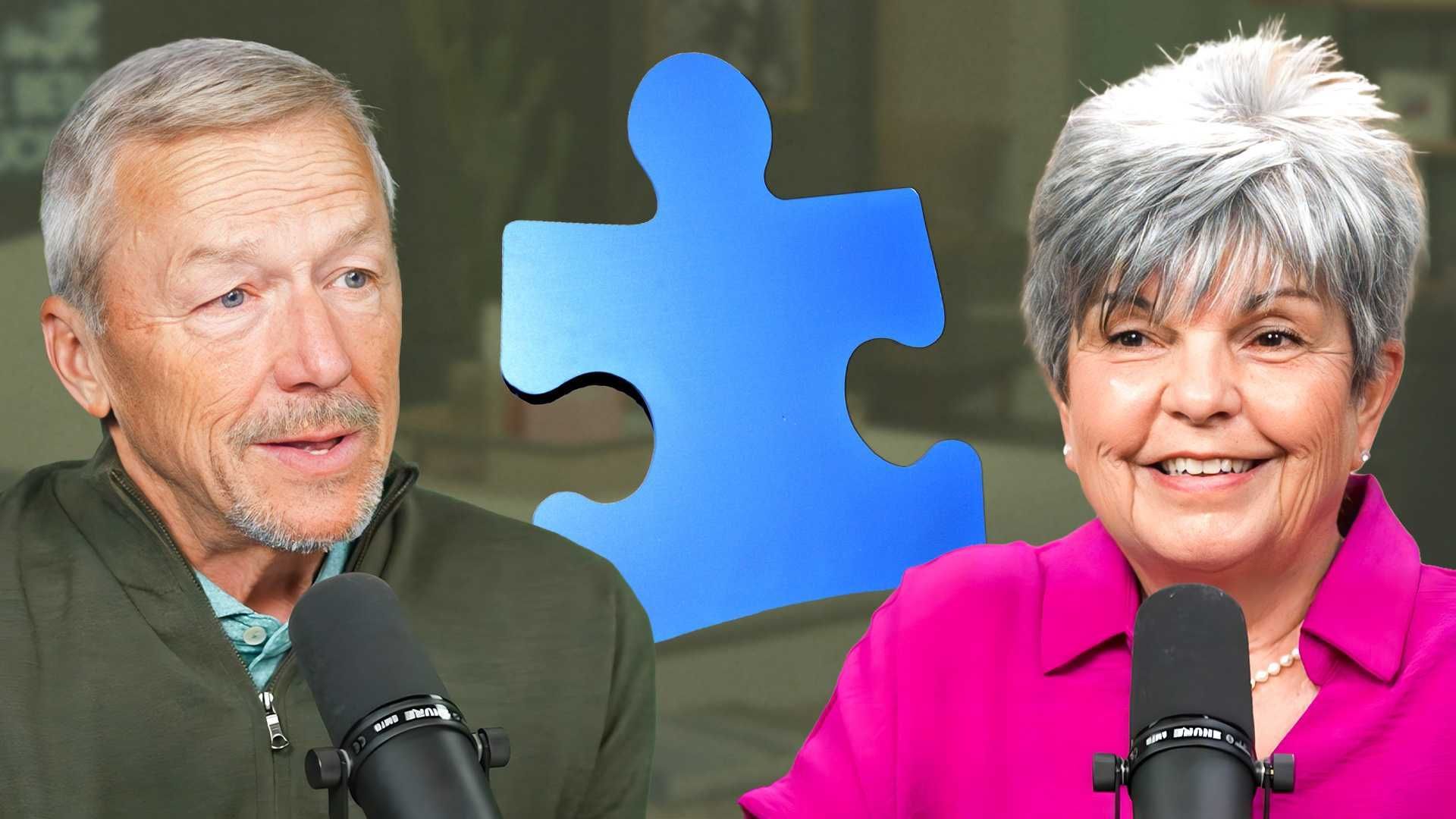
As parents who raised a child with autism, BlazeTV host Ron Simmons and his wife, Lisa Simmons, understand the realities of raising a child on the spectrum — and they know what to look for and what advice to take.

Lisa explains that kids on the spectrum “tend to be more what we call ‘floppy,’” due to a lack of muscle tone, and usually hit developmental milestones a little later.

“Their fine motor skills are just delayed,” she says.

However, Lisa points out that none of these characteristics mean an autism diagnosis is in the child’s future.

“You could just have, you know, a learning difference, and that’s not autism. So autism has been sort of broadly defined these days,” she explains.


This is why she believes the best piece of advice to give parents is to “trust your instincts.”

“If you think something’s wrong, there probably is something wrong,” she says.

“And just because your doctor says it’s not doesn’t mean that that’s true. And it’s nothing against doctors,” Ron chimes in.

“When you leave the doctor’s office, when you leave the therapist's office, they’re not thinking about your child. As wonderful as they might be, you’re the one that’s thinking about your child, and you’re the one that has to be the greatest advocate,” he continues.

And the same goes for when a doctor might diagnose the child and claim the child will never be able to participate in certain activities.

“Yes, they’ve had maybe more education than you’ve had. They’ve had maybe more experience working with these kids than you have, but you know your child, and you know your ability to work with your own child,” Lisa explains, noting that a doctor told her that her son would never be able to ride a bike.

“We got that bicycle, put the training wheels on it, propped the training wheels up on bricks. So it was like a stationary bike, and I held his feet on the pedals, and we did that until he got muscle memory in his legs,” she says.

Soon her son was riding a two-wheeler without training wheels and even joined a rollerblading hockey team.

“So, you know,” Lisa says, “don’t just take the first answer.”

Want more from Allie Beth Stuckey?

To enjoy more of Allie’s upbeat and in-depth coverage of culture, news, and theology from a Christian, conservative perspective, subscribe to BlazeTV — the largest multi-platform network of voices who love America, defend the Constitution, and live the American dream.

At Trump’s State of the Union, remember the free-market miracle in your pocket


President Trump will deliver the first State of the Union of his second term on Tuesday, an address that lands near the 250th anniversary of a nation built on freedom and enterprise. He will likely highlight ending foreign conflicts, restoring border security, reasserting American strength, and advancing his legislative agenda. He will point to economic gains — growth returning, inflation easing, energy prices falling, tax relief delivered, and markets responding. He will argue that the Trump economy is putting Americans back in charge of their own prosperity.

But one success story may not make the headlines: Under pro-investment, pro-competition policies, America’s wireless market has delivered lower prices, better service, and more choice — without mandates, price controls, or government-run networks.

Wireless shows free markets still work when Washington lets them.

Since Trump took office, wireless prices are down 4%. The White House even lists it as Win No. 132 in “365 Wins in 365 Days.” Backed by Bureau of Labor Statistics data, wireless plans and smartphones cost less in real dollars today than they did decades ago — while delivering hundreds of times faster speeds and vastly more data.

Twenty years ago, wireless networks mostly carried voice calls. Today they power work, school, health care, navigation, banking, entertainment, and small business. A wireless subscription also takes a declining share of the household budget.

That didn’t happen by accident. Competition, private investment, and smart policy drove it.

Better service, more choice, lower cost

Plans now deliver more data, faster speeds, and wider coverage than most people imagined 20 years ago. What once required a wired connection at home now works almost anywhere.

Fixed wireless access has helped drive that shift — home internet delivered over wireless networks. Nearly 15 million households now use wireless service instead of a fixed line, giving families a new, often cheaper alternative.

Americans also benefit from real choice. Most people are covered by three or more national wireless networks, each offering multiple brands, including lower-cost and prepaid options for families, seniors, students, and budget-conscious users. Dozens of smaller carriers and resellers add even more price competition. Companies need to earn customers’ business.

Wireless saves families real money

Wireless doesn’t just connect people — it cuts costs.

Parents save time and fuel by working remotely. Seniors can use telehealth instead of driving long distances. Students can learn from anywhere. Small businesses can reach customers without expensive storefronts or phone systems.

No other essential service — housing, health care, food, or energy — has improved this much while becoming more affordable. Wireless quietly delivers more value every year.

America leads because America invests

None of this works without investment. U.S. wireless companies invest about $30 billion a year to build and upgrade networks. Per person, that’s nearly double what Europe invests.

As a result, the United States leads the world in wireless performance, coverage, and innovation. That leadership didn’t come from government-run networks or price controls. It came from letting companies compete, invest, and take risks.

President Trump’s first-term spectrum auction raised a record $90 billion and helped fuel today’s 5G networks. Now FCC Chairman Brendan Carr is moving quickly toward another auction to free up more airwaves — the raw material wireless networks need to grow.

The spectrum bottleneck is real

Wireless runs on spectrum, and America is running tight.

Large blocks of valuable spectrum remain locked up by federal agencies, even when lightly used. Other countries — China, South Korea, and Japan — have moved faster to free spectrum for commercial use.

More spectrum means better service, more competition, and lower costs. Without it, growth slows and prices rise. That makes unlocking spectrum a national priority.

RELATED: Phones and drones expose the cracks in America’s defenses

dikushin/Getty Images

The hidden fee on your phone bill

Another problem stays mostly invisible to consumers.

The Universal Service Fund is meant to support rural connectivity and essential communications. But instead of being funded broadly, it gets tacked onto phone bills, often as a separate line item. Seniors and working families pay about $9 a month without ever voting on it.

Meanwhile, the biggest users of America’s networks — massive internet platforms — pay little or nothing into the system. They generate enormous traffic, earn billions, and rely on wireless infrastructure built by others.

President Trump has argued that Big Tech should pay its own way when it comes to energy-hungry AI data centers. The same principle should apply here. If you benefit from the network, you should help pay for it.

The bottom line

Wireless shows free markets still work when Washington lets them. Competition pushed prices down. Private investment built world-leading networks. Smart spectrum policy unlocked innovation.

Now policymakers face a choice: Protect what’s working, or burden it with bureaucracy and political favoritism. Free up more spectrum. Preserve real competition. End Big Tech’s free ride on infrastructure funded by American consumers.

If President Trump wants a model of American strength and market-driven success in his State of the Union, he doesn’t have to look far. It’s already in the hands of nearly every American holding a cell phone.

When It Comes To The Left’s Radical Agenda, No One Is Safe

Aversion to the wokeness that has swept the nation didn’t protect Canyon or WTAMU from leftism sneaking onto their home turf, and it won’t stop it from reaching your beloved institutions either.

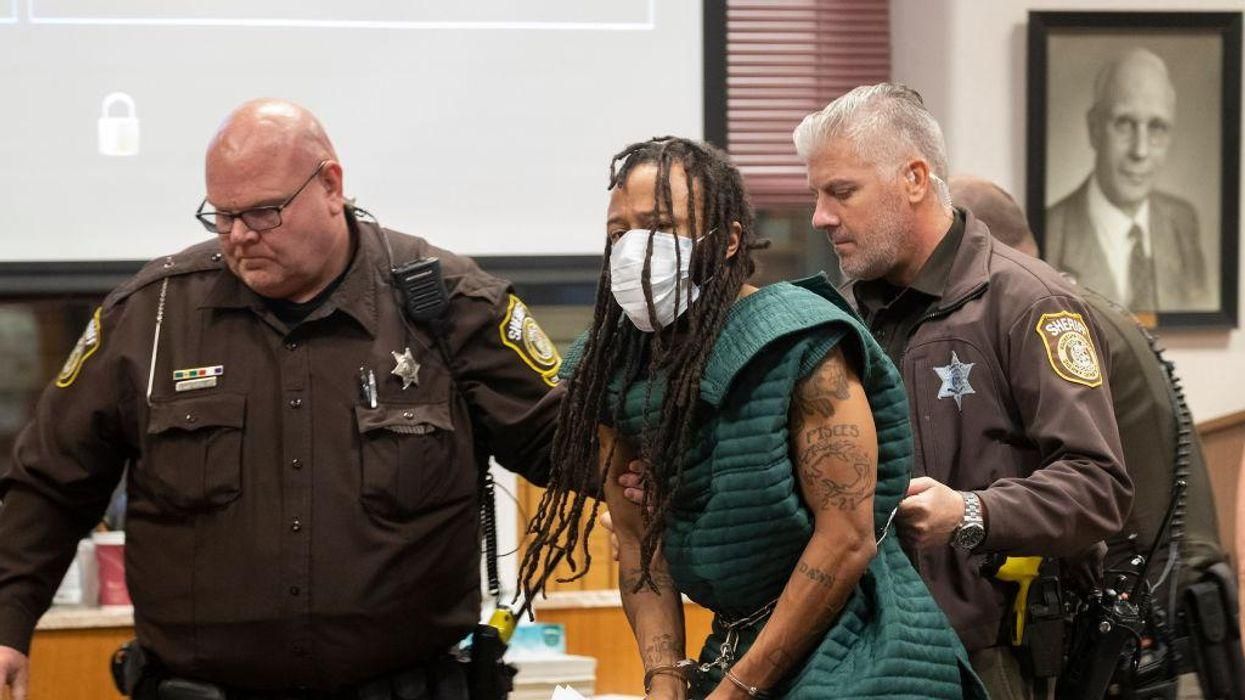
Violent felon is now representing himself in the Waukesha Christmas Parade massacre trial


On November 21, 2021, hundreds took to the streets of Waukesha, Wisconsin, for the city's annual Christmas Parade. The good cheer and wholesome revelry was cut short when a red Ford Escape pulled onto the parade route and powered through the crowd, injuring nearly 50 people.

18 kids were among those badly hurt. Six people were killed, including eight-year-old Jackson Sparks, who had been marching in the parade along with his baseball team. Four of the victims were members of the Dancing Grannies, elderly women known for dancing in parades.

The trial for the individual believed responsible, 41-year-old Darrell Brooks Jr., began on Monday.

Brooks faces six counts of first-degree intentional homicide and 61 counts of felony reckless derangement. Prosecutors have indicated that an overwhelming amount of evidence stacked against him, including over 300 videos of the parade, a witness list 32-pages long, and testimonies from grieving parents, police officers, and FBI agents.

'Playing games'

Last week, Brooks withdrew his insanity/not-guilty plea and filed a motion to represent himself. He didn't offer the court any insight into the motivation behind his decision, stating only, "I have my own reasons why."

Although she warned about "what he's getting into," Waukesha County Circuit Judge Jennifer Dorow ultimately decided on September 28 to permit Brooks to represent himself in court, noting that he was both "competent" and "coherent" enough to do so.

\u201cWaukesha Parade massacre suspect #DarrellBrooks, who is representing himself, was hauled out of the courtroom four times Monday during his jury selection.\u201d
— Law&Crime Network (@Law&Crime Network) 1664819100

The defense attorneys who Brooks subsequently dismissed, Jeremy Perri and Anna Kees, had "no comment."

Tom Grieve, a Madison-based criminal defense attorney, told the AP, "You have a defendant who feels like he has nothing to lose. He's going to try to make as big a mess as possible and force a fumble by the prosecutors or judge and try to force a mistrial or build an appeal."

Former federal prosecutor Phil Turner expects a breakdown when it comes to the cross-examinations. Turner suggested that "there's going to be an appeal, no matter what."

Seven minutes into the trial, earlier suggestions concerning Brooks' ability to derail proceedings proved true, as the defendant was ejected from the court and sent back to his holding cell for repeatedly interrupting Dorow.

The judge told Brooks subsequent interruptions would result in him watching the proceedings from an adjacent courtroom.

\u201cDay 1 of jury selection in #WaukeshaParade trial with defendant #DarrellBrooks representing himself. First thing this morning Brooks wouldn't stop interrupting the judge. She sent him back to his cell. Now he's back in the courtroom. No live stream of jury selection.\u201d
— Cathy Russon (@Cathy Russon) 1664805342

Three hours into the trial, the court was on its sixth recess due to Brooks' interruptions.

Brooks repeatedly asserted that he was a "sovereign citizen," refusing to answer Dorow's questions. Dorow characterized this assertion and its implicit rejection of the court's jurisdiction as an "obstructionist tactic."

Brooks also demanded that prosecutors provide "verified proof" that he is an American citizen.

Former Waukesha County District Attorney Paul Bucher suggested that Brooks is delaying the inevitable and keen now just to waste everyone's time. "He's playing games, and I think he enjoys it," said Bucher.

Bucher indicated further that it's "going to be terrible for the victims and the witnesses."

Throughout the process, Brooks has been regarded as a volatile.

In August, Brooks fell asleep, having complained that he was "bored." When he awoke, he yelled at the judge and then tussled with the bailiff.

Last week, Brooks' interruptions were so frequent as to prompt the frustrated judge to adjourn until the next day.

History of violence

Brooks is a convicted sex offender, who, when aged 39, preyed upon a 15-year-old girl. In addition to impregnating the minor, he has a long track record of violent crimes.

Fox 6 reported that in September 1999, Brooks was convicted of substantial battery and intentionally causing bodily harm. Despite a two-year prison sentence, he served three year's probation and only six months in the House of Correction.

In January 2003, he pled guilty to resisting an officer.

In February 2010, he was convicted on a strangulation charge only to serve 90 days in jail.

In 2011, Brooks fled from a police traffic stop and resisted arrest.

In 2020, Brooks was charged with firing a gun at his nephew.

In November 2021, just days before the Waukesha Christmas Parade massacre, Brooks was released on $1,000 bail, having allegedly run over the mother of his child at a Milwaukee gas station.

A BLM-supporter and an advocate for knocking "white ppl [the f***] out," Brooks routinely employed violent rhetoric online.

He claimed in his songs, "yeh we terrorists," and boasted about being a "killer in the city." In addition to writing a song criticizing former President Donald Trump, Brooks repeatedly shared anti-police and anti-Semitic messages.

The massacre

According to the police complaint filed on November 23, 2021, despite numerous attempts by police to stop Brooks, he allegedly increased his speed as he drove into the crowd and over pedestrians.

The complaint alleges that one officer who had been assisting with crowd control observed Brooks' vehicle intentionally moving side to side as it rammed through the crowd, "striking multiple people ... bodies and objects were flying from the area of the vehicle."

One witness said, the vehicle "continued to drive in a zig zag motion ... There was no attempt made by the vehicle to stop, much less slow down."

Another witness stated that it had appeared the suspect drove as with "a direct intent to hit as many parade participants."

He fled the scene, and was captured by police trying to get into a nearby house.

\u201cWATCH: Darrell Brooks, the man charged with homicide in the #Waukesha Christmas Parade tragedy, appears in a Ring doorbell video moments before his arrest.\u201d
— Spectrum News 1 Wisconsin (@Spectrum News 1 Wisconsin) 1637770829

Each of the six murder charges Brooks faces carries a life sentence.

Wisconsin does not have the death penalty.
Pilot narrowly avoids pulverization in the latest in a series of small plane crashes


On Friday at 4 p.m., a small plane came hurtling down towards University Boulevard and North Econlockhatchee Trail in Orlando. The aircraft dropped as the result of what Florida Highway Patrol reported to be a mechanical failure.

"All of a sudden it started to drop, and that's when we were like, 'Oh my God,'" said Amanda Skuban, who had been driving to Costco with her friend Raiah Collins when they caught a glimpse of the earthbound plane. "I just kind of freaked," Skuban told WESH2.

\u201cWATCH this. Raiah Collins and her friend were driving to Costco when they saw this plane CRASH onto University Blvd in Orlando. \n\nEveryone is okay! \nNo homes or cars were hit!\n\nCredit: Raiah Collins @WESH\u201d
— Anika Hope (@Anika Hope) 1660946609

Other drivers stopped or pulled over, giving the plane — which narrowly avoided oncoming traffic and powerlines — enough space for its unplanned final descent.

Ben Stillman heard the crash from his house, just nearby. "We assumed it was a car crash ... We peeped over the fence and we just this plane sitting in the driveway."

Apart from the damage incurred by the aircraft, only some landscaping and brickwork were disturbed at the crash site. The pilot sustained only minor injuries and no one else was hurt.

\u201cA plane crash near University and Econ in Orlando. Pilot tells me he is ok and that he thinks he was having engine trouble. @MyNews13\u201d
— Spectrum News Asher Wildman (@Spectrum News Asher Wildman) 1660941512

This is just the most recent in a series of small plane crashes this summer, some of which resulted in tragedy.

On August 18, three people and a dog were killed when two planes (a single-engine Cessna 152 and a twin-engine Cessna 340) collided over Watsonville Municipal Airport in Santa Cruz, County, California.

Both planes had been on their final approaches to the airport when they collided approximately 200 feet in the air. One Cessna careened into an aircraft hangar off the runway and the other plane smashed into a grassy field nearby.

Although the Watsonville airport is without a traffic control tower, the pilots involved were reportedly in communication via the common traffic advisory frequency. The smaller plane reportedly did not, however, have its transponder on, which would have otherwise enabled pilots to spot the aircraft on their displays.

\u201cMultiple fatalities after mid-air plane crash at Watsonville airport. @nbcbayarea #SkyRanger over the scene. City officials say it happened as the 2 planes were trying to land around 3 pm. https://t.co/H9PGSIuP6K\u201d
— Janelle Wang (@Janelle Wang) 1660865476

On the same day, a silver 1951 Cessna 195 crashed onto Interstate 8 near San Diego in El Cajon, California. The plane struck Carrie Zub's Hyundai before coming to a halt. Though Zub was not harmed in the crash, the plane's 65-year-old pilot withstood major injuries. He is expected to survive.

\u201cSurveillance video shows when a small plane crashed in El Cajon today. The pilot was taken to the hospital for his injuries\u201d
— Ramon Galindo (@Ramon Galindo) 1660853313

On August 11, a single-engine Piper PA-32 crash-landed east of Los Angeles in Corona. According to the Federal Aviation Administration, the pilot of the Piper reported an engine issue. The craft subsequently crashed onto the 91 Freeway. Although the plane splintered and was consumed by flames, the two occupants were able to escape uninjured.

\u201cA small plane crash lands on a highway in Corona, California near Los Angeles\nhttps://t.co/q7sJs6eNaL\u201d
— Coco Esteves (@Coco Esteves) 1660227814

Florida man arrested for threatening to kill Trump supporters and 7 Republican politicians: Police


A Florida man has been arrested for allegedly threatening to kill supporters of President Donald Trump and politicians who are allies of the president.

Police arrested Richard Szala, from Clearwater, a suburb of Tampa. Szala, a registered Democrat, reportedly threatened to kill seven prominent Republican politicians who are Trump allies, including Florida Gov. Ron DeSantis, Senate Majority Leader Mitch McConnell (Ky.), Sen. Rand Paul (Ky.),Sen. Lindsey Graham (S.C.), Sen. Marco Rubio (Fla.), Sen. Rick Scott (Fla.), and Rep. Matt Gaetz.

Szala, 61, also allegedly threatened to kill Trump supporters, including his neighbor.

"We were going to plant signs and what have you, but I thought, you know what, in this environment, maybe not a good idea ... and now, oh my God," Szala's neighbor John Clayton, a Trump supporter, told WFLA-TV. "No clue. Cause you have no idea who your neighbors are."

Szala reportedly made online threats against the GOP politicians and Trump supporters on YouTube, according to Clearwater police.

Someone tipped off the Florida Fusion Center about the online threats early Wednesday morning, according to officials. The Florida Fusion Center says it "protects citizens, visitors, resources, and critical infrastructure of Florida by enhancing information sharing, intelligence, capabilities, and preparedness operations for all local, state, and federal agencies in accordance with Florida's Domestic Security Strategy."

Law enforcement did a search of the IP address, which led to Szala's address in Clearwater.

"We got a credible tip from an information intelligence gather source about him posting threatening comments on YouTube," Clearwater Lt. Michael Walek told WTVT. "His comments were directed to the Republican party, specific people in the Republican party. ... He was threatening to shoot them."

Szala allegedly claimed he was making empty threats and did not intend to carry out any politically inspired violence against Trump supporters.

"He admitted to making the statements out of anger and just shouldn't have said it, didn't mean it, but he still said it," Walek added. "Anytime somebody threatens to shoot somebody and kill somebody because he's upset with them, it's inappropriate and not going to be tolerated.

"We take all written threats seriously. It doesn't matter if it's a political rant, a school, a neighbor, a friend...anytime you threaten somebody, we can establish probable cause you're going to jail," Walek said. "We don't know if you're joking. We don't know what your actions are going to be."

On Wednesday, Clearwater police went to Szala's home after learning of the threats. Authorities seized his gun, phone, and computer. Szala was arrested and charged with making a false report concerning the use of a firearm in a violent manner. The arrest happened hours after the 2020 presidential election results started to roll in.

The investigation involved Florida Department of Law Enforcement, the FBI, and the Secret Service.

Szala was charged with harassment by phone in Illinois in 1989, according to public records.

A Clearwater man has been arrested after being accused of making online threats to kill President Trump supporters,… https://t.co/ojwTvzJGr4
— Spectrum Bay News 9 (@Spectrum Bay News 9)1604575020.0