‘It’s Very Clear’: Jeanine Pirro Says There’s No Doubt Gunman Targeted Trump At WHCD
'It is not just the manifesto'
In 2018, I was a guest of Sen. Marsha Blackburn (R-Tenn.) at the State of the Union. The place was electric — political theater at its finest. Members of Congress, guests, and press were packed into a room that felt more like a pressure cooker than a chamber. And whoever designed those gallery seats clearly had smaller people in mind.
We had to be there early, which meant a lot of sitting. I struck up a conversation with the man seated just behind me to my left. It turned out to be Bill Nye. He was cordial. My kids had watched him on TV. We talked briefly, just two people passing time.
A serious person is obligated to be even-handed, even when he doesn't like someone or disagrees with him.
After the speech by Donald Trump, as the room began to empty, I stuck my hand out to Bill, and his only response was, “He didn’t talk about space.”
It wasn’t a big comment. But it was revealing. We had just witnessed something few people ever experience in person. And that was his takeaway.
A lot has happened with America’s space program since then.
I looked and have yet to see where Bill Nye said, “I don’t agree with the man, but something good happened here.”
I did see he was at a No Kings rally last month.
Which raises a simple question: Are we willing to acknowledge what is true, even when we don’t like who it’s attached to?
We hear a lot about following the science. Fine. Then follow it.
Because if you start with the premise that a person is irredeemable, then everything he does must be dismissed. At that point, you’re not evaluating evidence. You’re protecting a conclusion you’ve already chosen.
We’ve seen this before. A man once stood face to face with truth and asked, “What is truth?” Not because the answer wasn’t there, but because he had already decided what he was willing to accept and what it might cost him.
Truth is not hard to find, but it’s hard to accept when it costs us something.
Sometimes you see people model a better way.
I encountered one of those moments when my wife, Gracie, sang at the inauguration of the governor of Tennessee.
At the time, Harold Ford Jr. was a young congressman who was present at the event. After Gracie performed, there were a lot of people on that platform. Important people. People far more connected than we were.
But Harold made a point to come straight to us.
Not a quick handshake and move on. He engaged. Asked questions. Took genuine interest.
A few days later, we found ourselves on the same flight to Washington. Gracie was headed to Walter Reed to sing for wounded warriors. Once again, Harold made a beeline for us.
Same posture. Same curiosity. Same kindness.
We’ve not crossed paths since, but I still watch him when he’s on "The Five." Not because I agree with everything he says. I don’t. I watch because he is measured. He gives credit where it’s due. He asks questions. He looks for common ground. He treats people as individuals, not categories.
That stayed with me.
I saw something recently that would have been unthinkable not long ago.
Mark Levin had Sen. John Fetterman (D-Penn.) on his show. If talk radio were music, I always considered Rush Limbaugh a virtuoso and Mark Levin heavy metal.
Levin and Fetterman engaged. Asked real questions. Gave thoughtful answers. No rush to score points.
Just two men doing something we used to call normal. And that’s when it hit me. Why does that feel unusual?
RELATED: You don’t have to engage with crazy
For 40 years, I’ve lived in a world where I don’t get to choose who walks into the room to care for my wife. Nurses. Surgeons. Specialists. People from every background and belief system.
I’ve seen medical professionals wearing pronouns on their badges. While I inwardly sighed and questioned the scientific judgment of someone who touts that, Gracie still needed care.
And in that moment, my irritation didn’t get a vote. So I did what caregivers learn to do.
I stuck out my hand and engaged. I listened, observed, and learned to separate what I felt about a person from what I could clearly see in front of me.
A serious person is obligated to be even-handed, even when he doesn't like someone or disagrees with him.
The next time you hear something good about someone you can’t stand, ask yourself a simple question: Could this be objectively true, even though I don’t like this person?
You don’t have to change your vote or your convictions, but you do have to decide whether you’re going to follow the facts or protect a script.
In the real world, where people actually depend on you, clinging to a preferred script isn’t just lazy, it can be very costly.
If you’re willing to set that script aside, even for a moment, you might find something better than being right.
You might find clarity. And in a world this loud, that’s no small thing.
Instead of celebrating America’s 250th birthday this summer, we may end up engraving its tombstone if we don’t alter our current course.
The chaos is winning, both because of the persistent evil of the Democrats and the growing confusion in defining the Trump administration’s balance between foreign and domestic concerns.
While I agree that Iran is a legitimate security issue for us as Americans, the fundamental and systemic breakdowns in our own cultural back yard are far more dangerous right now.
We must be plain about the true nature of the enemy. If Democrats were made an offer to secure nationalized health care at the cost of permanently excluding illegal aliens, they wouldn’t take the deal. A Republican Party not run by the likes of John Thune — which increasingly seems like an impossibility — should be forcing votes to expose this reality on the regular instead of going on vacation.
Here is the key to understanding Democrats and exposing them to the average American voter: They simply want to destroy the foundations of this country, no matter the current policy argument. Therefore, the last thing they will ever allow to exist is a country primarily for Americans and by Americans.
After President Trump’s State of the Union speech in February, I talked about what a great job he did highlighting this ugly reality. Remember how he asked members of Congress to stand up if they thought the lives of Americans should be prioritized over illegal aliens, and not a single Democrat stood up? I walked away from that thinking the right was back on message and unity was locked in for the midterm elections ahead.
No one was talking about invading Iran and how many more weeks it is going to take — unlike this week’s presidential address to the nation. And no one was talking about it because the majority of Trump’s base — including the Joe Rogan bros and the MAHA world that pushed Trump to victory in 2024 — had a war with Iran anywhere near the top of their Trump 2.0 priority list.
None of which means this proud child of the '80s doesn’t hope we kill every single member of the Iranian high command and every single member of the Iranian revolutionary guard. I think the world will be a better place and that God is glorified if they all die per the biblical dictates of Romans 13. They made their choice.
But that's a separate issue from the one that is really bothering potential Republican voters: Why did we run away from a domestic communist like Tim Walz on the streets of Minneapolis only to run to the possibility of boots on the ground in Iran?
I'm looking at polling from Scott Rasmussen showing that support for the war in Iran is plummeting. That’s because we simply can't be seen fighting for other countries harder than we are willing to fight for our own. It's not 1987. The American voter is a different animal now with a different set of concerns and problems.
RELATED: The SAVE America Act won’t be enough to save the GOP from a midterm bloodbath
I was in North Dakota to address that state's GOP convention just a week ago, and I cannot tell you how many people I heard from who lamented that they can’t find a good husband for their daughter or a good wife for their son. Not in Oregon or Massachusetts. In North Dakota, a state Trump won by 36 points in 2024. No one was enthusiastically cheering on the war in Iran.
While I agree that Iran is a legitimate security issue for us as Americans, the fundamental and systemic breakdowns in our own cultural back yard are far more dangerous right now.
While I support Israel and call myself a Zionist without reservation, I also don’t live there. I'm an American. It's a little bit like when your favorite cousin wins the lottery, but your wife is gravely ill and you're not sure when she's going to get better. You'd love the luxury of celebrating your cousin's success — like Iran's threat to Israel being greatly diminished — but you have a very serious concern in your own house.
When you're on an airplane, the flight attendants always instruct you that if there's a problem and the cabin loses air pressure, the safety masks will drop down, and your priority must be to make sure that yours is secure before you help the person next to you. Because if you’re not safe, how can you effectively help anyone else? See where I'm going with this?
We are seeing this argument play out right now in the Supreme Court birthright citizenship case. Chief Justice John Roberts is clearly already signaling that he thinks it's totally fine if a billion foreigners come here.
Meanwhile, average Americans are still fighting to make sure their kids and grandkids are at least as secure from drag queen story hour as Israel is from Iran. The center of that situation simply cannot hold. We are running off an existential cliff.
Thankfully, before that time comes, we now have Easter. We, with our Lord as our strength and our salvation, can rise again. Pray it be so.
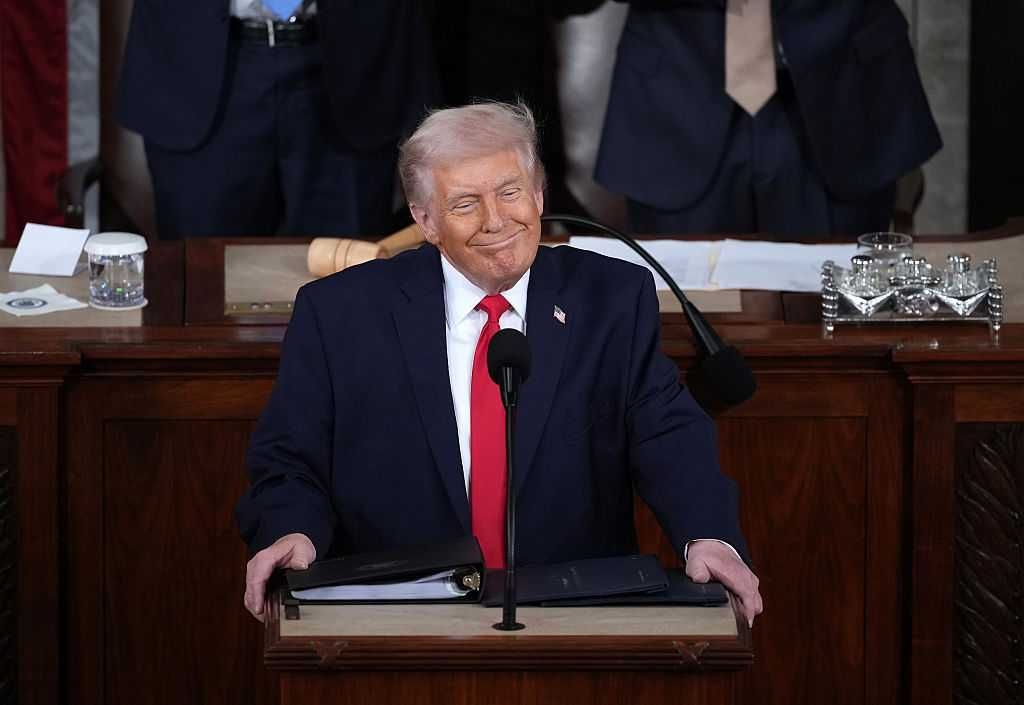
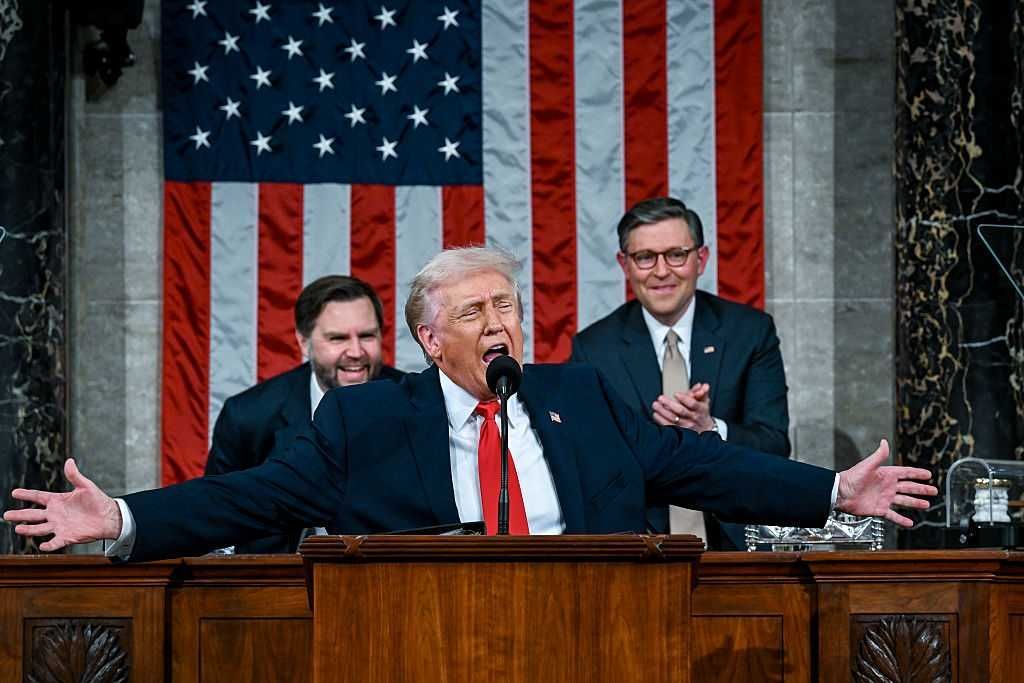
President Donald Trump doesn’t tiptoe around the obvious. Even in his State of the Union address, he put dangerous, destructive realities in blunt terms.
So why doesn’t it land?
Many people cling to nonsense even when the nonsense has been exposed.
Why do ordinary people hear the twisted “logic” of the woke mindset and not respond with the only reasonable reaction: What?! That doesn’t even make sense!
Consider three simple propositions Trump has stated plainly.
“There are two sexes.”
“Men masquerading as women do not belong in women’s sports.”
“The first duty of the American government is to protect American citizens, not illegal aliens.”
Most Americans answer those without breaking a sweat: Yes. Of course. Move on.
Glenn Beck noted that the third line — “protect American citizens, not illegal aliens” — should land like Ronald Reagan’s “Tear down this wall!” A statement so clean should do serious damage to the Democrat brand — maybe even serve as the kill shot.
And yet we keep watching the same evasions, the same doublespeak, the same manufactured confusion. Even when someone drags the truth into the light, too many people stare at it and blink.
That’s the puzzle. Once a fact is stated plainly in a public forum, shouldn’t observers think: Of course, I see it! I knew it all along!
Learning is supposed to work that way. A rational mind stores what it sees and hears. When new evidence appears, it updates. When a similar situation comes along, it draws on what it already knows and responds accordingly.
So what explains the opposite? What explains a person seeing something that is as plain as day and still refusing to interpret it correctly?
Some cases are easy. Some people are self-deluded. Some are wicked. Some know they’re lying and do it anyway for profit, power, or self-aggrandizement. They surround themselves with gullible followers and use them.
Set those cases aside for a moment. Even then, you still face a stubborn reality: Many people cling to nonsense even when the nonsense has been exposed.
RELATED: The common-sense case for nationalizing US elections
That’s where a grim insight from Dietrich Bonhoeffer may help. Bonhoeffer wrote from a prison cell in Nazi Germany and reflected on “stupidity.” His point wasn’t that stupid people score poorly on tests. His point was moral and social: A person can become hardened against reason itself. He wrote:
Stupidity is a more dangerous enemy of the good than malice. One may protest against evil; it can be exposed and, if need be, prevented by use of force.
Evil always carries within itself the germ of its own subversion in that it leaves behind in human beings at least a sense of unease.
Against stupidity we are defenseless.
Neither protests nor the use of force accomplish anything here; reasons fall on deaf ears; facts that contradict one's prejudgment simply need not be believed — in such moments the stupid person even becomes critical — and when facts are irrefutable they are just pushed aside as inconsequential, as incidental.
In all this the stupid person, in contrast to the malicious one, is utterly self-satisfied and, being easily irritated, becomes dangerous by going on the attack.
For this reason, greater caution is called for when dealing with a stupid person than with a malicious one.
Never again will we try to persuade the stupid person with reasons, for it is senseless and dangerous.
In modern vernacular, that insight has been whittled down to “you can’t fix stupid.”
So is that the answer? Does stupidity explain why so many people cannot process statements as basic as “there are two sexes” or “government must protect citizens first”?
Maybe.
Not as a way to sneer at strangers, but as a warning: Once a society trains itself to treat reality as negotiable, argument stops working. The debate stops being about evidence and becomes a test of loyalty, emotion, and power. At that point, the obvious doesn’t fail because it’s unclear. It fails because too many people have learned — willingly or not — to reject clarity.
Editor’s note: A version of this article appeared originally at American Thinker.
The daily news cycle around President Trump moves at a pace that buries accomplishments most presidents would tout for weeks. Several developments in late February fit that pattern. The headlines fixated on Iran, but other wins piled up in the background.
On February 22, CNBC reported that the average rate on a 30-year fixed mortgage fell to 5.99%, its lowest level since 2022. A year earlier, the rate sat at 6.89%. That drop matters because mortgage rates drive affordability. When rates fall, more families can buy a home, refinance, or move without swallowing a punishing monthly payment. Home ownership still anchors the American dream for millions of households, and lower rates expand access.
In Trump Time, one week can carry the weight of a season.
The news barely lingered there.
Last week, Trump delivered his State of the Union address and used it to draw a bright line between two governing priorities. He framed the choice in plain language: “The first duty of the American government is to protect American citizens, not illegal aliens.” Republicans applauded. Democrats looked unsure how to respond, caught between the demands of their activist base and the public’s expectation that government first serve citizens.
A CNN poll afterward reported that 54% of respondents supported the president’s priorities and 64% reacted positively to the address. Trump notched another measurable win in a week already packed with news.
On Thursday, another development landed. Netflix dropped its bid to acquire Warner Bros. Discovery. That retreat looked like a setback for a streaming giant that critics often associate with a “woke” programming agenda. It also reopened the field for Paramount and Skydance to pursue a deal involving Warner Bros. Discovery.
If corporate maneuvering eventually places CNN under new ownership more sympathetic to Trump, the political and media implications could prove significant. Even the possibility signals a shift in leverage and influence.
RELATED:CNN’s biggest nightmare is one step closer to finally coming true

Democrats, meanwhile, appeared to watch one of their own tactics rebound.
For years, many on the left and in legacy media downplayed Jeffrey Epstein’s world, treated the story as politically inconvenient, or framed it as tabloid excess. When Democrats and their allies tried to turn Epstein-related scrutiny into a weapon against Trump, the blowback reached prominent Democrats as well.
Reports circulated about possible testimony and renewed scrutiny for figures long treated as untouchable. Bill Clinton again faced questions about his proximity to Epstein and Epstein’s network. And, once again, the former president insisted: “I know what I did and, more importantly, what I didn’t do. I saw nothing, and I did nothing wrong.”
Then Iran swallowed the rest of the news.
As reports surfaced about a rare gathering of Iran’s senior leadership, Trump authorized a combined strike with Israel that killed more than 40 prominent Iranian figures. Iran has served as a major sponsor of terrorism for decades and has threatened the United States and Israel openly, with chants of “Death to America” and repeated vows to destroy Israel. The regime’s proxies and partners have fueled violence across the region and beyond.
RELATED: Iran, China, and Trump’s ‘art of the squeal’
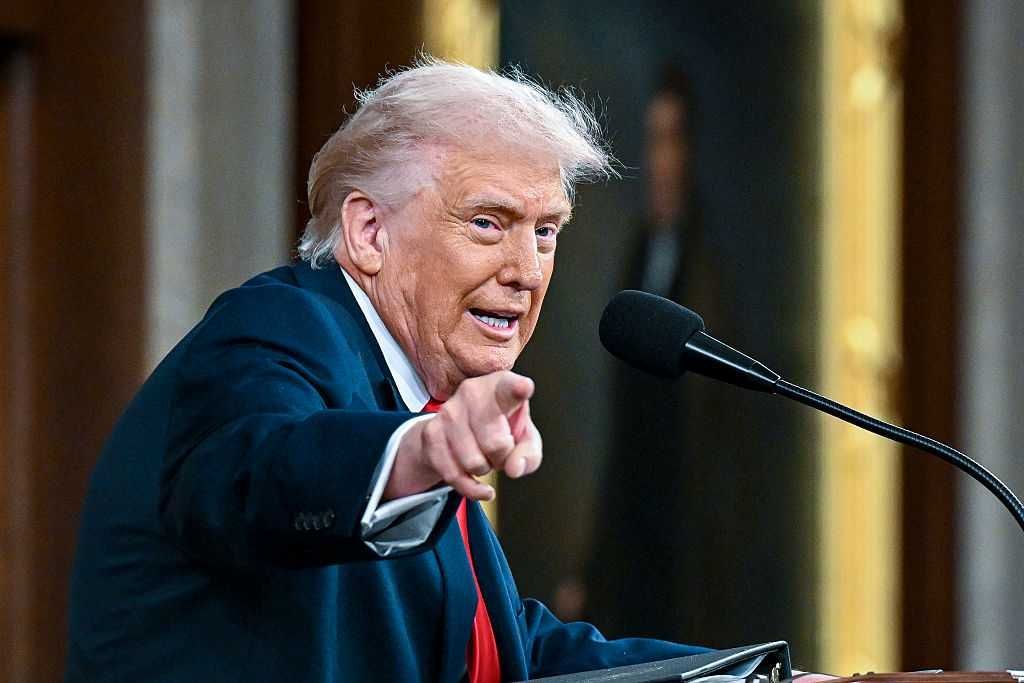
Trump framed the strikes as a turning point and spoke directly to the Iranian people afterward. He argued that past presidents refused to do what he did and urged Iranians to seize the moment. His message carried a theme he returns to often: American strength, applied decisively, can change the calculus abroad and open space for change at home in hostile regimes.
Democrats struggled to land on a coherent response. Many want to condemn the Iranian regime. Many also want to attack Trump for acting against it. That tension keeps surfacing in real time, especially when Trump moves quickly and forces the opposition to choose between moral clarity and partisan reflex.
Trump’s week ended with a dramatic shift in the U.S. posture toward Iran and the broader Middle East. At the same time, the mortgage story, the polling bump, and the corporate shake-ups showed how much else moved beneath the Iran headlines.
In Trump Time, one week can carry the weight of a season.
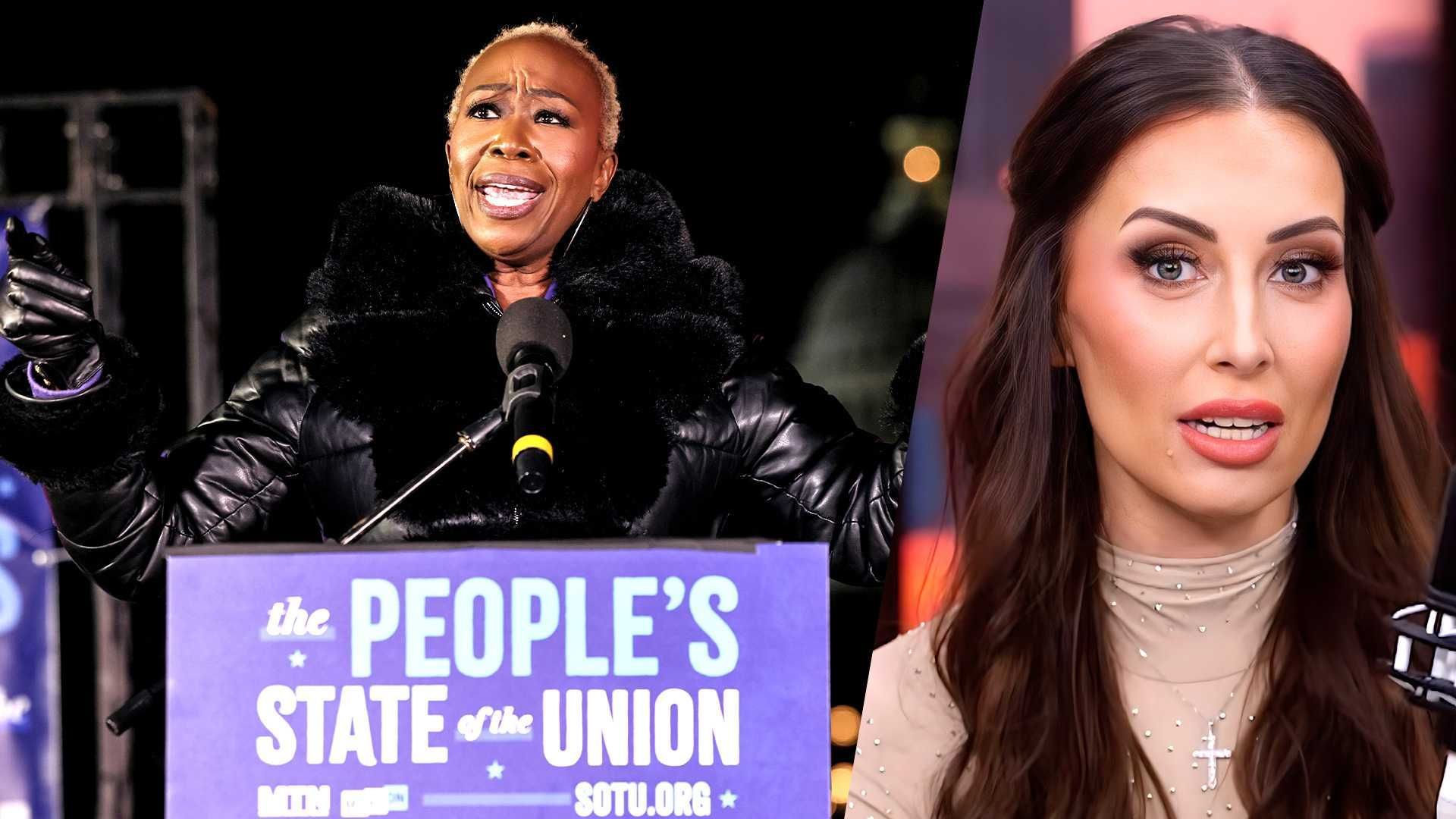
In protest of President Trump’s State of the Union address, Democrats held their own “People’s State of the Union” featuring Joy Reid — and BlazeTV host Sara Gonzales was easily able to infiltrate it before getting kicked out after trolling the former MSNBC host.
“Now obviously, President Trump is the troller in chief, and I just try to learn from him like a young Padawan. And I just thought, you know what? I’m gonna do a little trolling as well,” Gonzales explains.
While there, Gonzales squeezed in some interviews with the audience — one of whom was dressed in an inflatable cat suit.
“So do cats, is their official position that they don’t like Donald Trump?” Gonzales asked the cat attendee.
“They definitely don’t like this guy,” the cat responded, holding a sign of JD Vance.
Another man was holding a sign that read, “MAGA is Putin’s tool.” When Gonzales asked how MAGA is Putin’s tool, the man responded “Figure it out. If you can’t figure it out, you’re part of the problem.”
“I mean, I feel like you would want to educate people as to exactly how that is,” Gonzales shot back, adding, “You don’t want to educate people? ... How much you were paid to be here tonight?”
“Fifty bucks and a bottle of Crown Royal,” he answered.
“Really? Does George Soros pay that to you?” she pressed, before he yelled back, “Fascist maggot, get the f**k out of here.”
After briefly heckling Reid, who took the stage and immediately began celebrating Kilmar Abrego Garcia, Gonzales was kicked out of the event — missing a performance by Reid and another woman singing.
“You guys can hear the claps,” Gonzales comments, adding, “There’s nobody there."
To enjoy more of Sara's no-holds-barred takes on news and culture, subscribe to BlazeTV — the largest multi-platform network of voices who love America, defend the Constitution, and live the American dream.
President Donald Trump delivered the State of the Union address Tuesday night, touting his administration's achievements and laying the groundwork for the remaining three years of his term.
While Democrats attempted to distract from Trump's patriotic speech, Republicans embraced policies to improve the lives of everyday Americans, some of whom were in attendance at the State of the Union.
'I want to thank President Trump.'
Tuesday night, members of the Republican Study Committee, the largest conservative committee on Capitol Hill, hosted guests from North Dakota, Arizona, New York, Alabama, and elsewhere. While all of these guests come from different walks of life, the common thread is their appreciation for the president and his America First policies.
In a series of testimonials obtained exclusively by Blaze News, the RSC shows how real Americans feel about Trump's progress in America.
Fifth-generation rancher Ben Menges, who was the guest of Arizona Rep. Juan Ciscomani, laid out the roadblocks he previously encountered on the farm, but noted he was "looking forward to hearing" Trump's plan to address these regulatory burdens.
"We farm and ranch in Arizona because it's the desert, not in spite of the desert. And we're faced with a variety of issues; most of them stem around not having enough water," Menges said. "I've also discussed the issues of federal regulation and how it's impacted my grazing operation."
Retired Command Sergeant Major John Herring, who was the guest of Texas Rep. Monica De La Cruz, praised the tax cuts greenlit in Trump's One Big Beautiful Bill Act as well as the administration's clampdown on the southern border.
"My wife is a small-business owner," Herring said. "We're ranchers in South Texas, retired from the military. President Trump has done a fantastic job of helping us and improving our ways of life. The border security is tremendously better. The tax cuts have been tremendous for us."
RELATED: Watch the State of the Union tonight on BlazeTV's YouTube channel
Another small-business owner, Kristin Chorne, who was the guest of North Dakota Rep. Julie Fedorchak, noted the positive impact Trump's tax reforms have had on her company and her employees.
"I'm representing my business, Gratitude Spa and Salon. We are an all-female-employee business: cosmetologists, aestheticians, massage therapists, nail technicians," Chorne said. "And so, we're super excited about the One Big Beautiful Bill and the no tax on tips portion especially, as well as the no tax on overtime — huge benefits for our employees."
"I've already had several employees come and talk with me, and they're getting anywhere from $2,000 to $10,000 in refunds for 2025, so a big change for them from years past, where they've had to pay in."
RELATED: Every attendee who was awarded by Trump during the State of the Union
Law enforcement was also represented at the State of the Union, including Alabama Rep. Barry Moore's guest, Coffee County Sheriff Scott Byrd, and New York Rep. Claudia Tenney's guest, Wayne County Sheriff Robert Milby. Both Milby and Byrd applauded Trump's crackdown on crime both in the homeland and on the border.
"I've been in the law enforcement business for 23 years, and these border closing is definitely helping our community," Byrd said. "They're slowing the drug trafficking down, which I've obviously seen in my county, in my community."
"I want to thank President Trump for his efforts in supporting law enforcement and making sure that people are held accountable and responsible for their actions, something that we haven't seen in a few years," Milby said. "What we have seen, though, is that people feel less safe, and that's what matters."
"You can do anything you want with statistics, but when people tell me that they don't feel safe because of what is happening with our criminal justice system, it's refreshing to know that we have the support and that we're going to hold people accountable and responsible rather than hold court in the street," he continued.
Like Blaze News? Bypass the censors, sign up for our newsletters, and get stories like this direct to your inbox. Sign up here!


 www.theblaze.com
 thefederalist.com