Debunking Spielberg: Why real alien disclosure will not affect the faithful


Steven Spielberg's 2026 sci-fi thriller “Disclosure Day” about a whistleblower exposing a government cover-up of extraterrestrial life is performing strongly at the box office with over $160 million worldwide to date.

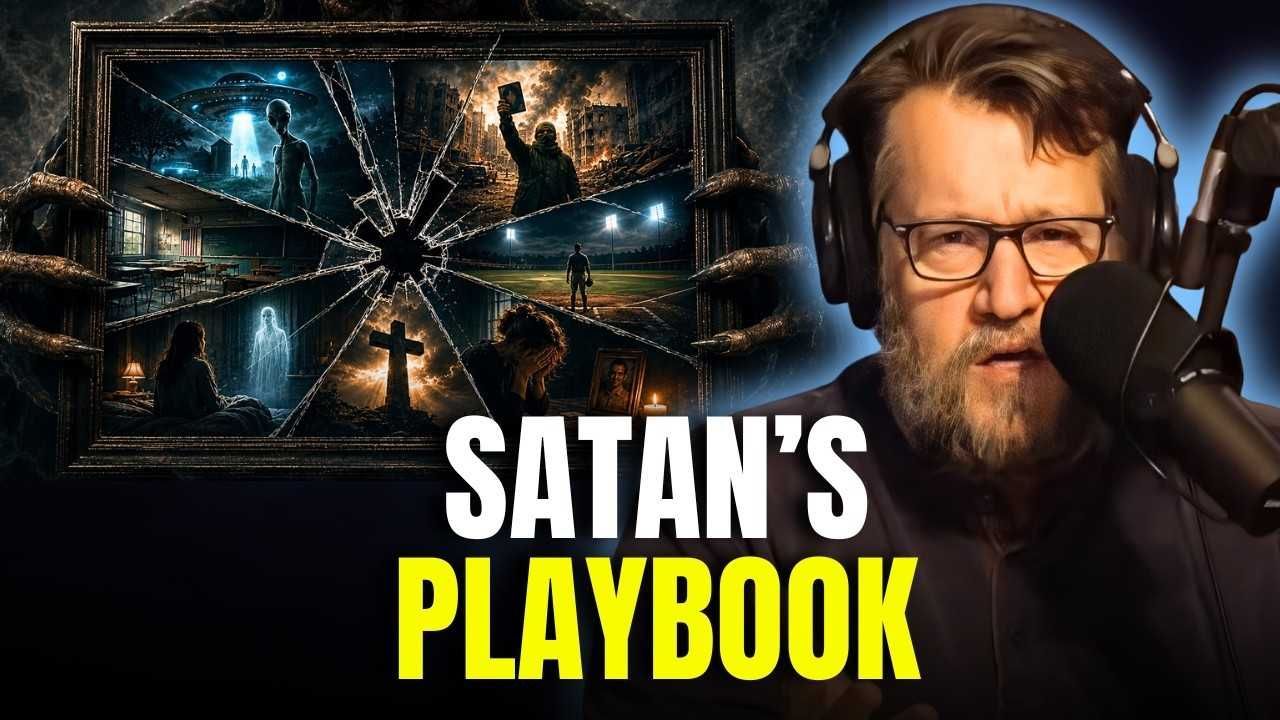
BlazeTV host Rick Burgess has been suspicious about this summer blockbuster since he first saw the previews. Not only is the timing a bit odd in light of the government’s ongoing declassification of UFO-related files, but Spielberg's own comments about how real disclosure could rattle the faith of many people has Rick’s guard up.


The movie reflects this theory, as many characters wrestle with doubts about God's divinity and humanity's place after learning about aliens.

Rick, who argues “aliens” are most likely angels or demons, believes that even if aliens proved to be otherworldly beings, it would not affect believers like Spielberg predicts.

“If it turns out like in the movie that they're straight up people from somewhere else and they're not demonic and they're not angelic, this notion that somehow that's going to rattle our faith ... it's just not so,” he assures.

True Christians, Rick argues, know that everything is created by God.

“The Scriptures tell us even in Genesis that God is the creator. He is the beginning and the end of all things. If space people show up from another planet or another galaxy, it doesn't change what we believe about God,” he says.

Believers already know that a great cosmic celestial war between God’s forces of good (angels) and Satan’s forces of evil (demons) rages invisibly all around us.

“So if there's another bunch from somewhere else, I don't know what their situation with God may or may not be, but their existence doesn't equal God doesn't exist,” says Rick.

But one thing is certain, he says: “What Satan is hoping that we'll take from this ... is that if space people show up, and they're really something, they must have created us, not God.”

To hear more of Rick’s analysis of Spielberg and “Disclosure Day,” watch the full episode above.

Want more from Rick Burgess?

To enjoy more bold talk and big laughs, subscribe to BlazeTV — the largest multi-platform network of voices who love America, defend the Constitution, and live the American dream.

Full 'Disclosure': Steven Spielberg's latest has no signs of intelligent life


Damon Packard's movie diary

Damon Packard is the Los Angeles-based filmmaker behind such underground classics as “Reflections of Evil,” “The Untitled Star Wars Mockumentary,” “Foxfur,” and “Fatal Pulse.” His AI-generated work recently appeared as interstitials for the 18th annual American Cinematheque Horrorthon and can be enjoyed on his YouTube channel. After a long day making movies or otherwise making ends meet, he likes to unwind with late-night excursions to the multiplexes and art house cinemas of greater Los Angeles.

May 20, "Obsession" (d. Curry Barker), AMC Century City 15

This movie is exactly the kind of hollow, dystopian misery porn that brainless contemporary culture keeps walloping with praise. I found it tedious, annoying, and dull.

I know this has nothing whatsoever to do with De Palma’s "Obsession," but at least DePalma's film (and its inspiration, Hitchcock's "Vertigo") knew how to seduce you with mood and atmosphere, mystery and romance. I'll take a single dreamy close-up of Genevieve Bujold in soft diffusion filters over an hour of a possessed, shrieking, creepy, clingy girlfriend.

At some point in the last act, there was a lot of screaming and noise in the theater, and they shut the film off because someone had a seizure or something. So I was spared suffering through the rest.

As I left, I heard Bernard Herrmann's music in my head. I watched the paramedics arrive. They all looked jaded and took their time pushing the gurney into the elevator. I walked past the huge "The Mandalorian and Grogu" forest planet display they have out front of the AMC Century City, and Herrmann's music seemed to keep following me.

And then I saw her. A Geneviève Bujold look-alike drifting silently past the Funko Pop claw machines in a cream-colored coat, soft curls glowing under the multiplex exterior lights. She turned slightly, just enough for me to catch the resemblance, and then vanished onto the escalator like the ending of a forgotten De Palma dream.

May 29, "Backrooms" (d. Kane Parsons), AMC Century City 15

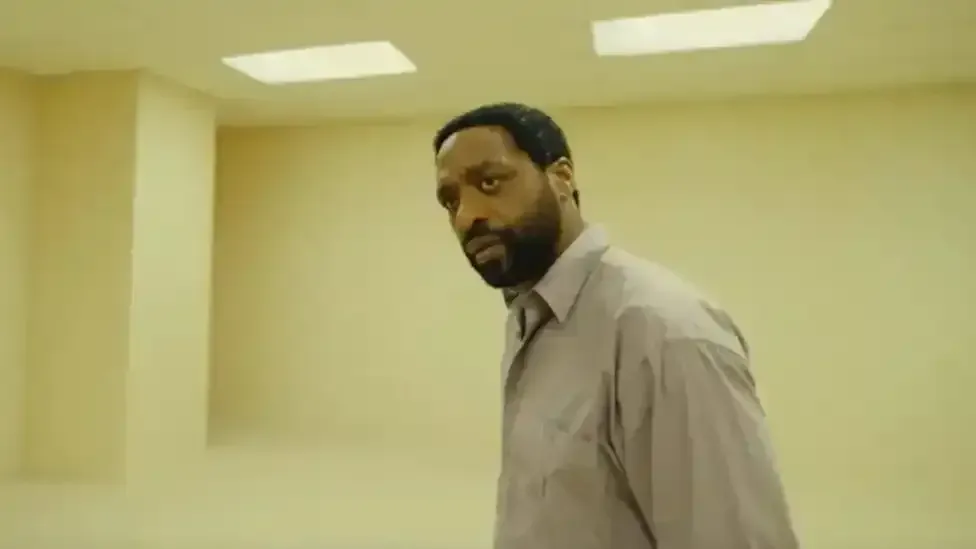
You know you're in trouble when the first two minutes are instant boredom and the rest doesn't get any better. Yeesh, what a waste — ultimately an endurance test to get through. Not a single interesting moment or idea.

I like that actor Chiwetel Ejiofor, but what the hell is he doing in this? Not only is he miscast, but he's above this kind of tripe.

When I hear them praising 'Disclosure Day,' I'm like George C. Scott in 'Hardcore' when he finds out his daughter has been abducted into the porn industry.

I would have hoped a 20-year-old boy-wonder director would bring the reckless energy to make something at least half watchable, but nope, just as horrible, bland, lifeless, dull, and dumb as every other thing the clueless moron masses who wouldn't know what a good film was if their life depended on it flock to.

Sam Raimi was 21 when he made "Evil Dead"; Steven Spielberg 24 when he made "Duel"; Orson Welles 25 when he made "Citizen Kane"; Bernardo Bertolucci 22 when he made "Before the Revolution"; Louis Malle 23 when he made "Elevator to the Gallows." Now THOSE were great films.

Spielberg is now 79, and "Disclosure Day" looks like a bland, generic, insipid pile of direct-to-Tubi junk. But is it really age and vitality, or is it that nobody can write good stories any more? Or that nobody would finance one if it even existed?

RELATED: Mission: Impossible (to sit through); Final Dud-stination; RIP Joe Don Baker

Mike Malloy/Damon Packard/Cinerama/Manuel Velasquez/Getty Images
June 2, "Pressure" (d. Anthony Maras), AMC Century City 15

Just when you thought every WW2 story had been exhausted over the last 80 years, along comes this little $5 million production set within a world of dueling weathermen!

What immediately sounds like mundane, made-for-cable fodder turns out to be a surprisingly terrific and engaging little movie, with an interesting perspective and new take.

Mostly due to the things you rarely see in films these days: good writing, good music, good direction, and interesting characters. Superb performances and casting all around, even for the initially perceived as a terribly miscast Brendan Fraser, who gives it his all and wins you over in the end. Special mention to the lovely Irish actress Kerry Condon, who makes a perfect 40s military babe.

Nothing phenomenal, but as far as mainstream theatrical releases, it is one of the best I've seen this year so far and a reminder some people still know how to make proper films (even if they are shot on the Arri Alexa 35 and technically shouldn't be called "films").

June 6, "The Doors" (1991, d. Oliver Stone), Vista Theater Hollywood

Caught a late show in 70mm last night. Which looked beautiful but seemed to be missing the subwoofer channel or something. The sound was all high and mid frequencies, zero low end. Not sure what the deal was there, a print issue or something not switched on? A projectionist might know the answer.

I really like this film, and it always brings back certain feelings and memories of sneaking onto the set with my friend Chad and joining the background actors at 3 a.m. at the Whiskey back in 1990. The cult worship of Morrison is not dead; there were girls screaming in the theater. The Vista still has a bag-checking policy; therefore I always make it a point to sneak in food and drink just on principle

June 12, "Disclosure Day" (d. Steven Spielberg), AMC Burbank 16

Caught a nice and empty 11:30 p.m. showing of "Disclosure Day" last night. Talk about a moronic, bland snoozefest. The latest major mega-embarrassment from an aging cine-Boomer. So incredibly dumb, dull, and out of touch that you just sit there half awake in a stunned stupor, taking it all in while trying to stay awake.

How anyone can actually defend this is beyond me. It never ceases to amaze: No matter how awful some new mainstream pile of garbage is, there are plenty of defenders — people (clueless, brain-dead walking software programs) who have zero proper film knowledge or education or interest and wouldn't know one way or the other.

When I hear them praising something like "Disclosure Day," I'm like George C Scott in "Hardcore" when he finds out his daughter has been abducted into the porn industry. Oh, never mind, that's another film and actor you've probably never heard of.

The John Williams score is good. Spielberg may not have it any more, but Williams still does.

June 17, "The Furious" (d. Kenji Tanigaki), AMC Marina Marketplace 6

Caught a late show of this this mostly pretty darned awesome and entertaining Hong Kong action film.

It feels very much like the kind of creative (and at times goofy and hilarious) Hong Kong martial arts exploitation films we were getting in the 1980s. With a lot more blood and violence.

Top-notch fight scenes, even if they get a little overlong in the third act (which is typical). American action movies that borrow from Hong Kong can never come close to the real deal, and this here is seventh-generation Asian action fight choreography done right.

The AI lip sync is a completely flawless and amazing tool, for those who have never seen it. (I'm pretty sure with all the idiotic knee-jerk AI hatred right now, they don't want people to know they're using it, even though it's impossible to tell.)

Only wish I saw this in a better theater instead one of the few non-upgraded multiplexes in this area, with muddy images and weak sound. It's stuff like THIS that should be dominating the premium screens.

Still, I'm grateful we get little surprises like this in an otherwise predictable world.

The Audacity: Obama Slams America's Fixation on Wealth and Fame Ahead of Star-Studded Launch Party for $850M Shrine to Himself

Barack Obama wants the American people to stop caring so much about personal wealth and celebrity status. Speaking at a private stakeholder reception for the $850 million Obama Presidential Center, which opens to the public on Friday, the former president complained that "salt-of-the-earth, bedrock people" were being screwed over by nefarious elites consumed by greed and vanity.

The post The Audacity: Obama Slams America's Fixation on Wealth and Fame Ahead of Star-Studded Launch Party for $850M Shrine to Himself appeared first on .

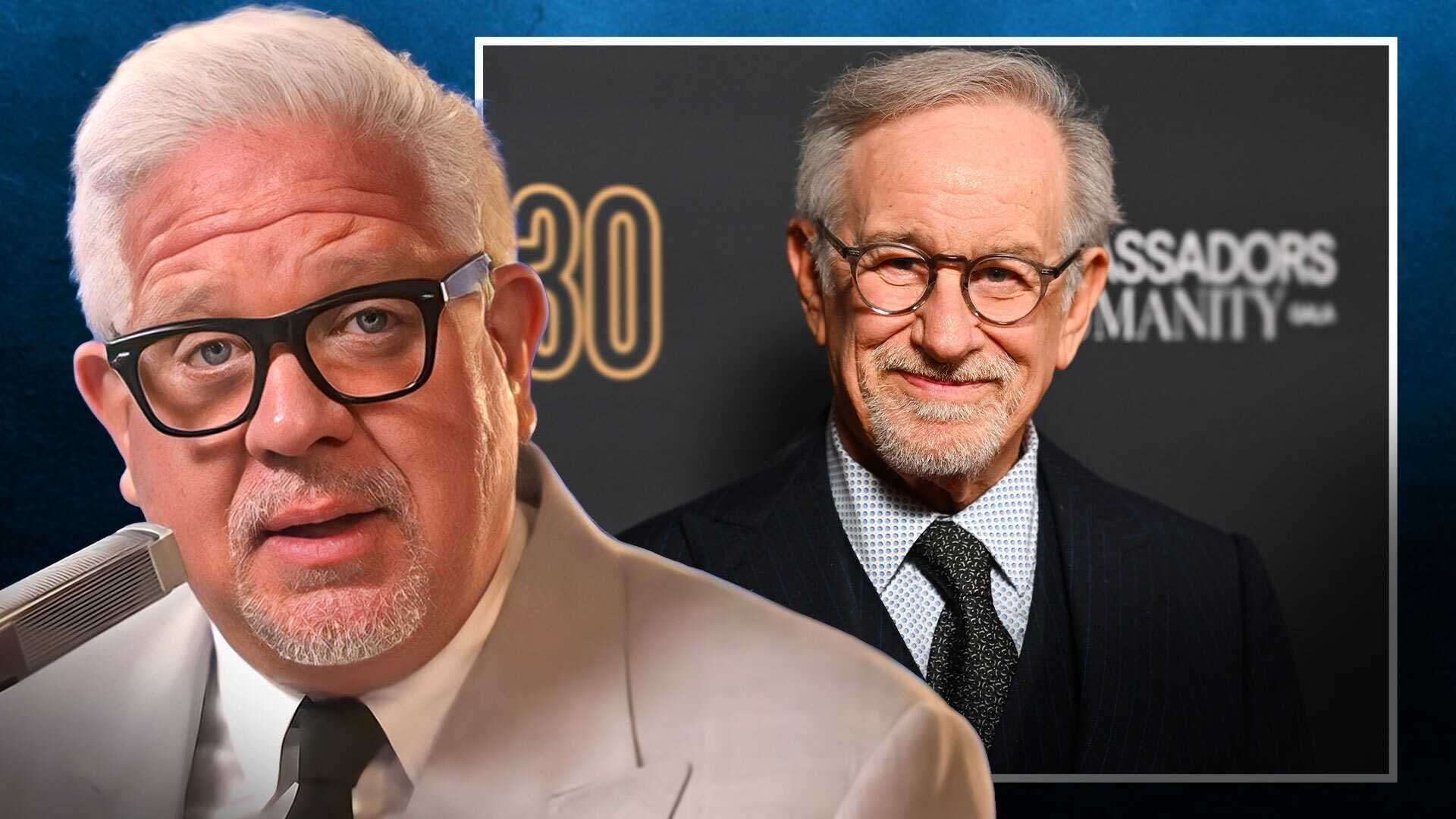
Is Spielberg’s ‘Disclosure Day’ priming us for real disclosure? Glenn Beck drops his chilling take after opening night


Steven Spielberg’s highly anticipated alien movie “Disclosure Day” hit theaters last Friday. In the weeks leading up to its premiere, a circulating theory — fueled by the government’s ongoing UFO file declassifications — suggested Spielberg collaborated with the government to prepare the public for real alien disclosure.

Glenn Beck saw it on opening night, and he says it’s definitely “worth seeing.”

But could it actually be predictive programming?

On this episode of “The Glenn Beck Program,” Glenn shares his raw thoughts on what “Disclosure Day” really means.

Glenn isn’t ready to dismiss the theory that “Disclosure Day” is predictive programming — entertainment designed to plant ideas so that future real-world events feel familiar and less shocking.

“The Department of War and the CIA have had an official entertainment liaison office for decades,” he says.

“They are brought in to help shape stories, and it's not a shadowy conspiracy ... [Hollywood is] given jets and bases and technical advisers for their movies, and in exchange, they shape the stories for the government, and this is documented policy.”

However, there’s another framework worth considering: George Gerbner’s cultivation theory.

Gerbner’s theory argues that long-term, heavy exposure to media gradually "cultivates" or shapes people's perceptions of reality, making them believe the world is more like what they see on screen than it actually is.

Glenn points out that heavy media consumption is one of the modern era’s defining characteristics, as people are “scrolling and staring and consuming media” essentially “eight hours every day.”

“[Gerbner’s] research shows that heavy viewers develop mean world syndrome where everything is a danger. They overestimate the danger, crime, threats. They become more fearful, more dependent, and more open to strong-man measures,” he explains.

What if “Disclosure Day” isn’t preparing us for real aliens but rather attempting to scare people into submitting to future government mandates?

The most critical question, Glenn insists, is: “Who profits from the fear?”

“We've been seeing a steady drum beat of disclosure that is happening. I don't know what's real and what's not,” Glenn confesses.

But he does know one thing: “A government who has been denying [aliens] for decades suddenly decides to open the door?”

“Why? And who profits from fear?” he asks.

To hear more, watch the video above.

Want more from Glenn Beck?

To enjoy more of Glenn’s masterful storytelling, thought-provoking analysis, and uncanny ability to make sense of the chaos, subscribe to BlazeTV — the largest multi-platform network of voices who love America, defend the Constitution, and live the American dream.

REVIEW: ‘Disclosure Day’

Now 79, Steven Spielberg has spent the past few years dredging up his roots. His previous film, The Fabelmans, was a cinematic version of an autobiographical novel, following the course of his life from age 6 to age 18. What was weird about The Fabelmans is that usually such works are the first publications of a budding writer rather than a septuagenarian’s career capstone. Now he’s gone and made a movie about aliens called Disclosure Day, so you might think it’s a return to his glory days as the auteur of Close Encounters of the Third Kind and E.T. the Extra-Terrestrial. But it doesn’t resemble those landmark works at all, either in quality or meaning. Close Encounters literally incepted serious science fiction as a box-office staple and E.T. was an unparalleled modern fairy tale that was for a decade the highest-grossing film ever made.

The post REVIEW: ‘Disclosure Day’ appeared first on .

The Hype About Aliens, UAPs, And ‘Disclosure’ Isn’t What It Appears To Be

What if UAP sightings and alien abduction accounts aren’t evidence of extraterrestrial life, but of supernatural life?

UFO disclosure is a test of whether citizens still own reality


This week, as critics lined up to call Steven Spielberg’s June 12 film “Disclosure Day” the best thing he has made in 20 years, Glenn Beck made a point on his program that matters more than the movie.

The real story, Beck argued, is not whether Spielberg is running a quiet psychological operation for the Pentagon. The real story is that we have entered what Beck calls “the death of free will” — an age in which the device in your pocket studies what frightens you, flatters you, and keeps you watching, then feeds each of us a private version of reality until no two Americans can agree on what is true.

A faction that insists on deciding how much reality you can handle and an algorithm that quietly decides which reality you will see are two versions of the same problem.

He is right. I would push the point one step further.

That is precisely why the fight over UFO disclosure matters more than it appears.

I am an attorney by training and a California public school science teacher of 19 years. I have published 20 books, all on governmental and corporate corruption, and none of them touched anything I would have called fringe. Two and a half years ago, I co-wrote “Catastrophic Disclosure: The Deep State, Aliens, and the Truth” with documentary filmmaker Michael Mazzola.

I came to the subject as a skeptic. What convinced me something serious was being hidden was not a sighting or a leaked photograph. It was a congressional hearing.

On July 26, 2023, three credentialed witnesses — Air Force intelligence officer David Grusch and Navy pilots Ryan Graves and David Fravor — testified before the House Oversight Committee. Anyone who has covered Capitol Hill knows witnesses are vetted exhaustively before they testify under oath.

Grusch described an active military program of UFO crash recovery, reverse engineering, and the retrieval of “biologic” remains. He said he was denied access when he asked for it. Either the witnesses were lying, or the government was. As a lawyer, my instinct was to look for what we call best evidence: the earliest accounts, made before anyone had reason to shade the truth.

That brings me to the documents.

RELATED: Pentagon publishes first tranche of ‘hidden’ UFO files

AFP/Getty Images

On May 8, the Pentagon began releasing what it calls “never-before-seen” files on unidentified anomalous phenomena under a new program called PURSUE. The first tranche, roughly 162 documents, includes Apollo-era astronaut sightings, decades-old military records, and pilot encounter reports over the Persian Gulf and elsewhere. More tranches are promised on a rolling basis. Director of National Intelligence Tulsi Gabbard called it “the first in what will be an ongoing joint declassification and release effort.”

One document, dated December 19, 1947, is a letter from H.M. McCoy, the Air Force chief of intelligence, transmitting reports on what were then called “flying discs.” McCoy wrote that continued reports from qualified observers still made the matter one of concern.

A second document — a September 23, 1947, assessment by Lt. Gen. Nathan Twining of the Air Materiel Command — is blunter. Twining concluded that “the phenomenon reported is something real and not visionary or fictitious.” He described disc-shaped objects roughly the size of manned aircraft, with metallic surfaces, maneuvering in ways that suggested intelligent control at estimated speeds above 300 knots.

That was the Air Force’s own view in 1947. In 2026, our best and brightest still cannot give the public a credible answer. We have walked on the moon. We have edited human DNA. Yet, we still cannot explain what military pilots record on infrared cameras over the Persian Gulf.

Credit where it is due. The May 8 release would not have happened without the Task Force on the Declassification of Federal Secrets, chaired by Rep. Anna Paulina Luna (R-Fla.), and the persistence of Reps. Tim Burchett (R-Tenn.) and Eric Burlison (R-Mo.). President Trump and Defense Secretary Pete Hegseth deserve credit for the directive that made it possible. This is real progress and the kind of transparency that should not be a partisan question.

But it is a first step, not a final one.

When I started the book, my co-author described a quiet war inside the national security state between two factions. One wanted “controlled” disclosure, a careful release at a pace the public could absorb. The other wanted “full” disclosure, the entire record at once. The first faction feared the second would trigger what it privately called catastrophic disclosure — a revelation severe enough to disrupt the basic institutions of public life.

RELATED: The real mystery isn’t UFOs — it’s what the government won’t explain

Moor Studio/Getty Images

What that faction fears the public will learn, I do not know. I will not pretend I do.

Here is where Beck’s warning and my book meet. A faction that insists on deciding how much reality you can handle and an algorithm that quietly decides which reality you will see are two versions of the same problem. Both take away the same thing: the right to look at the evidence and judge it for yourself.

Beck worries that the machine will hand each of us a custom world and convince us we discovered it on our own. The defense against that is not a better algorithm. It is a shared, documented, public record — primary sources and sworn testimony any citizen can read and weigh.

That is exactly what disclosure produces. It is also exactly what the “controlled” faction wants to ration.

In an age when truth is splintered into a million private feeds, a common set of facts is not a small thing. It may be the only thing.

On June 12, Spielberg releases “Disclosure Day.” He has spent his career telling stories about contact, from “Close Encounters of the Third Kind” to “E.T. the Extra-Terrestrial.” He is a serious filmmaker with serious sources. The question is whether the disclosure he puts on screen looks like what the government released May 8 — or like something larger it is still holding back.

I hope it is the larger one.

Beck asks what is real. In a free country, the answer starts with the documents.

The American public can handle them. We have earned them.

Is Spielberg’s ‘Disclosure Day’ preparing us for real aliens? Glenn Beck says we’re missing a much bigger story


Critics are raving about Steven Spielberg’s new sci-fi film “Disclosure Day,” which is set to hit theaters June 12. Some are calling it his “best film in 20 years.”

But because the film coincides with the government’s declassification of UFO-related files, conspiracy theories are buzzing.

One popular theory posits that “Disclosure Day” is being deliberately hyped to generate more viewership because the film is secretly designed to prepare the public for real alien/UFO disclosure.

While Glenn Beck acknowledges the suspicious circumstances surrounding the film — the globally famous Spielberg coming out of retirement with a movie about disclosure right when the government is talking more about UFOs — he doesn’t believe “the chief storyteller of the modern age” is secretly working with the government or aliens on a big psyop.

While governments have long worked with Hollywood storytellers, including Spielberg, to generate propaganda that shapes public opinion, he believes “Disclosure Day” is likely just Spielberg “reading the room.”

“He might have just seen, oh, everybody’s paranoid about all of this stuff,” Glenn says.

But Glenn argues that even if the theory is true and “Disclosure Day” is some kind of soft propaganda or predictive programming, that still wouldn’t be the most important thing about the film.

“Here’s something I think is more interesting and more important than Spielberg working with the Pentagon or the CIA or aliens,” he says. “I believe this movie and Steven Spielberg may actually represent the end of a human era.”

In the very near future, “you’re not going to need Steven Spielberg anymore,” Glenn says.

“As government, power centers, advertisers, anyone else that’s trying to get you to buy something, act a certain way, believe something, just come over to their side of thinking, wear the mask, don’t wear the mask ... you don’t need Hollywood or a Spielberg anymore because you now have the algorithm.”

There’s only one thing that’s truly with us all the time — in our beds, cars, pockets/purses, bathrooms, desks, etc. — our cell phones.

“And your phone studies you all the time,” Glenn says.

“What makes you angry? What makes you laugh? What scares you? What keeps you watching? What kind of voice do you trust? What headlines make your pulse jump? It tracks all of it.”

When that kind of scary, detailed data is combined with artificial intelligence, the result is something truly dystopian.

Effective persuasion no longer requires a creative genius like Steven Spielberg because your data married to AI make a “far more powerful” tool.

“The old system of broadcasting one message like I’m doing right now to millions of people — this is over,” says Glenn. “The new system builds millions of custom messages for individual people.”

“That’s a gigantic shift, probably the biggest shift in culture, propaganda, in thinking.”

Glenn warns that right now we are in an age that will witness “the death of free will.”

Soon, our opinions, passions, decisions, and beliefs won’t stem from our own thinking; they’ll stem from the content the algorithm curated for us.

And this content will be wildly different for each person.

“One [person] gets stories about hidden corruption, UFO disclosures, and secret programs; the other gets stories about safety and experts and the dangers of misinformation,” Glenn illustrates. “Both people become more emotionally certain and hardened; both believe they discovered that truth on their own, but the machine has studied them and is feeding that to them like lab rats.”

Unlike “human propagandists” that have been “manipulating crowds for a very long time,” the machine “never sleeps” and can “[run] billions of tiny emotional experiments every single day.”

“Maybe this is why Spielberg's movie is landing at exactly the right moment,” Glenn says, “because beneath all of the UFO or UAP fascination now sits the biggest question humans have ever asked. ... What is real?”

To hear more of Glenn’s analysis, watch the video above.

Want more from Glenn Beck?

To enjoy more of Glenn’s masterful storytelling, thought-provoking analysis, and uncanny ability to make sense of the chaos, subscribe to BlazeTV — the largest multi-platform network of voices who love America, defend the Constitution, and live the American dream.

Hollywood and the UFO files: New disclosure footage fuels WILD theories


The Department of War has begun releasing the UFO files — and the most recent footage has left Americans questioning what they’re really seeing.

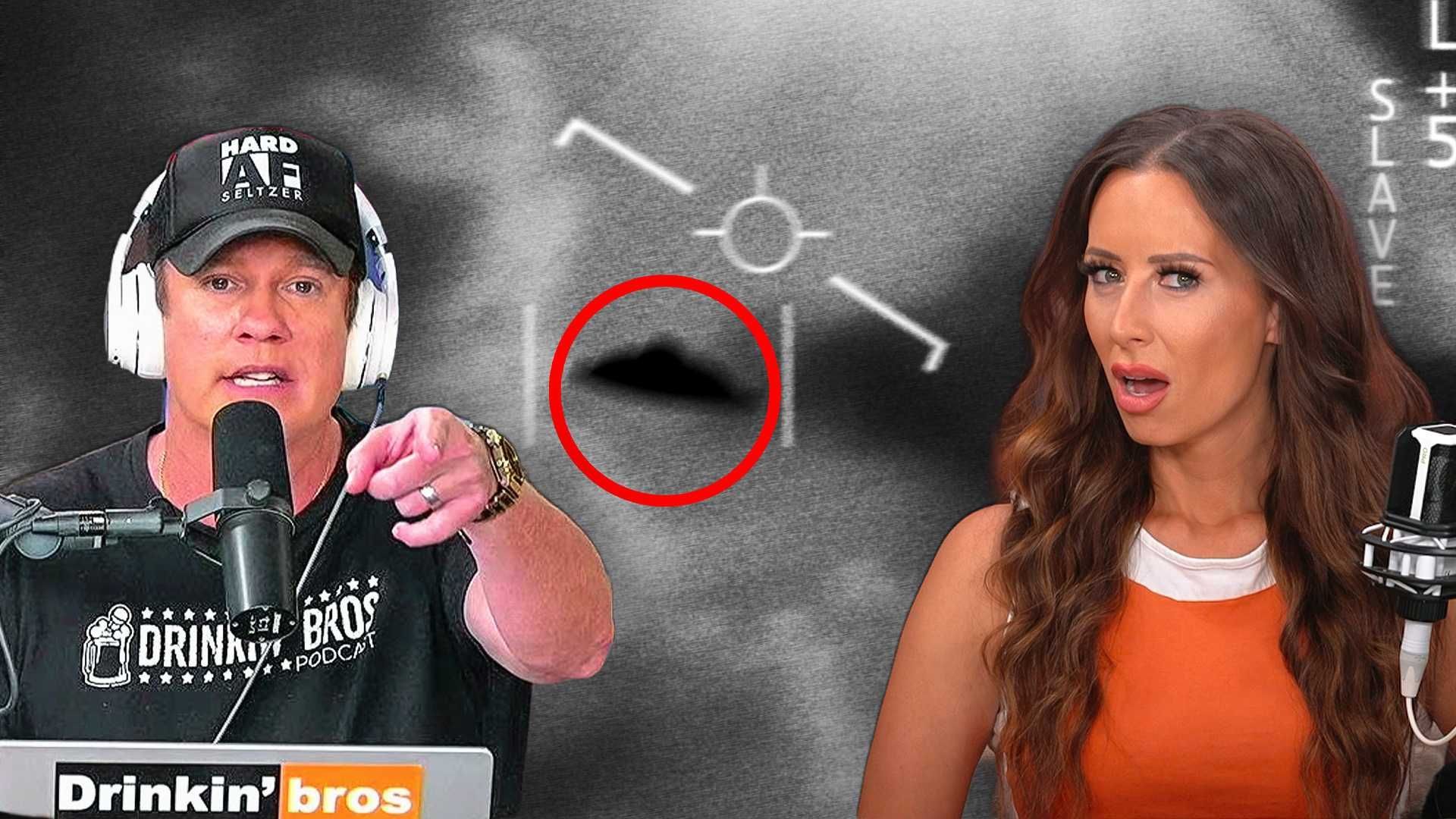
Ross Patterson of the “Drinkin’ Bros Podcast” tells BlazeTV host Sara Gonzales that conversations he’s had with insiders over the years have left him convinced that something far stranger may be happening behind the scenes.

“I’ve got some insight into this. It’s super weird,” he says, recalling a conversation with the late producer John Brenkus, who used to “host all of those UFO shows on Sci-Fi Channel for years.”

“I asked him, ‘Hey, let’s get real here. What’s the actual sitch?’ And he goes, ‘Look, do I think they’re manned by an alien, like a person?’”


“He goes, ‘No, I think the tech is so advanced. If they’re sending things here, ... you don’t need to man that,’” he explains.

Patterson likens it to manning a drone, where there’s no risk of an occupant being injured.

And while he admits he’s “not a conspiracy dude,” he explains that some of the “crazier stories” he’s heard from “friends over there” involve “communication” with other “beings” over the years.

“They have a unique way of talking,” he tells Gonzales, noting that according to his source, it took years to figure out a code in order to communicate.

“I said, ‘Well, what were the conversations like?’” he recalls. “And they said it was mostly about energy and how they were able to use magnetic fields.”

While Patterson admits he doesn’t “know what’s real and what’s not,” there are a few theories he’s entertaining regarding the files — one of them being that their release is a “cover-up” to distract from the Epstein files.

“But I don’t know,” he says, adding that another theory is that “Hollywood has always been in communication with the White House and then pumping out movies to get Americans used to what’s coming.”

The most recent example is a new Steven Spielberg film about an alien encounter that will be released in June. The film is called “Disclosure Day,” which Spielberg himself said is “more truth than fiction.”

“He didn’t expand on it,” he adds.

Want more from Sara Gonzales?

To enjoy more of Sara's no-holds-barred takes on news and culture, subscribe to BlazeTV — the largest multi-platform network of voices who love America, defend the Constitution, and live the American dream.