It’s Time To Cancel Our Subscription Culture Once And For All
A new cancel culture is coming. Consumerism, bad customer service, and corporations beware!Netflix has announced an $80-plus billion plan to buy Warner Bros. Discovery — a move that would give the streaming giant control of some of the biggest entertainment franchises in America. Executives celebrated the deal, promising consumers “more of what they love.” In reality, the merger would create a monopolistic monster. For millions of Americans already frustrated with Netflix’s ideology and influence, this feels like a bridge too far.
This isn’t some routine corporate merger. It is an attempt to build an unstoppable cultural behemoth. Netflix is already the largest streaming platform in the country. Absorbing Warner Bros. — one of Hollywood’s oldest and most important studios — would allow the company to tower over its competitors and control a massive share of American storytelling.
The Netflix-Warner Bros. merger would confer unprecedented cultural and economic authority on a company already mired in national controversy.
Antitrust concerns are obvious and bipartisan. Lawmakers in both parties have called the deal an antitrust “nightmare.” Consumers have already filed a class-action lawsuit arguing that the merger would gut competition. But there is another reason conservatives in particular are sounding the alarm: the cultural power Netflix has accumulated — and how it intends to use it.
In recent years, Netflix has dominated the streaming world and, by extension, much of the debate over ideological influence in entertainment. The company has been at the center of national fights over gender, sexuality, race, and the politicization of children’s programming.
Elon Musk triggered a viral backlash when he urged millions of followers to cancel Netflix, accusing the platform of pushing a “woke agenda” into entertainment and slipping social messaging into children’s content. Musk tapped into a widespread, simmering frustration: the belief that major corporations no longer reflect the values of ordinary American families.
Netflix’s programming choices have not eased those concerns. The company has showcased transgender and nonbinary themes in children’s shows, celebrated DEI ideology internally, and proudly curated LGBTQ+ collections “for families.” Sometimes this yields unintentional comedy — like a new show about a transgender coal miner — but other times, the messaging feels more deliberate and invasive.
Now imagine giving the company control of Warner Bros. The concern isn’t only economic. It’s cultural. A combined Netflix-Warner empire would shape what stories get made, which values get promoted, and what kind of entertainment future generations will inherit.
Warner Bros. has long been a pillar of American cinema. Local theaters depend on major studios to draw families out of their homes and into shared cultural experiences — some of the last common spaces in American life. Netflix, by contrast, has built its kingdom on isolation: individual screens, algorithmic curation, the slow erosion of communal entertainment.
If Netflix takes control of Warner Bros., expect shorter theatrical windows, more straight-to-streaming releases, and a slow decline in the local theaters that hold American communities together. The result: fewer choices, weaker alternatives, and consumers trapped paying whatever the merged company demands.
Netflix insists this won’t happen. History suggests otherwise.
Hollywood’s creative class understands the danger. Director James Cameron has warned that the merger would flatten artistic diversity and silence competing voices. Industry unions fear that a single corporation controlling both production and distribution will decide which projects get funded, which careers move forward, and which ideas make it to the screen.
A company with that much power can shape the entire pipeline of culture.
RELATED:Can conservatives reclaim pop culture?

Regulators have noticed. President Trump has expressed concern that the combined company would wield too much market power. The Department of Justice and consumer advocates are preparing for an aggressive antitrust review. Critics across the political spectrum warn that prices will rise, competition will collapse, and consumers will lose.
Americans want competition — not cultural empires run by a handful of executives who impose ideological agendas while claiming neutrality. They want storytellers who reflect a diversity of values and views, not corporate gatekeepers who see entertainment primarily as a delivery system for political messaging.
The Netflix-Warner Bros. merger threatens all of this. It would confer unprecedented cultural and economic authority on a company already mired in national controversy.
The Trump administration should block the merger.
Americans are tired of corporations that profit from their attention while ignoring their concerns. Allowing one company to dominate such a massive share of American entertainment would weaken the industry and harm the country.
The government must stop this power grab before the damage becomes irreversible.
Netflix announced a massive deal to acquire Warner Bros. Discovery Inc., a company that controls huge entities like HBO and CNN.
Which networks Netflix will control, however, is a bit complicated.
Warner Bros. put itself up for sale last month, and as Blaze News reported, was simultaneously being eyed for acquisition by Amazon.
'Our mission has always been to entertain the world.'
Netflix has seemingly won the battle though, with a cash and stock transaction valued at $27.75 per share for Warner Bros. Discovery, totaling approximately $82.7 billion, which equates to an equity value of $72 billion after debt, according to CNN and Netflix.
The deal is expected to close in Q3 2026, which will give WBD a chance to conclude the separation of its company, which has huge implications in terms of which channels Netflix takes control of.
In June 2025, WBD decided to split itself into two companies, WBD Global Networks and WBD Streaming & Studios. The split is expected to take effect in summer 2026, after which Netflix will take over the Streaming & Studios company.
RELATED: Netflix features trans teen kissing scene in kids' cartoon — but it's not the only one

This means Netflix will gain Warner Bros Pictures/Television/Games, HBO, streaming service HBO Max, TNT Sports (international), and studio New Line Cinema.
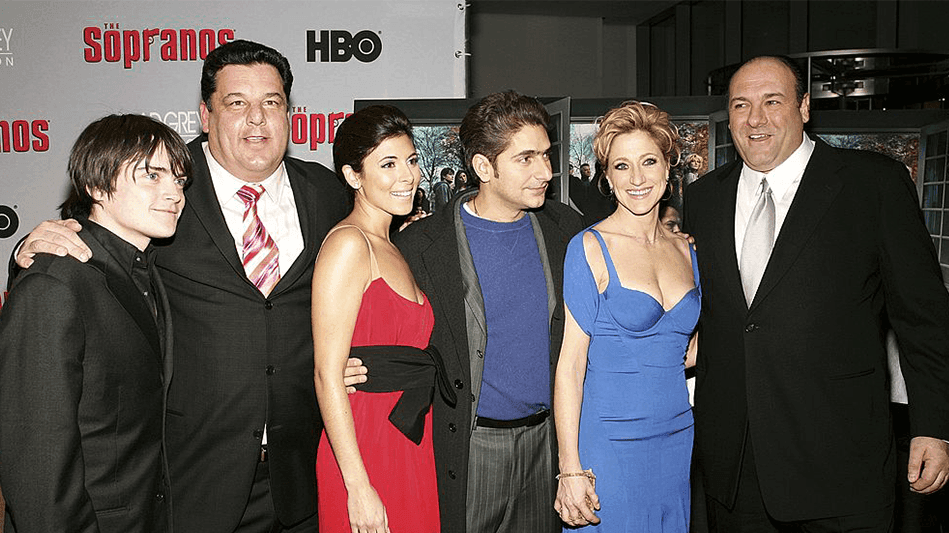
The acquisition also comes with the rights to some of the most highly sought after shows around, such as "Friends," "Game of Thrones," "The Sopranos," "The Big Bang Theory," and those in the DC Comic Universe. As well movies like the "Harry Potter" franchise will move to Netflix.
There were questions as to what it would mean for CNN should WBD be acquired by a different platform, but the news network will fall under WBD Global Networks and not move to Netflix.
The same goes for networks like HGTV, Discovery, TBS, the Cartoon Network, TNT Sports (U.S.), along with the rights to the NHL, NCAA, and Olympics in terms of sports.

Ted Sarandos, co-CEO of Netflix said, "Our mission has always been to entertain the world."
He added that the combination of Warner Bros.' library and Netflix's catalogue will "give audiences more of what they love and help define the next century of storytelling."
Greg Peters, the other co-CEO of Netflix, said the acquisition will "accelerate" their business for decides.
"With our global reach and proven business model, we can introduce a broader audience to the worlds they create — giving our members more options, attracting more fans to our best-in-class streaming service, strengthening the entire entertainment industry and creating more value for shareholders."
Warner Bros. Discovery CEO David Zaslav added that the sale to Netflix will "ensure people everywhere will continue to enjoy the world's most resonant stories for generations to come."
Like Blaze News? Bypass the censors, sign up for our newsletters, and get stories like this direct to your inbox. Sign up here!
Last month, Warner Brothers Discovery put itself up for sale, triggering what could become a bidding war for one of America’s most iconic studios. Days later, reports emerged that Amazon plans to make a run at the company, immediately raising the stakes.
Consumers and regulators should treat every Big Tech bidder with skepticism, but Amazon’s interest demands special scrutiny. The world’s largest online retailer has a long record of distorting markets, crushing rivals, and cozying up to foreign adversaries — most notably China. Letting Amazon absorb yet another major media asset would tighten its grip on an entertainment industry already buckling under corporate consolidation.
Why would antitrust officials hand Amazon even more power in a sector already suffocating under concentration?
Amazon may be a household name, but it is not an America-first company. It bullies smaller retailers, copies their ideas, and funnels profits and supply-chain leverage through China. That behavior undermines the ingenuity and fair competition that built the U.S. economy.
Amazon already wields enormous influence over media. Last year, Prime Video topped U.S. streaming charts for the third straight year. Amazon controls a sprawling production studio, reinforced by its 2022 purchase of MGM. It holds high-dollar sports rights, including "Thursday Night Football" and an 11-year deal with the NBA.
Amazon doesn’t need Warner Brothers Discovery to survive. It wants the company to force more Americans into its digital universe, dominate an even larger share of the market, and use that dominance to trap users and raise prices. Buying competitors beats out-competing them — a classic monopolist playbook that burdens consumers and smothers innovation.
A Warner Brothers takeover would give Amazon exactly what it wants: a massive content library, the third-largest streaming platform, and a lineup of lucrative cable properties. With the deal sealed, Amazon would control more than a third of the streaming video on demand market — roughly 50% more than its nearest rival.
Why would antitrust officials hand Amazon even more power in a sector already suffocating under concentration? They likely won’t.
FTC Chairman Andrew Ferguson and the Justice Department’s antitrust chief, Gail Slater, have made clear that they intend to protect small businesses and consumers from predatory corporate behavior.
The Trump administration has backed those promises with action. Within nine months of taking office, the FTC forced Amazon to pay $2.5 million for trapping customers in Prime subscriptions. Ferguson’s vow to ensure that “Amazon never does this again” shows that this White House will not give repeat offenders a free pass.
RELATED: Stop feeding Big Tech and start feeding Americans again

The regulatory terrain also looks dramatically different from 2022, when Amazon bought MGM — an acquisition the Biden administration should have challenged and likely would challenge today. After that merger, the FTC rewrote its merger and acquisition guidelines to strengthen oversight. President Trump kept those rules and appears ready to use them.
Some critics claim Amazon earned goodwill with the administration by contributing to White House renovation projects. That accusation doesn’t survive contact with the facts. Candidate Trump warned about Amazon’s “huge antitrust problem” as early as 2016. The company has grown eightfold since then. Trump hasn’t softened.
And Amazon hardly functioned as a friend of the right. The company backed Joe Biden heavily in 2020, donating nearly $2.3 million to his campaign. Biden’s FTC did not treat Amazon kindly either, suing the company for “anticompetitive and unfair strategies to illegally maintain its monopoly power.” That case remains unresolved.
The sale of Warner Brothers Discovery will shape the future of American media — either by giving the company a fighting chance to innovate and compete, or by cementing Big Tech control over what Americans watch, read, and hear. If Amazon tries to tighten that grip, I expect the Trump administration to step in.
Let’s hope the sale doesn’t force the administration's hand.
A pair of monumental streaming deals have likely ended the chances of two major brands ever appearing on pay-per-view again.
In recent years, sports fans have typically only dished out cash for pay-per-view events if they were for boxing, mixed martial arts, or professional wrestling.
'It’s an outdated, antiquated model.'
Fans of the latter two have been left frustrated in recent years, as events they would have simply paid a one-time fee to watch in the past now get locked behind subscription paywalls.
When the UFC inked a deal with ESPN in 2019, the fight promoter abandoned standard PPV and made its events purchasable only through ESPN+, which requires a separate subscription. Viewers, now effectively required to pay for the opportunity to pay for an event, were understandably miffed.
Meanwhile, WWE, also owned by TKO Holdings along with UFC, has until now been showing its premium events through Comcast's subscription-based streamer Peacock, without an additional fee.
Now, in the span of a week, TKO Holdings may have eliminated this hurdle — and the business model — forever.
As part of its new rights deal, UFC will abandon a PPV scheme, as viewing options slowly creep toward looking like traditional TV again.

Last week, TKO signed with ESPN to provide the WWE's biggest live events to the Disney-owned network, which will shift ESPN+ to a direct-to-consumer model. Simply put, WWE events will either appear on the ESPN app or on television and the app at the same time.
As for UFC, it will depart ESPN for Paramount, which on Monday acquired the rights to UFC events for $7.7 billion over seven years, per CNBC.
All 13 marquee UFC events along with 30 "Fight Nights" will appear on the Paramount+ app, but it will not charge subscribers an added fee the way ESPN+ did.

What is left are two gigantic brands, no longer on PPV models, with some of the biggest wrestling events of the year appearing on ESPN's cable channels.
"The pay-per-view model is a thing of the past," Mark Shapiro, TKO Group's president, said. "What’s on pay-per-view any more? Boxing? Movies on DirecTV? It’s an outdated, antiquated model," he told CNBC.
"When [fans] find out, 'Wait, if I just sign up for Paramount+ for $12.99 a month, I'm going to automatically get UFC's numbered fights and the rest of the portfolio?' That's a message we want to amplify."
For now, subscription models may reign supreme, but it seems entirely possible that premium products may wind up being free for viewers on whichever type of screen they choose to view it on, even if it is the dreaded living-room TV.
Like Blaze News? Bypass the censors, sign up for our newsletters, and get stories like this direct to your inbox. Sign up here!