Democrat Sen. Chris Murphy's team gives hopeful update after stroke


Democrat Senator Chris Murphy of Connecticut is in the hospital after suffering a stroke.

According to Murphy's office, the 53-year-old Democrat was taken to a hospital on Saturday after experiencing numbness in his arm at his son's hockey game.

'I understand all too well how much this impacts your life.'

Following confirmation that he had indeed suffered a stroke, Murphy was transferred to Johns Hopkins Medicine for "further monitoring."

A stroke, also known as a "brain attack," can leave a victim with permanent brain damage. Nearly 800,000 people suffer a stroke every year in the U.S. where it is a leading cause of serious long-term disability, according to the Centers for Disease Control and Prevention.

The senator's office claimed on Sunday that "the doctors are encouraged by his progress, he is awake and alert, and we are optimistic he will make a full recovery."

Murphy, who has been floated as a possible 2028 presidential candidate, suffered the stroke ahead of a planned campaign event with New Hampshire Rep. Chris Pappas (D), who is running for the U.S. Senate.

RELATED: Tantrums galore! Democrats crash out over Rep. Haley Stevens' last-minute 'betrayal'

Graeme Sloan/Bloomberg/Getty Images

In the days leading up to the adverse medical event, Murphy — a gun control advocate who once identified illegal aliens as the people "we care about most" — was criticizing President Donald Trump, championing Ukraine, and trying to help get Democrats elected. He also claimed days earlier to have seen the president's alleged plan to "restart war with Iran after the election."

Sen. John Fetterman (D-Pa.), who suffered a stroke in May 2022 that initially prompted concerns about his competence, was among the many politicos who wished Murphy a speedy recovery.

"As someone who survived a near-fatal stroke, I understand all too well how much this impacts your life," said Fetterman. "My family is rooting for Chris and his family for a full and speedy recovery."

Murphy's stroke comes just months after Republican Sen. Lindsey Graham (S.C.) died of an aortic dissection and amid sustained concerns over retiring Kentucky Sen. Mitch McConnell's health in light of his latest absence.

Like Blaze News? Bypass the censors, sign up for our newsletters, and get stories like this direct to your inbox. Sign up here!


Jill Biden’s stroke excuse was pure ‘Black Knight’ politics


One of the enduring gifts of “Monty Python and the Holy Grail” is that 50 years later, people still quote it.

My favorite scene involves the Black Knight.

King Arthur encounters him guarding a bridge, and a duel follows. The fight goes badly for the knight. Arthur lops off one arm, then the other. When the knight keeps fighting, Arthur removes both legs as well. Reduced to a torso lying in the dirt, the knight somehow surveys the situation and announces, “All right, we’ll call it a draw.”

The older I get, the more convinced I become that much of human behavior can be explained by that scene. We possess a remarkable ability to keep arguing with reality long after reality has settled the matter.

And which of us has not, in some absurd situation, said, “It’s just a flesh wound”?

Reality has a way of reminding us that some things we carry are, indeed, more than a flesh wound.

That thought crossed my mind recently while reading statements coming out of Iran. Whatever one thinks about the conflict itself, leaders standing amid rubble and declaring victory have a distinctly Monty Python quality. At a certain point, the rhetoric sounds less like confidence and more like the Black Knight insisting he still has a chance.

But Iran does not have a monopoly on reality rejection.

Recently, Jill Biden said she feared her husband was having a stroke during his one and only 2024 presidential debate. She described watching him struggle on stage and wondering whether he was experiencing a stroke or some other medical emergency.

As a caregiver, I am apparently behind the times. For 40 years, I foolishly assumed that if one suspects a spouse is having a stroke, the next step involves medical attention. Evidently, the new protocol may include chants of “Four more years!” at the after-debate rally, followed by a late-night visit to Waffle House.

Medical science has made huge strides.

Someone’s Waffle House hash browns were clearly scattered and smothered. Whether they were covered as well remains an open question.

As the Black Knight might say, it’s only a flesh wound.

Like Jill Biden, I am not a licensed physician. But watching her reminded me that I know enough to recognize when someone may need urgent care — or at least a cranial specialist.

Yet while I laugh at the Black Knight, sigh at Iran, and look with exasperation at Jill Biden — and at the reporter who let that remark pass without serious follow-up — I have to admit that defiance in the face of reality is not limited to them. Sometimes it appears in my own bathroom mirror.

The absurdity of these public examples points to a common problem in the human condition. Most of us have our own version of the same speech. We insist the exhaustion is not that bad, the debt remains manageable, the resentment is justified, the addiction is under control, or the diagnosis must be wrong.

RELATED: Caregivers should not have to lie to prove compassion

Samuel Corum/Getty Images

Every day, I talk with family caregivers who insist things are fine while staggering under impossible burdens.

We twist ourselves into pretzels defending positions reality abandoned long ago. We can mock Iran’s leaders and Jill Biden. We can laugh at the Black Knight. But are we prepared to admit that we often travel the same road, just not as far down it?

The Serenity Prayer asks for the wisdom to know the difference between what can be changed and what cannot. Most of us would prefer a third option: the ability to negotiate with reality until it agrees to call the whole thing a draw.

Sooner or later, reality delivers its verdict and waits.

The question is whether we will acknowledge it.

The Black Knight never did. Iran’s leaders and Jill Biden seem intent on following him into absurdity. That is why we laugh at the knight and deride the others.

But perhaps we should stop laughing long enough to see ourselves.

Reality has a way of reminding us that some things we carry are, indeed, more than a flesh wound.

FACT CHECK: Is the New Governor of North Carolina Recovering From A Stroke?

A post on X claims that former Democratic Attorney General and new Governor of North Carolina Josh Stein is recovering from a stroke. North Carolina Attorney General Stein recovering from stroke | AP News Is he fully recovered? Was he vaccine injured? Do we even know? https://t.co/Cit0Cmlm1W — Margo (@MargoinWNC) January 2, 2025 Verdict: False […]

Robert F. Kennedy’s widow dead at 96

Her death was reported just days after she suffered a stroke

Kennedy Family Member Suffers Health Emergency

The elder Kennedy’s grandson asked that those reading keep the 96-year-old in their prayers

Longtime Democrat leader Rep. Steny Hoyer suffers 'mild' stroke


Longtime Democrat leader Rep. Steny Hoyer of Maryland is now recovering after suffering a "mild" stroke over the weekend.

On Sunday night, Hoyer, 85, "experienced a mild ischemic stroke and sought medical treatment," according to a statement from his deputy chief of staff, Margaret Mulkerrin.

Hoyer has been a mainstay in the U.S. House of Representatives for more than four decades.

As the New York Post noted, Mulkerrin's statement did not clarify to which hospital Hoyer was taken or how long he remained there. However, Mulkerrin did add that Hoyer "has responded well to treatment," "has no lingering symptoms," and that he "expects to resume his normal schedule next week."

Mulkerrin's statement also extended thanks to the entire "medical team" on behalf of Hoyer and his family.

The National Heart, Lung, and Blood Institute reported that the vast majority of strokes — fully 87% — are ischemic, meaning they involve blockages that prevent the brain from receiving normal blood flow, WBAL-TV reported.

Hoyer has been a mainstay in the U.S. House of Representatives for more than four decades. After spending a few years in the Maryland Senate, Hoyer won a special election in 1981 for the seat representing his state's fifth congressional district.

Since then, Hoyer advanced so far in his party's ranks that he eventually became House majority leader from January 2019 until January 2023.

An ardent Democrat partisan, Hoyer was also a key figure in the two impeachments of former President Donald Trump, calling the first impeachment investigation "a duty to the country, to the American people, and to the Constitution of the United States."

To this day, Hoyer remains in Congress and is still an active member of the House Appropriations Committee.

Both legislative chambers are currently on August recess, even though a federal statute requires an August recess only during odd-numbered years.

This stroke is not Hoyer's first medical scare, the Post reported. In 2018, while he was still majority leader, he was hospitalized after developing pneumonia. He also contracted COVID-19 in 2022.

Like Blaze News? Bypass the censors, sign up for our newsletters, and get stories like this direct to your inbox. Sign up here!

Federal Civil Rights Complaint Accuses Cleveland Clinic Of Racial Discrimination

The complaint, which alleges the Cleveland Clinic excludes white patients in favor of minorities, may trigger a federal investigation.

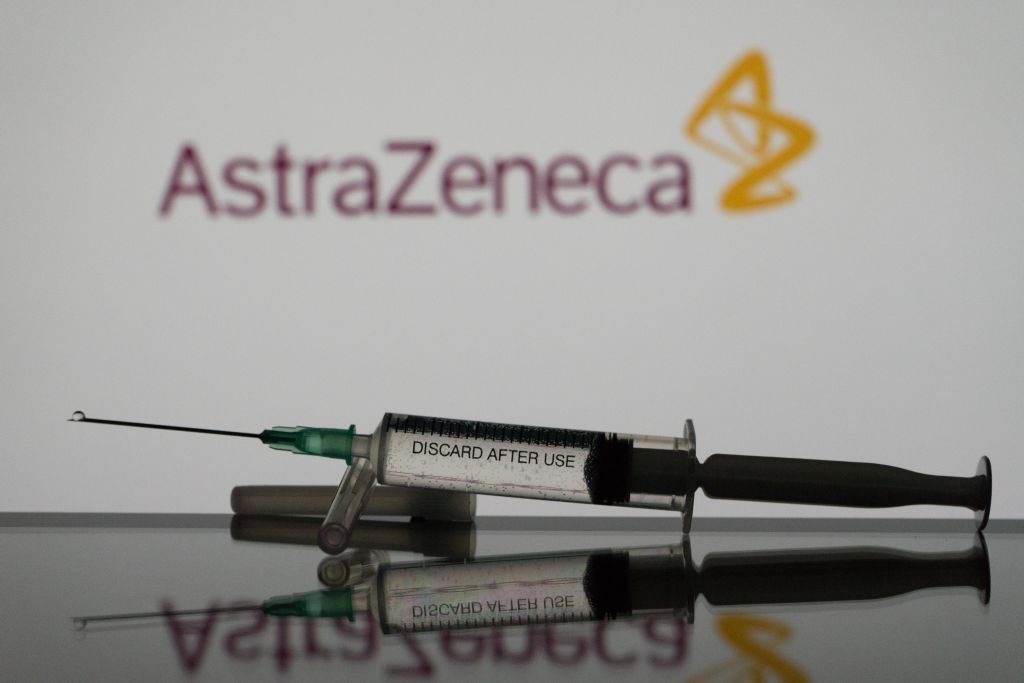
AstraZeneca vindicates skeptics with admission that its COVID-19 vaccine can cause blood clots


The British-Swedish pharmaceutical giant AstraZeneca has finally admitted that its COVID-19 vaccine can cause bloodclots.

While there were plenty of indications and fatalities over the years to suggest as much, the company and so-called experts around the world long downplayed the causal link along with critics' concerns.

Clot shot

The Oxford-AstraZeneca COVID-19 vaccine was a viral vector vaccine developed in the United Kingdom, which used a transmogrified version of a chimpanzee adenovirus. The shot wasapproved for use in the U.K. in December 2020 and later approved by the World Health Organization. It was not rolled out at the outset in the U.S., although the Biden administration did agree to share up to 60 million doses with other nations.

By January 2022, the vaccine had been injected globally more than 2.5 billion times.

More than 20 countries temporarily took AstraZeneca-Oxford vaccine off the market in March 2021 following mounting reports of abnormal bleeding, low blood platelets, blood clots, and sudden deaths among various recipients.

Some agencies had been caught off guard as blood clotting was not an advertised side effect of the vaccine. Reuters indicated that Australia's Federal Office for Safety in Health Care, for instance, was surprised when a 49-year-old nurse died from "severe coagulation disorders" after receiving the AstraZeneca vaccine.

USA Today indicated that some of the cases that raised red flags in 2021 involved blood clots in the lungs, the legs, throughout the blood, and in the brain.

German and Nordic researchers concluded that some vaccine recipients were developing a clotting disorder that produced antibodies that activated platelets and led to clots, reported the New York Times. What was then dubbed "vaccine-induced immune thrombotic thrombocytopenia" was believed to harm one in 100,000 recipients.

As a point of contrast, for patients under 30, the vaccine would prevent only 0.8 in 100,000 from going to the hospital with COVID, according to the Telegraph.

AstraZeneca repeatedly denied causation, noting in a March 14, 2021, statement that a careful review showed "no evidence of an increased risk of pulmonary embolism, deep vein thrombosis (DVT) or thrombocytopenia, in any defined age group, gender, batch or in any particular country."

AstraZeneca added that the "available evidence does not confirm that the vaccine is the cause [of the clots]."

Despite an alarming number of apparent victims, various health organizations, including the European Medicines Agency, suggested that "the vaccine's benefits continue to outweigh its risks."

Multiple European countries resumed AstraZeneca vaccinations in late March after the European Medicine Agency claimed it was "safe and effective."

The World Health Organization doubled down in June 2022, claiming AstraZeneca was "safe and effective for individuals aged 18 and above," reported the BBC.

The cry of the so-called experts

The temporary caution exercised by some European nations was criticized by American medical professionals such as Paul Offit, director of the Vaccine Education Center and an infectious disease specialist at the Children's Hospital of Philadelphia, USA Today reported at the time.

"While it's easy to scare people, it's very hard to unscare them," said Offit. "It creates the perception that these vaccines are dangerous."

Offit further suggested that the "only way out of this pandemic is by vaccination, and if we make people reluctant to be vaccinated, we're going to have a hard time getting out of this pandemic."

"Unless there is an unusually high rate of blood clots among people receiving a particular vaccine, I just think it's quite dangerous to draw these kind of conclusions of causality without knowing," Akiko Iwasaki, an epidemiologist at Yale University, said in March 2021.

Daniel Salmon of Johns Hopkins' Institute for Vaccine Safety told the New York Times that vaccines had not been shown to cause blood clots.

Peter Hotez, a cable news vaccine promoter and the founding dean of the National School of Tropical Medicine at Baylor College of Medicine, claimed, "By unnecessarily suspending the AstraZeneca-Oxford vaccine, the European countries may have created a new problem."

Hotez suggested that the "vaccine ecosystem is fragile, and it doesn't take a lot to get a vaccine voted off the island."

Legal action

Jamie Scott, a father of two, was left with a permanent brain injury after developing a blood clot and bleed on his brain following his AstraZeneca vaccination in April 2021. On three occasions, his wife was told by hospital staff that Scott was going to die. Having so far survived his injury, Scott — certain the vaccine was "defective" — is now seeking to hold AstraZeneca accountable, reported the Telegraph.

Scott sued the company last year. At least 51 other alleged vaccine victims have since followed his lead, launching a group action under section 2 of the British Consumer Protection Act of 1987. Among the plaintiffs are the widower and two young children of Alpa Tailor, a 35-year-old who died after receiving the shot.

A coroner determined in September 2021 that the mother of two had died from blood clots on her brain. She began suffering stroke-like symptoms a week after her first dose of the AstraZeneca vaccine, reported the Daily Mail.

In the event that AstraZeneca loses in court, it could be forking over around $100 million in compensation. The British government will, however, underwrite the company's legal bills.

The admission

AstraZeneca told Scott's lawyers in March 2023, "We do not accept that [thrombosis with thrombocytopenia syndrome] is caused by the vaccine at a generic level."

However, the Telegraph noted that in a legal document submitted in February to the High Court of Justice in the U.K., the company noted, "It is admitted that the AZ vaccine can, in very rare cases, cause TTS. The causal mechanism is not known."

After confirming victims' suspicions, the company attempted to cast doubt on whether the plaintiffs were themselves victims of such "very rare cases," writing, "TTS can also occur in the absence of the AZ vaccine (or any vaccine). Causation in any individual case will be a matter for expert evidence."

According to the Council for International Organizations of Medical Sciences, "very rare" side effects are those that occur in less than one in 10,000 cases, reported the Independent.

The company has reportedly also attempted to cover itself, claiming that the product information concerning the AstraZeneca vaccine was updated in April 2021 to note "the possibility that the AstraZeneca-Oxford vaccine is capable, in very rare cases, of being a trigger" for TTS.

Kate Scott, the first plaintiff's wife, told the Telegraph, "The medical world has acknowledged for a long time that VITT was caused by the vaccine. It's only AstraZeneca who have questioned whether Jamie’s condition was caused by the jab."

"It's taken three years for this admission to come. It's progress, but we would like to see more from them and the Government. It's time for things to move more quickly," said the victim's wife. "We need an apology, fair compensation for our family and other families who have been affected. We have the truth on our side, and we are not going to give up."

Sarah Moore, a partner with the law firm representing the group action, said in a statement, "It has taken AstraZeneca a year to formally admit that their vaccine has caused this harm, when this was a fact widely accepted by the clinical community since the end of 2021: In that context, regrettably it seems that AstraZeneca, the Government and their lawyers are more keen to play strategic games and run up legal feels than to engage seriously with the devastating impact that the vaccine has had upon our clients' lives."

Like Blaze News? Bypass the censors, sign up for our newsletters, and get stories like this direct to your inbox. Sign up here!

Strangling For Sexual Sport Is Exactly The Kind Of Thing We Should ‘Kink-Shame’

If sexual liberation can’t even provide good sex, then what possible reason is there to keep pursuing it?

'I'm only 24': Daughter of rapper Snoop Dogg suffers 'severe' stroke


Cori Broadus, the daughter of rapper Snoop Dogg, was rushed to the hospital this week after suffering a "severe" stroke. She is just 24 years old.

On Thursday, Broadus posted a photo to her Instagram story showing herself lying in a hospital bed. She then revealed to her more than 650,000 followers that she had just suffered a stroke.

"I had a severe stroke this a.m. I started breaking down crying when they told me," she wrote. "Like I'm only 24; what did I do in my past to deserve all of this."

— (@)

Broadus did not share any additional information about the concerning incident, including what type of stroke she suffered or what may have caused the stroke.

The prevalence of strokes in people Broadus' age is not exactly known. Data suggests that approximately 15% of strokes occur in people under age 50, but unfortunately, the data isn't stratified to show the prevalence of strokes in people ages 18-25, for example.

Still, one can assume that strokes are rare in young adults like Broadus because the risk factors for stroke have a compounding effect on the body. This, of course, is why it is alarming that a 24-year-old like Broadus would experience a "severe" stroke.

On the other hand, Broadus has been open about her health complications, mostly from an autoimmune disease known as Lupus. But she told People magazine last year that she had recently made changes to her lifestyle to improve her health.

"I've been good, better than I've ever been," she said. "I stopped taking all of my medication like five months ago. I'm just doing everything natural, all types of herbs, sea moss, teas. I started working out, drinking lots of water. So now I think my body's like, OK, this is the new program and she's getting used to it."

"I've had medication since I was 6 years old, depending on these drugs all my life. So I wanted better for myself," she explained. "I wanted to change because it just became a lot. I'm only 24 years old, taking 10 to 12 pills every single day. So I kind of just went cold turkey."

Fortunately, those changes had paid dividends.

"My body is not achy," Broadus told the magazine. 'When you have lupus, that's one of the number one things. You have achy joints, you have arthritis. And now I'm like, damn, I'm not complaining about my knees, my feet, my hands, my back."

Like Blaze News? Bypass the censors, sign up for our newsletters, and get stories like this direct to your inbox. Sign up here!