'Why don't men go to therapy?' It all comes down to one very good reason


On both sides of the Atlantic, men, especially young men, are dying by suicide at rates that should freeze governments in their tracks. But the powers that be don’t seem to notice.

The U.K. watches males of all ages go under — boys dropping out of school, men in their 20s drifting between short-term jobs and long nights alone, 30s lost to drink, dread, or sheer exhaustion. The U.S. watches its men go under, too. Their suicide rates dwarf those of women, and overdose deaths skew heavily male.

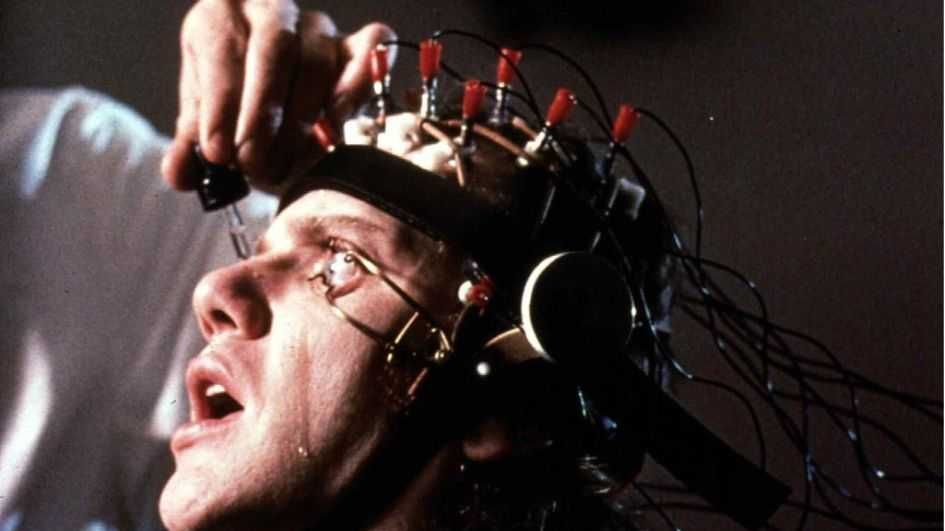
When a young man limps into therapy, he’s met with soft voices, polite nods, and vague talk about letting his guard down.

Whenever this comes up, we hear the same insufferable chorus: Why won’t these men just go to therapy?

As if it’s that simple. As if men are ignoring a perfectly functioning safety net. As if they’re being stubborn for sport.

Girl talk

Most men aren’t avoiding therapy because they fear healing, but because the entire system is built with someone else in mind.

Walk into the average psychology department, clinic, or counseling office and look around. The landscape is overwhelmingly female — in training, in staffing, in leadership, in tone. In both the U.K. and the U.S., the majority of therapists are women.

While that isn’t inherently bad — many of these therapists are excellent — it does mean the system has been shaped by female norms, female communication styles, and female emotional instincts.

This is not a conspiracy theory but just an honest acknowledgment of reality. Men and women don’t experience mental suffering the same way. They don’t express it the same way. They don’t process it the same way. A woman in distress tends to talk her way outward. A man tends to go inward until the pressure builds, then either falls silent or implodes. Women spiral verbally; men quietly.

So when a young man limps into therapy — desperate, numb, maybe half a step away from ending it all — he enters a world where the emotional rules weren’t written for him. He’s told to “open up,” “talk through it,” “share feelings,” “name the emotion.” He’s met with soft voices, polite nods, and vague talk about letting his guard down. What he’s not met with is someone who speaks his language.

It’s a mismatch from the very first minute.

Manning up

And because therapy culture is so thoroughly feminized, a man struggling with anger, confusion, despair, or loss often feels like a stranger adrift in a foreign country — grappling with an unfamiliar language and baffling customs.

That’s not the therapist’s fault. But it is the system’s fault.

And this is the part no one wants to say out loud: Men respond better to men. Not because women are incompetent, but because no matter how skilled a female practitioner is, she will never fully understand what it means to move through the world as a man. Just as no man will ever fully understand the interior life of a woman.

A man who has lost his job, lost his marriage, or lost his sense of purpose doesn’t want to explain the weight of male shame to someone who has never carried it. A man who feels emasculated doesn’t want to define the word emasculated from scratch. A man drowning in a culture that treats masculinity as a pathology doesn’t want to walk into a room where he suspects that belief might subtly be shared.

And yes, he may be wrong. But suffering doesn’t make people clear-headed. If anything, it makes them cautious.

This is why men light up when paired with a male therapist — someone who knows the codes: the long pauses, the tight jaw, the clipped sentences, the jokes that aren’t jokes, the sudden confession buried in small talk. Someone who knows what it feels like to fail publicly and hurt privately. Someone who knows that “I’m fine” is never fine. Someone who understands that for men, emotional honesty often comes disguised as humor, deflection, or irritation.

But right now, the system expects men to adapt to it, not the other way around.

RELATED: How to find effective, no-nonsense therapy for men
Archive Photos/Getty Images

Pundit patriarchy

And so the suicide numbers climb. Young men continue to vanish. Fathers fade. Sons and brothers never return home. Journalists write “What’s Wrong with Men?” think pieces. And the cycle rolls on, as pathetic as it is predictable.

If this were happening to young women, the entire culture would pivot. Funding would pour in. Campaigns would explode. Universities would redesign programs overnight. Therapy models would be reimagined to match the needs of the group in crisis.

But because it’s men — the group everyone assumes will always be fine, always be strong, always survive — nothing moves.

Maybe the darkest irony is that the very qualities that make men decline therapy — the sense of being misunderstood, mismatched, and misplaced — are the same qualities pushing them to the edge in the first place.

And unless the mental health world learns to meet men where they are, with approaches shaped by men who understand men, the funerals will continue, and everyone will keep acting surprised.

Transgender Skepticism Is The Ultimate Bipartisan Issue

A pro-LGB culture is deeply disturbed by the T. People you mostly wouldn't agree with agree with you on this.
'I know it just wasn't me, it was God in me': Memphis cop saves suicidal teen father with inspirational message


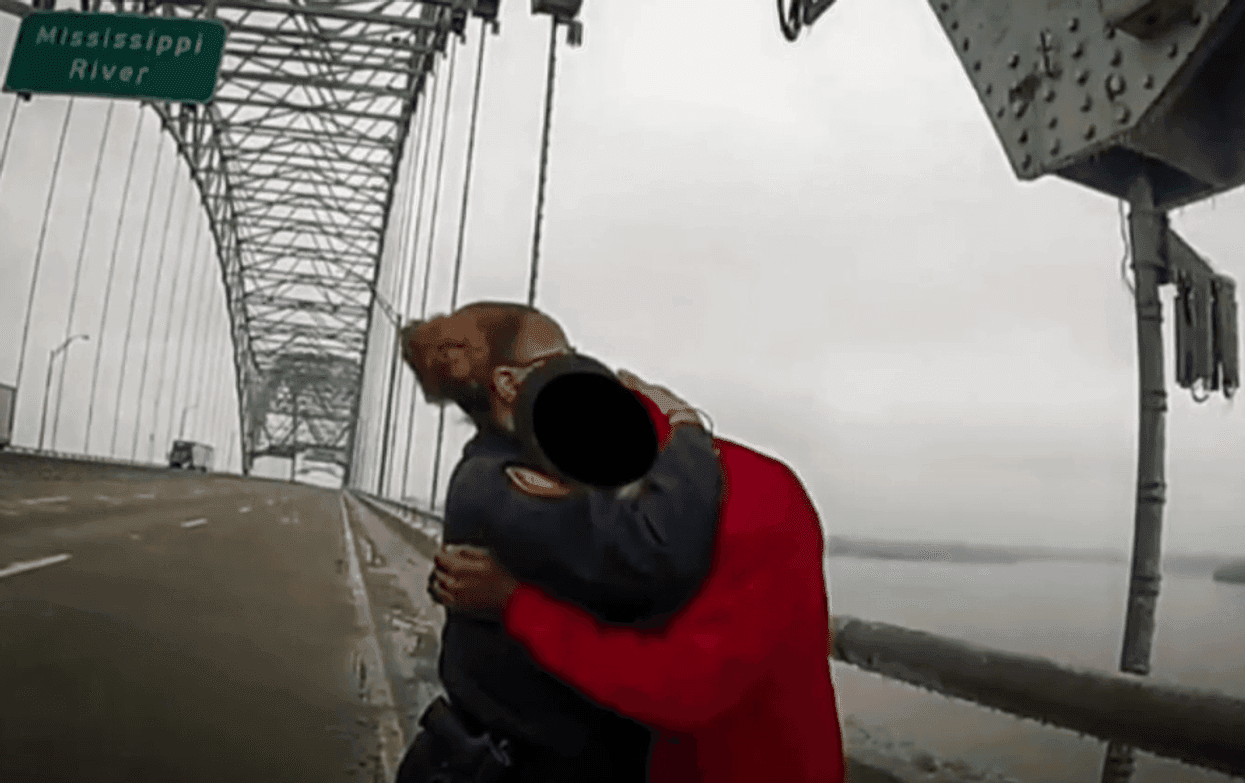
A Memphis police officer is being heralded as a hero and an angel for stopping a suicidal teen father from jumping off a Tennessee bridge.

Officer Tina Shaw is a 15-year veteran of the Memphis Police Department. Shaw is a member of the MPD's Crisis Intervention Team, and she sprang into action when there was a distressed teen contemplating suicide on the I-40 bridge over the Mississippi River.

"The Spirit just led me to go there to see what was going on there and who all was there," Officer Shaw proclaimed.

Shaw said of the 17-year-old, "I got out, and at this point, he was already over the ledge. He was hanging over the ledge, and then he finally went all the way over. Turned his body facing the water."

"Time was of the essence … we didn't want him to make one wrong move," she explained. "I kept asking him, 'Hey, can I come help you? Can I get you down?'"

The young father was reportedly worried about his job and the pressures of life.

"I said, 'Son, it’s gonna be OK. God gonna get you through this,'" Shaw told the young father. "'It's gonna be OK,' and he was crying, and I shed a few tears."

She consoled the teen. "He was pretty much crying out for help, and I saw it in his eyes, and I was telling him, 'Hey, look, your son needs you. There is no you without him, and there is no him without you.'"

"He was crying, and I saw the fear in his eyes," Shaw added. "I was telling him about me being a mother, I think that's what kind of drove him home."

After about 15 minutes, Officer Shaw convinced the teen to step away from the edge of the bridge.

"He was crying when I helped him get down," the mother of two recalled. "It's like we immediately just hugged each other. A few tears roll down my eyes while his were still flowing. It was like a mother and son, as if he was my third child, my third son."

Shaw said that she received help from above to save the suicidal young man. Shaw professed, "I know it just wasn’t me, it was God in me."

The teen was reunited with his family and taken to a facility for help. She said that she had spoken to the teen's mom and plans to reconnect with her "third son."

The Memphis cop stated, "This is one of the reasons why I'm also a police officer. To help people who are suicidal, mentally ill, whether it's ADHD, suicide, or bipolar schizophrenic situations."

She remarked, "People were saying I'm a superhero, I'm an angel, and I appreciate all that dearly, I really do. Because this is something that I normally do every day that kind of get unnoticed. I'm OK with that because I signed up to be a CIT officer. I just tried to display the transparency of officers versus being a human being."

Shaw pointed out, "In spite all the negativity, there are quite a bit of officers on this department that are great."

When asked about how the photo of her hugging the teen makes her feel, Shaw told WREG-TV, "Joy, joy. It was the best feeling in the world."

Like Blaze News? Bypass the censors, sign up for our newsletters, and get stories like this direct to your inbox. Sign up here!

'The spirit led me to go': Officer reflects after saving teen father on I-40 bridge www.youtube.com

Video: Traffic stop turns into emotional moment for Connecticut trooper and Army vet who needed help


A routine traffic stop on a highway in Connecticut turned into an emotional moment between a state trooper and a U.S. Army veteran who was contemplating suicide.

Trooper Kyle Kaelberer was conducting traffic enforcement on Sunday, September 11, when he saw a vehicle stop and activate its hazard lights on Interstate 84, near the exit 68 off-ramp. Kaelberer stopped to assist the motorist, who identified himself as a U.S. Army veteran. The man was in distress and said he was on the phone with a counselor from the Veterans Administration suicide prevention hotline, Connecticut State Police said.

"We'll help you out, all right bud?" Kaelberer told the veteran, according to body camera footage released by state police. "I’m here with you. I’m here with you, all right?”

Kaelberer said he would call for an ambulance. When the man objected that he could not afford one, the trooper assured him that the state would pay for the expense. He then asked the veteran if he would step out of his vehicle to talk.

“It’s a tough time for everyone in your position, I’m here with you,” Kaelberer said.

The distraught man asked if he could have a hug and Kaelberer embraced him.


The state police said Kaelberer then helped the veteran receive medical care. In a Facebook post, police urged Connecticut residents to call 988 if they or someone they know is contemplating suicide.

“We encourage [people contemplating suicide] to call 988, call 911 if it’s immediate, and we’ll respond,” Sgt. Christine Jeltema told the Hartford Courant. “988 will respond as well to them and get them the help that they need.”

Jeltema said that drivers in distress should activate their hazard lights, like the veteran did, if they need assistance. She said state troopers are trained to assist with motorists who activate their hazard lights, even when off-duty.

Jeltema explained that motorists may stop with their hazard lights on if they need directions or if something is wrong with their vehicle. In this case, a man who needed help got it.

“I just think that the other side of law enforcement is that compassion,” Jeltema said. “We’re trained to deal with people who are in [a] mental health crisis, and it’s something that we as troopers and law enforcement do every day.”

The state police noted that September is Suicide Prevention Month. If you or someone you know is contemplating suicide, please call the National Suicide Prevention Hotline immediately at 800-273-8255. Counselors are also available to chat at www.suicidepreventionlifeline.org. You are not alone. It is not too late to reach out to someone who can help you.

Transgender Activists Use Unreliable Surveys To Emotionally Blackmail America

The threat of suicide or self-harm should be removed from our political discussions entirely. It is inherently flawed, malicious, and self-serving.