Super Bowl ratings DROP — and the NFL’s decline has begun


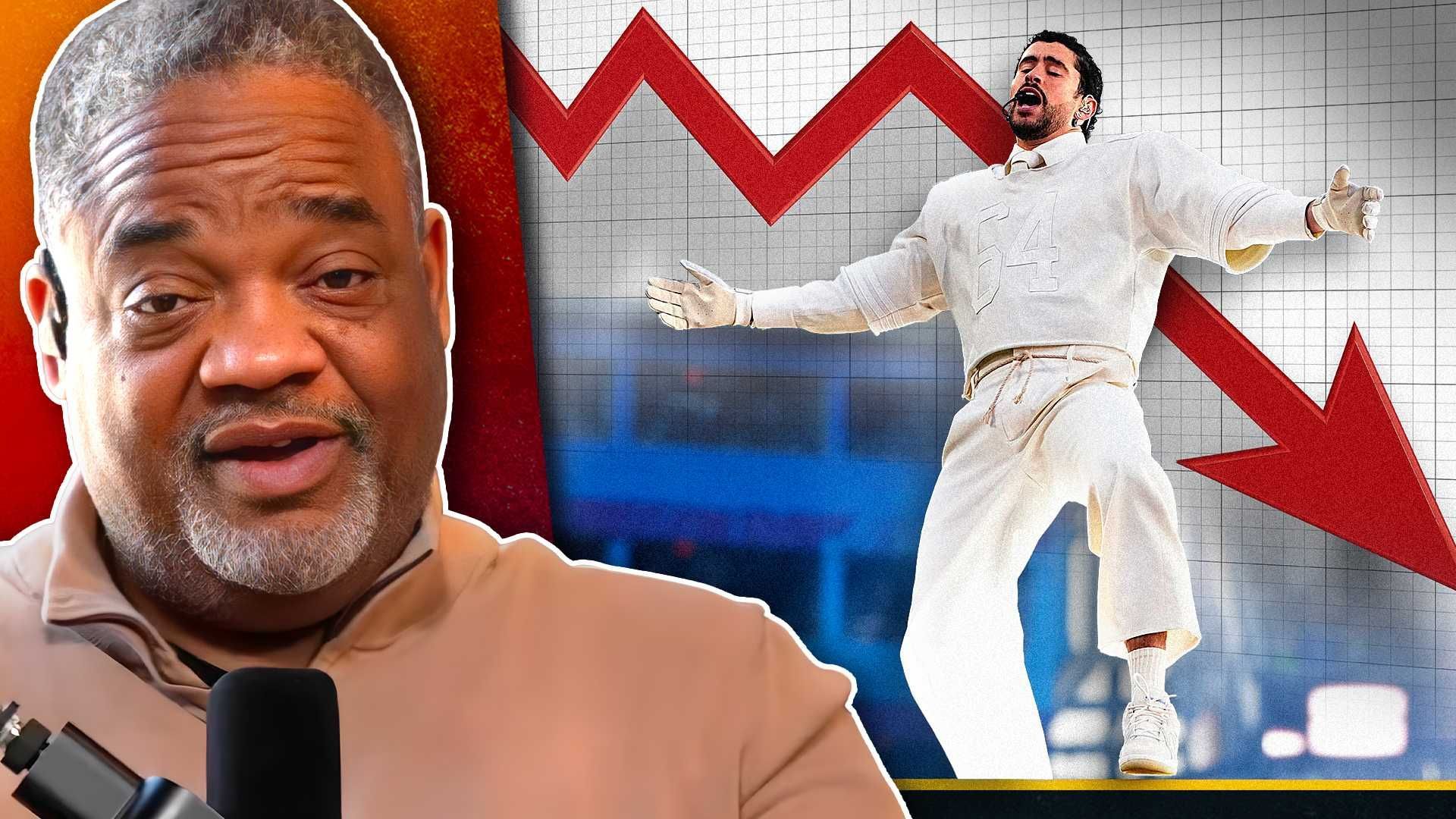
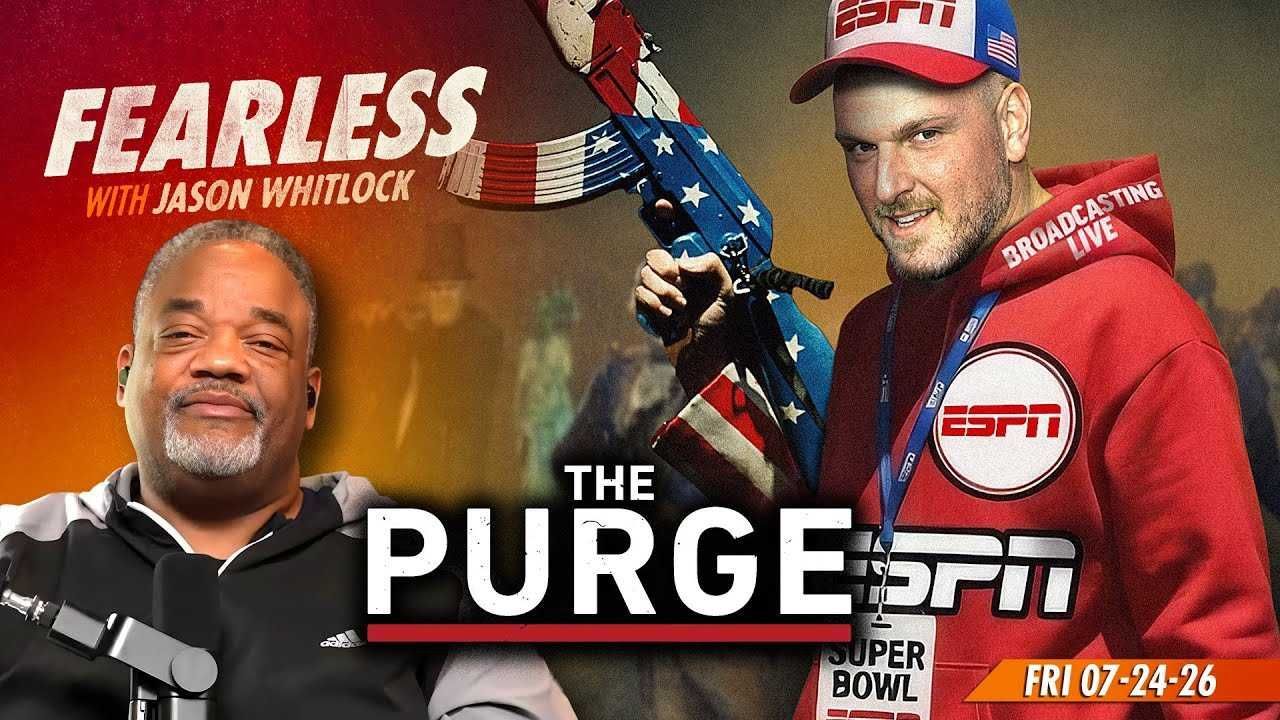
The NFL may be touting Super Bowl LX as another ratings success, but BlazeTV host Jason Whitlock believes the fine print tells a very different story.

“The ratings dropped for the Super Bowl and for Bad Bunny, and they got to spin it in some sort of way,” he says, though he notes there is “no positive spin on what just happened.”

“The viewership’s down 2% to 124 million,” Whitlock points out.

“If you read the fine print of the stories that are coming out and trying to spin these Super Bowl ratings, it actually tells the real story,” he explains, before reading an excerpt from a Front Office Sports report.


“Notably, this was also the first Super Bowl with Nielsen’s Big Data + Panel measurement process. The methodology, first introduced last September, brings in millions of additional data points from set-top boxes and smart TVs. That expanded view of the market has helped produce viewership gains across much of live sports, and particularly pro and college football — but not with the Super Bowl,” the article reads.

“What that means is since September, when we rigged up this new accounting system at Nielsen that counts all of these extra people, we’ve boosted up the TV ratings for football. And since September, everybody in live sports has been benefiting from this new calculation and new system that keeps producing these record ratings,” Whitlock explains.

“They had a system in place designed to boost the ratings of the Super Bowl and didn’t boost the ratings of the Super Bowl. That’s an indicator. That’s an indicator that the NFL and the Super Bowl are losing their grip. They’ve become too arrogant,” he continues.

Whitlock believes that the drop in ratings means that “people are finally starting to wake up to the diminished content.”

“They’re producing more content, and they’re giving us more content, but the content is no good,” he adds.

Want more from Jason Whitlock?

To enjoy more fearless conversations at the crossroads of culture, faith, sports, and comedy with Jason Whitlock, subscribe to BlazeTV — the largest multi-platform network of voices who love America, defend the Constitution, and live the American dream.
Seahawks crushed with California taxes post-Super Bowl — how much they lost will ‘blow your mind,’ says Glenn Beck


For a football player, winning the Super Bowl is the Mount Olympus of athletic dreams. Unless, of course, he wins it in California.

“If you win the Super Bowl in California, then they send you a bill that says, ‘Uh-oh, you lose,’” laughs Glenn Beck.

Since the Super Bowl was hosted in San Francisco, the state of California taxes not just the income the players earned for the game but for all their “duty days.”

But just how much money are we talking?

“This is going to blow your mind,” says Glenn.

Unlike many other states, “California reaches backward months into the past, and they claim the right to tax a slice of your entire season salary based on how many duty days you spent in the state. … So they're not just taxing the bonus; they're not just taxing the game check; they're taxing you the entire year,” he explains.

What does that mean for the Seahawks players, who each received a $178,000 bonus for winning the Super Bowl? It means that they “[owed] the state more than that in taxes,” says Glenn.

“How can you lose money winning the Super Bowl? Well, California's found a way to do it,” he scoffs.

California implements what is called a “jock tax,” which is the harshest nonresident income tax scheme on visiting athletes.

“In California, they're giving you the highest marginal rate in the country. It's over 13%, and they're thinking about raising it,” says Glenn.

“When a government decides it can tax income earned elsewhere just because you happen to pass through, you're not taxing activity; you're taxing existence. That doesn't work out well,” he warns.

In the 1970s, Richard Cloward and Frances Piven — two “crazy Marxist professors,” says Glenn — “collapsed New York [City]” when they intentionally overloaded the U.S. welfare system by mass-enrolling eligible people in benefits, aiming to force a crisis that would lead to major reforms.

“They had high taxes, aggressive enforcement — ‘you owe us because you were here.’ What followed in the 1970s?” asks Glenn. “Capital flight.”

“Why do you think Rush Limbaugh left? Why do you think Sean Hannity left? Why do you think I left?”

France has a similar story in its history books. In the 1980s, the nation imposed a hefty “wealth tax,” spurring a historic exodus of the nation’s richest people.

“The wealthy didn't pay more. They left. And by the time the [French] government repealed the tax, tens of billions of dollars in capital already [were] gone, along with all the jobs and the investment that came with it,” says Glenn.

Ancient Rome is yet another example.

“In Rome — late empire — they took productive citizens and just squeezed them,” says Glenn. “Why? Because ... they were bloating the state. They needed to pay for the giant state. Tax base completely collapsed. Economy followed — gone.”

“There is a lesson in every civilization that has tried this. … You cannot tax people into staying. You can only tax them into leaving.”

But will California heed history’s warnings? It’s not looking promising for the Golden State.

“Six straight years of net population loss [in California]. ... Hundreds of major companies are gone. Film production is a thing of the past. Billionaires are moving their residence. Where? To Florida,” says Glenn.

But “instead of asking the question what's happening here, they just answer the same way: just tax what's left.”

“That's the danger of the 'jock tax' mentality,” says Glenn, “because once you accept the idea that location alone gives the government the right to reach into your entire life, there is no limiting principle any more.”

To hear more, watch the video above.

Want more from Glenn Beck?

To enjoy more of Glenn’s masterful storytelling, thought-provoking analysis, and uncanny ability to make sense of the chaos, subscribe to BlazeTV — the largest multi-platform network of voices who love America, defend the Constitution, and live the American dream.
Breaking down the DISASTER that was the Super Bowl LX halftime show


The Super Bowl LX halftime show is going down in history as the first halftime show to be performed nearly entirely in Spanish — a factor that didn’t seem to bother those reporting on the performance in the mainstream media.

“The headlines were glowing. The mainstream media loved this halftime show. They just freaking love it. They loved it,” BlazeTV host Stu Burguiere says on “Stu Does America,” pointing out a Rolling Stone headline that reads, “Right-wingers who boycotted halftime show still saw enough of it to be furious.”

“I was not furious about it. It was not enjoyable for me. And, you know, again, I will say I don’t like most of the halftime shows, even when they’re speaking the language that I can understand. This made it even more difficult to enjoy,” he continues.


And while those critical of the right for not loving the performance appear to believe it’s a symptom of racism, Stu is well aware that couldn’t be further from the truth.

“People keep bringing this up as if Latin culture is the thing that people are questioning. Now, we’ve had tons of Latin culture at previous Super Bowl halftime shows. Shakira was at a Super Bowl halftime show. There’s probably five to 10 different examples of people performing within Latin culture at Super Bowl halftime shows,” he says.

“The issue here is that the people in the crowd and the people watching on television couldn’t understand the words being sung. This is a very basic thing. A language is not a cultural statement. A language is a mechanism to allow others to understand what you’re talking about. That’s what it is,” he continues.

“So, when you’re talking to an audience that speaks almost entirely English, it usually would benefit you to have an artist that can communicate to the people watching,” he adds, pointing out that commercials are in English when the audience speaks English for the same reason.

“Why didn’t the announcers just call the entire game in Spanish? Why not? Because they were trying to communicate what was going on at the game,” he explains.

“The bottom line here is, the NFL had a choice to make, and they made this choice with very specific things in mind. Because, as I said, when you try to communicate to a specific audience, you choose the language that they speak,” he adds.

Want more from Stu?

To enjoy more of Stu's lethal wit, wisdom, and mockery, subscribe to BlazeTV — the largest multi-platform network of voices who love America, defend the Constitution, and live the American dream.

The Super Bowl now plays like America’s divorce proceedings


The Seattle Seahawks trampled the New England Patriots in Super Bowl LX, but the postgame chatter barely touched football. Fans and pundits argued about anthems, halftime, commercials, and what the whole spectacle “said” about America.

For better or worse, the Super Bowl serves as the premier civic liturgy of the American empire, a night when strangers share the same screens and offices share the same small talk. When that ritual becomes another front in the culture war, the country loses one more place to breathe.

Americans once used the game to share food, laugh at ads, and pretend for a night that they still belonged to one people. This year, the country used the game to rehearse separation.

Families fight. Politics intrudes. Resentments pile up. Holidays still force a pause. Thanksgiving and Christmas push people back to the same table, reminding them that the argument cannot become the relationship.

When even the ritual itself turns into the argument — when Thanksgiving and Christmas are no longer about gratitude or celebrating the birth of Christ but rather who can win a political debate — the family slides from conflict toward rupture. A nation works the same way. Shared ceremonies do not solve deep disagreements, but they keep disagreement from becoming total separation.

From national pastime to litmus test

Americans rarely stop living their separate lives to watch the same thing at the same time. Streaming splinters audiences. Social media isolates communities. Even big films and best-selling books now fall into ideological silos.

The Super Bowl remains one of the few national events that still compels common attention. People who hate sports tune in for the ads so they can follow the conversation at work the next day. A shared celebration, however frivolous, still binds people who otherwise share little else in common.

This year’s Super Bowl looked like a country at war with itself.

The broadcast opened with two national anthems: the familiar Francis Scott Key standard and the newer “black national anthem” that appears at more NFL events each season. The league has leaned hard into woke activism, from corporate rituals to social campaigns, and it rarely hides the moral it wants viewers to absorb. Two anthems signal two constituencies. Two constituencies begin to behave like two nations.

A cultural sorting mechanism

The halftime show sharpened that divide. The NFL chose Bad Bunny, a Puerto Rican artist who performs almost entirely in Spanish, and the set centered on Hispanic identity. The stage recreated a bodega, complete with an “EBT welcome” neon sign. The performance leaned into sexual provocation, with dancers simulating sex acts and same-sex grinding played for shock and applause. The show ended with performers hoisting foreign flags, a tableau that read less like cultural flair and more like a victory lap.

RELATED: Bad Bunny preached in Spanish. The NFL hides behind tax perks in English.

Photo by Kevin Sabitus/Getty Images

A large portion of the audience did not buy what the league sold. Ratings suggested many viewers tuned out during the set. Some did so out of prudishness, others out of irritation at the message, others out of confusion. Either way, the halftime show did not function as a shared moment. It became a sorting mechanism.

Turning Point USA offered a competing halftime program featuring country artists singing about America and Jesus Christ. The stream broke records and reportedly became YouTube’s largest live broadcast. The accomplishment deserves credit. The need for it should worry anyone who wants a coherent nation. Instead of one shared celebration, Americans built parallel ceremonies, then congratulated themselves for avoiding each other.

Who is the customer here?

The commercials followed the same pattern. One spot from a mortgage lender portrayed a family of color moving into a mostly white neighborhood and encountering casual racism until they instructed the residents on diversity and inclusion. The ad did not wink. It preached.

Another strange commercial, backed by Patriots owner Robert Kraft, aimed to address rising anti-Semitism. It showed a Jewish student harassed in a school hallway as classmates mocked him and stuck a note reading “dirty Jew” to his backpack. The boy reached his locker, where a black student offered solidarity based on shared experience with hatred from whites. The ad then unveiled a “blue square” social media campaign modeled on the "black square" campaign that followed George Floyd’s death in 2020.

NFL owners did not back away from the woke script. They turned the dial higher.

Two different worlds

The next day I went to my barber, and he described the shift in real time. Small talk drives that job. For most of his life, the Monday after the Super Bowl brought lively chatter about the best plays and the funniest ads. This year, customers wanted to talk politics. They complained about the anthems, the halftime, the messaging, the moral scolding. The game itself barely came up. Friendly banter about the MVP and next season’s prospects gave way to arguments about what kind of country this still is.

That exchange captured the larger problem. Conservatives and liberals increasingly inhabit different worlds. They share geography, but they do not share premises. They do not share authorities. They do not share the same media diet, the same moral language, or the same sense of what counts as a fact. When they occupy the same room, they talk past each other. When they can avoid the room, they do.

RELATED: Americans aren’t arguing any more — we’re speaking different languages

Photo by Taurat Hossain/Anadolu via Getty Images

The old American civic fracture ran along a map. The new fracture runs through families, workplaces, churches, and neighborhoods. The country did not divide into North and South. It divided into competing moral nations layered on top of the same territory. Each tribe builds its own institutions, its own entertainers, its own narratives, and, increasingly, its own rituals.

No stable regime can endure that kind of division indefinitely. One side will eventually impose cultural dominance on the other, with power used to punish dissent and enforce conformity. Or the country will choose some form of national divorce, formal or informal, with communities separating as much as law and logistics allow.

The Super Bowl did not create this crisis. It revealed it. A shared civic ritual lets people practice unity without requiring uniformity. Americans once used the game as a harmless excuse to share food, laugh at ads, and pretend for a night that they still belonged to one people. This year, the country used the game to rehearse separation.

A nation that cannot share a football game cannot share much else for long.

Glenn Beck exposes what Bad Bunny’s halftime show was REALLY saying


This year’s Super Bowl halftime show was performed by six-time Grammy-winning artist Bad Bunny. Even though the majority of event spectators are English-speaking, the Puerto Rican artist sang almost entirely in Spanish — with the exception of a singular “God bless America” tacked on to the performance’s finale.

For years, the Super Bowl halftime show has reflected the “worst” aspects of American culture, says Glenn Beck, but Bad Bunny’s performance “went the extra mile” in all the wrong ways.

On this episode of “The Glenn Beck Program,” Glenn breaks down Bad Bunny’s halftime performance, exposing its messaging.

“First of all, there was no English on American television at the biggest American sporting event for about 10 minutes,” he scoffs, speculating that NFL Commissioner Roger Goodell is perhaps letting us know that football is “not an American sport any more.”

“I mean, we know the NFL has already sold their soul to China,” he quips.

But it wasn’t just the language that Glenn says sent a message. Some of the lyrics Bad Bunny sang during his performance made strong statements of their own.

Some were sexually explicit — the most widely criticized being “so that your panties get wet” from the track “Safaera” — while others alluded heavily to sexual themes.

“Roger Goodell is saying, ‘That's the American culture; that's family entertainment,”’ Glenn says.

He compares Americans who watched the Super Bowl to a person being invited to a fancy party only to be “mocked and humiliated” by its “elitist host.”

“I think that's the moment a lot of Americans experienced during the Super Bowl,” he says.

“The NFL should hear something: You're not a preacher, okay? You're not a church. … We didn't come to you to hear lessons. You're not a teacher, either. You're not a cultural re-education program. You're the host of a stupid game where people make millions of dollars based on my attendance and my watching you.”

Like the host of any party, the NFL’s job, Glenn says, is to “make space where wildly different people can sit at the same table without feeling targeted, diminished, or deliberately excluded.”

But Bad Bunny’s performance did precisely the opposite.

“When you as the host repeatedly signal contempt for me, my values, my friends’ values, I'm not going to riot. I don't flip tables. I'll just stop coming. ... I’ll go find another room,” says Glenn, “which is what happened last night at halftime” when roughly 6 million people tuned into TPUSA’s alternative show, he says.

To hear more of Glenn’s breakdown, watch the video above.

Want more from Glenn Beck?

To enjoy more of Glenn’s masterful storytelling, thought-provoking analysis, and uncanny ability to make sense of the chaos, subscribe to BlazeTV — the largest multi-platform network of voices who love America, defend the Constitution, and live the American dream.