Cheap Chinese cars: Trojan horse built to undermine US security?



Why are Washington and Detroit so worried about Chinese automakers?

Most Americans assume the answer is cheap cars. But lower-priced imports are only the visible part of China's advantage.

Companies like BYD aren't simply building vehicles. They're building integrated ecosystems that include batteries, software, and charging infrastructure.

The bigger story is who controls the batteries, software, supply chains, and technology that increasingly determine who wins — and loses — the future of the auto business.

Hard line

To control a nation's car industry is to control an industry that sits at the center of manufacturing, technology, and national security.

That's the assumption behind Ohio Republican Sen. Bernie Moreno's proposal to block Chinese vehicles and components entirely — and it signals a turning point. His message is blunt: Chinese automakers should not gain a foothold in the United States. This isn't an incremental policy adjustment. It's a hard line.

The automotive industry isn't some niche corner of the economy. It accounts for roughly 22% of trade between the United States, Mexico, and Canada, making it one of the most important industries on the continent. And now it's being challenged by a global competitor that plays by very different rules.

While the United States tightens restrictions, the international response remains divided. Europe has imposed steep tariffs on Chinese electric vehicles, arguing they are being dumped below cost. Canada has taken a different approach, agreeing to allow 49,000 Chinese EVs into its market.

That divergence matters because supply chains don't stop at national borders.

Washington is already signaling that any attempt to route Chinese vehicles through Canada or other backdoor channels will face scrutiny. The message is clear: If Chinese vehicles can't enter directly, they won't be allowed to enter indirectly.

Losing control

Nor is this happening in isolation. The Biden administration already laid much of the groundwork through executive actions targeting Chinese vehicle imports over concerns about software, hardware, and data security.

Those concerns aren't hypothetical. U.S. officials have confirmed that Chinese state-sponsored hackers have infiltrated critical infrastructure systems.

Now apply that reality to modern vehicles, which increasingly function as rolling computers. The issue isn't simply where a vehicle is assembled. It's who controls the software, connectivity, and data flowing through it.

That's why Moreno's proposal focuses not only on vehicles themselves, but also on software integration, component sourcing, and corporate partnerships.

That may be a step in the right direction, but the auto industry itself is now pushing for even tougher restrictions.

Fast lane

Major industry groups representing automakers, suppliers, and dealers argue that simply moving Chinese production onto U.S. soil doesn't solve the underlying problem if the technology, software, and supply chains remain controlled elsewhere. That leaves policymakers weighing the benefits of investment and jobs against concerns over long-term dependence on foreign-controlled technology.

At the same time, the global auto industry is changing faster than many manufacturers anticipated.

Toyota executives have warned that the industry's traditional cost structures and manufacturing assumptions may no longer be sufficient in a rapidly changing market. This isn't about minor adjustments. It's about adapting to a fundamentally different competitive landscape.

Chinese companies dominate battery production, accounting for roughly 80% of global output. Batteries are the most expensive component in most electric vehicles and increasingly important in hybrids as well. Control over battery production translates directly into pricing power and manufacturing flexibility.

Companies like BYD aren't simply building vehicles. They're building integrated ecosystems that include batteries, software, and charging infrastructure. That level of vertical integration allows them to move faster and often at lower cost than competitors relying on fragmented global supply chains.

RELATED: The great motor oil shortage of 2026 is another fake, media-driven panic — and drivers are paying the price

Kevin Carter/Jeff Greenberg/Getty Images

Cashing in their chips

Technology companies are also entering the automotive space with a different mindset. They're not burdened by decades of manufacturing habits or legacy systems. They're focused on software, speed, and scale. Watch companies like NVIDIA and Qualcomm, which are becoming increasingly important players in automotive technology.

For traditional automakers, the challenge is no longer just building a better vehicle. It's building vehicles faster, cheaper, and smarter while navigating regulations that seem to change with every election cycle.

That uncertainty has become a growing frustration across the industry. Executives increasingly complain about regulatory whiplash that makes long-term planning difficult.

Two years ago, the industry was being pushed toward full electrification. Today, many automakers are shifting resources toward hybrids as consumer demand evolves. Those strategic pivots are expensive.

Hyundai executives have acknowledged that competing directly with Chinese manufacturers on price is likely a losing proposition. Their strategy is to compete on quality, brand reputation, and dealer networks.

Price is right

Consumers, however, ultimately care about affordability.

If Chinese manufacturers can consistently deliver competitive vehicles at significantly lower prices, pressure on Western automakers will continue to grow.

That's why this debate isn't going away.

The push to block Chinese vehicles and components is as much about buying time as it is about setting policy. It gives American and allied manufacturers time to strengthen battery production, secure supply chains, and improve their competitive position.

But time alone won't solve the problem.

The United States still possesses enormous advantages in engineering talent, established brands, and one of the strongest dealer networks in the world. Those advantages remain meaningful, but they aren't permanent. They have to be reinforced with competitive products, realistic pricing, and a clear, long-term strategy.

Cars are no longer just transportation. They are increasingly software platforms, data hubs, and strategic industrial assets.

That is why the debate over Chinese vehicles has become far bigger than tariffs or trade policy. The question is whether the United States can remain competitive in an industry being reshaped by technology, batteries, and global supply chains.

Once control of those systems is lost, getting it back becomes far more difficult than anyone expects.


The great motor oil shortage of 2026 is another fake, media-driven panic — and drivers are paying the price


America is running out of motor oil!

At least, that’s the latest media-driven crisis making the rounds — and making consumers nervous. Shelves stripped bare by panic buying, retailers quietly raising prices, and everyone blaming “supply chains.”

Older vehicles were often far more forgiving. Many could run multiple oil viscosities without major drama.

Sound familiar?

It should. Welcome to the reboot of 2020’s “great toilet paper shortage.” This time, the same playbook is being used with synthetic motor oil.

Spoiler alert: There is no nationwide motor oil collapse.

Slick trick

Your car is not about to become undrivable because America suddenly “ran out” of lubricants. Most drivers will probably notice little more than higher prices and fewer discount sales.

Yes, there is a legitimate supply issue involving some specialty synthetic base oils used in certain ultra-low-viscosity lubricants. Shipping disruptions, refinery problems, and instability in parts of the Middle East and Asia have tightened supply for these specialized lubricants.

The American Petroleum Institute even activated emergency provisional licensing flexibility for some lubricant formulations because certain approved ingredients became harder to source. That’s not something done casually.

But these high-end Group III base oils — thinner oils designed primarily to help automakers meet fuel economy and emissions targets — are only used in specific synthetic formulations like 0W-8, 0W-16, and certain OEM-specific blends required in some newer vehicles.

So if your car has a new Toyota, Honda, Hyundai, Ford, or GM engine designed around low-viscosity lubricants, you could face higher prices, fewer choices, or occasional temporary shortages of specific formulations.

That’s a very different story from, “America is running out of oil.”

RELATED: This used-car odometer scam is everywhere — and impossible to detect

CBS Photo Archive/Getty Images

Primed for panic

Even if your car is affected, the impact will likely show up as higher maintenance costs, reduced sales promotions, and occasional difficulty finding certain premium synthetic blends. That’s annoying, especially when vehicle ownership costs are already skyrocketing from inflation, insurance increases, expensive repairs, and high interest rates. But it’s hardly an automotive apocalypse.

But the media narrative is turning a narrow industrial issue into another broad consumer panic, and once again, fear is becoming profitable.

Most conventional motor oils are still widely available. Most drivers using common viscosities like 5W-30 or 10W-30 are not likely to face major supply issues. You can still walk into most parts stores, retailers, and service centers and find plenty of oil on the shelf.

But that nuance doesn’t generate clicks.

Instead, social media influencers and breathless news coverage are lumping everything together under the terrifying word “shortage” because panic spreads faster than facts. Suddenly consumers start hearing rumors that oil changes may become impossible, stores will run dry, and everyone needs to buy cases of oil immediately before it disappears forever.

That panic buying itself becomes the problem.

Memory wipe

The toilet paper fiasco proved how quickly consumer psychology can create artificial shortages. There was never a true nationwide inability to manufacture toilet paper. The system broke because consumers started hoarding far more than they normally purchased, overwhelming distribution and retail inventory systems that were never designed for panic-level buying behavior.

Now we’re watching the same pattern develop in automotive service.

Some repair shops and distributors are already stockpiling certain synthetic products because they expect higher prices and tighter inventories. Consumers are hearing “shortage” and buying extra oil they otherwise would not have purchased. Retailers are responding by raising prices early, sometimes well ahead of any actual supply impact.

Which raises the question: At what point does anticipation become opportunistic pricing?

Thin is in

The bigger question, however, is why we’re in this situation at all. The answer points to increasing government pressure on the auto industry.

Modern engines have become increasingly dependent on hyper-specific lubricants largely because automakers were chasing federal fuel economy targets. Thinner oils reduce internal drag slightly, helping manufacturers squeeze out small efficiency gains that look good on government testing charts.

But that engineering strategy also created greater dependence on specialized synthetic supply chains.

Older vehicles were often far more forgiving. Many could run multiple oil viscosities without major drama. Today’s engines are increasingly calibrated around exact formulations, exact additives, and exact viscosity requirements. That means even a relatively small disruption in specialized synthetic oil supply suddenly becomes a much bigger issue for dealerships and owners of newer vehicles.

If you own an older truck running conventional 5W-30, you’re probably in much better shape than someone driving a brand-new vehicle requiring a very specific OEM-approved 0W-8 synthetic blend.

If your vehicle requires a highly specialized synthetic oil, keeping enough for your next oil change is reasonable. Buying a lifetime supply because somebody on TikTok said that “the shelves are going empty” is exactly the kind of irrational behavior that creates unnecessary shortages in the first place.

The bigger concern should actually be how quickly we’re manipulated into panic consumption cycles every time there’s even a modest supply disruption.

We’ve seen this movie before.

And unless consumers stop reacting emotionally every time a scary headline appears, we’ll probably see it again with the next product too.

The Strait of Hormuz is a warning. Alaska is the answer.


We’re learning a lesson that should be unmistakably clear as the world watches instability ripple outward from the Middle East: Geography still matters.

The war with Iran and the ever-present threat of disruptions at the Strait of Hormuz are exposing how fragile global energy supply chains have become. When choke points half a world away can rattle prices at the pump throughout the nation, it is time to rethink how and where America produces its energy.

Alaska offers our nation something rare: stability, security, and strength without choke points.

That rethink points north to Alaska.

Roughly a fifth of the world’s oil moves through the Strait of Hormuz. When tensions rise, insurance rates surge, shipping slows, and prices spike. Families feel it immediately, particularly young families already struggling with affordability. These price shocks do not stem from resource scarcity; they stem from dependence on unstable routes and hostile actors.

Alaska has no Strait of Hormuz

What Alaska has is something the rest of the nation desperately needs right now: secure access to energy, open ocean shipping lanes, and proximity to Asian markets without relying on canals, narrow passages, or adversarial regimes. From the Gulf of Alaska, resources can move freely across the Pacific without transiting choke points that can be threatened, closed, or weaponized.

This geographic reality significantly cuts travel days and costs; it embodies freedom of access. It is geography that is Alaska’s destiny — and America’s — if we act on it.

For years, Alaska has been sidelined in national energy conversations, despite holding nearly all the critical minerals the United States depends on and vast reserves of oil and natural gas. Here at home, Alaskans pay some of the highest fuel prices in the nation, in part because we lack refining capacity and sufficient infrastructure to fully use what we already have.

A failure, not a shortage

When conflicts like the Iran war inject chaos into global markets, Alaska should be part of the solution. Responsible development of Alaskan oil, gas, and minerals strengthens national security, lowers costs for American families, and reduces reliance on adversaries who do not share our values or our interests.

Alaska should be treated as a critical asset, not an afterthought. That means advancing energy projects, encouraging refining capacity, and opening pathways for responsible exports. It also means making sure the benefits of development flow first to Alaskans — through jobs, lower costs, and long-term economic stability — rather than being locked away by red tape or federal neglect.

RELATED: The Iran war is causing another shortage — and it will directly affect every American

Majid Saeedi/Getty Images

The cost of service

The lesson of today’s uncertainty is not that America should retreat from the world, but that we should stand on firmer ground at home.

Wars are not measured by headlines, speculation, or the arguments that swirl in the middle of the conflict. They are measured at the end. If this conflict concludes with Iran defeated, its ability to threaten the world diminished, and our troops coming home safely, then Americans should unite in gratitude and pride.

Alaska understands the cost of service. We have one of the highest rates of veterans per capita in the nation. Our communities know sacrifice, duty, and resilience. If our sons and daughters in uniform succeed and return home victorious, we should celebrate their service and the removal of a dangerous foe from the world stage.

Alaska offers our nation something rare: stability, security, and strength without choke points. There is no Strait of Hormuz here, only opportunity. It is time we seize it. The time is right for Alaska and for the whole nation.

Digital trade corridors can fix our outdated supply chain


Trade policy still thinks in terms of borders. Supply chains moved on long ago.

The old model wasn’t wrong. When production was mostly national and exports crossed a frontier once on their way to market, managing trade at the border made sense. But that’s no longer how things work.

If information has already been verified once, why should anyone have to re-create it at the next border?

In North American manufacturing, intermediate goods move back and forth across borders at multiple stages of production. In automotive, a single component can cross the same frontier three or four times before final assembly. No one sat down and designed it that way — it’s just what efficiency ended up producing.

Every crossing still triggers the same rituals: compliance checks, data submissions. All that costly friction adds up.

Governments haven’t been idle. Digitization, single windows, paperless trade — these have all helped. But they mostly improve individual touchpoints. They don’t really change how the system works end to end.

Trade policy is still organized around discrete events: a declaration filed, an inspection completed, a shipment released. That was fine when trade itself was simpler. Now the harder problem is managing trust, data, and compliance across an entire journey, through multiple agencies, multiple jurisdictions, and the same goods crossing borders more than once.

Digital trade corridors are an attempt to deal with that reality. The formal definition sounds technical, but the idea isn’t complicated. A DTC connects existing systems so that they can share information without forcing everyone onto the same platform.

Put more plainly: If information has already been verified once, why should anyone have to re-create it at the next border? Yet that’s exactly what usually happens today.

Fixing that changes quite a bit. Regulators don’t just see a shipment when it arrives; they can see its history. That allows them to assess risk earlier and more precisely. And when that happens, the usual trade-off between control and speed starts to look less inevitable than we have assumed.

One group that would notice the difference immediately is smaller firms. Large multinationals can absorb compliance costs. They have the teams and systems to do it. Smaller exporters don’t. When things like classification, origin, and documentation are built in to the corridor itself and offered as services, those fixed costs start to spread out.

There’s a bigger shift under way, and it doesn’t get discussed nearly as much as it should. Governments and industries are experimenting with what you might call joint production zones — arrangements in which different stages of production are deliberately spread across countries that are trying to align their regulatory approaches.

RELATED: America’s elites trusted global trade. Japan trusted reality.

Andrew Harnik/Getty Images

Pharmaceutical supply chains are already being set up this way, with different stages distributed across allied countries. In shipbuilding, Korean and American firms have started collaborating on projects in which modules are built in one place and assembled in another. What has been missing is the connective tissue to make it run smoothly.

That’s where DTCs come in. By allowing compliance and provenance data to move with the goods and to be reused rather than re-created, they make frequent cross-border movement workable at scale.

There is, predictably, a sovereignty concern. The worry is that deeper integration means less control. But that assumes that the current system actually provides strong control. In reality, point-in-time checks at the border offer only a snapshot. What corridors provide is more like a continuous record. In many cases, that strengthens oversight.

None of this is especially mysterious from a policy perspective. Electronic trade documents need to be recognized across borders. Data standards need to line up; there is already a base to build on. Participation can be tiered so that more reliable actors get smoother treatment. The harder part is treating this as infrastructure rather than as a series of pilot projects.

Trade policy has a habit of lagging behind how trade actually works. That’s not new. What is different now is the scale of the gap. Supply chains have already reorganized themselves around a cross-border reality. The administrative systems haven’t caught up — and the costs of that mismatch are starting to show.

I saw the sky light up over Dubai. The real shock came next.


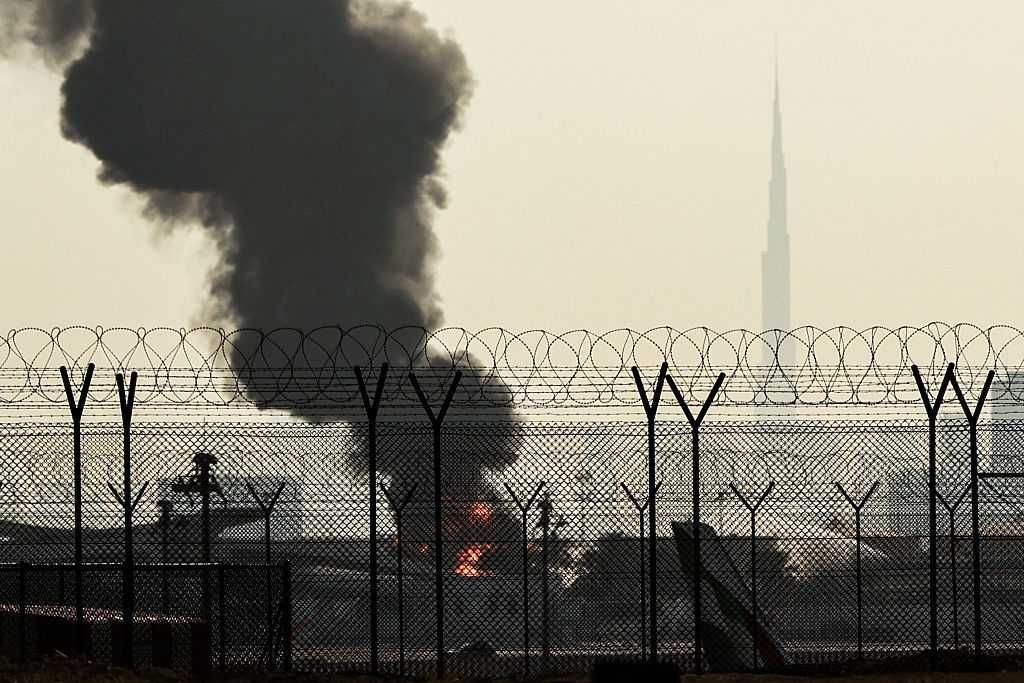
Two weeks ago, I was caught in Dubai for a layover when the war suddenly became very real. While driving back from a pleasant sunset walk along Dubai Creek, my Uber driver suddenly yelled, “Brother, look at the sky!” Peering through the windshield, we watched as the UAE air defense system lit up the sky orange as it intercepted multiple drones, one of which we would later learn struck near the U.S. consulate in Dubai, causing a fire; fortunately, it was quickly extinguished, and there were no fatalities.

To say that war in the Middle East has become a state of normality would be a profound and unfortunate understatement. As drones and missiles fly overhead, the majority of which are intercepted, people go about their day as if nothing has changed. In Dubai, I had the privilege of witnessing an exceptional demonstration of resilience, an unwillingness to give in to fear as the very clear and present danger grows with each passing day.

The resilience I saw in Dubai, where life continued amid ongoing attacks, now faces an even greater test as the global energy supply chain is under strain.

Operation Epic Fury is ongoing and will have long-lasting impacts that will reverberate not only across the region but also worldwide. Iran is one of the world's largest producers of crude oil and has some of the largest known reserves. Decades of sanctions have left the country with a very limited customer base for its oil, with the majority of it going to China at heavily discounted prices.

For this reason, with the possibility of regime change in Iran, China stands to lose a significant portion of its discounted oil supply, especially when combined with the shift in political direction in Venezuela, another vital source of heavily discounted seaborne imports for the Chinese Communist Party.

Additionally, as the Strait of Hormuz is not effectively closed, a halt of up to a fifth of the global oil and liquified natural gas supply, which comes from the other major regional suppliers like Saudi Arabia, Qatar, and Kuwait, is now beginning to take its toll on energy prices across the world.

Dire Strait

Serving as the bridge between the Arabian Gulf and the Gulf of Oman, the Strait of Hormuz is one of the most important strategic chokepoints in the world. With an astounding 20% of global petroleum liquid products flowing through the Strait, it plays a vital role in both the global economy and the economies of the Gulf states.

For example, of the total oil that moves through the Strait, 38% is sourced from Saudi Arabia, a nation where 53.4% of the government’s revenue came from oil in 2025. Furthermore Qatar exports all of its 9.3 billion cubic feet per day of liquid natural gas through the Strait, accounting for most of the LNG transiting through it.

These nations are heavily dependent on revenues earned from oil and gas exports, which is why Iran is targeting both the Strait and the Gulf nations’ energy supply chains. Unable to strike the U.S. mainland, Iran is attacking the Gulf states that support the ongoing U.S. military presence in the region.

The impact from closing the Strait will not be limited to the region. With a substantial amount of exports destined for Asia, upwards of 83% in 2024, including China, South Korea, Japan, India, and Taiwan, the cost of energy in these countries is at risk of rising, which, given the sizable amount of manufacturing that takes place there, could lead to price rises for multiple sectors.

For this reason, China is pressuring Iran to allow for tankers to pass through and to continue shipments, given that China has not yet fully diversified its seaborne oil supply chain away from Iran. Closure of the Strait of Hormuz, even if not by blockade but simply by shippers unwilling to take the risk of asset loss and rising insurance costs, will remain a global market issue rather than a regional challenge.

The lack of transit through the Strait of Hormuz and the possibility that the Houthis in Yemen begin impeding transit through the Bab al-Mandeb Strait in the Red Sea in solidarity with Iran will lead to higher costs for everything shipped from the region and manufactured in East Asia.

Attacking energy infrastructure

Part of Iran’s strategy involves a willingness to openly attack any Gulf state with a connection to the U.S., with new attacks expanding to include Azerbaijan and reaching as far as Cyprus. Iran is doing so with a particular focus on energy infrastructure, recognizing the importance of the energy sector to the regional economy.

Multiple attacks have taken place targeting infrastructure in Qatar — impacting up to 17% of its LNG export capacity, the UAE, whose Shah gas field was struck, Bahrain, and Saudi Arabia — which is putting pressure on a vital part of these countries’ economies.

If Iran is allowed to continue to inflict severe damage on the energy infrastructure of the Gulf states, while depleting their defensive stockpiles with a steady flow of drones and ballistic missile attacks, they will be placed into an even more vulnerable position both economically and militarily.

China’s reliance on Iranian oil

RELATED: The only Iran plan that doesn’t end with a 20-year hangover

Majid Saeedi/Getty Images

China imports almost all of the oil Iran exports, over 80% of it. The strategy is simple: Purchase oil from a heavily sanctioned country with few or no other customers, and enjoy a significant discount. The same strategy was implemented with Venezuela, though not to the same extent as with Iran, in terms of the volume of oil purchased.

The combination of Iranian and Venezuelan seaborne oil imports regularly accounts for 17% of China’s seaborne imports; 13.4% from Iran and 4% to 4.5%. If the war continues to escalate, or perhaps if Kharg Island’s energy infrastructure, which processes 90% of Iran’s oil for export, is attacked or occupied, China could potentially lose close to 20% of its seaborne imports. If the war leads to a regime change in Iran more favorable toward the West, or Iran’s ability to export discounted oil to China is impacted by either military action or the lifting of sanctions, it will be forced to aggressively diversify its seaborne oil imports.

What it means

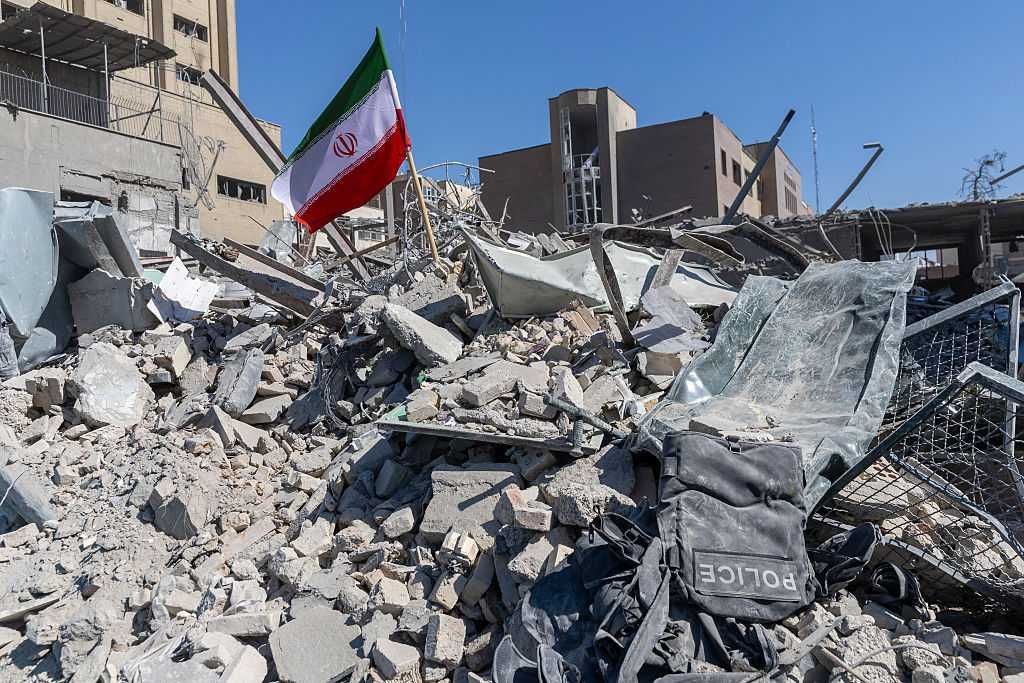
I am fortunate to be concluding this piece from the comfort of my home in Arizona after an evacuation flight to San Francisco, a commuter flight to Los Angeles, and a final long drive home. Operation Epic Fury has effectively disrupted the Strait of Hormuz, unleashed waves of attacks on Gulf energy infrastructure, and driven sharp increases in worldwide energy prices.

China stands to lose up to 20% of its discounted seaborne oil imports from Iran and Venezuela, while Asian economies face higher manufacturing costs that will be passed on to global consumers. The resilience I saw in Dubai, where life continued amid ongoing attacks, now faces an even greater test as the global energy supply chain is under strain. With escalation showing no signs of abating, volatility in oil, LNG, and gasoline prices has become the new normal, underscoring how deeply interconnected our world’s energy security truly is.

Editor’s note: This article was originally published by RealClearEnergy and made available via RealClearWire.

America’s elites trusted global trade. Japan trusted reality.


“Moshitora,” Japanese shorthand for “what if Trump?,” first emerged in the run-up to the 2016 U.S. election, as policymakers and business leaders in Tokyo tried to make sense of an unpredictable candidate.

The phrase resurfaced in early 2024 as Donald Trump’s campaign regained momentum. This time, it carried more than curiosity. It reflected strategic caution and genuine unease. What would a second Trump presidency mean for Japan’s security, its economic ties, and its role in the Indo-Pacific?

The US-Japan alliance has entered a new phase that looks beyond defense alone.

The question mattered bigly. Since former Prime Minister Shinzo Abe’s assassination in 2022, Japan has had to manage its alliance with Washington without the personal rapport Abe cultivated over decades. Trump’s first term had already shown how quickly supply chains could become instruments of strategic power and how fast economic policy could merge with national security.

For decades after the Cold War, Western policymakers assumed deep trade ties would soften geopolitical tensions. If nations became economically intertwined, conflict would grow too costly to sustain. That assumption collapsed. Supply chains did not reduce rivalry. They became tools of leverage instead.

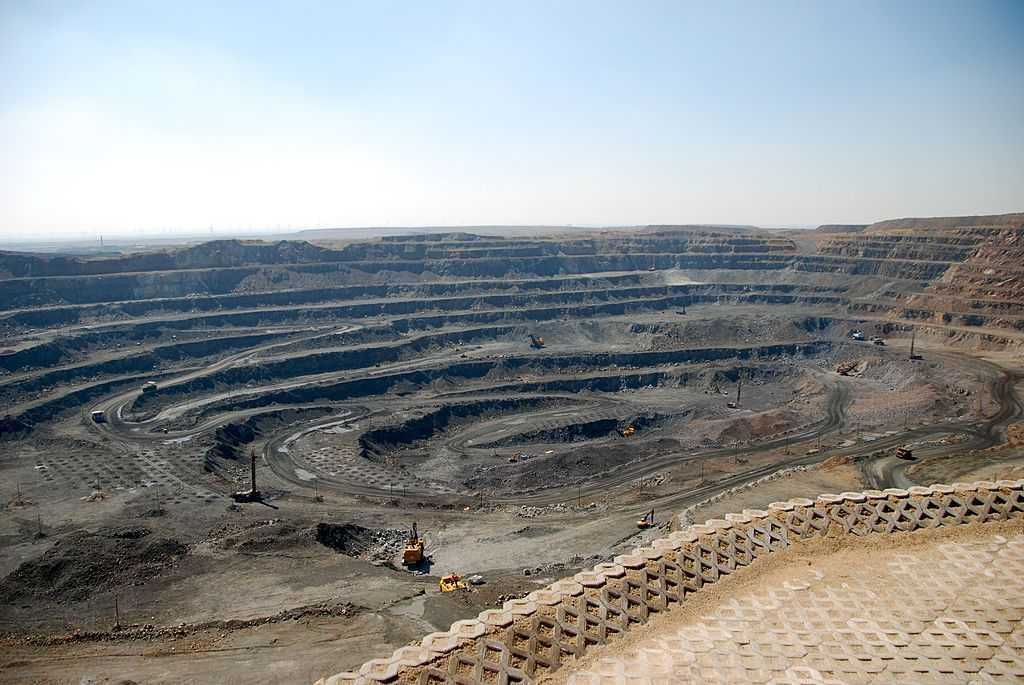
Technology, once treated mainly as an engine of economic growth, became a strategic asset. Materials long confined to commodity markets — lithium, cobalt, nickel, and rare earths — moved to the center of national security planning.

The consequences reached far beyond trade policy. Industries once taken for granted became strategic pressure points. Governments began to see commercial flows not as neutral exchanges, but as levers of power. Control over production, processing, and access could shape the balance of global influence.

Trump’s first administration accelerated that reckoning. Washington had to confront dependencies it had ignored for too long. Over the next several years, policymakers turned instinct into structure. Alliances no longer looked like military arrangements alone. They began to function as economic security networks built around trusted supply chains, resilient manufacturing, and reliable access to critical materials.

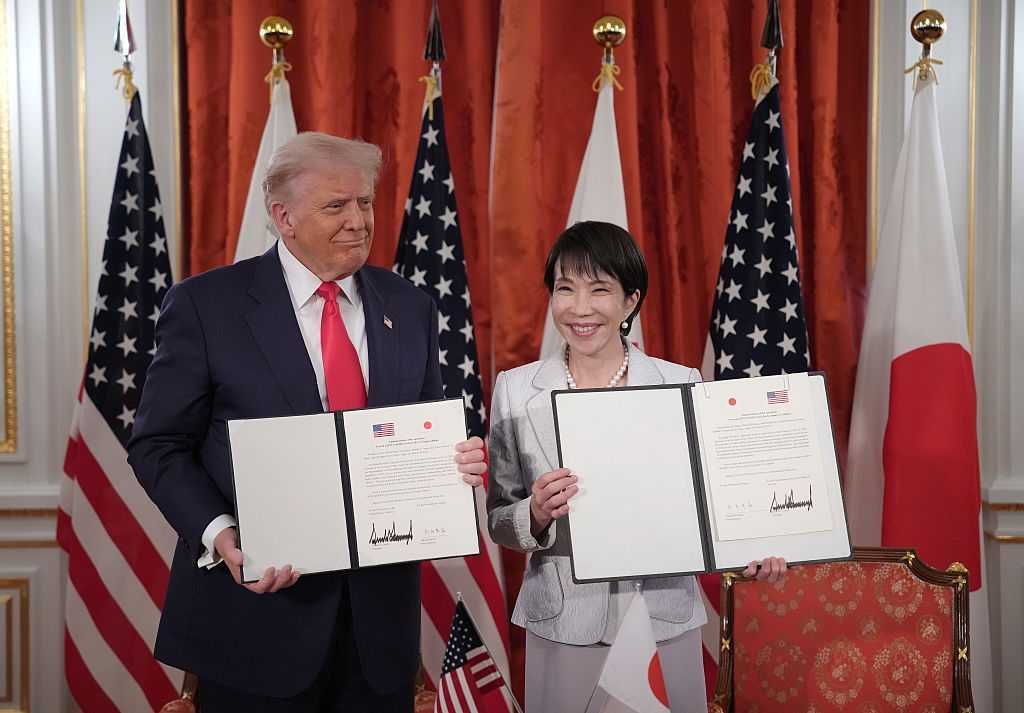
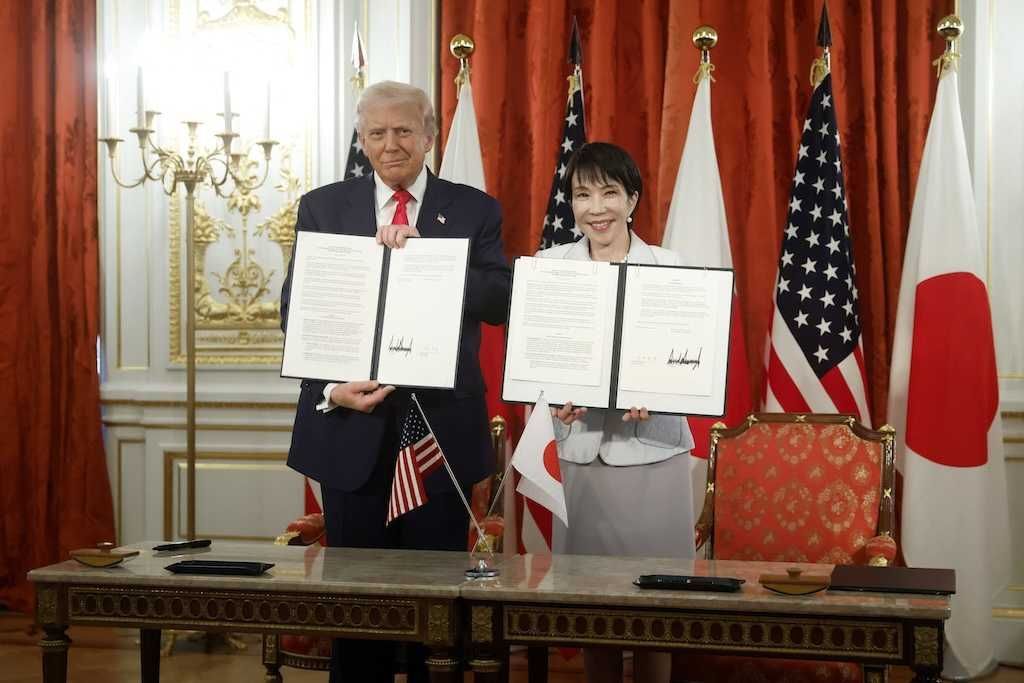
The results are now visible. In October 2025, the U.S. and Japan signed a framework to secure supply chains for rare earths and critical minerals, with the stated goal of reducing dependence on China’s dominant processing capacity.

Africa shows the stakes even more clearly. In early 2026, Glencore entered a nonbinding agreement with the U.S.-backed Orion Critical Mineral Consortium to sell 40% of its Mutanda and Kamoto copper and cobalt mines in the Democratic Republic of Congo.

RELATED: China is arming itself with minerals America refuses to mine

Bert van Dijk / Getty Images

These mines rank among the world’s largest producers of metals essential to next-generation technologies. The deal aims to diversify supply beyond China’s orbit.

Across Africa, Washington has deepened partnerships to strengthen supply chains for essential commodities, while Japan has pursued its own ties with resource-rich nations.

These efforts go beyond securing raw materials. They concern industrial resilience, strategic autonomy, and influence over the technologies that will define the next era of power. Countries now face a hard question: Who offers long-term commitment, and who merely shows up to extract what it needs?

Japan’s approach reflects foresight. Its economic security policies — diversifying supply chains, investing in semiconductors, and deepening ties with African and Southeast Asian resource producers — show a clear understanding that industrial capacity underwrites national power. In some respects, Tokyo saw this shift coming before Washington did.

The U.S.-Japan alliance has entered a new phase that looks beyond defense alone. Who will build together, mine together, and secure the industrial base behind technological competition? The choices nations make now will help determine which economies and militaries remain resilient enough to compete in the years ahead.

“Moshitora” began as a phrase about a single American election. Its return in 2024 looks, in hindsight, like a warning Japan had already begun to heed. The question now is whether Washington will answer with the same clarity, persistence, and long-term vision.

Oil Matters In Venezuela, But Not For The Reason Democrats Think

Oil isn’t just a commodity anymore. It’s a strategic weapon.

Trump Is Right — America Needs Greenland And Access To Its Critical Resources

Greenland isn’t just an Arctic landmass — it’s a North American strategic economic and military asset that America cannot afford to ignore. The time to secure it is now.

If The Post-Covid ‘Recovery’ Was So Great, Why Can’t I Get Better Than Two-Star Service?

From high prices, to shortages, to poor service, politicians and economists don't want to talk about the major lingering effects of lockdowns.