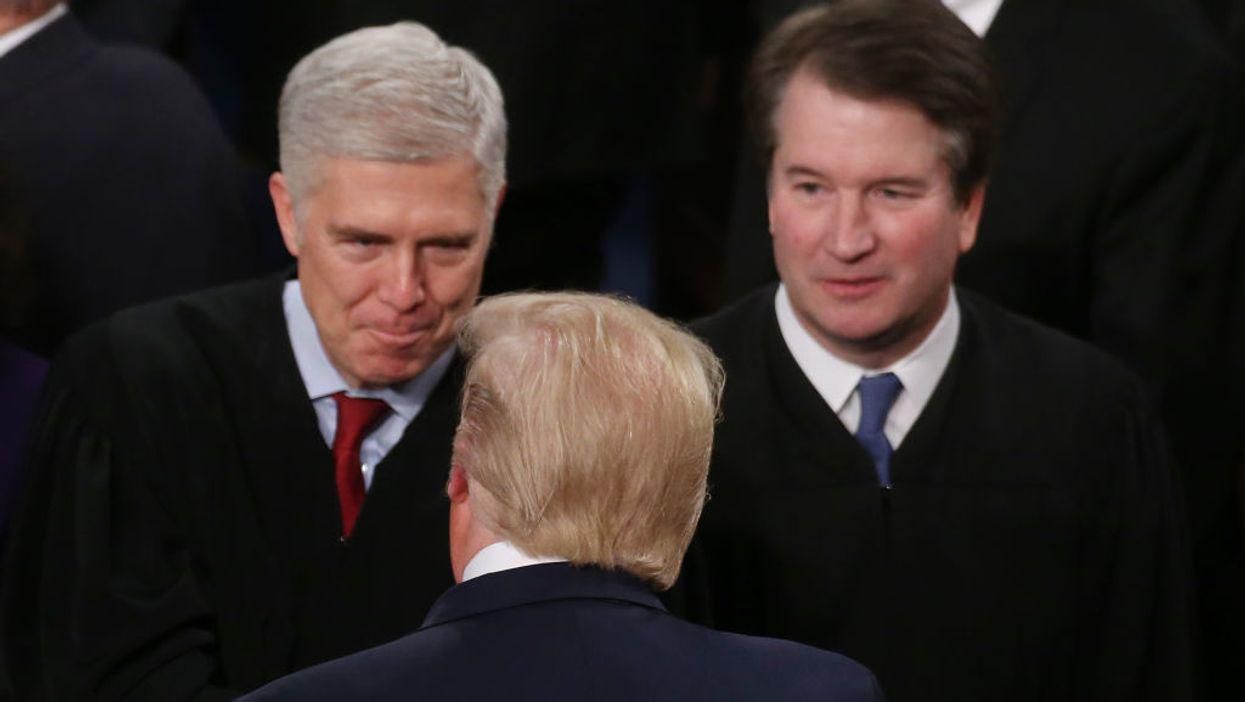
The Supreme Court came to the wrong conclusion on the 14th Amendment


Chief Justice John Roberts begins the Supreme Court’s birthright citizenship opinion in Westminster in 1608 with Calvin’s Case and the English law of royal subjectship.

I would begin in Philadelphia in 1776.

English law rested upon allegiance to the Crown. The American Republic would rest upon the consent of a self-governing people.

Between those two places — and those two moments — lies the American Revolution. And the Revolution changed more than who governed America. It changed the very foundation of political membership.

That is the central problem with the Supreme Court’s decision in Trump v. Barbara. The court’s opinion is learned, careful, and historically rich. Chief Justice Roberts traces the English doctrine of jus soli through Calvin’s Case, Blackstone, a substantial body of antebellum American authorities, and finally United States v. Wong Kim Ark.

It may well become the definitive defense of the conventional understanding of the 14th Amendment’s Citizenship Clause. But it answers the wrong question.

The issue is not whether America inherited English legal language. It plainly did. The issue is whether America also inherited England’s understanding of political membership.

The majority assumes that the American Revolution left the English understanding of political membership largely intact. The dissents argue that the Revolution rejected that understanding and replaced it with an American conception of citizenship grounded in the consent of the governed. That is the real disagreement in this case.

A new creed

Under English common law, nearly everyone born within the king’s dominions became a natural-born subject. Birth within the sovereign’s territory created permanent allegiance to the Crown because the child was born under the king’s protection. That doctrine made sense in a monarchy. It reflected a world of subjects, sovereigns, dominions, and perpetual allegiance.

But the United States is not a monarchy.

The Declaration of Independence did more than announce separation from Great Britain. It rejected the political philosophy upon which English subjectship rested. Jefferson’s words — that governments derive “their just powers from the consent of the governed” — were not mere rhetorical flourishes. They announced a new theory of political legitimacy.

The Declaration’s closing words made the rejection of perpetual allegiance explicit: The new states were “absolved from all allegiance to the British Crown.”

English law rested upon allegiance to the Crown. The American Republic would rest upon the consent of a self-governing people.

That revolutionary transformation should have been central to the Court’s interpretation of the 14th Amendment.

Instead, the majority largely assumes that English subjectship and American citizenship belong to the same constitutional lineage. Roberts proves an important proposition: England recognized birthright subjectship. But he does not prove the decisive one: that Americans who had repudiated monarchy intended, less than a century later, to constitutionalize the English law of royal subjectship as the definition of citizenship in a republic.

Mere obedience to law is not the same thing as complete political allegiance.

Justice Joseph Story helps explain why that distinction matters. Story was steeped in English law, but he was not merely Blackstone with an American accent. His great constitutional project was to explain how inherited English legal concepts had been adapted to the institutions and principles of an American republic.

He stands as a bridge between the common-law inheritance and American constitutionalism.

That is the bridge missing from the majority’s account. Roberts reads the inherited legal tradition largely as a line of continuity from Calvin’s Case to Wong Kim Ark. But the American constitutional genealogy runs along a different path: the Declaration of Independence, Story’s adaptation of inherited law to republican constitutionalism, Lincoln’s reaffirmation of the Declaration as the nation’s first principle, the Civil Rights Act of 1866, and the 14th Amendment.

Abraham Lincoln understood this better than anyone. He did not treat the Declaration as a mere political manifesto. Lincoln treated it as the nation’s statement of principle. In his famous meditation on the Constitution and the Union, Lincoln described the Declaration’s principle of liberty as the “apple of gold,” with the Constitution as the “picture of silver” framed around it.

The frame was made not to conceal or destroy the apple, but to preserve it.

That is precisely the point here. The Constitution must be read as law. But it is American law, not English law. And the 14th Amendment must be read as part of the Constitution’s effort to vindicate the principles of the Declaration after the catastrophe of slavery and Dred Scott.

Preserving the cornerstone

The Reconstruction Congress was not attempting to preserve English constitutionalism. It was completing the work begun in 1776.

The Declaration proclaimed that “all men are created equal.” Dred Scott denied that promise, holding that an entire class of Americans could never become members of the political community. The 14th Amendment repudiated that decision.

But it did so by restoring the principles of the American founding, not by reviving the legal doctrines of the British Crown.

This is why the majority’s repeated description of the Citizenship Clause as “declaratory” does not resolve the question. Declaratory of what? The common law of royal subjectship inherited from England? Or the constitutional law of citizenship that Americans had transformed through the Declaration, the Revolution, and nearly a century of republican self-government?

The 14th Amendment was ratified in 1868, not 1768. It should therefore be interpreted through the constitutional understandings of the American Republic, not simply those of the British Empire.

The Citizenship Clause provides: “All persons born or naturalized in the United States, and subject to the jurisdiction thereof, are citizens.” The clause does not simply require birth in the United States. It adds a second requirement: The person must be “subject to the jurisdiction” of the United States.

Those words must do real work.

RELATED: The Supreme Court puts border judges back in their lane
Graeme Sloan/Bloomberg/Getty Images

The majority effectively equates “subject to the jurisdiction” with “subject to American law.” Anyone physically present in the country, except diplomats and members of sovereign Indian tribes, must obey American law. From that premise, the majority concludes that virtually everyone born here becomes a citizen.

But the Reconstruction Congress was speaking of something more profound than traffic laws and criminal jurisdiction. It was defining membership in the American political community.

The debates surrounding the Civil Rights Act of 1866 and the 14th Amendment repeatedly invoked the ideas of complete jurisdiction, complete allegiance, and undivided political obligation.

Senator Lyman Trumbull, the principal author of the Civil Rights Act, explained that citizenship extended to those who were subject to the complete jurisdiction of the United States — not merely to those temporarily answerable to its laws.

Every foreign visitor is obliged to obey American law while here. So is every foreign student, every tourist, every diplomat’s driver, and every person who crosses the border unlawfully. But mere obedience to law is not the same thing as complete political allegiance. If it were, the jurisdictional language would add almost nothing to the constitutional text.

The Civil Rights Act of 1866 used slightly different language, extending citizenship to persons born in the United States and “not subject to any foreign power.” The 14th Amendment altered the phrasing, but not the underlying concept of complete political jurisdiction. The point was not mere geography. It was political membership.

That is why the dissents have the stronger originalist argument.

Citizenship in America

Justice Clarence Thomas begins with a question the majority never fully confronts: What did Americans understand citizenship to mean after they had rejected English subjectship? That is the proper originalist inquiry. It is not enough to ask how English courts defined the king’s subjects. The constitutional question is how Americans defined members of a self-governing republic.

The majority’s treatment of United States v. Wong Kim Ark illustrates the same methodological difficulty. Roberts portrays today’s decision as little more than the faithful application of settled precedent. That gives Wong Kim Ark much broader force than it actually possessed.

The case involved a child born in San Francisco to parents who had been lawfully admitted and permanently domiciled in the United States. That holding was sufficient to resolve the controversy before the Court. Whether the Constitution mandates citizenship for children born to temporary visitors or to those unlawfully present was not presented.

To be sure, Justice Horace Gray’s opinion draws heavily on the English tradition of jus soli. But the opinion’s reasoning extended well beyond the facts before it. Its discussion of temporary visitors and the full scope of the Citizenship Clause should be evaluated on the strength of its historical reasoning, not treated as though every observation carried the force of the Court’s holding.

That is especially important because Wong Kim Ark itself looked backward through the English common-law tradition. Today’s Court repeats that move. But whether Justice Gray correctly understood the original meaning of the 14th Amendment remains the very question under debate.

Over the past two decades, Edward Erler, Michael Anton, and I, along with several other prominent legal scholars, have argued that the Citizenship Clause must be understood against the backdrop of the American Revolution rather than the English common law of perpetual allegiance.

That argument does not deny England’s commitment to jus soli. It asks whether the American Revolution rejected the premise on which English jus soli rested.

RELATED: Sen. Schmitt offers glimmer of hope after birthright citizenship 'mistake' from SCOTUS

Bill Clark/CQ-Roll Call, Inc/Getty Images

Chief Justice Roberts presents an intellectually serious account of the conventional view. The majority opinion deserves respect for its scholarship and for its careful engagement with difficult historical sources.

But scholarship is only as persuasive as the question it seeks to answer.

Roberts proves that England followed jus soli. He proves that English subjects acquired allegiance by birth within the king’s dominions. He proves that Wong Kim Ark embraced that historical tradition.

What he never quite proves is why the American people, after repudiating monarchy and proclaiming government by consent, should be presumed to have constitutionalized that English doctrine rather than adapting inherited legal language to their own revolutionary understanding of citizenship.

The disagreement between the majority and the dissent is therefore not ultimately about Blackstone, Calvin’s Case, or even Wong Kim Ark. It is about what the American Revolution accomplished. Did it merely transfer sovereignty from the king to the people while leaving the English understanding of political membership intact? Or did it reject that understanding and replace it with citizenship grounded in consent, allegiance, and membership in the American political community?

Justice Thomas places that question at the center of the inquiry. For an originalist, that is exactly where it belongs.

The Declaration of Independence eloquently and definitively answered that question in favor of the doctrine of consent rather than the feudal doctrine of jus soli. In this, its 250th anniversary, it should not have been overlooked.
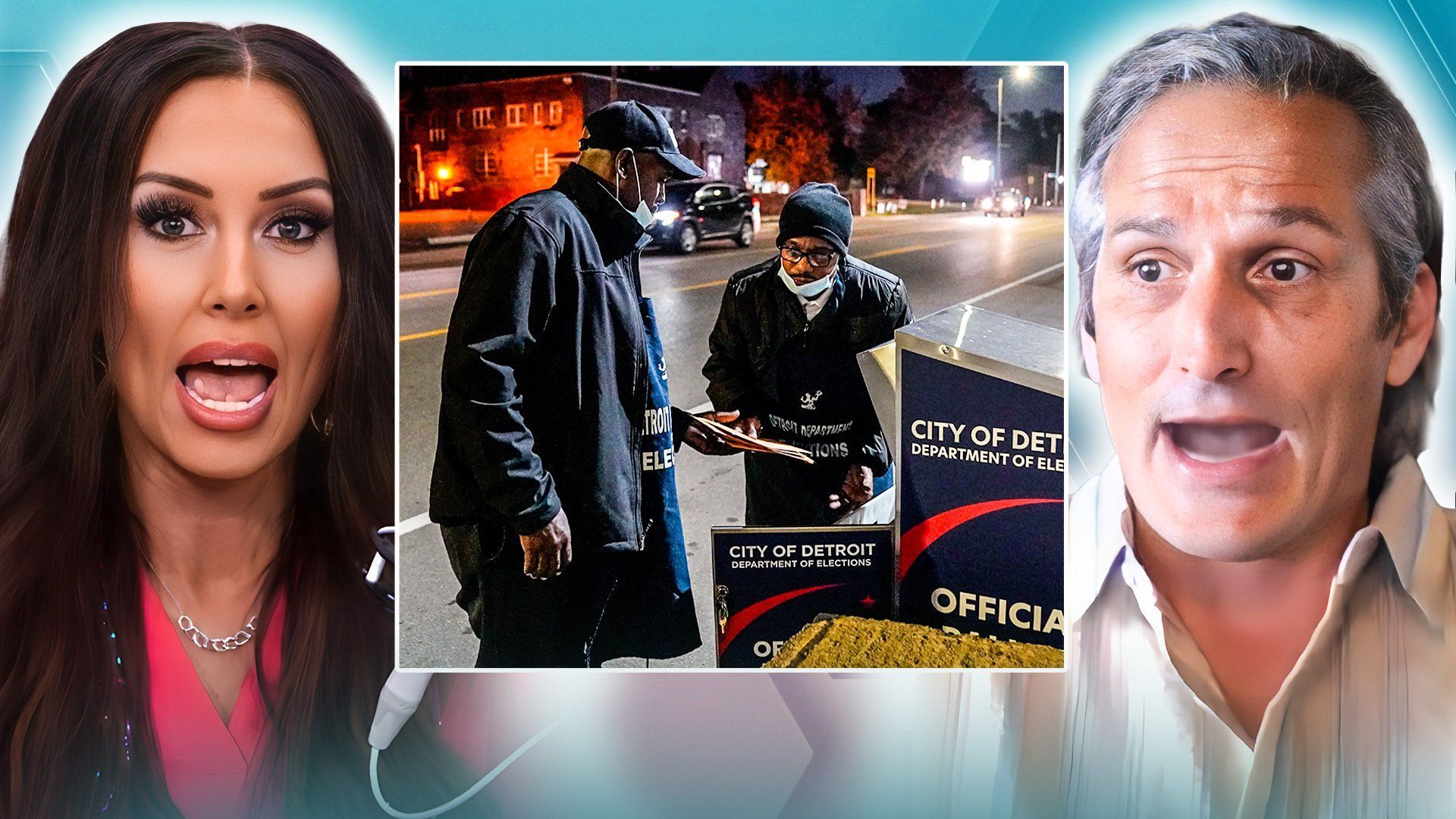
Michigan voter fraud EXPOSED: ‘If you want to live forever, register to vote’


While many Americans are aware that elections haven’t exactly been fair, Sara Gonzales has put in the time to figure out exactly why that is.

Gonzales took a trip down to Michigan to find out for her latest Blaze Originals documentary, "Voter Fraud: Exposed," in which she looked into voter fraud in the state alongside Charlie LeDuff.

LeDuff, who is the host of “No BS News Hour” and a Pulitzer Prize-winning journalist, notes that an impossible 105% of adults in Michigan are registered to vote.

“You have 8.3 million registered voters, and you have slightly under 7.9 million adults,” he explains. “Not all adults in Michigan are citizens, so right there you have a problem.”

“They’ve got a saying in Detroit, which is ‘If you want to live forever, register to vote, but you’re going to die waiting for them to count your vote,’” LeDuff adds, laughing.

The problem is massive, especially when it's considered that not 100% of adults are actually registered to vote. LeDuff witnessed the issues in Michigan firsthand when, in 2020, an absentee ballot came to his house for a woman named Janet who hadn’t lived there in 25 years.

“So I went down to City Hall, told my clerk 'Janet hasn’t lived here in 25 years. Janet lives in Texas, Janet remarried and has assumed another name.' They kept coming, and they came in '21, and they came in '22, and I keep sending them back, and they came in '23.”

“And in '23, Janet’s voter registration card came. I called Janet and I said, ‘Hey Janet, all I have to do is change my gas bill into your name. That’s two pieces of ID and I can get your Social Security.'”

LeDuff also knows a woman who owns a house in Michigan that was burned. It’s boarded up, and no one has lived in the house for 10 years.

“There are four active registered people at that address. One guy apparently was born in 1914,” LeDuff says.

No matter the political aisle, Americans overwhelmingly believe that voter ID is a massive issue.

“Almost 80% of Americans left or right agree that you have to be able to prove that you are who you say you are in order to vote, because it’s really freaking important in this country,” Gonzales says.


Want more from Sara Gonzales?

To enjoy more of Sara's no-holds-barred take to news and culture, subscribe to BlazeTV — the largest multi-platform network of voices who love America, defend the Constitution, and live the American dream.

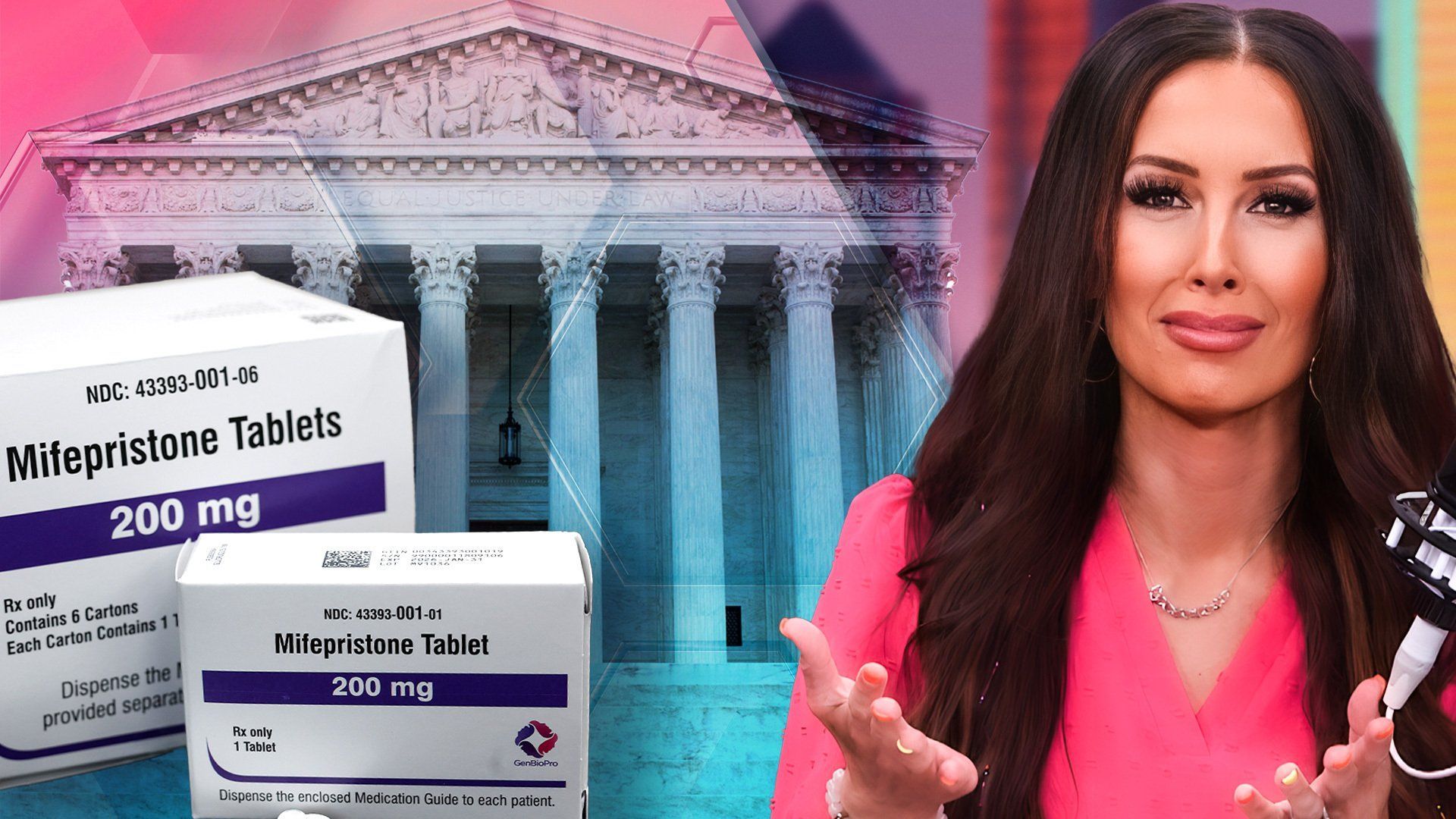
Abortion pill by MAIL is legal; Supreme Court unanimously rejects lawsuit


The result of the first major abortion case to be brought to the Supreme Court since Roe v. Wade was overturned in 2022 has disheartened many in the pro-life movement.

The case, FDA v. Alliance for Hippocratic Medicine, was an organization of physicians challenging the FDA’s loosened regulations on the abortion pill — which women can now get by mail without an in-person doctor’s office visit. The Supreme Court rejected the lawsuit.

“I do know enough about law to be dangerous,” Sara Gonzales comments, noting that the Supreme Court’s decision was “more about whether or not this group even had the standing to sue, rather than all of the nuts and bolts of it.”

The opinion was written by Justice Brett Kavanaugh, and according to his opinion the court found that the plaintiffs had not met the threshold for a lawsuit in the first place. One of the reasons was that they hadn’t proved that the FDA’s relaxed regulatory requirements could result in injury.

“So they’re not saying ‘we don’t understand the problem that you have with this,'" Gonzales explains. “This is why it was unanimous, because the decision wasn’t about the morality of it; it was of course just about the technicality.”

However, Gonzales believes the abortion pill shouldn’t be so available.

“What they are doing, particularly with this drug, is in my opinion criminal,” Gonzales says. “If you go by their own label, go by the FDA’s own label, okay, roughly one in 25 women who take these chemical abortion drugs have to end up going to the emergency room, and that is of course assuming that they don’t bleed out on the bathroom floor first.”

“The FDA under the direction of the Biden-Harris regime is allowing these women to take these high-risk drugs without being under care of a doctor, without even physically going in to a doctor,” she continues, relating it to the back-alley coat-hanger abortions the left has threatened.

“What is so different about this?” she asks.


Want more from Sara Gonzales?

To enjoy more of Sara's no-holds-barred take to news and culture, subscribe to BlazeTV — the largest multi-platform network of voices who love America, defend the Constitution, and live the American dream.

Will the Supreme Court restore freedom of speech?


A Louisiana district court judge has just ruled that the Biden administration most likely violated the First Amendment by calling on social media companies to censor political speech during the COVID-19 pandemic.

Judge Terry Doughty, who is a Trump appointee, issued an injunction banning federal agencies — like the FBI — and officials from working with social media companies to censor speech normally protected by the First Amendment.

Doughty said in a statement that he believes that the government “colluded with and/or coerced social media platforms to suppress disfavored speakers, viewpoints, and content on social media platforms.”

He accused the United States government of assuming “a role similar to an Orwellian ‘Ministry of Truth,’” and using its power to “silence the opposition” on COVID-19 vaccines, COVID-19 masking, lockdowns, the lab-leak theory, the validity of the 2020 election, Biden’s policies, and Hunter Biden’s laptop.

Pat Gray is impressed.

“This guy’s really good. All of that is so very true.”

While Gray knows that those who side with the government on the matter will say it was because the political opposition was spreading dangerous “disinformation” and “misinformation” — he also knows that it was the government that created those terms in the first place.

“Who decides that — the government, the left? Because all of that stuff turned out to be true and accurate,” Gray says, continuing, “Let the American people noodle that out. We’re smart enough to do that.”

“If people are saying things about the vaccine that isn’t true, it’ll come out,” he adds.

Keith Malinak agrees and quotes Terry Doughty.

“Otherwise, it’s almost like the United States government seems to have assumed a role similar to an Orwellian 'Ministry of Truth,'” he mimes.

“Powerful,” Gray responds.


Want more from Pat Gray?

To enjoy more of Pat's biting analysis and signature wit as he restores common sense to a senseless world, subscribe to BlazeTV — the largest multi-platform network of voices who love America, defend the Constitution, and live the American dream.

Democrats want to destroy the Supreme Court by packing it


The Democrats are trying to pack the Supreme Court, and Mark Levin is not amused.

“We have no choice,” he mocks, “we have to pack the Supreme Court. Biden has to issue executive orders like he’s making laws from the Oval Office.”

“We need to get rid of the filibuster rule,” he continues, “so we can ram through whatever we want to in the Senate. Then we have to add Puerto Rico and D.C. as states so we can have four more Democrats, so the Republicans can never win.”

Levin says the Democrats “hate the Constitution” before playing a clip of news anchor Chris Hayes, who doesn’t seem to understand what’s in the Constitution.

“These days,” Hayes begins, “it’s fair to ask who really is in charge in this country, because the momentous loss of the constitutional right to abortion, which has led to state abortion bans across the country –”

Levin cuts him off and ends the video.

“Okay, dummy,” he says, “the 'constitutional right to abortion' is not in the Constitution.”

Levin asks where the “long list of women who can’t get abortions who want or need abortions” are, because if there were a long list of them, networks like MSNBC would be airing it.

“If this is really the problem,” he says, “don’t you think night after night, day after day, that tricks like this and jerk networks like this and others, they would have a conga line of cases, they would put their names on their, on their screen, something like that. But they don’t.”

Levin believes these Constitution-ignorant leftists want to destroy not just the Constitution, but the Supreme Court.

And how do you destroy it?

“Turn it into the Democrat Party Marxist Politburo by packing the court,” he continues. “Well then, what’s the point of having a court?”


Want more from Mark Levin?

To enjoy more of "the Great One" — Mark Levin as you've never seen him before —subscribe to BlazeTV — the largest multi-platform network of voices who love America, defend the Constitution, and live the American dream.

Mark Levin clears up misconceptions about SCOTUS sending abortion conversation back where it belongs


Feminists are losing what little of their minds they had left in response to the long-overdue SCOTUS decision that removed abortion from federal jurisdiction.

In this clip, Mark Levin cleared up any misconceptions you might have about the Supreme Court's decision, and he gave a savage breakdown of the abortion process, how it works, and why it is evil. Watch the clip from the latest episode of "LevinTV."


Want more from Mark Levin?

To enjoy more of "the Great One" — Mark Levin as you've never seen him before — subscribe to BlazeTV — the largest multi-platform network of voices who love America, defend the Constitution, and live the American dream.

Justice Kavanaugh accused of helping Trump 'steal the election' after SCOTUS rejects Wisconsin mail-in ballot extension


Justice Brett Kavanaugh is being accused of paving the way for President Donald Trump to "steal the election" after the Supreme Court on Monday rejected an effort by Wisconsin Democrats to have mail-in absentee ballots postmarked by Election Day counted even if they arrive after the election.

In a 5-3 decision, the court ruled that absentee ballots in Wisconsin could only be counted if they were in the possession of election clerks by 8 p.m. on Nov. 3. State Democrats attempted to have the deadline for counting absentee ballots extended a full six days after Election Day, CNBC reports. They argued the extension was necessary due to the surge in mail-in voting caused by the coronavirus pandemic.

Last month, District Court Judge William Conley agreed with the Democrats' arguments, ordering the deadline to be extended. The 7th U.S. Circuit Court of Appeals reversed Conley's decision in October and Democrats appealed the case to the Supreme Court.

The Supreme Court ruled against the Democrats. Justice Neil Gorsuch, writing for himself and joined in part by Justice Brett Kavanaugh, said that the Constitution gives elected legislators the power to set election rules and that judges cannot overstep the separation of powers when the Legislature fails to act.

"Legislators can be held accountable by the people for the rules they write or fail to write; typically, judges cannot," Gorsuch wrote. "Legislatures make policy and bring to bear the collective wisdom of the whole people when they do, while courts dispense the judgment of only a single person or a handful."

In his concurring opinion, Kavanaugh said that while he understands the concerns over COVID-19, "you need deadlines to hold elections — there is just no wishing away or getting around that fundamental point. And Wisconsin's deadline is the same as that in 30 other States and is a reasonable deadline given all the circumstances."

"Moving a deadline would not prevent ballots from arriving after the newly minted deadline any more than moving first base would mean no more close plays," he added.

Kavanaugh's concurring opinion has been cited by critics on the left as evidence he wants to help Trump "steal the election" by discounting mail-in votes.

"Brett Kavanaugh Lays Out a Plan to Help Trump Steal the Election" reads one headline at Mother Jones, while "Brett Kavanaugh Signals He's Open to Stealing the Election for Trump" is a piece by Mark Joseph Stern for Slate. These articles accuse Kavanaugh's "frankly terrifying" opinion (Stern's words) of echoing Trump's rhetoric opposing mail-in voting in one passage wherein Kavanaugh defends states that have statutes similar to a Wisconsin law that disqualifies ballots received after Election Day:

Those States want to avoid the chaos and suspicions of impropriety that can ensue if thousands of absentee ballots flow in after election day and potentially flip the results of an election. And those States also want to be able to definitively announce the results of the election on election night, or as soon as possible thereafter.

"It is genuinely alarming that the justice cast these aspersions on late-arriving ballots," Stern writes.

Another area of Kavanaugh's opinion that's under attack is a footnote where he positively cites Chief Justice William Rehnquist's opinion in Bush v. Gore on why federal courts should step in to review state court interpretations of state election laws that affect federal elections, such as presidential election.

"Whatever the reasons behind Kavanaugh's performance on Monday, he has given the nation another legitimate reason to fear that this election may end with a Bush v. Gore–like disaster for American democracy, but even worse than the original," he concludes.

A CNN report on Kavanaugh's opinion shares a similar premise with the headline "Brett Kavanaugh foreshadows how Supreme Court could disrupt vote counting," suggesting that Wisconsin following state election law would disrupt the election. Another article for USA Today also suggests Kavanaugh is "echoing Trump."

President Trump has frequently criticized mail-in voting, predicting that fully counting votes could take months after the election and suggesting "mail ballots are very dangerous for this country because of cheaters. They go collect them. They are fraudulent in many cases. They have to vote. They should have voter ID, by the way."