The GOP’s 2028 ticket math is already brutal


The ink will not even be dry on the final 2026 midterm ballots before Washington turns to the next race: the battle for the White House in 2028.

Election Day ends November 3. By the morning of November 4, the campaign for America’s next president will already be under way.

There is one rule every VP nominee must follow: Do not become the story. The job is to amplify the presidential candidate, not compete with him.

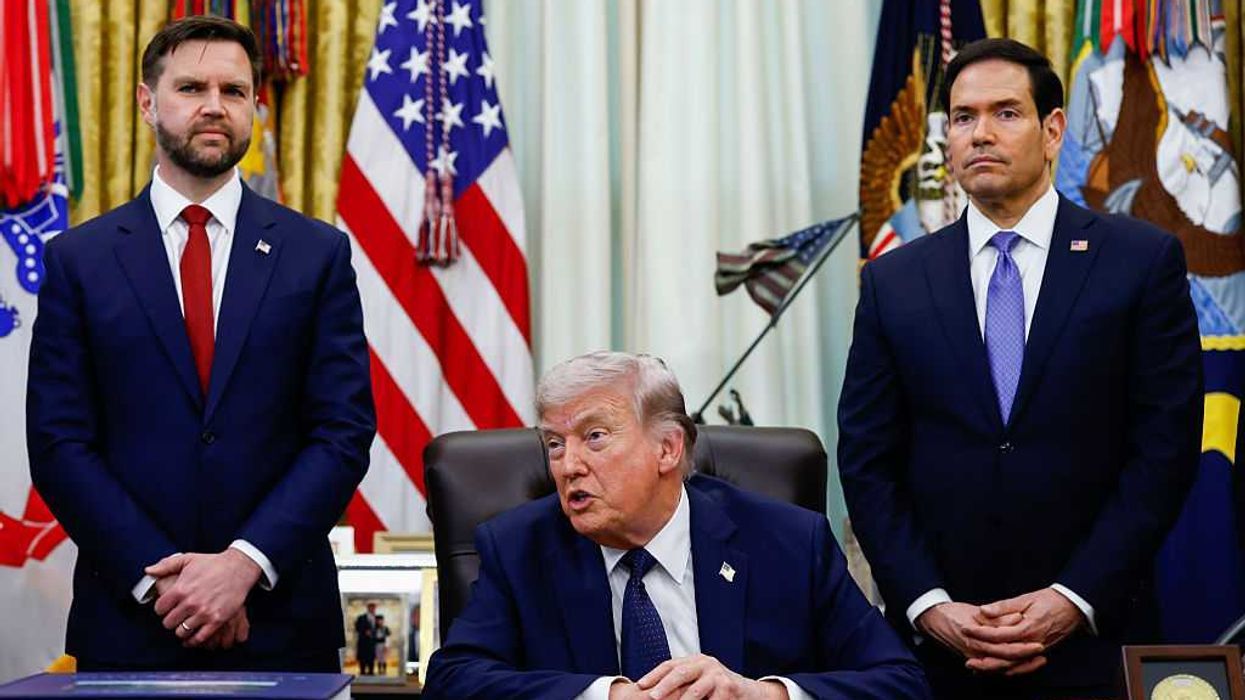
The biggest names — Vice President JD Vance and Secretary of State Marco Rubio among them — will dominate early speculation. But the more interesting question may be the second spot on the ticket.

Vice presidential picks are no longer afterthoughts. Gone are the days when running mates were chosen simply to “balance the ticket.” Today’s contenders are expected to serve as attack dogs, media stars, policy messengers, fundraising powerhouses, and trusted governing partners.

They must energize the base, reassure swing voters, and be ready to step into the Oval Office if necessary.

Which running mate gives the Republican nominee the greatest advantage?

The answer will not be about geography alone. It will be about chemistry, fundraising, media skill, governing experience, and the ability to help win the handful of battleground states likely to decide another close election.

Several Republicans are already generating early speculation.

Andy Ogles — Tennessee, 11 electoral votes

Ogles belongs at the top of the watch list.

The Trump-endorsed Tennessee congressman has built a reputation as one of the House’s most outspoken conservatives, championing limited government and an unapologetic defense of Trump-era policies.

Ogles pairs an easygoing manner with hard-line positions. He has become a familiar figure in congressional battles over immigration, federal spending, election integrity, and cultural issues.

As chairman of the House Homeland Security Subcommittee on Cybersecurity and Infrastructure Protection, Ogles also works on an issue likely to grow more important in future campaigns.

Tennessee is safely Republican, so his value would lie less in changing the Electoral College map than in energizing conservatives across other states.

Byron Donalds — Florida, 30 electoral votes

Donalds combines strong media skills with a compelling personal story and growing national recognition.

Frequently mentioned as a leading contender in Florida’s 2026 gubernatorial race, the Florida congressman has become one of the Republican Party’s most visible communicators. Supporters argue that his appeal extends beyond the party’s traditional coalition, making him one of the GOP’s fastest-rising figures.

With Florida’s 30 electoral votes already central to any Republican path to the White House, Donalds would bring both state-level strength and national media reach. His New York roots also have some Republicans wondering whether he could help the party make inroads with voters in the Northeast.

Sarah Huckabee Sanders — Arkansas, 6 electoral votes

Sanders brings executive experience and years in the national spotlight.

The Arkansas governor first became a national figure as White House press secretary, then returned home to lead a reliably Republican state. Her familiarity with the Trump movement, fundraising network, and communications experience continue to make her a frequently mentioned possibility for a future Republican ticket.

Arkansas’ six electoral votes are not in doubt. Sanders’ value would come from her executive résumé, conservative credibility, and ability to speak directly to the Trump coalition.

Her appearances at high-profile fundraising events, including in Palm Beach, have only fueled speculation about her national ambitions.

Tim Scott — South Carolina, 9 electoral votes

Scott has built his national profile around economic opportunity, education, faith, and conservative policy priorities.

After his 2024 presidential campaign, the South Carolina senator remains a respected figure within the party and has continued expanding his national profile.

South Carolina’s nine electoral votes are safely Republican. Scott’s appeal would lie less in delivering his home state than in his optimistic message, donor network, and ability to broaden the ticket’s tone without abandoning conservative priorities.

RELATED: Trump to address declassified intel revelations about 2020 foreign interference: Report
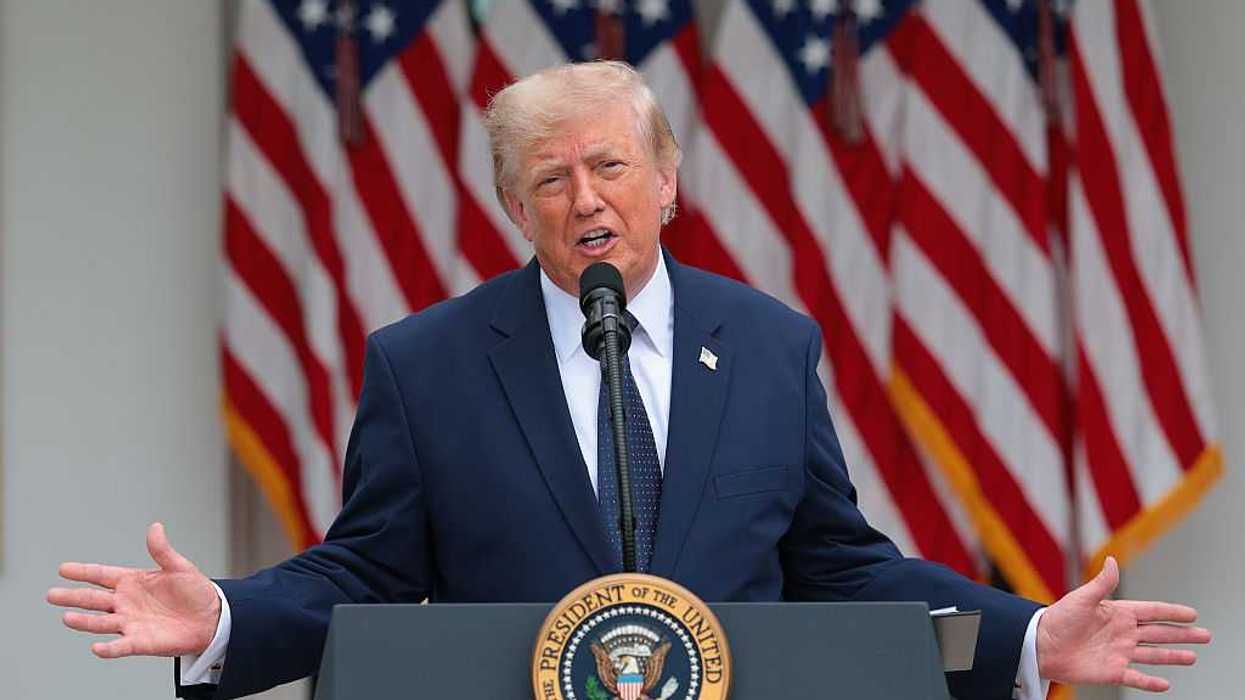
Anna Moneymaker/Getty Images

The Trump name may not be leaving the stage

Another variable remains impossible to ignore: the Trump political brand.

Donald Trump Jr.’s name continues to circulate among supporters and commentators as a potential future candidate. Although he has repeatedly said he is focused on advancing the America First movement rather than seeking office himself, his national profile, fundraising network, and loyal following keep him in nearly every early conversation about 2028.

Unlike many political heirs, Trump Jr. has spent years campaigning across the country, building relationships with conservative activists, appearing regularly in conservative media, and becoming one of the Republican Party’s most recognizable surrogates.

Whether he ultimately seeks the presidency, accepts a vice presidential nomination, or remains one of the party’s most influential campaign voices, his involvement would almost certainly keep the Trump family’s political movement at the center of Republican politics.

There is one rule every VP nominee must follow: Do not become the story. The job is to amplify the presidential candidate, not compete with him.

In a country where elections are often decided by razor-thin margins in a handful of battleground states, even a small advantage can mean the difference between victory and defeat.
‘Teflon Don’ made the elites sleep with the fishes


Donald Trump’s resounding victory over Kamala Harris means that the former president is now president-elect, but as a fellow New Yorker from Queens, I think the next occupant of the White House has also earned another title.

The “Teflon Don” just proved that nothing Democrats — or their allies in media, pop culture, and corporate America — threw at him would stick. Trump isn’t an infamous mafia boss like John Gotti whose track record of beating court cases earned him the moniker. To the pundit class, he is way worse. They tried to paint the former president as a fascist, Nazi-sympathizing, authoritarian wannabe dictator. They’re still trying.

If this election taught us anything, it’s that the pundit class is too arrogant, smug, emotional, narcissistic, and incurious to understand the average American.

Democrats spent months saying Trump is a threat to democracy. They weaponized the legal system and used lawfare to keep him out of the White House. An assassin’s bullet didn’t take him down. They said his vice presidential pick was “weird.” None of it could stop the inevitable.

This isn’t to say Trump was the perfect candidate. He upset his base more than once during the campaign, from his criticism of state abortion bills to his public attacks on the conservatives behind Project 2025. Some social conservatives also didn’t like the party’s decision to give a speaking slot at the Republican National Convention to Amber Rose, the atheist, pro-abortion influencer who used to lead “slut walks” in Los Angeles. Her appearance came around the time the party decided to soften its language around key social issues like abortion and same-sex marriage.

But through it all, the voters chose their man, despite spending the campaign being slandered as hateful bigots who wanted to strip women of their “right” to kill their babies. Democrats thought they could use race and sex as a “carrot” to draw people to a history-making campaign as well as a “stick” to knock sense into wayward voters they believe they own.

They failed to see what will go down as the most multiracial, multigenerational working-class coalition in recent Republican history.

While Harris surrogates were busy lecturing black men who thought about sitting out the election or — God forbid — voting for Trump, Latino men were causing a “red wave” to the right. In 2016, Trump received 28% of the Latino vote. In 2020, he earned 32%. According to 2024 exit polls, he won support from 46% of Latino voters, including 55% of men.

Maybe the progressives who tried to shove “Latinx” down the throats of Dominicans in the Bronx, Cubans in South Florida, and Mexicans in Texas don’t really understand those Americans and still assume all “brown” people feel “oppressed” in 2024.

Trump also earned 20% of the black male vote. In Pennsylvania, 26% of black men voted for Trump. The feminists and henpecked men who do their bidding clearly overestimated their ability to use their coordinated shame campaign to control “disobedient” black men.

It’s possible suburban soccer moms realized that people who can’t define “woman” don’t really have women’s best interests in mind. The white women progressives targeted in the final days of the campaign with ads meant to divide husbands and wives put their families over the Democratic Party. Nationally, Trump took 53% of the white female vote, including 69% in Georgia and 60% in Texas.

If this election taught us anything, it’s that the pundit class is too arrogant, smug, condescending, emotional, neurotic, narcissistic, and incurious to understand the average American. The people who make a living hurling “-ism” and “-phobia” accusations at people they don’t know have been exposed for the mediocre thinkers they are.

They don’t understand the world outside their superficial identity and oppressed-oppressor power dynamics. I recently had a conversation with a progressive woman in education who said social conservatives are only pro-life because they’re afraid of the declining white birth rate, even though roughly 40% of aborted babies in America are black. The pundit class lives in a bubble so thick that neither data nor an electoral beatdown will penetrate it.

I am cautiously optimistic about what Trump’s victory means for the social issues I care about most. A party big enough to accommodate both Caitlyn Jenner and Franklin Graham could take policy positions that scare off the disaffected liberals who voted for Trump this election and rankle the president-elect’s social conservative base.

We’ll have plenty of time to talk about the MAGA governing strategy. This election, however, was about the Teflon Don and the voters who didn’t care what craven politicians, Hollywood perverts, low-information entertainers, and media shills had to say about him. Americans sent a loud message to the elites that power belongs to the people, not the self-appointed god-kings in the culture who think they rule us.

Every single hand goes up for President Trump in post-debate focus group of undecided voters on who would be better for economy


Pollster Frank Luntz put together a virtual focus group of undecided voters from swing states Thursday night to get their impressions of the second and final debate between President Donald Trump and Democratic presidential nominee Joe Biden.

The economy question

In an eye-opening moment near the end of the session, Luntz asked the 13 focus group participants the following question, "Who do you believe would do a better job with the economy after listening to tonight's debate, Joe Biden or Donald Trump?"

Luntz wanted a show of hands for each candidate — and when he asked who thought Biden would be better for the economy, not one hand went up.

When he asked if Trump would do a better job with the economy, every single hand went up.

"Clearly by that Trump is the preferred candidate," Luntz said in response.

Individual responses

Luntz then turned to the focus group participants to get their individual reasons for preferring Trump over Biden.

Jennifer from Michigan said Trump "has knowledge and a skill set to actually bring us ahead. I think that prior to COVID ... the first three years of his presidency, he was doing great. And then COVID happened, and our economy has obviously gone into the tanker ... and if there's somebody who's going to get us out, I believe it's going to be him."

Elizabeth from Georgia said that before the coronavirus pandemic, the economy was "better than it has been before. Our 401Ks have grown like crazy, and even in this pandemic look at the stock market — it's crazy. Everybody had jobs ... and here in Georgia, everybody can still have a job. Everywhere I go there's 'help wanted' signs, everywhere."

Tasha from Ohio said that navigating the economy "will take a special skill set" and that Trump "has shown us that he can recover in many different areas."

Opinion: Undecided voters assess final Trump-Biden debateyoutu.be

Anything else?

A tweet from Luntz offered some words from focus group members to describe Trump and Biden based on their debate performance:

My focus group’s words to describe Trump tonight:• “Controlled”• “Reserved”• “Poised”• “Con artist”• “Surprisi… https://t.co/tcS1sGgUha
— Frank Luntz (@Frank Luntz)1603423526.0

According to the Los Angeles Times, Luntz selected participants only if they met the following criteria: Currently registered to vote in one of 11 swing states; self-described as "possible" Biden or Trump voters; self-defined independents; and consider themselves "undecided." Participants were compensated $100 each for their time, the paper said.

The Times also said that, along with Luntz, it asked Sewell Chan, its editorial page editor, to pose questions to the focus group and provide analysis. He was pictured on the bottom of the screen next to Luntz.

Verdict from Luntz?

Luntz told Bloomberg Politics the debate was a tie — which he said bodes well for Biden:

.@FrankLuntz on tonight's debate between Trump and Biden: "The net of all this is essentially a tie... and that's v… https://t.co/hbJ9zcgUx1
— Bloomberg Politics (@Bloomberg Politics)1603421433.0

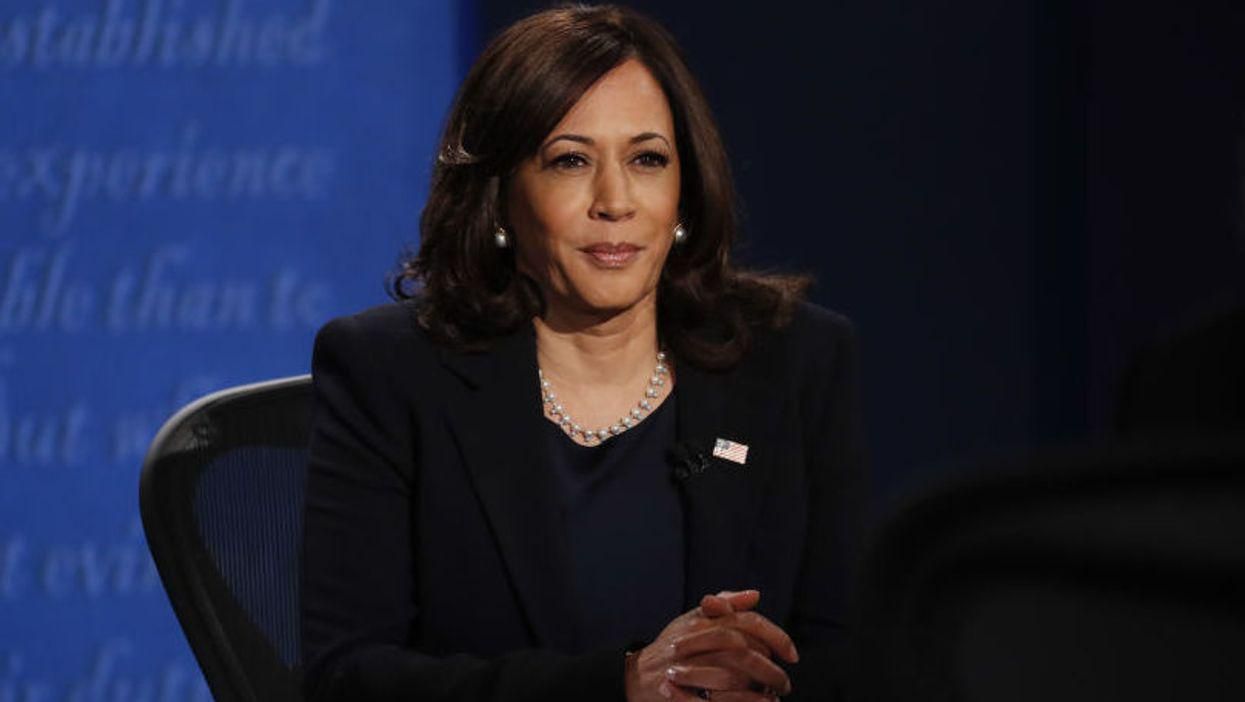
Critical swing voters in battleground state reveal why Kamala Harris helps Trump's re-election chances


When Joe Biden announced Sen. Kamala Harris as his vice presidential running mate, political experts predicted that Harris, being the first black female vice presidential nominee of a major political party, would boost Biden's standing with voters.

But selecting Harris, a progressive Democrat, may have actually harmed Biden's standing among swing voters in battleground states, according to a new focus group.

What are the details?

Following last week's vice presidential debate between Harris and Vice President Mike Pence, Axios conducted a focus group with Michigan voters who supported Barack Obama in 2012 but Donald Trump in 2016.

The majority of the swing voters said they would support Trump in this year's election because they believe Harris would eventually become president if Biden is elected.

"Biden's not going to make it four years, so Kamala Harris is going to be president and I have zero trust she can be president, so I'm just picking the lesser of two evils at this point," one voter, identified as Shelley D, said.

According to Axios, "everyone else in the group agreed" with Shelley D.

Other swing voters told Axios they felt "scared" over Harris' debate performance because she may help Biden win election, the voters said.

"I'm fearful of this woman because she knows how to strike chords with the people of America," a voter identified as Matt T said. "She's basically utilizing everything that has happened this year to attack the Trump campaign and she does it in such a way that she's making really strong points, but I don't think they're true. So she's coming across very powerful."

According to Axios, just two voters in the group of 13 will be voting for Biden — the other 11 will be sticking with Trump.

More from Axios:

These are some of the few voters for whom the vice-presidential pick has outsized importance in how they view the two tickets, and for now that's benefitting Trump.
...
While a focus group is not a statistically significant sample like a poll, the responses show how some voters are thinking and talking about the 2020 election in crucial states.

What do polls show?

According to the RealClearPolitics average of polling, Biden is leading Trump by almost 10% nationally.

Among battleground states — Florida, Michigan, Pennsylvania, Wisconsin, North Carolina, and Arizona — Biden leads by an average of 4.5%. He leads in each state, with Pennsylvania being the largest margin and North Carolina being the smallest.

‘I’m Worried He Will’: Trump Appears Poised To Win Obama Swing Counties North Of Detroit

In a state Trump won by a razor-thin margin in 2016, Michigan might be decided in a handful of counties just now emerging from months of pandemic lockdowns.

GOOD NEWS: Recent polls show strong gains for Trump among traditionally Democratic voters


On the radio program this week, Glenn Beck and Pat Gray discussed a series of recent polls that suggest presidential nominee Joe Biden's expected lead may be slipping with traditionally Democratic voters.

A new poll conducted by the Jewish Electorate Institute shows that two-thirds of Jewish voters still plan to vote for the Biden-Harris ticket in November. However, President Donald Trump's support within the Jewish community is also the highest among any Republican candidate in recent history.

In more bad news for Biden, a CNN poll (yes, CNN) released last month showed growing support for President Trump among black voters in swing states. Meanwhile, his support among Latino voters remains at roughly 33%.

"I don't think it's going to go the way the Democrats hope that it will," Glenn said of the election. "If you look at the groups that the Democrats have carefully fostered ... that's falling apart. If Donald Trump can grow that by 5%, and hurt the Democrats by 5% ... that alone could swing the election."

Watch the video below to catch more of the conversation:


Want more from Glenn Beck?

To enjoy more of Glenn's masterful storytelling, thought-provoking analysis and uncanny ability to make sense of the chaos, subscribe to BlazeTV — the largest multi-platform network of voices who love America, defend the Constitution and live the American dream.

In Wisconsin Campaign Stop, Mike Pence Says 2020 Is About Whether ‘America Remains America’

Only 50 days out from Election Day, Pence stopped in flyover country, noting 'Joe Biden has never called out his campaign staff or his running mate for raising money for bail for violent criminals.'