Elon Musk's next target? America's self-entitled phone companies.


America loves competition, except, apparently, when it comes to your phone bill. For years, the wireless market has been dominated by three Mafia-like fat cats: Verizon, AT&T, and T-Mobile. They compete for customers, of course. But Americans could be forgiven for wondering whether somebody forgot to invite a fourth player to the party. The monthly bills keep coming. The dead zones remain, and escaping one carrier often means signing up for another version of the same expensive headache.

Now, as the Washington Post recently reported, Elon Musk wants in. Through SpaceX, he's exploring ways to enter the $235 billion wireless market, potentially by acquiring Boost Mobile or using its network. His aim is to combine conventional mobile connectivity with Starlink satellites, challenging the way Americans have traditionally accessed wireless service.

Rural America has spent far too long paying full price for half-baked service.

It's an audacious undertaking, with enormous technical and commercial obstacles. But Musk loves a challenge. And the prospect of a serious new competitor should give America's established players something to sweat about.

The wireless cartel has operated like a medieval feudal system for two decades. Three lords divided the fiefdom, then charged the peasants $200 a month for four lines and provided customer service reps who sounded like they were reading scripts at gunpoint. You hand over a small fortune every thirty days. Yet the moment you step onto a rural highway or enter a basement grocery store, your $1,200 smartphone turns into a rather luxurious paperweight.

Dodging the opposition

The corporate titans prefer this arrangement. Musk approached Verizon, AT&T, and T-Mobile to buy wholesale access to their cellular networks. All three slammed the door in his face. Standard corporate paranoia drove the refusal. Nobody invites a sledgehammer into a glass house.

So Musk pivoted toward EchoStar, the corporate parent of Boost Mobile. Acquiring Boost would give SpaceX millions of existing subscribers overnight, along with valuable rights to use the airwaves. Boost currently leases network capacity from AT&T and T-Mobile. Buying Boost could give Musk a back door into the market, letting him sidestep the barriers established carriers put in his way.

RELATED: 'Defund Musk': Robert Reich calls for government takeover of SpaceX and Starlink — and Elon responds
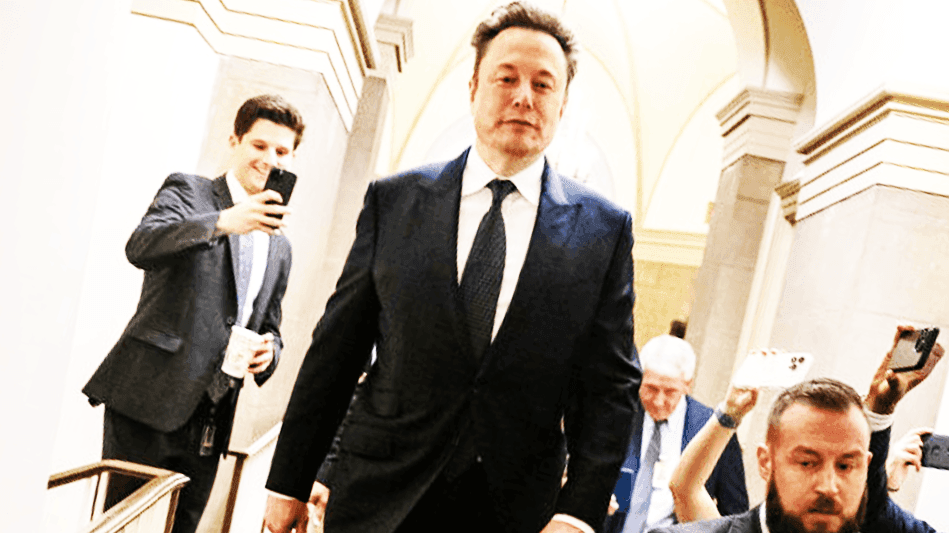
Samuel Corum/Bloomberg/Getty Images

To be clear, building a competitive nationwide terrestrial network requires years of hard graft and hundreds of billions of dollars. But Musk could skip the shovel work entirely. He already operates over 6,000 active Starlink satellites in low Earth orbit. He builds rockets in Texas, launches them from Florida, and controls the sky.

Traditional carriers build cell towers. They secure local zoning permits and pray a passing tornado doesn't knock out coverage for three counties. SpaceX hangs its cell towers in space. By bonding low Earth orbit satellites directly to mobile networks, Musk can route a signal anywhere the sun hits the soil.

The merger of orbital satellites and ground networks fundamentally alters the math for everyday Americans. Farmers operating combines in North Dakota could finally maintain high-speed connections across 4,000 acres of wheat. Long-haul truckers crossing remote stretches of Interstate 80 in Wyoming would no longer lose navigation maps mid-route. Emergency services operating in fire-consumed canyons could bypass incinerated ground cables entirely.

Rural America has spent far too long paying full price for half-baked service. City dwellers enjoy five distinct bands of high-speed coverage while ranching families in Montana pay identical rates for a single, dodgy signal bar. Musk’s hybrid model treats geography as an engineering nuisance, not an excuse for extortion.

A revolution in the making

National security demands this kind of structural redundancy. The defense establishment already understands this reality. The U.S. military increasingly depends on private space companies to keep communications secure, while traditional defense contractors can take years to deliver even basic equipment. Musk moves faster than federal procurement officers can write meeting agendas.

If America's first trillionaire's plan comes to fruition, the commercial fallout will hit home fast. The traditional carriers will fight this expansion in courtrooms, regulatory hearings, and corporate PR campaigns. They will claim satellite signals drop during heavy rainstorms. They will insist spectrum transfers threaten consumer safety. The unholy trinity can fight Musk all they want, but they can't easily stop Americans from wanting cheaper bills and better coverage.

When Tesla entered the automotive market in 2008, Detroit executives laughed off the idea of a Silicon Valley start-up manufacturing family cars. Tesla subsequently forced every major auto manufacturer on Earth to overhaul their entire production lines. When SpaceX launched its first commercial rockets, legacy aerospace contractors declared reusable boosters mathematically impossible. SpaceX now launches more tonnage into orbit than every other country combined.

The wireless market represents the next logical domino. Musk doesn't need to convert every smartphone user in North America to win this war. Stealing 10% of market share forces Verizon, AT&T, and T-Mobile to slash prices and actually repair dead zones. Healthy competition makes companies work for their money.

The American consumer wins the second a real fight breaks out. For 20 years, phone bills have acted like a mandatory utility tax administered by a corporate triad. Musk brings capital. He brings orbit-proven hardware and a total disregard for industry decorum. He has been written off many times before and has always come through. Only a fool would bet against him now.
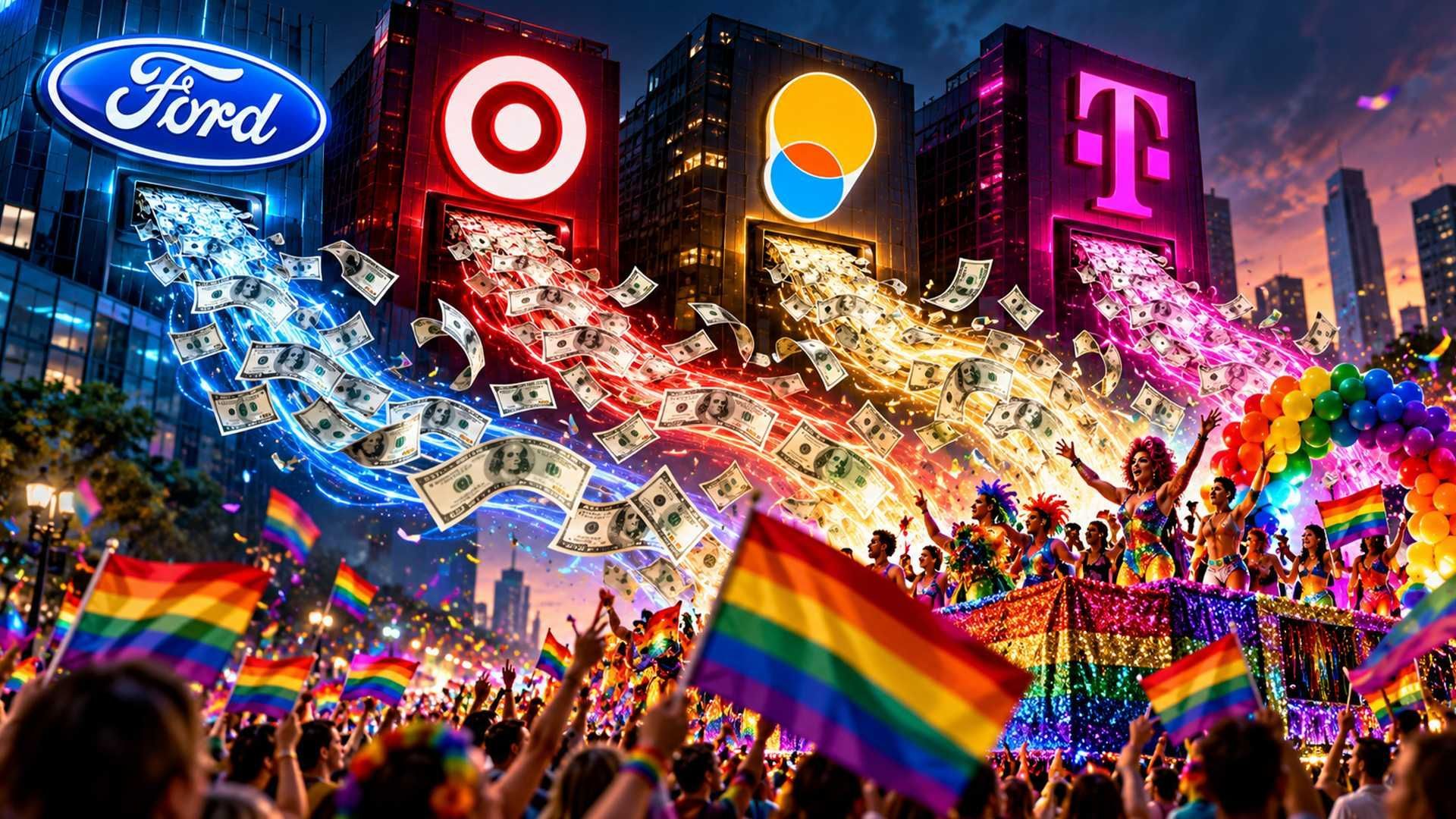
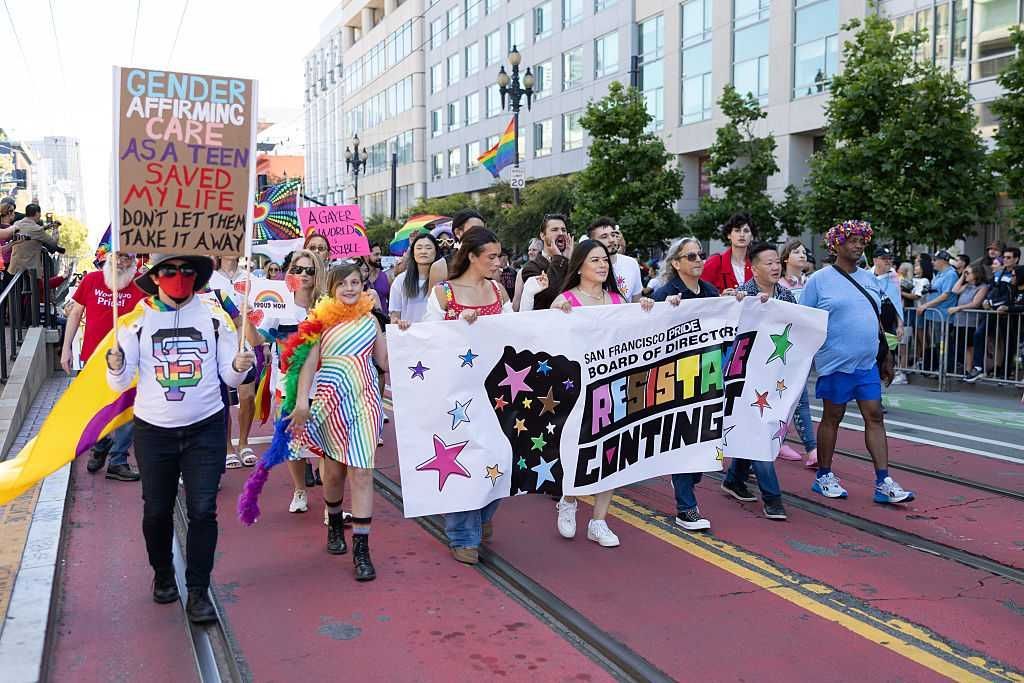
Smoke and mirrors? These big corporations are still shelling out for LGBT indoctrination


Some of the major corporations that once wrapped themselves in the LGBT flag and embraced racist DEI initiatives have in recent years signaled a change in tack.

It appears that this may have been a pump fake — that normalcy advocates may have been premature in celebrating the apparent return to sanity at Ford Motor Company, Molson Coors, Target, and T-Mobile.

'Companies should consider whether their support aligns with issues that unite rather than divide their customers, employees, and shareholders.'

The 1792 Exchange, a corporate bias watchdog seeking to restore political neutrality in the boardroom and to educate lawmakers about the dangers of woke corporate policies, has been tracking various businesses' DEI commitments, participation in the LGBTQ activist organization Human Rights Campaign's Corporate Equality Index, and their nonbusiness activities — particularly those with an ideological bent.

For example, Ford signaled in 2024 that it would be undergoing some reform on the woke front.

Ford CEO Jim Farley noted in an August 2024 memo obtained by normalcy advocate Robby Starbuck that the automotive company would: focus on taking care of its customers and employees as opposed to "publicly commenting on the polarizing issues of the day"; end its participation in the HRC's Corporate Equality Index; and ensure that its policies and practices "drive business results."

RELATED: Gay Atlantic writer whines to Bill Maher that LGBT extremism is blowing up support for homosexual 'marriage'

Miikka Skaffari/Getty Images

The watchdog also highlighted how:

  • T-Mobile announced in a July 2025 letter to the Federal Communications Commission that it was dissolving its DEI roles and corresponding initiatives and instead partnering with "third party suppliers, community groups, and other organizations ... to advance our core business objectives";
  • Target announced that it would cease participation in the Corporate Equality Index, "further evaluate corporate partnerships to ensure they are directly connected to [the company's] roadmap for growth," and end its DEI goals; and
  • Molson Coors signaled in September 2024 that it would cease participation in the CEI and end DEI-based training programs and donations to divisive events.

Allen Mendenhall, a senior adviser for the Heritage Foundation's American Investor Initiative, told the Daily Signal in June that these changes were part of a broader "market correction and a cultural correction."

"Businesses are increasingly rejecting pressure from activist investors and corporate bureaucracies in favor of listening to consumers and respecting longstanding moral and religious convictions," continued Mendenhall. "Top-down cultural engineering is losing its grip."

The 1792 Exchange pointed out a month ago that some of these supposedly reformed corporations haven't lost their woke reflexes.

Target, for instance, was listed this year as a platinum sponsor of New York City Pride, a supposed "carnival-style celebration for LGBTQIA+ youth, their families, and allies." The stated aim of this year's parade was to "empower and educate queer youth with a variety of queer- and gender-affirming resources and activities."

This included a political rally "to demand protections for trans and queer youth."

This year, Target was also listed as a sponsor on numerous other LGBT activist events, including Jersey Pride, LA! Pride in Los Angeles; Utah Pride in Salt Lake City; Pride Houston 365 in Texas; and San Francisco Pride.

Through its Vizzy Hard Seltzer brand, Molson Coors was named a "silver sponsor" of Jersey Pride, a "diamond partner" of Miami Beach Pride, and a presenting sponsor of Denver Pride, where anti-Immigration and Customs Enforcement signage was visible in the parade.

T-Mobile is also still backing LGBT activist events. T-Mobile Fiber is listed both as a gold-level sponsor of Phoenix Pride's Rainbows Festival and as a bronze-level sponsor of Capital City Pride in Des Moines, Iowa. Metro by T-Mobile is listed as a sponsor for this year's Philly Pride 365.

Children appear to have been present at these events despite the heavy sexual themes and imagery.

Ford, Molson Coors, Target, and T-Mobile did not respond to requests for comment from Blaze News by deadline.

The 1792 Exchange noted that "publicly traded companies have a fiduciary responsibility to create long-term value for shareholders while remaining consistent with their publicly stated commitments and corporate values. When engaging in charitable giving or corporate sponsorships, companies should consider whether their support aligns with issues that unite rather than divide their customers, employees, and shareholders."

Like Blaze News? Bypass the censors, sign up for our newsletters, and get stories like this direct to your inbox. Sign up here!

Another Cellular Provider Bends The Knee To Trump Admin, Cancels DEI Initiatives

T-Mobile agreed to kill off its Diversity, Equity and Inclusion (DEI) policies, joining Verizon in compliance with the Trump administration. Federal Communications Commission (FCC) Chairman Brendan Carr publicized a letter sent to the FCC on Wednesday. The filing announces that ‘T-Mobile will no longer have any individual roles or teams focused on DEI.” (RELATED: Trump Admin Ends Biden […]

Congressional Committee Wants Data FBI Claimed Was ‘Corrupted’ In Unsolved J6 Pipe Bomb Case

At minimum, the FBI should be able to articulate where its investigations led.
What we should all be asking ourselves after today's mysterious cellular outage


Many Americans across the country woke up on Thursday morning without cell service — but there’s still no explanation for what caused the outage.

The most affected were AT&T customers with 50,000 outages officially reported at 7 a.m. EST, but some Verizon and T-Mobile customers were affected as well.

Now, Americans are left wondering whether or not it was a solar flare or a massive cyberattack — especially considering just yesterday there was a cyber attack on the cellular systems in Israel.

This was a small taste of what life would be like after such an attack, but a bigger attack could have devastating effects.

“One Second After” author William Forstchen has been warning about this for years.

“If you saw the number of attacks, incoming attacks on our infrastructure, on our military, it’s unrelenting,” Forstchen tells Glenn Beck. “This is just a foretaste of the future,” adding that we should be prepared for a cyber attack.

“Cyber attacks could include our water system, our electrical grid,” Glenn says, asking Forstchen how widespread this could be.

“It could be targeted to a specific or in a general offensive, like what I would call a first strike scenario,” Forstchen says. “For example, take where you are, suppose water all across the board was shut down for 48 hours because that’s all electronically controlled.”

“Would be very bad within 24 to 48 hours,” he adds.

“If you lose electricity, that’s the fundamental building block,” he continues. “Then everything goes. Water, food, medical, all of it.”


Want more from Glenn Beck?

To enjoy more of Glenn’s masterful storytelling, thought-provoking analysis, and uncanny ability to make sense of the chaos, subscribe to BlazeTV — the largest multi-platform network of voices who love America, defend the Constitution, and live the American dream.

Americans across the country are experiencing drops in cell service, in some cases hindering 911 calls


Tens of thousands of Americans awoke Thursday morning to discover their cell phones were bereft of signal. In addition to being unable to touch base with friends, families, and coworkers, some users apparently were unable to hail 911.

While those affected by the cascading cellular service outages appear to be predominantly AT&T customers, clients of other service providers are reportedly experiencing issues.

Around 3 a.m., there was a spike in reports of AT&T outages on the website Downdetector. As of 9:02 a.m. ET, there were over 73,000 reporters of customers experiencing service issues.

While Verizon, T-Mobile and other providers similarly saw spikes, Downdetector indicated they were orders of magnitude smaller. Verizon and T-Mobile maintain that their networks were unaffected and operating normally.

A spokesman for T-Mobile told CBS News, "Downdetector is likely reflecting challenges our customers were having attempting to connect to users on other networks."

"Some customers experienced issues this morning when calling or texting with customers served by another carrier," Verizon said in a statement obtained by the New York Times. "We are continuing to monitor the situation."

While AT&T has confirmed that it is experiencing rampant outages, it failed to provide an explanation for why the failure occurred in the first place, reported CNN.

"Some of our customers are experiencing wireless service interruptions this morning. We are working urgently to restore service to them," the company said in a statement. "We encourage the use of Wi-Fi calling until service is restored."

A spokesman for the company indicated further that AT&T's first responder network nevertheless remains operational.

The outages prompted some speculation online about possibly wicked causes, such as an electromagnetic pulse strike or a cyberattack; however, an industry source who spoke to CNN under the condition of anonymity suggested the issue is likely linked to a process known as peering, whereby cellphone services pass off calls from one network to the next.

CNN noted that the company was experiencing sporadic outages earlier this week, including a drop in 911 service in various southeastern states.

Blaze News reached out to AT&T for comment on the extent and cause of the outages as well as a projected timeline on a remedy but did not immediately receive a reply.

Various municipalities and local authorities across the country have confirmed the outages, in some cases highlighting corresponding difficulties reaching first responders by phone.

The City of Upper Arlington in Ohio noted that outages were affecting fire alarms, such that first responders "may not be notified of an activation." The city advised residents to follow up alarms with a 911 call "for the foreseeable future."

The San Francisco Fire Department noted that while the San Francisco 911 center was still operational, 911 calls had reportedly been impacted for some customers.

Various other official channels, including the X accounts for the City of Little Rock, Arkansas, the Rockville City Police Department of Maryland, and Orlando Police Department in Florida noted similar difficulties. A common recommendation: Use family or friends as proxies for 911 calls or call from a landline.

Like Blaze News? Bypass the censors, sign up for our newsletters, and get stories like this direct to your inbox. Sign up here!

FACT CHECK: No, T-Mobile Will Not Be Fining Customers For ‘Harmful’ Texts

The fines apply only to third-party messaging accounts who send illegal and illicit content.