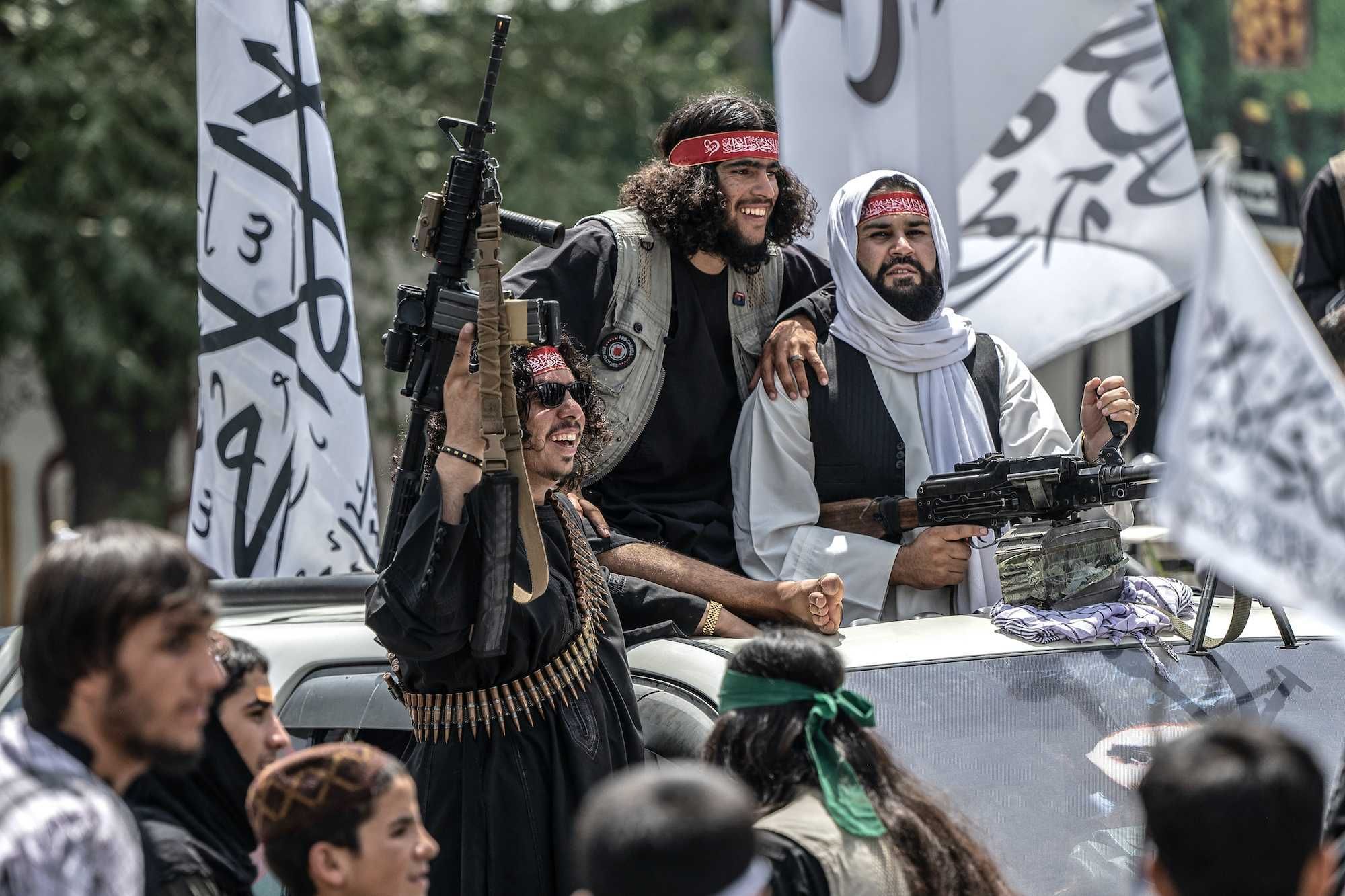
UN expresses 'grave concern' over horrific rule on child marriage from Taliban regime in Afghanistan


The Taliban government in Afghanistan issued a rule on separation of child brides in marriage, and the United Nations responded by expressing its "grave concern."

Afghanistan's justice ministry issued a decree containing several provisions regarding the lawful separation of a married couple but included an order pertaining to girls that had reached puberty.

'This situation reinforces structural discrimination and limits women's autonomy in matters fundamental to their dignity, safety, and well-being.'

The United Nations Assistance Mission in Afghanistan said the rules allowed men to interpret the silence of a girl reaching puberty as consent for marriage. Another section implied that child marriage was permitted, according to the agency.

"This undermines the principle of free and full consent and failing to safeguard the best interests of the child," reads a statement from the organization.

The rules also say that a marriage can be declared invalid if a father or grandfather gives a minor girl or boy without any dowry or sufficient dowry.

The Taliban decree is "part of a broader and deeply concerning trajectory in which the rights of Afghan women and girls are being eroded," said U.N. Special Representative Georgette Gagnon.

The agency said the rules allow women to seek divorce from men but make it far easier to men to seek divorce.

"While men retain the unilateral right to divorce, women must pursue complex and restrictive judicial avenues to separate from a spouse," UNAMA said. "This situation reinforces structural discrimination and limits women's autonomy in matters fundamental to their dignity, safety, and well-being."

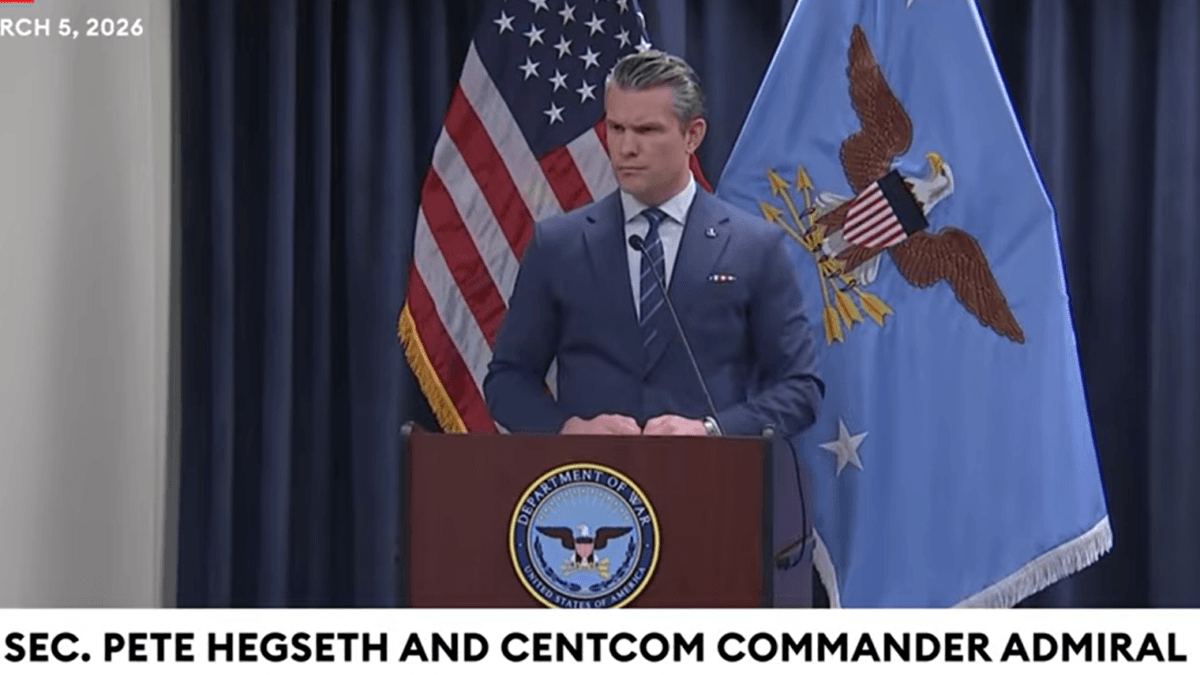
RELATED: Pete Hegseth orders investigation into 'catastrophic' withdrawal from Afghanistan under Biden

A spokesperson for the Afghan regime said "those who contradict the religion of Islam are not new, and we should not pay attention to them."

The Taliban seized power in Afghanistan after former President Joe Biden ordered U.S. military forces out of the nation in 2021. The government almost immediately fell into terrorist hands, and they were able to seize massive amounts of abandoned military assets.

Like Blaze News? Bypass the censors, sign up for our newsletters, and get stories like this direct to your inbox. Sign up here!

The case for banning the burqa


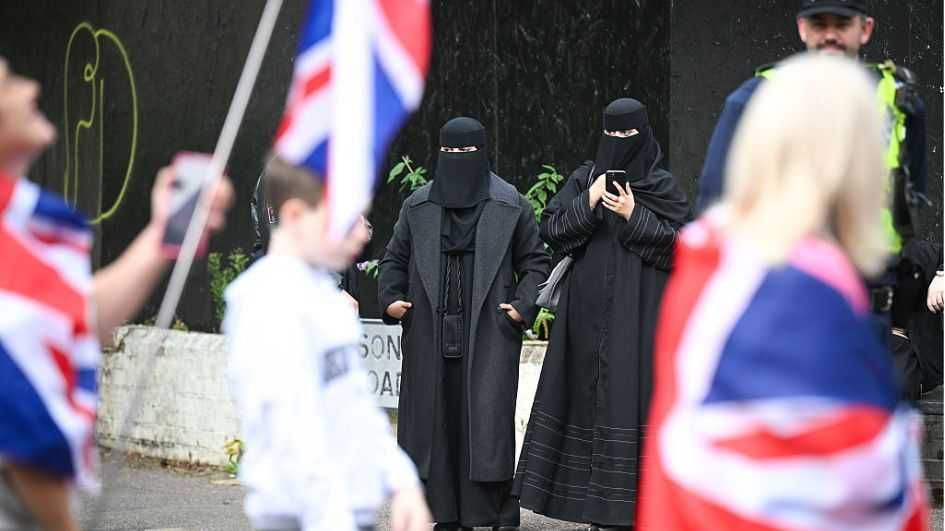
Kemi Badenoch — Conservative Party leader, survivor of the 2024 electoral rout, and arguably the sharpest political mind left in British conservatism — is considering a ban on the burqa as part of a broader review of Islamist extremism.

She should stop considering and start legislating.

'Freedom' that produces permanent public anonymity for one group, in spaces where no one else enjoys it, is not freedom’s finest hour.

The case does not begin with Badenoch, and it does not end in Westminster. Across six European democracies — Austria, Belgium, France, the Netherlands, Portugal, and Switzerland — full or partial bans are already law.

Their constitutions survive. Their Muslim populations remain. The predicted social cataclysm never arrived.

What arrived instead was policy — enforced and producing measurable outcomes.

Facing facts

The deeper question is why the rest of the Western world has been so slow, so squeamish, to reckon with what the burqa actually does in public space.

Full facial concealment — not the hijab, not the headscarf, but the garment that renders a woman’s face entirely invisible — removes her from the basic grammar of human interaction. Faces carry trust, intention, fear, and consent. Humans have read them for a hundred thousand years, and no amount of progressive goodwill has updated the firmware.

When you cannot see someone’s face, you cannot treat the person as a fully present participant in civic life. You can only treat the person as a shape moving through it.

Free societies depend on legibility among their members. Not total transparency — nobody is proposing to ban sunglasses or launch inquiries into wide-brimmed hats — but the basic mutual visibility that public life requires.

Courts require faces. Banks require faces. Polling stations, airports, and schools all require faces. Nobody marches on these institutions screaming tyranny.

Anonymity in shared space has always carried costs, and open societies have never been shy about saying so.

The burqa asks for a permanent exemption from an obligation everyone else accepts without drama.

Enforced invisibility

That exemption makes a certain grim sense in Afghanistan, where the Taliban reinstated the burqa as compulsory law in 2022 — a country where female faces are treated as a political problem requiring a legislative solution. In that context, the garment is a uniform of erasure, imposed top-down by men who find women’s faces inconvenient.

Which makes its romantic defense in the West, as an expression of individual freedom, not just ironic but absurd. The symbol of enforced invisibility does not become an emblem of liberation simply by crossing a border.

The First Amendment crowd — loudest in America, with philosophical cousins across the Atlantic — will say that mandating what a woman removes from her face differs not at all from mandating what she puts on it.

The argument does not survive contact with consistency.

Masks off

Masks at protests are already banned in multiple jurisdictions. Religious exemptions from generally applicable laws have limits even under the most robust free-exercise jurisprudence. The Supreme Court has never held that faith confers a blanket right to opt out of civic norms that apply to everyone else.

Employment Division v. Smith settled that much in 1990, and the decades since have not reversed the principle that neutral, generally applicable laws can coexist with religious freedom without apology.

A ban on full facial concealment in public spaces would likely qualify.

“Freedom” that produces permanent public anonymity for one group, in spaces where no one else enjoys it, is not freedom’s finest hour.

Female agency is the argument’s most seductive register. She chooses this. She owns it. Perhaps. But agency exercised under doctrinal pressure, familial expectation, or community sanction has a habit of resembling choice from a distance.

RELATED: Syria's Bloody Crescent

Mike Mercury

Feminist exception

Western feminism spent decades insisting that personal preference does not close the conversation when that preference is shaped by systems that constrain what preference can look like. That reasoning dismantled arguments about beauty standards and industries far less coercive than religious orthodoxy.

Applied here — to a garment entire governments have made compulsory — the same movement suddenly finds the question too delicate to pursue.

None of this requires hostility to Islam, to faith, or to religious expression broadly understood.

The headscarf is not the burqa. Private devotion is not public concealment.

People are entitled to their beliefs, entitled to wear almost anything behind their own doors, entitled to worship as conscience directs.

But public space is shared space, and shared space carries shared obligations.

Turning your face away from those obligations — permanently, behind fabric, as a matter of principle — is less religious liberty than a form of civic withdrawal.

There is a meaningful distance between religious expression and civic withdrawal. The burqa travels the full length of it.

Open society? Closed case

British polling puts support for a ban at 56%. For once, democratic instinct and reasoned argument are pulling in the same direction — not always a luxury policymakers enjoy.

In America, a federal ban would face genuine First Amendment scrutiny. The constitutional architecture differs, the judicial culture differs, the politics differ enormously.

But “legally complicated” and “morally unclear” are not synonyms.

Many Americans who correctly distrust government overreach have no difficulty concluding that facial concealment in courtrooms, classrooms, and government offices warrants regulation.

The legal pathway varies by country. The underlying social logic does not.

The burqa is not compatible with open societies. The only remaining question is how long open societies intend to pretend otherwise.
American hostage to finally return home after Taliban captivity


An American hostage has been released by the Taliban after more than a year in custody.

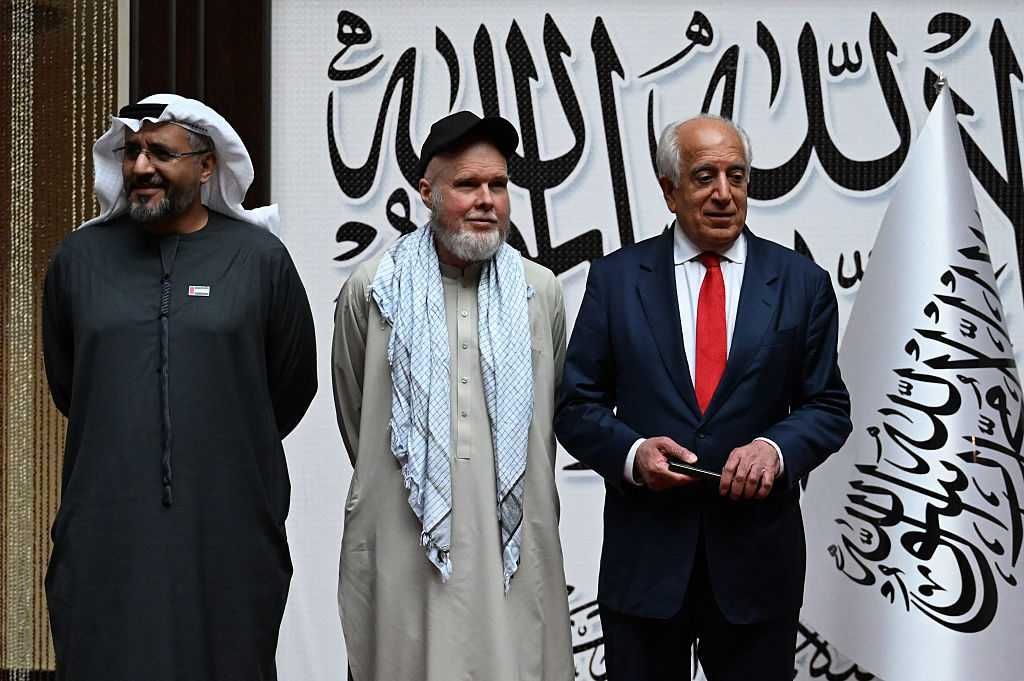
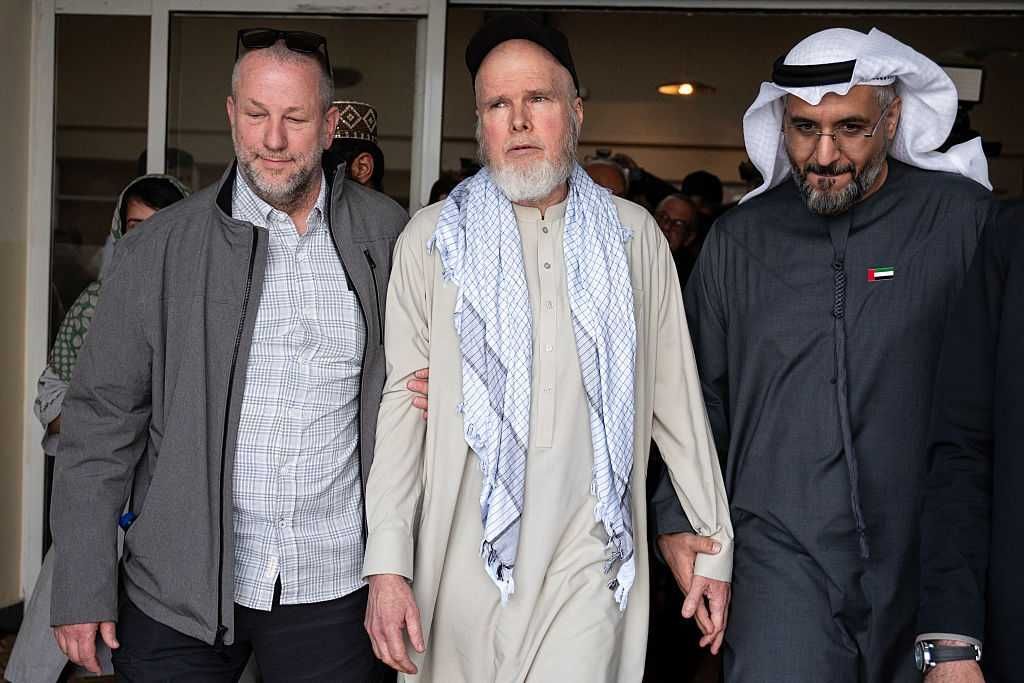
Fox News reported Tuesday that Dennis Coyle, an American academic who spent nearly two decades in Afghanistan before being detained by the Taliban without charges, has finally been released after more than a year in near-solitary confinement.

'Today, Dennis is on his way home.'

Coyle, 64, was taken from his home in Kabul in January 2025.

"The United States welcomes the release of American citizen Dennis Coyle, who was wrongfully detained in Afghanistan for more than a year," Special Envoy for Hostage Affairs Adam Boehler said in a statement to Fox News.

RELATED: Suspect in National Guard shooting was part of CIA-backed unit that hunted down Taliban commanders

Photo by Wakil KOHSAR / AFP via Getty Images
Earlier this month, Secretary of State Marco Rubio designated Afghanistan as a state sponsor of wrongful detention, writing on social media, "The Taliban continue to use terrorist tactics to seek policy concessions, but it won't work under this administration. The Taliban must release Dennis Coyle, Mahmood Habibi, and all Americans unjustly detained in Afghanistan."

On Tuesday, Rubio celebrated Coyle's release as "a positive step towards ending the practice of hostage diplomacy."

"Earlier this month, I met Molly, Amy, and Patti as they asked for help freeing their brother Dennis Coyle from detention in Afghanistan. Today, Dennis is on his way home. We thank the UAE and Qatar for their support," Rubio said on social media.

Coyle's family told Fox News that Coyle had been working legally as an academic researcher to support language communities in Afghanistan.

He was seized on January 27, 2025, just days after another American, Ryan Corbett, was released at the start of President Trump's second term, CBS News reported on the anniversary of Coyle's detention.

Afghanistan's Ministry of Foreign Affairs announced Coyle's release on social media. A section of the translated post on X reads: "[The release] has further strengthened the atmosphere of trust between the two countries. Likewise, it expresses the hope that both countries will, in the future, find ways to resolve the remaining issues through mutual understanding and constructive dialogue."

Habibi's status is unclear. The U.S. government, including the House Foreign Affairs Committee, claims he was taken hostage by the Taliban in August 2022. The State Department has offered a reward of up to $5 million for information leading to his whereabouts.

CBS News reported in January that the Taliban denies that they arrested him.

Like Blaze News? Bypass the censors, sign up for our newsletters, and get stories like this direct to your inbox. Sign up here!

No Matter How The Iran War Ends, We Absolutely Cannot Take Any Refugees

Allowing zero refugees to resettle on American soil should be the absolute minimum requirement for any U.S. military action in the Middle East.
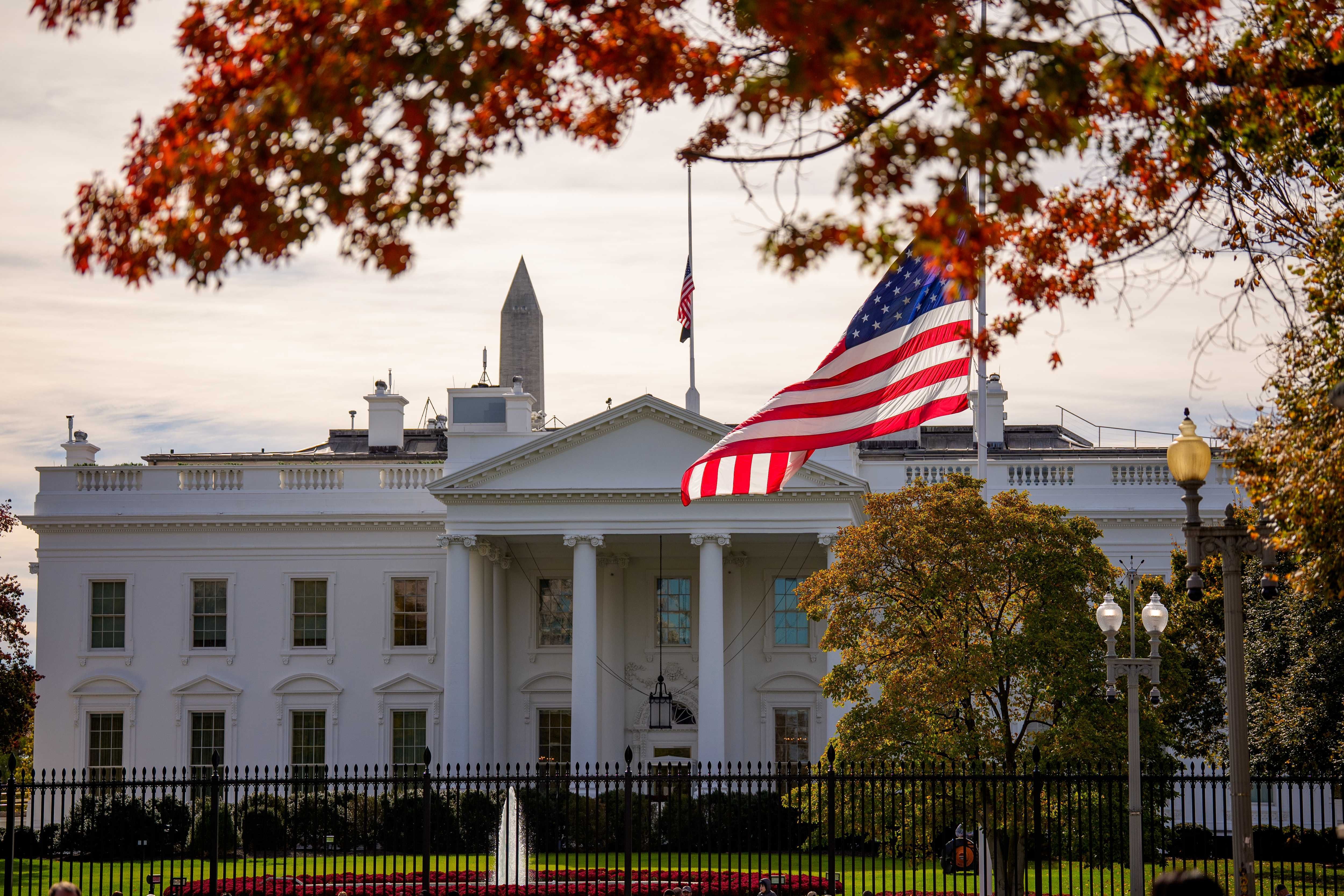
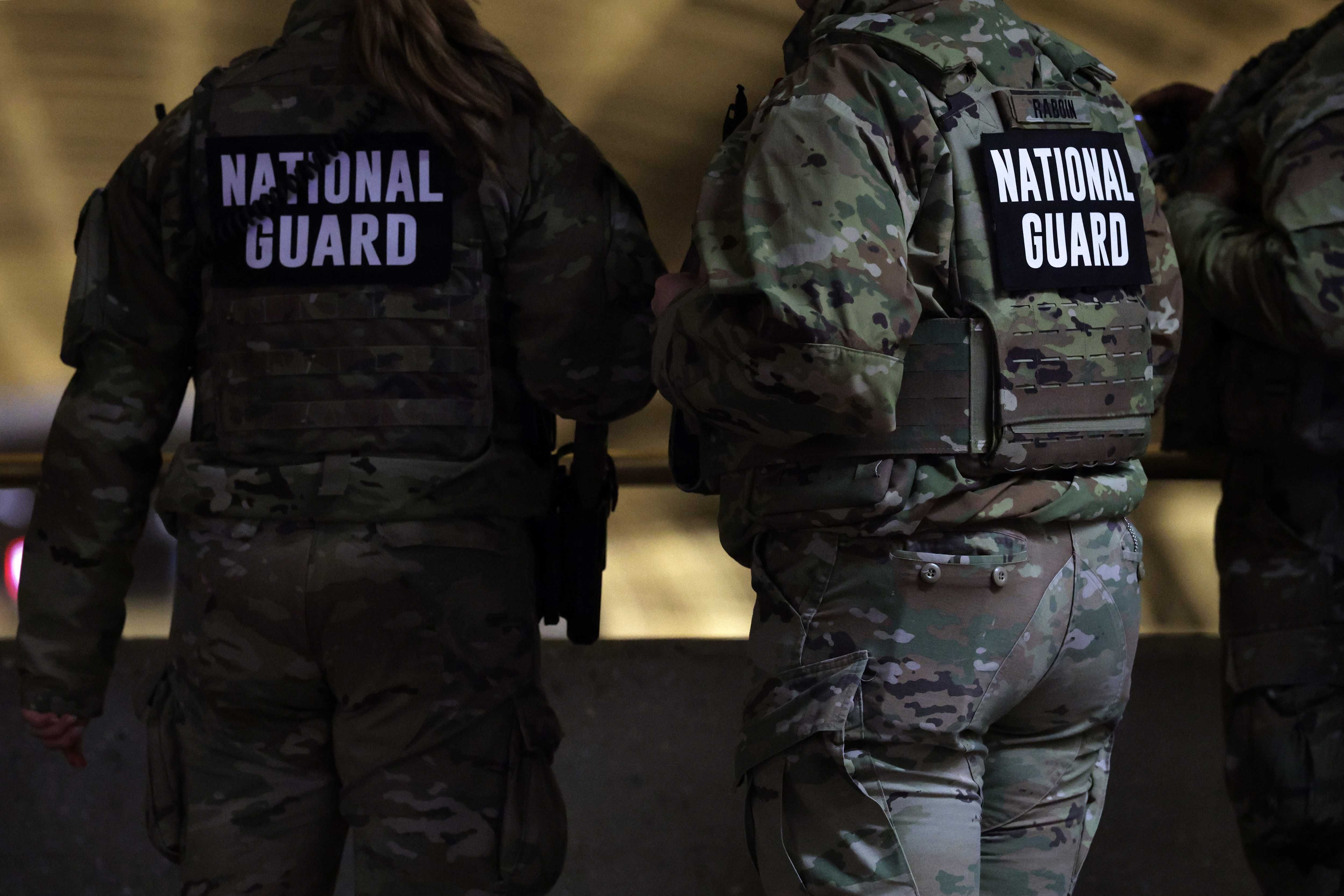
White House makes touching gesture to honor assassinated National Guard member, allegedly by CIA-linked Afghan


President Donald Trump's administration is honoring fallen National Guard member Spc. Sarah Beckstrom in the wake of her horrific murder just yards away from the White House grounds.

The White House lowered all flags on the grounds to half-staff on Thursday after Beckstrom succumbed to her wounds on November 27, Thanksgiving Day. The suspect is a CIA-linked Afghan national who allegedly shot her and fellow guardsman Staff Sgt. Andrew Wolfe in Washington, D.C, the day prior.

Beckstrom was only 20 years old.

'The Biden administration justified bringing the alleged shooter to the United States.'

The proclamation from Trump's administration extended the honor to "all public buildings and grounds, at all military posts and naval stations, and on all naval vessels of the Federal Government in the District of Columbia and throughout the United States and its Territories and possessions until sunset, December 4, 2025."

The flags will also be lowered at American embassies, legations, consular offices, and military facilities across the world.

RELATED: Trump to 'permanently pause' migration from third-world backwaters in wake of National Guard member's grisly murder

Flags at the White House are lowered to half-staff in memory of Army Specialist Sarah Beckstrom.

May God bless her family, our National Guard heroes, and the United States of America. 🙏🇺🇸 pic.twitter.com/OyOGMc0dv3
— Rapid Response 47 (@RapidResponse47) December 4, 2025
Twenty-nine-year-old Rahmanullah Lakanwal, who was officially charged with Beckstrom's murder, also allegedly ambushed 24-year-old Wolfe, who is miraculously expected to recover.
Lakanwal first came to the United States under President Joe Biden's administration under the program Operation Allies Welcome following the disastrous withdrawal from Afghanistan in 2021. Lakanwal was also a member of a CIA-backed military operation to hunt down Taliban commanders.

Photo by Alex Wong/Getty Images

"In the wake of the disastrous Biden withdrawal from Afghanistan, the Biden administration justified bringing the alleged shooter to the United States in September 2021 due to his prior work with the U.S. government, including CIA, as a member of a partner force in Kandahar, which ended shortly following the chaotic evacuation," CIA Director John Ratcliffe said in a statement to Fox News Digital.

Like Blaze News? Bypass the censors, sign up for our newsletters, and get stories like this direct to your inbox. Sign up here!

Taliban accused of shutting off internet to 'prevent immorality': 'An alternative will be built'


The Taliban has denied shutting down its tech sectors after residents went 48 hours without cellphone or internet service.

The largest phone service providers, the foreign-owned Roshan and Etisalat, were restored on Wednesday afternoon after internet, satellite television broadcasts, and even flight operations were disrupted.

'This measure was taken to prevent immorality.'

According to the Independent, not only were at least five flights at Kabul airport canceled, but banking operations were also affected during the shutdown.

The reports of a shutdown started with an X post on Monday by NetBlocks, which wrote that Afghanistan is "now in the midst of a total internet blackout as Taliban authorities move to implement morality measures, with multiple networks disconnected through the morning in a stepwise manner; telephone services are currently also impacted."

When asked, the Taliban had a different story. The ruling terrorists said the internet blackout was simply a case of "decaying fiber-optic infrastructure" and any inference that it was part of a ban were just "rumors."

According to the Taliban, the regime was just replacing the broadband internet infrastructure, which caused interruptions in service.

What paints the claim with uncertainty, however, is the fact that the Taliban openly cited morality as a reason to cut off internet access to residents just a few weeks prior.

RELATED: Trump reveals why the US is trying to get back Bagram Air Base

Photo by WAKIL KOHSAR/AFP via Getty Images

In mid-September, outlets reported that the Taliban banned fiber-optic internet in the Northern Afghan province of Balkh.

The province, which sits on the southern border of Uzbekistan, left government offices, private residences, and public institutions without Wi-Fi, all in the name of morality.

"This measure was taken to prevent immorality, and an alternative will be built within the country for necessities," said Haji Attaullah Zaid, a provincial government spokesman, according to Gulf Today.

The spokesman said there was a "complete ban" in the province by order of Hibatullah Akhundzada, the leader of the Taliban. No reason was given as to why only Balkh was cut off from the world wide web.

RELATED: State Department isn't buying ProPublica's sob story about Taliban alumnus whose funding was exposed by DOGE

Photo by Haroon Sabawoon/Anadolu via Getty Images
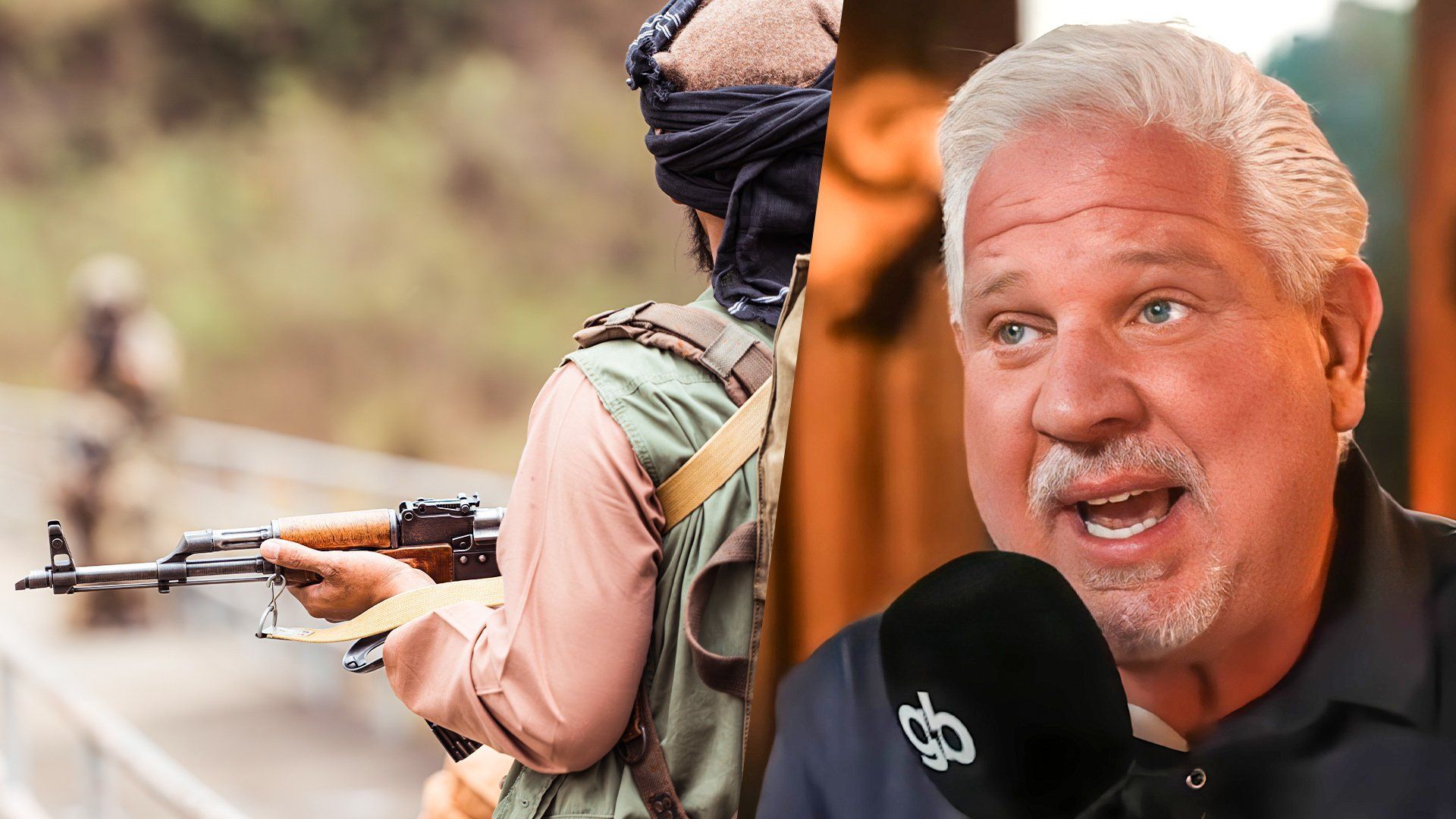
During the shutdowns, the BBC ran multiple stories about Afghan women being cut off from online learning, their only option for advanced knowledge since they are banned from receiving formal education after the age of 12.

The Muslim regime has also removed any books written by women from its universities, which, according to the BBC, was part of a ban on teaching about human rights and sexual harassment.

Approximately 140 books were allegedly found to be of "concern" to the Taliban, which found them to be "anti-Sharia" and violating "Taliban policies."

Like Blaze News? Bypass the censors, sign up for our newsletters, and get stories like this direct to your inbox. Sign up here!

Who Remembers Afghanistan?

The Taliban rose to power in Afghanistan in the 1990s. It achieved international notoriety for hosting al Qaeda through the September 11, 2001, attacks. These zealous Islamists were toppled from power by U.S. forces and our Afghan allies shortly after those attacks. But the group fought back for two decades. Its tenacity paid dividends. The United States withdrew in ignominious defeat in 2021. Jon Lee Anderson documented much of this, covering the rise, fall, and rise of the Taliban for the New Yorker. His new book is a patchwork of republished essays he penned during this tumultuous period. His travels took him to the dustiest corners of Afghanistan. He traversed the poppy fields that fueled Afghanistan's opium export. He sat with hardened fanatics who could barely disguise their disdain for him or the country of his origin. He interviewed key stakeholders in Kabul. And he embedded with U.S. forces in dangerous places like the notorious Khost-Gardez Highway. As a student of the jihadist movement who never found occasion to visit Afghanistan, I distinctly recall reading Anderson's work with no small amount of awe and admiration. Anderson risked life and limb to cover the war that, at the time, felt like a hugely consequential test for the U.S.-led world order.

The post Who Remembers Afghanistan? appeared first on .

Qatar’s Double-Sided Diplomacy Crumbles in Israeli Airstrike

The Israeli strike in Qatar on Tuesday sent a shockwave rippling far beyond the Middle East. Qatar’s neighbors and several European states rushed to condemn the bombing. Donald Trump was more conflicted, stating, “Unilaterally bombing inside Qatar, a Sovereign Nation and close Ally of the United States … does not advance Israel or America’s goals. However, eliminating Hamas, who have profited off the misery of those living in Gaza, is a worthy goal.” The United States ultimately signed off on the U.N. Security Council statement that "expressed their condemnation of the recent strikes in Doha" and "underscored that releasing the hostages, including those killed by Hamas, and ending the war and suffering in Gaza must remain our top priority."

The post Qatar’s Double-Sided Diplomacy Crumbles in Israeli Airstrike appeared first on .

The WILDEST deep-state story the mainstream media won’t tell you


On paper, the U.S. Institute of Peace does exactly what its name suggests: It promotes peace and conflict resolution in global conflict zones.

But dig a little deeper into its operations, and it becomes clear that the quasi-governmental, quasi-private agency is a deep-state snake pit. According to newly appointed acting President Darren Beattie, the USIP pushed to restore the opium trade in Taliban-run Afghanistan, had former Taliban member Mohammad Halimi on its payroll, and attempted to destroy evidence during a chaotic takeover by the Department of Government Efficiency.

Beattie recently joined Glenn on “The Glenn Beck Program” to share the shocking details.

When the DOGE infiltrated the USIP in March of this year, the agency erupted into chaos.

“They barricaded themselves in the offices. They sabotaged the physical infrastructure of the building. There were reports of there being loaded guns within offices. There was one hostage situation where they held a security guard under basically kind of a false imprisonment-type situation,” says Beattie.

“In the course of all of that, they tried to delete a terabyte of data, of accounting information that would indicate what kind of stuff they were up to, what kind of people they were paying.”

Thankfully, the DOGE was still able to uncover a major scandal: “One of the people on their payroll was this curious figure who had a prominent role in the Taliban government,” says Beattie, referring to Halimi.

On top of that, the DOGE discovered that “that one of the U.S. Institute of Peace's main policy agendas was basically lamenting the fact that the opium trade had dissipated under Taliban leadership.”

“They had multiple reports coming out basically saying 'this is horrible that the opium trade has diminished under the Taliban. We need to find some way to restore it,'” says Beattie.

When ProPublica got hold of Halimi’s story, it published a twisted piece titled “DOGE Targeted Him on Social Media. Then the Taliban Took His Family,” in which authors Avi Asher-Schapiro and Christopher Bing argued that Halimi was an “exiled Afghan scholar” victimized by Elon Musk and the DOGE, alleging that the payments he received from USIP were for legitimate work.

“I'm not an expert on this particular person's history, but what's very clear is he was a former Taliban guy, and he was probably one of these people who was playing all sides,” says Beattie.

He points out that the USIP’s hostile behavior upon the DOGE’s arrival stands in stark contrast to ProPublica’s narrative. If the payments were legitimate and Halimi had nothing to hide, then why the scrambling to delete data?

“This is the real deep-state stuff that I think bothers people so much,” says Glenn. “We expect our CIA to do stuff … but when it's in the State Department, when every department is pushing out money to NGOs to overthrow governments and everything else, it's out of control.”

To hear more details from the story, watch the video above.

Want more from Glenn Beck?

To enjoy more of Glenn’s masterful storytelling, thought-provoking analysis, and uncanny ability to make sense of the chaos, subscribe to BlazeTV — the largest multi-platform network of voices who love America, defend the Constitution, and live the American dream.

Trump, Gold Star families commemorate Abbey Gate tragedy: 'One of the darkest days'


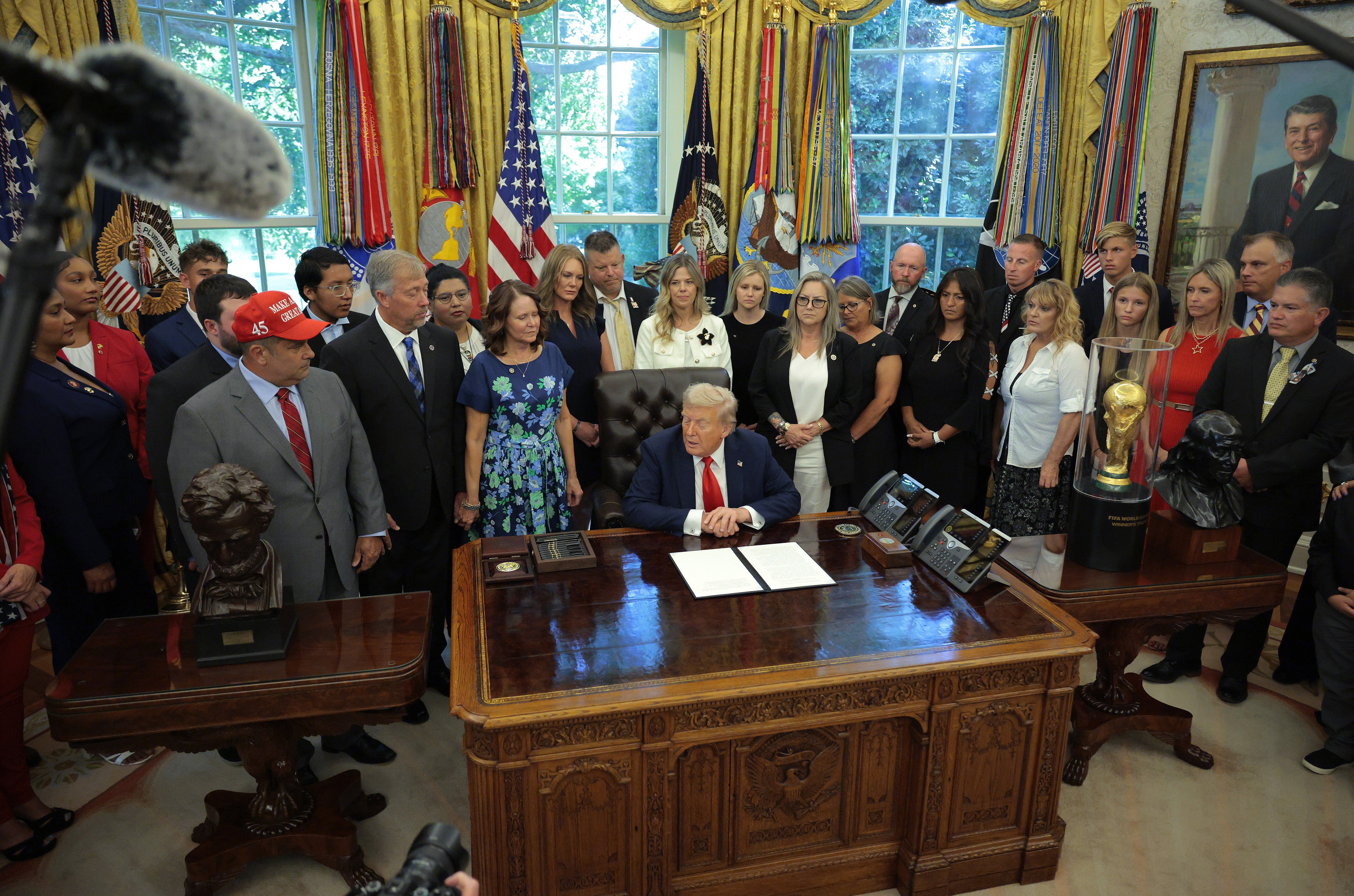
President Donald Trump honored the fallen soldiers from the Abbey Gate attack of 2021, commemorating their service and bravery alongside the Gold Star families.

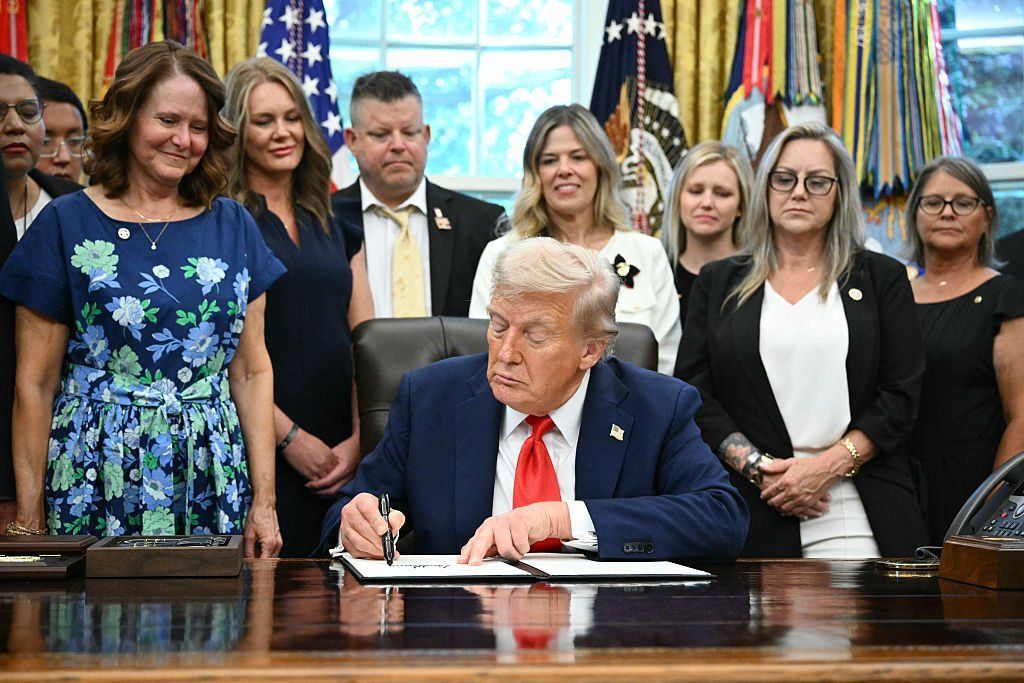
On Monday, Trump signed a proclamation on the fourth anniversary of the attack when terrorists carried out a suicide bombing, killing 13 service members at the airport in Kabul, Afghanistan. The proclamation called the bombing "one of the darkest days in our Nation's history," arguing that former President Joe Biden's botched withdrawal from the region only "empowered" the terrorists to attack.

'One of the most shameful and heartbreaking moments in our Nation's collective memory.'

"As our Nation remembers this atrocious attack, we honor the memory of every brave warrior who made the ultimate sacrifice for our country," the proclamation reads.

"We join in grief with the families who senselessly lost a loved one, and we renew our solemn pledge to our 13 fallen patriots — we will never forget you; we will never forsake you; and your memory will live on forever."

RELATED: Trump makes a bold push for global competitors to abandon nukes: 'The power is too great'

Photo by Chip Somodevilla/Getty Images

The proclamation went on to criticize Biden's lack of leadership that led up to the attack. Biden first began to withdraw from Afghanistan in July 2021 but failed to alert Afghan National Defense and Security Forces, leaving many service members defenseless and empowering the Taliban to free "thousands of bloodthirsty terrorists and criminals" from Bagram prison.

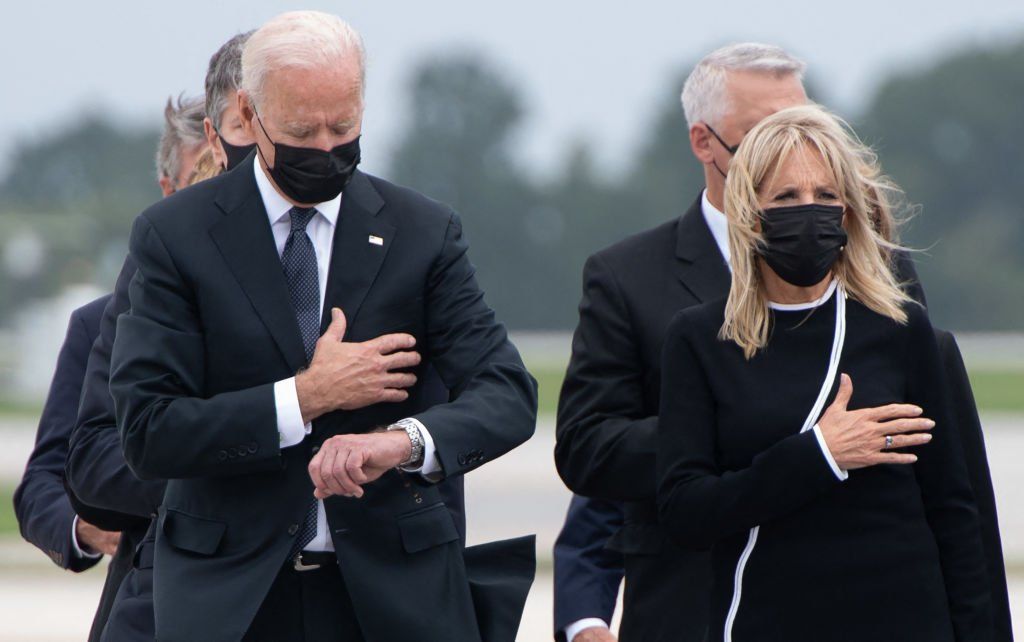
One of those prisoners who was set free went on to detonate a suicide bomb at the airport in Kabul, killing 13 American service members, wounding 45, and injuring over 160 civilians. The tragedy led to one of Biden's most notorious political blunders when he checked his watch while the fallen soldiers were returned to American soil.

"In what will be remembered as one of the most shameful and heartbreaking moments in our Nation's collective memory, Joe Biden checked his watch — and time stood still — as a Sailor, Soldier, and 11 Marines returned home in flag-draped coffins, solemnly escorted by their brothers and sisters in arms."

RELATED: The brutal reality Democrats can't ignore

Photo by SAUL LOEB/AFP via Getty Images

"We're so proud of you. We're so proud of your loved ones for giving their lives for our country," Vice President JD Vance told Gold Star families in the Oval Office on Monday.

"The fact that the president of the United States lost your loved ones through incompetence but never acknowledged it ... we correct that wrong today."

Like Blaze News? Bypass the censors, sign up for our newsletters, and get stories like this direct to your inbox. Sign up here!