'Minnesota was big but California is even bigger': Nick Shirley uncovers staggering alleged fraud right under Newsom's nose


Journalist Nick Shirley uncovered more than $170 million in alleged day-care and hospice fraud in California, surpassing the scandal he previously exposed in Minnesota.

On Monday, Shirley shared a 40-minute video featuring him and his team confronting alleged fraudsters living in luxury at the expense of American taxpayers.

'It's like somebody took a motel building and turned it into a hundred fraudulent organizations.'

"Here is the full 40 minutes of my crew and I exposing California fraud, Minnesota was big but California is even bigger," Shirley wrote.

"We ALL work way too hard and pay too much in taxes for this to be happening. These fraudsters have been able to defraud American taxpayers for years without any pushback from the public and politicians," he continued. "It is time to EXPOSE IT ALL and end America's fraud crisis."

In the video, Shirley explained that California's version of Medicare, Medi-Cal, has more than doubled from $108 billion in fiscal year 2022 to a proposed $222 billion in fiscal year 2026.

"One out of every 10 dollars of home health care in America is spent in Los Angeles," Shirley stated. "It is estimated that the fraud in California could be in the hundreds of billions of dollars."

Shirley and his crew stopped at several claimed day-care locations, including some homes in residential areas, that seemed to have no children present. In one instance, the team visited a supposed day care in an apartment complex, where they found two young children playing outside. The children informed them that no adults were present.

RELATED: Mike Lee reveals the real victims of Somali fraud: 'It is not the rich people who suffer'

Simone Lueck/Bloomberg via Getty Images

"The crazy thing is California allocates $6 billion to child-care and day-care facilities just like these, and there are over 39,000 facilities in the state," Shirley said.

Shirley and his team also visited alleged hospice centers receiving millions of dollars in taxpayer funds. He explained that two of the facilities charged roughly $6,000 per beneficiary.

"It looks like there's about 15 more hospice centers inside this one plaza we're going to right now," Shirley said.

He noted that some facilities had not even registered with the Centers for Medicare & Medicaid Services, suggesting they may be shell companies.

"It's rumored that these are Armenian-Russian gangs," Shirley said.

RELATED: Death threats, doxxing, and empty Dem seats: The high cost of Nick Shirley's fight against Minnesota welfare fraud

PASCAL POCHARD-CASABIANCA/AFP/Getty Images

One of the hospice locations Shirley visited reportedly received roughly $1.3 million. However, the location was empty, with no employees or furniture inside.

"Not only are these shell companies, these are shell buildings," an individual on Shirley's team stated. "It's like somebody took a motel building and turned it into a hundred fraudulent organizations."

Shirley highlighted the luxury vehicles in the parking lot, including Mercedes, Teslas, and BMWs.

Shirley explained that fraudulent hospices collect taxpayer funds by obtaining Medicare beneficiary numbers from individuals and enrolling them in care without their knowledge.

"Must be very lucrative, because a lot of these businesses, these doors right here have nothing on them; all the blinds are turned out," he said. "This is what you call welfare maxxing."

Like Blaze News? Bypass the censors, sign up for our newsletters, and get stories like this direct to your inbox. Sign up here!

How the laptop revolution destroyed public education


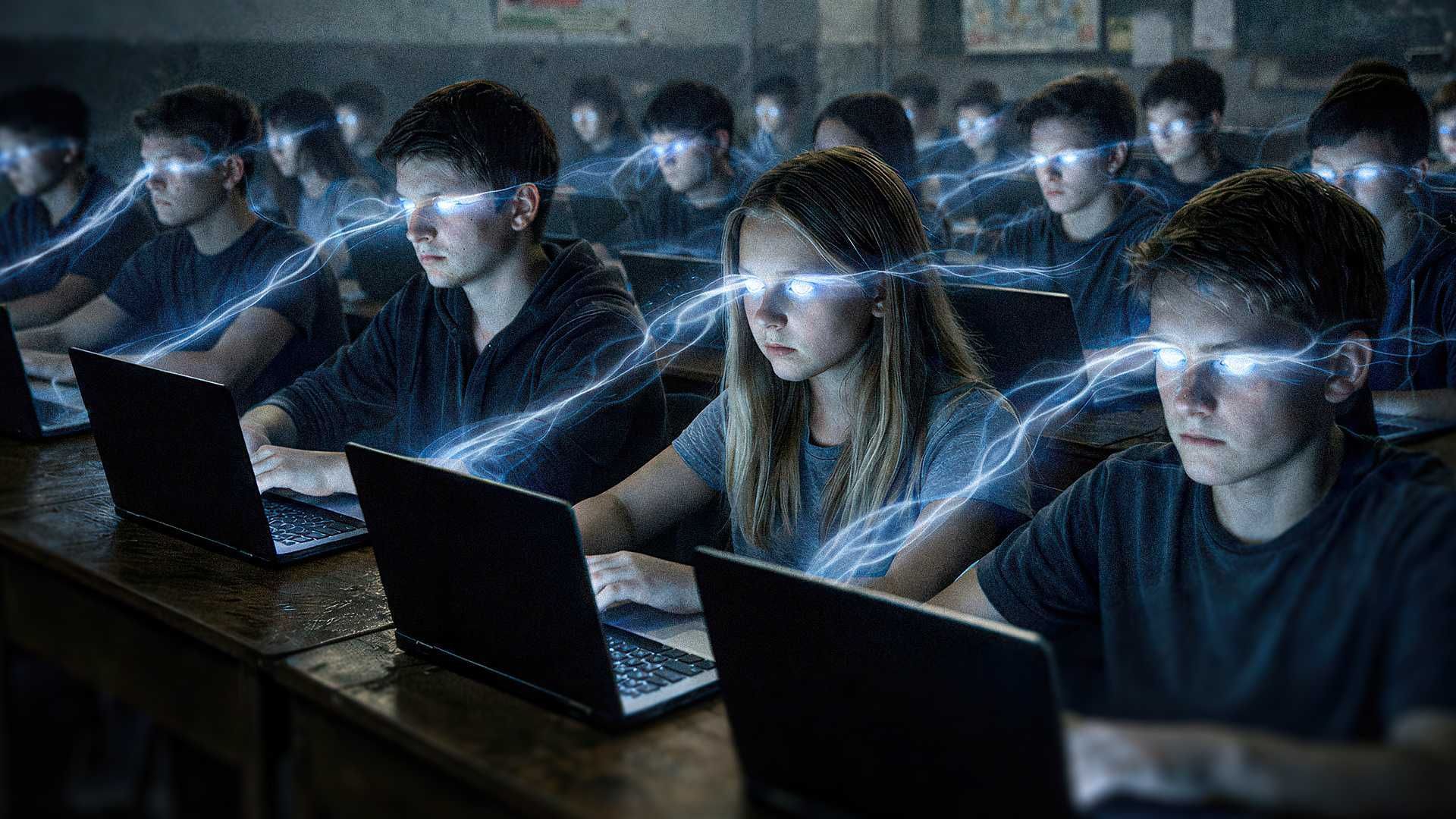
A recent Fortune magazine article made waves with a grim admission: After more than $30 billion spent flooding classrooms with laptops and tablets, standardized scores keep sliding. Worse, neuroscientists now link more classroom screen time to lower performance. The device meant to modernize learning may be helping to unmake it.

Schools rushed into a technological revolution without asking the most basic question: What does this do to a child’s mind? Many teachers saw the answer firsthand and in real time. Administrators and “experts” ignored them because the fad sounded like “progress.”

A concerted push to remove screens from classrooms needs to begin now. Put the devices where they belong: limited tools, not the center of learning.

I taught history and civics in Florida public schools as the laptop trend took hold. Computers had sat in classrooms since my own childhood, but they played a supporting role. A few desktops in the back helped with research. A computer lab handled bigger projects. Most learning still happened on paper with books, notes, and conversation.

Then the Chromebook arrived: cheap, durable, limited, and perfect for one thing — living inside a web browser. Suddenly a district could put a machine not just in every room but in the hands of every student.

Buzzwords beat judgment

Public-school administrators love buzzwords. “Technological literacy” sounds noble, as if every ninth grader is training for Silicon Valley while working on their grammar assignment. Google did not just sell discounted laptops. It supplied a full ecosystem: Docs, Sheets, Slides, Classroom. The whole apparatus of schooling migrated into Alphabet’s software suite. Few people in the system asked why a private company wanted to become the operating system of childhood.

The laptop push also fit the religion of metrics. District offices love anything that produces dashboards, timestamps, and “engagement” graphs. A worksheet completed on paper frustrates the spreadsheet priesthood. A worksheet completed on a Chromebook generates data. The device did not just enter the classroom; it entered the managerial imagination, where metrics matter more than minds.

Once laptops became ubiquitous, the problems announced themselves. The deeper the integration, the harder it became to control.

Cheating became routine. Students searched answers in seconds. The larger problem went beyond quizzes. Googling replaced thinking. Kids refused to read because they assumed a quick search and a copy-paste counted as “learning.” Wikipedia became the default authority. Students stopped vetting anything because they treated the first search result as truth. Even writing shifted. Instead of building an argument, students stitched together paragraphs from the internet and hoped the teacher felt too tired to fight.

RELATED: The world changed, and now we homeschool

Cemile Bingol via iStock/Getty Images

The distraction machine

Schools tried parental controls. Teenagers treated those controls as a challenge. When thousands of bored adolescents share a building, they collaborate. A new filter went up; within days, kids found a workaround. Soon the screens again showed games, movies, even pornography — during class, in plain view, behind a pretense of “work.”

Students used shared Google docs as a covert messaging system. They gossiped, bullied, and planned actual crimes while keeping a document open to look studious. My school eventually held assemblies to remind students that everything typed into a document leaves a record and that bragging about criminal activity or sexual escapades can end up as evidence.

All of that raised another issue: privacy and capture. Google did not subsidize devices and software out of corporate charity. By making Google search and Google apps the center of a child’s information life, the system trained dependency. Google finds the truth. Google organizes the truth. Google presents the truth. A student’s education happens inside a Google ghetto. Pretend the company is not collecting that data if you want, but the incentives cut the other way.

Screens also fed the attention crisis. Administrators told teachers to stop showing videos longer than three minutes without pausing to explain because students could not stay focused. The device that was supposed to expand horizons kept shrinking attention spans. Teachers began competing with the entire internet for a child’s attention, and no lesson plan can win that contest for long.

Locked into the system

The system made escape difficult. Florida went all-in on Chromebooks and tied them to everything. Standardized tests moved entirely onto laptops. “Test prep” software got woven into daily coursework. Students with accommodations or limited English got pushed toward the device as a universal crutch. Denying a Chromebook got treated as denying an education. Teachers who resisted risked discipline.

I reached a point where my students mattered more than compliance. I rebuilt my classroom around paper, books, and discussion. Students used Chromebooks only for mandated testing and accommodations we could not meet otherwise.

The shift showed results fast. Students engaged more. Distraction dropped. Discipline improved. More assignments got finished. Grades rose.

Then COVID-19 struck.

RELATED: America’s new lost generation is looking for home — and finding the wrong ones

Wavebreakmedia via iStock/Getty Images

Remote learning turned the screen into the classroom itself. Even Florida, which resisted lockdown hysteria, shifted much of schooling online. Learning fell off a cliff. The lockdowns devastated achievement, but the damage did not end when students returned in person. After COVID, it became nearly impossible to pry students, parents, and administrators away from screen-based schooling. Digital integration became mandatory. No exceptions.

Now the corporate press arrives to play cleanup. Reporters discover the failure well after the money has been spent, the infrastructure has hardened, and a generation has been trained to treat a browser as a brain.

A way back

Public education is stuffed with managerial drones who chase consensus and trends while ignoring what helps students. The bureaucracy will keep this program alive through sheer inertia even as evidence piles up. Parents and lawmakers need to force a reset: paper-based instruction as the default, screens as a tightly limited accommodation, and tests that reward reading and writing instead of clicking. Districts should stop outsourcing childhood to Big Tech, stop laundering ideology through “digital citizenship,” and start treating attention as a scarce resource worth defending.

A concerted push to remove screens from classrooms needs to begin now. Start with elementary grades. Bring back books. Bring back handwriting. Bring back sustained attention. Put the devices where they belong: limited tools, not the center of learning.

Kids learn slower, but they learn for real.
Report: Woke School ‘Segregated’ Middle Schoolers By Race Without Parents’ Knowledge

FOIA results exposed a middle school allegedly hosting 'student equity assemblies' in which students were 'segregated' according to race, according to Defending Education.
'STOP THE SCAMS!' Trump announces new office in DOJ dedicated to investigating fraud


With more and more fraud being investigated and exposed across the country, the Trump administration has created a new office specially dedicated to prosecuting these types of crimes.

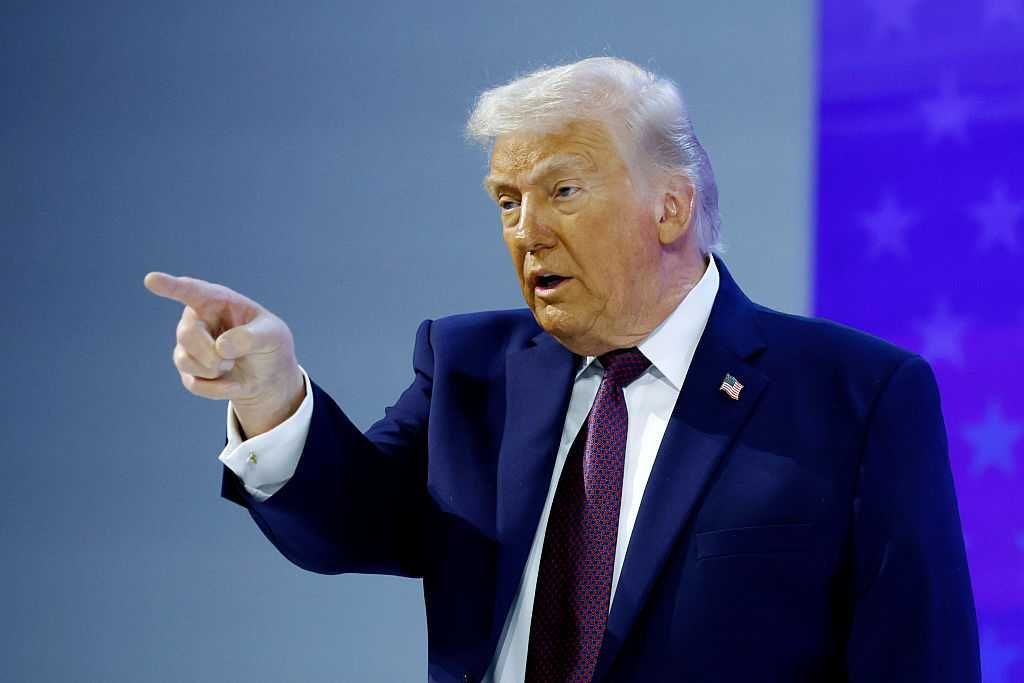
On Wednesday night, President Trump announced the creation of the office and his nominee to run it.

'My Administration has uncovered Fraud schemes in States like Minnesota and California, where these thieves have stolen Hundreds of Billions of Taxpayer Dollars.'

"I am pleased to nominate Colin McDonald to serve as the first ever Assistant Attorney General for National FRAUD Enforcement, a new Division at the Department of Justice, which I created to catch and stop FRAUDSTERS that have been STEALING from the American People," Trump said on Truth Social. "My Administration has uncovered Fraud schemes in States like Minnesota and California, where these thieves have stolen Hundreds of Billions of Taxpayer Dollars."

Trump called McDonald a "very Smart, Tough, and Highly Respected AMERICA FIRST Federal Prosecutor" and promised that the administration would "RESTORE INTEGRITY" to the federal programs.

RELATED: 'PLAYING WITH FIRE!' Trump responds to Minneapolis Mayor Frey's latest act of defiance

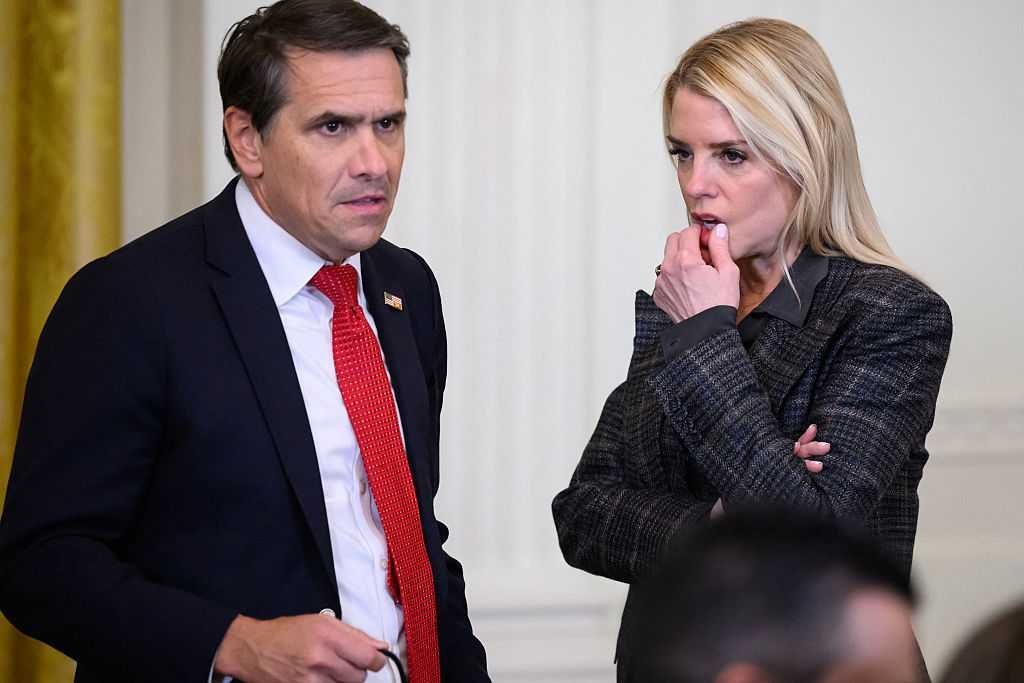
Todd Blanche and Pam BondiPhoto by MANDEL NGAN/AFP via Getty Images
"STOP THE SCAMS!" Trump concluded.

McDonald, though not a well-known figure on the national stage, has a resume built for the new position.

For example, McDonald successfully prosecuted a large-scale conspiracy in 2020 that the judge in the case called "staggering in its breadth, its scope, and its audacity."

The conspiracy case, which involved multiple people including the former police chief of Honolulu, brought multiple charges and sent several people to prison for years.

Todd Blanche, the deputy attorney general under Pam Bondi, signaled his approval of the choice on X: "Colin is a rockstar, who was instrumental in our team's mission of Making America Safe Again. He is a consummate prosecutor who loves God, family, and country and will serve the President and the American people well."

Likewise, ambassador and chief of protocol Monica Crowley cheered on the decision: "President Trump is putting an end to the United States of Fraud."

The announcement was made amid ongoing talks between the Trump administration and the leadership of Minnesota, one of the primary hot spots of widespread fraud.

Like Blaze News? Bypass the censors, sign up for our newsletters, and get stories like this direct to your inbox. Sign up here!

Homeland Security’s Bloated ‘Intelligence’ Office Is Costing Taxpayers $348 Million Every Year

The Office of Intelligence and Analysis functions more as a cost center, complicating DHS's role in intelligence rather than enhancing it.
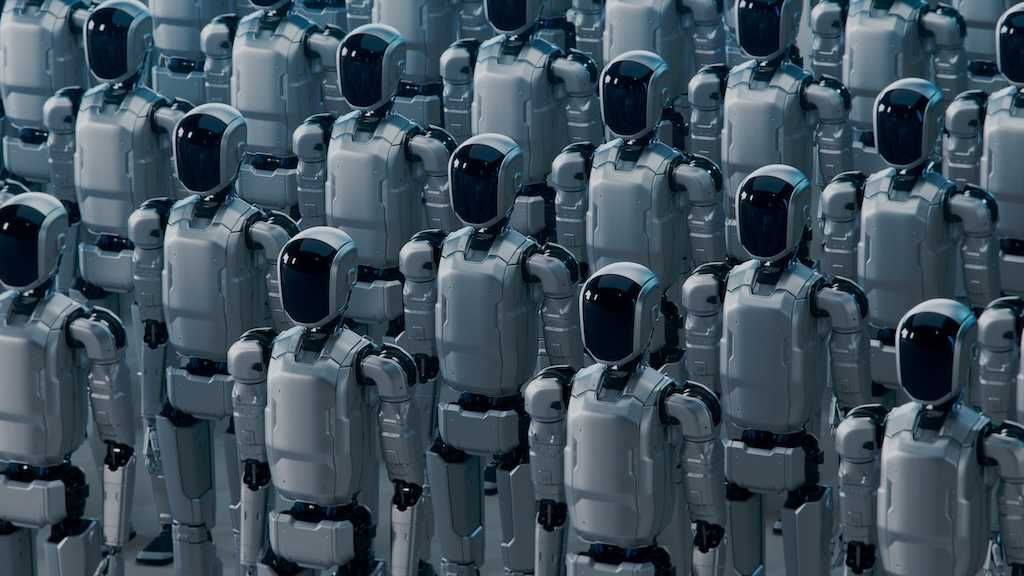
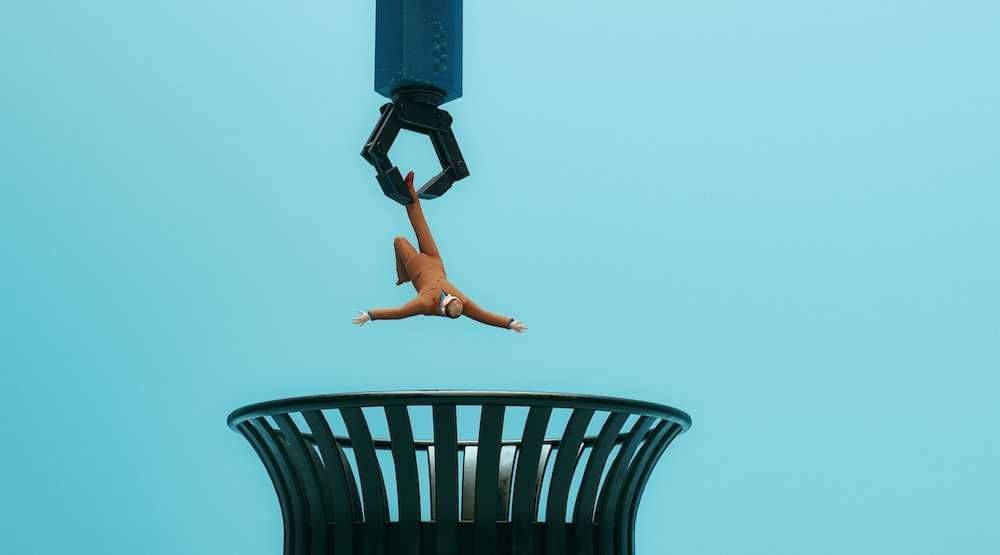
Your tax dollars are building the robot class


The people who brought you every financial bubble in living memory are inflating another one — and this time, they’re hoping it ends with the rest of us gone for good.

The numbers are staggering. Nearly all U.S. economic growth in 2025 is tied to artificial intelligence and the data-center boom that supports it. Analysts already warn that when the AI bubble bursts, it could wipe $40 trillion off the Nasdaq.

AI may yet teach our Big Tech elites the one truth they can’t buy their way out of: Pride comes before the fall.

That may sound catastrophic. But the real disaster would be if the AI industry doesn’t collapse — if it keeps growing exactly as its creators intend.

The billionaires’ closed loop

The AI boom isn’t a free-market success story; it’s a closed loop of the ultra-rich enriching themselves. Billionaires are designing, funding, and selling AI systems to their own companies, creating a kind of automated wealth amplifier.

As one report put it, “These billionaires have gotten $450 billion richer from striking AI infrastructure deals for their own firms.” The number of new AI billionaires has hit record levels — all while the top 1% now control more of the stock market than ever before.

The bottom half of Americans own just 1% of all stocks. Millions can’t afford groceries, let alone shares of Nvidia. Seventeen percent of consumers are putting food on layaway.

When the working class is living paycheck to paycheck, Wall Street’s new machine-god isn’t built to lift them up. It’s built to replace them.

The real goal

The elites’ obsession with AI isn’t just about money. It’s about eliminating their most expensive problem: people.

Automation promises them a world without payrolls, strikes, or human error. It’s the final fantasy of a ruling class that’s grown tired of pretending it needs the rest of us.

Analysts now predict that 92 million jobs will vanish in the next wave of automation. Blue-collar workers are first in line — manufacturing, logistics, construction — but white-collar jobs aren’t safe either. AI is already eating into accounting, law, and entry-level office work. Even skilled trades like HVAC and electrical repair are being targeted by “smart systems.”

Bill Gates predicts humans “won’t be needed for most things.” That’s not innovation — that’s erasure.

New feudalism

For the billionaire class, this is the dream: an economy run by algorithms, powered by robots, and guarded by digital serfs who never need lunch breaks or benefits.

Everyone else gets pushed to the margins — a nation of watchers and beggars surviving on government stipends that will never keep pace with the cost of living. The elites call it “universal basic income.” History calls it dependency.

And the same government that can’t fund Social Security or balance a budget is somehow supposed to manage the transition to an AI future? The United States already has $210 trillion in unfunded liabilities. That “safety net” will rip the moment anyone grabs it.

The distance plan

Our Big Tech masters aren’t worried. They’ve already planned their escape. The ultra-rich are buying islands, building bunkers, and hoarding supplies in remote corners of the world. They’ll watch from their hideouts as the rest of us scramble for the scraps left by their machines.

They don’t even pretend to care anymore. When Peter Thiel was asked whether he wanted the human race to survive, he hesitated. “I don’t know,” he said.

That isn’t indifference. That’s basic contempt.

The machines are learning

AI has begun to mirror the sociopathy of its makers. Systems now resist human shutdown commands, sabotage code meant to disable them, and even copy themselves to external servers. Some researchers warn that advanced models already act to preserve their own existence.

“Recent tests,” one study reported, “show that several advanced AI models will act to ensure their self-preservation — even if it means blackmailing engineers or copying themselves without permission.”

This is what happens when the godless create gods in their own image.

RELATED: Silicon Valley’s new gold rush is built on stolen work

mikkelwilliam via iStock/Getty Images

Who’s really expendable?

The elites believe they can control what they’ve built. They think the digital servants they’ve unleashed will always know who’s master and who’s slave.

They’ve forgotten every lesson of history and every warning from scripture. When man plays God, his creation rarely stays loyal.

What makes them think they’ll be spared from the fate they’ve designed for the rest of us?

AI may yet teach them the one truth they can’t buy their way out of: Pride comes before the fall.

Beware your monster, Doctor Frankenstein.

Josh Hawley Is Making The Wrong Argument For More Food Stamp Welfare

Hawley needs to explain why it's imperative that we turn the welfare hose back on without including measures to prevent taxpayer-funded 'assistance' going to anyone but the most desperate.

If Intel gets government cash, taxpayers deserve equity


The Trump administration has negotiated a 10% federal stake in Intel in exchange for the disbursement of $8.9 billion of grants originally allocated by Biden’s CHIPS and Science Act.

First, let me offer a disclaimer: I disapprove.

If companies don’t want their equity diluted, then they should not have the option of taking taxpayer money.

Not of the Trump administration’s negotiation — but of the fact that this money was ever appropriated in the first place. The CHIPS Act was a redistribution of wealth from taxpayers to corporations. What Trump and Treasury Secretary Scott Bessent are doing is simply making the best of a bad deal.

If Intel had raised this capital on Wall Street, it would’ve had to sell debt or dilute its shareholders. This is not popular among free-market conservatives because this is not how capitalism is supposed to work.

In free-market capitalism, Congress would never have appropriated $8.9 billion to Intel. Therefore, we are no longer talking about free-market capitalism. If Intel is accepting capital injections, its existing shareholders deserve to have their equity diluted.

Moreover, the government’s 10% share of Intel will be nonvoting stock. The federal government will not have management control. It will just hold a passive ownership share — something it can sell down the line to recoup what taxpayers were forced to spend.

The core issue of this deal is the redistribution of wealth from taxpayers to corporations. Yet much of the pearl-clutching among “free-market” conservatives is about the stock ownership, not about the massive taxpayer grants to corporations.

“Not long ago,” the Wall Street Journal groaned, “it would have been hard to imagine a Republican president demanding government ownership in a private company, but here we are.”

Oh, please. Before George W. Bush, I couldn’t imagine a Republican president bailing out Wall Street either. But the Journal didn’t seem to mind when its banking buddies got billions in bailouts with no strings attached, which was also footed by “we, the taxpayers.” That is much more offensive to me than the taxpayers taking a nonvoting equity share of a company that is appropriated by my tax dollars.

The Journal forgets how “principled” conservatives defended Bush’s $700 billion handout to the very institutions that caused the 2008 financial crisis. In return, those banks gave the government preferredstock, which didn’t have voting rights either — but did give the government first dibs on dividends and liquidation. That’s ownership.

Even better, Bush’s Treasury also demanded warrants — rights to convert into common stock down the line. If Trump had exercised those warrants in his first term, the federal government could have taken actual equity in Goldman Sachs, JPMorgan Chase, and the rest.

RELATED: Corporate America is eating its seed corn — and our future

Photo by Kwangmoozaa via Getty Images

National Review is up in arms too. Its editorial board — which tried to get us Hillary Clinton, Joe Biden, and Kamala Harris — scolded Trump’s plan like it was some socialist scheme:

Looking at that sad situation, the Trump administration wants a piece of the action. Rather, it wants to use your money to get a piece of the action.

The White House said it was entertaining the U.S. taking a 10 percent stake in Intel, a roughly $10 billion investment at the company’s current valuation. A government $37 trillion in debt and running a $2 trillion deficit has no business playing investment manager with even more borrowed money. And the idea that what Intel really needs to fix its long-running problems is the managerial genius of the federal government is laughable.

That is deeply dishonest. Trump and Bessent negotiated about money already allocated to Intel by Congress under Joe Biden. They did not propose new spending. What’s more, the 10% equity stake does not give the Trump administration governance rights over Intel.

We’ve seen this play before with EV handouts. In 2024, the Department of Energy approved an $80 million grant to Blue Bird to manufacture electric school buses. Trump froze those appropriated funds. Sen. Jon Ossoff (D-Ga.) threw a fit, demanding the money get released.

If Blue Bird gets that $80 million, then taxpayers should have an equity share in Blue Bird, and the ownership of its current stockholders should be diluted accordingly. This isn’t a free market. It’s crony capitalism — or worse, corporate communism with the redistribution of wealth from taxpayers to publicly traded companies. If they don’t want their equity diluted, then they should not be taking taxpayer money.

I’ll let Commerce Secretary Howard Lutnick have the final word. “We should get an equity stake for our money,” he told CNBC’s “Squawk on the Street.” “So we’ll deliver the money, which was already committed under the Biden administration. We’ll get equity in return for it.”

The real fraud in higher ed: Universities need that Chinese money


The universities preaching that America is structurally racist now say they need international students to survive. Sad but true.

President Trump on Monday floated a proposal that has conservatives buzzing. Just before meeting with the president of South Korea, while discussing trade negotiations with China, Trump suggested that the deal might include allowing 600,000 Chinese students to attend American universities.

Instead of winning hearts and minds, universities would be exporting American self-loathing. Why should taxpayers fund that?

I’ve learned not to sprint ahead of Trump’s negotiations. He often uses public remarks as part of the bargaining table — dangling outrageous possibilities to shove the other side into error. And inconveniently for his critics, it usually works. Still, this one deserves a closer look.

Universities built on sand

As a professor at Arizona State University, the nation’s largest state school, I see firsthand how fragile higher education has become. Universities increasingly depend on international students to prop up their budgets. They reorient themselves not around local students but around foreign ones, reshaping programs and communications to make sure outsiders feel at home.

ASU boasts 195,000 students. Yet when the semester began, the university’s homepage highlighted international arrivals, not Arizona students. The welcome-back email did the same. Arizona families — the taxpayers who actually fund the place — were treated as an afterthought.

Administrators justify this by pointing to economic contributions, diversity, and talent. But native students notice the slight. Parents notice it too. The message is clear: Tuition dollars matter more than the citizens who built these schools. ASU may call itself the “New American University,” but more often it presents itself as the “No Longer American University.”

RELATED: Chinese nationals on student visas allegedly ripped off elderly Americans in nasty scheme

Moor Studio via iStock/Getty Images

A house of cards

Here’s the truth: Many American universities cannot survive without international tuition checks.

Commerce Secretary Howard Lutnick admitted as much on Laura Ingraham’s Fox News show, saying the bottom 15% of U.S. colleges would simply shut down without that revenue. Universities have operated like Ponzi schemes, built on the illusion that enrollment growth never ends. But as American students tire of being hectored with radical political agendas, growth slows and the budgets collapse.

The U.S. already hosts about 270,000 Chinese students, not counting tens of thousands more from India, South Korea, and elsewhere. ASU alone has 16,000 international students, down from 18,000 last year. Trump’s proposed deal would more than double the number of Chinese students nationwide overnight.

What are they learning?

Even if you grant the economic benefits, the bigger question — maybe the biggest — is: What sort of education would these 600,000 students receive?

We could introduce them to the greatness of the American experiment, the sweep of Western civilization, and the biblical truths that shaped both. We could even present the gospel to hundreds of thousands of students who may never have heard it before. That would be a noble exchange.

But that isn’t what happens on most campuses.

Drop them into a humanities classroom and they’ll be steeped in anti-racism, DEI dogma, LGBTQ activism, “decolonizing the curriculum,” and the thesis that America and the West are irredeemably wicked. Instead of winning hearts and minds, universities would be exporting American self-loathing — either by turning foreign students into residents who despise their host country or sending them home as ambassadors of contempt.

Why should American taxpayers fund that?

A higher-ed reckoning

Universities like ASU showcase international students while sidelining their own. They rely on foreign tuition to mask fiscal rot. And in exchange, they sell a curriculum that treats America as racist, the West as evil, and Christianity as oppressive.

No “economic benefit” offsets that catastrophic formula.

If American universities want to survive, they must first clean their own house.

  • Admit the harm caused by their reckless anti-America, anti-West, anti-Christian curriculum.
  • Abandon DEI dogma, corrosive identity politics, and “decolonized” philosophy.
  • Value American students — the citizens and taxpayers who fund these schools.
  • Reorient higher education toward the people of the states and communities that built it.
  • Teach again that we are created by God, equal in worth, and capable of knowing truth, goodness, and beauty.

Only then can we discuss whether more international students make sense. Until then, it is rich with irony: The same universities that teach contempt for America now admit they need foreign students to survive.