US formally ditches World Health Organization


President Donald Trump announced America's withdrawal from the scandal-plagued World Health Organization late in his first term, citing the organization's abysmal response to COVID-19, its willingness to help the communist Chinese regime cover up the spread of the virus, and its refusal to adopt urgently needed reforms.

Former President Joe Biden swooped in, however, to prevent the withdrawal, which was scheduled for July 6, 2021.

'The United States will not be making any payments to the WHO before our withdrawal.'

On his first day back in office, Trump put the country back on track for withdrawal, giving the WHO a one-year notice period as required by U.S. law. In the months since, the Trump administration has cut off funding, withdrawn all personnel from the organization, and pivoted initiatives previously executed with the WHO to bilateral engagements with other countries and outfits.

Pursuant to the president's order, the United States has — as of Thursday — officially finished its exit from the WHO.

In a joint release confirming the completion of the withdrawal, the U.S. State Department and the Department of Health and Human Services stated, "Going forward, the U.S. government will continue its global health leadership through existing and new engagements directly with other countries, the private sector, non-governmental organizations, and faith-based entities."

"U.S.-led efforts will prioritize emergency response, biosecurity coordination, and health innovation, including for noncommunicable diseases, to protect America first while delivering benefits to partners around the world," added the departments.

RELATED: 'We are not doing this any more': Rubio to strip billions in foreign aid from 'NGO industrial complex'

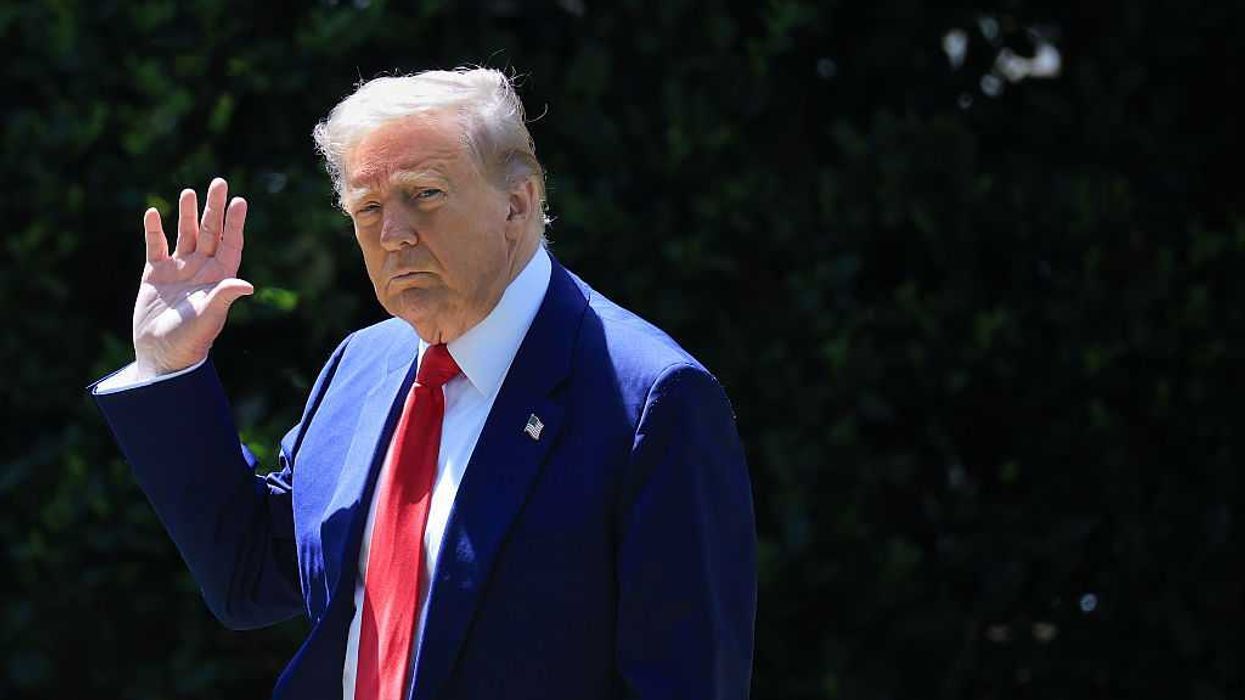
Photo by Robert Hradil/Getty Images

In a corresponding fact sheet, the departments indicated that in addition to terminating all funding to the WHO and recalling all U.S. personnel and contractors previously assigned to or embedded with the agency, the U.S. has "ceased official participation in WHO-sponsored committees, leadership, bodies, governance structures, and technical working groups."

"Withdrawing from WHO restores long-overdue accountability and transparency for U.S. taxpayers," says the fact sheet.

The WHO, a specialized agency of the United Nations that was founded in 1948, has long depended on the U.S. for financial and technical support. The U.S., a founding member, has historically been the organization's single largest contributor, pouring hundreds of millions of dollars into the WHO yearly and regularly accounting for over 20% of all member-state assessed contributions.

While the Trump administration satisfied its statutory obligation to give a one-year notice, critics of the withdrawal and officials at the globalist organization claim the U.S. has not met its financial obligations under the provisions of the congressional resolution that first enabled the country to join the WHO.

The amount supposedly owing for the 2024-2025 period is reportedly $278 million.

"The United States will not be making any payments to the WHO before our withdrawal," a State Department official told NPR earlier this week. "The cost borne by the U.S. taxpayer and U.S. economy after the WHO's failure during the COVID pandemic — and since — has been too high as it is."

Lawrence Gostin, director of the WHO's Center of National and Global Health Law, told NPR, "This is a very, very public and messy divorce."

"The man says, 'No, I'm not going to pay you any money, and we're no longer married.' And the woman says, 'No, you can't not be married unless you pay me,'" said Gostin.

Unlike in Gostin's analogy, the man in this scenario is the world's pre-eminent nuclear superpower.

Despite the apparent futility of the effort, the WHO's principal legal officer, Steven Solomon, indicated earlier this month that the organization's member states will discuss whether the U.S. has met the requirements for leaving, reported Stat News.

"It’s a lose for the U.S., and it’s also a lose for the rest of the world," Director-General Tedros Adhanom Ghebreyesus said last week of America's imminent departure. "I hope they will reconsider."

Bill Gates, a funder of some of the WHO's work, told Reuters, "I don’t think the U.S. will be coming back to WHO in the near future."

Like Blaze News? Bypass the censors, sign up for our newsletters, and get stories like this direct to your inbox. Sign up here!

Charging Low-Income Americans Just $1 Monthly Obamacare Premiums Could Save Taxpayers $7 Billion A Year

If roughly 1 million people won’t even pay $1 per month to enroll in an Exchange plan, what does that say about how Americans view the utility and value of Obamacare?

When the AI bubble bursts, guess who pays


For months, Silicon Valley insisted the artificial-intelligence boom wasn’t another government-fueled bubble. Now the same companies are begging Washington for “help” while pretending it isn’t a bailout.

Any technology that truly meets consumer demand doesn’t need taxpayer favors to survive and thrive — least of all trillion-dollar corporations. Yet the entire AI buildout depends on subsidies, tax breaks, and cheap credit. The push to cover America’s landscape with power-hungry data centers has never been viable in a free market. And the industry knows it.

The AI bubble isn’t about innovation — it’s about insulation. The same elites who inflated the market with easy money are now preparing to dump the risk on taxpayers.

Last week, OpenAI chief financial officer Sarah Friar let the truth slip. In a CNBC interview, she admitted the company needs a “backstop” — a government-supported guarantee — to secure the massive loans propping up its data-center empire.

“We’re looking for an ecosystem of banks, private equity, maybe even governmental ... the ways governments can come to bear,” Friar said. When asked whether that meant a federal subsidy, she added, “The guarantee that allows the financing to happen ... that can drop the cost of financing, increase the loan-to-value ... an equity portion for some federal backstop. Exactly, and I think we’re seeing that. I think the U.S. government in particular has been incredibly forward-leaning.”

Translation: OpenAI’s debt-to-revenue ratio looks like a Ponzi scheme, and the government is already “forward-leaning” in keeping it afloat. Oracle — one of OpenAI’s key partners — carries a debt-to-equity ratio of 453%. Both companies want to privatize profits and socialize losses.

After public backlash, Friar tried to walk it back, claiming “backstop” was the wrong word. Then on LinkedIn, she used different words to describe the same thing: “American strength in technology will come from building real industrial capacity, which requires the private sector and government playing their part.”

When government “plays its part,” taxpayers pay the bill. Yet no one remembers the federal government “doing its part” for Apple or Motorola when the smartphone revolution took off — because those products sold just fine without subsidies.

The denials keep coming

OpenAI CEO Sam Altman quickly followed with a 1,500-word denial: “We do not have or want government guarantees for OpenAI datacenters.” Then he conceded they’re seeking loan guarantees for infrastructure — just not for software.

That distinction exposes the scam. Software revolutions scale cheaply. Data-center revolutions depend on state-sponsored power, water, and land. If this industry were self-sustaining, Trump wouldn’t need to tout Stargate — his administration’s marquee AI-infrastructure initiative — as a national project. Federal involvement is baked in, from subsidized energy to public land giveaways.

Altman’s own words confirm it. In an October interview with podcaster Tyler Cowen, released a day before his denial, Altman said, “When something gets sufficiently huge ... the federal government is kind of the insurer of last resort.” He wasn’t talking about nuclear policy — he meant the financial side.

The coming crash

Anyone paying attention can see the rot. Nvidia, OpenAI, Oracle, and Meta are all entangled in a debt-driven accounting loop that would make Enron blush. This speculative bubble is inflating not because AI is transforming productivity, but because Wall Street and Washington are colluding to prop up stock prices and GDP growth.

When the crash comes — and it will — Washington will step in, exactly as it did with the banks in 2008 and the automakers in 2009. The “insurer of last resort” is already on standby.

The smoking gun

A leaked 11-page letter from OpenAI to the White House makes the scheme explicit. In the October 27 document addressed to the Office of Science and Technology Policy, Christopher Lehane, OpenAI’s chief global affairs officer, urged the government to provide “grants, cost-sharing agreements, loans, or loan guarantees” to help build America’s AI industrial base — all “to compete with China.”

Altman can tweet denials all he wants — his own company’s correspondence tells a different story. The pitch mirrors China’s state-capitalist model, except Beijing at least owns its industrial output. In America’s version, taxpayers absorb the risk while private firms pocket the reward.

RELATED: Stop feeding Big Tech and start feeding Americans again

Credit: Photo by Mario Tama/Getty Images

Meanwhile, the data-center race is driving up electricity and water costs nationwide. The United States is building roughly 10 times as many hyper-scale data centers as China — and footing the bill through inflated utility rates and public subsidies.

Privatized profits, socialized losses

When investor Brad Gerstner recently asked Altman how a company with $13 billion in revenue could possibly afford $1.4 trillion in commitments, Altman sneered, “Happy to find a buyer for your shares.” He can afford that arrogance because he knows who the buyer of last resort will be: the federal government.

The AI bubble isn’t about innovation — it’s about insulation. The same elites who inflated the market with easy money are now preparing to dump the risk on taxpayers.

And when the collapse comes, they’ll call it “national security.”

Behind Democrats’ Sob Stories Is A Push For More Tax Dollars To Insurance Companies

It's not a debate about lowering insurance costs. It's about how much of our tax dollars the government will give to private corporations.

Exclusive: New Report Tracks $200 Million Spent On Illegal Immigrant Health Care

'When elected officials argue that taxpayer dollars aren't going to illegal immigrants that just isn't true,' Open The Books CEO John Hart said.

Obamacare’s latest scandal is a $35 billion ghost story


The Democrats have named their price to end the government shutdown — an additional $350 billion for health care over the next decade. Critics say a big chunk of that money may go to ghosts.

At issue are the generous subsidies the Biden administration created for Affordable Care Act policies, sweeteners that are slated to expire in December. Making health care essentially free for millions of Americans, those policies have sent enrollment in Obamacare plans skyrocketing. But a recent study found they have also sparked a curious phenomenon: an estimated 12 million enrollees “without a single claim — no doctor visit, lab test, or prescription filled” in 2024.

Obamacare expansion has created an explosion of phantom patients — including 6.4 million of them so far in 2025.

The Paragon Health Institute study reports that this is triple the number of no-claim policyholders before the Biden sweeteners were put in place.

“Among those now eligible for zero-premium plans with low or no deductible,” the study found, “that number increased nearly sevenfold. … A whopping 40% of enrollees in fully subsidized plans had no claims in 2024. In 2024 alone, taxpayers sent at least $35 billion to insurers for people who paid no premiums and never used their plan,” the report said.

Although many analysts suspect that these numbers suggest widespread fraud, Democrats and the insurance industry argue that they reflect consumers taking advantage of affordable coverage. They warn that the expiration of Biden-era reforms will make policies far more expensive for more than 20 million Americans.

“If Congress fails to extend the health care tax credits, millions of Americans will face immediate and severe premium increases, leading many to forgo coverage altogether,” said Chris Bond, a spokesman for AHIP, the lobbying arm of the health insurance industry. “Congress must act as quickly as possible to protect Americans from this affordability crisis.”

As Democrats have made health care their line in the sand on the government shutdown, Biden-era expansions of Obamacare are receiving new attention as a symbol of both expanding access to health care and of spending run amok.

Critics say they underscore the findings of the Department of Government Efficiency, which has highlighted a lack of accountability in massive government spending programs at a time when the federal government is struggling to corral massive deficits and debt. They say the Biden sweeteners also illustrate how and why government spending keeps increasing: Once a subsidy is put in place, it is hard to take it away from voters.

Swollen rolls

The Obamacare expansion at issue came about through legislation and regulations during Biden’s term and was often cast as a response to the COVID-19 pandemic. First, the scope of who was eligible for subsidies was broadened to households with incomes above 400% of the federal poverty line — making a family of four earning up to $160,000 eligible for subsidized plans. Also, increased subsidies made Obamacare free for those with incomes between 100% and 150% of the poverty line, and longer enrollment periods were introduced.

The cost for this, on the other hand, is borne by taxpayers.

“Biden’s COVID credits didn’t reduce health care costs — they just shifted them to taxpayers while padding insurer and enrollment intermediary profits,” Paragon President Brian Blase said.

Like all gigantic markets and massive government programs, the Affordable Care Act and what people pay each month have become a very complicated thing, varying by age, state, plan level, and other factors. But the figures for the Obamacare “reference plan” (silver level) reveal what has happened since the COVID pandemic.

In 2021, when Biden was inaugurated, the basic plan cost an individual $27 a month if reported income was at or below the federal poverty line, which stood at around $14,500 a year. For those making 50% more, the “reference plan” cost $75 a month, and so on up to $152 a month for someone making more than $30,000. Those monthly payment figures were constant regardless of what the insurers charged, with taxpayers making up the difference.

Through legislation Biden pushed through by narrow majorities or via reconciliation, the amount someone would pay each month in the first two categories dropped to zero. And as Obamacare became essentially free, millions signed up — enrolling at rates the plan had never seen since its inception in 2013.

RELATED: Obamacare was never affordable — and neither is cowardice

Photo credit should read RHONA WISE/AFP via Getty Images

The overall figures reflect this explosion. Between 2016 and 2020, an average of 8.5 million people signed up for a subsidized Obamacare policy each year, and in none of those years did the figure equal 9 million, according to the Centers for Medicare and Medicaid Services.

In 2021, however, the subsidized total topped 10 million, and by 2024 it had nearly doubled to 19.5 million, CMS figures show.

“It’s all counterintuitive that when enrollment isn’t being publicized, no one is out beating the bushes to get people enrolled like we had in the early years of Obamacare,” said Ed Haislmaier, a health care expert at the Heritage Foundation. “Amazing that a product’s sales would go through the roof when nobody was talking about it.”

Some analysts believe the numbers indicate rampant fraud. Blase claimed in a letter to the Wall Street Journal that the expansion has created an explosion of phantom patients — including 6.4 million of them so far in 2025. “The problem isn’t real people with coverage they don’t use — it’s fraudulent sign-ups who never should have been subsidized,” he wrote.

Haislmaier agreed. “We don’t have an exact number for how many people might be fake. I don't think anyone does,” he said. “What we do have is a lot of circumstantial evidence, a lot of data points, and a lot of information about how the markets have always operated to suggest there is massive fraud here.”

Feds smell a rat

Paragon is not the only group voicing concerns. It often seems like fraud is endemic in federal programs, and government health care appears to offer a rich vein for such activity.

In fact, CMS itself has warned of potentially rampant fraud and abuse sapping taxpayers through the revamped Obamacare exchanges. CMS focused on people who were unwittingly signed up for more than one plan, possibilities that multiplied when the Biden administration relaxed reviews of applicants and extended open enrollment periods.

CMS found in July that 2.8 million Americans were potentially enrolled “concurrently” in Medicaid and the Children’s Health Insurance Plan in more than one state, or on one of those federal programs plus the Obamacare exchange, resulting in inexplicable overlaps that could cost taxpayers $14 billion a year.

CMS insists its analysis is helping identify such problems and that it is working with states and exchanges to strengthen eligibility verification processes and clean up enrollment data. The Trump administration has instituted some safeguards, such as sending state Medicaid agencies and state-based exchanges a list of individuals with possible concurrent enrollments so they can cross-check appropriate eligibility.

Opponents of expanded subsidies note that when the government makes a deep pool of money available, as has happened with the ACA, fraud is sure to follow. In June, Bloomberg did a deep dive on the phenomenon, describing a rat’s nest of unscrupulous call centers, primarily based in Florida, that have lured people in with various gimmicks and then signed them up for subsidized plans.

Democrats who traditionally oppose big business make strange political bedfellows of the insurance industry.

What’s more, those licensed to sell plans had access to Obamacare exchange databases, which allowed them to change both the “agent of record” (thereby making themselves recipient of whatever bonus insurers paid for new sign-ups), or the plan a person was enrolled in (thereby increasing their commission and the taxpayers’ bill), according to Gabrielle Kalisz, one of the authors of Paragon’s report.

Consequently, millions of Americans may be unaware that they own a subsidized Obamacare policy, and horror stories abound of unsuspecting people hit with tax bills seeking to recoup the subsidies.

“Nobody seems to have an incentive to be a good actor in the process,” Kalisz said. “The insurance companies are perfectly happy to keep getting the rising premiums, the navigators or agents are happy to keep getting the commissions, and Obamacare supporters are happy to act as if all this reflects people getting coverage.”

Nor are the so-called “phantom enrollees” the only issue. For example, the numbers don’t add up when percentages of state populations according to census data are measured against the Obamacare subsidies. Fourteen states have more people enrolled at up to 150% of the federal poverty line than they do residents who fit that category, and Florida’s total is five times what census data shows it could be.

“The enrollment fraud has become a massive problem,” said Michael Cannon, a health care expert at the libertarian Cato Institute. “The program has become like a great big ATM spitting out checks, and there’s very little policing going on because the government doesn’t care as much as it should about other people’s money.”

The new figures also diverge from the fairly consistent behavior in health care markets — another red flag, Haislmaier said. In 2019 and 2020, less than a quarter of policyholders never filed a claim. And the huge increase in so-called “phantom enrollees” doesn’t appear in market segments other than the now highly subsidized Obamacare plans.

Such figures make no sense if they reflect genuine people aware of what coverage they were enrolled in, and bogus enrollment activity offers a clear explanation.

“This whole situation has been ideal for the fraudster,” he said. “Now you’ve got more enrolled than are eligible, subsidized plans spiking and non-subsidized plans flat. These are just all indicators that there is something wacky going on here.”

Subsidies or shutdown?

All of this is informing the partisan debate over health care and efforts to fund the government.

Republicans, including some who got fabulously wealthy through the health care system, including Florida’s Sen. Rick Scott, have said extending the subsidies is ruinously expensive and foolhardy, given what has happened since they were introduced.

“COVID opened the door for massive waste, fraud, and abuse of government programs, like the billions in fraud and abuse allowed by the ‘temporary COVID’ enhanced Obamacare subsidies,” Scott posted in September. “Americans don’t want their tax dollars lining the pockets of insurance companies — it’s time to end this clear abuse of YOUR dollars.”

RELATED: Smash the health care cartel, free the market

pilli via iStock/Getty Images

Scott drew attention to a Sept. 15 post by Sen. Ron Johnson (R-Wis.) that made much the same point: “Extending the ‘temporary COVID’ enhanced Obamacare subsidies would perpetuate fraudulent activity, sending billions of dollars to insurance companies for policies that people are unaware they’re enrolled in and do not use,” he posted.

On the other side are Democrats who make strange political bedfellows of the insurance industry. Some who traditionally oppose big business, such as Sen. Elizabeth Warren (D-Mass.) or socialist Sen. Bernie Sanders (I-Vt.), insist these recent subsidies must continue, preferably permanently. For them, Obamacare more than doubling — from 11.4 million to more than 24 million between 2020 and today — is a success sign of government-run health care.

Warren compared ending the subsidies to taking health care away from people.

“Still waiting to find out how Trump and Republicans think cutting health insurance for 15 million Americans makes America healthy again,” she posted on Sept. 15.

Polls suggest support for government-subsidized health care is a partisan issue. Last November, Gallup reported that “90% of Democrats say that the federal government is responsible for American health care coverage, while 65% of Independents hold the same view. Although only 32% of Republicans share that opinion.” Another survey found that among those receiving subsidies, people who voted for Democrats outnumbered Republicans by more than two to one.

Insurers say the Paragon study was flawed and accused the think tank of misunderstanding how insurance works. It’s not unusual for homeowners or car insurance policyholders to go years without filing a claim, and the same could be true with health care, they say. According to the industry and Democrats, the ballooning numbers reflect a thriving market in which many more Americans are enjoying health care coverage, as stated in a rebuttal released by AHIP in August.

Republicans want to let the subsidies expire. Democrats want to make them permanent.

Of course, that leaves some wiggle room, such as extending the subsidies for another year or some set period of time, a kicking-the-can option long favored by Congress.

Whatever the outcome, large subsidies that have always been part of Obamacare will continue. For all the hue and cry about rising costs, the elimination of Biden-era sweeteners would simply return the system to the way it was operating before 2021, Kalisz said.

“It’s crony math, a kind of corporate welfare,” she told RealClearInvestigations. “Why are the insurers now making it seem like all the subsidies are going away? It’s a form of scaring and spooking the public.”

Editor’s note: This article was originally published by RealClearInvestigations and made available via RealClearWire.

Current Congressional Spending Levels Are Already A Compromise With Democrats

Democrats are pushing for an unserious, radical set of policy changes that would add another $1.5 trillion to the debt.

Big Beautiful Bill Will Save Taxpayers From Paying Millions To Fund Medicaid For Dead People

State and federal officials ought to be doing everything they can to protect their hard-earned dollars from being used improperly or illegally. For once, things are finally looking up in this regard.