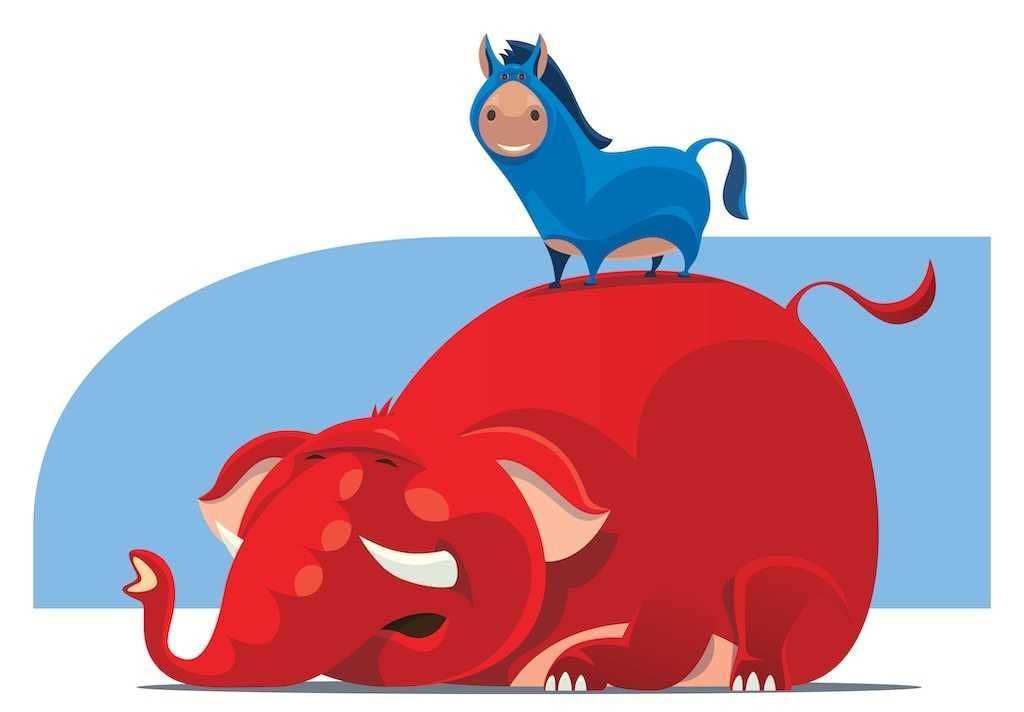
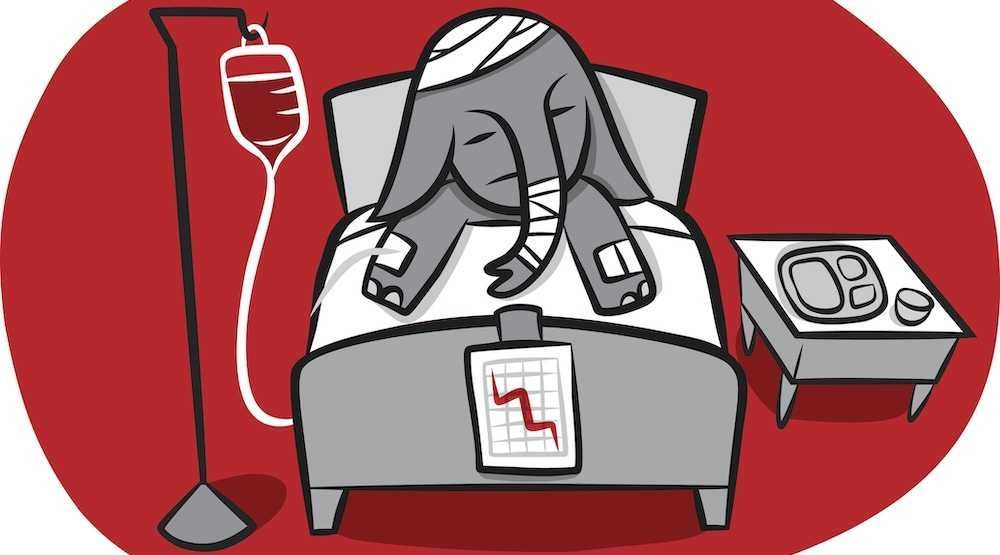
Conservatives face a choice in ’26: realignment or extinction


The elections of 2026 and 2028 will be “Flight 93 elections,” but not in the way Michael Anton envisioned in 2016. Anton famously compared supporting Donald Trump to charging the cockpit of a hijacked plane: reckless, dangerous, but preferable to certain death.

Nine years later, the metaphor has inverted. The forces that once stormed the cockpit now control it. They have locked the door, fortified the controls, and flown the Republican Party in widening circles toward disaster. No one inside can change course. The GOP plane is rapidly losing altitude, and everyone aboard can see it coming.

Continuing down this path does not preserve conservatism. It buries it inside an irredeemable party.

At this stage, the only rational move involves grabbing a parachute and jumping. Staying seated guarantees political death.

The gamble failed

Anton wrote his essay when the Republican Party had already revealed itself as corrupt, inert, and incapable of reform. That decay produced Trump. He appeared as something new: a transactional, deeply flawed outsider promising to smash the uniparty and deliver for workers and small businesses long ignored by corporate Republicanism.

Many voters tolerated Trump’s personal failings and erratic behavior because he represented a rupture. At least it was different.

Nine years on, Republicans carry all the liabilities of Trump’s image and record without securing the benefits that justified the gamble. His better policies stall in court. His worst instincts endure. Meanwhile, Republicans lose elections in territory that once leaned safely red.

Trump obsesses over his ballroom project, courts tech and crypto bros, cuts deals with China and Qatar, and waves away economic pain that millions feel daily. Consumers face rising prices. College graduates struggle to find work. Small businesses buckle under costs. The White House insists the economy is strong.

It is not.

History repeats

This failure did not begin with Trump. The Tea Party quickly collapsed because it tried to reform a party that could not be reformed. The GOP long ago ceased functioning as a conservative party. It exists to serve corporate donors while marketing fear of the left to a skeptical electorate.

History offers a warning. The Whig Party collapsed once it became obvious that it stood for nothing relevant to its era. The Republican Party replaced it. Today’s GOP has perfected the art of symbolic resistance paired with practical surrender. It’s fake opposition.

Trump’s rise looked like a break from that pattern. Sadly, it was not. He has spent five election cycles endorsing establishment Republicans, preserving the very faction that produced the crisis. His rhetoric attacks “RINOs,” but his endorsements entrench them.

His current agenda reflects the same contradiction: Big Tech, techno-feudal economics, Qatari pandering, Chinese student visas, and government-backed industrial schemes sold as innovation, paired with denial of inflation and hardship.

All the liabilities, none of the benefits

The result proves electorally poisonous. Republicans repel suburban voters and working-class voters simultaneously. They project the aloof corporatism of the pre-Trump era mixed with cultural coarseness and denial of obvious hardship.

Since 2017, Republicans have compiled a grim down-ballot record, interrupted only by Trump’s 2024 victory against a weak opponent in a terrible economy. Rather than consolidate that win, Trump chose to own the economy outright and burn political capital.

Conservatives now die on hills that are not their own. They inherit Trump’s liabilities without achieving the promised purge of the party’s corporate class. The GOP and Trump’s coalition increasingly merge into a single structure that offers spectacle instead of reform.

RELATED: Democrats are running as Bush-era Republicans — and winning

Seahorse Vector via iStock/Getty Images

The case for a clean break

As Republican candidates face double-digit swings toward Democrats even in light-red districts, the choice sharpens. Conservatives can continue propping up a failed party and risk discrediting their ideas permanently. We could embrace the “aristopopulism” of JD Vance and his circle. Or we could force a realignment.

A new party could channel distrust of techno-feudalism, mass surveillance, foreign labor exploitation, and a K-shaped economy engineered through government favoritism. It could ground itself in tangible productivity, property rights, sound money, privacy, small business, and national sovereignty.

Every decade or so, Republican dysfunction becomes obvious enough to provoke rebellion: Ronald Reagan, Newt Gingrich, the Tea Party, MAGA. Each time, the insurgency gets absorbed and neutralized by the same structure.

We have reached that moment again.

Continuing down this path does not preserve conservatism. It buries it inside an irredeemable party. The Republican Party has reached the end of its rope. The only question is whether conservatives recognize it before the fall becomes irreversible.

Did Democrats’ ‘Nonpartisan’ Voter Outreach Violate IRS Rules?

Putatively nonpartisan charitable voter registration and mobilization organizations are thinly veiled Democrat vote-generation vehicles.

Trump Admin Should Purge IRS Of Officials Who Targeted Conservatives

If the administration wants to show they are serious about lasting reform and an end to lawfare operations, they should empower Long to drain the leftist fever swamp at the IRS.
Lawsuit Aims To Prevent IRS From Targeting Conservative Groups Ever Again

When the IRS was exposed for targeting conservatives in 2013, the policies to blame remained in place, leaving the door open to more weaponization.
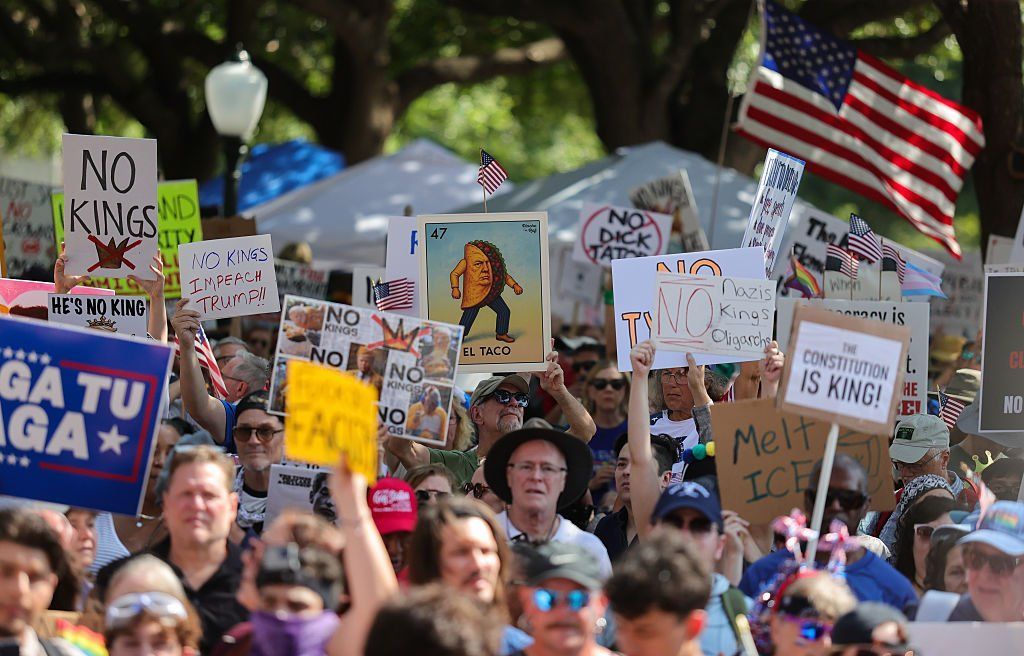
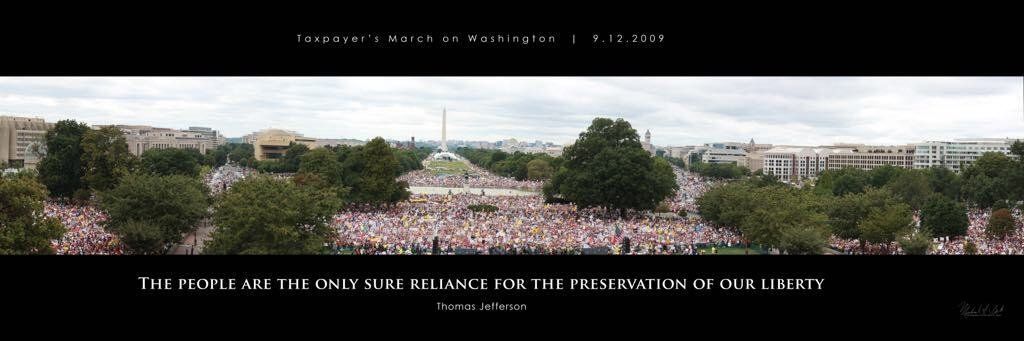
What changed? No Kings vs. 2009 Tea Party protests


The No Kings protests that sprang up across the nation in June have sparked comparisons with the Tea Party protests that started around Tax Day of 2009. However, a look back in time reveals a very different treatment by the mainstream media that could not be more at odds with the favorable treatment given to the No Kings protests today.

In 2009, several networks accused Fox News of unfair coverage of the Tea Party movement. ThinkProgress said Fox was "actively promoting the protests," and Politico even said the network was "blurring the line between journalism and advocacy,” using the term “pseudo-journalism” to describe Fox News’ coverage of the Tea Party protests.

'The problem is, you can’t buy grassroots energy like we had in 2009, particularly when the "kings" behind the veil are paying for it.'

A Fox News article said, "The grassroots phenomenon, while largely ignored in the mainstream press, has caught fire on the Internet, where platforms like Facebook and Twitter have served as launching pads for demonstrations." The article went on to describe the Tea Party as a "nonpartisan" movement, though it "largely involved conservatives."

Double standard

Media Matters for America published a lengthy exposé titled "REPORT: 'Fair and balanced' Fox News aggressively promotes 'tea party' protests" criticizing Fox News' coverage of the protests: "While tea-party organizers have stated that the protests are nonpartisan, Fox News and organizers have also characterized the protests primarily as a response to the [Obama] administration's fiscal policies."

RELATED: Over 98% of Americans ignore No Kings' tired tantrum

Michael Beck Photography. Used with permission.

The article concluded with a breakdown of each of the Fox hosts' supposedly biased coverage of the protests, but MMFA's main issue was with Fox's promotion of the events.

Media Matters wrote: "Fox News has in dozens of instances provided attendance and organizing information for future protests, such as protest dates, locations and website URLs. Fox News websites have also posted information and publicity material for protests. Fox News hosts have repeatedly encouraged viewers to join them at several April 15 protests that they are attending and covering."

By contrast, CBS News published an article on June 13, 2025, titled "'No Kings' protests planned across Massachusetts on June 14. Find one near you," seemingly presuming public interest in the event and encouraging participation.

Left-leaning outlets were as quick to dismiss the grassroots nature of the movement and downplay the size of the protests as right-leaning outlets were to affirm them.

The outlet subsequently updated the title of the article early the next morning. The current version replaced "Find one near you" with "Here's what to know."

Grassroots or astroturf?

During the Tea Party rallies of 2009, many outlets called into question the "grassroots" nature of the protests, as Fox News reported them.

The Los Angeles Times published an article called “Republicans stage 'tea party' protests against Obama.” The article opens: “Republicans sought to ignite a popular revolt against President Obama on Wednesday by staging 'tea party' protests across the nation to demand lower taxes and less government spending — but the tactic carried risk for the party.”

The reported number of people who attended Tea Party rallies seemed to differ across ideological lines as well. A New York Times article reported 200 people in Philadelphia; "several hundred" in Lafayette Park across from the White House; 500 protesters in Pensacola, Florida; around 1,000 people in Austin, Texas; and around 2,000 in Houston, Texas.

RELATED: From 'F**k Trump' to handshakes: 'No Kings' rally in Texas stays civil

Plexi Images/GHI/UCG/Universal Images Group via Getty Images

On the other hand, the Washington Times reported that the rally in Richmond, Virginia, "drew over 5,000 people on a chilly, rainy day and they were pumped," according to American Majority founder and CEO Ned Ryun. The story went on to report that there were "hundreds of thousands of protesters" at "more than 300 rallies across the country."

ThinkProgress named FreedomWorks and Americans for Prosperity as the "heavily staffed" and "well funded" power players behind the organization of these protests. The article was clearly framed to refute Fox News' coverage of the story, which drew criticism from many other outlets as well.

On the other hand, DataRepublican, a user on X, compiled a database of over 140 organizations that purportedly participated in funding the No Kings protests. This list is not exhaustive, as more organizations will likely be added as more information becomes available.

Some have noted the stark difference between a "grassroots" protest on the left versus the right.

“Oh, the irony. Back when I was helping organize the Taxpayer March on Washington on September 12, 2009, the corporate media leftist apparatchiks like Media Matters were eager to characterize the massive Tea Party turnout that year as paid-for astroturfing. Because that’s how they had always done it,” said BlazeTV host Matt Kibbe, one of the organizers of the grassroots Tea Party movement in 2009. “They still are with their web of government-financed NGOs. The problem is, you can’t buy grassroots energy like we had in 2009, particularly when the 'kings' behind the veil are paying for it.”

A Democrat Tea Party

Clearly, there was a great deal of partisan coverage of the Tea Party movement in 2009. Left-leaning outlets were as quick to dismiss the grassroots nature of the movement and downplay the size of the protests as right-leaning outlets were to affirm them. However, some left-leaning outlets today have seemingly changed their outlook toward the 2009 protests.

For example, Vox recently wrote an article which played up how effective the protests in 2009 were, saying, “The Tea Party reorganized the Republican Party on its own terms.”

Even more surprising is the affirmation that the Tea Party was a grassroots movement at the start: “Notably, the movement was defined by how decentralized it was at its start — though some national organizations later formed to try to organize and wield populist furor, it was mostly a grassroots movement.”

While there are some very clear differences between the 2025 No Kings protests and the 2009 Tea Party protests in terms of media coverage and organizational support, Vox may be right that the Democratic Party is facing an internal reorganization. Or perhaps the very notion of a grassroots movement on the left has become obsolete.

Like Blaze News? Bypass the censors, sign up for our newsletters, and get stories like this direct to your inbox. Sign up here!

New Laws Restrict Indiana Treasurer Who Protects Americans From Debanking

The banking industry is attempting to take programs from Indiana's state treasurer because he works to protect Christians and conservatives.

Before Going After Trump, Jack Smith Tried To Take Down The Tea Party

All Americans must remain wary of granting government agencies like the IRS power that can ultimately be turned against them.

From Iraq To Trump, David Frum Has Always Been A Cancer On The Body Politic

David Frum's article blaming Trump for his own assassination attempt reminds us that he has always been a petty egotist.