Booming El Salvador Begs U.S. Migrants To Return, But The Media Keep Lying About It
 El Salvador has launched a 'Reverse Migration' campaign with tax breaks to lure U.S. Salvadorans home to build a booming economy and fill acute labor shortages.
The Trump administration has gotten the last laugh against an illegal alien gangster who infamously refused to hold his tongue when he was arrested by Immigration and Customs Enforcement.
Just two days after President Donald Trump retook office in January 2025, Boston ICE Enforcement and Removal Operations picked up Wisteguens Jean Quely Charles, a native Haitian and convicted criminal who was then 25 years old.
'He went viral for praising Biden as he was getting arrested, because he knew that the Biden administration’s open borders turned America into a paradise for criminals like him.'
During his arrest, a defiant Charles cursed Trump and insisted he was "not going back to Haiti."
"F**k Trump! You feel me?" he continued. "Yo, Biden forever, bro. Thank Obama for everything that he did for me, bro."
Despite the verbal bluster, the case for deporting Charles was strong. For one thing, he is a career criminal, with convictions for assault and battery on a public employee, assault and battery with a dangerous weapon, various drug and weapons offenses, resisting arrest, and even trespassing.
Moreover, Charles is a known member of the Back Block Money Gang, according to the Department of Homeland Security.
RELATED: DHS secretary: Ilhan Omar married her brother, and consequences are coming

Charles was granted Temporary Protected Status by President Barack Obama in February 2013, and he was admitted into the U.S. a few months later, the DHS said. His TPS status was then terminated in 2022, under President Joe Biden, and a federal judge issued a final deportation order for him last November.
On Thursday, that order was carried out, and Charles was deported back to Haiti.
DHS Secretary Markwayne Mullin said of Charles:
This illegal alien gang member from Haiti had quite the rap sheet, with convictions for assault and battery on a public employee, resisting arrest, and drug trafficking, among other heinous crimes.
He went viral for praising Biden as he was getting arrested, because he knew that the Biden administration’s open borders turned America into a paradise for criminals like him. The Trump administration has finally done what both the Obama and Biden administrations failed to do and deported this criminal back where he belongs.
The White House took a victory lap on Tuesday, sharing a video of Charles with the caption "Home sweet Haiti" and two waving emojis. The voice of a real or virtual female flight attendant concludes the video saying, "You have arrived at your destination."
Like Blaze News? Bypass the censors, sign up for our newsletters, and get stories like this direct to your inbox. Sign up here!
The existentialist Jean-Paul Sartre claimed that "hell is other people." Former Fox News commentator Geraldo Rivera is among the bleeding hearts who believe that hell is Haiti — at least now that the Trump administration is repatriating its people.
President Donald Trump identified Haiti in a January 2018 meeting as one among various "s**thole countries." This was, after all, then a failed state plagued by violence, haunted by rumors of cannibalism, and still reeling from a deadly earthquake.
'Ridiculous.'
There was tremendous backlash over Trump's remarks — not only from the Haitian government and the United Nations' human rights office but from Democrats and the liberal media.
Twice-failed presidential candidate Hillary Clinton and Illinois Sen. Dick Durbin (D) were among the many concern-mongers who claimed that Trump's vivid characterization of Haiti as a less-than-ideal nation was "racist."
In addition to similarly attacking Trump, celebrities ran a PR campaign for the Caribbean nation, portraying it as a paradisiacal place.
Conan O'Brien, for instance, aired a one-hour special showcasing Haiti's perceived beauty — a special that included refutations of Trump's "s**thole" comment from Haitian natives along with repeated emphases that the island nation was a "beautiful country."
In subsequent months, others, including Bill Maher, jumped on the bandwagon, donning apparel that stated, "HAITI IS GREAT ALREADY."
Unfortunately, the situation deteriorated in Haiti before it got better — simultaneously confirming Trump's initial framing and prompting the liberal media to ramp up its gaslighting campaign.
When confronted — a couple of years after Haitian President Jovenel Moise's assassination — with reports that criminals had taken over the country's capital, freed thousands of felons from jail, engaged in systematic rape, forced the prime minister to resign, and threatened genocide, NBC News, for instance, reassured its viewers in 2024 that contrary to claims by "right-wing pundits," the Western Hemisphere's poorest country did not also have a problem with cannibalism.
The Trump administration announced in July 2025 that it was terminating Haiti's Temporary Protected Status, having determined that the Caribbean nation no longer meets the conditions for special status, in part due to improvements in domestic safety and stability.
While the administration recognized that the country still suffers a "lack of functional government authority" and that "gang violence in Haiti persists," then-Homeland Security Secretary Kristi Noem stated that "the environmental situation in Haiti has improved enough that it is safe for Haitian citizens to return home."
This revocation of Haiti's special status — which has shielded roughly 350,000 Haitians from removal — faced multiple legal challenges; however, the U.S. Supreme Court ultimately ruled in the administration's favor in June.
Now that the Department of Homeland Security is "going after" Haitian migrants with suspended special statuses, the usual suspects have jettisoned their "HAITI IS GREAT ALREADY" framing and adopted the president's previous understanding of the Caribbean country as a loathsome place.
Geraldo Rivera, who asked Trump in 2018 to apologize for his "unfortunate" remarks about Haiti and other third-world nations, wrote on Sunday — in the wake of reports about the deportation initiative under way — that "expelling Haitian immigrants is sending them straight to hell."
Rivera was widely criticized for joining the chorus of liberals against the repatriation campaign.
Normalcy advocate Robby Starbuck wrote in response, "Didn’t the entire media and Democrats in DC swear that Haiti was amazing and wonderful and perfect when Trump called it a hellhole? Trump then said okay, then sounds like they can go back and now the framing switches to, 'it’s hell on earth, you can’t send them back!' Ridiculous."
Mike Howell, the president of the Oversight Project and Blaze News contributor, alluded to Rivera's previous concern-mongering over Trump's "s**thole," then asked, "What happened[?]"
Like Blaze News? Bypass the censors, sign up for our newsletters, and get stories like this direct to your inbox. Sign up here!
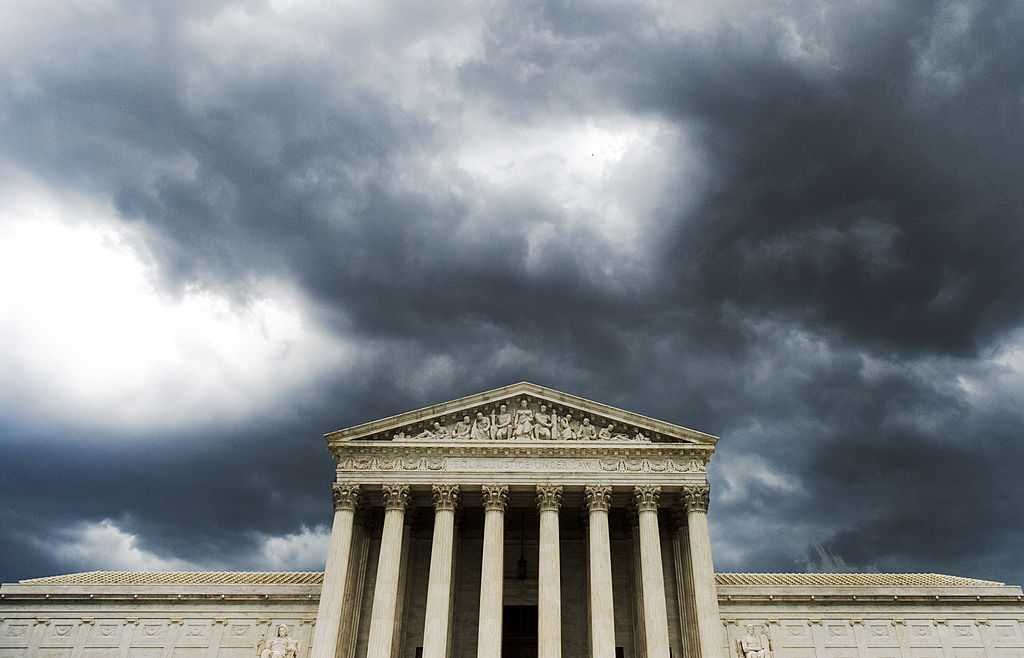
When the Supreme Court struck down President Trump’s birthright citizenship executive order in Trump v. Barbara, it settled for now in the courts who becomes a citizen at birth. It did not settle — and could not settle — whether American citizenship may be bought and sold.
It remains well within the power of Congress and the president to shut down the contracts, clinics, agencies, and visas that convert foreign money into American citizenship — without amending the Constitution or defying the court. Until the court revisits the issue, the political branches are solely responsible for overseeing the marketplace, and they have no excuse to delay.
Why buy a visa when you can commission a citizen?
If you doubt that such a marketplace exists, meet the Simpson triplets.
Nearly 20 months ago, Kyla Simpson of St. Augustine, Florida, gave birth to triplet boys as a gestational surrogate for an intended parent she had never met: a single man in China. He never came. Not during the boys’ two months in the NICU, not through the year and a half the Simpsons raised them, and not even when one of the triplets died of RSV.
When the man from China sent two strangers in a black SUV to collect the boys, Simpson refused. Then, she moved to terminate his parental rights, and he resurfaced with a lawyer and an emergency pickup order, which a Florida judge granted. The surviving twins, 20-month-old American citizens, now sit in state care while his attorneys obtain travel documents.
Why would a Chinese man pay hundreds of thousands of dollars for children he has never crossed an ocean to meet? Because he wasn’t buying children. He was buying American citizens.
A surrogate-born child of a foreign national receives a birth certificate, Social Security number, and passport at birth. When the child reaches age 21, he can petition for green cards for his parents and siblings, turning one commissioned pregnancy into chain migration for an entire family, at a fraction of the cost of the half-million-dollar EB-5 investor visa.
Why buy a visa when you can commission a citizen?
This citizenship-for-sale system has three serious dangers.
First, the burgeoning international surrogacy industry is a clear example of immigration fraud and abuse. For example, within days of President Trump signing the executive order on birthright citizenship, the agency Surrogate First issued workaround guidance for prospective parents, explaining that for international clients, “the certainty of their child obtaining U.S. citizenship at birth is a significant factor” in choosing America.
Likewise, Creative Family Connections advertised a “2-step birth certificate process” to guarantee citizenship for the children of foreign clients regardless of executive action. Prior to that, another agency pitched surrogacy as cheaper than the EB-5 investor visa.
RELATED: 1776, not 1608: What the Supreme Court got wrong on birthright citizenship
The co-founder of one California agency told NPR that dual nationality would be “a win-win situation for your children.” A fellow agent admitted many of her clients were “high-level Communist Party officials and celebrities” seeking American citizenship for their children.
Second, the international surrogacy industry is a national security threat that intensifies every year. Children with American passports who are raised under Chinese Communist Party rule can vote as adults in U.S. elections, join our military, work in sensitive research, and even run for president.
Beijing exploits every vulnerability American citizenship offers, whether the parents intend it or not. Why would it ignore this one?
Third, the industry is a child-welfare catastrophe. Authorities found 21 surrogate-born children in the home of a former CCP official tied to immigration fraud and smuggling — discovered only after an infant arrived at a hospital with severe head trauma in Arcadia, California. Chinese billionaire Xu Bo has reportedly commissioned 100 children and counting through American surrogates to build a personal dynasty.
According to data in the American Society for Reproductive Medicine’s own journal, surrogacy cycles commissioned by foreign intended parents surged 78% from 2014 to 2019, from 2,758 to 4,905 embryo transfers a year, with Chinese nationals the largest customer base at 41.7% — quadruple the next country.
More than 107 Chinese-owned surrogacy agencies operate in Southern California alone, many with Mandarin-only marketing and some listing offices in mainland China, where surrogacy is illegal. Indeed, international commercial surrogacy is merely the newest wing of a larger operation. Conventional birth tourism results in an estimated 50,000 to 100,000 annual U.S. births to Chinese nationals — a phenomenon that, according to investigative journalist Peter Schweizer, Chinese sources themselves describe as massive.
Since 2013, he estimates that more than one million “U.S. citizens” are being raised in China because their mothers came here to give birth.
Yes, the Trump v. Barbara majority misread the 14th Amendment, whose author said it excluded “persons born in the United States who are foreigners, aliens.” A future court should revisit the issue, with the Simpson case as Exhibit A. In the meantime, however, there are concrete actions Congress and the executive branch can take to address birth tourism.
Close the state loophole with federal law. Earlier this year, Florida became the first state to prohibit surrogacy contracts with foreign nationals from adversarial nations, including China, Russia, Iran, and others. But the law does not stop Florida citizens from working with a California-based agency.
We need federal action to shut this market down. As Sen. Rick Scott (R-Fla.) proposed via the SAFE Kids Act and Rep. Scott Perry (R-Penn.) introduced via the Preventing International Surrogacy Exploitation Act, Congress should ban international commercial surrogacy outright by prohibiting foreign nationals from contracting with American surrogates or agencies.
Notably, the vast majority of developed nations — aside from the United States and Ukraine — already have a law like this in place.
RELATED: Where is the outrage over our stolen birthright?

Cut off the travel and count the trade. Congress and the State Department should deny visas to anyone traveling to the U.S. to commission or collect a surrogate-born child. They should also mandate federal reporting, through the CDC or another agency, of every commercial surrogacy contract and resulting live birth, including the client’s nationality.
There is no reason to regulate the export of technology more carefully than the export of our own citizens.
Make the buyer, not the baby, pay the price. Heritage Foundation Vice President Roger Severino has proposed the boldest remedy. Vice President JD Vance has already endorsed Severino’s plan to end birth tourism citizenship in U.S. territories, which China has exploited.
Every solution so far has focused on the “anchor.” Severino’s plan, by contrast, targets the “boat.” Under existing law, the president has broad authority to bar any class of foreign nationals whose entry he deems detrimental to U.S. interests.
He should use that power to give every foreign national without permanent residency who has a child on U.S. soil a simple choice: Relinquish the child’s American citizenship, or never legally set foot in the United States again.
This doesn’t remove citizenship from the children. But it does mean that the parents who refuse would become permanently ineligible for any visa, asylum, refugee status, or temporary protected status; any lottery or family-based entry; or any future path to residency or citizenship, including through marriage to an American.
The Supreme Court says these children are citizens. Very well — then act like it.
American citizens should not be purchased for export, warehoused unclaimed, or shipped beyond the reach of American courts. The 14th Amendment was written so that no one born on American soil could be bought or sold. It’s time to extend that same protection to children born via international commercial surrogacy schemes.
Editor’s note: A version of this article appeared originally at the American Mind.
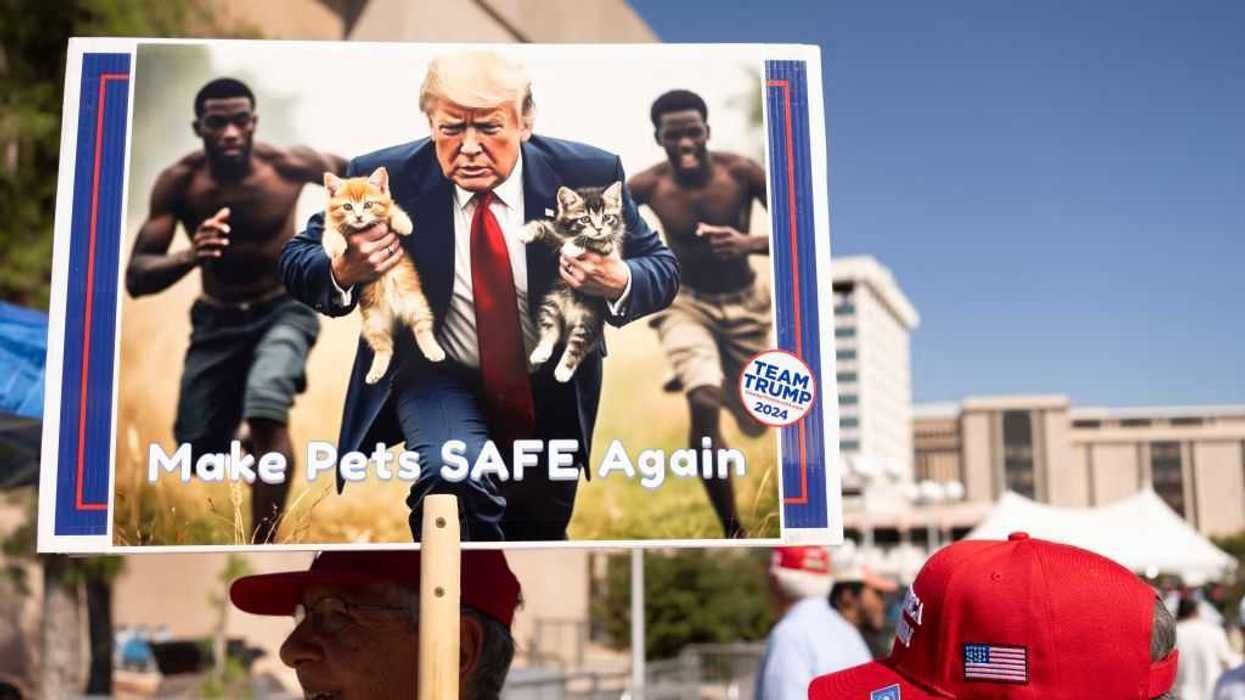
Owing to their nation's Temporary Protected Status, hundreds of thousands of Haitian migrants have avoided deportation despite greatly adding to the strain on American resources in places such as the blue-collar city of Springfield, Ohio, where they were accused by then-presidential candidate Donald Trump of "eating the pets of the people that live there."
After a protracted legal battle that went all the way to the U.S. Supreme Court, the activist judge who initially held up the process has finally conceded that the Trump administration can start giving Haitian migrants the boot.
The Trump administration announced last summer that Haiti's TPS was, after 16 years, finally coming to an end, having determined that the Caribbean nation no longer meets the conditions for special status, owing largely to significant improvements in domestic safety and stability.
'You don't have status inside this country any more.'
The revocation was, however, held up in the courts.
In Washington, D.C., U.S. District Judge Ana Reyes — a foreign-born, Biden-appointed, lesbian judge who previously worked as a lawyer to fight the first Trump administration's immigration policy and helped the U.N. secure asylum for so-called refugees — gave her fellow immigration activists cause to hope on Feb. 2, blocking the revocation of Haiti's TPS.
Reyes, originally from Uruguay, claimed that former DHS Secretary Kristi Noem not only violated the Administrative Procedure Act and the Fifth Amendment's Due Process Clause when terminating the TPS designation for Haiti but had likely done so "because of hostility to non-white immigrants."
RELATED: Trump-hating Republican governors conspire with Democrats to smuggle in even more migrants
After the U.S. Court of Appeals for the District of Columbia declined in March to block Reyes' ruling and kept Haiti's special status in place, the government kicked the matter up to the nation's highest court.
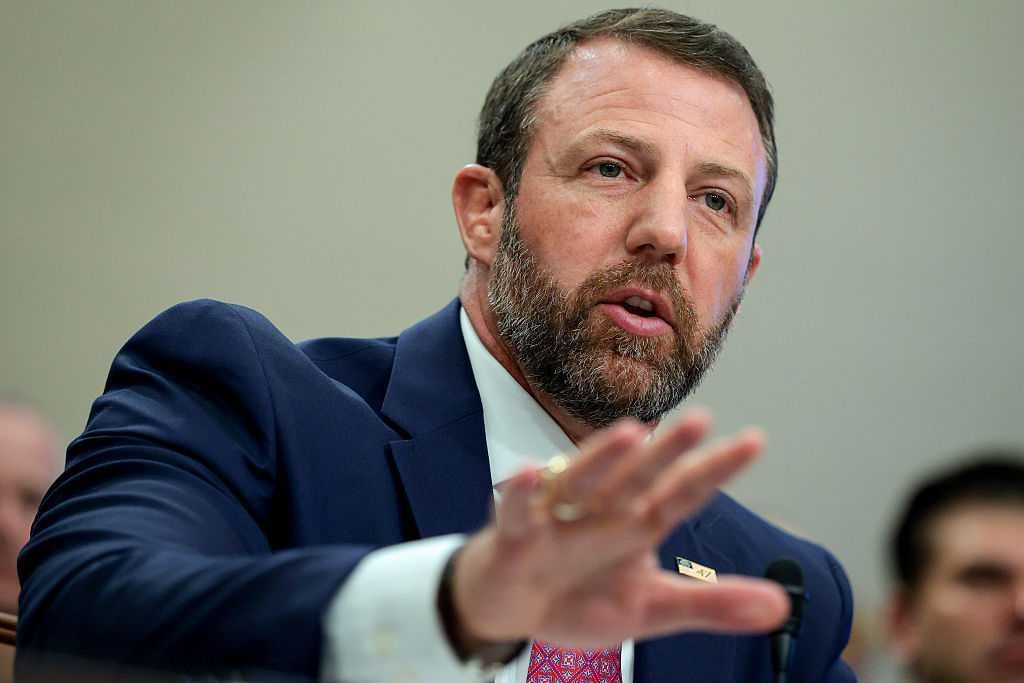
In late June, the U.S. Supreme Court delivered the Trump administration a huge victory, overturning the lower court's ruling.
In the majority opinion, Justice Samuel Alito rejected the suggestion that race was a motivating factor behind the TPS revocation and emphasized that the "TPS statute plainly bars consideration of respondents' non-constitutional claims."
In the wake of the Supreme Court making mincemeat out of her ruling, Reyes issued an order on Wednesday acknowledging the reversal of her judgment and what it necessarily entails.
The foreign-born judge, who previously had a great deal to say about the matter, kept her admission of defeat brief, noting that her stay of termination "is no longer in effect."
Despite Reyes' insinuation that the government was waiting on her say-so, James Percival, general counsel of the Department of Homeland Security, noted, "Haiti TPS ended when the Supreme Court mandate issued on July 27. I will give Judge Reyes kudos though for taking the L with grace and not doing something bonkers like many of her colleagues."
DHS Secretary Markwayne Mullin issued a message to Haitians with suspended special statuses: "We're going after them right now. We are giving them an opportunity to either leave on their own, and we'll help you, or we'll arrest you and send you back."
"Either way, you don't have status inside this country any more," continued Mullin. "That has been litigated. The courts spoke very clearly. We knew that we were going to win this because in its name itself it says, 'Temporary Protected Status.'"
Steve Foster, the immigration policy coordinator for the Institute for Justice and Democracy in Haiti, told ABC News, "Haitians with TPS, regardless of whether they have a pending asylum claim, have gotten a 'DHS Call-In Letter' to appear at ICE offices in person."
Foster said that some Haitians have reportedly been assigned future court dates and given ankle monitors.
These efforts are reportedly under way in Springfield — an Ohio city that has in recent years heard allegations of Haitians eating pets and wildlife and seen a significant spike in Haitian-caused traffic accidents.
In 2024, Springfield Mayor Rob Rue admitted that the tens of thousands of Haitians who had recently poured into his city — a city that had a population of just over 58,000 in 2020 — "taxed" the "infrastructure of the city, our safety forces, our hospitals, our schools." According to the city, there were more than 15,000 migrants presently residing in Clark County alone.
Viles Dorsainvil, the head of a Haitian support group in Springfield, confirmed the government's efforts to get the ball rolling on Haitian migrants' ouster.
"We are just helping these folks to go to this appointment, and when they get there, they interview them and eventually put [an] ankle monitor on them," said Dorsainvil.
Like Blaze News? Bypass the censors, sign up for our newsletters, and get stories like this direct to your inbox. Sign up here!
Republican Rep. Andy Ogles of Tennessee has filed articles of impeachment against a federal judge after she ruled to block the president's rescission of deportation protections for Somalis.
U.S. District Judge Allison Burroughs issued an administrative stay on Friday to stop the administration from deporting Somalis who had been granted Temporary Protection Status.
'This judicial activist’s obstruction of the people’s will must be stopped. Judge Burroughs must be impeached.'
Ogles fired back in a statement on Saturday, threatening to impeach Burroughs, who was appointed by former President Barack Obama. On Monday, he filed the articles.
"America is not Africa’s dumping ground. We will end Temporary Protected Status, remove those who have no lawful right to remain, and put the sovereignty of the American people FIRST," he wrote on social media.
Ogles explained the justification for the impeachment in a statement to Just the News.
"SCOTUS made it very clear that lower courts cannot suspend TPS. Yet, an Obama-appointed judge is defying the court and the Constitution in an attempt to subvert the will of the president," Ogles said. "This judicial activist’s obstruction of the people’s will must be stopped. Judge Burroughs must be impeached."
Burroughs issued the stay after African Communities Together and other plaintiffs accused the administration of discrimination on the basis of race as well as national origin. The plaintiffs had changed their lawsuit in order to fit the standards the Supreme Court had placed on federal judges blocking TPS terminations.
The same judge had also issued a previous stay over the TPS program. Department of Homeland Security General Counsel James Percival issued a stern condemnation of Burroughs' latest decision.
"Judge Allison Burroughs just entered yet another order preventing the termination of Somalia TPS," Percival posted Friday. "There is no serious debate about what is going on in these cases — defiance, obstruction, and delay."
RELATED: Spain says 25,000 migrants have been expelled from tiny Ceuta territory — with at least 34 DEATHS
The process to remove a judge is difficult and unlikely. Ogles has begun the process, but a majority of the U.S. House of Representatives will need to approve the motion.
Then, the articles would go to the U.S. Senate for trial, and two-thirds of the senators would need to vote to convict to remove Burroughs from office.
Only eight federal judges have been convicted and removed in U.S. history.
Ogles is facing a fierce and well-funded challenge in the Republican primary, and Democrats are also targeting his seat as a possible pickup for them in the general election.
Like Blaze News? Bypass the censors, sign up for our newsletters, and get stories like this direct to your inbox. Sign up here!

 'Notice the resources the Left is putting into silencing me. Why? Judicial activism is their golden goose, and they’re afraid if I keep talking about it then it will stop,' wrote DHS General Counsel James Percival.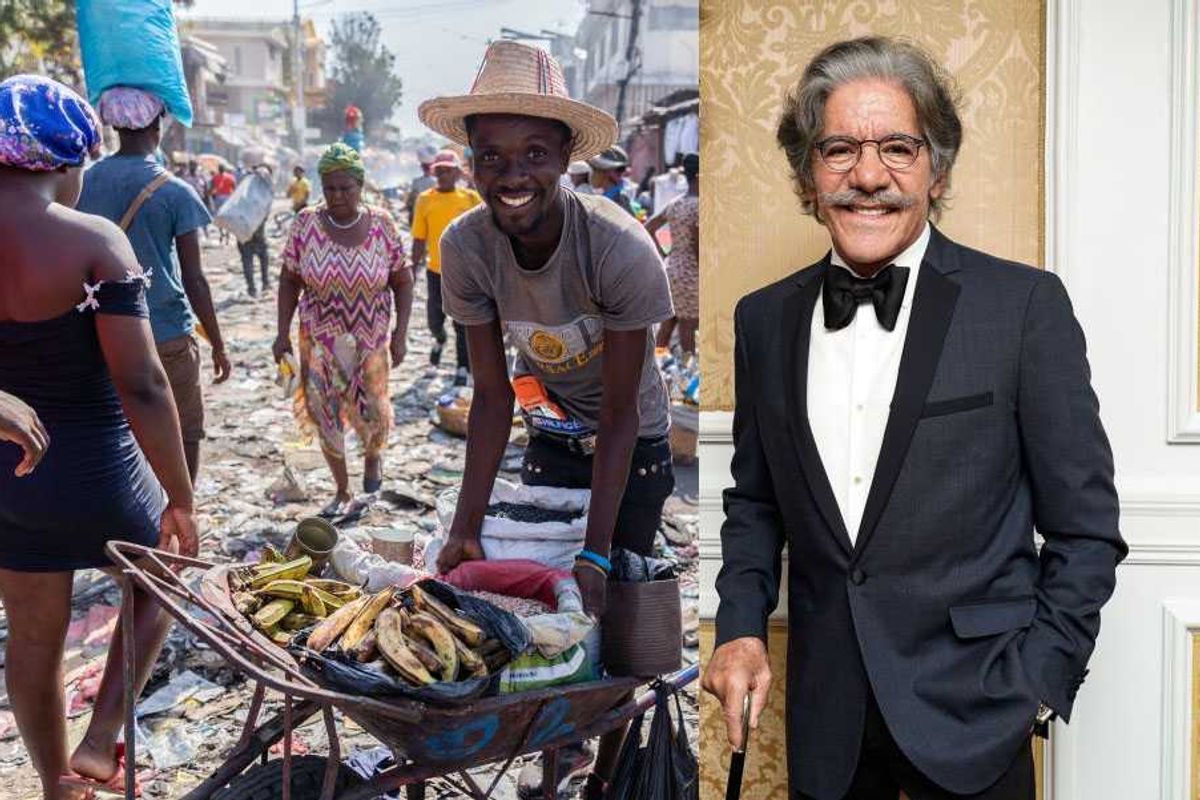


 Obama-appointed Judges Salas and Bloom appeared on an anti-Trump podcast to attack the admin for noticing their colleagues' activism on the bench.
 A federal appellate court shot down on Wednesday attempts by a pair of rogue judges to sidestep a recent Supreme Court immigration ruling. In its newly released orders, a three-judge panel on the 1st Circuit Court of Appeals overturned Massachusetts-based Judges Patti Saris and Brian Murphy’s administrative pauses against the Trump administration. Those directives sought […]
 While efforts to effectively sidestep the Supreme Court's TPS ruling seem ripe for dismissal, several rogue judges are entertaining such chicanery.
 thefederalist.com
 www.theblaze.com
 www.theblaze.com