Let’s build a statue honoring Pat Buchanan
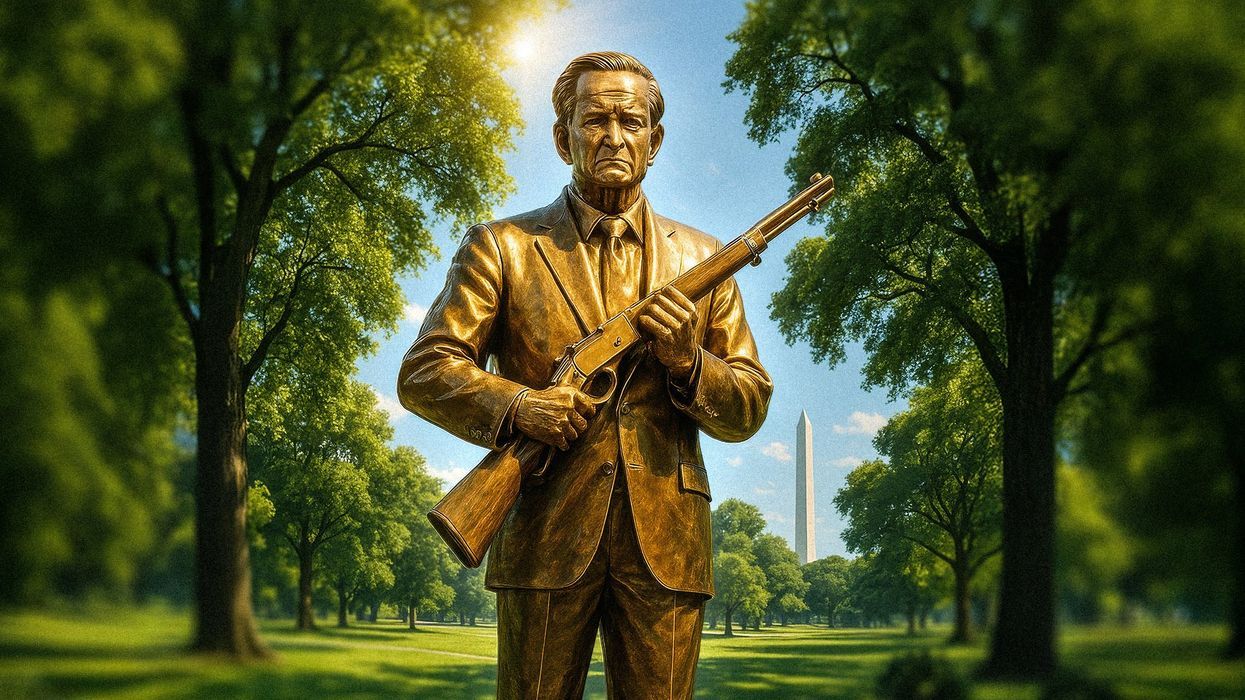
The life of an unheeded prophet rarely ends in comfort and often courts danger. Pat Buchanan endured both with the resolve of a warrior. As the most prominent paleoconservative in American politics, Buchanan stood so far ahead of his time that today’s MAGA agenda looks like a photocopy of his 1992 presidential campaign platform. From the culture war to working-class economics and immigration, Buchanan served as the American Cassandra — right about nearly every major question yet scorned by Republican elites.
Republican pundits and politicians dismissed him as a bigot, a racist, an anti-Semite — even likening him to a Nazi. Many of the loudest voices came from within his own party. But Buchanan never bent. He held the line. Decades later, nearly all his predictions have come true. He kept the torch of paleoconservatism burning when no one else would — and that torch lit the fire of the MAGA movement.
Buchanan took on the thankless task of warning his party and his country about the real dangers ahead, long before anyone in power was ready to listen.
Born in 1938 in Washington, D.C., Buchanan rose to prominence as a newspaper columnist and editor before joining President Richard Nixon’s White House as a speechwriter and political strategist. He later became a fixture on TV with shows like “Crossfire” and “The McLaughlin Group” and did a second tour at the White House as Ronald Reagan’s communications director from 1985 to 1987.
Buchanan could have coasted on that résumé. He didn’t. Instead, he broke with the GOP’s managerial, globalist consensus and challenged it head-on. In 1992, he ran against George H.W. Bush in the Republican primary, furious over the president’s betrayal of his “no new taxes” pledge. But Buchanan’s campaign wasn’t just about tax policy. He warned against endless foreign wars, the abandonment of Christianity, the hollowing out of American industry, and the long-term consequences of mass migration.
In his famous “culture war” speech at the 1992 Republican National Convention, Buchanan didn’t just warn Republicans. He challenged the entire direction of the American ruling class.
“My friends, this election is about more than who gets what. It is about who we are,” he said. “It is about what we believe and what we stand for as Americans. There is a religious war going on in this country. It is a cultural war, as critical to the kind of nation we shall be as was the Cold War itself, for this war is for the soul of America.”
After two more failed presidential bids, Buchanan returned to writing and commentary. He published several influential books, including “The Death of the West” and “Suicide of a Superpower,” launched the American Conservative, and penned columns for VDARE. At every turn, he tackled controversial topics — foreign intervention, demographic transformation, and the destruction of the American middle class. While neoconservatives dominated Republican politics, Buchanan stood firm, laying the groundwork for the civil war now raging inside the GOP.
Most voters aren’t driven by ideology. They want a politics that serves their families, communities, and country. Conservatism shouldn’t revolve around abstractions but should exist to preserve a way of life. Despite the “conservative” label, Republican leadership made clear it cared only about cutting taxes and waging endless wars.
Then came Donald Trump, who bulldozed the GOP establishment by campaigning to secure the border, protect American workers, and end the forever wars. Trump won on Buchanan’s platform.
As Millennial and Gen Z conservatives came of age under Trump, many sought intellectual roots for the movement. They found them in the paleoconservatives: Paul Gottfried, Samuel Francis, and, most of all, Pat Buchanan. Clips of Buchanan’s speeches and passages from his books now go viral across social media, revealing a man who diagnosed America’s decline with uncanny foresight. He has become, retroactively, the elder statesman of the New Right — an inspiration to a generation of conservatives eager to challenge the party line and reclaim their country.
Buchanan’s return to prominence hasn’t gone unnoticed by establishment conservatives or the legacy press. Neoconservatives have taken to calling Trump supporters the “Buchanan right” — a clumsy insult aimed at discrediting the movement by association. The Atlantic recently ran a hit piece titled “The Godfather of the Woke Right,” recycling the slur peddled by James Lindsay. The article begrudgingly acknowledged “Suicide of a Superpower” as a formative text for the MAGA right but framed this influence as toxic — an engine of xenophobia and racism.
In a time when the GOP sold out to neoconservative globalism, Buchanan held the line. He took on the thankless task of warning his party and his country about the real dangers ahead — mass migration, national decline, foreign entanglements — long before anyone in power was ready to listen. For his efforts, he was ridiculed, condemned, and cast aside.
That must never happen again. We won’t let it happen again. The term “Buchanan right” shouldn’t be a smear — it should be a badge of honor.
While the left tears down statues of America’s founders, the right should start building. We must erect monuments to the men who stood firm when it mattered most. The first should be Pat Buchanan. We can no longer elect him president — but we can honor him now, while he’s still here to see it. Let’s build the monument he deserves — one that pays tribute to the man who carried the torch through the wilderness and lit the way for the movement that would Make America Great Again.
 The only path forward is for Israel to dismantle Hamas terrorists and let the critics say whatever they want.
 To celebrate its 20th anniversary, The American Conservative has published an anthology, 'Main Street Conservatism,' that demonstrates the magazine's remarkable prescience during a period where movement conservatives foundered.
 www.theblaze.com