Kids have already found a way around Australia's new social media ban: Making faces



The liberal-dominated Australian parliament passed an amendment to its online safety legislation last year, imposing age restrictions for certain social media platforms.

As of Dec. 10, minors in the former penal colony are prohibited from using various platforms, including Facebook, Reddit, Snapchat, TikTok, X, and YouTube — platforms that face potential fines exceeding $32 million should they fail to prevent kids from creating new accounts or from maintaining old accounts.

Australian kids were quick, however, to find a workaround: distorting their faces to appear older.

'They know how important it is to give kids more time to just be kids.'

Numerous minors revealed to the Telegraph that within minutes of the ban going into effect, they were able to get past their country's new age-verification technology by frowning at the camera.

Noah Jones, a 15-year-old boy from Sydney, indicated that he used his brother's ID card to rejoin Instagram after the app flagged him as looking too young.

Jones, whose mother supported his rebellion and characterized the law as "poor legislation," indicated that when Snapchat similarly prompted him to verify his age, "I just looked at [the camera], frowned a little bit, and it said I was over 16."

RELATED: App allegedly endangers ICE agents — now its creator is suing the Trump administration
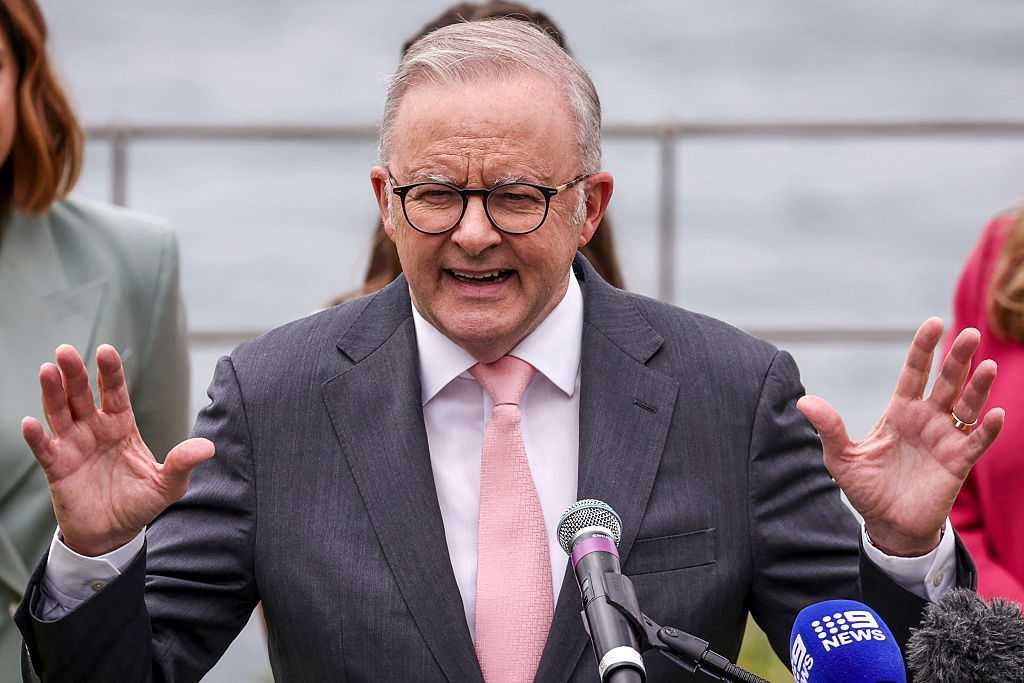
Australian Prime Minister Anthony Albanese. Photo by DAVID GRAY / AFP via Getty Images.

Jones suggested to the Telegraph that some teens may alternatively seek out social media platforms the Australian government can't regulate or touch.

"Where do you think everyone's going to?" said Jones. "Straight to worse social media platforms — they're less regulated, and they're more dangerous."

Zarla Macdonald, a 14-year-old in Queensland, reportedly contemplated joining one such less-regulated app, Coverstar. However, she has so far managed to stay on TikTok and Snapchat because the age-verification software mistakenly concluded she was 20.

"You have to show your face, turn it to the side, open your mouth, like just show movement in your face," said Macdonald. "But it doesn't really work."

Besides fake IDs and frowning, some teens are apparently using stock images, makeup, masks, and fake mustaches to fool the age-verification tech. Others are alternatively using VPNs and their parents' accounts to get on social media.

The social media ban went into effect months after a government-commissioned study determined on the basis of a nationally representative survey of 2,629 kids ages 10 to 15 that:

  • 71% had encountered content online associated with harm;
  • 52% had been cyberbullied;
  • 25% had experienced online "hate";
  • 24% had experienced online sexual harassment;
  • 23% had experienced non-consensual tracking, monitoring, or harassment;
  • 14% had experienced online grooming-type behavior; and
  • 8% experienced image-based abuse.

Australian Prime Minister Anthony Albanese said in a statement on Wednesday, "Parents, teachers, and students are backing in our social media ban for under-16s. Because they know how important it is to give kids more time to just be kids — without algorithms, endless feeds and online harm. This is about giving children a safer childhood and parents more peace of mind."

The picture accompanying his statement featured a girl who in that moment expressed opposition to the ban.

The student in Albanese's poorly chosen photo is hardly the only opponent to the law.

Reddit filed a lawsuit on Friday in Australia's High Court seeking to overturn the ban. The U.S.-based company argued that the ban should be invalidated because it interfered with free political speech implied by Australia's constitution, reported Reuters.

Australian Health Minister Mark Butler suggested Reddit was not suing to protect young Aussies' right to political speech but rather to protect profits.

"It is action we saw time and time again by Big Tobacco against tobacco control, and we are seeing it now by some social media or Big Tech giant," said Butler.

Like Blaze News? Bypass the censors, sign up for our newsletters, and get stories like this direct to your inbox. Sign up here!
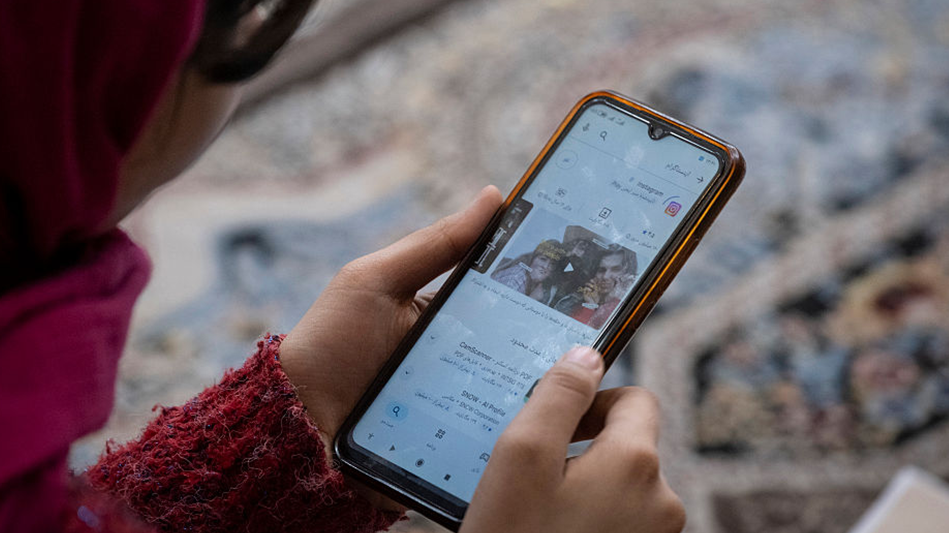
Australia BANS key social media apps for kids under 16 — and platforms must enforce the rule


Australia will put the onus on social media platforms to limit access to children under 16 years old.

The Online Safety Amendment (Social Media Minimum Age) Bill 2024 amended Australia's reigning online safety measures and gave social media companies time to age‐restrict their platforms and "take reasonable steps to prevent Australian under 16s from having account[s]."

'No Australian will be compelled to use government identification.'

Officially taking effect on December 10, the ban includes Facebook, Instagram, Snapchat, Threads, X, and YouTube's general platform; YouTube Kids and WhatsApp do not meet the criteria for the ban.

Australia introduced its social media minimum-age framework that included a list of criteria that would result in a platform being banned for those under 16. This included if a platform's sole purpose, or "significant purpose," is to "enable online social interaction between two or more end‐users."

Or if the service "allows end‐users to link to, or interact with, some or all of the other end‐users" and "allows end‐users to post material on the service" and "meets such other conditions (if any) as are set out in the legislative rules," it will not be available for younger Australians.

The legislation can also specify certain platforms, or classes, to not include in the ban.

Social media platforms will be responsible for enforcement, and neither children nor their parents will face punishment should they gain access. Companies face fines of up to $32 million USD or just under $50 million in Australian dollars.

RELATED: How Texas slammed the gate on Big Tech’s censorship stampede

Photo by DAVID GRAY/AFP via Getty Images
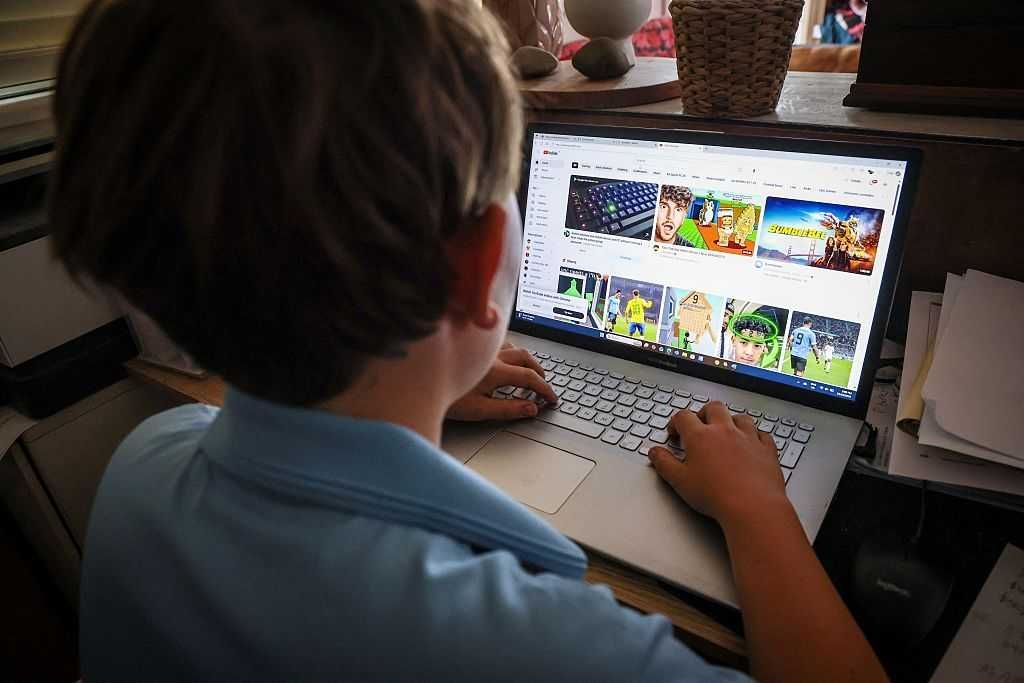
The government further defined the requirements placed upon the platforms, adding that they must "take reasonable steps to prevent" those under 16 from having accounts.

The legislation also specified that "no Australian will be compelled to use government identification (including Digital ID) to prove their age online" and that platforms must offer reasonable alternatives to its users.

According to the BBC, other countries are hot on Australia's tail in terms of implementing their own similar bans. This includes the French government, which has begun a parliamentary inquiry into banning children under 15 years old from social media, while also implementing a "digital curfew" for those between 15 and 18.

The Spanish government has also drafted a law that would require parental consent for children under 16 to access social media.

RELATED: Conservative influencers promote Qatar as a desert paradise — but are they lying?

Photo by DAVID GRAY/AFP via Getty Images
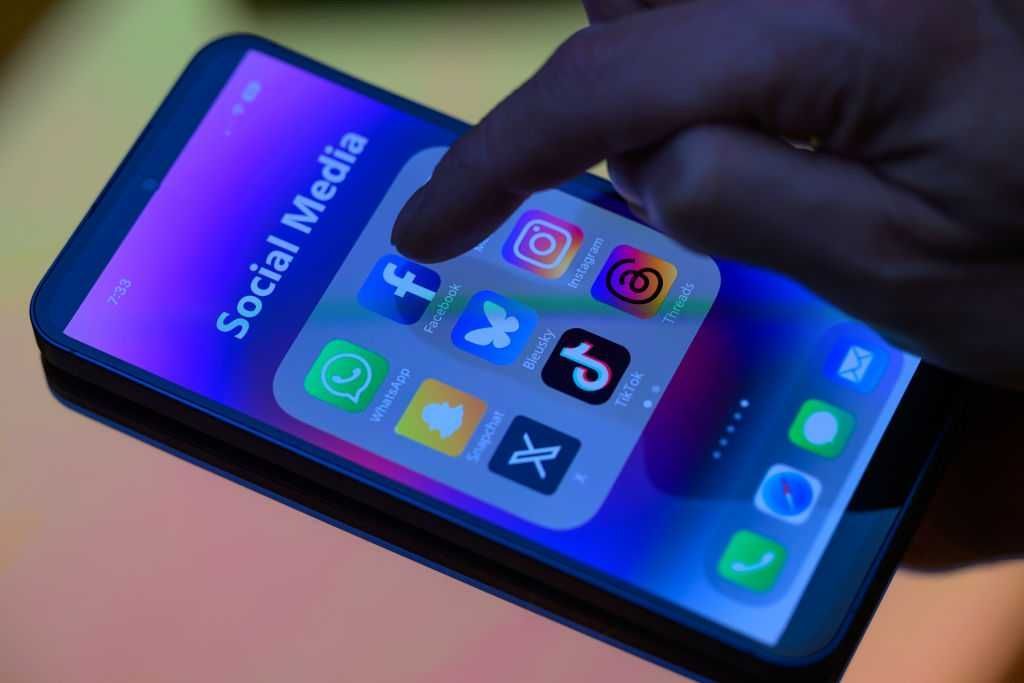
Ruling left-wing Labour Party official Anika Wells, who serves as Australia's communications minister (and minister of sport), said that the ban is not "perfect" and is going to "look a bit untidy on the way through."

"Big reforms always do," she added.

Australians under 16 will still be able to access content that is available on a website without being logged in or being a member, as there is virtually no way to prevent that without restricting access to the internet entirely.

Like Blaze News? Bypass the censors, sign up for our newsletters, and get stories like this direct to your inbox. Sign up here!

Threads is now bigger than X, and that’s terrible for free speech


Move over X! The public square has a new mayor. The latest user metrics show that, for the first time ever, Threads surpassed X in monthly active users worldwide, and it’s on track to rise even further. At the same time, X continues to decline, spelling disaster for the world's free-speech platform. Will censorship run rampant on the global stage, or is there still hope that X can bounce back? Let’s find out ...

Threads has more daily users than X, but it’s not what you think

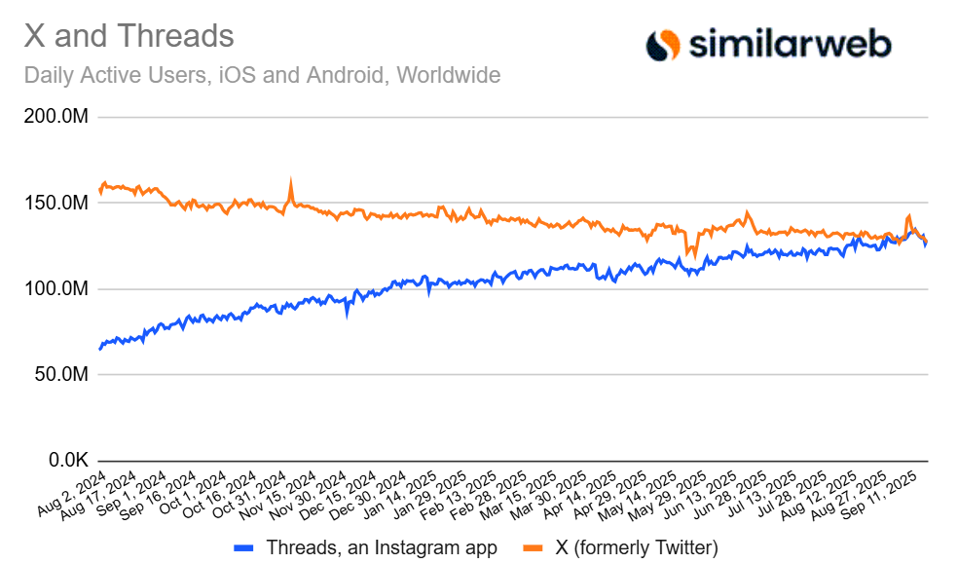
In a graph compiled by Similarweb, September shows that Threads just barely eked ahead of X in monthly active users, coming in at 130.2 million daily users compared to X’s 130.1 million users. The difference between them is razor-thin, but it’s still significant for one big reason: September 2025 marks the very first time that Threads surpassed X since the platform launched on July 5, 2023.

Graphic by Zach Laidlaw

Another quick look at the graph outlines a second alarming stat — X, marked in orange, is on a clear downward slide, while Threads, highlighted in blue, is climbing upward. Now that both have intersected, it’s likely that they will trade places permanently, giving Threads the crown over X in active monthly users worldwide.

Threads stands to gain it all and shift the political narrative back in favor of the left.

But it’s not all bad news. Threads may be king around the globe, but X still leads on mobile in the U.S. market with 21.3 million daily users over Threads’ 16.2 million daily active mobile users. The disparity is even larger for website visits, with 140.7 million daily active users flocking to X.com versus a paltry 7.7 million daily users on Threads.com.

So why worry if X is still ahead of Threads in the United States? There are several causes for concern:

The great social media reset

Now that Threads is the new worldwide digital town square, it’s only a matter of time until the U.S. market takes a hit. The first major paradigm shift will come from brands as they pull advertising dollars from X and invest in Threads with its wider global reach. Advertisers have already dropped X in the past, and Elon Musk sued to reverse it, though there may not be much he can do if brands simply decide to prioritize a more active platform.

Next, users will continue to drop off in favor of Threads’ growing community. They’ll follow their friends and relatives to Meta’s platform, further hitting X’s bottom line. If X loses enough traction after that, it will either recede into obscurity or worse, it could dissolve entirely.

The end of online free speech

As a bastion of free speech, X is the premiere open platform with the least amount of political censorship. While Americans can exercise these rights on X, the rise of Threads opens the door for greater censorship around the world, especially in countries where X is already banned.

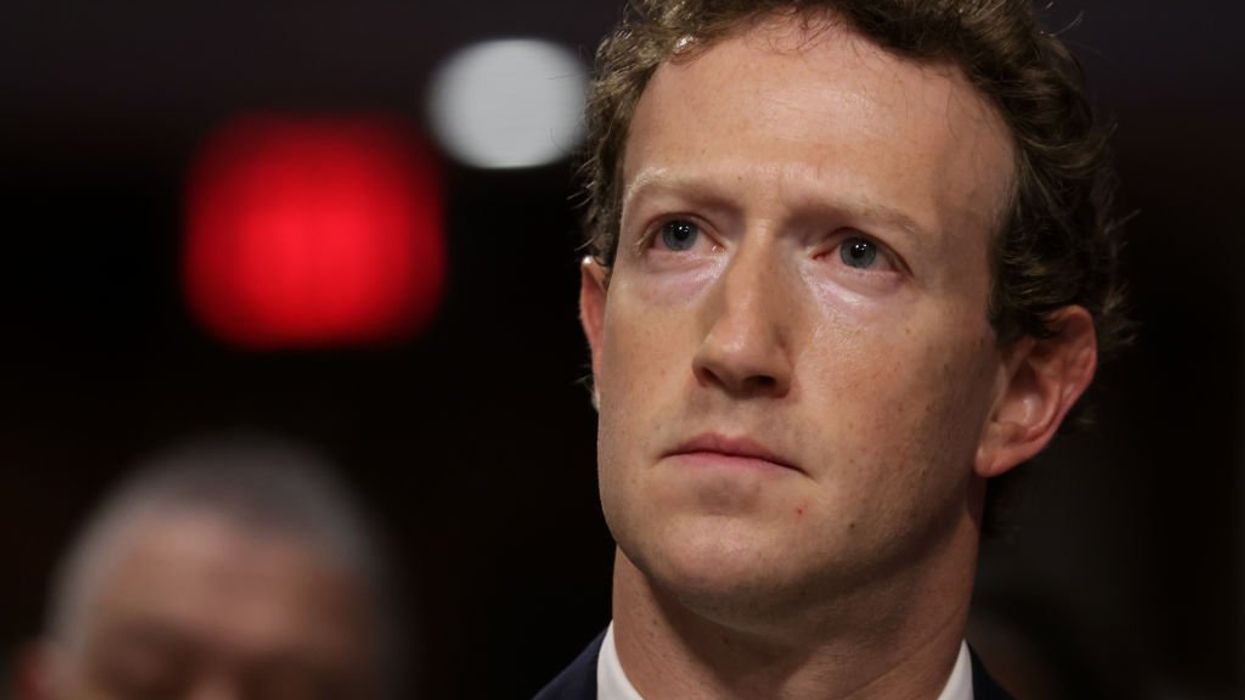
If X topples entirely, no U.S. citizen is safe from the next Democrat president reinstating the oppressive censorship tactics from the Biden administration. Meta’s Mark Zuckerberg claims to be a proponent of free speech these days, but does anyone trust him to keep his word in the next administration? I’m not holding my breath.

The echo chamber wars

Just as pre-Musk Twitter was a left-leaning echo chamber for liberal ideas, X could become the same thing for the right. More left-leaning users will undoubtedly flee to Threads to shore up their online political stronghold, and X will morph into a right-wing haven primarily for conservative values.

It might sound like a good idea to give both sides their places to gather online in peace, but the truth is a little more grim. Echo chambers of any kind have consequences, and society is better off without them. We need an online space — like X — where the two sides engage in civil debate, a fact that the late Charlie Kirk knew well. In Charlie’s own words, “When people stop talking, that’s when you get violence ... because you start to think the other side is so evil and they lose their humanity.”

X is more than its user metrics

Looking at raw data, the graph is clear: X has been on a steady decline for years dating back to Elon Musk’s acquisition. At the same time, Threads has continued to grow month over month, and it doesn’t show any signs of stopping. If the trend plays out, X is at real risk of losing its power in the social and political landscape, while Threads stands to gain it all and shift the political narrative back in favor of the left.

RELATED: Zuckerberg's vision: US military AI and tech around the world

Photo by Alex Wong / Contributor via Getty Images
That said, X’s U.S. momentum is still going strong, providing enough engagement to keep the platform relevant, at least for the time being. X is also so much more than a social media app — it’s a hub for xAI and Grok, a PR machine for SpaceX, a launchpad for the new Vine, a budding financial platform, and more. Musk is betting big on X as a holistic lifestyle product that transcends its social roots. The new strategy provides multiple engagement points to grow the userbase outside of X alone, keep users locked in every day, and make sure they come back for more, Threads be damned.

Meta officially ending 'fact-checking'


Meta, the parent company of Facebook, Instagram, and Threads, announced on Friday that it is officially ending its "fact-checking" program in the United States.

Joel Kaplan, the company's chief global affairs officer, stated that starting Monday, it will terminate the program for good and switch to a community notes system, similar to Elon Musk's X.

'We don't expect this process to be perfect, and we'll continue to improve as we learn.'

Kaplan declared, "By Monday afternoon, our fact-checking program in the US will be officially over."

"That means no new fact checks and no fact checkers," he continued. "We announced in January we'd be winding down the program & removing penalties. In place of fact checks, the first Community Notes will start appearing gradually across Facebook, Threads & Instagram, with no penalties attached."

A Meta spokesperson told Fox Business that community notes are "a better approach that will be less biased and more scalable."

The representative noted that the company expects "more people with more perspectives adding context to more types of content."

"The community decides what notes get written and rated — not Meta," the spokesperson continued. "That said, this is a brand-new product that we're still testing and building. We don't expect this process to be perfect, and we'll continue to improve as we learn."

Meta explained that as part of the change, no social media users should have strikes against their account by Monday. Since January, anyone who has been so-called "fact-checked" will reportedly not face any account penalties or demotions.

The company's website explains that the changes will be rolled out to the U.S., improved over the year, and then implemented in other countries.

Meta began testing its new community notes feature in mid-March, allowing some social media users to write and rate notes across its platforms.

"Around 200,000 potential contributors in the U.S. have signed up so far across all three apps, and the wait list remains open for those who wish to take part in the program. But notes won't initially appear on content. We will start by gradually and randomly admitting people off of the wait list and will take time to test the writing and rating system before any notes are published publicly," the company stated.

The rating system for determining whether a community note is added to a post "isn't majority rules," Meta added.

"No matter how many contributors agree on a note, it won't be published unless people who normally disagree decide that it provides helpful context," it said.

Meta CEO Mark Zuckerberg announced the forthcoming changes in January when he released a video stating that the company was returning to its "roots and focus on reducing mistakes, simplifying our policies, and restoring free expression on our platforms."

"More specifically, here's what we're going to do. First, we're going to get rid of fact-checkers and replace them with community notes similar to X, starting in the U.S.," he said, citing the 2024 presidential election as a contributing influence in the decision.

"The recent elections also feel like a cultural tipping point towards, once again, prioritizing speech," Zuckerberg added.

Like Blaze News? Bypass the censors, sign up for our newsletters, and get stories like this direct to your inbox. Sign up here!

FACT CHECK: Did The New York Post Publish Headline Claiming Mark Zuckerberg Is Changing The Name Of Threads?

A post shared on social media purports New York Post Meta will change the name of Threads to “Z.”   View on Threads   Verdict: False There is no evidence of this headline being published by the New York Post. Fact Check: A group of authors have alleged in a court filing that Zuckerberg approved the use […]

FACT CHECK: Kamala Harris Capital Gains Tax Rate Proposal Would Only Apply To Income Earners Over $1 Million

Harris stated that the tax increase on long-term capital gains would affect those who make $1 million a year or more.

FACT CHECK: No, This Image Does Not Show Kamala Harris In The 90s

The photo is miscaptioned and actually shows three reality TV stars, not Harris.

WHO Bragged About Helping Big Tech Control What You See About Covid, And It’s Still Happening

The WHO bragged about 'working with more than 50' tech companies to make its own claims 'appear first' in Covid-related searches.

Leftist ‘Disinformation’ Police Pressure Meta To Run Election Interference On New Threads Platform

Left-wing organizations are pressuring Meta to develop a plan to combat so-called election 'disinformation' on its new Threads platform.