Tom Cruise is utterly bizarre. He’s also America’s greatest movie star.
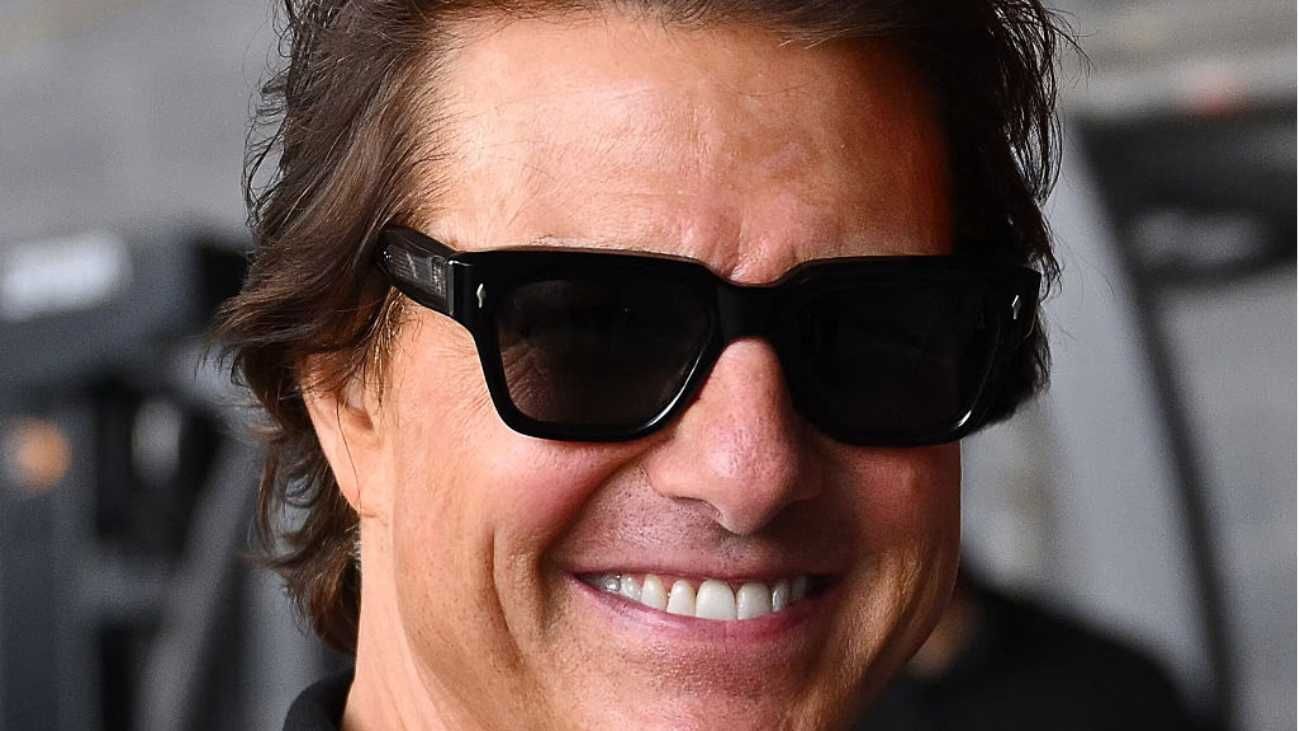
Tom Cruise is a strange human being. This is not up for debate.
Nor is the fact that he’s a great movie star and perhaps the last truly great American movie star.
Cruise doesn’t overplay the working-class persona. He simply embodies the concerns of a terrified father trying to dodge alien death rays.
Even at 64, this genetic anomaly shows no signs of slowing down. Cruise is so monomaniacally devoted to his craft that what he does off-screen should have no bearing on what he delivers on-screen.
Losin' it
Yes, he sold his soul to a sci-fi cult founded by a charlatan and a known criminal. Yes, he bounced around on Oprah’s couch like a toddler who had just inhaled a dozen Red Bulls. Yes, he left a trail of high-profile divorces behind him. And yes, his relationship with his youngest daughter, Suri, has all the warmth of a North Korean prison camp in November.
None of this matters. Not in the grand scheme of things, anyway.
That’s because Tom Cruise is essentially a diminutive delivery system for larger-than-life cinema.
We live in a culture obsessed with dragging actors into the town square to answer for their sins, whether real or manufactured. Audiences demand that stars double as Sunday school teachers. Expecting a guy who scales mountain faces for fun to have a wholesome, normal domestic life is borderline delusional.
As a young man, Cruise briefly considered becoming a Franciscan priest. That didn't work out, but he eventually found a vocation almost as all-consuming.
All the right moves
Circa 1986, Cruise abandoned the real world to become a perpetual entertainment machine. If he wants to spend his days grazing on a handful of almonds, running on a treadmill at 3:00 a.m., and worshiping cosmic conquerors, that’s his business. And in truth, it’s really none of ours. He is an actor, not a member of Congress.
The miracle of Cruise is his ability to play an everyday American while living a life that seems more alien than the creatures he runs from.
Which brings us to Steven Spielberg’s 2005 masterpiece "War of the Worlds." Cruise plays Ray Ferrier, a divorced New Jersey dock worker with a rusted V8 engine block sitting on a coffee table in his messy living room.
A man worth hundreds of millions of dollars, who flies private jets around the globe, somehow steps onto the screen and instantly radiates the exact energy of a guy who owes child support and eats cereal straight out of the box. He doesn’t overplay the working-class persona. He doesn’t force a cringeworthy accent. He simply embodies the concerns of a terrified father trying to dodge alien death rays. And he does it superbly.
Far and away
This effortless ability to play an average American sets him apart from his peers. Brad Pitt is a fine actor. But he always looks like a Hollywood A-lister playing dress-up when he tries to portray a normal civilian. Pitt was fantastic in "Fight Club" and "Once Upon a Time ... in Hollywood," but he could never match the ferocious vulnerability delivered by Cruise in Paul Thomas Anderson’s 1999 drama, "Magnolia."
In an ensemble that includes Philip Seymour Hoffman, Jason Robards, and William H. Macy, Cruise stands out as Frank T.J. Mackey, an obnoxious, hyper-alpha pickup-artist guru. But when Mackey sits beside the hospital bed of his estranged father, now comatose and dying, the tough-guy facade fades.
The scene had an eerie parallel in Cruise's own life. His mother left his father when Cruise was 12, and father and son didn't see each other again for a decade. They finally reunited when his father was dying of cancer in a hospital — on the condition, Cruise later said, that the son ask no questions about the past.
Cruise, who has described his father as a "bully and a coward," brought some of that history directly into the scene, rewriting the monologue himself. The result is a brutal, believable breakdown that remains one of the finest performances in modern film history.
Risky business
Cruise's range is genuinely impressive, even extending into areas where it really shouldn’t. In the 2008 comedy "Tropic Thunder," Cruise donned a fat suit, a bald cap, and inordinate amounts of fake chest hair to play Les Grossman, a psychopathic, Diet Coke-chugging studio executive. The performance was comedic gold, turning a Harvey Weinstein-esque caricature into a cult-classic figure. The idea of Maverick aggressively dancing to hip-hop while screaming expletives into a satellite phone should never have worked. But it did, with magnificent effect.
The first time I saw Cruise on screen was in Oliver Stone’s 1989 classic, "Born on the Fourth of July." I was much too young to watch it, and my father should really have known better than to let me see it. But he didn’t at the time, and I’m eternally grateful for his questionable parenting decisions.
Playing Ron Kovic, a paralyzed Vietnam veteran, Cruise captures the heartbreak of a young American patriot who was betrayed by the country he served. The performance, which earned him an Academy Award nomination, remains a masterclass in psychological horror.
Yet people still wax lyrical about Daniel Day-Lewis and his much-discussed commitment to method acting, while treating Cruise as little more than a charismatic movie star. The disrespect is almost automatic. Cruise gets lumped in with Jason Statham and Keanu Reeves, as though physicality and box-office appeal somehow disqualify an actor from serious dramatic greatness. That’s the great irony of Cruise’s career. One of Hollywood’s most technically gifted dramatic actors has spent decades being dismissed because he also happens to be one of its biggest movie stars.
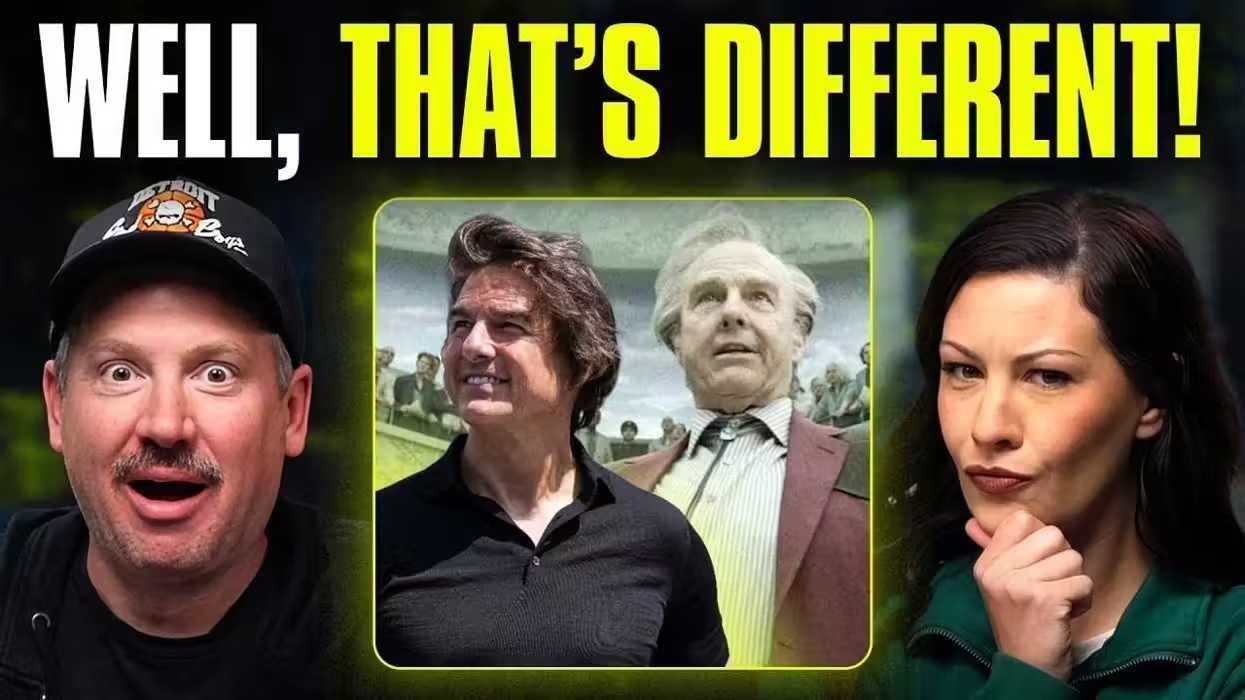
RELATED: Tom Cruise goes bald, fat, and Southern. Blaze comics approve.
Minority report
At an age when most Hollywood legends are retired or playing roles no one cares about, Cruise instead chooses to hang off the side of an Airbus A400M aircraft at 5,000 feet. He breaks his ankle while jumping between buildings in London, gets up, finishes the shot on camera, and then gets physiotherapy so he can do it all over again. The sexagenarian treats his body like an industrial turbine. He treats his craft with the devotion it deserves. Tom Cruise is an absolute machine, and he has given so many memorable performances.
The obsession with his off-screen antics reveals a sickening hypocrisy in how we consume art. We routinely listen to songs sung by disgusting individuals and admire paintings by violent lunatics, yet we expect our action heroes to be salt-of-the-earth types who adopt African children and fight for Zelenskyy on the front lines.
Cruise traded a quiet life for total mastery of cinema. When you sit down to watch a newly minted sequel to "Days of Thunder," you’re not buying a ticket to a lecture on family values. Instead, you’re paying for two hours of pure, unfiltered adrenaline, delivered by someone who sacrificed his sanity and his physical safety to make sure you enjoy your popcorn. Forget the trampolining on a couch. Forget the celebrity gossip. Tom Cruise is bizarre, but his body of work is damn near unimpeachable.
 If you’re looking for something to get you more excited to celebrate America’s 250th birthday than you already are, drop everything you’re doing and go see the Top Gun movies in theaters right now. To commemorate the iconic 1986 film’s 40-year anniversary, Paramount Pictures re-released Top Gun and its riveting sequel, Top Gun: Maverick, in […]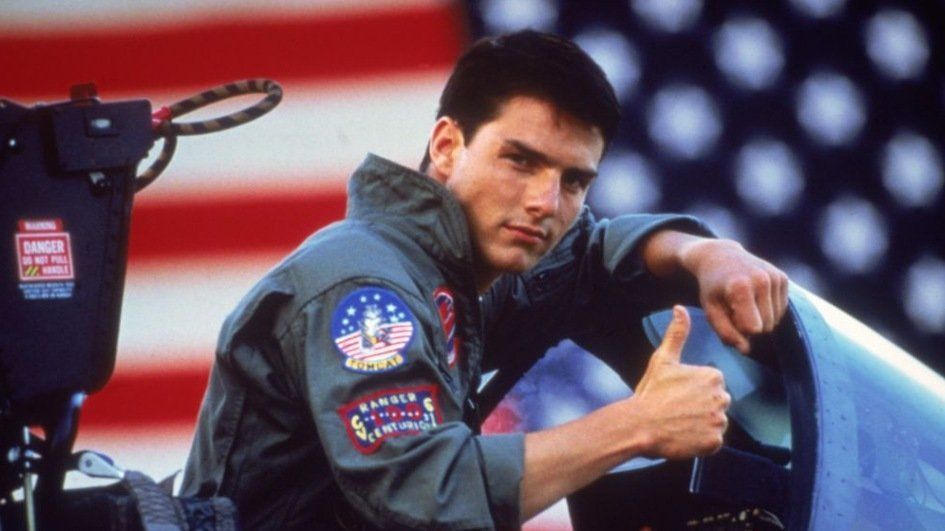
 Photo by JIM WATSON/AFP via Getty Images
 Please stop trying to make Pedro Pascal happen; he's not going to happen.
 As Bob Dylan famously sang, 'You don’t need to be a weatherman to know which way the wind blows.'
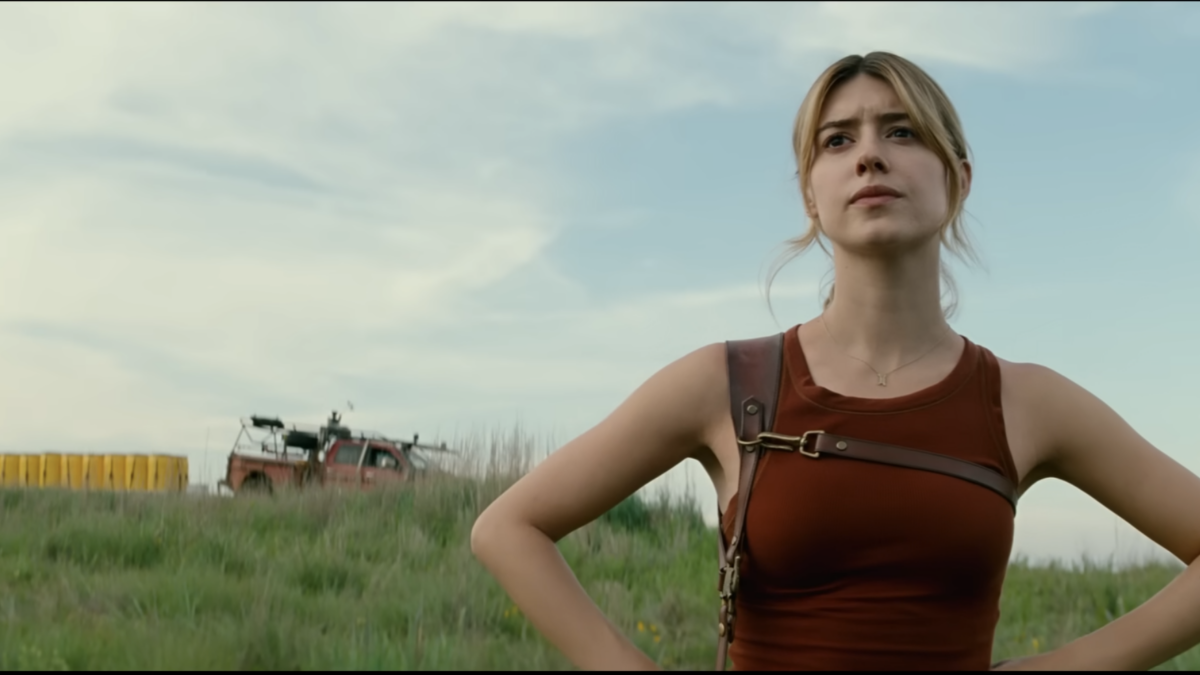 The minds behind 'Twisters' have successfully reverse-engineered the chemistry of the original film and even improved it in places.
 March was a good month at the box office, where movies like 'Godzilla' and 'Dune: Part Two' upstaged more recent financial failures.
 Moviegoers consistently appreciate characters like John Wick, the noble outlaw, the cowboy in a bulletproof Armani suit.
 thefederalist.com
 www.theblaze.com
NASCAR suspends Mike Wallace indefinitely over social media post