'Start driving north': US tourists stranded in Mexico after slaying of top cartel boss 'El Mencho' sparks chaos
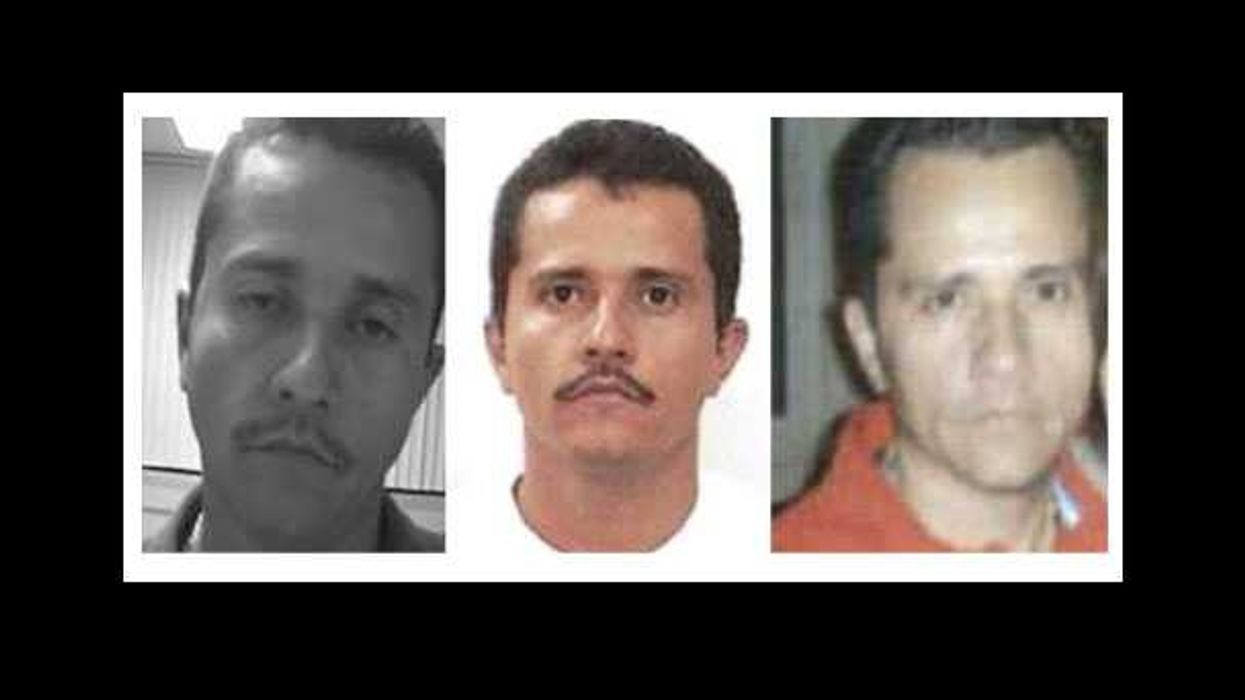


The U.S. State Department issued an advisory on Sunday instructing Americans in Jalisco State as well as in several other Mexican states to "shelter in place until further notice" following the elimination of Nemesio "El Mencho" Oseguera Cervantes, Mexico's most-wanted cartel boss.

With firefights breaking out across the country, radicals blocking key roads, and flights being canceled, many tourists really had no other option than to hunker down.

Mexican Army special forces, aided by the nation's air force and national guard, launched a military operation on Sunday aimed at capturing Oseguera Cervantes in Tapalpa, Jalisco.

'The United States will ensure narcoterrorists sending deadly drugs to our homeland are forced to face the wrath of justice.'

Under Oseguera Cervantes, 59, the Jalisco New Generation cartel became one of the most formidable criminal enterprises south of the border.

The State Department noted that the CJNG, which the Trump administration designated a terrorist organization last February, "has been assessed to have the highest cocaine, heroin, and methamphetamine trafficking capacity in Mexico, and over the past few years, includes the trafficking of fentanyl into the United States."

In addition to trafficking deadly drugs, the savage and allegedly cannibalistic CJNG developed a reputation for murdering Mexican police and rival drug traffickers. The cartel was also allegedly involved in several assassination attempts against Mexican government officials.
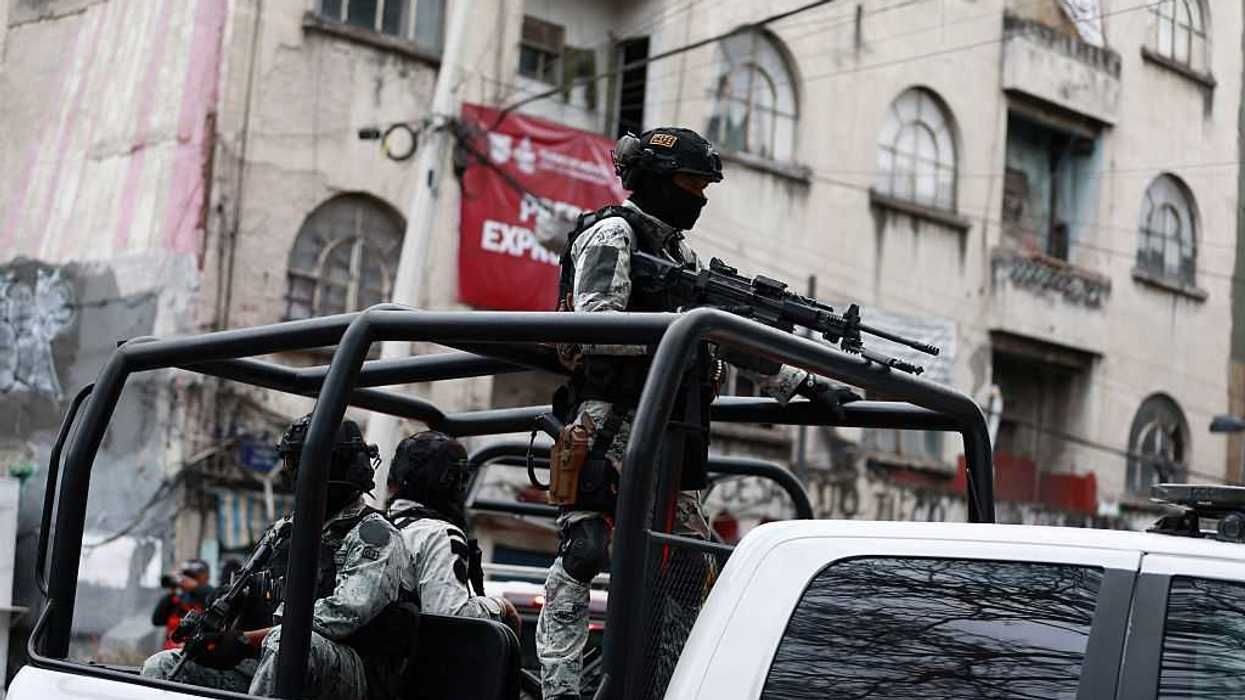
Mexican National Guard outside Specialized Prosecutor's Office for Organized Crime on Feb. 22. Photo by Daniel Cardenas/Anadolu/Getty Images

White House press secretary Karoline Leavitt indicated that the U.S. provided intelligence support to ensure the success of Sunday's operation. Mexican officials confirmed that "complementary information was provided by U.S. authorities within the framework of bilateral coordination and cooperation with the United States."

"'El Mencho' was a was a top target for the Mexican and United States government [sic] as one of the top traffickers of fentanyl into our homeland. Last year, President Trump rightfully designated the Jalisco New Generation Cartel as a Foreign Terrorist Organization — because that’s exactly what it is," Leavitt said in a statement.

"President Trump has been very clear — the United States will ensure narcoterrorists sending deadly drugs to our homeland are forced to face the wrath of justice they have long deserved," added Leavitt.

RELATED: What will replace the old world order?
Photo by Yilmaz Yucel/Anadolu/Getty Images

Mexico's Secretariat of National Defense indicated that while attacked during the operation, Mexican military personnel "repelled the aggression," resulting in "four members of the 'CJNG' criminal group dying at the scene and three others being severely wounded, who lost their lives during their airlift to Mexico City."

Oseguera Cervantes was among those wounded in the operation who apparently perished in transit.

Although Mexican and U.S. officials reported that Oseguera Cervantes was eliminated during the operation, the Mexican Secretariat of National Defense said that a forensic evaluation will nevertheless be undertaken to confirm that the cartel terrorist is dead.

In the wake of the operation, in which officials seized numerous armored cartel vehicles and rocket launchers, Mexican Army and National Guard troops mobilized to Jalisco and neighboring states to maintain a modicum of order.

Mexican President Claudia Sheinbaum — whose party has numerous members accused of being in bed with the cartels — underscored that "we must remain informed and calm."

'The good guys are stronger than the bad guys.'

Authorities in Jalisco, Michoacan, and Guanajuato indicated that seven Mexican National Guard troops were killed on Sunday along with seven others, reported the Associated Press.

Just before midnight on Sunday, the U.S. Dept. of State Bureau of Consular Affairs reiterated the need for American citizens to shelter in place, noting that "while no airports have been closed, roadblocks have impacted airline operations — most domestic & int’l flights are cancelled in Guadalajara and Puerto Vallarta."

Consular Affairs noted further that all rideshares are suspended in Puerto Vallarta and toll roads in various parts of the country are temporarily suspended.

One tourist claiming to be in Puerto Vallarta captured footage of thick columns of smoke billowing up on either side of his resort. Footage reportedly taken by a Canadian tourist stranded in Puerto Vallarta shows smoke-filled streets caused in one instance by a flaming bus.

David Miranda, a Chicagoan whose vacation in Puerto Vallarta has evidently gone off the rails, told WSB-TV, "There's blockages, there's cars on fires, there's buses blocking the roads. So nobody can take an Uber, can take a taxi, can take a bus. Everything is blocked."

"We don't know how we're going to get food, because it's Airbnbs," said Miranda. "So everything is closed, the corner stores — everything is closed."

Lefty Karkazis of San Francisco also found himself trapped in Puerto Vallarta.

"We were supposed to fly out of here at 2 p.m. So local time, at approximately 10 o'clock, we came downstairs, trying to get a taxi to go to the airport," Karkazis told KPIX-TV. "And [the hotel staff] told us that nothing is moving, all the roads are blocked because there's apparently a cartel operation that is affecting all the flights in and out."

His United Airlines flight was reportedly canceled.

"The next flight out for San Francisco from United is on Thursday. So we might end up staying until Thursday. I don't know," continued Karkazis. "We're just going to go from there. And the worst-case scenario, like I told my wife, we're just going to rent a car and start driving north."

The Trump administration commended the Mexican military on a job well done.

Deputy Secretary of State Christopher Landau said that the slaying of "one of the bloodiest and most ruthless drug kingpins" is a "great development for Mexico, the US, Latin America, and the world."

"The good guys are stronger than the bad guys," added Landau.

Like Blaze News? Bypass the censors, sign up for our newsletters, and get stories like this direct to your inbox. Sign up here!

Cape Town: My visit to one of the world's most dangerous cities


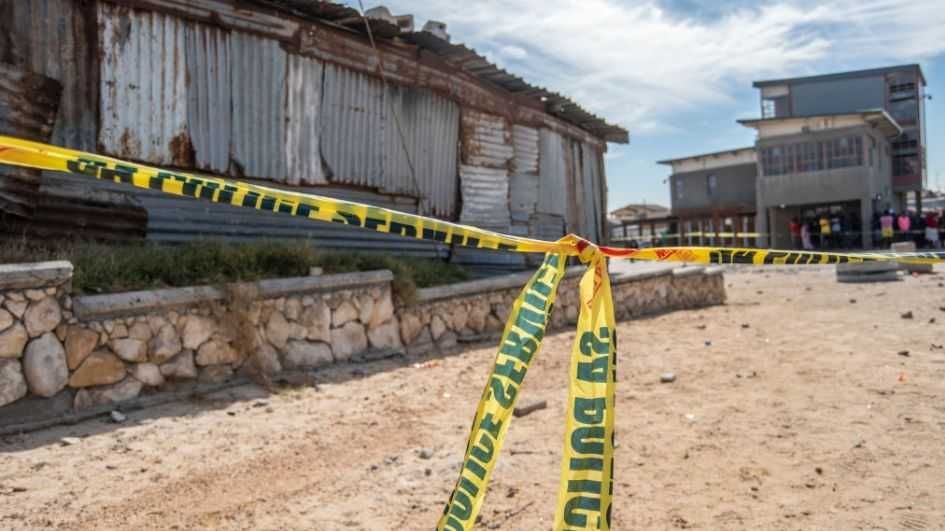
I recently ran a rather grueling race in Cape Town, a city ranked the world’s most stressful place to visit. By the end of my stay, I understood why.

Race morning brought cold Atlantic air. Table Mountain stood like a fortress. The scene was impossibly beautiful. Then the warnings began.

Julius Malema, the deranged leader of the openly Marxist Economic Freedom Fighters, has led crowds in chanting 'Kill the Boer,' the Afrikaans term for farmer.

“Stay where the crowds are after you finish,” an organizer told us.

A gray-haired runner, tying his never-before-worn Asics, gave me a knowing look, the kind that said "enjoy yourself, but stay alert." The gun fired. We surged forward. And Cape Town revealed itself in fragments.

The route hugged the ocean. Waves crashed against huge rocks. Sunlight rippled across the bay. Spectators shouted encouragement from spotless sidewalks. Cyclists zipped by in neon helmets. In Sea Point and Camps Bay, Cape Town looks effortlessly affluent: palm trees, clean promenades, and cafés filled with people sipping espressos. You could be forgiven for thinking the warnings were overstated. They weren’t. If anything, they were understated.

Razor wire on the Riviera

South Africa’s “Mother City” lives with staggering levels of violent crime. Armed robberies are frequent. Carjackings happen in broad daylight, averaging more than four an hour. Drivers slow at traffic lights but leave space ahead, ready to bolt. Doors lock automatically. Security companies advertise response times the way pizzerias advertise delivery. Sexual assault remains widespread, not just among women but also among children. In the Western Cape alone, nearly 2,000 sexual offenses against minors were recorded in a single quarter last year. The numbers are sobering; the anxiety is constant.

Security is everywhere. High walls ring homes like fortresses. Electric fencing hums overhead. Razor wire catches the light. The message needs no translation.

RELATED: 'Mass slaughter': Trump moves to help Nigerian Christians under attack

NurPhoto/Getty Images

Gang warfare

A few hours before I arrived in the so-called cultural capital, President Cyril Ramaphosa announced the deployment of soldiers to help fight criminal gangs, a clear sign that police can no longer contain the violence.

And violence is everywhere. Between April and September last year, an average of 63 people were murdered each day. In parts of the Western Cape, especially around Cape Town, gang warfare has become part of daily life. Children are caught in crossfire. Streets fall under the influence of savage syndicates. The gangs, armed with high-powered weapons and machetes, have grown bolder. Why wouldn’t they? Ramaphosa himself noted that soldiers aren’t trained for community policing. Their deployment now underscores the depth of the crisis.

In Gauteng province, illegal miners known as zama zamas run riot. Armed and operating in abandoned shafts, they have built criminal networks around illicit gold extraction. Residents describe intimidation, forced displacement, and operations typical of paramilitary units, not opportunistic gangs.

Existential threat

Ramaphosa has called violent crime “the most immediate threat to our democracy.” He’s right. It is. When criminal groups control territory, extract revenue, and outgun police, the problem is no longer confined to law enforcement. In truth, it becomes a contest over authority itself — an existential struggle South Africa knows all too well, a divided nation once again on edge.

These divisions didn’t appear overnight. Apartheid enforced separation with clinical precision. Its architects portrayed the system not as hatred but as “separate development,” claiming that divided populations couldn’t share power without conflict.

Whites were a small minority, and universal suffrage meant irreversible political defeat. Afrikaners carried the memory of previous conflicts, including the concentration camps in which thousands of their women and children died. They watched postcolonial upheaval unfold elsewhere in Africa and reasoned that without firm control, the country would descend into all-out anarchy.

Set aside outrage and judgment for a moment, and the logic reads as cautious, defensive realism. They believed strict separation would prevent barbarity, preserve a functioning economy, and protect a vulnerable minority from domination. In their minds, it was a matter of survival, not ideology. It’s easy to dismiss the apartheid movement as pure racism, a low-IQ explanation that fits neatly on a placard. But it overlooks the deeper dread that shaped it.

Farmers under siege

History didn’t end with apartheid’s fall. The country remains marked by mistrust, hatred, and absolute terror. Last year, President Trump suggested that white farmers were facing vicious reprisals. Violence against farmers is real and terrifying for those who live beyond the reach of towns and patrols. Farm attacks — home invasions, assaults, and killings — occur with regularity. Many farmers live far from towns or patrols, isolated and vulnerable when attackers strike.

Julius Malema, the deranged leader of the openly Marxist Economic Freedom Fighters, has led crowds in chanting “Kill the Boer,” the Afrikaans term for farmer. Thousands raise their hands like guns as they echo the refrain. Supporters describe it as a chant from the struggle era. Others, a little more grounded in reality, hear something far more dangerous. They hear language that calls for genocide. After all, what is being proposed is the elimination of people defined by a particular skin color. When I asked a white taxi driver whether such fears were exaggerated, he answered without hesitation: “No.”

At the crossroads ... again

South Africa is a beautiful country, arguably one of the most beautiful places on earth. Yet it can feel deeply intimidating, largely because it is. A tension hangs in the air, present even in the quietest moments. In many communities, it’s considered reckless not to keep multiple loaded firearms at home, ready to be used at any moment, day or night. Safety is discussed in near wartime terms. Even a simple trip to the store can feel like a roll of the dice, especially for white families.

Does South Africa have the capacity to weather the mounting unrest? I hope so, but I wouldn’t bet on it. A nation intimately familiar with bloodshed once again stands at a crossroads.

Trump’s economic agenda needs a Vegas test — and a Vegas win


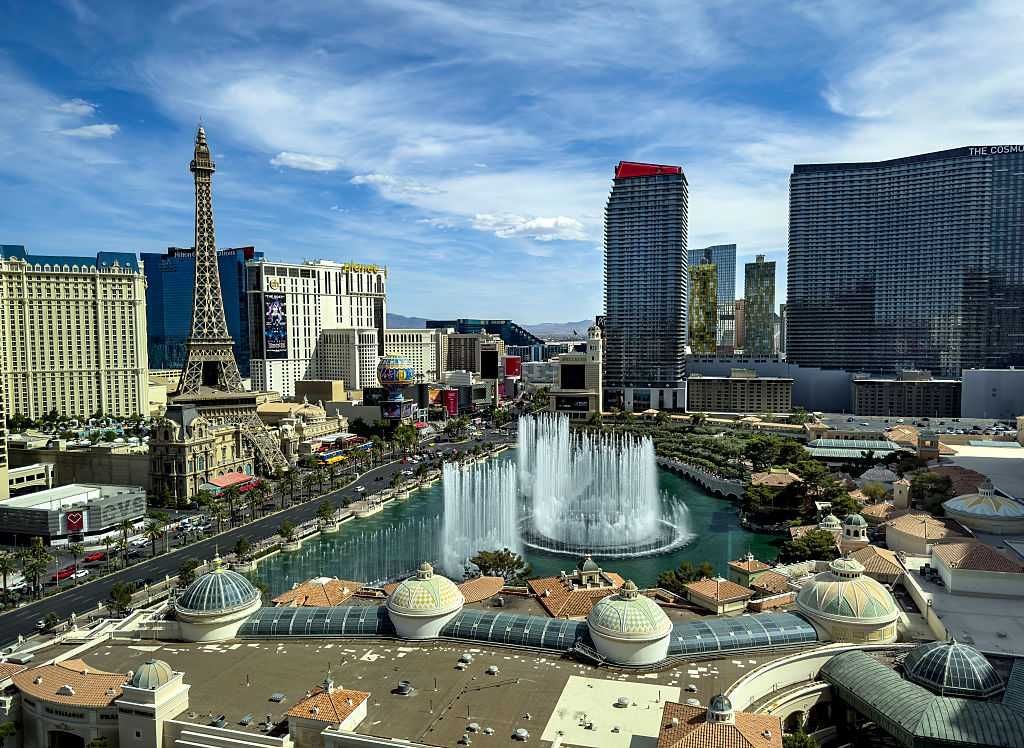
Las Vegas is a mirror. When it works, America works. When it struggles, the problem isn’t local — it’s national.

Vegas was built on a simple idea: value. Give people a reason to come, treat them fairly, and let them choose how much risk they want to take. No lectures. No stupid political games. No government hand in your pocket every five minutes.

A great city doesn’t nickel-and-dime its customers. Value matters. People don’t expect cheap. They expect fair. That lesson applies nationally, too.

That formula built the entertainment capital of the world. And right now, it’s under pressure.

The neon lights have dimmed

Vegas is getting squeezed from both ends, and the pressure feels familiar because it’s the same pressure families across the country have felt.

Under the Biden administration, inflation surged. Housing costs jumped. Groceries, energy, airfare, and insurance rose together. Families didn’t get richer. Their dollars just bought less.

Reckless spending, energy restrictions, and regulatory overreach drove the damage. Washington acted like prices were somebody else’s problem.

Southern Nevada also felt the economic whiplash. Tourism collapsed during the 2020 lockdowns, wiping out billions and driving unemployment as high as 33% at its peak. Visitor spending returned slowly, then softened again in 2025 — after wages, rents, and debt had already risen on the assumption that demand would keep growing.

For locals trying to raise families, that meant higher baseline costs and less margin for error. Housing, rent, and transportation ate paychecks. Hospitality wages rose, but many workers still lost ground as commuting costs and rents climbed faster.

A gamble on progress

Under President Trump, the trend has started to reverse — not overnight, but directionally. Energy production is up. Supply chains have stabilized. Regulatory pressure has eased. Inflation cooled. Costs didn’t snap back, but the bleeding slowed.

That matters because affordability is competitiveness. Vegas shows what happens when value breaks.

For decades, Vegas understood the middle-class customer: a weekend trip, a decent room, a good meal, a show, maybe a little gambling — and you left feeling like you got your money’s worth.

That perception is cracking. Resort fees that feel like a second room rate. Paid parking where it never used to exist. Food and drink prices that make people stop and stare. Fees stacked on top of fees, revealed at checkout. The experience starts feeling less like entertainment and more like an airport terminal.

Visitors notice. And when people feel squeezed, they don’t just complain — they change their behavior.

RELATED: America tried to save the planet and forgot to save itself

Photo by Timothy Fadek/Corbis via Getty Images
Vegas runs on volume. When fewer visitors come, fewer dollars circulate. The pain hits the dealer, the server, the bartender, the stagehand, the hotel staff, and the rideshare driver long before it reaches the executive suite.

Zoom out, and you see America facing the same dynamic.

The United States used to win because we offered the best value on earth. Not the cheapest — the best deal. A place where costs made sense and life felt attainable.

That edge has been eroding, especially in housing. When home ownership becomes a fantasy, workers can’t relocate, young families delay building stable lives, and talent looks elsewhere.

Meanwhile, competitors are building. Riyadh. Dubai. Macao. Singapore. They’re creating new tourism and entertainment hubs designed to pull dollars away from legacy markets like Las Vegas.

They’re betting America forgets how competition works.

Make Vegas Vegas again

Federal policy matters here. Washington still treats Vegas like a cash register, with outdated rules such as taxing gambling winnings and forcing IRS reporting thresholds stuck in the 1970s. That doesn’t just annoy visitors. It tells the world America doesn’t understand modern consumer behavior.

Ending the federal tax on gambling winnings isn’t radical. It’s strategic. Updating IRS reporting levels isn’t reckless. It’s realistic. Both would improve the visitor experience and help Vegas compete.

The industry also has work to do. A great city doesn’t nickel-and-dime its customers. Transparency matters. Value matters. People don’t expect cheap. They expect fair.

That lesson applies nationally, too.

America doesn’t win by lecturing consumers or ignoring affordability. America wins by making this country the best place on earth to live, work, build, and spend money.

Vegas is telling that story in real time. If Washington listens, the rest of the country benefits.

Places To Visit In D.C. Unaffected By The Government Shutdown

If you’re at a loss for what to do in Washington during the shutdown, or if you're looking for off-the-beaten-path places to visit once the government reopens, check out this list.
'A more direct solution': State Department rolls out key strategy to prevent foreigners from overstaying their welcome


President Donald Trump issued an executive order on his first day in office titled "Protecting the American People Against Invasion."

In addition to directing all executive departments and agencies to "employ all lawful means to ensure the faithful execution of the immigration laws of the United States against all inadmissible and removable aliens," the president tasked the secretaries of treasury, state, and homeland security to establish a visa bond program.

Pursuant to Trump's executive order, the State Department published a temporary final rule in the Federal Register on Tuesday announcing the commencement of a 12-month visa bond pilot program aimed at ensuring that foreign nationals pay a hefty price if they overstay their welcome.

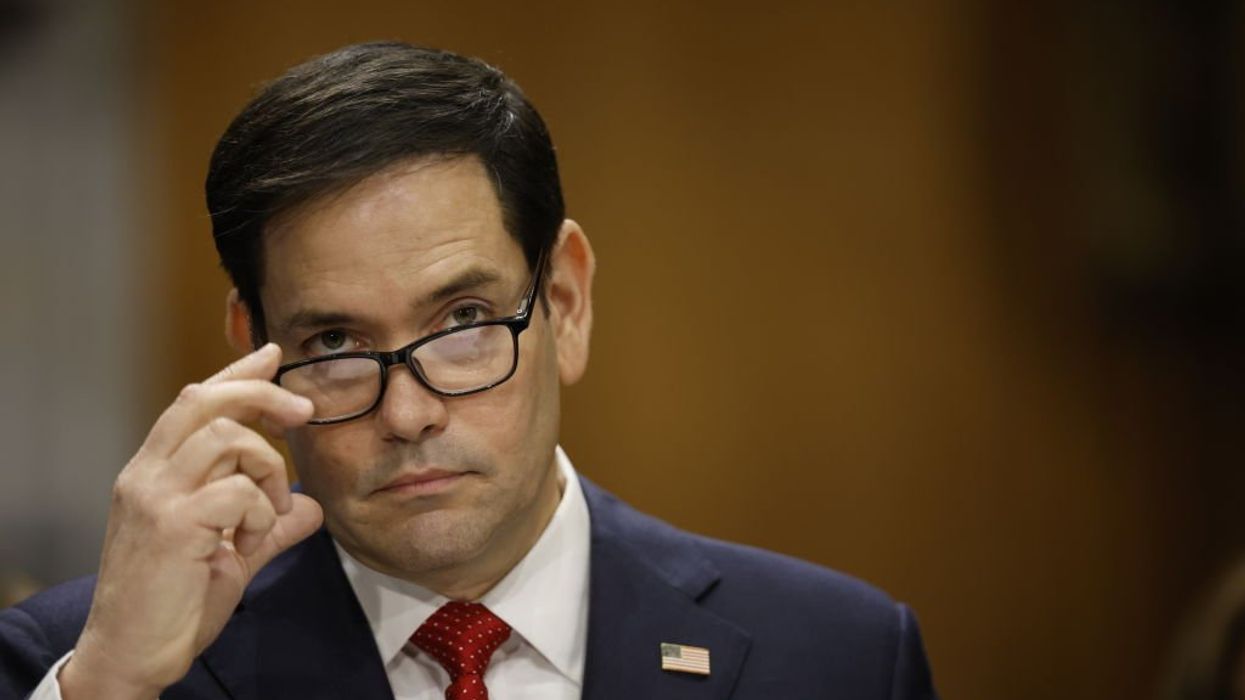
Secretary of State Marco Rubio notified State Department employees of the program in a cable on Monday.

A State Department spokesperson told Blaze News, "The pilot reinforces the Trump administration’s commitment to enforcing U.S. immigration laws and safeguarding U.S. national security.

Under the program, consular officers can require aliens applying for visas as temporary visitors for business or pleasure to post bonds of up to $15,000 if they hail from countries identified by the State Department as having high visa overstay rates, substandard screening and vetting information, or offering citizenship by investment.

According to the State Department spokesperson, foreign policy considerations may also be factored into whether a bond is required.

By overstaying a visa, an alien could forfeit the bond as well as risk the usual consequences: a three-year, a 10-year, or an indefinite ban from the country, depending on the duration of unlawful presence.

The pilot program — established under the Immigration and Nationality Act, which authorizes consular officers to require aliens to post a bond for a B-1/B-2 visitor/tourist visa — is effective from Aug. 20, 2025, until Aug. 5, 2026.

'With their own money on the line, more temporary visa holders will comply with their required departure date.'

"In line with an America First foreign policy, fully enforcing U.S. immigration laws bolsters American security, promotes lawful travel, and ensures foreign visitors depart the United States on time and in accordance with the terms of their visas," said the spokesperson.

RELATED: Rubio, Vance outline the 'work of a generation,' next steps for the American renewal: 'This is a 20-year project'

Photo by ANDREW CABALLERO-REYNOLDS/AFP via Getty Images

Lora Ries, director of the Heritage Foundation's Border Security and Immigration Center, told Blaze News, "Large numbers of visa-overstayers have been a problem in our country for decades. The U.S. government should use various tools to end this abuse of our legal visa system."

"President Trump has issued visa restrictions for a few countries with high overstay rates. Applying visa sanctions is another tool that the State Department can use against countries with high overstay rates," continued Ries. "Requiring travelers to post a bond is a more direct solution tied to the individual rather than a country, since it is the individual deciding to ignore our law to depart the U.S. on time. With their own money on the line, more temporary visa holders will comply with their required departure date, so it would be an effective tool in that regard."

Simon Hankinson, a senior research fellow at the Border Security and Immigration Center who worked for the State Department for over two decades, told Blaze News that the program is "great," though he does not want it exploited to grant questionable applicants a visa.

"Consular officers should refuse any applicant who does not qualify for a visa," continued Hankinson. "In most cases, that means they fail to convince the officer that they have a home outside the U.S. that they intend to return to and that they will do what they say in the U.S. and nothing more."

While the State Department would not immediately disclose which countries may be affected, past visa overstay data indicates which countries would be prime candidates.

RELATED: State Department finally gets to trim the bureaucratic fat — and Rubio's going the distance

Photo by Russian FM Press Service/Anadolu via Getty Images

According to a 2024 U.S. Customs and Border Protection "Entry/Exit Overstay Report," there were over 314,000 overstays by business or pleasure visitors from non-Visa Waiver Program countries in fiscal year 2023, not including the 79,443 overstays by nonimmigrant visitors from Canada and Mexico.

There were an additional 99,460 overstays by business or pleasure visitors from VWP countries.

Among the worst offenders for B1/B2 visa overstays among non-VWP countries in terms of total overstays were Brazil, China, Colombia, Dominican Republic, Ecuador, Haiti, Honduras, India, Jamaica, and Venezuela.

When asked which countries should be at the top of the list, Hankinson said that countries with high rates of fraud in applications or of overstay/abuse rates might be a place to start but that he saw "no reason the bonds could not eventually cover every country, for at least high-risk visa categories."

'The left, libertarians, and anyone with a business interest in open borders want no limits.'

"The bond should be much higher than the typical price for that category and country for an alien smuggler to bring someone in illegally, or else it won’t work as a deterrent," added Hankinson.

Alex Nowrasteh, vice president for economic and social policy studies at the Cato Institute, complained in a statement obtained by CBS News that the program "will convince most foreigners not to bother coming."

"The result will be a decimated tourist industry. Tourists spend over $200 billion annually in the U.S., spending that counts as exports," continued Nowrasteh. "The administration's proposal will not only undermine much of the tourist industry, but it will counteract the administration's goals to reduce the trade deficit."

A spokesperson for the U.S. Travel Association similarly whined about the program, noting, "If this is implemented, the U.S. will have one of, if not the highest, visitor visa fees in the world."

Neither Hankinson nor Ries is buying the line sold by such critics.

"The left, libertarians, and anyone with a business interest in open borders want no limits. Americans reject this as selfish and self-destructive," said Hankinson, adding that if properly applied, the visa bonds will minimally impact tourism and the countries from which most tourists hail.

Ries suggested that "instead of just complaining about the government trying to end a long and serious violation of our law, cities and companies that rely on tourism should encourage visitors to comply with our laws and depart when required."

"That simple addition would help to end the visa overstay issue," added Ries.

Like Blaze News? Bypass the censors, sign up for our newsletters, and get stories like this direct to your inbox. Sign up here!

1 In 5 NYC Hotels Is Now An Illegal Migrant Shelter, Driving Up Prices

Lodging in New York City has become obscenely expensive because the government keeps providing housing to illegal migrants.

Bombshell Audit Reveals How Disney Bribed And Scammed Its Way Into An Unaccountable Florida Empire

Little did Disney know it was no match for DeSantis — or that its belligerent gay agenda would be the beginning of its end.

You Don’t Need National Parks To Find Summer Solitude

America's national parks are world famous for good reason, but they're far from the be-all and end-all of outdoor recreation.
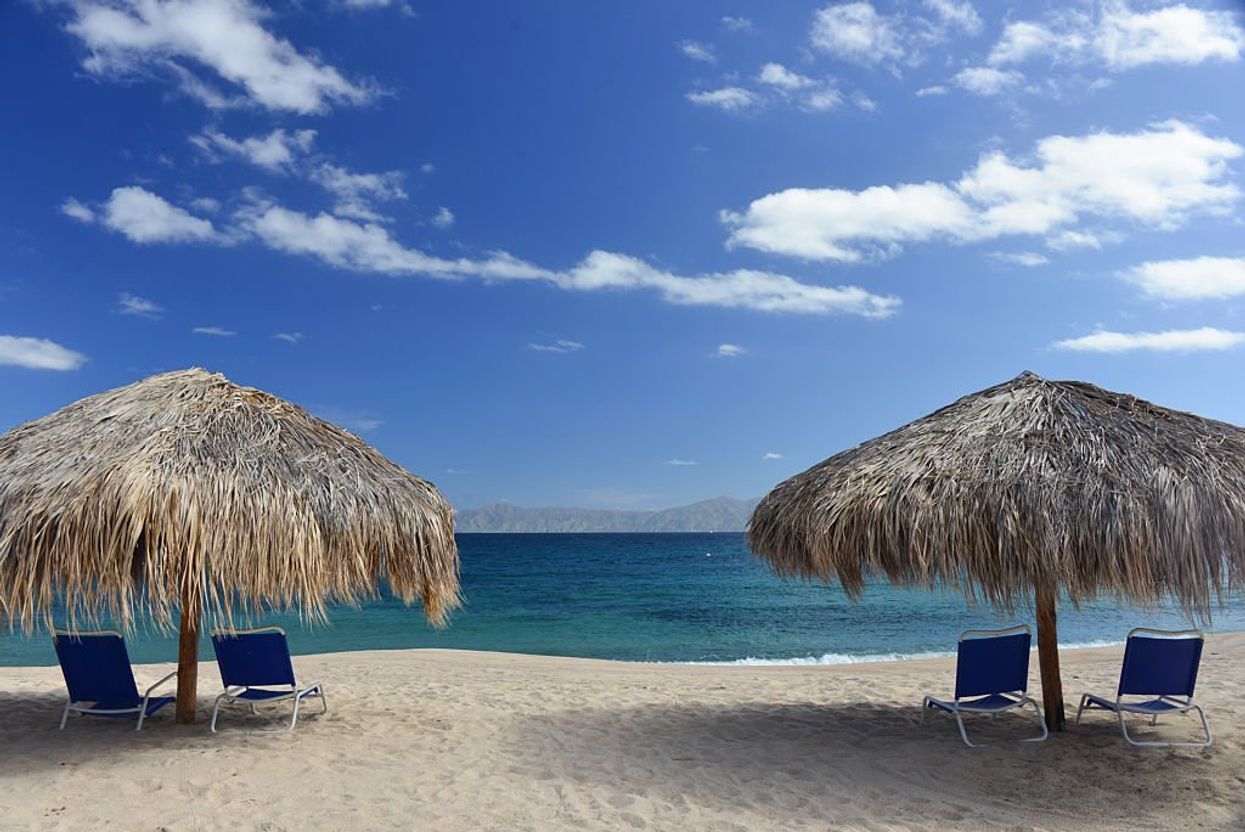
2 Americans found dead at luxury hotel in Mexico


Two Americans were found dead inside a luxury hotel room in Mexico's Baja California peninsula, local authorities said.

Around 9 p.m. on Tuesday, police and paramedics arrived at the Hotel Rancho Pescadero in the seaside Mexican town of El Pescadero after reports of an unresponsive couple. A man and a woman were found inside a hotel room with no vital signs, according to police. The pair were pronounced dead at the scene.

Authorities believe the man and woman had been dead for about 10 or 11 hours when they were found. There were reportedly no signs of violence.

The Baja California Sur Attorney General’s Office said in a statement on Wednesday that their cause of death was "intoxication by substance to be determined."

The AG's office identified the deceased Americans as John Heathco, 41, and Abby Lutz, 22. Lutz is from Newport Beach, California.

The local attorney general is overseeing the investigation.

U.S. officials told the Associated Press they were aware of the deaths, but did not comment because of privacy concerns.

Henar Gil, the general manager of Hotel Rancho Pescadero, told Fox News, "We are truly heartbroken by this terrible tragedy. Our hearts are with the impacted families and loved ones during this unimaginable loss. Local authorities are still actively investigating the situation, and the safety and security of our guests and colleagues remains a top priority, as always."

"We can confirm there was no evidence of violence related to this situation, and we are not aware of any threat to guests’ safety or well-being," Gil continued. "We are working to care for those who have been impacted, and we are working closely with authorities as they conduct their investigation to understand the cause of death."

Hyatt didn't immediately respond to a request for comment from ABC News.

Hotel Rancho Pescadero is part of Hyatt's Unbound Collection. Hyatt describes its Unbound Collection as "an exclusive portfolio of upper-upscale and luxury properties designed to captivate travelers seeking distinctive experiences with the reassurance of Hyatt."

Nightly rates at the Hotel Rancho Pescadero start at $540.


Last October, three Americans were found dead at a rented apartment in an upscale neighborhood of Mexico City. The cause of death was determined to be carbon monoxide poisoning.

In 2018, an American couple and their two children died from a "high charge" of gas that escaped from the boiler at a vacation rental in Tulum, Mexico.

Newsweek previously reported, "Though incomplete, the data suggest an average number of U.S. deaths in Mexico of about 194 annually, of which there is an average of 60 homicides a year."

Like Blaze News? Bypass the censors, sign up for our newsletters, and get stories like this direct to your inbox. Sign up here!