Is a tariff a tax?


Is a tariff a tax? Many Americans have forgotten that this question, which has been in the news more or less all year, was fundamental to the American Revolution. And among American Patriots, or Whigs, meaning those who supported the colonists’ claims against Parliament, there was almost universal consensus that they were different things, constitutionally speaking.

Throughout the Imperial Crisis of 1763 to 1776, the consensus among the colonists was that Parliament had the right to regulate trade in the British Empire but had no right to tax the colonists. And they recognized that a regulation of trade might take the form of a duty imposed upon, for example, molasses imported from French colonies to favor molasses imported from British colonies.

The founding generation believed in the separation of powers.

In the colonists’ view, the Sugar Act of 1764 was an unconstitutional innovation. The Act was quite explicit, stating at the top that it was passed for the purpose of “applying the produce of such duties, and of the duties to arise by virtue of the said act, towards defraying the expences of defending, protecting, and securing the said colonies and plantations.” It was the first trade act to do that.

Townshend’s overreach

The Stamp Act of 1765, and the reaction to it, made the protest against the 1764 Sugar Act less conspicuous. The result of the actions taken against the Stamp Act was that many in Parliament did not grasp the American argument against the Sugar Act. Hence, Parliament passed the Townshend Acts in 1767, imposing duties on lead, glass, paper, paint, and tea to raise revenue. When the colonists complained, many in Parliament accused the colonists of moving the goalposts.

The charge was not accurate, but it did reflect what they believed. And, like many today, many members of Parliament were unable to grasp the difference between a duty imposed for the purpose of trade regulation and a duty imposed for the purpose of raising revenue.

The most famous criticism of the Townshend Acts, and the most popular writing of the era until Thomas Paine published “Common Sense” in January 1776, was John Dickinson’s “Letters from a Farmer in Pennsylvania.” In the second letter, Dickinson made the consensus Patriot argument logically, clearly, and eloquently.

There is another late act of parliament, which appears to me to be unconstitutional, and as destructive to the liberty of these colonies, as that mentioned in my last letter; that is, the act for granting the duties on paper, glass, etc.

The parliament unquestionably possesses a legal authority to regulate the trade of Great Britain, and all her colonies. Such an authority is essential to the relation between a mother country and her colonies; and necessary for the common good of all ...

I have looked over every statute relating to these colonies, from their first settlement to this time; and I find every one of them founded on this principle, till the Stamp Act administration.* All before, are calculated to regulate trade, and preserve or promote a mutually beneficial intercourse between the several constituent parts of the empire. ... The raising of a revenue thereby was never intended. ... Never did the British parliament, till the period above mentioned, think of imposing duties in America for the purpose of raising a revenue. ...

Here we may observe an authority expressly claimed and exerted to impose duties on these colonies; not for the regulation of trade; not for the preservation or promotion of a mutually beneficial intercourse between the several constituent parts of the empire, heretofore the sole objects of parliamentary institutions; but for the single purpose of levying money upon us.

This I call an innovation; and a most dangerous innovation.* It may perhaps be objected, that Great Britain has a right to lay what duties she pleases upon her exports.

That so many people today don’t seem to understand this distinction is a sign that the American bar seems to have gone Tory. The founding generation’s way of thinking about tariffs, and perhaps law in general, is in danger of being rendered foreign to our public policy discussion, perhaps even to constitutional discussion, even among people who mistakenly think of themselves as originalists.

This way of thinking, of course, says little about the current case, as the purpose of the law itself must be understood in light of the thinking of the men who passed it. But it is also true that the way of thinking that Dickinson represented, and which was broadly shared in the founding generation, might have something to say here.

Delegation’s limits

The founding generation believed in the separation of powers. The founders recognized, as “The Federalist” notes, that in practice the powers will inevitably overlap and sometimes clash. But they did operate within a way of legal and constitutional thinking that took it as a given that in order to guard the separation of powers, any delegation of legislative powers to the executive had to be limited and focused.

There is a difference between a reasonable and an unreasonable delegation of powers, just as there is between a tax and a regulation of trade, even if, in both cases, money is raised at customs houses. The kind of delegation the Trump administration is asserting in this case is difficult, perhaps impossible, to reconcile with the practice of separation of powers. Congress has no right to abdicate its obligation to set trade policy via legislation.

RELATED: Read it and weep: Tariffs work, and the numbers prove it

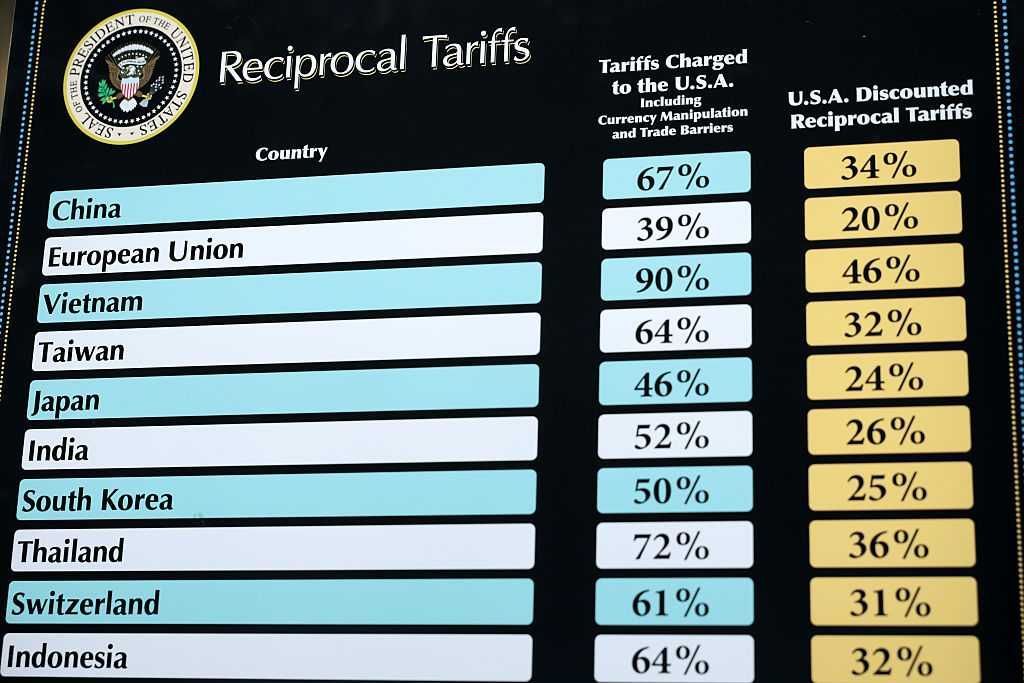
Photo by Spencer Platt/Getty Images

The Trump administration’s assertion that it has the right to set tariffs worldwide, claiming unlimited emergency power based on a law designed to delegate to the president a narrow emergency power, resembles the kind of expansive, arbitrary interpretation that the founders’ legal heroes fought.

In the 1630s, King Charles claimed the right to collect “ship money” throughout England. By tradition, the king had the right to raise money, without Parliament’s consent, in port towns in time of war, or if war was imminent.

King Charles asserted a living constitution interpretation: Given modern circumstances, he claimed a general right to raise taxes if a war emergency was imminent. Dickinson mentioned the case in the first Farmer’s Letters, suggesting there was a connection between the logic of the one argument and the other.

Our difficulty recognizing the limits of the nondelegation doctrine — and our confusion about the difference between a duty imposed to raise revenue and one imposed to regulate trade — shows how much work remains if we want to understand the Constitution as the framers did. That understanding requires grappling with the ideas about human nature, government, and law that justified ratification in the first place and that still anchor our constitutional order.

Editor’s note: This article was originally published by RealClearPolitics and made available via RealClearWire.

Trump’s Trade Negotiations Should Include A Push For Free Speech

There should be more to economic and trade policy than merely the price of goods.
House Dem More Supportive Of Trump Tariffs Than Many Republicans

'I remember Dems being outraged by the World Trade Organization'

Exclusive: House Republicans commend Trump's efforts to bolster American industries


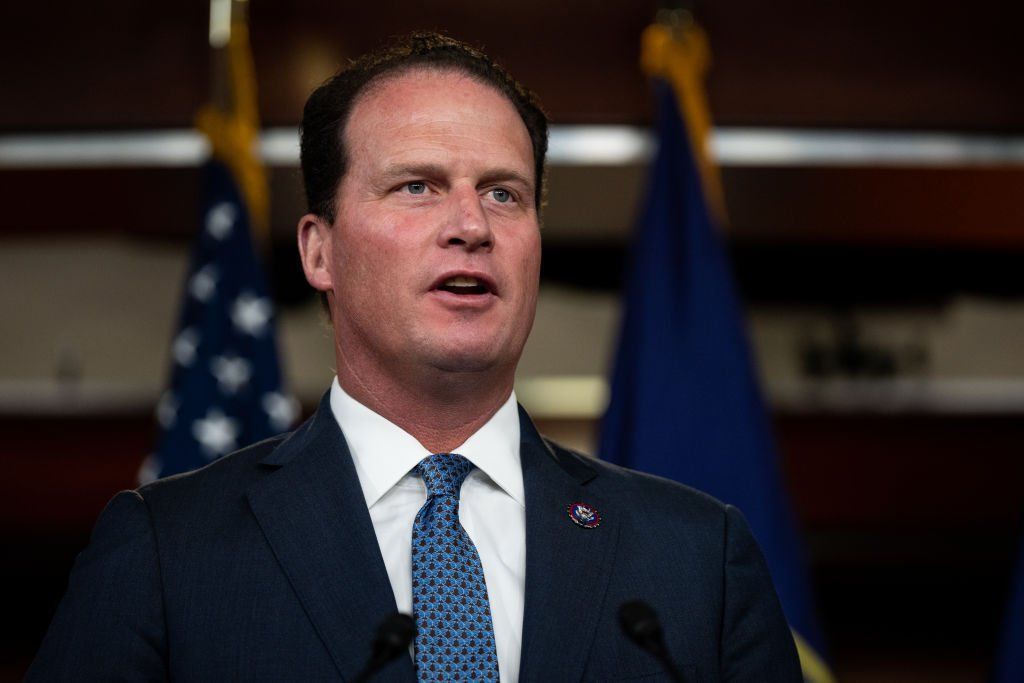
House Republicans, led by Rep. August Pfluger of Texas, sent a letter in support of President Donald Trump's efforts to support and protect American industries, which they said "starkly contrast" with former President Joe Biden's administration.

Pfluger pointed to a specific case regarding the Vulcan Materials Company, which is one of the largest producers of construction aggregates and has been a key part of infrastructure development in both the United States and Mexico. In 1986, the company began to build and operate a limestone quarry in Mexico, which was able to supply crucial construction materials to Texas, Florida, North Carolina, and South Carolina.

In May 2022, however, the Mexican government's military unlawfully invaded and shut down Vulcan's facilities in Mexico, depriving neighboring American states of crucial construction materials. Pfluger noted that this action not only disrupted the "construction of essential infrastructure projects," but it also "[put] American jobs at risk."

Meanwhile, the Biden administration stood by and did nothing.

'Holding Mexico accountable sends a powerful message that the United States fully supports its businesses and workers.'

With Vulcan's facility in Mexico located less than 400 miles from American soil, Pfluger points out that there are also national security interests as well as economic ones to be vigilant of. The fact that the Mexican military illegally invaded an American facility without consequence sounded the alarm for Pluger and his Republican colleagues.

But now with Trump back in office, Pfluger and other House Republicans have expressed optimism about the new administration's trade policies and prioritization of American workers and industries.

"This starkly contrasts the previous administration, which stood by as the Mexican government forced the closure of Vulcan Materials’ limestone quarry and deepwater port in the Yucatan Peninsula in 2022," the letter reads.

"Thank you for your leadership and commitment to upholding American First [sic] interests," the letter reads. "Holding Mexico accountable sends a powerful message that the United States fully supports its businesses and workers. We stand ready to back your efforts to protect American companies and hold our allies responsible for their unfair treatment of American businesses."

Like Blaze News? Bypass the censors, sign up for our newsletters, and get stories like this direct to your inbox. Sign up here!

Trump enjoys yet another confirmation for his Cabinet


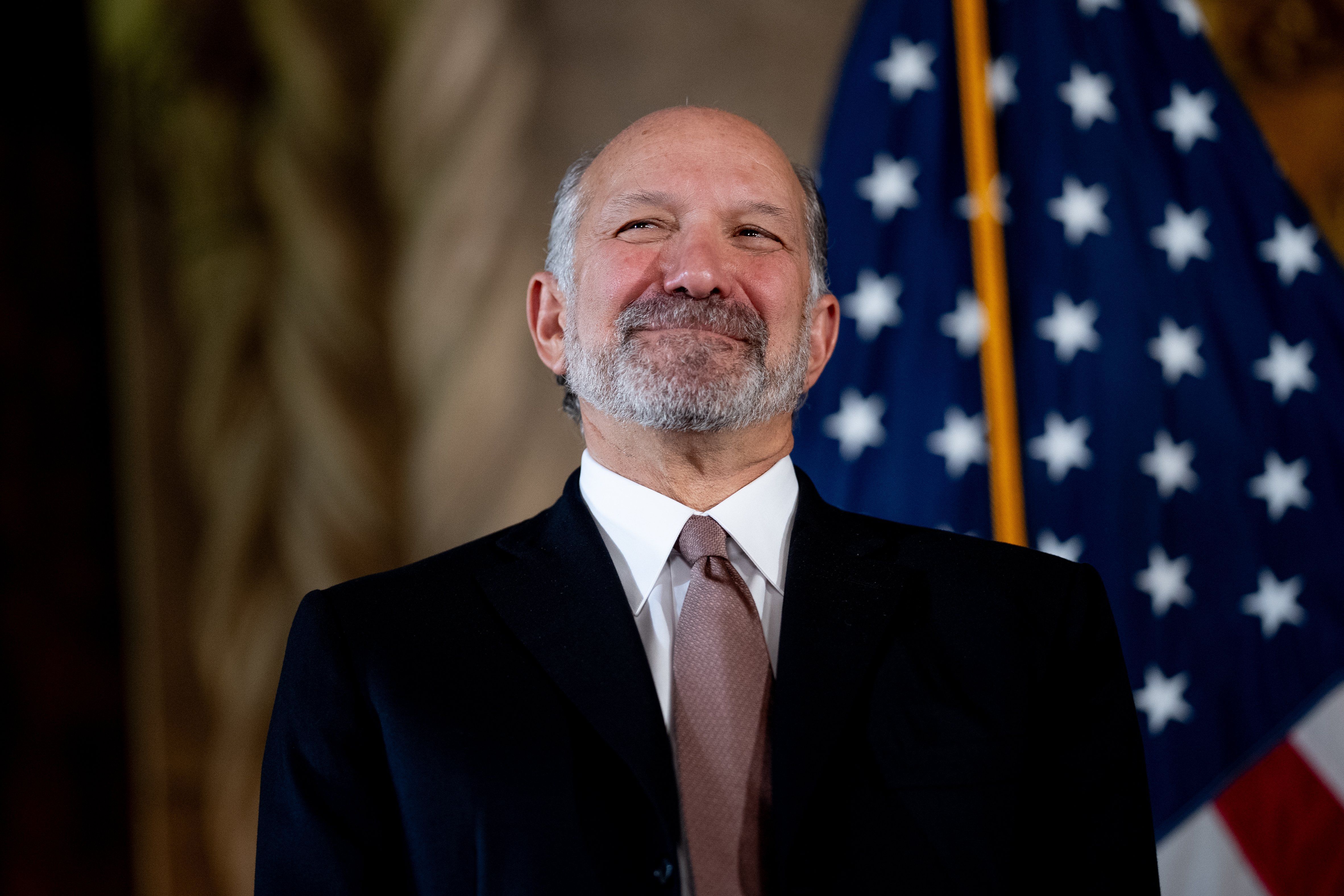
The Senate confirmed Howard Lutnick to serve as President Donald Trump's secretary of commerce Tuesday night.

Lutnick was narrowly confirmed in a 51-45 party-line vote, making him the 17th member of Trump's Cabinet to be confirmed. Notably, Democratic Sen. John Fetterman of Pennsylvania voted to block Lutnick's confirmation on the final floor vote despite siding with 15 Republicans to advance his nomination through committee.

'He was an inspiration to the World - The embodiment of resilience in the face of unspeakable tragedy.'

Lutnick served as co-chair of the Trump-Vance transition team and has long championed a tariff-forward trade policy as well as implementing DOGE-style spending cuts.

"He will lead our Tariff and Trade agenda, with additional direct responsibility for the Office of the United States Trade Representative," Trump said in a post on Truth Social announcing his nomination.

Prior to his nomination, Lutnick had spent decades working on Wall Street and securing his role as CEO of Cantor and Fitzgerald at the impressive age of 29. However, the trajectory of his career was forever changed following the terrorist attacks on September 11 that claimed the lives of hundreds of his employees, including his brother.

"He emerged from these events with an indomitable sense of purpose to rebuild the firm to honor those lost, support their families, and become a beacon of hope for those who remained," Trump said in the statement. "He was an inspiration to the World - The embodiment of resilience in the face of unspeakable tragedy."

Like Blaze News? Bypass the censors, sign up for our newsletters, and get stories like this direct to your inbox. Sign up here!

‘Plunging American Workers’: Rep. Jason Smith Grills Biden Trade Agenda For Benefitting China

'Without a trade agenda that puts workers and jobs first, the United States is falling behind China and other competitors'

Why National Conservatives’ Platform Should Start With Men

Sen. Josh Hawley is on to something: When men struggle to find good jobs and to form and maintain families, they often turn to alternatives that sap their fitness for a good life.

400 Ways The United States Can Respond To Chinese Aggression In New House Report

'This series of wakeup calls has revealed how CCP ideology is undermining the core principles of the international system and putting Americans’ safety and prosperity at risk,' the report states.