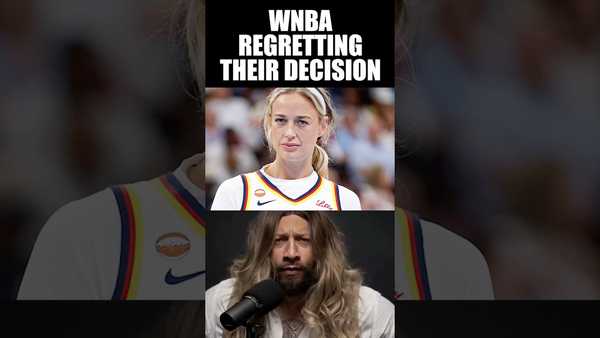
Sophie Cunningham gets relentlessly booed in Canada — and shuts the haters down in the classiest way possible
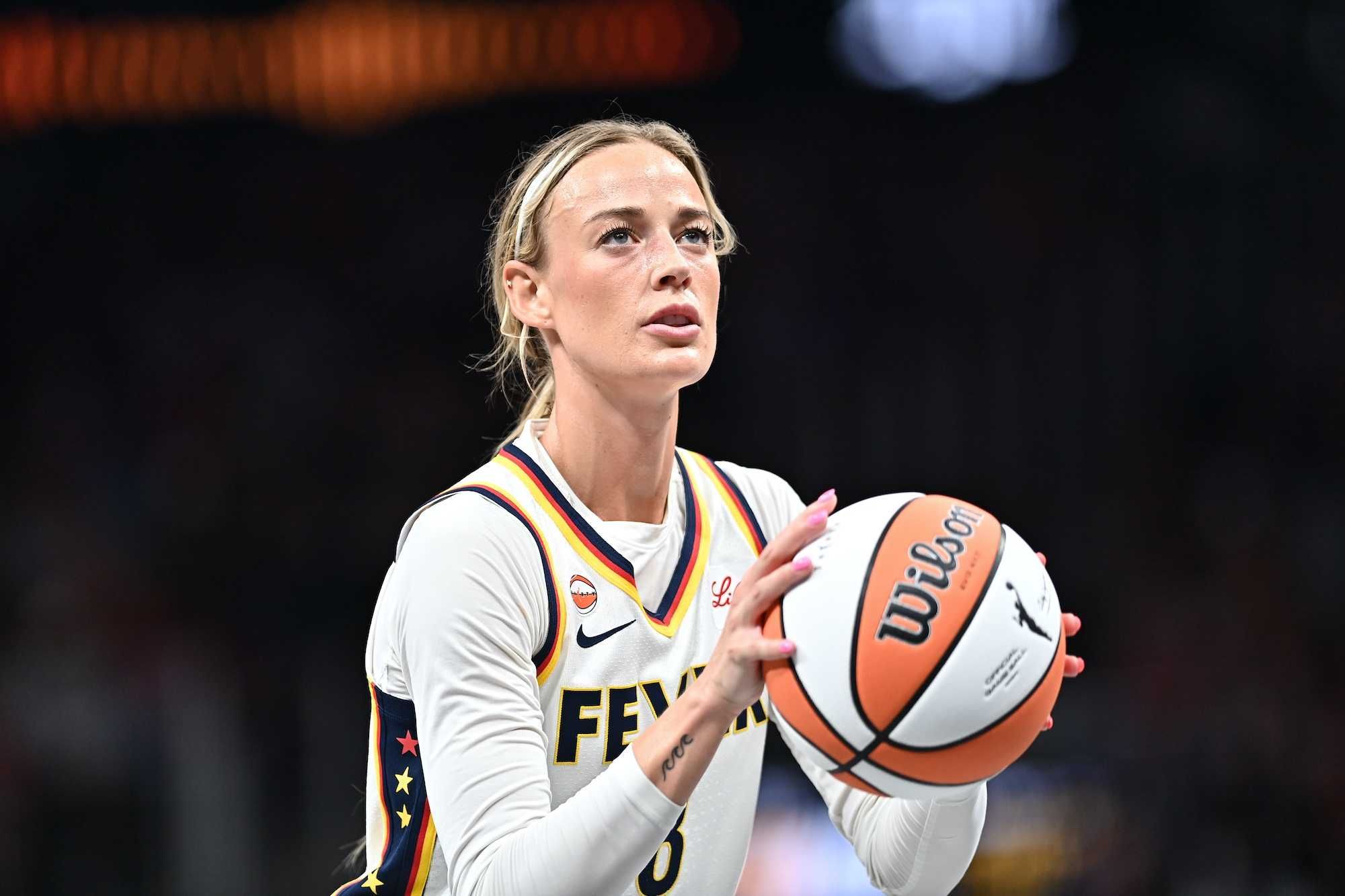
Sophie Cunningham responded with style, grace, and domination after fans in Canada booed her relentlessly during the Indiana Fever game against the Toronto Temper Tuesday.
The star guard has come under fire after she made a powerful statement in support of women's sports and against biological males competing against females.
'I think that’s what sports is all about. You’re going to get boos. You’re going to get cheers.'
That may have been the impetus for the Canadian fans booing passionately whenever Cunningham got the ball during the WNBA matchup. Several viewers posted videos of the booing on social media.
Cunningham hit all three of her three-point attempts and helped the Fever defeat the Tempo, 101 to 95.
After the game, she was gracious in a postgame press conference and complimented the fans in the arena.
"I want to shout out the Tempo crowd and the city. I think we've had so much fun. It's my first time being in Canada. It's a lot of our first times being in Canada," Cunningham said unprompted.
"But the crowd was absolutely amazing, and, you know, I think that’s what sports is all about. You’re going to get boos. You’re going to get cheers," she added. "But just the fact that they're so passionate, they're loud, and they're putting on for the city, I think it's amazing."
In an on-court interview after the game, she also appeared to reference the controversy over transgender-identifying athletes.
"What a great environment for women's basketball. It was a hell of a crowd. It was a lot of fun to play in front of," she said.
When asked about her role among the "big three" scorers, she referenced girls playing sports again.
"I'm just here. I'm just here. Whatever the team needs of me, I'm going to do," she insisted.
"Like I said, I'm just going to come, have some fun. Maybe inspire some young girls to come beat me one day!"
RELATED: Black WNBA player blames 'white privilege' after ejection for hitting Sophie Cunningham
Cunningham's support for women athletes has led to some fans appearing at her games with signs thanking her for standing up against unfair competition.
This in turn has led to some angry responses from many, including the co-owner of the Seattle Storm, who cursed out two teenage girls at a game. She was later suspended and fined by the league.
Like Blaze News? Bypass the censors, sign up for our newsletters, and get stories like this direct to your inbox. Sign up here!
WNBA can’t define a woman. Now men are declaring for the draft.

WNBA Commissioner Cathy Engelbert has announced that a league task force has been formed to discuss the topic of transgender athletes.
“I know many of you have received questions in recent weeks regarding transgender athlete participation in women’s basketball, and I expect this topic will continue to receive significant attention,” Engelbert wrote in a memo.
“Go ahead, laugh at the WNBA. The league is a joke. Cathy Englebert has formed a task force to determine what a woman is,” BlazeTV host Jason Whitlock comments.
“Enes Kanter and Royce White read the CBA, found the loophole, and declared for the 2027 draft. Two former NBA guys trolling a league that can’t define its own eligibility rules without a committee,” he adds, before playing videos of the men joking about the draft.
“It’s official, official, I just declared for the 2027 WNBA Draft in April. Join me in this journey,” former NBA player Kanter joked in a parody video.
Former Minnesota Republican Senate candidate Royce White also joined the bit, posting a photo of himself in a wig.
And while still wearing the wig during an interview with Alex Jones, White said, “You think Caitlin Clark’s drawing eyeballs to the women’s game? Wait till me and Enes Kanter get there. Wait until the LeBron James’ of the world show up.”
“Wait until your young high school athletes decide, you know what? Why would I want to go hang around with a bunch of other sweaty men in a hyper-competitive setting? Just go on over here to the WNBA and experience being a woman because we all should get the opportunity to experience being the other sex, because it’s just a construct anyway,” he added.
“That’s two former NBA players treating the Women’s National Basketball Association like an open mic night,” Whitlock says, adding, “And they’re funnier doing it than the league is at being serious.”
Want more from Jason Whitlock?
To enjoy more fearless conversations at the crossroads of culture, faith, sports, and comedy with Jason Whitlock, subscribe to BlazeTV — the largest multi-platform network of voices who love America, defend the Constitution, and live the American dream.
'I'm trying to be nice': Trump piles pressure on Thune over SAVE America Act
Trouble likely awaits a budget resolution tied to the SAVE America Act as it heads to the stubborn upper chamber of Congress.
On Wednesday, the House passed a $95 billion budget resolution, 216-214, carrying with it important incentives for states to pass the SAVE America Act, alongside funding for Iran-related operations and farm aid.
'It's like the Senate is a place that you send things when you want them to die.'
The $95 billion package includes $73 billion for defense and intelligence funding, $12 billion for agricultural aid, and $10 billion in election-related funding for states, a key aspect of the SAVE America Act.
The bill itself is five primary issues: voter ID, proof of citizenship to register, an end to universal mail-in ballots, and bans on transgender athletes in women's sports and transgender surgery for minors.
The SAVE America Act is now sitting with a Republican-controlled Senate that is in apparently no rush to deal with it.
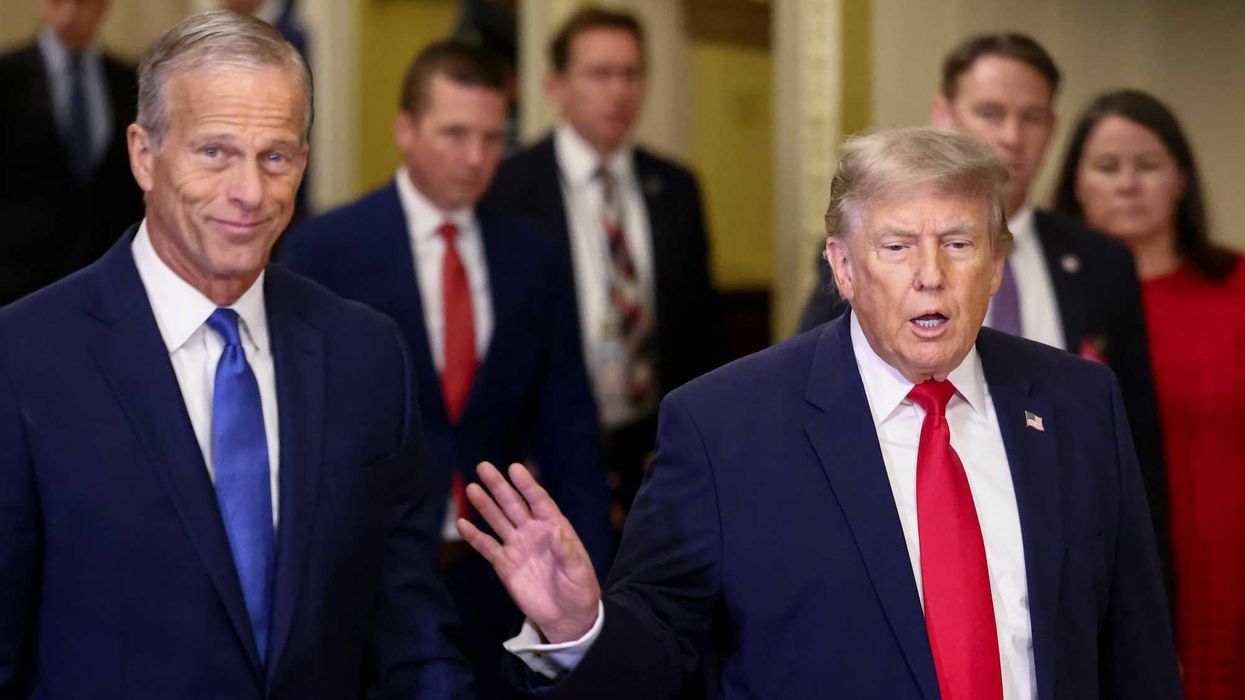
Trump ramped up his pressure campaign against Senate Majority Leader John Thune (R-S.D.) at a Georgia rally Wednesday, urging supporters to flood Thune's office with calls demanding action on passing the budget bill and, eventually, the SAVE America Act.
RELATED: House narrowly passes SAVE America Act as rider to trillion-dollar spending bill
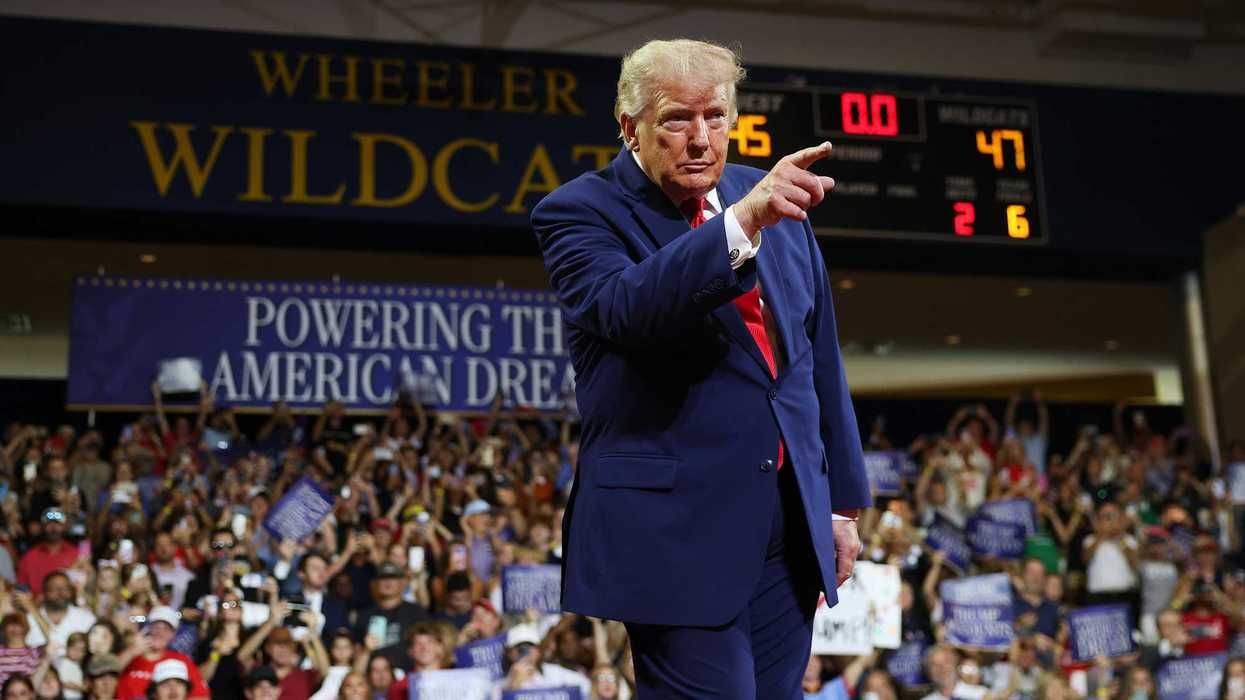
He credited Johnson and the House for doing their part, but blamed the Senate for the holdup: "It's like the Senate is a place that you send things when you want them to die."
“We’re not going to take this any longer. … I’m trying to be nice; I’m trying to be really nice,” Trump added.
Rep. Andy Ogles (R-Tenn.) also suggested on X that Thune should "step aside" if he won't act.
Politico's reporting from inside the GOP conference shows the resistance runs well past the three sitting holdouts — Sens. Susan Collins (R-Maine), Lisa Murkowski (R-Alaska), and Thom Tillis (R-N.C.).
A source familiar with the matter told Blaze News that Thune is prioritizing the continuing resolution to avoid another shutdown and that the budget resolution is in reserve.
Asked Wednesday how close he was to 50 votes, Thune said only, "Good question."
By Thursday, he was blunter: "I can't count to 50 right now on a budget resolution."
Per Politico, Sen. John Kennedy (R-La.) told reporters Wednesday he doesn't expect Thune to take it up at all; Sen. John Cornyn (R-Texas) isn't sure the votes exist in the first place; and newly named Budget Chairman Ron Johnson (R-Wis.) said there has been no formal conversation yet.
Thune himself has asked colleagues, "Is the juice worth the squeeze?"
Reconciliation needs only a simple majority, as opposed to the 60-vote threshold for passing bills into law. Even so, the bill has failed twice — once in April and again in June — with Collins, Murkowski, Tillis, and Mitch McConnell (R-Ky.) voting no alongside every Democrat both times.
RELATED: New Jersey's noncitizen voter blame game doesn't add up — literally

Earlier this month, Speaker Johnson called the package "our best shot" at 50 votes plus Vice President JD Vance as the tiebreaker. For now, McConnell's indefinite absence drops the vote count to 99, meaning Republicans need a plain majority. One holdout flipping to yes still passes it outright, while an abstention reopens a possible 49-49 tie, putting Vance's tiebreaker back in play.
Only if all three hold firm does the package fail.
Asked directly at Tuesday's weekly Senate GOP leadership press conference whether the House's reconciliation push is more than an academic exercise, Thune demurred: "We'll see ... what they get done this week and what it all consists of."
He confirmed the Senate would "hold" any budget resolution the House sends over — but specifically as a fallback to fund the government, not to advance the SAVE America Act.
"I hope that's not necessary," he said, noting he's already having "productive conversations" with Democrats on a separate funding deal to carry the government past the November election.
Like Blaze News? Bypass the censors, sign up for our newsletters, and get stories like this direct to your inbox. Sign up here!
The Supreme Court finally confirmed what I knew all along
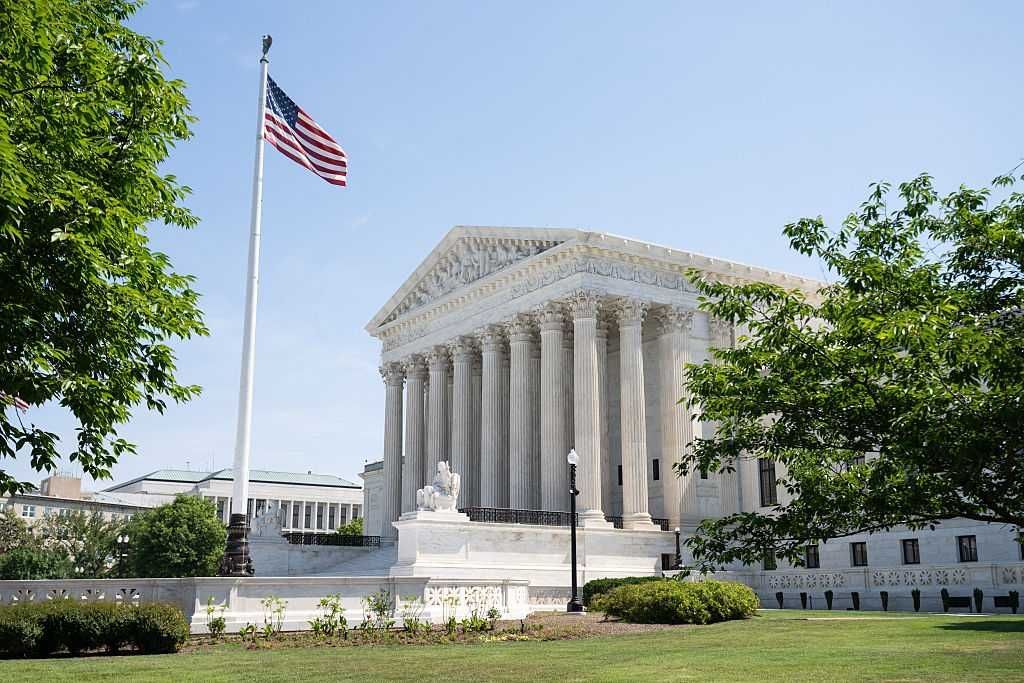
Nobody asked us. Not me, not my teammates, not the 18-year-olds who had just arrived at the University of Pennsylvania and found themselves sharing a locker room with Lia Thomas.
Nobody held a vote, nobody sent an email, nobody knocked on the door and said, "Hey, is this OK with you?" They simply instructed us that a man would be joining the women’s swim team and waited for us to get used to it. We never did.
Somewhere along the way, it became the job of a bunch of college kids to fix something the adults in the room had broken.
Plenty of lawyers and pundits will spend the next several weeks dissecting the Supreme Court's 6-3 ruling in West Virginia v. B.P.J. They will argue about precedent and jurisdiction, but here is what most of them are missing: They were not in that locker room. I was.
Eighteen times a week for an entire season, I changed and showered alongside a male athlete. Eighteen times a week, my teammates and I were expected to act like this was normal.
Voicing concerns was dubbed hateful, and the policy that created this situation in the first place was not. We had earned our spots on the team, but not one person in a position of authority at Penn, the NCAA, or USA Swimming ever pulled us aside and asked how we were handling the situation.
The administration and governing bodies were not interested. The message was quiet but very clear: Your discomfort is not the problem we are trying to solve.
When we tried to raise our concerns, the athletic department told us Thomas’ place on the team was nonnegotiable. Staff members offered us psychological services in an attempt to re-educate us into being comfortable undressing in front of a man. Their solution was not to protect us but to “fix” us.
Somewhere along the way, it became the job of a bunch of college kids to fix something the adults in the room had broken.
That is what I want people to understand when they hear about this ruling: It is not abstract to me. It is not a hypothetical or a talking point. I lived inside the policy the court just ruled states have the right to prohibit.
I can tell you from experience that the "compassionate" framing the other side always reaches for has never once held up to reality.
RELATED: SCOTUS sides with common sense after boys try to play sports with girls
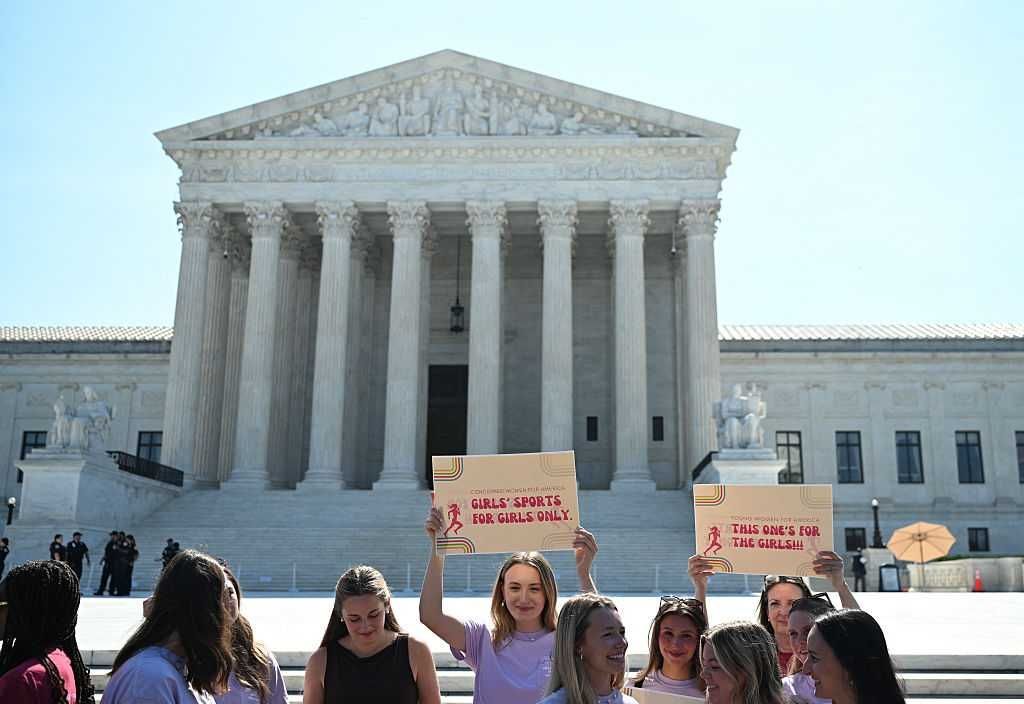
Compassion for whom? Not for the female athletes who trained their entire lives and finished one place lower than they should have. Not for the teenager in California who lost a state track title she had earned. Not for my teammates and me who were expected to smile and say nothing while the people making decisions were only concerned about the feelings of one male athlete.
This ruling matters, but it does not automatically fix the issue of the governing bodies and professional organizations that spent the last several years dismantling women's protections one policy at a time.
The NCAA still allows athletes to compete on an amended birth certificate in some cases, a solution you’d come up with if you were never really trying to solve the problem and never had to share a locker room with a fully grown man.
And worse still, 23 states have no law protecting girls at all.
The Protection of Women and Girls in Sports Act has been sitting on Capitol Hill for years. Every member of Congress who let it die in committee now has a Supreme Court majority telling them they had the authority to act and chose not to. It is time to finish the job.
I have been waiting for that moment since I was 19.
The court got it right. I just wish it had not taken this long for the people in charge to catch up to what I knew firsthand in my locker room.
Women’s sports finally got a reality check
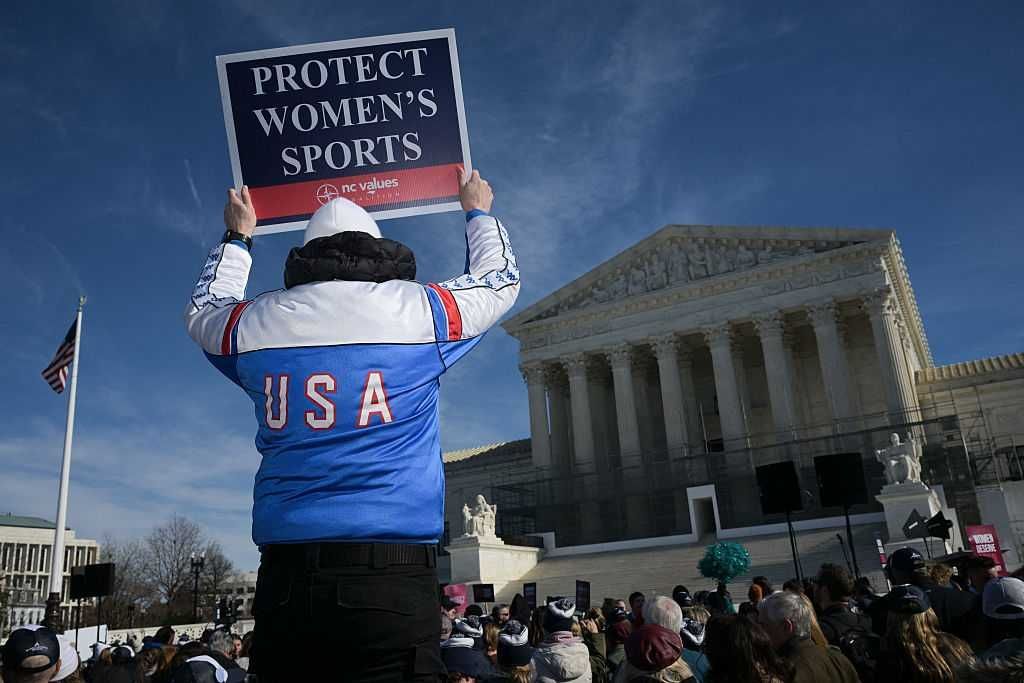
In a decisive ruling Tuesday, the Supreme Court has settled the most consequential legal question for women's sports in a generation — affirming what biology and fairness have always made clear: Women's sports must remain protected spaces for female athletes.
The court ruled 9-0 that Title IX — the federal law that ensures equal opportunities for women in education and sports — and 6-3 that the Equal Protection Clause allow states to protect female athletes with sex-based categories in sports.
Changing the culture means rejecting the lie that biology is bigotry.
The decisions in Little v. Hecox and West Virginia v. B.P.J. mark a watershed. The court recognized that sex is a biological fact, not a feeling, and that it shapes athletic performance in ways no paperwork or policy can undo.
Writing for the majority, Justice Brett Kavanaugh held that Title IX "cannot plausibly be interpreted to refer to anything other than biological sex."
By upholding the constitutionality of state laws safeguarding sex-based categories in athletics, the court has reinforced the rights of girls and women in the 27 states that have already passed protective legislation. This is a win worth celebrating.
No longer will biological males like B.P.J. dominate girls’ shot-put competitions in West Virginia next season. The ruling draws a firm line: Sex is not a feeling, and paperwork and lip gloss cannot rewrite reality.
Female athletes deserve fair competition, safe locker rooms, and equal opportunity — the principles Title IX was built to protect and that reflect simple scientific truth. The majority opinion emphasizes immutable biological differences in strength, speed, and physiology and rejects the claim that gender identity can override sex in the context of physical athletics.
Yet this victory, meaningful as it is, remains incomplete.
In the remaining 23 states — California chief among them — business as usual persists. Biological males can still claim girls’ and women’s titles, taking podium spots from female athletes they outperform.
The patchwork nature of this decision means fairness remains geographically contingent. But a girl’s right to compete on a level playing field should not depend on her zip code.
We have made progress. President Trump’s 2025 executive order provided critical momentum, functioning with the force of law and prompting the NCAA to reaffirm that women’s categories are for women. The International Olympic Committee has committed to protecting the female category starting with the 2028 Los Angeles Games. Ballot initiatives in blue states like Colorado and Washington this November will let voters decide directly whether girls deserve their own sports. In Maine, fathers have mobilized to put the Protect Girls’ Sports in Maine initiative on the ballot so their daughters can have the same opportunities their mothers did.
These developments are encouraging. But the challenges remain formidable.
The NWSL and the WNBA still operate without meaningful sex verification. Professional leagues, private events such as the Boston Marathon, and college athletics remain fractured. Birth certificates — the only proof of sex required by the NCAA — can be changed in 44 states. Given the fungible nature of paperwork and other IDs, documents cannot substitute for actual biological testing at the highest levels of sport.
Blue states continue to defy federal guidance, treating fairness as optional. Interstate competition creates impossible inconsistencies. A female athlete protected in Tennessee could still face unfair qualification scenarios against out-of-state males if she advances to national competition.
How is that fair?
The deeper truth is that a Supreme Court ruling can set a legal boundary, but it cannot change the culture by itself. That work falls to all of us — parents, athletes, coaches, journalists, and everyday citizens who refuse to stay silent.
RELATED: Democrats can’t escape their trans problem
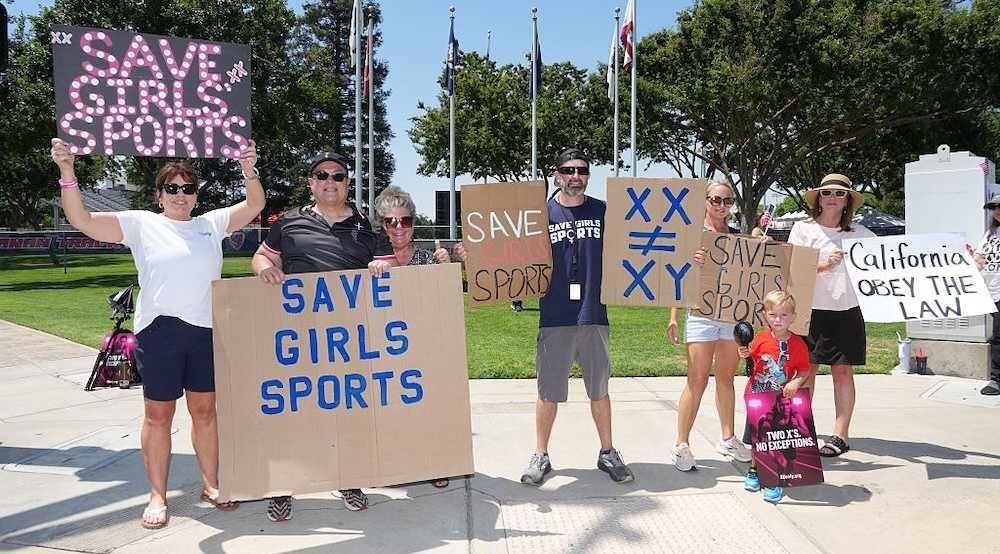
For too long, institutions have prioritized feelings, optics, and activist pressure over the safety, dignity, and opportunity of girls and women. We saw a version of the same pattern in the gymnastics sex abuse scandals I helped expose decades ago: Adults in power looked the other way while vulnerable athletes paid the price.
The Safe Sport Act now exists to protect young athletes from abuse, but the coaching culture has not changed enough, and abuse still occurs. SafeSport faces a four-year backlog of abuse reports.
Changing the culture means rejecting the lie that biology is bigotry.
It means parents showing up at school board meetings, statehouses, and ballot initiatives with unrelenting clarity. It means athletes — female and male — finding the courage to speak the truth even when it costs them. It means sponsors, leagues, and media outlets facing real consequences for enabling unfairness.
And it means raising a generation that understands sex is real, fairness is not optional, and protecting female spaces is not hate. It is basic decency.
Legal wins are essential guardrails, but they are not the finish line. We must build a culture where courage defeats compliance, evidence defeats ideology, and the protection of girls takes precedence over performative virtue.
Only then will the promise of Title IX — and the promise of fair sports — be fully realized for every daughter, in every state.
The fight continues. But today, with the Supreme Court’s backing, we have firmer ground beneath our feet.
Now let’s use it to shift the culture for good.
Lawsuit: Washington State Violated Title IX By Allowing Trans Student To Assault Female Athlete
 Officials discriminate against girls by making them choose between athletic participation and their physical safety, the complaint says.
Barney Frank’s dying warning should worry conservatives
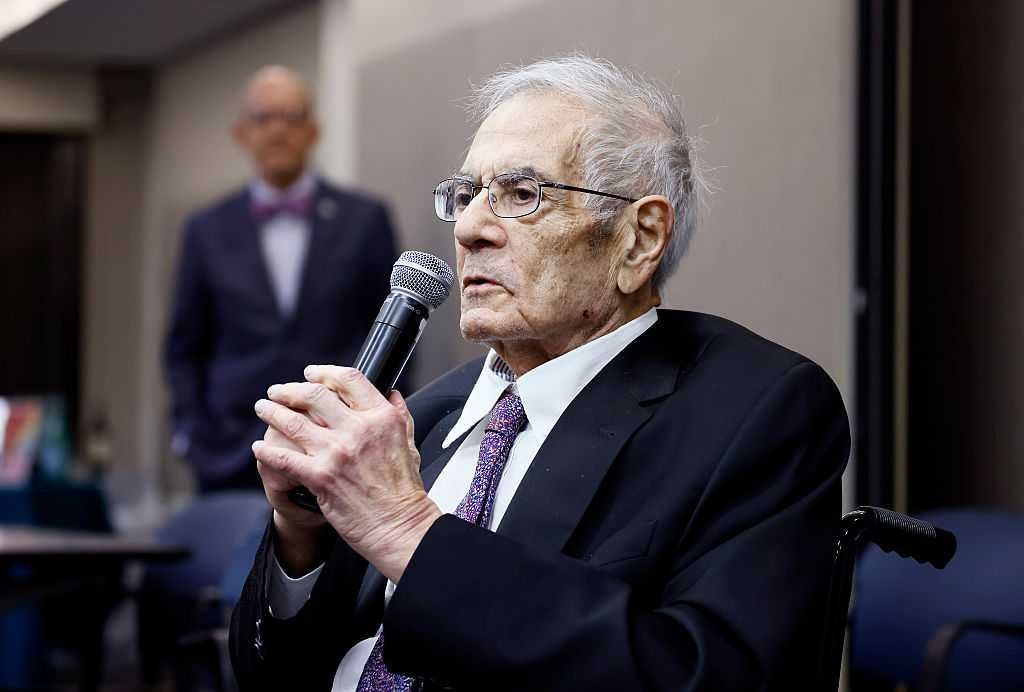
Barney Frank spent his final months warning Democrats that the left had become a danger to itself.
Frank, the 16-term congressman from Massachusetts who died May 19 at 86, had been promoting a book scheduled for September publication: “The Hard Path to Unity: Why We Must Reform the Left to Rescue Democracy.”
The most effective revolutionaries do not always sound revolutionary. Sometimes they sound like men telling the revolutionaries to shut up, count the votes, and wait their turn.
That title says a great deal. Frank warned his fellow Democrats that they’re losing the electorate. But he was no mushy moderate. He was solidly a man of the left who understood that his party had developed habits that could cost it power — and, in his view, endanger the country.
Before anyone mistakes my point: This is not a eulogy for the co-author of Dodd-Frank, a man with more than his share of ethical lapses and scandals — male prostitution, anyone? — and a long record of expanding federal power and undermining American civilization. I am not here to praise Barney Frank’s life and career. I am here to draw a vital lesson about politics — how it works, who wins, and who loses.
Frank spent more than three decades in Congress advancing left-wing causes, from gay rights and anti-discrimination law to financial regulation and a more aggressive federal role in American life.
But not too aggressive too soon.
In one of his final interviews, Frank told CNN’s Jake Tapper that Democrats had succeeded in moving inequality to the center of the party’s agenda. But that success, he said, had “enabled people who wanted to use that as a platform for a wide range of social and cultural changes, some of which the public isn’t ready for.”
That little caveat — what “the public isn’t ready for” — carries a lot of weight.
To the activist mind, public reluctance often looks like bigotry, cowardice, or false consciousness. To Frank, it looked like politics. Voters were not clay to be molded by professors, nonprofits, and online scolds. They had to be persuaded, reassured, pressured, and moved over time.
Politics is persuasion — and persuasion can be the work of a lifetime.
Frank never confused delay with defeat. He treated delay as part of the cost of lasting victory. That was the real meaning of his final, misunderstood calls to “moderation” — something his irritating leftist critics missed or chose to ignore. He did not ask the left to abandon its goals. He asked the left to stop endangering them.
RELATED: Inside the left’s push to reshape 2028 with ranked-choice voting
His career offers a useful correction to our political vocabulary. We tend to call politicians “moderate” when they sound less insane than their allies. But Frank was not moderate in his ends. He was moderate only in his sense of timing, sequencing, and risk.
Consider same-sex marriage. Frank supported gay rights long before they became fashionable in elite institutions. But he understood that the movement first had to win more basic fights against discrimination before asking the public to redefine marriage.
“When we were fighting for gay rights — a fight I think we have essentially won — we knew that some issues were more popular than others,” Frank told the New York Times a week before his death. “So we tended to start by trying to win the ones that were most popular. Gays in the military. Employment. We didn’t go after same-sex marriage, we didn’t make marriage a litmus test, until the very end.”
Then he drew the analogy to biological males competing in women’s sports. “That is the most controversial part of the agenda — the equivalent of gay marriage — so put it at the end. If you go at it that way, you build support for it. But if you insist on the most controversial parts all at once, you make it harder.”
Notice what he did not say. He did not say men in women’s sports had crossed an uncrossable line. He said the left had mistimed the fight. Prepare the ground, then advance. Move the public, then consolidate the gain. Do not force every question at once and then denounce the electorate for failing to keep pace.
Call that whatever you like, but don’t call it mushy moderation. That’s professional politics.
The same instinct shaped Frank’s conduct in Congress. In 2007, he supported removing gender identity protections from the Employment Non-Discrimination Act because he believed the votes did not exist to pass the broader bill. Activists accused him of betrayal. Frank’s answer was coldly practical: Do what you can now, and return later for the rest.
Frank was a patient institutional leftist. He understood committees, votes, caucuses, and public opinion. He could be abrasive, partisan, and arrogant. But he did not mistake moral intensity for legislative power.
That separated him from Sen. Bernie Sanders (I-Vt.), whom Frank often criticized as a politician with little to show for decades in Congress. Sanders treats politics as indictment. The system is corrupt. The billionaires are guilty. The people have been betrayed. Some of that rhetoric can move voters, but rhetoric alone does not write statutes, build coalitions, or hold fragile majorities together.
Sanders rages against the system. Frank learned how to use it.
Alexandria Ocasio-Cortez complicates the picture. She entered Congress as a democratic socialist insurgent in the Sanders mold. But she has grown in office — not toward the center, exactly, but toward machinery. Frank would not have mistaken her for one of his own. But he might have recognized the beginning of her political education.
RELATED: Your enemies aren’t mentally ill. They apparently just want to kill you.

A better comparison might be Jerry Brown.
California Republicans never got past the late-1970s caricature of “Governor Moonbeam,” and it cost them. “Moonbeam” was Jerry 1.0. The man who left the governor’s office in 2019 was Jerry 7.0, maybe 7.5: older, harder, more disciplined, more fiscally cautious, and vastly more dangerous. Brown was no conservative, though he possessed certain conservative instincts. Brown succeeded because he understood California’s currents better than the Republicans who mocked him.
Brown had his canoe theory of politics: Paddle a little to the left, paddle a little to the right, and you get where you need to go — ultimately, the to left bank of the river. Brown was smart enough and steady enough not to tip the canoe on the way there.
Conservatives should study politicians like Brown and Frank, not because we should admire or emulate their goals, but because we should understand their methods. A political movement that cannot describe its opponents accurately cannot defeat them. Worse, it cannot learn from them.
Frank’s final warning to Democrats was simple: Stop letting the loudest voices on the left turn every unpopular cultural demand into a test of moral seriousness. Read the room. Build consensus. Move when the ground can hold.
That warning should stir conservatives, too. The most effective revolutionaries do not always sound revolutionary. Sometimes they sound like men telling the revolutionaries to shut up, count the votes, and wait their turn.
Actress Ilana Glazer attacks women's sports advocate Riley Gaines: 'You're just stealing money'

Emmy award winner Ilana Glazer described former NCAA swimmer turned anti-trans activist Riley Gaines as delusional for her campaign to keep biological men out of women's sports.
In a podcast posted Thursday, Glazer and her guest Matt Bernstein continually insulted Gaines while simultaneously saying she is part of a cruel, right-wing grifter movement.
'She is mad she lost fifth place in a swimming competition to a trans woman.'
Bernstein, a makeup artist and activist who refers to himself as a "queer Jew with long nails," gleefully insulted Gaines on the podcast "It's Open with Ilana Glazer," while calling the former NCAA swimmer a bully.
All wet
Bernstein said Gaines has been "grifting millions of dollars" for years through "bullying people with no societal capital."
Glazer then chimed in to refer to specific "right-wing people" as "sociopathic" before jumping all over Gaines. After referring to topics surrounding Gaines as "garbage," Glazer boiled the athlete's work down to being mad that she "lost fifth place."
"She is mad she lost fifth place in a swimming competition to a trans woman," she added.
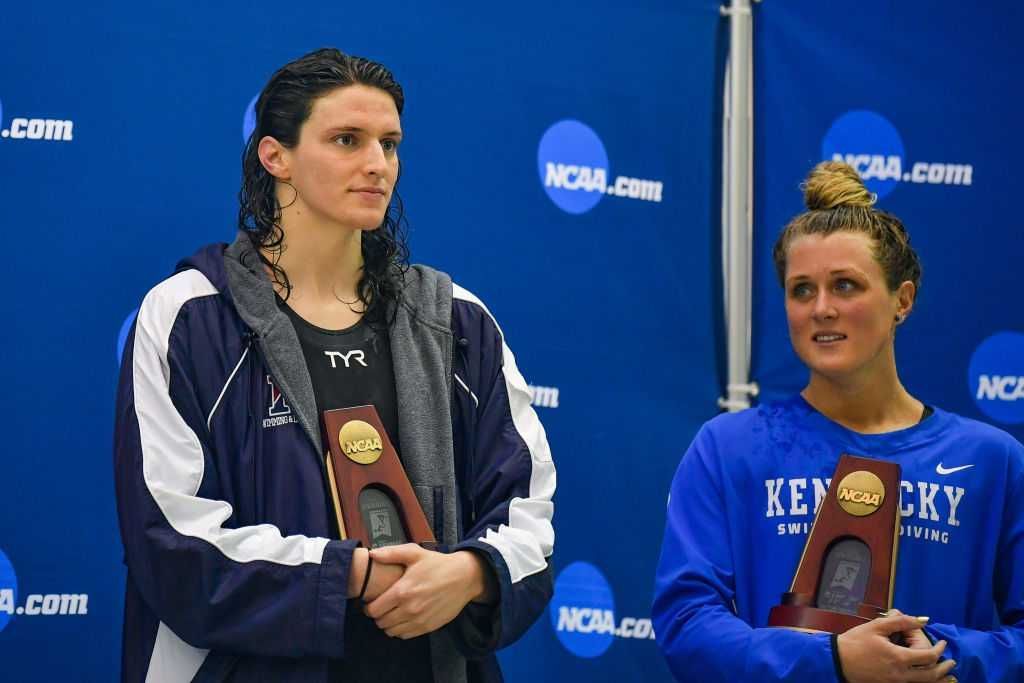
Gaines tied William "Lia" Thomas — a man — for fifth place in the 2022 NCAA women's 200-yard freestyle final. The two failed to mention that Thomas also won the women's 500-yard freestyle final, making him a national women's champion.
Thomas was also famously ranked as low as No. 554 when competing in men's NCAA swimming, as opposed to reaching No. 1 against women.
Shallow end
Gaines' work resulted in an executive order to keep women's sports for women only, but Glazer described the activism as "so stupid."
"That is so uncreative. That's literally stealing," Glazer said, likening Gaines' work to "anti-trans messaging, which genuinely leads to violence against trans women."
With significant vocal fry, Bernstein then stated that Gaines and other women's rights activists ignore "statistics or reality or truth" and instead profit off "the most minoritized people" in the country, referring to men who think they are women.
Nice Gaines
Bernstein did correctly characterize early comments from Gaines, however. In a 2022 interview with the Daily Wire shortly after her competition, Gaines said about Thomas, "I am in full support of her and full support of her transition and her swimming career and everything like that."
She added, "because there's no doubt that she works hard too, but she's just abiding by the rules that the NCAA put in place, and that's the issue."
RELATED: Olympic Committee adopts new policy on 'trans' athletes
Bernstein concluded that it was the right thing to do for Gaines to simply "move on" and ultimately wish Thomas well.
Glazer then described Gaines as having a "money-making scheme" that has now merged with "some new semblance of reality that she was robbed."
Like Blaze News? Bypass the censors, sign up for our newsletters, and get stories like this direct to your inbox. Sign up here!
 www.theblaze.com
 www.theblaze.com