![]()
I’ve recently come up with the term “take-ism” to describe what I consider to be one of the most pernicious and destructive social phenomena of our era.
We all know the term “hot take.” Basically, it’s an idea that’s provocative, strident, and also — and this is key — a bit new. It’s the opposite of a cold take, which is essentially common knowledge.
Is it the overexposure to infinite faces and places that our phones enable that creates this desperate need for novelty, even at the expense of our sanity?
A hot take is often offensive to someone out there, but that's just a byproduct. What it really needs to offer is novelty.
Race to novelty
Take-ism is essentially a race to novelty above all and at all costs. While there are hot takes that are true and novel takes that do illuminate an unexplored and previously unobserved fact of reality, the pursuit of truth plays little role in the real thrust of take-ism.
The logic of take-ism is essentially the logic of the internet: novelty = interest = attention = likes = follows = good. Truth doesn’t matter, earnest belief doesn’t matter, all that matters is novelty and attention.
Take-ism takes many forms, ranging from the very benign to the extremely corrosive and actually evil. A couple of benign examples of take-ism would be things like:
“Actually, summer is the worst season of the year.”
“Actually, Italian food is terrible.”
Maybe someone really believes those things. Who knows? The point is that everyone knows summer is supposed to be great and Italian food is supposed to be delicious, so saying the opposite gets attention. The take wins.
Take it till you fake it
More corrosive and evil examples of take-ism would be things like:
“Actually, the good guys lost World War II.”
“Actually, the United States of America is a force for evil in the world, and China is force for good.”
You’ll notice the word “actually” appears at the beginning of all four of those examples. Even when it doesn't, it's always implied. Take-ism loves to correct.
“Actually, everything you know is wrong.”
Take-ism also plays a role in conspiracy-theory culture. A big part of what propels the conspiracy-theory influencer world is a logic of take-ism and insatiable need for new secrets and new "truths."
You can see this logic in transgenderism. “Actually, I am not who I am, I am someone else. I am not a girl despite having XX chromosomes, I am a man. Actually, biology doesn’t matter. Actually, your eyes cannot tell you reality. Actually, everything you know is wrong.”
The fact that transgenderism has spread primarily by way of the internet is a further confirmation of the fact that it is ultimately just a form of take-ism. Obviously, social contagion plays a huge role in this case, but the subterranean logic underneath it is take-ism.
RELATED: Are antidepressants zombifying American culture?
![]() Oscar del Pozo/Getty Images
Oscar del Pozo/Getty Images
Belief optional
Of course, we can never know for certain why people believe what they believe — or if they really believe it. But we can make some inferences based on our own observations of the world and what we know about human nature.
We can also see the financial incentives at play in the era of posts, memes, and short-form video. And lastly, we can easily see how simple it is to manipulate people who posses shallow morals and a mind permanently addled by nihilistic brain rot.
How much do influencers, writers, posters, and speakers believe when they claim to believe an idea based on take-ism? How much do the doom-scrollers believe when they hear it? What difference does it make if one believes based on earnest thought or one believes based on a secret desire for something novel?
Slop culture
The question underneath all of this is why do people seek out the novel above the true?
Why exactly is take-ism the latent logic of the internet? Is it inherent to the medium? Does the internet — and its democratic communication — lend itself to unifying with take-ism?
Is it the overexposure to infinite faces and places that our phones enable that creates this desperate need for novelty, even at the expense of our sanity? Are we being entertained to death by endless scrolling and thusly all we want is more entertainment and nothing else? Does the internet click-economy clandestinely aim to make us all into cynical nihilists who no longer care about earnest belief, goodness, or truth?
Whatever it is — and it’s a lot of things — take-ism is responsible for the boiling of people’s brains in vats of conspiracy sludge, transgenderism, and countless other forms of intellectual damage and dysfunction, which are currently coursing through the culture.
 The U.S. Supreme Court refused on Wednesday to shut down a rogue judge’s bid to restore federal prisoners’ access to transgender-related “treatments” and accommodations. Only Justices Clarence Thomas and Samuel Alito indicated they would stop the lower court’s antics. In its unsigned order, the high court rejected the Trump administration’s request to temporarily pause an […]

 Watch Me! Sports Bar, Long Beach, California, 2024. Allen J. Schaben/Los Angeles Times/Getty Images
 The Sports Bra, Portland, Oregon, 2024. Amanda Loman/Getty Images
 How does a bag of sandwiches 'stand with' lesbians, say for example?
 Trakas has an ability to skillfully navigate Title IX funding and education law and successfully litigate in hostile courts.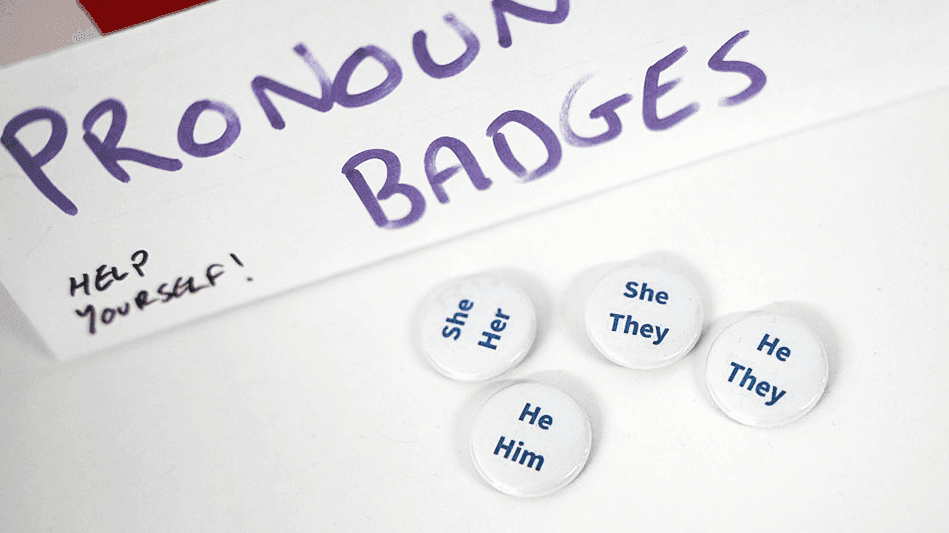
 Wiktor Szymanowicz/Future Publishing/Getty Images
 Eric Thayer/Los Angeles Times/Getty Images
 Tara Walton/Getty Images
 Virginia's extreme abortion and same-sex union proposals are a grim reminder that for the left, there is no 'moderation.'
 A federal court sided with Indiana on Friday in upholding a state law prohibiting “horrific” “trans” surgeries from being conducted on children. “We have won this critical fight against radicals who would otherwise impose this horrific practice on our kids for ideological and financial reasons,” Indiana Attorney General Todd Rokita said in a statement. “My […]
 Oscar del Pozo/Getty Images
 www.theblaze.com
 thefederalist.com