Trump announces pathway to replace 'unqualified illegal alien' truckers with American heroes


President Donald Trump says thousands of illegal alien truck drivers put Americans at risk on U.S. highways — but he has a solution.

Trump spoke at the White House on Thursday, providing plenty of context for his new program that hopes to encourage former military members to get back on the road.

'They don't speak the language for the most part. ... They don't want to learn the language.'

The president cited tens of thousands of illegal commercial driver's licenses being distributed across the United States, which have resulted in the deaths of Americans in recent months.

One such case of an Indian truck driver, who is an illegal immigrant, was directly criticized by Department of Transportation Secretary Sean Duffy, who took the state of California to task over the alien's ability to get a CDL.

"For many years, American highways and roadways have been terrorized by unqualified illegal aliens dangerously driving big rigs," Trump said from the podium.

"They don't speak the language for the most part. Many of these illegal aliens don't even come close. They don't want to learn the language," he added.

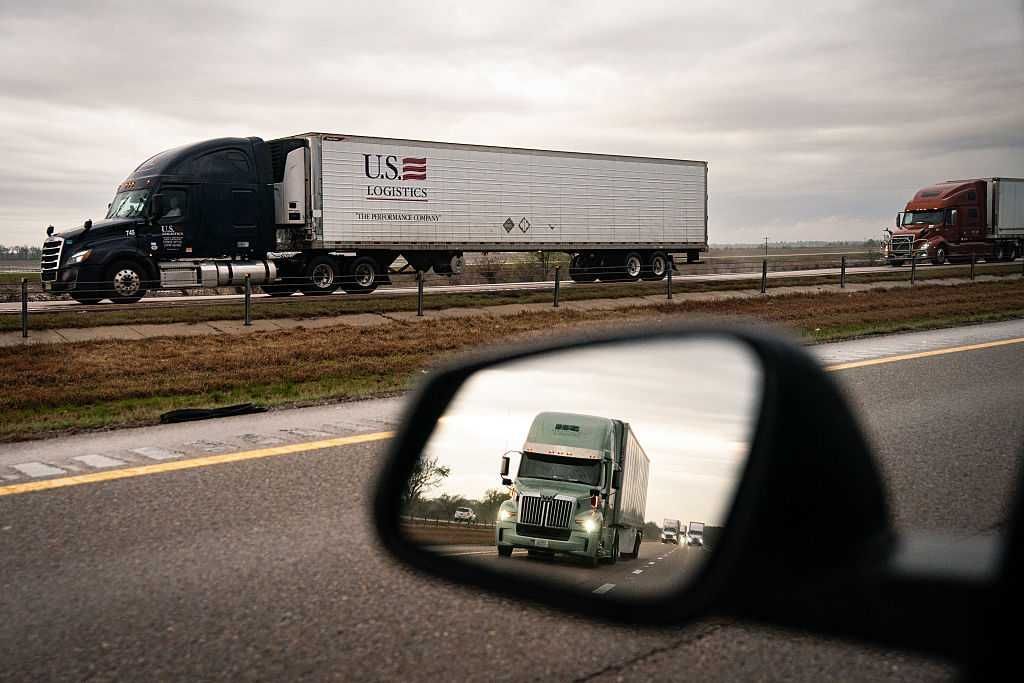
Trump then announced a new pathway for American veterans to replace the illegal truckers who are taking up space on the road. The government program is titled Freedom Haulers, and it will fast-track the licensing of veterans who have experience with air brakes, trailers, and the like from their time in the military.

"We want veterans to take the wheel of big rigs and secure the economic supply lines of the country you swore to defend," the federal website reads.

RELATED: ROAD RULES REFRESH: Forgot how to drive? Let Uncle Josh bring you up to speed.

The program promises up to 100% of tuition coverage for approved CDL programs that can result in annual salary of $70,000 for truckers.

The administration also stated that after annual earnings of truckers were down 3% under President Joe Biden, they have risen by 7.42% under Trump, which will provide great opportunity for the 25% of military veterans who are truckers.

"Any American who has driven a heavy truck for our military will automatically be eligible for a commercial driver's license. ... We're going to make it as easy as possible for the veterans," the commander in chief explained.

RELATED: TATTLETALE EXPRESS: School buses may soon become America's largest mobile surveillance network

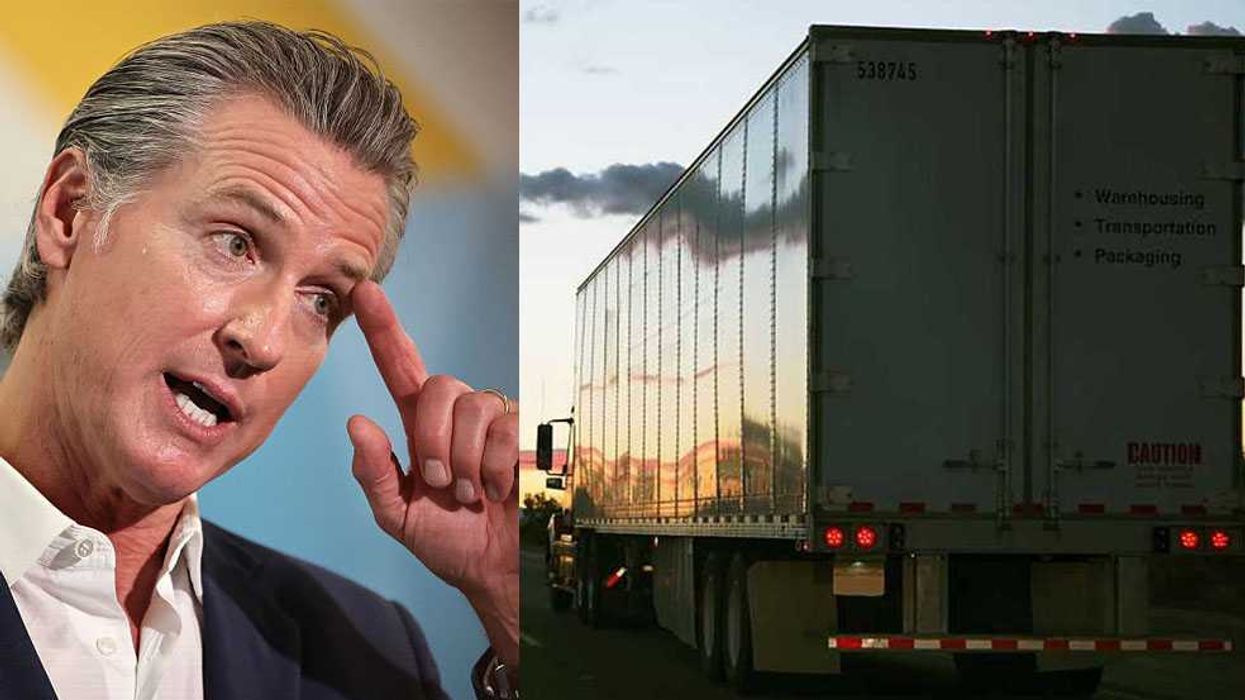
Smith Collection/Gado/Getty Images

The president also claimed that federal authorities had "already removed more than 24,000 non-English speakers from behind the wheel."

"We've also forced states to cancel more than 28,000 commercial driver's licenses unlawfully issued to illegal aliens. They were given illegally," Trump added.

Secretary Duffy firmly stated on Thursday, "Illegal alien truckers are OUT, and American Veterans are IN."

"Thank you, [President Trump,] for putting OUR safety first," Duffy added.

Like Blaze News? Bypass the censors, sign up for our newsletters, and get stories like this direct to your inbox. Sign up here!

Truck-driving illegal alien from India arrested for horrific hit-and-run that killed 2 young Americans


California Highway Patrol officers responded around 12:20 p.m. on Tuesday to a multiple-vehicle crash near Lodi that left two young Americans dead. The man believed to be responsible for the carnage — an illegal alien from India — reportedly fled the scene on foot.

The suspect, 24-year-old Manvir Singh, was quickly tracked down and arrested by San Joaquin County sheriff's deputies and taken to the county jail, where he remains in custody as of early Thursday.

'This criminal illegal alien from India should never have been behind the wheel of a semi-truck and allowed to kill.'

The deceased, ages 20 and 16, were sitting in a Kia Forte and slowing to a stop behind a Nissan Frontier and a Toyota Camry in the far right lane of northbound Highway 99 when a heavy-duty truck driven by the suspect and carrying a fully loaded semi-trailer smashed into them, reported Freight Waves.

According to CHP, the 80,000-pound truck hammered the rear of the Kia and launched it into the Camry, killing two Americans and sending five others to hospital, two of whom suffered critical injuries.

Department of Transportation Secretary Sean Duffy revealed that Democrat Governor Gavin Newsom's California — where an estimated 35% of the commercial drivers are Sikh, an Indian religious group — issued Singh a commercial driver's license in March 2025.

RELATED: Fraudulent trucking carriers just ran out of road with new registration system, DOT says

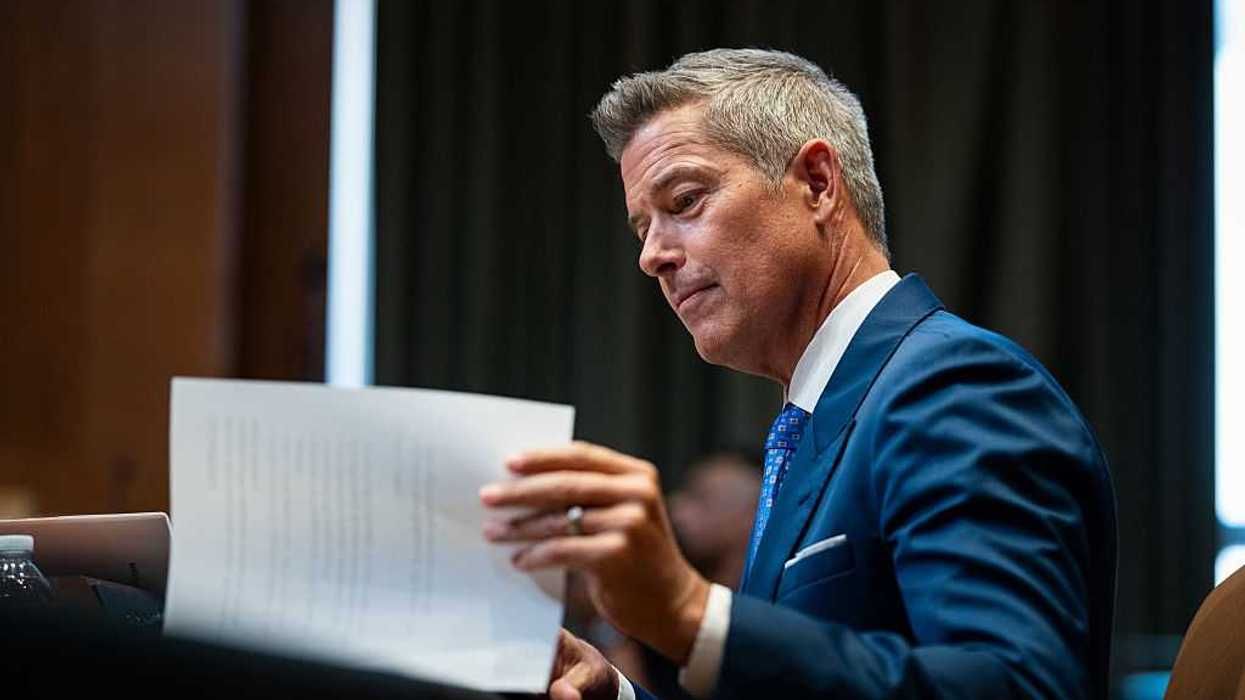
Al Drago/Bloomberg/Getty Images

Duffy noted further that Federal Motor Carrier Safety Administration investigators "are looking into how this illegal got his CDL and will investigate the trucking company who employed this driver."

Amritsar Trans Inc., the intrastate freight company that reportedly operates the truck, is registered in Manteca, California; owns or leases five vehicles; has nine drivers; is unrated by the FMCSA; and is apparently run by Baljeet Singh.

Freight Waves highlighted that the company was cited for six violations across 11 inspections in the two-year window that ended April 24, 2026. One of the violations was for speeding 15 or more miles per hour over the posted limit, and another was for falsifying duty status to conceal having driven over hours.

Manvir Singh has been charged with felony vehicular manslaughter with gross negligence, felony hit-and-run resulting in death or injury, and obstructing or resisting arrest. The Indian, whose bail has been set at $185,000, is set to appear in court Thursday afternoon.

The Department of Homeland Security told Fox News that Manvir Singh illegally entered the country through Arizona in 2023 and was subsequently released into the U.S. by the Biden administration.

U.S. Immigration and Customs Enforcement has lodged a detainer request in hopes that California authorities will ultimately transfer the illegal alien into federal custody.

"This criminal illegal alien from India should never have been behind the wheel of a semi-truck and allowed to kill two innocent people in a multi-vehicle crash in California," DHS acting Assistant Secretary Lauren Bis said in a statement. "He is now charged with vehicular manslaughter, hit and run resulting in death or injury, and resisting a police officer."

"This is yet another example of why illegal aliens should not be operating trucks on American highways," added Bis.

Transportation Secretary Duffy emphasized that "Dalilah’s law would have revoked this illegal trucker’s license. Congress must pass Dalilah’s Law NOW."

H.R. 5688, Dalilah's Law, would ban states from issuing commercial driver's licenses to illegal aliens and limit issuance to U.S. citizens, lawful permanent residents, and holders of specific work visas. The legislation would also require the revocation of any existing ineligible CDLs.

The legislation takes its name from Dalilah Coleman, a little girl grievously injured in a car accident that was caused by an illegal alien from India who reportedly obtained a commercial driver's license from Gov. Gavin Newsom's Department of Motor Vehicles.

Like Blaze News? Bypass the censors, sign up for our newsletters, and get stories like this direct to your inbox. Sign up here!

EXCLUSIVE: A Conservative Coalition Is Backing The Trump Admin’s Push To Prevent Another East Palestine Disaster

A notable coalition of conservative and America First organizations announced late Wednesday that they are backing the Trump administration’s push to insert railway safety regulations into the five-year surface transportation bill. The groups are advising lawmakers that key constituencies back the move to add the rail safety language — originally championed by then-Republican Ohio Sen. […]

Lawmakers Want To Make Roads Great (And Safe) Again

An incoming bill seeks to be among the largest federal surface infrastructure investments in American history, according to the lawmakers behind it. The lead Republican and Democrat on the House Committee on Transportation and Infrastructure drafted a 5-year authorization bill that aims to invest billions of dollars into “America’s roads, bridges, transit, rail transportation, and […]

One crash, one derailment — and Congress still can’t follow the data


After a midair collision and a train derailment, Congress faces a simple test: Will it follow the evidence?

In aviation, the Senate’s ROTOR Act would mandate improved aircraft surveillance technology after last year’s deadly midair collision involving a military helicopter and a passenger jet. Yet earlier this month, the House failed to advance the bill after Pentagon opposition — sidelining broader use of Automatic Dependent Surveillance-Broadcast, a system that likely would have prevented that tragedy.

Rail risks being locked into prescriptive labor mandates, while aviation safety is undermined by incomplete adoption of proven technology. Neither sector is getting what it needs.

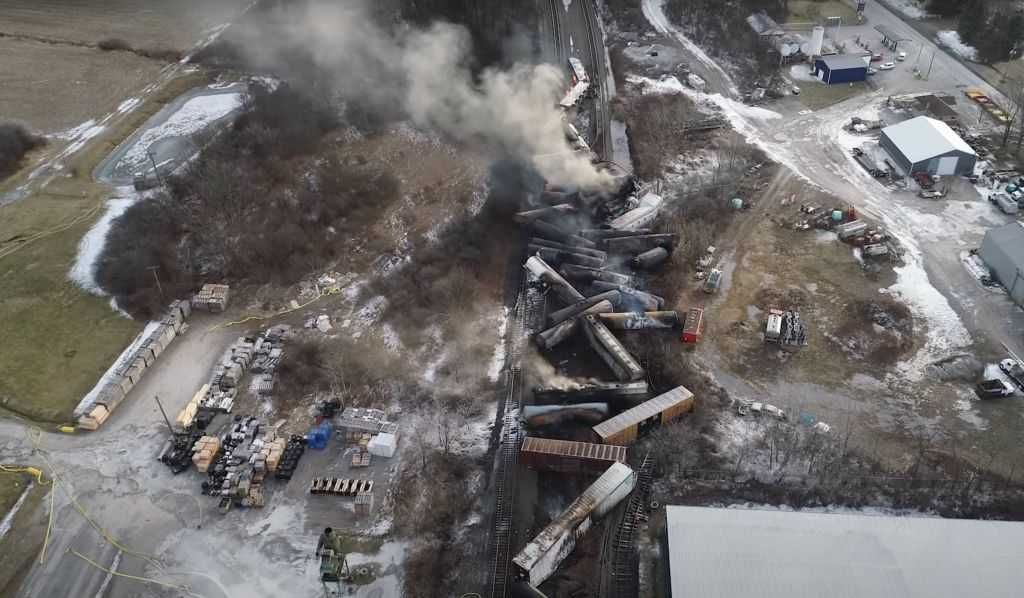
At the same time, a group of senators reintroduced the Railway Safety Act, branding it “data-driven” while again pushing minimum crew mandates — despite no empirical evidence that larger crews reduce accident rates — in response to the 2023 East Palestine derailment.

The impulse is understandable. When tragedy strikes, Washington acts. But acting quickly is not the same as acting on evidence.

If safety is truly the goal, Congress needs to ask a harder question: What actually reduces risk?

The data point in a clear direction. Human error dominates transportation accidents. And the most consistent safety gains in modern transport have come not from adding more people into systems but from improving system design, automation, and structured safety management.

Human error is the core problem

In 2024, roughly 40,000 Americans died in motor vehicle crashes — far outpacing most developed countries on a per-capita basis, according to the National Highway Traffic Safety Administration.

By contrast, aviation and rail — sectors that have embraced automation and safety management systems — post dramatically lower fatality rates. Commercial aviation in developed countries now experiences fatal accidents at rates below 0.1 per million departures. Federal Railroad Administration data show train accident rates have fallen 33% since 2005, with derailments down significantly and human-factor incidents continuing to decline.

The lesson is straightforward: When systems are designed to reduce human error, safety improves.

RELATED: Female Black Hawk pilot didn't follow orders before horrific crash: Report

Photo by Jabin Botsford/The Washington Post via Getty Images

Automation works — with caveats

Fully autonomous and semi-autonomous vehicle systems have posted lower crash rates in controlled environments. These results require continued scrutiny and larger data sets, but the direction is clear: Reducing reliance on human reaction time reduces collisions.

The same logic applies in aviation and rail.

Automation now governs the vast majority of routine commercial flight operations. Positive train control has sharply reduced train-on-train collisions and overspeed derailments.

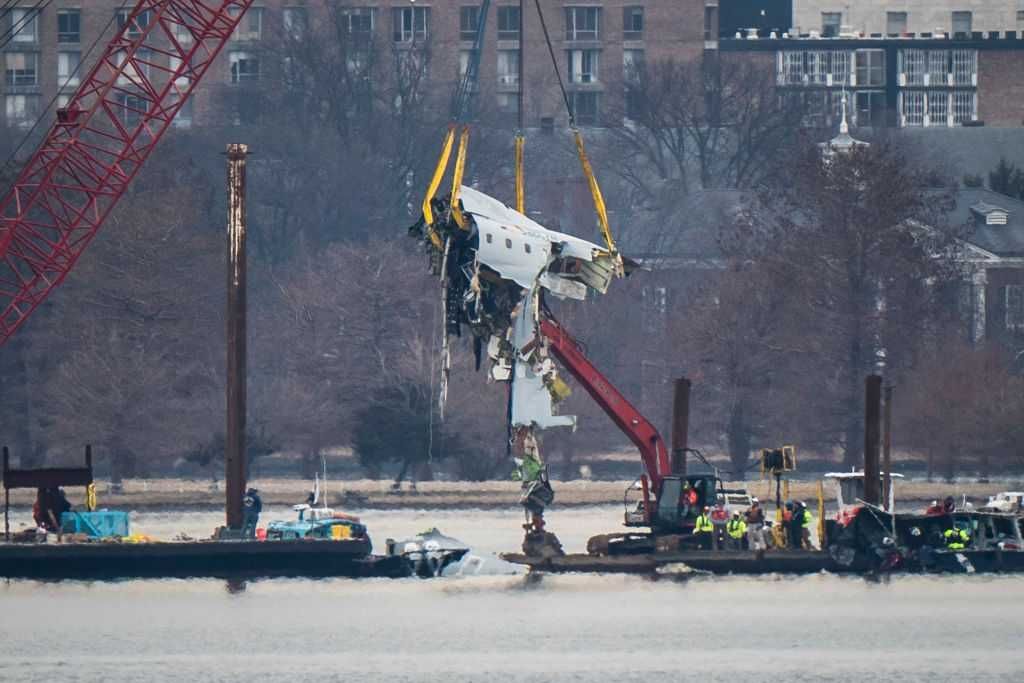
Consider last year’s midair collision. Broader, uninterrupted use of ADS-B In and Out would have provided precise real-time traffic awareness to pilots and controllers. The technology exists to prevent exactly this type of conflict, a point highlighted in the BlazeTV documentary “Countdown to the Next Aviation Disaster,” which presaged the January 2025 Reagan National Airport tragedy. Yet expanded deployment has failed to advance despite bipartisan Senate support.

In rail, meanwhile, some lawmakers are moving in the opposite direction — toward mandates for more personnel.

Symbolic safety vs. structural safety

The East Palestine derailment stemmed from a mechanical failure — an overheated bearing — not a shortage of crew members. There were three crew members on board.

Adding personnel would not have prevented a bearing from overheating. Predictive maintenance systems, sensor networks, and better data integration are the tools designed to catch precisely that kind of failure.

Yet the RSA would codify minimum crew requirements across freight rail operations, regardless of route, cargo type, or level of automation.

This isn’t primarily about risk analysis. It reflects political incentives.

Organized interests exert concentrated influence. Diffuse beneficiaries — consumers, shippers, taxpayers — do not.

Labor interests can organize to protect jobs. The Pentagon can block safety rules it opposes. But the public — which wants safer transportation — is too diffuse to mobilize around specific, technical policy choices. The result is a grab bag of special-interest “safety” measures rather than coherent, risk-targeted reform.

RELATED: Trucks destroy roads, but railroads — yes, rail! — can save taxpayers billions

Photo by Brandon Bell/Getty Images

Focus on what works

Freight railroads in the United States are privately funded and capital intensive, investing billions annually in track upgrades, advanced detection systems, and predictive maintenance. Rail remains one of the safest ways to move goods over land because sustained technological improvement compounds over time.

By contrast, the Federal Aviation Administration — a government-run system — has struggled to modernize needed surveillance and air-traffic technologies at speed and at scale. In civil aviation, the FAA has deployed ADS-B across controlled airspace, dramatically improving traffic surveillance and situational awareness. But gaps remain where some defense aviation actors are not required to fully transmit or receive ADS-B data.

Rail now risks being locked into prescriptive labor mandates, while aviation safety is undermined by incomplete adoption of proven collision-avoidance technology. Neither sector is getting the policy it needs.

As Congress considers the RSA, lawmakers should prioritize provisions that directly reduce accident probability. Decades of transportation data point to a consistent lesson: Safety improves when systems are engineered to anticipate and correct human limitations — not when policymakers assume more humans automatically mean more safety. One-size-fits-all crew mandates don’t meet that test.

Nor should Washington abandon expansion of ADS-B and other proven collision-avoidance technologies. The system exists to prevent the very type of tragedy we witnessed. It shouldn’t take another collision for Congress to act.

The evidence isn’t ambiguous. Technology-driven risk reduction works. Symbolic mandates do not. If lawmakers are serious about safety, they need to focus on what demonstrably prevents accidents — and have the discipline to follow the data.
Why I Wasn’t Offended When An Airline Pilot Called Me An ‘SOB’ When Landing A Plane On Fire

During an emergency onboard, a Delta airline pilot called me an SOB, and here's why I'm grateful that he did.
This coast-to-coast rail merger could cut your expenses


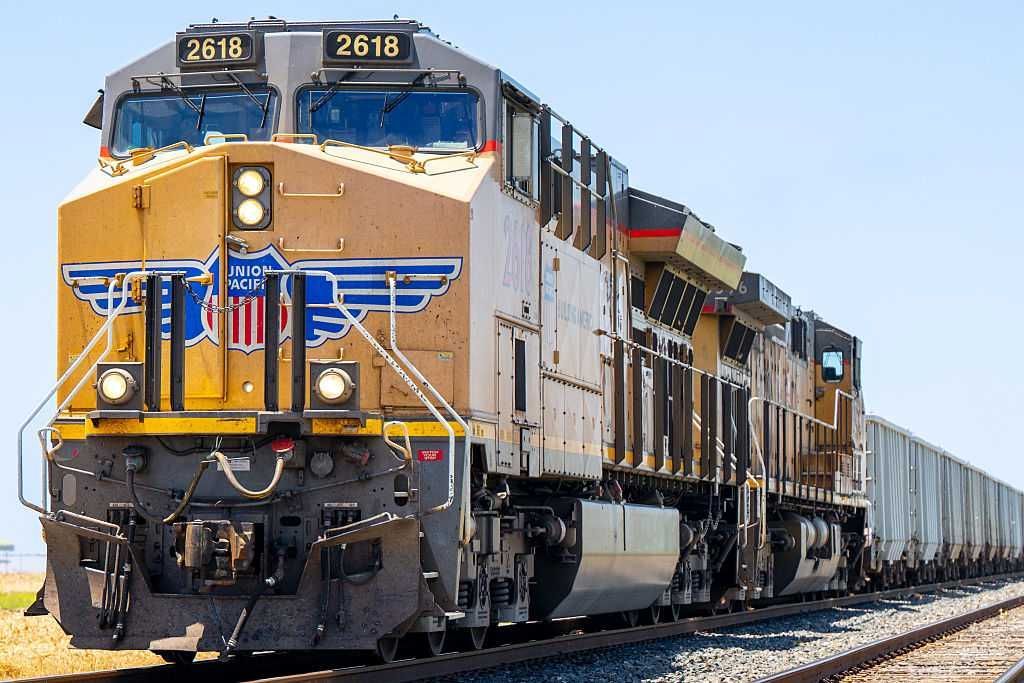
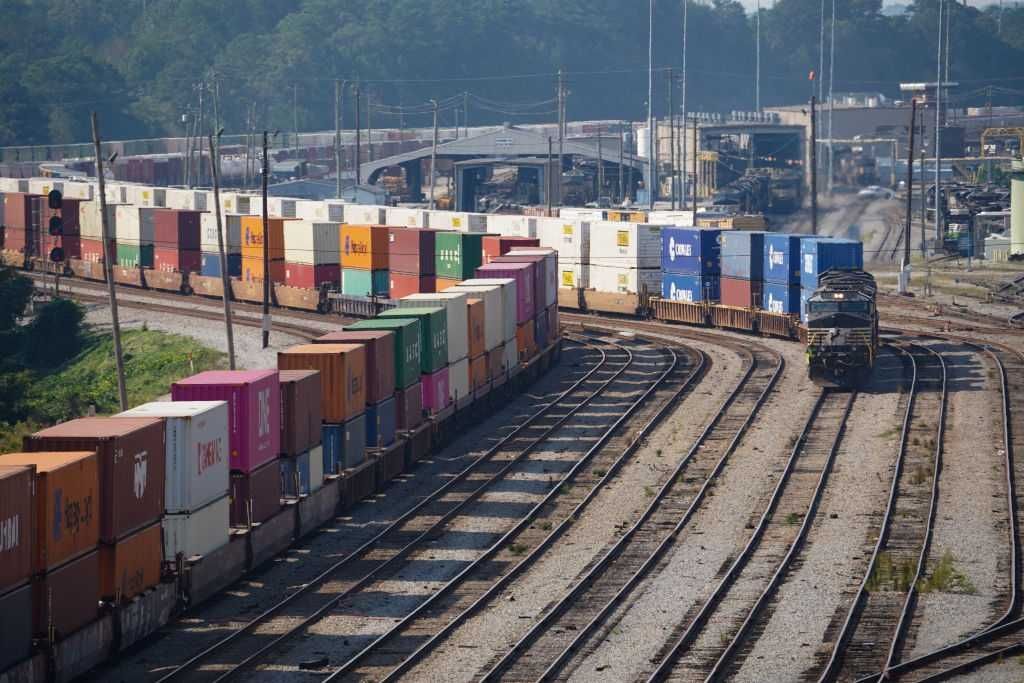
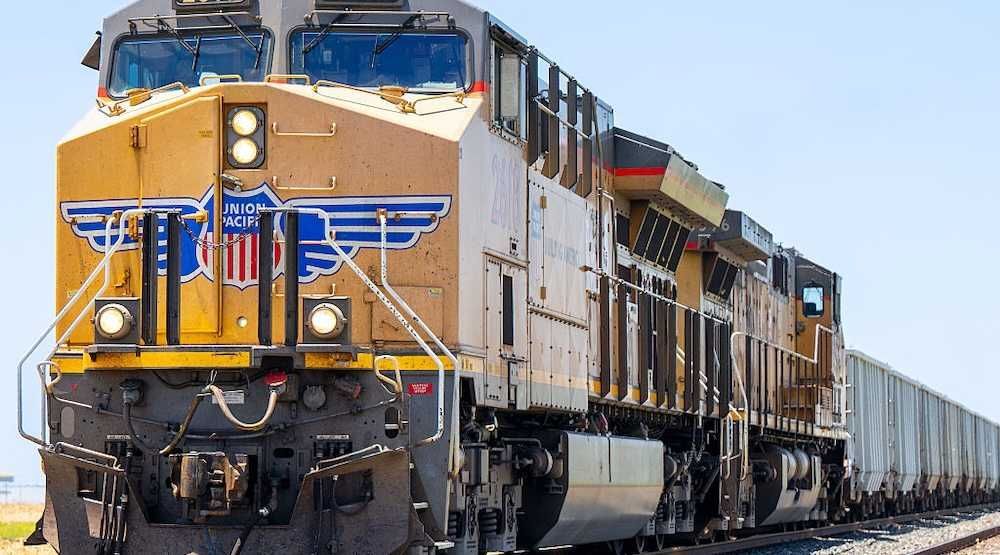
Government micromanagement has throttled economic growth for decades. The latest example came when the Surface Transportation Board deemed the Norfolk Southern-Union Pacific merger application incomplete and rejected it without prejudice. That decision delays what would be the first uninterrupted transcontinental railroad in American history — a privately financed project that could strengthen supply chains, boost growth, and improve American competitiveness without costing taxpayers a dime.

For now, that vision sits on hold.

A stronger rail network would help stabilize the supply chain while lowering costs for producers and consumers alike.

The STB said the 7,000-page filing lacked several key materials, including a full market-impact analysis with traffic projections. Norfolk Southern and Union Pacific now must fill in the gaps and refile.

That setback does not decide the larger question. Rail mergers have recovered from early regulatory obstacles before, and the STB’s ruling on completeness says nothing definitive about the underlying merits of this merger.

In May 2021, for example, the STB rejected CSX’s application to acquire Pan Am Railways as incomplete. Two months later, CSX resubmitted the application, and the board accepted it. The combined railroad later expanded shipping options, lowered freight costs for shippers, and supported regional growth.

Opponents of the present merger nevertheless treat the incomplete ruling as a final victory. It is not. It is a procedural delay, not a substantive rejection. And history shows that rail mergers of this kind can generate real economic benefits.

Today, shipping goods across the country by rail often means navigating a patchwork system of freight lines, transfer points, and carriers. Businesses must coordinate among multiple operators just to move a product from one coast to the other.

That fragmentation imposes real costs. It slows delivery, raises uncertainty, and forces businesses to protect themselves with larger inventory buffers and wider shipping windows. Those costs do not disappear. Businesses absorb some of them, and consumers pay the rest.

Farmers, manufacturers, and other suppliers feel that pressure most acutely. Many already operate on thin margins. Add shipping delays and higher freight costs, and those businesses face hard choices: eat the loss, cut investment, or raise prices.

That is why the Union Pacific-Norfolk Southern merger matters.

A stronger rail network would help stabilize the supply chain while lowering costs for producers and consumers alike. It also would mark the first time companies attempted to create a true transcontinental rail line without asking taxpayers to foot the bill.

RELATED: The railroad that could unite — and revive — America

Photo by Brandon Bell/Getty Images

The competitiveness argument matters too. A USDA study found that wheat grown in 2022 cost more to ship by rail to western ports in the United States than in Canada, even across comparable distances. Canada produces far less wheat than the United States, but its less fragmented rail network gives its exporters an advantage. American farmers, by contrast, compete from a structurally weaker position because the U.S. rail system remains broken into discontinuous lines.

That disadvantage carries real consequences. When uninterrupted, rail can move freight at costs up to 60% lower per ton than other transportation modes. A more seamless coast-to-coast rail network would narrow the gap between American producers and their foreign competitors.

Critics argue that the merger would reduce competition in shipping. That view is too narrow. Freight competition does not occur only within rail. Shippers compare rail with trucking, barges, pipelines, and air cargo. A stronger rail network would not eliminate those alternatives. It would complement them. In a resilient supply chain, businesses need multiple transportation options, not fewer.

An efficient rail system would make the entire freight market stronger by giving shippers another dependable, lower-cost tool for moving goods.

The task now is straightforward: Norfolk Southern and Union Pacific should complete the review process quickly and responsibly. The precedent exists for a successful resubmission after an incomplete ruling. If that happens here, Americans will gain the kind of privately financed infrastructure upgrade the country badly needs.

'Couldn't read ... road signs': Video shows trucker driving the wrong direction on highway — Sec. Duffy responds


According to a recent video that surfaced on Wednesday, a Missouri driver found himself near a truck driver who was driving on the wrong side of the highway — reportedly for several miles.

X user MolonLabeBTC posted a series of short videos on Wednesday detailing his experience. The first video clearly shows a semi-truck driving into oncoming traffic from the opposite direction.

'We have learned that a truck driver with a Minnesota CDL who couldn't read basic road signs spent MILES driving the wrong way in an 80 TON truck!'

"Eighteen-wheeler going the wrong way down southbound 61. He is on the northbound lanes of 61, going the wrong way," a man can be heard saying in the video. The post reported that the video was captured about five miles north of Troy, just outside St. Louis.

The X user claimed in the caption to the first video that the trucker "nearly hit me head on before I pulled over to my left."

RELATED: Foreigners want to drive a big rig? They'll need more than work authorization papers, Duffy says

Photographer: Al Drago/Bloomberg via Getty Images

He added that the driver was "driving southbound in the northbound lane for about 3 miles." The driver eventually swung over onto the correct side of the highway. The truck appears to have eventually been pulled over by a state trooper.

The user uploaded several more videos of the person he identified as the truck driver. The suspect took out his own phone camera and began filming in return when he realized he was being filmed.

Transportation Secretary Sean Duffy acknowledged the incident, saying, "DISTURBING: We have learned that a truck driver with a Minnesota CDL who couldn't read basic road signs spent MILES driving the wrong way in an 80 TON truck! Thanks to Missouri law enforcement, this dangerous trucker is now out of service."

Secretary Duffy added that the Federal Motor Carrier Safety Administration is investigating the alleged carrier, Cargo Transportation LLC.

Blaze News was able to locate a Cargo Transportation LLC registered in Minnesota on the FMCSA registration portal. The USDOT number also appears to match the number on the side panel of the semi-truck in the MolonLabeBTC videos.

According to information that was current as of Wednesday, the USDOT status was listed as "active."

The physical address listed for this business also appears to be in an apartment complex, which is legal, but operators must be able to prove that it is the principal place of operations. According to FMCSA, "A motor carrier may designate as its principal place of business only locations that contain offices of the motor carrier's senior-most management executives, management officials or employees responsible for the administration, management and oversight of safety operations and compliance."

Blaze News left a message at the phone number listed in the company's registration page. Blaze News also reached out to the Missouri Highway Patrol.

Like Blaze News? Bypass the censors, sign up for our newsletters, and get stories like this direct to your inbox. Sign up here!

Exclusive interview: DOT Secretary Duffy explains how he's making flying great again in time for Thanksgiving


Secretary of Transportation Sean Duffy ruffled feathers among the professionally offended last week by noting that "traveling has become more uncivilized."

Duffy cited Federal Aviation Administration data indicating a 400% increase of in-flight outbursts, including physical violence since 2019; 13,800 reported unruly passenger incidents since 2021; and a doubling last year of unruly passenger events compared with 2019.

'Did people start kind of acting more like animals because they were treated more like animals?'

As part of the Department of Transportation's broader effort to usher in a "Golden Age of Travel for the American people" — which dovetails with an initiative to beautify and restore key transportation infrastructure — Duffy kicked off a campaign on Wednesday aimed at jump-starting "a nationwide conversation around how we can restore courtesy and class to air travel."

In an interview with Blaze News editor Christopher Bedford on Monday, Duffy said he's not necessarily calling for a return to three-piece suits and top hats — just a return to basic decency.

"I think it's a confluence of things that have come together that have caused people, as they get on airplanes, to be less civil to each other," Duffy said.

Duffy identified long lines at airports and airlines' efforts to cram passengers into increasingly smaller spaces as two contributing factors.

According to the advocacy group FlyersRights.org, airline seats have shrunk in recent decades while passengers have largely grown in size, such that as of 2022, "less than 50% of the public can reasonably fit in current seats."

"The airline is trying to put, you know, a lot of people on an airplane, sell as many tickets as possible, and by doing that, they're able to reduce the cost of travel and make it affordable for more people," Duffy said. "But then you feel like you're cargo."

RELATED: 'Disruptive' woman causes flight with 4 congressmen to divert: 'We live in a fascist state'

Photo by Kevin Carter/Getty Images

"Did people start kind of acting more like animals because they were treated more like animals? Or did airline crews have to crack down and treat people like that because of the actions they were seeing?" Bedford asked. "There was an obvious breakdown during COVID."

Duffy suggested that the transformation of flight attendants into mask-enforcers during the pandemic helped cultivate a more confrontational environment, which — when coupled with disrespect from the airlines and from passengers alike, signaled by the latter with an apparent increase in slovenly dress — helped grease the slide into relative barbarism.

Among the alleged incidents referred by the FAA to the FBI last year were sexual assaults, attacks on fellow passengers and/or flight staff, instances of inappropriate touching of minor fliers, and incidents where passengers attempted to breach the cockpit.

'I think we can be better.'

While physical violence and inappropriate touching are obvious examples of the behavior the Trump administration seeks to curb in air travel, Duffy noted that incivility finds various forms — such as passengers taking their shoes off and placing them on the seats in front of them, playing movies on high volume without headphones, and touching other fliers' TV screens with their bare toes.

"I want to have a conversation with America that says, 'Listen, let's call our better angels. Let's all be better when we travel together,'" Duffy told Blaze News.

The DOT secretary emphasized that it's necessary not only to curb nasty behavior but to embrace good behavior: "Let's dress more respectfully. Let's be nicer to one another. Let's say please and thank you."

Duffy suggested, for instance, that if capable men see a woman struggling to put her bag into the overhead bin, they should man up and step in to help.

"I think we can be better — better humans, better Americans, better travelers," the secretary said.

A change in general behavior could make traveling a whole lot less vexatious, not only daily where the TSA's current volume is roughly 2.48 million souls, but this week — a week where the Transportation Security Administration expects to screen more than 17.8 million people from Nov. 25 to Dec. 2, with over 3 million souls on Sunday alone.

"We are projecting that the Sunday after Thanksgiving will be one of the busiest travel days in TSA history," Adam Stahl, a senior official at the TSA, said in statement.

Like Blaze News? Bypass the censors, sign up for our newsletters, and get stories like this direct to your inbox. Sign up here!