Trump's Iran strategy is the one America needs
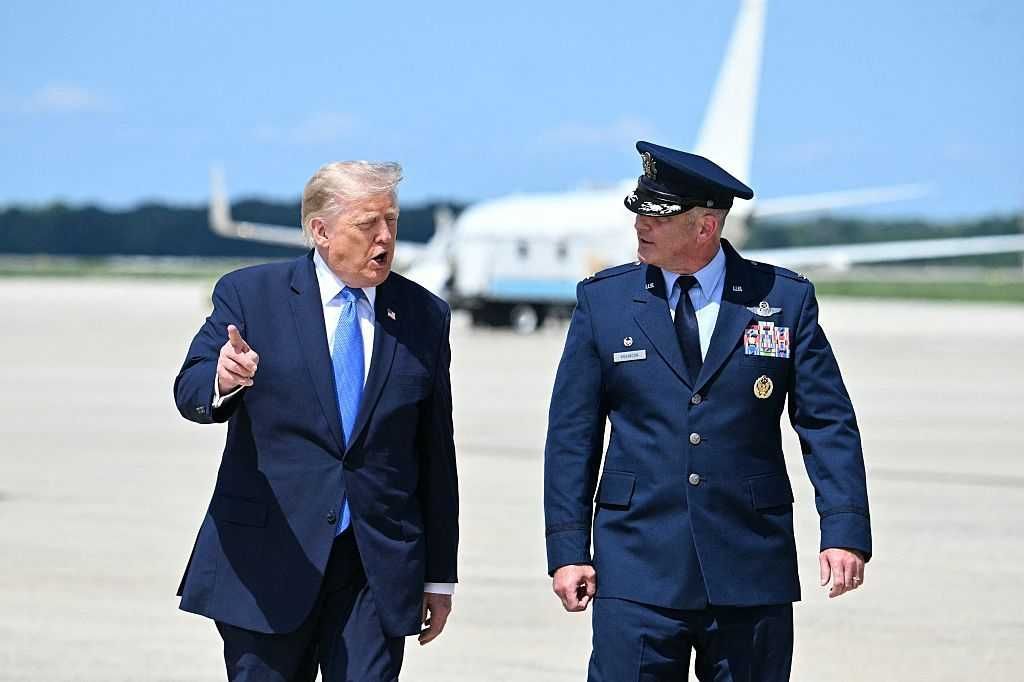
America is engaged in negotiations to end the war in Iran on terms favorable to the United States. It is difficult to believe this will be achieved through negotiations alone, however hopeful President Trump is about the prospects. Like many Americans, the president wishes to bring this war to a close. After all, America is not the policeman of the world. Nor is the U.S. the protector of the Middle East.
When the United States spends the blood and treasure of the American people, we do so for the good of the American people. This is both the beginning and the end of President Trump’s strategic view of the war in Iran.
How long did we imagine it would be before something had to be done about Iran?
Although other very high-priority policies must be carried out — the deportation of 25 million illegal aliens that came during the Biden administration, for starters — this war must be prosecuted to a satisfactory conclusion for the United States.
President Trump does not see the war in Iran as a diversion from America’s true interests, as many of his critics on both the left and the right insist. He sees it as one front in a larger world war that America did not choose but needs to fight and win.
The Chinese Communist Party declared a “People’s War” against the United States in May 2019. Communist China and Russia have supplied, financed, and shielded the Islamic Republic of Iran for decades precisely because Iran is useful to them: a deadly proxy that bleeds America and the West while Beijing and Moscow deny responsibility.
And Iran is useful to the broader Islamic world as well. However much Sunni and Shia Islam may differ, Iran regards itself as the military vanguard of the global Islamic movement — the effective instrument of Islam against the United States and the West.
To treat the war in Iran as an isolated regional quarrel is to misunderstand the global war we are in today.
The mullahs and the Iranian people
To understand the war, one must first understand the Iranian regime.
The mullahs who rule Iran look on the Iranian people — whose attendance at Friday mosque services ranges from a high of 12% to perhaps as low as 1.5%, the lowest in the Middle East — with contempt. They regard themselves as the faithful remnant, determined to fulfill an apocalyptic worldview, whatever the cost to the nation they rule. The Iranian people are expendable instruments of that destiny.
Herein lies our central challenge: We Americans value human life. We do not wish to kill the Iranian people, the vast majority of whom do not share the anti-Western fanaticism of the Islamic Republic. But because the Iranian people do not have guns, they are poor candidates to overthrow the regime that oppresses them.
Any serious effort at regime change would require continued economic warfare, the arming of various factions within the country, and the separation of the Iranian military from the theocratic leadership. These are not quick or easy steps, and no one should pretend otherwise.
Let us be clear: In this war, we play by different rules than our enemy. If Iran had the capability to launch an array of thermonuclear weapons against the United States — whether from long-range ballistic missiles or from medium-range, ship-launched ballistic missiles, the latter delivery system well within their capability — it might well do so. It would not matter to them that the response would be the nuclear annihilation of Iran.
For the mullahs, such a cataclysm would fulfill their apocalyptic worldview. A regime that hates its own people will not be deterred by the promise of their destruction.
This is the reason President Trump believes Iran cannot have nuclear weapons. It is not a position he arrived at recently, nor one supplied to him by the so-called Israel lobby or the military-industrial complex. He has held this view for more than a quarter century.
As Trump wrote in 2015 before he was president, “Whatever it takes, whatever we have to do, Iran cannot be allowed to build a nuclear weapon. ... An Iran with a nuclear weapon would start a nuclear arms race in the Middle East with potentially devastating consequences.”
And in the first two weeks of his second term, he translated that belief into policy in National Security Presidential Memorandum-2, which includes this language: “A radical regime like this can never be allowed to acquire or develop nuclear weapons, or to extort the United States or its allies through the threat of nuclear weapons acquisition, development, or use.”
President Trump abhors nuclear weapons. He regards them as a necessary evil for deterring our enemies abroad, and nothing more. This is a key reason he has placed such emphasis on building the Golden Dome missile defense system.
RELATED: America needs to understand Golden Dome before it’s too late
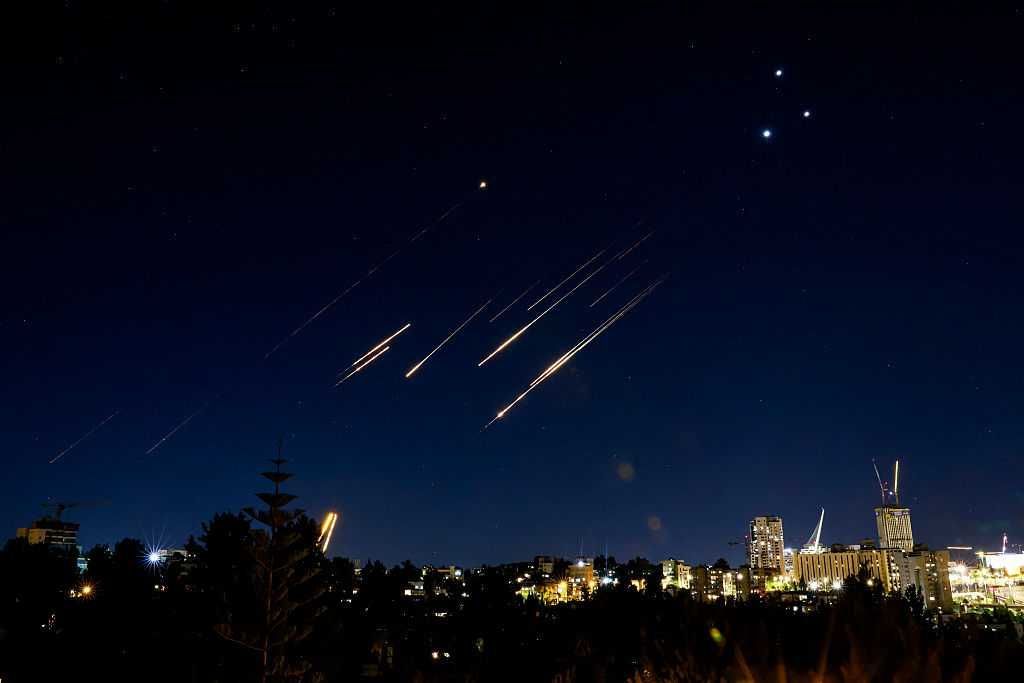
A fully operational and robust Golden Dome would render the Iranian nuclear threat irrelevant. Iran could still do us harm — terrorism in its various forms would not be out of the question — but the civilization-ending attack by a nuclear warhead or an Iranian electromagnetic pulse device detonated over the American homeland would be largely negated.
The U.S. Golden Dome, however, is still years from completion. Until it is finished, the American people remain exposed to precisely the ship-launched ballistic missile scenario the Iranians rehearsed in the Caspian Sea two decades ago and rehearsed again from the IRIS Shahid Mahdavi in 2024.
We do not know with certainty whether Iran already possesses a nuclear warhead. Prudence requires that we assume the worst, especially as Iran is so closely allied to our mortal enemy communist China. It also requires that the building of the Golden Dome proceed at a pace far more rapid than it is currently.
The stakes
The Iranian regime’s strategy today is simple. Fight a war of attrition against the United States. Maintain strategic, military, and economic relationships with communist China and Russia to keep the economy afloat and the arsenal of drones and missiles replenished. And wait for the day when President Trump is out of office, trusting that his successor will lack his resolve. The mullahs believe time is on their side. Every American president before President Trump taught them to believe it.
President Trump very much wants to end this war — but only on terms that guarantee the security of the United States. From the beginning, and even now, he has not set out upon the task of regime change. The key strategic objective continues to be to deny Iran the ability to launch nuclear weapons against the United States and to do so in ways that do not create an expanded war with communist China and Russia.
Those who demand regime change should be honest about what it requires. It is not enough that the regime be defeated; it must know it has been defeated. That is very difficult to achieve against men who belong to what can only be described as an Islamic death cult, men who would welcome a global cataclysm in service of a delusional worldview.
And there is a harder question still: How many Iranians are we willing to kill? Short of a nuclear attack upon us, I do not believe the president is prepared to kill millions of Iranians in order to degrade Iran to the point that regime change would require. President Trump is a civilized man. He has not crafted a military strategy that will lead to the annihilation of the Iranian people. The mullahs, by contrast, may well fight and expend Iranian lives to the bitter end.
The permanent problem
To avoid a forever war, we need to understand a truth that our political class resists: As long as the Islamic Republic stands, it is a permanent enemy of the United States.
What we face is not a forever war, but a permanent problem — the perpetual ambition of the mullahs to build nuclear weapons — with which we must deal. If regime change is not possible, however desirable it may be, then the next best option is a military strategy that continuously destroys Iran’s nuclear capabilities as they appear, for as long as they appear, until American missile defenses are fully operational.
This is not the endless nation-building of Iraq and Afghanistan. It requires no occupation, no democracy promotion, no American garrisons rebuilding Iranian society. It is the periodic and decisive application of American power in defense of the American homeland — nothing more and nothing less.
RELATED: America is winning the air war and losing the information war
What would such a strategy look like in practice? Consider the Pickaxe Mountain site, the complex Iran has been tunneling beneath a ridge just south of the Natanz nuclear facility since its centrifuge assembly plant was destroyed there. Its halls are buried at least 100 meters down, deeper than our GBU-57 Massive Ordnance Penetrator, which burrows through some 60 meters of earth, can reliably reach. And although it is also believed that enough sustained bombardment may permanently bury the uranium at Pickaxe, a facility does not need to be totally destroyed to be rendered ineffective.
Pickaxe Mountain has four known tunnel entrances, ventilation shafts, and above-ground power lines running to it. An American strike would not have to reach the halls themselves. B-2 bombers would put Massive Ordnance Penetrators into the tunnel portals, collapse the ventilation system and sever the power — entombing whatever centrifuges and whatever portion of Iran’s stockpile of highly enriched uranium the mullahs have buried there.
And when the regime begins to dig it out — an excavation that takes months and is visible from space the entire time — we strike again. For the United States, sealing the mountain costs a few sorties. For Iran, unsealing it costs a year. That is an exchange rate America can sustain until we have a fully operational Golden Dome system in place.
Some will ask why we do not simply go and take Iran’s highly enriched uranium by invasion, or by a special forces operation. An invasion can be dismissed quickly. To conquer and occupy Iran — a nation of 90 million people, four times the size of Iraq, where 150,000 American troops proved too few to hold the ground — would require hundreds of thousands of American soldiers. That is the forever war, arrived at by another name.
A special forces operation sounds more attractive, and it deserves a serious answer. To be sure, such a raid is within American capability. It would require a few thousand men: special operators, an airborne force to seize and hold a desert airstrip, and American airpower overhead to suppress Iranian air defenses and keep a corridor open.
The numbers, however, are not the problem.
First, one must know where the material is. Four hundred-odd kilograms of highly enriched uranium fit in a handful of transport cylinders; it can be moved in a few trucks and dispersed the moment the regime suspects a raid. Much of it now likely sits beneath the rubble of our own strikes, which means excavation.
Second, excavation transforms the raid into a siege: American forces holding a fixed position deep in Iran’s interior for days or weeks while the IRGC masses against them. A fixed American position in the Iranian desert would present the mullahs with a stationary American target, the one thing their remaining arsenal was built to hit, as they demonstrated against our base at Al Udeid.
Third, even a flawless raid ends nothing. Iran would keep its scientists, its centrifuge know-how, and its intent. We would have seized a stockpile, not a program — buying the same delay as the bombing campaign buys, at vastly higher risk.
And here is the essential point: We do not need to possess Iran’s uranium. We need Iran not to possess it. Highly enriched uranium entombed beneath a collapsed mountain is denied to the mullahs as surely as if it were in American hands — without a single American boot on Iranian soil.
And the war came
Let me close with two points: one about expectations and one addressed to those who support the president but do not approve of this war.
On expectations: The American people should not expect a surrender ceremony on the deck of a battleship. Wars against regimes like the one in Iran do not end cleanly. They end when the enemy is denied the means of destroying you and knows that any attempt to rebuild those means will bring their destruction. That is the standard by which President Trump’s conduct of this war should be judged — not by the false choice between a forever war and a pretended peace.
To those who support the president but not this war, let me ask a question in a spirit of friendship, for I understand the sentiment: How long did we imagine it would be before something had to be done about Iran?
RELATED: Washington still has not learned the North Korea lesson
The Islamic Republic has committed textbook acts of war against the United States for 47 years — the seizure of our embassy in 1979, the murder of 241 Marines in Beirut in 1983, the American soldiers killed and maimed in Iraq by Iranian munitions — while president after president deferred the reckoning to his successor. Did we believe this problem would never mature to the point where we would have to deal with it? That a regime whose schoolchildren recite “Death to America” each morning, and which enriches uranium to build a weapon, would simply grow old and moderate on its own? The debt was always going to come due. It came due on President Trump’s watch, and rather than defer payment once more — the politically expedient thing every predecessor did — he paid it.
The choice before us was never between this war and no war. It was between war now, on our terms, against a regime not yet armed with nuclear weapons, and war later, on their terms, quite possibly announced by the destruction of an American city.
And here a word must be said to the president himself. President Trump, knowing well the American people’s reluctance to go to war, has never fully explained the Iranian nuclear threat to them. Now would be a good time to do so.
The American people have been asked to bear real sacrifices — the expenditure of American military power and treasure, oil prices above $100 a barrel, the disruption of the economy, and the daily risk to American servicemen — without ever hearing, plainly and from the Oval Office, what a ship-launched Iranian nuclear missile or an electromagnetic pulse attack would mean for their country.
These hard facts are unpleasant to explain. But the American people are more than capable of bearing sacrifice when they are told honestly why it must be borne, and they will not sustain a war they have not been given reason to understand.
A people who know the stakes will see this war through to its conclusion. A people kept in the dark will demand it end before its object is achieved — and hand the mullahs the only victory available to them.
Put simply, this war ends when the nuclear threat from Iran ends and when the regime in Tehran understands that it is suicidal to attack the United States. Until the Golden Dome is complete, President Trump must deny our permanent enemy the permanent object of its ambition. That is the task before us and one we must achieve sooner rather than later.
Editor’s note: This article was originally published in the American Mind.
 U.S. Navy/Getty Images
 American troops and attack helicopters in Germany. Photo by Sean Gallup/Getty Images.

 The real reason leftists are gunning for Hegseth's resignation has nothing to do with their fake Signalgate concerns.
 Certain legal obstacles complicate the use of troops within the U.S., creating a reluctance to engage in homeland missions

 www.theblaze.com