![]()
Two weeks ago, I was caught in Dubai for a layover when the war suddenly became very real. While driving back from a pleasant sunset walk along Dubai Creek, my Uber driver suddenly yelled, “Brother, look at the sky!” Peering through the windshield, we watched as the UAE air defense system lit up the sky orange as it intercepted multiple drones, one of which we would later learn struck near the U.S. consulate in Dubai, causing a fire; fortunately, it was quickly extinguished, and there were no fatalities.
To say that war in the Middle East has become a state of normality would be a profound and unfortunate understatement. As drones and missiles fly overhead, the majority of which are intercepted, people go about their day as if nothing has changed. In Dubai, I had the privilege of witnessing an exceptional demonstration of resilience, an unwillingness to give in to fear as the very clear and present danger grows with each passing day.
The resilience I saw in Dubai, where life continued amid ongoing attacks, now faces an even greater test as the global energy supply chain is under strain.
Operation Epic Fury is ongoing and will have long-lasting impacts that will reverberate not only across the region but also worldwide. Iran is one of the world's largest producers of crude oil and has some of the largest known reserves. Decades of sanctions have left the country with a very limited customer base for its oil, with the majority of it going to China at heavily discounted prices.
For this reason, with the possibility of regime change in Iran, China stands to lose a significant portion of its discounted oil supply, especially when combined with the shift in political direction in Venezuela, another vital source of heavily discounted seaborne imports for the Chinese Communist Party.
Additionally, as the Strait of Hormuz is not effectively closed, a halt of up to a fifth of the global oil and liquified natural gas supply, which comes from the other major regional suppliers like Saudi Arabia, Qatar, and Kuwait, is now beginning to take its toll on energy prices across the world.
Dire Strait
Serving as the bridge between the Arabian Gulf and the Gulf of Oman, the Strait of Hormuz is one of the most important strategic chokepoints in the world. With an astounding 20% of global petroleum liquid products flowing through the Strait, it plays a vital role in both the global economy and the economies of the Gulf states.
For example, of the total oil that moves through the Strait, 38% is sourced from Saudi Arabia, a nation where 53.4% of the government’s revenue came from oil in 2025. Furthermore Qatar exports all of its 9.3 billion cubic feet per day of liquid natural gas through the Strait, accounting for most of the LNG transiting through it.
These nations are heavily dependent on revenues earned from oil and gas exports, which is why Iran is targeting both the Strait and the Gulf nations’ energy supply chains. Unable to strike the U.S. mainland, Iran is attacking the Gulf states that support the ongoing U.S. military presence in the region.
The impact from closing the Strait will not be limited to the region. With a substantial amount of exports destined for Asia, upwards of 83% in 2024, including China, South Korea, Japan, India, and Taiwan, the cost of energy in these countries is at risk of rising, which, given the sizable amount of manufacturing that takes place there, could lead to price rises for multiple sectors.
For this reason, China is pressuring Iran to allow for tankers to pass through and to continue shipments, given that China has not yet fully diversified its seaborne oil supply chain away from Iran. Closure of the Strait of Hormuz, even if not by blockade but simply by shippers unwilling to take the risk of asset loss and rising insurance costs, will remain a global market issue rather than a regional challenge.
The lack of transit through the Strait of Hormuz and the possibility that the Houthis in Yemen begin impeding transit through the Bab al-Mandeb Strait in the Red Sea in solidarity with Iran will lead to higher costs for everything shipped from the region and manufactured in East Asia.
Attacking energy infrastructure
Part of Iran’s strategy involves a willingness to openly attack any Gulf state with a connection to the U.S., with new attacks expanding to include Azerbaijan and reaching as far as Cyprus. Iran is doing so with a particular focus on energy infrastructure, recognizing the importance of the energy sector to the regional economy.
Multiple attacks have taken place targeting infrastructure in Qatar — impacting up to 17% of its LNG export capacity, the UAE, whose Shah gas field was struck, Bahrain, and Saudi Arabia — which is putting pressure on a vital part of these countries’ economies.
If Iran is allowed to continue to inflict severe damage on the energy infrastructure of the Gulf states, while depleting their defensive stockpiles with a steady flow of drones and ballistic missile attacks, they will be placed into an even more vulnerable position both economically and militarily.
China’s reliance on Iranian oil
RELATED: The only Iran plan that doesn’t end with a 20-year hangover
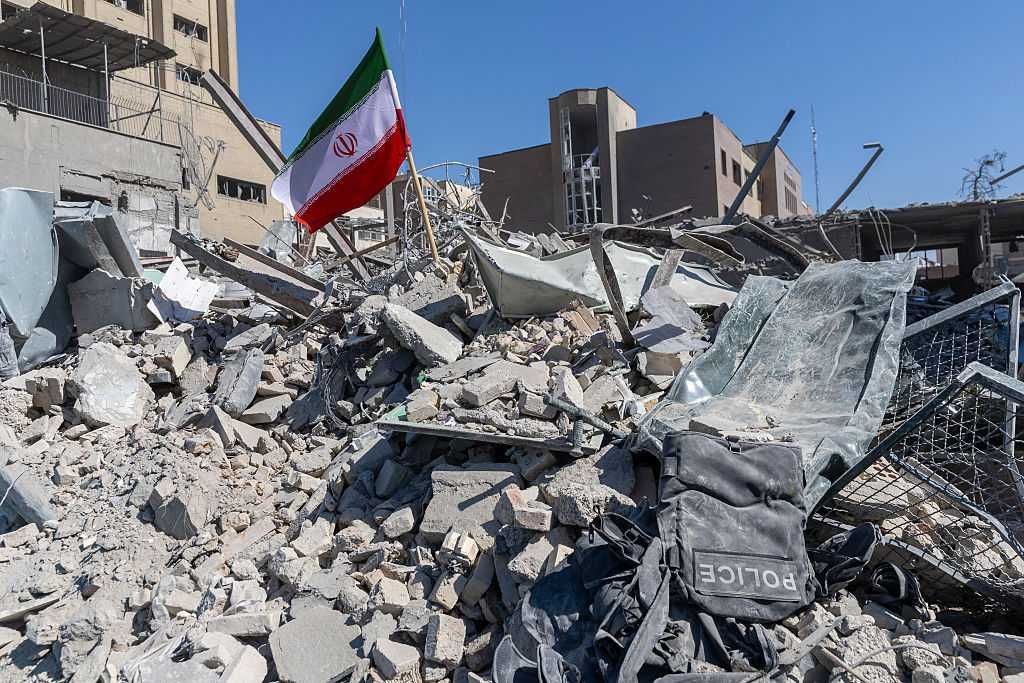
![]() Majid Saeedi/Getty Images
Majid Saeedi/Getty Images
China imports almost all of the oil Iran exports, over 80% of it. The strategy is simple: Purchase oil from a heavily sanctioned country with few or no other customers, and enjoy a significant discount. The same strategy was implemented with Venezuela, though not to the same extent as with Iran, in terms of the volume of oil purchased.
The combination of Iranian and Venezuelan seaborne oil imports regularly accounts for 17% of China’s seaborne imports; 13.4% from Iran and 4% to 4.5%. If the war continues to escalate, or perhaps if Kharg Island’s energy infrastructure, which processes 90% of Iran’s oil for export, is attacked or occupied, China could potentially lose close to 20% of its seaborne imports. If the war leads to a regime change in Iran more favorable toward the West, or Iran’s ability to export discounted oil to China is impacted by either military action or the lifting of sanctions, it will be forced to aggressively diversify its seaborne oil imports.
What it means
I am fortunate to be concluding this piece from the comfort of my home in Arizona after an evacuation flight to San Francisco, a commuter flight to Los Angeles, and a final long drive home. Operation Epic Fury has effectively disrupted the Strait of Hormuz, unleashed waves of attacks on Gulf energy infrastructure, and driven sharp increases in worldwide energy prices.
China stands to lose up to 20% of its discounted seaborne oil imports from Iran and Venezuela, while Asian economies face higher manufacturing costs that will be passed on to global consumers. The resilience I saw in Dubai, where life continued amid ongoing attacks, now faces an even greater test as the global energy supply chain is under strain. With escalation showing no signs of abating, volatility in oil, LNG, and gasoline prices has become the new normal, underscoring how deeply interconnected our world’s energy security truly is.
Editor’s note: This article was originally published by RealClearEnergy and made available via RealClearWire.
 We keep learning new things about the war with Iran. The new revelations haven’t added up to a clear picture yet, but they suggest the characteristics of a war that’s bigger than we’ve understood it to be. First, over the weekend, The Wall Street Journal reported that the Israeli military built a covert base inside […]
 The war Trump intends may not be the war that's actually underway, and America may de-escalate in the face of regional escalation.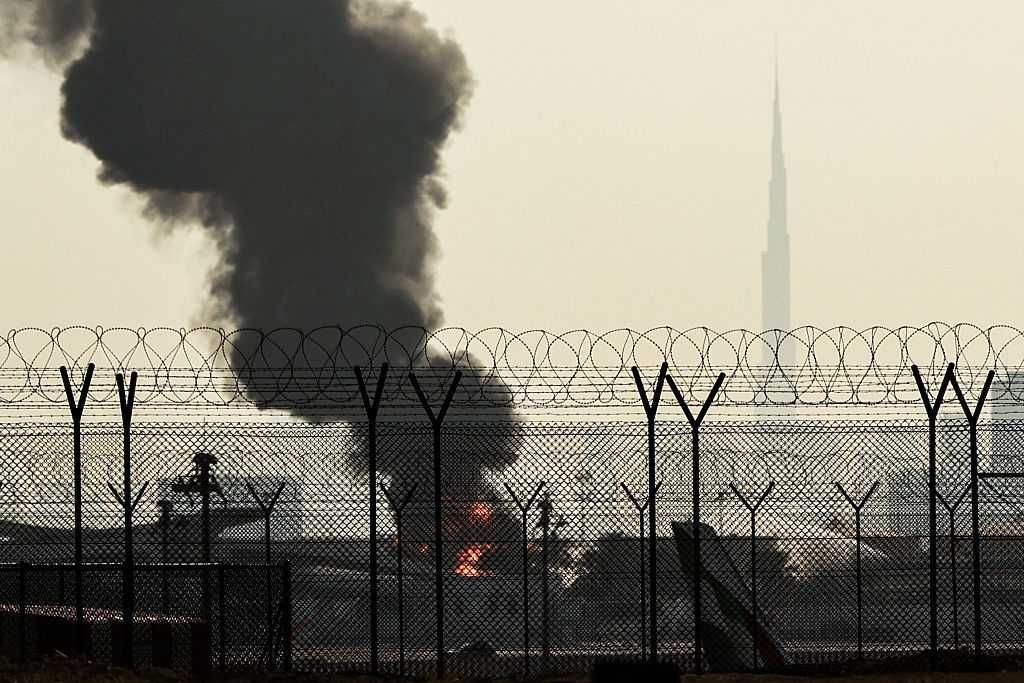
 Majid Saeedi/Getty Images
 IRB requires international research to be 'culturally appropriate,' but it is unlikely research of cultural problems would meet the requirement.
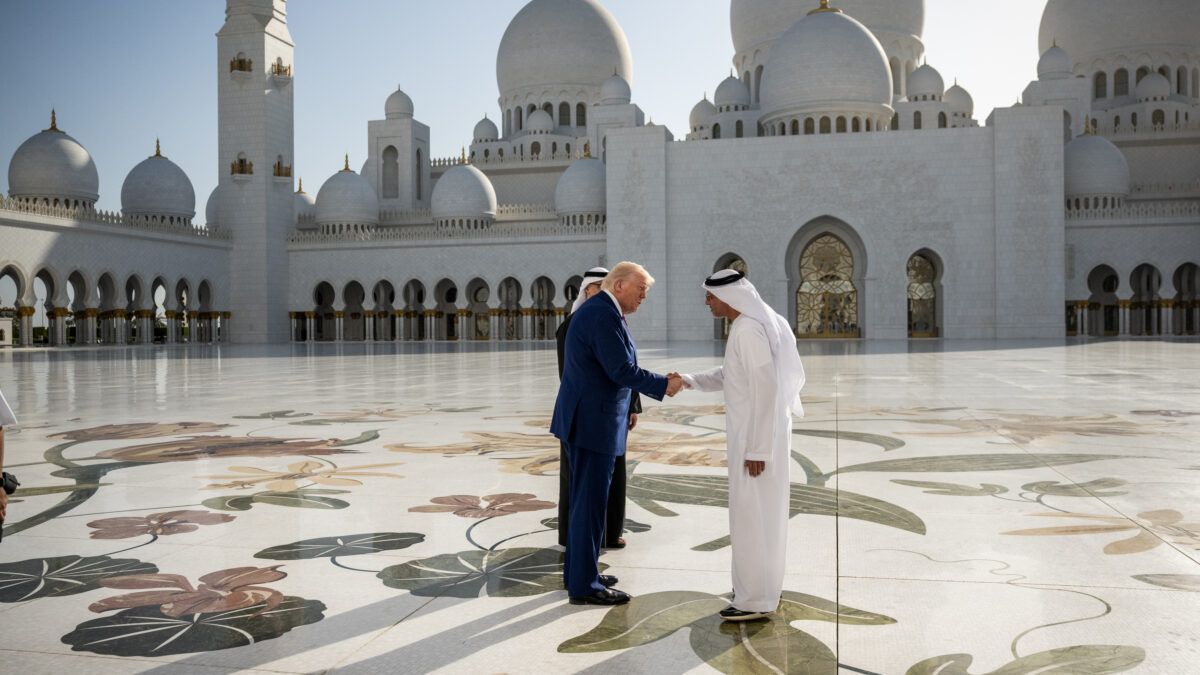 By breaking with tradition and visiting the Middle East, and the Gulf Arab States in particular, President Trump has shown he sees them as pivotal in changing the current dynamic.
 By giving in to the West-hating, slave labor-fueled, globalist agenda, Disney has cannibalized all the things that once made it great.
 www.theblaze.com
 www.theblaze.com
 thefederalist.com
 www.theblaze.com