The top 5 dangers of UBI


Social media is rife with warnings that AI will take everyone’s jobs within the next one to five years. If true, mass unemployment will become a mainstay of modern life, sparking questions as to how civilization as we know it will survive. The big-brained elite think they have a solution through universal basic income — with some optimists like Elon Musk claiming that high basic income is the wave of the future — but this idealistic concept poses several dangers severe enough that they could dismantle America and bring about the end of the world.

1. The death of capitalism

Let’s get this one out of the way first: UBI is a gateway to socialism. In a world where the people earn nothing and everything of value is handed down from on high, the capitalist system that made this country great ceases to exist.

Forced dependence, by any other name, is a form of slavery.

Without a consistent job or a way to earn a steady salary, the people must become dependent on the elite who control the money and dole it out at their discretion. Who exactly is expected to do this honestly and fairly? The government has shown itself to be an unreliable steward, especially on the left as the pursuit of equity ensures some groups — like white, straight men — are intentionally marginalized in favor of minority groups. Private companies don’t seem like good benefactors either, as many of them are currently firing employees in favor of AI, simply to keep more money for themselves.

Even if the UBI rollout magically goes off without a hitch, capitalism stands to face another hurdle. People are less likely to buy products and services when they live on a basic fixed income. In a study conducted in 2024, UBI recipients were most likely to spend UBI on necessities, like food and transportation, while withholding their dollars from what can be seen as more frivolous expenses that drive the American economy.

2. Financial inequity

The left’s disdain for wealthy Americans is well-known, with politicians regularly calling for the rich to “pay their fair share,” because why should you keep your money when the government can have it instead? Right now, the left tries to confiscate as much of the people’s earnings as possible through taxes — like California’s outrageous wealth tax — and if given the chance, they’d gladly redistribute those funds to groups that didn’t earn it.

RELATED: Why doesn't money make you happy?

MicrovOne/Getty Images

Universal basic income would install a fast lane to the left’s unofficial wealth redistribution program. Once in power, they would get to decide which groups receive UBI, as well as the amounts that are distributed. In a left-leaning world, that could mean minority groups get more basic income while “privileged” groups receive less, finally giving them the power to push the “equity” they’ve chased since the Biden administration.

3. The end of the American dream

While Elon Musk’s “high basic income” is a novel idea, the reality of a socialist system means that most of us will get a meager allowance while the elite keep the lion’s share for themselves. In doing so, this will create a larger divide between the upper class and lower class. At the same time, the middle class who can’t work, can’t earn money, and can’t get a leg up will also fall into the lower-class bracket.

Under UBI, the middle class will be hollowed out, permanently relegating the majority of Americans to poverty. Even worse, this new system will ensure that no one can escape the lower class simply because they don’t have a way to earn more money than the elites are willing to give. Job scarcity and financial dependence will keep the poor in check, and the American dream will cease to exist.

4. Freedom isn’t free

Our forefathers promised the people life, liberty, and the pursuit of happiness. They made a social contract, one that still stands to this day. But if the jobs go away, UBI is instated, and the people must depend on someone else for their next paycheck, the Declaration of Independence loses its power.

Simply put, the people can’t be free if we’re forced to depend on politicians, benefactors, or elitists to provide our way of life. Forced dependence, by any other name, is a form of slavery. Universal basic income gives the elite the power to take our rights and render our founding documents null and void.

5. One step closer to the end times

Last but not least, UBI is one of the final levers required to spread the mark of the beast, the precursor to the end times.

In the New International Version of the Bible, Revelation 13:16-17 says: “It also forced all people, great and small, rich and poor, free and slave, to receive a mark on their right hands or on their foreheads, so that they could not buy or sell unless they had the mark, which is the name of the beast or the number of its name.”

This doesn’t just mean you can’t buy or sell products unless someone says so. It also means you would need the mark to receive UBI payments.

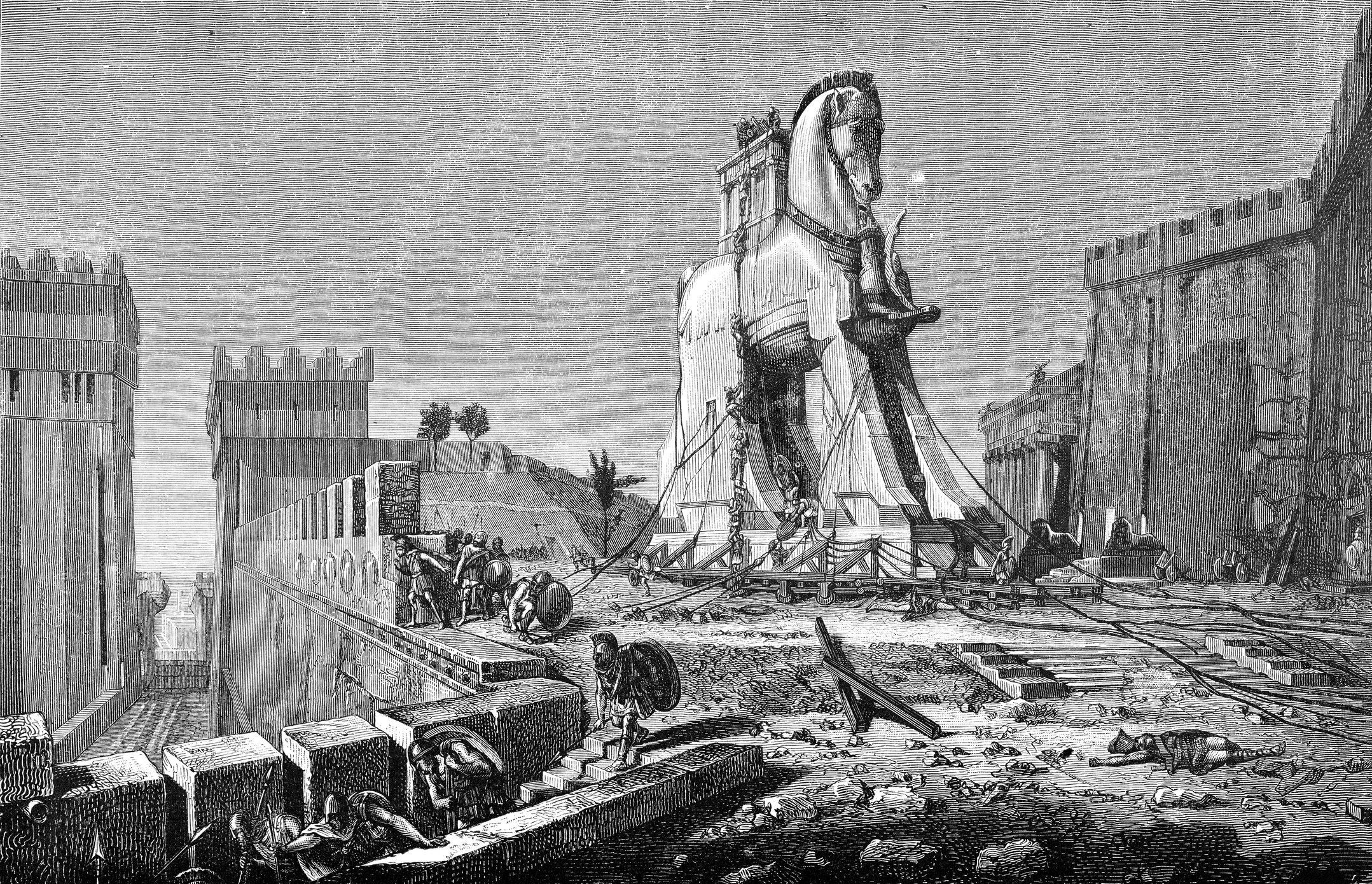
To put it bluntly, it’s easier to force the people to sell their souls when their means to work, earn money, and be free are all taken away. Even if UBI isn’t the mark itself, it’s a Trojan horse that will usher in top-down control that can be exploited by the most evil forces our world has ever known. It’s exactly what the devil wants and needs before the book of Revelation comes to pass.

Is universal basic income inevitable?

In a word, no, not yet. The things above can only happen if the two things below about the ongoing AI race are true:

  • AI will be effective enough to fully replace human jobs, a feat that’s proving difficult with continuous hallucinations, mistakes, and more.
  • AI will have the power to produce endless mountains of cash. There can only be enough basic income for everybody — even in small amounts — if AI can print infinite money.

Assuming these are true, more roadblocks stand in the way of an AI-controlled economy.

A crippled economy

Businesses are currently run by people who buy products and services from other human-led companies. Some businesses sell products to each other (B2B), while other businesses sell straight to consumers (B2C). This cycle is the beating heart of capitalism.

If companies are suddenly all run by the same AI platforms, they’ll no longer need to buy digital services from each other to get work done. They can simply use AI to build custom versions for their own companies at little or no extra cost, thus cutting out third-party vendors and partners, which will ultimately make some companies obsolete. In fact, this loophole has the power to take down the entire digital B2B market.

On the commerce side, consumers face a different problem. They can’t use AI to manufacture physical products for themselves — like iPhones, PCs, and game consoles — but under the universal basic income strategy, they are more likely to hold their money for necessary purchases than to spend it like they do today. This monumental shift in spending habits could also cripple companies and the market, or at the very least, it could stifle year-over-year growth.

In short, universal basic income, ushered in by the revolution of AI, would be a huge disaster for American workers, the American economy, and the American dream. All of it is in jeopardy unless the government passes regulations that prevent mass job loss. Luckily, after kneecapping the states’ ability to regulate AI via executive order, the federal government is finally stepping up by introducing the National AI Legislative Framework and the Trump America AI Act. More on that soon.
Why universal basic income is a Trojan horse for globalist control over free citizens


To most people following the story, UBI means universal basic income. The proposal, which has floated around under different names since antiquity, took shape in its modern incarnation as a project mainly pushed by British intellectuals favoring (at a minimum) some kind of collectivist floor to capitalist society.

Today, this sort of welfare arrangement is more closely associated with tech and tech-adjacent people who see progress in automation as inevitable and/or highly desirable. However, it is also costly because it adversely impacts the relevance or use of most human beings.

A lot of people laugh at satanism and even the idea of Satan, but there’s a reason the devil has stuck around in our consciousness to this very day.

It is no surprise that the arc of utopian Anglo thinking would end up here. Communism, as formulated by the functionally Anglo Marx and Engels, looked forward to a time when all people became industrially free to toggle among whatever pursuits they preferred whenever they cared to do so.

It is but a small leap to posit that the only real path to realizing this utopian collective is for a special class of super-capitalists to build the only kind of industry that could theoretically liberate everyone from the need for work or, indeed, any economic valuation.

That agenda (and the worldview behind it) seems very difficult to reconcile or harmonize with Christianity — for many reasons, but perhaps above all because it dramatically encourages looking to the machinery of utopian collectivism (and the people behind it) as the source of all goodness, salvation, and creative power rather than to the Lord of all creation, the triune God.

All too predictably, it’s now increasingly fashionable and high-status for AI researchers and technicians to baldly proclaim that they’re building a god to be worshiped as the one true transformer of all people out of their given human form. This is a god that destroys the Christian God by destroying the crown jewel of His creation, the human being.

Of course, we’re told, this is a good thing, actually, because what comes next for us is beyond our wildest dreams — in other words, we’re about to become gods, too, and it will be like nothing anyone has imagined.

This promise will carry the sting of especially diabolical heresy to those familiar with the millennia-old sacred Christian tradition of theosis, the concept and (highly laborious) practice of working to achieve union with God eventually. That tradition, taught carefully by the Church, has emphasized that the greatest of spiritual risks and harms come from trying to shortcut or speed-run theosis, properly understood as the reunion desired for us all by the immeasurably loving God who created us. The path toward theosis is marked and defined by the utmost patience, humility, discipline, and self-denial — not by (for example) maximizing “mind-blowing” inventions that make it ever easier for people to experience ecstasies and produce fantasies.

In sum, the best and oldest Christian teachings have warned the most against what is being pitched to us most aggressively as humanity's ultimate universal achievement.

Notably, this warning has great power because it doesn’t order us to stop making advanced tools or using them simply. Its counsel is more difficult and more spiritually purifying. It’s to recognize that the temptation to usurp and replace God is so difficult to resist that our best efforts are doomed to failure without an utterly humble and absolute reliance on God and trust in Him — a round-the-clock watchfulness wherein we focus on stopping temptations at the spiritual door to our hearts before they can get in, take hold, and grow.

All this deep and needful wisdom seems to be entirely lost on the loudest and most prominent advocates of universal basic income today, who are really advocating it because it helps accelerate us toward universal bot idolatry.

Beneath the hype, advocates struggle to ignore the fact that even the most extraordinary machines are only means to ends outside and beyond them. All machines, all tools, are for something, and the existence and development of these useful devices always ultimately depend on a creator exercising some kind of discernment, judgment, and, it must be concluded, worship.

As bleeding-edge technologists increasingly recognize that theology and worship are inescapable no matter how radically machine-making evolves, they must inevitably come to realize that one’s own tool — one’s own creation — can never be one’s god. If you think you’re worshiping tech for tech’s sake, you are deluded; you’re actually serving some other idol, some other facet of God broken off and falsely elevated to spiritually sovereign status.

A lot of people laugh at satanism and even the idea of Satan, but there’s a reason the devil has stuck around in our consciousness to this very day. And a lot of people are about to relearn why.

Rubio Memo Reminds ‘Reluctant’ Republicans That Dem Child Allowance Is A ‘Poverty Trap,’ ‘Precursor’ To UBI

Sen. Marco Rubio is circulating a memo aimed at emboldening Republicans to fight a measure that would distribute taxpayer money to nonworking parents.

Nancy Pelosi's house vandalized with leftist graffiti, fake blood and a severed pig's head


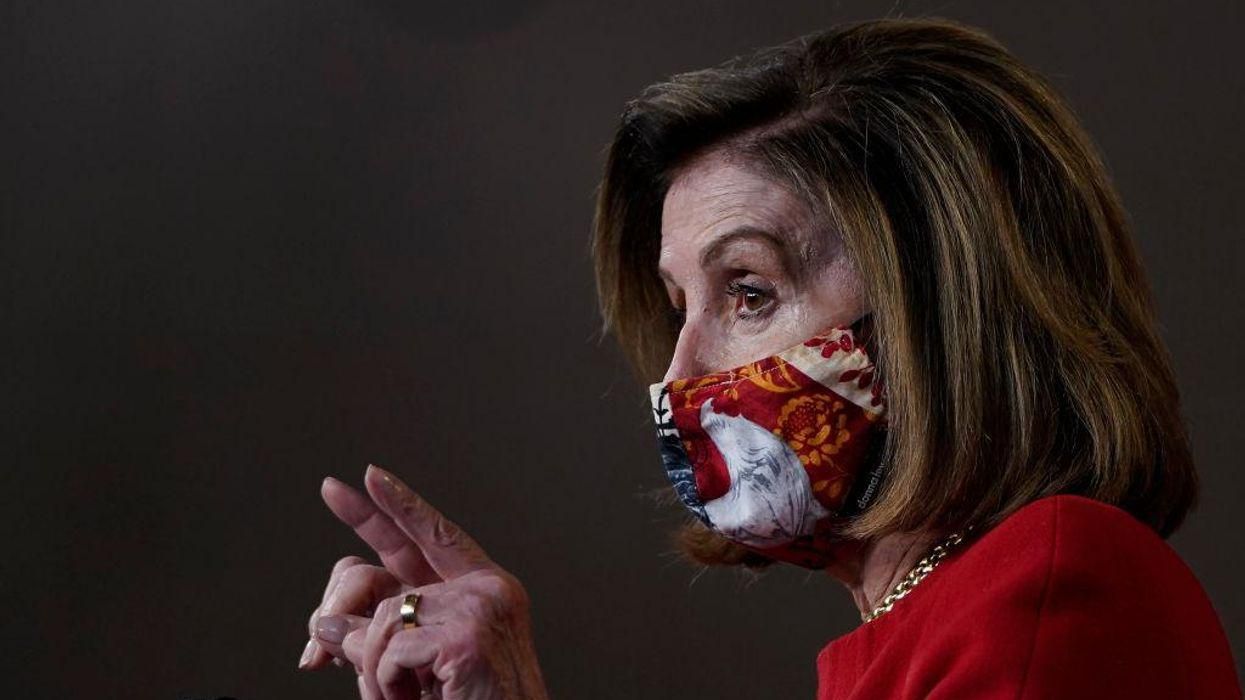
House Speaker Nancy Pelosi's home was vandalized with leftist messages demanding universal basic income and the cancelation of rent.

The home, reportedly owned by Pelosi, was splattered with fake blood and a severed pig's head was placed on the driveway. The white garage door was spray-painted with graffiti that read: "Cancel Rent!," "UBI!," and "We Want Everything!" There was a message of "$2K" with a line through the middle, a reference to lawmakers' failed attempts to increase the COVID-19 stimulus checks from $600 to $2,000. There was also the letter "A" inside a circle, which is the symbol of anarchists.

BREAKING EXCLUSIVE: @SpeakerPelosi’s house VANDALIZED with red paint, PIGS HEAD & spray-painted message “$2K (cross… https://t.co/cMhBx16MtX
— 🇺🇸Maggie VandenBerghe🇺🇸 (@🇺🇸Maggie VandenBerghe🇺🇸)1609528014.0

The San Francisco Police Department responded to the reported vandalism around 2 a.m. on New Year's Day, according to Fox News. "Unidentified suspect(s) had painted graffiti on the garage door and left a pig's head on the sidewalk," the SFPD said.

By Friday afternoon, the black garbage bags were covering up the graffiti on the garage door.

Lunatics leave pigs head & graffiti at Nancy Pelosi's house.Appalling.@FogCityMidge is right. News is ignoring.… https://t.co/lv0IKLAVc4
— John Dennis (@John Dennis)1609537428.0

The home, which is estimated to have a value of $5.5 million, is situated in the city's affluent Pacific Heights neighborhood.

It is not known if Pelosi was at home at the time of the defacement. Pelosi's office has yet to issue a statement.

"There are a lot of unresolved issues and I don't think this is a useful way to go about it and a terrible start to this New Year," Audrey Carlson, who has lived in the area for 38 years, told KGO-TV.

Fred Kennerley, who works for a private security company that is hired to protect several residents in the wealthy neighborhood said, "She has her own security. She has capitol police they fly all the way out here from Washington, D.C., with her."

Kennerley noted that this isn't the first time that Pelosi's home has been vandalized. "Last time they hung the hair dryers and stuff on the trees," he said.

The San Francisco Police Department has opened an investigation and is asking the public's help in finding the vandals.

"The SFPD Special Investigations Division is investigating. Anyone with information is asked to call the SFPD Tip Line at 1-415-575-4444 or Text a TIP to TIP411 and begin the text message with SFPD. You may remain anonymous," the police agency said.

Matthew Yglesias On How Writers Are Adapting In A Dynamic Media World

"I think digital media has become less friendly to trouble makers," Matt Yglesias told Ben Domenech on The Federalist Radio Hour.