First lady Melania Trump successfully negotiates ceasefire between Russia and Ukraine for occupied city


Humanitarian aid will be arriving for the residents of a Ukrainian city thanks to the efforts of first lady Melania Trump.

The first lady said in a press release Friday that Russia and Ukraine had agreed to cease military action in the city of Oleshky and allow a civilian evacuation.

'What she wants to do is save children, and that’s her focus. ... She wants to see babies come back to their families.'

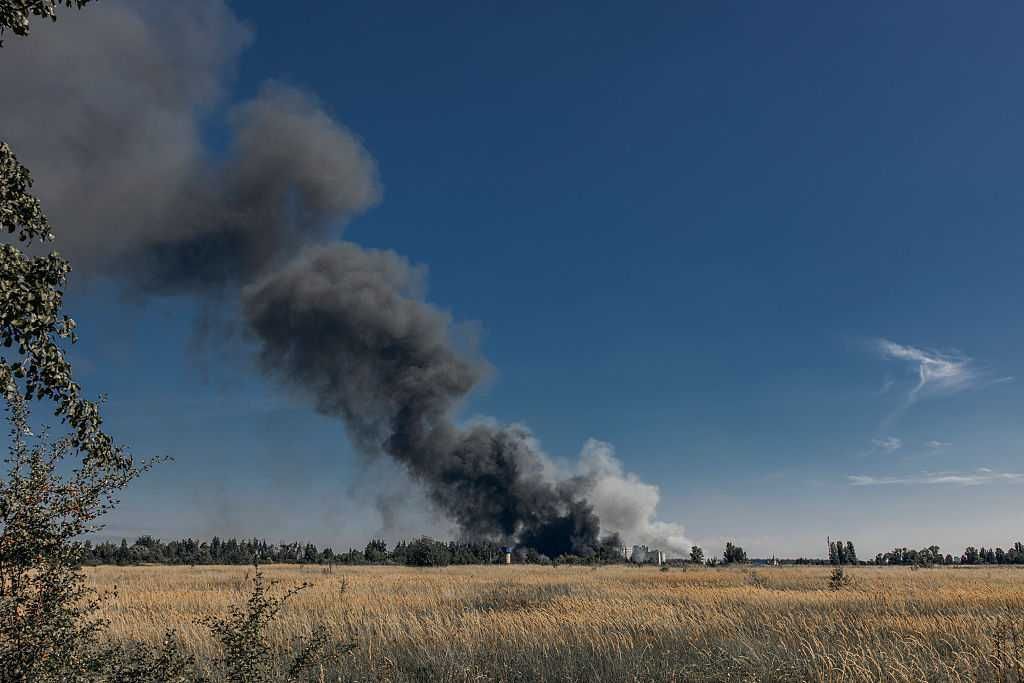
"The situation in Oleshky is dire. Oleshky is a front-line war city on the brink of disaster. Oleshky’s remaining population is comprised primarily of elderly residents who urgently need medical attention, medicine, food, and clean water," she said in the press release.

"The people of Oleshky have limited electricity, live amid mined roads, and endure regular military attacks," she added. "It was abundantly clear that without my intervention, the possibility to bring humanitarian aid into the city and to evacuate the elderly would be impossible."

The limited ceasefire will begin Thursday.

President Donald Trump responded to the agreement during a question-and-answer period with reporters in Washington, D.C.

"What she wants to do is save children, and that’s her focus," he said. "Both sides are cooperating with her, so she's doing a very good job."

"She wants to see babies come back to their families. And that's between Russia and Ukraine," he added.

The first lady also said in her press release that the evacuation would allow people to leave for Russia as well as other parts of Ukraine.

"I have also secured an impartial American media organization to accompany and document Russian and Ukrainian teams on the ground throughout the process," she added. "This will play a significant role in ensuring that the wishes of each family are faithfully respected."

RELATED: The cartels are learning drone warfare from Ukraine

The war has been ravaging Ukraine since Russia invaded in Feb. 2022.

Oleshky was captured by Russia on its first day of the invasion and has been occupied since then. At one time it had about 24,000 residents.

Like Blaze News? Bypass the censors, sign up for our newsletters, and get stories like this direct to your inbox. Sign up here!

'Digger' is the canary in the climate-change coal mine


Sometimes an issue’s best barometer is external to it. Such is the case for the climate-change agenda and the box-office bombing of Tom Cruise’s current movie, "Digger." Both agenda and movie are losing their audiences.

By now everyone has heard of the dual drubbing Tom Cruise’s "Digger" is receiving. First, it was panned by critics. Now, it is being ignored by audiences. Together, these have garnered the movie negative box-office headlines and put it well on its way to making the list of all-time money-losers.

Although the canary may not be dead in climate change’s coal mine, it is no longer singing.

Both outcomes are surprising. Critics have been very kind in the past to Tom Cruise and his projects. And the public has been kinder still, making him one of Hollywood’s biggest movie stars.

More surprising than either is the fact that one of the world’s biggest stars and one of the world’s most discussed issues would come together in such a pratfall.

Yes, there have been notable examples where the climate-change agenda seemed to show signs of wobbling. Bill Gates released a famous statement last year that said the “doomsday view of climate change” was “wrong.” Gates suggested acceptance and talked about working to address climate change’s impact (“to put human welfare at the center of our climate strategies”) rather than continue seeking to reverse it.

This June, Jamie Dimon issued a warning to Europe, home of climate change’s greatest adherents and policy implementers, that these countries were killing themselves economically. As Dimon noted that Europe’s GDP had fallen from 90% of the U.S.’ to just 70%, the connection was unmistakable.

Not long ago too, the U.N. dropped the severest estimate of climate change’s potential impact from its impact projections.

All were telltale signs of shift, but they were easy to miss or dismiss, especially considering the enormous coverage that the climate change agenda has received and the huge financial resources committed (an estimated $1 trillion in the U.S. alone) to it.

RELATED: Don’t let anyone spoil ‘Digger’ for you

Image courtesy of Warner Brothers

It is safe to say that climate change has been the most consistently uninterrupted major issue for policymakers and the public alike for decades now. Everyone knew which way the wind was blowing, and almost everyone sought to burnish their green bona fides accordingly.

Overlooked, though, was the shift that was occurring beneath the headlines. Since Russia’s 2022 invasion of Ukraine, and especially since the Iranian conflict began, the focus has been on the price of oil, not its usage. Lost in this contemporary focus was any serious mention of getting away from oil. Neither was mention made that, from a climate-change devotee’s perspective, higher oil prices are a good thing.

The focus has all been on the negative impact of higher oil prices, on the need for getting them lower, and on the need for making oil supply routes more secure.

As important as all these underground indicators of the climate-change agenda’s retrenchment are, "Digger" may be an even more important one. The combined failure of one of Hollywood’s biggest studios, one of the world’s biggest stars, and one of the world’s (until recently, at least) biggest issues may be a signal that the public no longer cares so much. It has moved on.

"Digger" and climate change: a related occurrence in an unrelated area. It calls to mind another familiar analogy of the canary in the coal mine. Although the canary may not be dead in climate change’s coal mine, it is no longer singing.

The cartels are learning drone warfare from Ukraine


Last summer, European news outlets reported that “volunteers” from Mexican and Colombian drug cartels had infiltrated Ukraine’s military — considered the world’s “drone superpower” — to learn cutting-edge drone warfare so they could use the knowledge to kill their enemies back home.

Claims that this problem is ongoing have not yet been publicly verified by the U.S. intelligence community or the media. As yet, however, they remain undisputed. They now demand further scrutiny and broader attention in the United States to prompt appropriate action. If it’s not too late, and if the reports are correct, the U.S. urgently needs to terminate this knowledge transfer from Ukrainian soldiers to Latin America’s crime lords.

'The drone industry has exploded, and criminals have adapted the technology for attacks, which is a major challenge to battlefield aerial supremacy.'

American military, law enforcement, and intelligence personnel are deployed for clandestine work inside and around Mexico and Colombia, working to eradicate the very same criminal organizations now siphoning drone expertise from Ukraine.

This means that top-of-the-line, battlefield-proven tech and tactics could empower vengeful cartel murderers to do to U.S. ground personnel what the Ukrainian army claims it did to 30,000 Russian soldiers in July alone.

One might hope that, after the problem was made public in 2025, Ukraine quickly moved to clear out all cartel infiltrators. One would be sadly disappointed. TheFinancial Times reported that Ukraine has discovered yet more Colombians with organized crime connections in-country, demonstrating “unusual obsessions” about battlefield drone fighting. The exfiltration problem persists.

“Former paramilitaries, former guerrillas, and former soldiers are fighting and learning together here how to operate drones,” a Colombian aid worker in Ukraine told the Financial Times for the August 6 story. U.S. outlets, meanwhile, are largely sitting this one out so far.

U.S. lawmakers should note the bitter irony that the drone warfare knowledge America’s enemies are stealing was funded by some of the $70 billion in U.S. taxpayer money appropriated to Ukraine. Then they should use that as leverage: There are tens of billions more dollars in the pipeline, which should be withheld until the gang operatives are purged.

What we think we know

On July 30, 2025, the French website Intelligence Online first reported that Ukraine’s Security Service launched an investigation after Mexico’s National Intelligence Center warned that Mexican cartel fighters had infiltrated Spanish-speaking units of the International Legion.

Their alleged intention was to learn how to fly first-person view drones, gather ideas for drone-attack tech, and study battlefield tactics that Ukraine’s armed forces have famously used to stall Russia’s invasion.

Foreign outlets keep turning up new information. Poland and Bulgaria have begun their own investigations into smuggling pipelines through their territories. Granular details seem to bolster the reports. For instance, some volunteers already accomplished in drone fighting have joined the legion’s specialized tactical intelligence combat unit, known as “Ethos,” in the combat-heavy Donetsk and Kharkiv regions, according to the reports.

Polish officials reportedly revealed that private Mexican and Colombian security companies with alleged ties to drug trafficking networks financed and smuggled the volunteers into Ukraine through neighboring countries. One Colombian security firm based in Cali and Medellín reportedly recruited former Colombian Army rangers.

One smuggled Mexican legion volunteer, operating under the alias “Aguila-7,” registered in March 2024 using fraudulent Salvadoran documentation. He proved so technically proficient during drone training in Lviv that instructors called for an investigation, which later found probable connections to Mexico’s elite GAFE air-mobile special forces. Former GAFE personnel have joined cartels, the reports said.

RELATED: The Navy has a choice: Get better or become less relevant

HUGE PERALTA/AFP/Getty Images

Why it matters

The infiltrations coincide with President Trump’s day-one declaration of a U.S. war to eradicate the cartels, designating many as foreign terrorist organizations. If cartel leaders are out to avenge what they have suffered, their drones can find many more targetable American personnel.

No one should have been surprised, for instance, when two CIA officers died this past April in a Chihuahua State car accident while traveling with Mexican forces after a drug lab raid. They were present because Trump has surged military and CIA personnel into Mexico and Latin America, as well as naval and aircraft assets for lethal boat bombing operations that have killed hundreds of drug smugglers. The operations have included supposed CIA-facilitated assassinations in Mexico.

An “Americas Counter Cartel Coalition” of 19 Latin American countries is heavily reliant on local national security forces within which U.S. intelligence community operatives are embedded. Additionally, some 9,000 U.S. military personnel are stationed along 845 miles of the U.S. southern border in expanding “National Defense Areas” intended to deny cartel drug-load entries along with illegal immigration. By many accounts, gangs in Colombia and Mexico are angry about the resulting killings, drug lab raids, boat bombings, profit disruptions, and imprisonments on U.S. terrorism charges.

By now, we would know if the cartels were killing more American personnel. They are not, likely deterred by the knowledge that crossing such a bright line would incur even more painful American wrath. But are the cartels building that capacity to get Trump off their backs in due time?

Before any reporting about cartels in Ukraine, Mexico’s cartels were already using sloppily repurposed commercial drones to drop grenades and explosives on rivals and indigenous security forces. That’s still happening in Mexico and Colombia, including the first recent attacks by FPV drones. In October 2025, a coordinated three-drone FPV attack hit the state prosecutor’s office in the Mexican border city of Tijuana, destroying six vehicles a mile from the U.S. border.

Senior Colombian officials told the outlet they are already seeing Ukraine-style first-person-view drones in recent widespread use. However, a Colombian drone pilot in Ukraine told the Financial Times that pilots still hadn’t mastered how to replicate some technology or set explosive charges.

“The drone industry has exploded, and criminals have adapted the technology for attacks, which is a major challenge to battlefield aerial supremacy,” Colombian Defense Minister Pedro Sánchez told the newspaper.

What to do now

Ukraine-style drone attacks against Americans in Mexico or Colombia could upend U.S. counter-cartel initiatives tactically and politically. Body bags returning home are a tragedy. But they also have a way of undermining public support in any war. Tactics and strategic trajectories change as a result. Just ask Moscow.

To head off this shameful outcome, the White House must forcefully leverage direct U.S. military aid to have Kyiv immediately remove cartel operatives from its formations, subject to direct verification by American investigators.

Next, the U.S. must speed up and diversify current efforts to counter the emerging drone threat along the border and to help foreign allied governments protect embedded U.S. personnel. The U.S. should do what it can to intercept drone equipment and technology imports into Latin America. And leadership should make sure American soldiers and operatives posted abroad burrow deeper out of sight.

In the meantime, if anyone wonders whether the U.S. might actually redouble its efforts if the cartels kill any Americans, the Trump administration should loudly message that they had better believe we will.

Editor's note: This article was originally published in the American Mind.

Putin's spies have been hiding in plain sight in Japan — now the US is helping clean house


Russian intelligence operatives have been quietly working out of Tokyo for years, using Japan as a channel to buy weapons components, dodge Western sanctions, and ship the material home to supply Russia's war in Ukraine, according to a New York Times investigation.

The stakes are staggering: Roughly 90% of Russian missiles and drones contain Japanese components, according to Ukrainian government estimates.

'We have a sense of crisis about this situation.'

The investigation identifies a Russian military intelligence unit called the "20th Directorate" as the network behind the effort. Its Tokyo station is reportedly run out of an office for Russian state airline Aeroflot near the headquarters of Japan's National Police Agency.

The alleged operative in charge, Maksim Filchenkov, is a veteran Russian intelligence officer using a cover job at Aeroflot — a tactic Russian spies have used since the Soviet era.

Tokyo's response has been limited, despite its public support for Ukraine. "We have a sense of crisis about this situation," said Akihisa Shiozaki, a lawmaker in Japan's governing party.

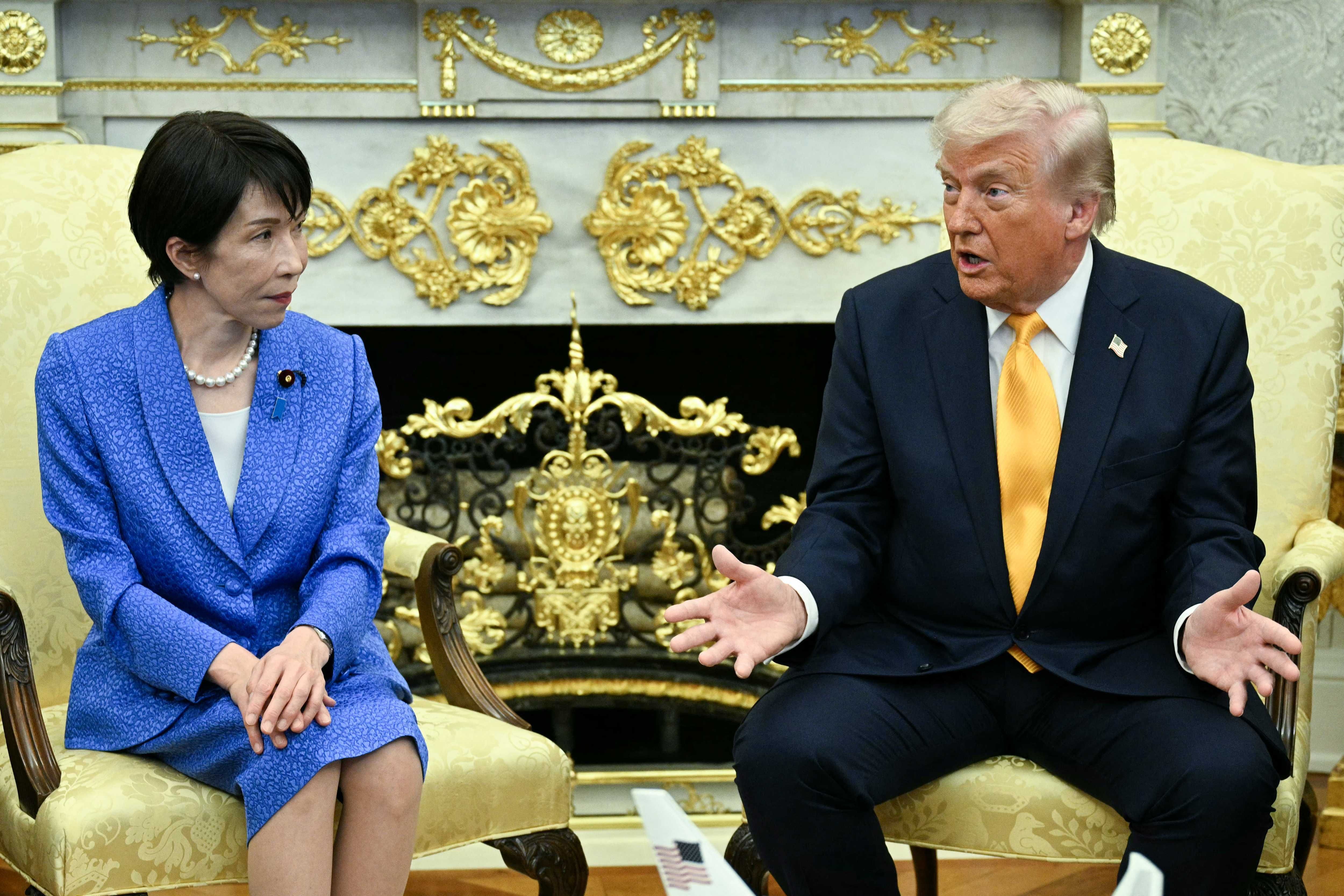
Japan has not had a dedicated foreign intelligence agency in more than 80 years, as post-WWII restrictions left the work scattered across the police, military, and foreign ministry. Prime Minister Sanae Takaichi, a noted Trump ally, is now racing to centralize it under one command to also counter China, which researchers say has built fake news sites disguised as Japanese-language outlets to spread pro-Beijing disinformation.

The U.S. and Australia have quietly advised Tokyo on the build-out, the Times reported, citing Japanese and other officials. So has Germany, itself in the middle of its own historic military rebuild and drawing on its foreign intelligence service's decades of experience countering Russian intelligence in Europe.

RELATED: Bombshell report claims China is transforming old jets for new war

Samuel Boivin/NurPhoto/Getty Images
President Trump has repeatedly accused U.S. allies of not spending enough on their own defense and questioned whether America should defend smaller nations — pushing Japan to build its own intelligence capability rather than lean on Washington. Even so, U.S. officials have quietly offered input on Japan's cyberdefense, industrial espionage, and screening of foreign investments and agents, according to the Times.

The State Department and Office of the Director of National Intelligence did not respond to a request for comment from Blaze News.

According to the Times, Japan's government wouldn't confirm the talks directly, saying only that it "maintains close cooperation with counterparts in relevant countries on a regular basis."

Opposition lawmakers warn the new agency risks reviving Imperial Japan's wartime secret police, the Tokko, and eroding privacy rights.

Like Blaze News? Bypass the censors, sign up for our newsletters, and get stories like this direct to your inbox. Sign up here!

Ukrainian officials plotted to direct massive sums of US taxpayer aid to Biden's campaign: Intel report


Ukrainian government communications discussed a scheme to direct American taxpayer dollars to then-President Joe Biden’s campaign and the Democratic National Committee to boost Biden’s 2024 re-election bid against President Donald Trump, according to an intelligence report obtained by Just the News.

The newly unclassified documents summarize raw intercepts from U.S. spy agencies in late 2022. Officials who reviewed the files stated that there was a lack of curiosity to investigate the allegations under the Biden administration, the news outlet reported.

'In this manner, most of the US funding would be diverted to Joe Biden’s election campaign without the ability to track where exactly the funds came from.'

The American tax dollars were intended to fund a clean energy project in Ukraine amid the ongoing war with Russia.

“The Ukrainian Government and unspecified U.S. Government personnel, through USAID in Kyiv, reportedly developed a plan that would provide hundreds of millions of U.S. taxpayer dollars to fund an infrastructure project for Ukraine that would be used as a cover to send approximately 90% of funds allocated to the DNC to fund Joe Biden’s re-election campaign,” the report read, according to Just the News.

“They were confident the project would be funded initially, even though at some time in the future the project would be disapproved as unnecessary. At this time, the money would already be allocated and impossible to return or use for a different purpose,” it added.

The report named two American subcontractors that could potentially receive the funds, officials told Just the News. However, those names were redacted in the report obtained by the news outlet.

RELATED: 'USADF is garbage': Senior US foreign aid official will plead guilty to taking kickbacks, lying to feds

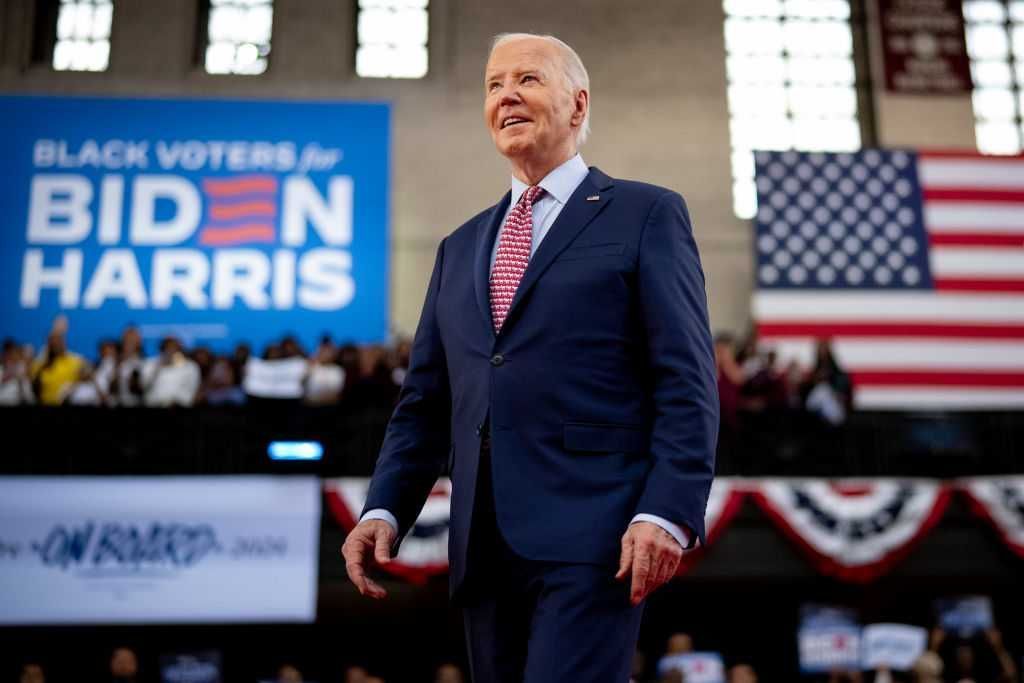
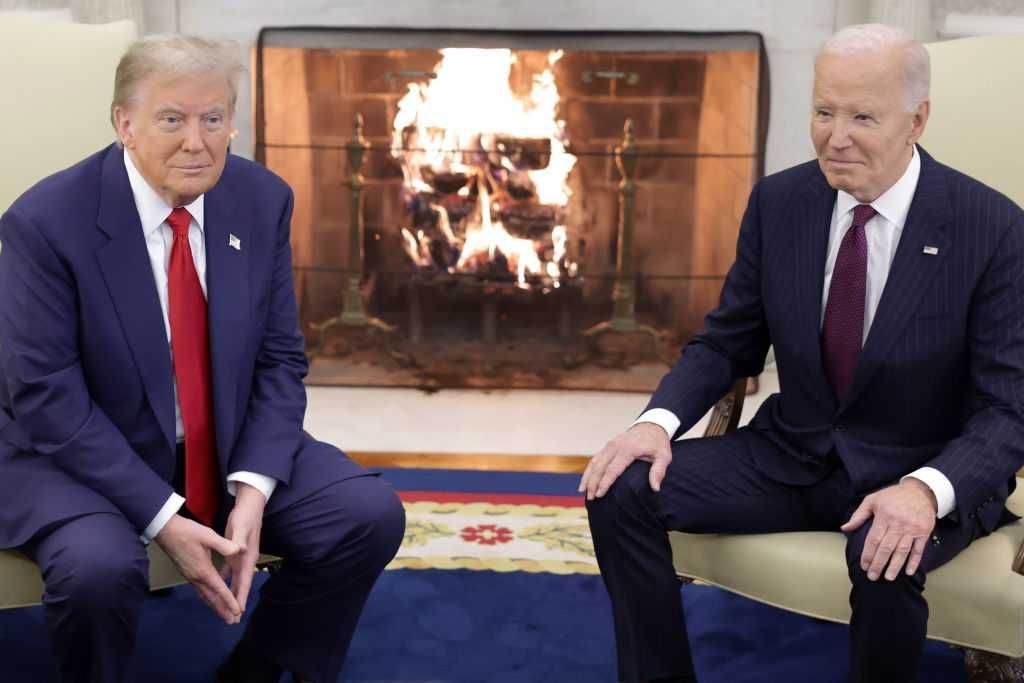
Donald Trump, Joe Biden. Photo by Alex Wong/Getty Images
“The plan included details of how subcontractors would be funded through U.S. companies so that how the funds were spent and allocated would be difficult to track,” the report continued. “Additionally, contracts would be executed that would be difficult to verify. In this manner, most of the U.S. funding would be diverted to Joe Biden’s election campaign without the ability to track where exactly the funds came from.”

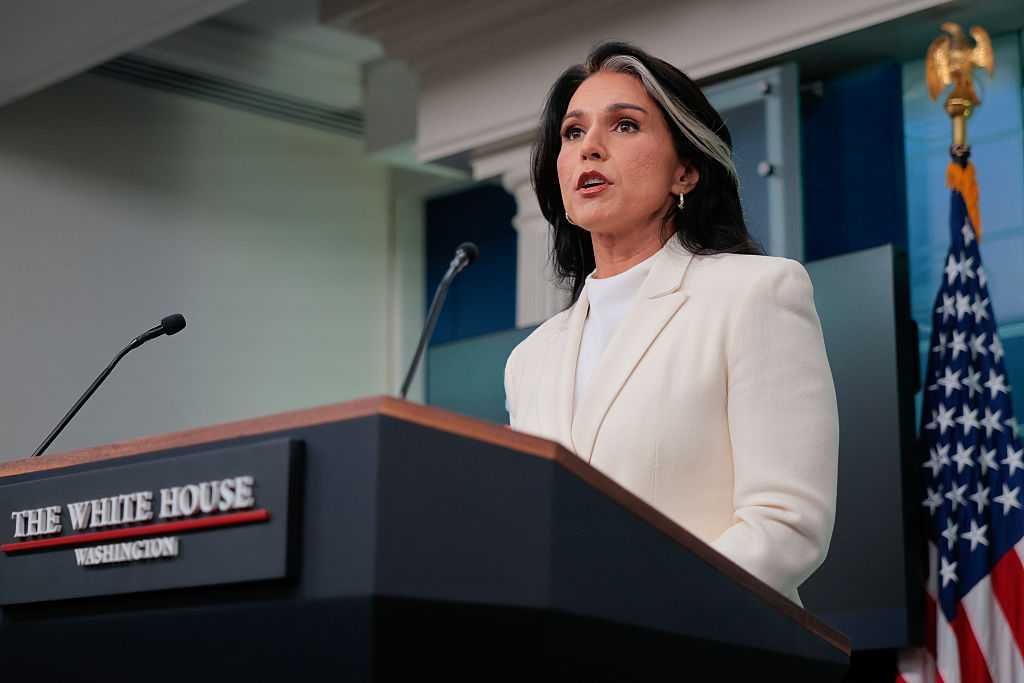
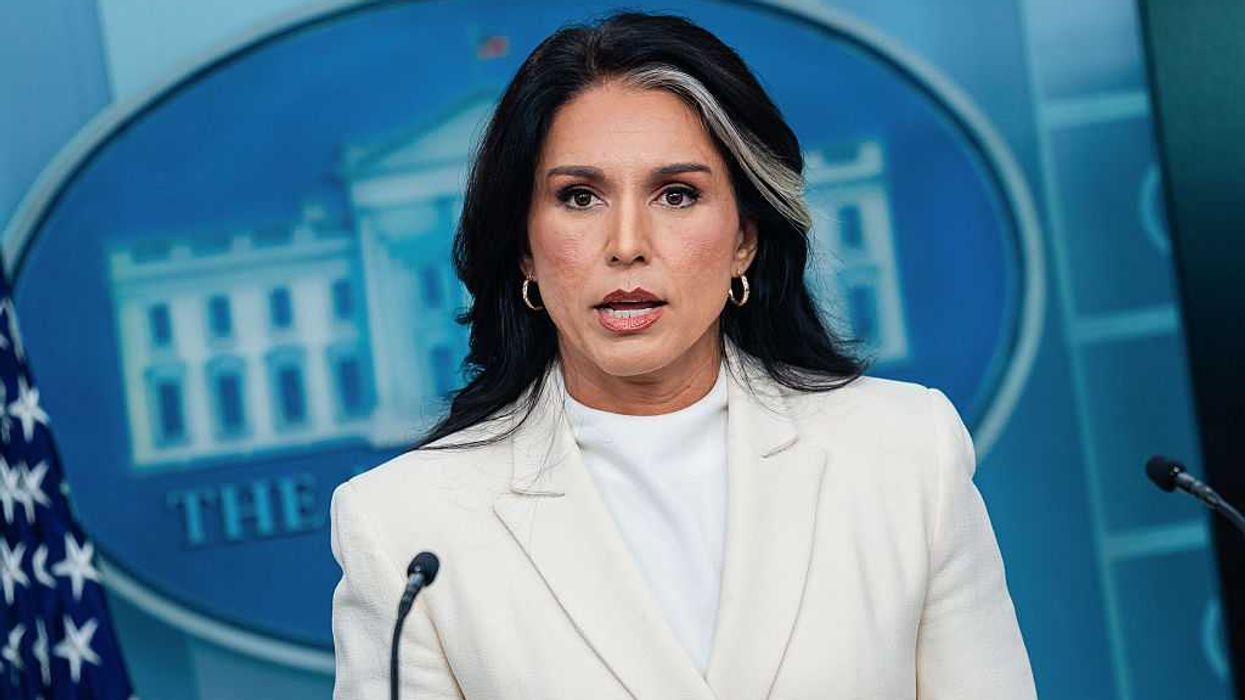
Just the News reported that Director of National Intelligence Tulsi Gabbard recently learned about the intelligence intercepts. She reportedly asked USAID officials to review their records to ascertain whether the alleged scheme was executed and whether a criminal referral should be made to the FBI.

RELATED: Tulsi Gabbard warns: Powerful foreign allies eager to pull US into war with Russia

Tulsi Gabbard. Photo by Chip Somodevilla/Getty Images
An official told the news outlet that Gabbard’s team has not found substantive evidence indicating that the allegations were thoroughly investigated under Biden’s leadership. The official noted that the communications are not believed to be linked to Russian disinformation efforts.

Trump shared the Just the News article in a post on social media.

In a statement to Blaze News, a spokesperson for Gabbard confirmed the existence of related intelligence, adding that the director’s team is “working to review USAID holdings.”

Like Blaze News? Bypass the censors, sign up for our newsletters, and get stories like this direct to your inbox. Sign up here!

Tulsi Gabbard warns: Powerful foreign allies eager to pull US into war with Russia


Director of National Intelligence Tulsi Gabbard told the AmericaFest crowd in Phoenix, Arizona, on Saturday that key global allies are hoping to drag the United States into a war with Russia.

Gabbard explained that the "warmongers in the deep state" are blocking Russia and Ukraine from reaching a peace agreement, undermining President Donald Trump's efforts.

'We cannot allow this to happen.'

"Predictably, they use the same old tactics that they've always used. The deep state within the intelligence community weaponizes 'intelligence' to try to undermine progress," she stated, motioning air quotes.

Gabbard said these deep-staters then leak that so-called "intelligence" to their friends in the "mainstream propaganda media" to propel a false narrative.

She went on to accuse the European Union and the North Atlantic Treaty Organization of wanting to pull the U.S. into direct battle with Russia.

RELATED: Frustrated Trump calls for Ukrainian election after Zelenskyy seemingly torpedoes another peace opportunity

President Donald Trump. Photo by Andrew Harnik/Getty Images
"[Deep-staters] foment fear and hysteria as a way to justify the continuing of the war and their efforts to undermine President Trump's efforts towards peace," Gabbard said. "And do so in this case in order to try to pull the U.S. military into a direct conflict with Russia, which is ultimately what the EU and NATO want."

"We cannot allow this to happen," she declared.

— (@)

During her AmFest speech, Gabbard also warned about the threat of Islamist ideology.

"There's a threat to our freedom that is not often talked about enough. And it is the greatest near- and long-term threat to both our freedom and our security, and that is the threat of Islamist ideology," she said.

Gabbard's comments prompted cheers and applause from the audience.

RELATED: European leaders gossip about US amid apparent efforts to torpedo Trump's Russia-Ukraine peace deal: Report

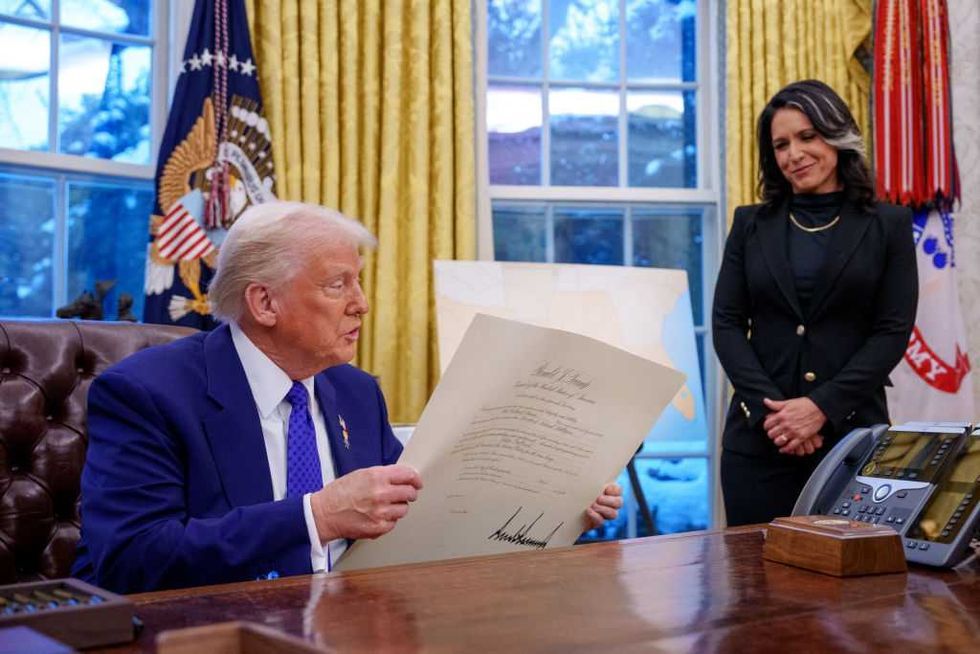
President Donald Trump, DNI Tulsi Gabbard. Photo by Andrew Harnik/Getty Images
She argued that, at its core, Islam is a political ideology that seeks to implement a "global caliphate" that would destroy freedom through Sharia law.

"This is already underway in places like Houston. This is not something that may possibly happen; it is already happening here within our borders," she continued. "Paterson, New Jersey, is proud to call themselves the first Muslim city."

You can view Gabbard's remarks about Islamist ideology beginning at the 6:50 mark in the below video:

RELATED: Secret Sharia ‘courts’ in Texas may be quietly overriding state law — Abbott calls for investigation

Gabbard added that Islamist ideology "is propagated by people who not only do not believe in freedom, their fundamental ideology is antithetical to the foundation that we find in our Constitution and Bill of Rights, which is that our Creator endowed upon us inalienable rights. The right to life, liberty, and the pursuit of happiness."

Like Blaze News? Bypass the censors, sign up for our newsletters, and get stories like this direct to your inbox. Sign up here!

Survival over pride: The true test for Ukraine and Russia


When has any country been asked to give up land it won in a war? Even if a nation is at fault, the punishment must be measured.

After World War I, Germany, the main aggressor, faced harsh penalties under the Treaty of Versailles. Germans resented the restrictions, and that resentment fueled the rise of Adolf Hitler, ultimately leading to World War II. History teaches that justice for transgressions must avoid creating conditions for future conflict.

Ukraine and Russia must choose to either continue the cycle of bloodshed or make difficult compromises in pursuit of survival and stability.

Russia and Ukraine now stand at a similar crossroads. They can cling to disputed land and prolong a devastating war, or they can make concessions that might secure a lasting peace. The stakes could not be higher: Tens of thousands die each month, and the choice between endless bloodshed and negotiated stability hinges on each side’s willingness to yield.

History offers a guide. In 1967, Israel faced annihilation. Surrounded by hostile armies, the nation fought back and seized large swaths of territory from Jordan, Egypt, and Syria. Yet Israel did not seek an empire. It held only the buffer zones needed for survival and returned most of the land. Security and peace, not conquest, drove its decisions.

Peace requires concessions

Secretary of State Marco Rubio says both Russia and Ukraine will need to “get something” from a peace deal. He’s right. Israel proved that survival outweighs pride. By giving up land in exchange for recognition and an end to hostilities, it stopped the cycle of war. Egypt and Israel have not fought in more than 50 years.

Russia and Ukraine now press opposing security demands. Moscow wants a buffer to block NATO. Kyiv, scarred by invasion, seeks NATO membership — a pledge that any attack would trigger collective defense by the United States and Europe.

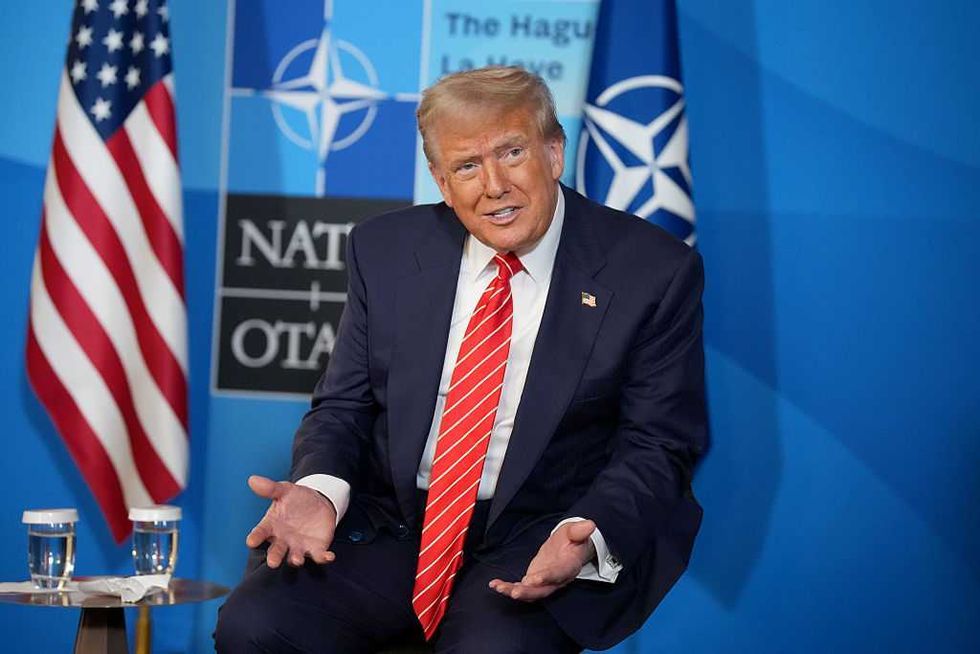
President Donald Trump and his allies have floated a middle path: an Article 5-style guarantee without full NATO membership. Article 5, the core of NATO’s charter, declares that an attack on one is an attack on all. For Ukraine, such a pledge would act as a powerful deterrent. For Russia, it might be more palatable than NATO expansion to its border.

RELATED: Trump says he knows exactly why Putin wouldn’t have invaded Ukraine if he was president

Photo by Andrew Harnik/Getty Images

Peace requires concessions. The human cost is staggering: U.S. estimates indicate 20,000 Russian soldiers died in a single month — nearly half the total U.S. casualties in Vietnam — and the toll on Ukrainians is also severe. To stop this bloodshed, both sides need to recognize reality on the ground, make difficult choices, and anchor negotiations in security and peace rather than pride.

Peace or bloodshed?

Both Russia and Ukraine claim deep historical grievances. Ukraine arguably has a stronger claim of injustice. But the question is not whose parchment is older or whose deed is more valid. The question is whether either side is willing to trade some land for the lives of thousands of innocent people. True security, not historical vindication, must guide the path forward.

History shows that punitive measures or rigid insistence on territorial claims can perpetuate cycles of war. Germany’s punishment after World War I contributed directly to World War II. By contrast, Israel’s willingness to cede land for security and recognition created enduring peace. Ukraine and Russia now face the same choice: Continue the cycle of bloodshed or make difficult compromises in pursuit of survival and stability.

Want more from Glenn Beck? Get Glenn's FREE email newsletter with his latest insights, top stories, show prep, and more delivered to your inbox.

Trump Blasts Media’s ‘Dishonest’ Coverage Of Russia-Ukraine Negotiations

President Trump blasted the legacy media’s “great dishonesty” in their coverage of his attempts to peacefully end the ongoing Russia-Ukraine war. The moment came on Monday during a White House meeting with Ukrainian President Volodymyr Zelensky about a potential peace deal with Moscow. While taking questions from reporters, Trump was asked about the press’s coverage […]

The Ukraine War Was Always Going To End This Way

From the very beginning it was clear that Ukraine’s borders, a relic of Soviet propaganda, would have to change.