Berkeley set out to defend DEI — and found no financial upside


A new study meant to reassure corporations about diversity, equity, and inclusion programs has delivered an awkward finding for DEI advocates: Keeping the programs produced no measurable financial advantage over abandoning them.

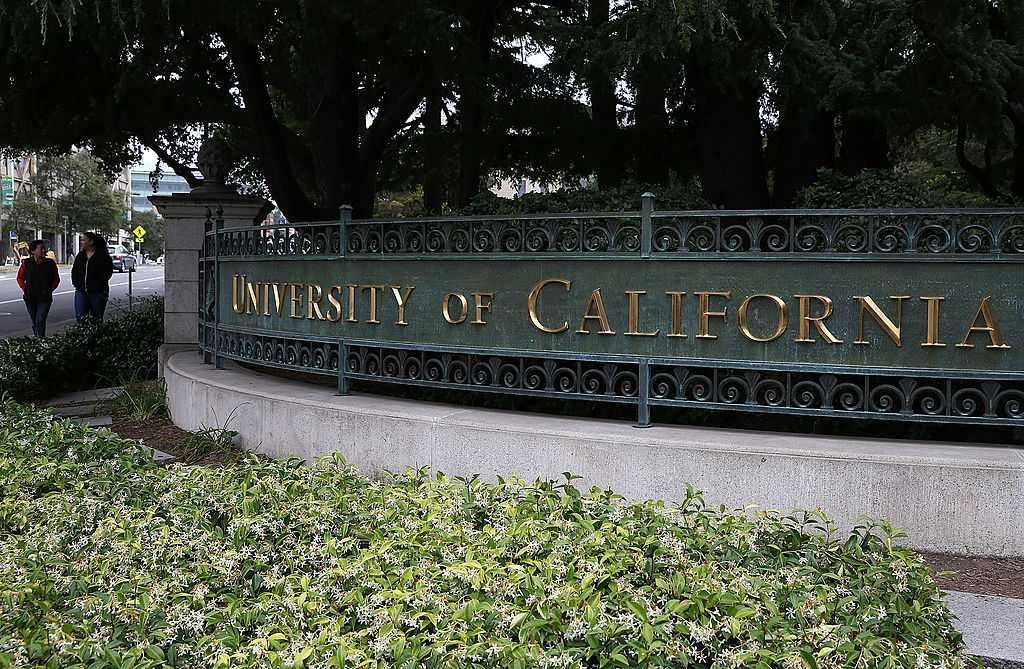
Researchers at the University of California in Berkeley compared S&P 500 companies that maintained DEI after President Trump’s January 2025 executive order with companies that scaled back their commitments. Firms that kept their programs performed about as well in stock returns and revenue as those that retreated.

Whether a company favors DEI or rejects it, executives cannot assume that a politically popular label will protect conduct that violates anti-discrimination law.

The authors and sympathetic news coverage emphasized the other half of that result: Companies could keep DEI without suffering a significant financial penalty. CBS News framed the finding that way, as did a subsequent Forbes analysis. But the conclusion cuts both ways. If companies paid no price for keeping DEI, they also paid no price for dropping it.

For investors, that raises a straightforward question: Where is the financial return from DEI?

The researchers found no statistically significant revenue or stock market advantage from maintaining the programs during the period they examined. Their paper reports an estimated effect on revenue close to zero. That does not prove every DEI initiative is worthless. It does mean this study offers no measurable payoff for the policies its authors defend.

DEI advocates have spent years insisting that diversity improves the bottom line. McKinsey’s influential reports linked leadership diversity with financial outperformance. But a 2024 reanalysis of its findings failed to reproduce statistically significant relationships using U.S. public-company data. A 2025 review found the broader empirical case considerably less certain than the confident corporate sales pitches suggest.

Companies that believe particular DEI practices improve performance should identify those practices and produce evidence that their gains are real and repeatable. The obligation to prove the promised return belongs to the people making the promise.

Even a demonstrated financial benefit would not settle whether a practice is ethical or lawful. The moral defense of DEI deserves scrutiny too. A corporate policy that uses race or sex to distribute opportunity may generate its own grievances, regardless of the language used to promote it.

Employment discrimination complaints have hardly disappeared. The Equal Employment Opportunity Commission received 88,201 new charges in fiscal year 2025, roughly level with the previous year and substantially above 2021. Those figures alone cannot tell us how many complaints involved DEI. They do underscore why employers should examine the legal consequences of their hiring and promotion rules.

The Berkeley paper also reveals an unmistakable political perspective. It refers to the Trump administration as a “regime,” discusses what its authors regard as “democratic erosion,” and describes the deaths of Trayvon Martin, Michael Brown, and George Floyd collectively as “murders.” It suggests that organized corporate resistance can hinder the consolidation of executive power.

RELATED: Nikole Hannah-Jones learned the hard way what ruins schools

Paras Griffin/Getty Images

Those judgments do not, by themselves, invalidate the statistical analysis. They do help explain the argument the authors want their findings to support: Corporations should feel free to maintain DEI as an expression of political and moral commitment, even without a measurable financial gain.

But companies face risks beyond the market response measured in the study. Public controversy can damage a brand, and legal enforcement can carry a steep price.

Consider Cracker Barrel’s 2025 rebranding backlash. Critics connected its logo redesign to broader complaints about the company’s “woke” direction. By mid-September, its shares had fallen nearly 16% since the August announcement, customer traffic had weakened, and the company had reversed course. A logo controversy is not a controlled test of DEI policy. It is a reminder that political and cultural backlash can have financial consequences.

The federal government has supplied a more direct warning. In April, IBM agreed to pay more than $17 million to resolve Justice Department allegations involving discriminatory employment practices and federal contracting. Deloitte settled for $21.5 million in August, and Accenture agreed to pay $25 million in September to resolve similar allegations. The settlements resolved government claims without findings of liability, but the costs were real.

The Justice Department also issued guidance outlining its view of unlawful discriminatory practices tied to federal funding. Whether a company favors DEI or rejects it, executives cannot assume that a politically popular label will protect conduct that violates anti-discrimination law.

The Berkeley study shows that companies maintaining DEI suffered no detectable financial penalty in the period examined. It also fails to establish a financial reward. Advocates who want shareholders, employees, and customers to support these programs still owe them a case grounded in performance, ethics, and law. That case cannot rest on assurances that DEI is harmless.
Woke 1 Is Still Crazy

"Woke 1 was crazy," Rep. Alexandria Ocasio-Cortez (D., N.Y.) said in August. We rate this claim half true. Crazy? Yes. Was? Hardly.

The post Woke 1 Is Still Crazy appeared first on .

The University of California banned 'misgendering' — now its own policy is being used against it


Freedom of speech is still the law of the land in the United States, but on college campuses, that is apparently up for interpretation.

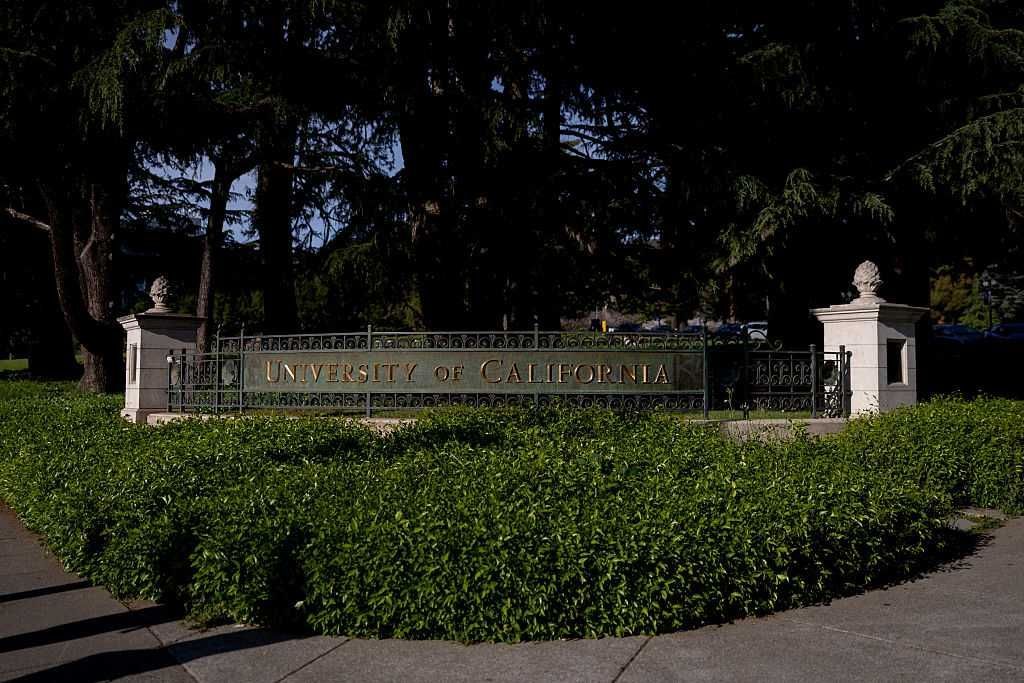
Look no further than the University of California and its sprawling system of 10 campuses across the state. One set of policies and standards governs all of its campuses, and with it comes a ban on "misgendering" and adhering to biological reality.

'UC's policy goes too far in restricting protected speech.'

Under UC's "Sexual Violence and Sexual Harassment" policy — which is available in four different languages — sexual harassment is described as including conduct like "acts of verbal, nonverbal, or physical aggression, intimidation, or hostility based on gender, gender identity, gender expression, sex- or gender-stereotyping, or sexual orientation."

In its FAQ section of the same document, "intentional and repeated use of a name or pronoun inconsistent with the individual's gender identity (i.e., misgendering)" is also considered harassment. The policy even extends its harassment definition to include the use of a person's "dead name," which in many cases means one's legal name.

So long as the conduct is "unwelcome," students or faculty who violate the policy are subject to discipline, including dismissal, aka expulsion.

Fortunately, a federal judge has stepped in and entered a preliminary injunction that bars UC from enforcing its policy for the time being, following a lawsuit from Defending Education.

In court documents, the Central District of California Southern Division's decision included an example of what UC considers to be harassment.

The school said that harassment based on gender identity includes "when a transgender man is intentionally and repeatedly called by his dead name (i.e., refers to a name that a transgender person was given at birth but that they no longer use), or intentionally and repeatedly referred to by 'Miss' or 'Ms.,' by a professor in an intentionally mocking manner."

RELATED: CALIFORNIA IDLE: Iconic reality show ditches Hollywood after 24 seasons

Wiktor Szymanowicz/Future Publishing/Getty Images
The court also made its decision based on precedent, citing two recent cases that establish "UC's policy goes too far in restricting protected speech."

In Bates v. Pakseresht, the court noted that adoptive parents being forced into "affirming" a child's sexual orientation and gender identity (including preferred pronouns) "quite clearly restrict[ed] and compel[led] speech based on both content and viewpoint."

Furthermore, in Defending Education v. Olentangy, the court explained, a school district was prevented from enforcing a similar policy against Defending Education's members.

The court documents from the latest Defending Education lawsuit also pointed to training that "UC students must also complete," described as sexual violence and harassment, anti-discrimination, prevention, and education training, or SHAPE.

The lawsuit said the training formerly included the following scenario as an example of a hostile environment:

My name is Mona, and I am transgender. My classmate Jane continues to call me James, which was my name before I transitioned. Jane refers to me as a man and complains when I use the restroom. I asked her to stop, but she does not. I feel very disrespected and want this to stop.

The lawsuit notes, however, that "UC declares that this example is no longer included in the SHAPE training."

RELATED: Campus free speech is alive — barely

Eric Thayer/Los Angeles Times/Getty Images

To the court, all of this evidence was sufficient enough to grant the injunction.

Nicole Neily, president and founder of Defending Education, told Blaze News in a statement that her organization is grateful for the district court's decision against "the University of California system's coercive speech policy against our members."

Neily also called it "unconstitutional" for public universities to compel student speech.

"We will continue to defend this principle in California and other schools across the country as needed," she added.

UC did not respond to a request for comment from Blaze News.

Like Blaze News? Bypass the censors, sign up for our newsletters, and get stories like this direct to your inbox. Sign up here!

How The University Of California Became A Stooge For China’s Anti-America Warfare

The Chinese Communist Party has leveraged the University of California to shape the state's policies and prioritize China’s interests.

Race Grifters Yanked Tests From UC Admissions, Boosting STEM Students Who Can’t Do Middle School Math

The disadvantaged students leftists claim to champion are suffering the most from ending college entrance requirements in math, threatening California’s future.
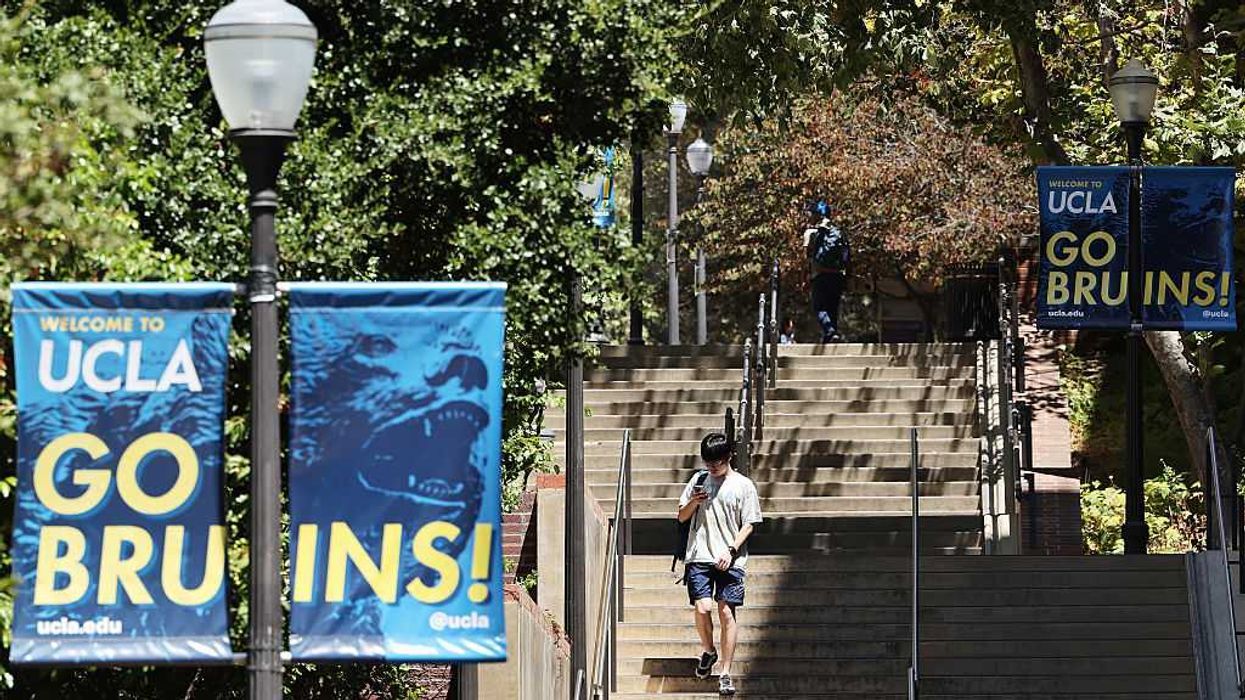
UCLA’s medical school racially discriminated against white, Asian applicants: DOJ


A year-long Department of Justice investigation has found that the David Geffen School of Medicine at the University of California, Los Angeles, discriminated against applicants based on race.

A Wednesday press release from the U.S. Attorney’s Office in the Central District of California announced that the DOJ’s Civil Rights Division discovered evidence that the school’s leadership “intentionally selected applicants based on their race.”

‘Federal law and the Supreme Court precedent are clear: Race discrimination has no place in our nation’s institutions of higher learning.’

The DOJ cited UCLA’s “dubious contention that patients receive the best care when treated by a doctor of the same race, rather than by the most qualified.”

The investigation claimed that, on average, black and Hispanic applicants whom the medical school admitted had lower academic qualifications than their white and Asian counterparts.

The department concluded that the medical school violated civil rights laws by intentionally discriminating on the basis of race. The DOJ highlighted that medical schools receive significant federal financial assistance.

“UCLA’s admissions process has been focused on racial demographics at the expense of merit and excellence — allowing racial politics to distract the school from the vital work of training great doctors,” Assistant Attorney General Harmeet Dhillon of the DOJ’s Civil Rights Division stated. “Racism in admissions is both illegal and anti-American, and this Department will not allow it to continue.”

RELATED: DEI class at UCLA's medical school sets up future doctors to fight the patriarchy and accept 'weight loss is useless'

Imeh Akpanudosen/Getty Images

First Assistant United States Attorney Bill Essayli said, “Federal law and the Supreme Court precedent are clear: Race discrimination has no place in our nation’s institutions of higher learning.”

“The pattern of illegal and odious conduct by UCLA’s medical school is abhorrent to our Constitution and our nation’s founding principles,” Essayli added.

RELATED: UCLA School of Medicine's radical DEI czar clumsily plagiarized vast portions of her dissertation on DEI: Report

Mario Tama/Getty Images

A UCLA medical school spokesperson told the Los Angeles Times that its admissions process is “based on merit” and “grounded in a rigorous, comprehensive review of each applicant.” The spokesperson rejected claims that it broke the law.

“We are confident in our practices and our mission to maintain access to a high-quality education to all qualified students,” the spokesperson told the Times. “We are carefully reviewing the Department of Justice’s report. The David Geffen School of Medicine is committed to providing equal opportunity to all applicants and fully complying with federal and state laws.”

Like Blaze News? Bypass the censors, sign up for our newsletters, and get stories like this direct to your inbox. Sign up here!

EXCLUSIVE: California Schools Can’t Tell Difference Between Jan 6 And KKK

'Comparing a KKK demonstration ... to the January 6th Insurrection'

UCLA Sued for Withholding Records Related to 'Activist-in-Residence' Who Demanded Students Pray to 'Mama Earth'

The University of California, Los Angeles, was slapped with a lawsuit on Tuesday for stonewalling a public records request related to an "activist-in-residence," Lisa Gray-Garcia, who demanded that students pray to "Mama Earth" during a mandatory lecture for UCLA medical students.

The post UCLA Sued for Withholding Records Related to 'Activist-in-Residence' Who Demanded Students Pray to 'Mama Earth' appeared first on .

Trump Admin Sues UCLA For Creating ‘Antisemitic Hostile Work Environment’

The Trump administration sued the University of California on Tuesday, alleging that its Los Angeles campus created a "hostile work environment" for Jewish employees and "turned a blind eye to—and at times facilitated—grossly antisemitic acts."

The post Trump Admin Sues UCLA For Creating ‘Antisemitic Hostile Work Environment’ appeared first on .