Senate Pushes Through Short-Term Extension Of Spy Tool Beloved By Deep State
Extended until April 30
The U.S. and Iran reached a fragile ceasefire agreement on Tuesday before President Donald Trump's threat of civilizational annihilation could be put to the test.
Trump subsequently noted that the U.S. "will be helping with the traffic buildup in the Strait of Hormuz. There will be lots of positive action! Big money will be made," adding that "this could be the Golden Age of the Middle East!"
'It is madness.'
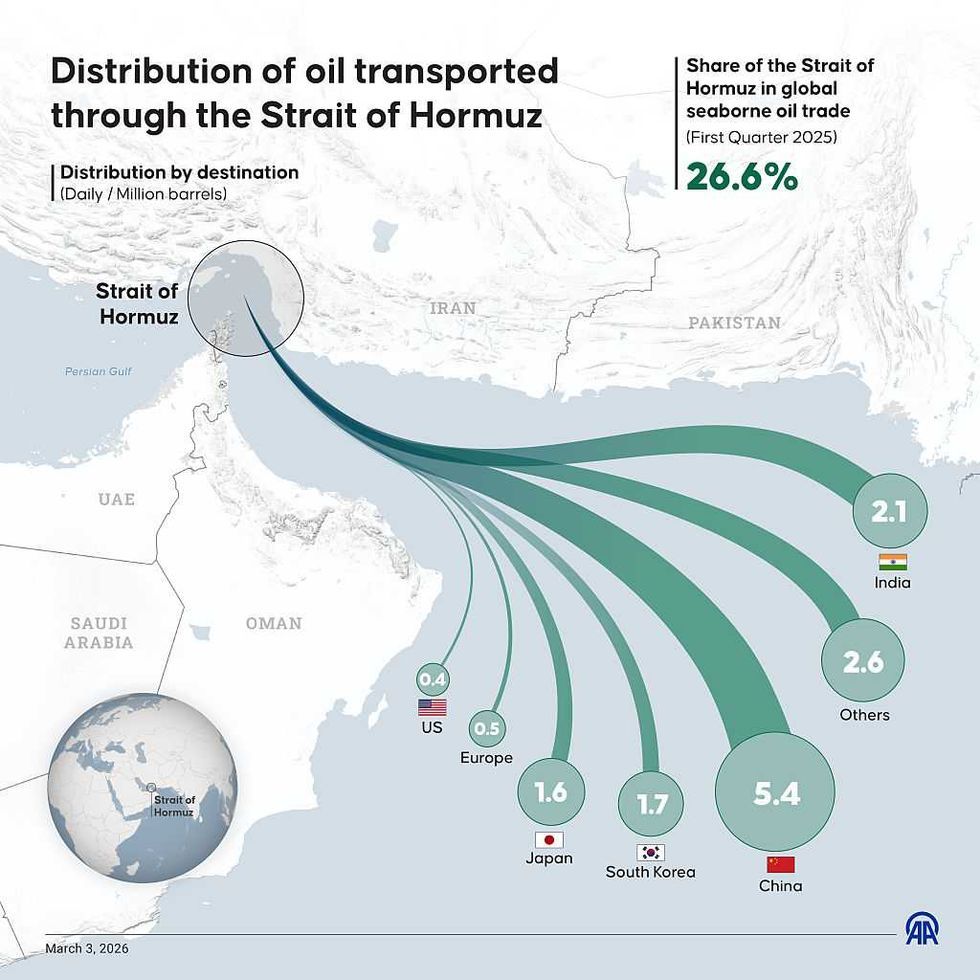
When asked on Wednesday whether he was amenable to the Iranians charging a toll for all ships that transit the Strait of Hormuz — the body of water between Iran and Oman linking the Persian Gulf with the Gulf of Oman, across which one-fifth of the world's oil customarily travels — Trump told ABC News' Jonathan Karl, "We’re thinking of doing it as a joint venture. It’s a way of securing it — also securing it from lots of other people."
"It's a beautiful thing," Trump said, hours before Iran reportedly halted oil tankers attempting to pass through the strait, claiming Israel had violated the ceasefire by firing on Lebanon.
While now apparently open to such a partnership with Iran, Trump suggested to reporters on Monday that the U.S. could unilaterally impose tolls on vessels attempting to pass through the strait, reported The Hill.
RELATED: Israel ramps up attacks on Middle East target despite US-Iran ceasefire
"What about us charging tolls?" said Trump. "Why shouldn’t we? We’re the winner."
He also said during the press briefing, "We want free traffic of oil and everything else."
Such tolls on vessels transiting a natural strait would seem to run afoul of the United Nations Convention on the Law of the Sea — ratified by the U.S., 170 other nations, and the European Union — which guarantees vessels the "right of transit passage" through straits used for international navigation; bars states bordering straits from hampering transit passage; and states that "no charge may be levied upon foreign ships by reason only of their passage through the territorial sea."
Tolls can be levied only at man-made canals, according to the U.N. agreement.
Of course, the agreement's authority and enforceability could be tested.
"All international law, unfortunately, is fragile," Saleem Ali, chair of the University of Delaware's geography department, told the New York Times. Ali noted that international laws depend on mutual respect between nations.
Blaze News has reached out to the White House for comment.
The idea clearly doesn't resonate with everyone.
Karen Young, a senior research scholar at the Columbia University School of International and Public Affairs, told Blaze News, "It is madness to think we are jointly collecting fees to help secure profits to the [Islamic Revolutionary Guard Corps]."
Former Israeli government spokesman Eylon Levy expressed a similar objection, writing, "If President Trump lets the Iranians charge a toll for ships in the Strait of Hormuz, then every time you fill up your car at the pump, you will put money straight in the pockets of the Islamic Revolutionary Guard Corps. This would be a humiliating disaster for the US."
Joint venture or no, it appears that Iran aspires to keep sweating passersby in the Strait of Hormuz, now for crypto tributes.
Hamid Hosseini, a spokesman for Iran's government-linked Oil, Gas and Petrochemical Products Exporters’ Union, told the Financial Times that his nation intends to force ships passing through the strait to pay the cryptocurrency equivalent of $1 per barrel of oil and notify Iranian officials of their cargo during the two-week ceasefire.
"Once the email arrives and Iran completes its assessment, vessels are given a few seconds to pay in Bitcoin, ensuring they can’t be traced or confiscated due to sanctions," said Hosseini. "Everything can pass through, but the procedure will take time for each vessel, and Iran is not in a rush."
Reuters estimated last week that if Iran charged each vessel $2 million to transit the Strait of Hormuz, as it had already in one instance, and traffic were restored to prewar volume — 150 ships down the strait — Tehran could bring in around $110 billion annually.
According to the European think tank Bruegel, the $2 million per vessel, which "translates to roughly $1 per barrel," would prompt the world oil price to rise "by only $0.05-$0.40 per barrel, relative to the pre-war level," with Gulf exporters absorbing the bulk of the toll.
Of course, for Iran to impose tolls, it must first keep the strait open.
Like Blaze News? Bypass the censors, sign up for our newsletters, and get stories like this direct to your inbox. Sign up here!
When President Donald Trump stood before reporters Saturday and invoked the Monroe Doctrine, he was not indulging nostalgia. He was announcing enforcement. Then came the line that removed all ambiguity: The Monroe Doctrine, he said, will now be known as the Donroe Doctrine.
The leftist political class recoiled on cue. Mainstream commentators scoffed. Corporate editorial boards feigned alarm. Strip away the theatrics, and the meaning was clear. The United States has decided to resume responsibility for the Western Hemisphere — not in the language of empire, but in the language of order, law, and consequence.
One reality is already clear. The Western Hemisphere no longer serves as an unguarded corridor for corruption, narcotics, and foreign subversion.
The Monroe Doctrine emerged in 1823, when President James Monroe warned European powers that further colonization or political interference in the Americas would not be tolerated. It never meant isolationism. It reflected realism.
Power vacuums invite conquest. Disorder invites domination. The early American republic understood that if Europe continued exporting its political systems into the New World, the hemisphere would remain unstable and unfree. America declared an end to European colonial ambition long before “decolonization” became a fashionable academic slogan.
Over time, enforcement varied in wisdom and restraint. Theodore Roosevelt’s corollary warned that chronic wrongdoing in the Americas could require U.S. intervention. During the Cold War, Washington invoked the doctrine — sometimes clumsily — to block Soviet expansion and nuclear weapons in the hemisphere.
Through each phase, the premise endured: The Western Hemisphere is a distinct political space, and the United States bears a special responsibility to prevent it from becoming a staging ground for criminal regimes and foreign adversaries.
That responsibility eroded in recent decades, replaced by a dangerous fantasy: that cartel-run states can invoke sovereignty to excuse any behavior so long as it occurs within their borders — or moves outward through drug routes and illegal oil networks. Venezuela stands as the clearest casualty of that delusion.
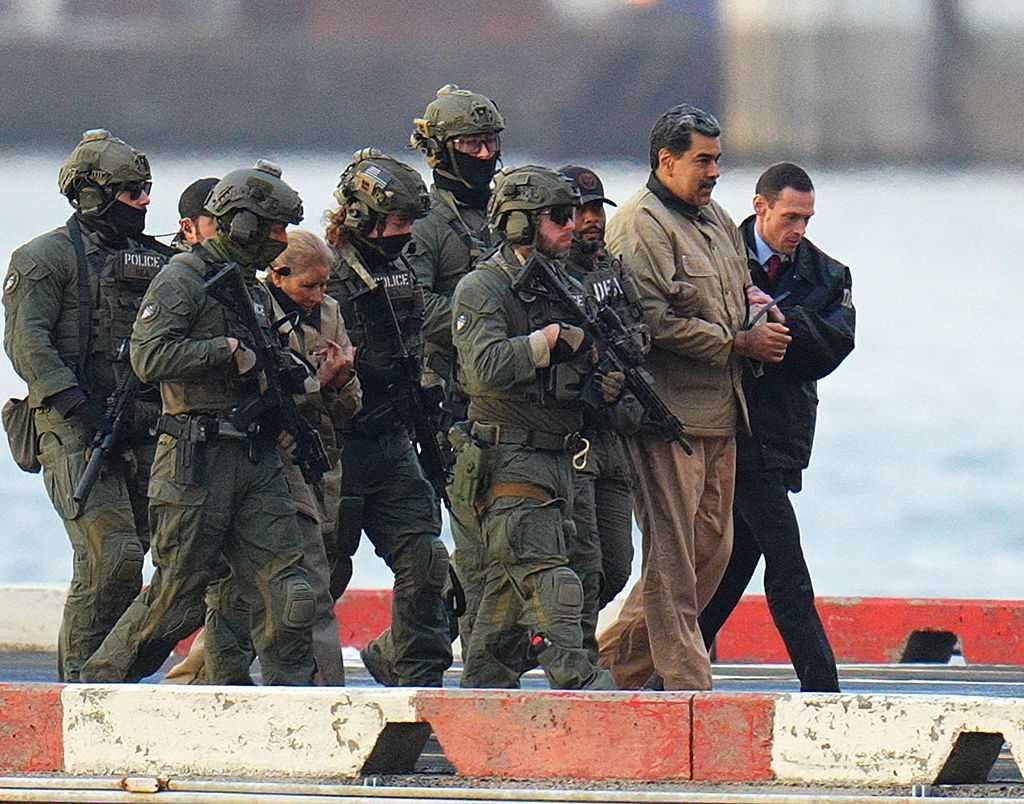
The U.S. Department of Justice indicted Nicolás Maduro on narco-terrorism charges for conspiring with drug cartels to flood the United States with cocaine. This was no symbolic gesture. It marked a recognition that Venezuela under Maduro is not a normal sovereign government, but a criminal enterprise masquerading as one. Enforcement, not rhetoric, gives such indictments meaning. That is what the Donroe Doctrine signals.
Democratic critics objected immediately, even though the indictment originated under the Biden administration. Some argued that because the United States cannot remove every tyrant everywhere, it lacks moral authority to act against any single one. That is moral paralysis disguised as principle. By that logic, no law should ever be enforced because more criminals remain at large. Police would stop making arrests. Courts would close. Justice would dissolve into excuses.
Others insisted Venezuela’s sovereignty places it beyond American reach. Sovereignty does not magically convert criminal conduct into legitimacy. A regime that finances itself through narcotics trafficking, collaborates with cartels, launders money through international systems, facilitates human trafficking, and exports violence across borders has already violated the sovereignty of others — especially the United States. Cocaine and fentanyl ignore borders. So do the trafficking networks Venezuela enables. By its conduct, the Maduro regime declared hostility. Enforcement followed.
Venezuelan officials now appeal to international law. The claim borders on parody. Venezuela ranks among the world’s most corrupt regimes. Its institutions lie hollow. Its courts serve politics. Its elections perform theater. For such a regime to suddenly demand protection from a rules-based order it has systematically violated is not irony; it is audacity. This is not a government. It is a cartel with flags and uniforms.
RELATED:The Venezuela crisis was never just about drugs
The more revealing question is not why the United States finally enforced its laws against a narco-state but why so many Western politicians rushed to defend it. How many careers, campaigns, and institutions have drawn quiet benefit from regimes like Maduro’s? How many activists and academics repeat talking points that align perfectly with the interests of Caracas, Beijing, Moscow, and Tehran?
America’s adversaries understand Venezuela well. China, Russia, Cuba, and Iran treat it as a strategic asset — oil-rich, geographically close to the United States, and governed by leaders willing to trade sovereignty for survival. Through Venezuela, hostile powers gain leverage and access in the Western Hemisphere. Only America’s political class pretended this did not matter.
Venezuelans themselves understand what is at stake. Many celebrated the renewed enforcement of U.S. law because polite diplomacy never delivered accountability. They lived under a regime that destroyed the economy, emptied shelves, silenced dissent, and drove millions into exile. They do not fear American responsibility. They welcome it. While American professors protest Donald Trump and plead for Maduro, Venezuelans cheer Trump and hope for freedom.
The Donroe Doctrine does not promise instant liberation or universal justice. It promises something more basic and more necessary: Criminal regimes will no longer receive legitimacy simply because they occupy a seat at the United Nations. Traffickers, tyrants, and their patrons now face consequences.
Whether this approach extends beyond Venezuela remains to be seen. But one reality is already clear. The Western Hemisphere no longer serves as an unguarded corridor for corruption, narcotics, and foreign subversion.
The age of moral neutrality is over. The age of the Donroe Doctrine has begun.

 www.theblaze.com
 thefederalist.com
 www.theblaze.com
Polymarket Going Crazy Over Trump's NATO Ultimatum | 3/18/26