Nonbinary suspect allegedly opens fire on Border Patrol agent — incident eerily similar to last year's fatal shooting


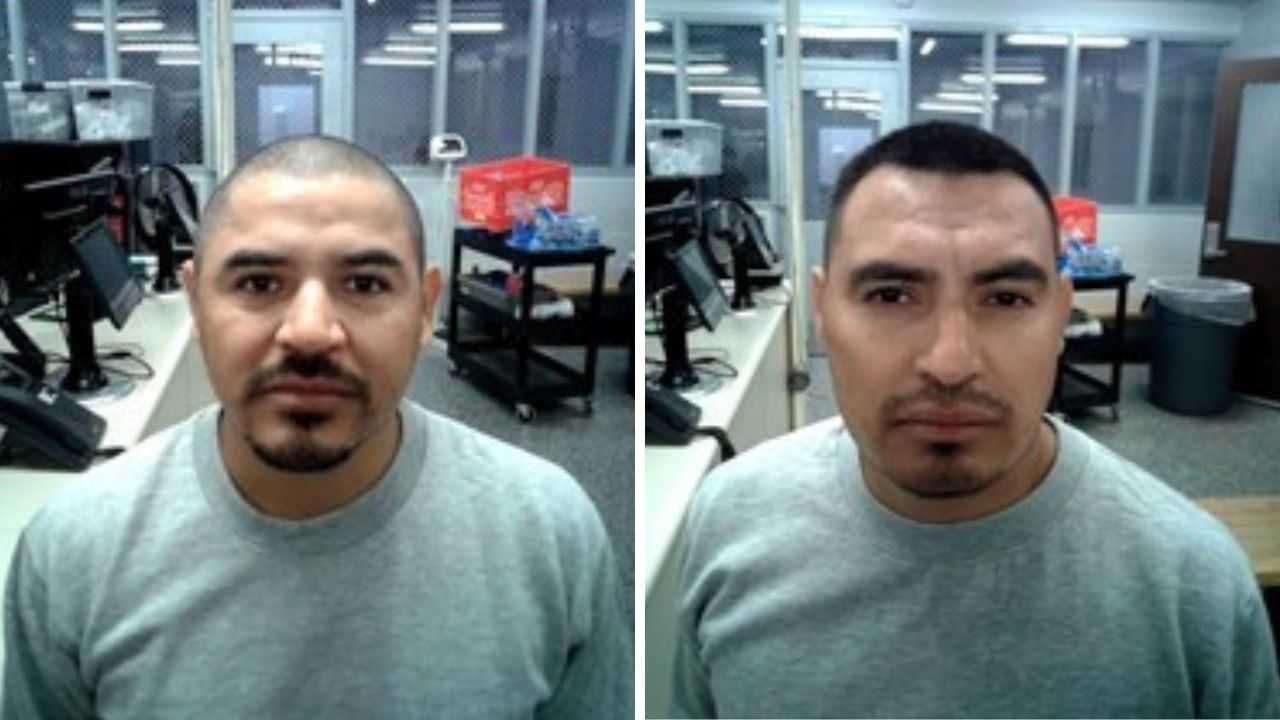
A suspect who reportedly identifies as nonbinary opened fire on a Border Patrol agent during a traffic stop in New Hampshire on Saturday. This latest incident occurred roughly one year after members of a radical trans cult allegedly shot and killed an agent in Vermont.

A criminal complaint reviewed by Blaze News revealed charges filed Tuesday against Blu Zeke Daly, also known as Cullan Zeke Daly, stemming from an incident that occurred on Feb. 21.

'This individual did have a previous Massachusetts driver's license that was denominated to be male and now has a New Hampshire driver's license, which is denominated to be female.'

An on-duty Border Patrol agent patrolling the border between the U.S. and Canada in Stewartstown, New Hampshire, encountered a 2012 Honda Civic at roughly 11:30 p.m., according to the affidavit of an FBI special agent.

Daly, the driver and sole occupant of the vehicle, provided the agent with a New Hampshire driver's license, according to the court document. After the officer asked whether Daly used any other names, Daly allegedly "immediately drove away," prompting the officer to follow at a distance.

The affidavit explained that Daly drove to the Pittsburg Port of Entry and stopped at a closed gate. When the officer exited his vehicle, Daly attempted to drive away.

While trying to turn the vehicle around, Daly allegedly fired a handgun at the officer.

The Border Patrol agent returned fire, shooting Daly and causing the suspect to lose control of the vehicle and hit a snowbank.

RELATED: The Zizians’ violent spiral: A trans group tied to killings across America

Gina Ferazzi/Los Angeles Times/Getty Images

A Smith & Wesson SD9 2.0 handgun and ammunition were reportedly recovered from Daly's vehicle.

The affidavit argued that there is probable cause to believe Daly committed the offenses of attempted murder of a federal officer and assaulting a federal officer with a dangerous weapon.

WMUR reported that investigators have been unable to speak with Daly after the suspect was severely injured in the shooting.

The Department of Justice stated that Daly is currently receiving medical treatment at a New Hampshire hospital and is under guard.

U.S. Attorney Erin Creegan told WMUR that investigators have spoken with "people associated with the defendant."

Creegan called it "a miracle" that the Border Patrol agent was not injured.

RELATED: Vermont Border Patrol agent's fatal shooting tied to radical trans murder cult

Photo by Kevin Dietsch/Getty Images

"We're still investigating everything about this individual, including potential motivation and what could have prompted them to be in the border area at that time of night, and what would have caused them to fire at a Border Patrol agent executing routine duties," Creegan stated.

WMUR obtained court paperwork indicating that Daly was granted a name change in 2024, claiming to identify as nonbinary.

"This individual did have a previous Massachusetts driver's license that was denominated to be male and now has a New Hampshire driver's license, which is denominated to be female. So it's a reasonable assumption that the person has decided to transition their gender," Creegan added.

In January 2025, a Vermont Border Patrol agent was shot and killed while performing a traffic stop on Interstate 91. The suspects included two individuals tied to a group known as the Zizians, whose members mostly identify as transgender or nonbinary.

There are currently no confirmed connections between Daly and the Zizians.

"When you have something happen which targets a Border Patrol agent in that area, it would be a reasonable line of investigative inquiry to determine whether there is any connection to a broader network or group, because that does appear to exist — the allegations that did exist in the murder investigation involving the Border Patrol agent," Creegan told WMUR.

Like Blaze News? Bypass the censors, sign up for our newsletters, and get stories like this direct to your inbox. Sign up here!

The Fifth Circuit cracks down on the asylum excuse factory


For nearly three decades, Washington has insisted that America’s immigration chaos stems from outdated laws, insufficient authority, or humanitarian necessity.

Last week, the Fifth U.S. Circuit Court of Appeals shattered that narrative.

For the first time in decades, a federal court treated immigration law as law, not a suggestion.

In Buenrostro-Mendez v. Bondi, a divided panel did something radical by modern standards: It enforced immigration law as Congress wrote it. The result ranks as one of the most consequential immigration rulings in a generation — and a direct rebuke to the legal fiction that has shielded millions of illegal aliens from mandatory detention for decades.

What the court actually said

The case turned on a simple question with enormous consequences: Do illegal aliens who entered the United States unlawfully — often years ago, without inspection or lawful admission — get discretionary bond hearings while in removal proceedings?

The Fifth Circuit answered no.

Writing for the majority, Judge Edith H. Jones, joined by Judge Stuart Kyle Duncan, held that any alien present in the United States who has not been lawfully admitted is, by statute, an “applicant for admission.” Congress supplied that definition in 1996.

Under the law, applicants for admission who cannot show they are “clearly and beyond a doubt entitled to be admitted” shall be detained pending removal proceedings.

“Shall” means mandatory. It leaves no room for discretionary bond hearings. It applies regardless of how long the alien has remained unlawfully in the country.

Physical presence does not confer the legal status or constitutional entitlements that accompany lawful admission, much less citizenship.

This ruling rejects the long-standing practice of treating interior illegal aliens as governed by the bond statute. As the Fifth Circuit panel made clear, that statute applies after lawful admission. It does not override Congress’ command for those who were never admitted at all.

No other federal appellate court has squarely held that mandatory detention applies not only to recent border crossers but also to long-term illegal aliens living in the interior who entered without inspection years — even decades — ago.

Long-delayed enforcement

Nothing in the Fifth Circuit’s decision turns on novel statutory interpretation. Congress enacted this framework in 1996 to eliminate incentives for evading inspection and remaining unlawfully in the United States.

What changed was not the law but the willingness to enforce it.

After the Board of Immigration Appeals acknowledged the plain meaning of the disputed section in Matter of Yajure Hurtado, DHS implemented a policy treating illegal entrants as Congress defined them: applicants for admission subject to mandatory detention.

The response was immediate and predictable. District courts across the country rushed to block the policy, issuing a wave of rulings restoring bond eligibility.

The Fifth Circuit is the first appellate court to say what should have been obvious all along: Courts do not get to rewrite immigration statutes because enforcement is politically uncomfortable.

RELATED: We escaped King George. Why do we bow to King Judge?

Photo by Pierce Archive LLC/Buyenlarge via Getty Images

Asylum is not a loophole

One of the most persistent myths in immigration discourse claims that filing for asylum legalizes illegal entry. It does not.

Congress made illegal entry a federal misdemeanor. The statute contains no asylum exception. Illegal entry remains a crime even for those who later request asylum.

Asylum also does not create a “right to remain.” It is discretionary relief from removal.

Federal law allows an alien to apply for asylum after illegal entry. That provision does not cure inadmissibility, erase criminal violations, or entitle the applicant to release from custody.

When an alien crosses the border illegally — between ports of entry — the alien violates federal law and becomes inadmissible for lack of valid entry documents. That inadmissibility triggers expedited removal.

The law allows an alien to request asylum after unlawful entry, but it does not legalize the entry, erase inadmissibility, or prevent removal. In this posture, asylum is defensive. The alien raises it after DHS initiates removal proceedings, and the alien receives it, if at all, as discretionary relief — not as a right to remain.

Aliens who enter without valid documents remain inadmissible and subject to detention or removal.

Mandatory detention applies to many asylum seekers. Under the statute:

  • Illegal entrants go into expedited removal unless they establish a credible fear.
  • When an alien claims credible fear, the alien remains detained pending final adjudication.
  • Release runs through limited DHS parole authority, not judicial bond hearings.

The Supreme Court confirmed this framework in Jennings v. Rodriguez (2018), holding that the statute mandates detention and does not allow courts to invent bond hearings where Congress declined to authorize them.

Law on the books vs. law in practice

The detention statute does not suffer from ambiguity. The conflict lies elsewhere.

Congress criminalized unlawful entry without exception. Congress also enacted the asylum provision through the Refugee Act of 1980, permitting any alien “physically present” in the United States or arriving at the border to apply for asylum regardless of manner of entry. That provision does not exempt such individuals from prosecution, detention, or removal. It does not repeal the detention mandate.

The Refugee Act incorporated aspects of the U.N. Refugee Convention and Protocol, including Article 31’s discouragement of “penalization” for unlawful entry in limited circumstances. Article 31 does not prohibit detention, prosecution, or removal. It confers no right to unlawful entry or release pending adjudication. Nothing in the treaty framework — or U.S. law — displaces Congress’ mandatory detention commands.

RELATED: Federalism cannot be a shield for sanctuary defiance

Photo by John Moore/Getty Images

Over time, however, executive agencies — and sometimes courts — expanded a limited non-penalization principle into a broader immunity regime. Officials treated asylum eligibility as a basis to avoid detention, delay removal, and suspend enforcement mandates Congress never repealed.

That is not discretion. It is dereliction. It nullifies the statute Congress enacted.

Until Congress revisits asylum law or alters treaty commitments, that structural tension will invite exploitation — regardless of what the detention statute requires.

Why this ruling matters

By enforcing the law as written, the Fifth Circuit restored a foundational principle of sovereignty: Illegal entry does not generate superior legal rights.

The dissent warns that enforcing the statute could produce large-scale detention. That warning is not a legal argument. It is a policy objection rooted in disagreement with the statute Congress enacted.

This ruling binds only Texas, Louisiana, and Mississippi — for now. Other circuits have signaled resistance. A split is coming. Supreme Court review seems likely.

When that moment arrives, the court will face a question it has avoided for years: Does immigration law mean what it says — or only what politics permits?

The Fifth Circuit has answered.

For the first time in decades, a federal court treated immigration law as law, not a suggestion.

Trump Doesn’t Need Maduro’s Cooperation To Deport Venezuelan Migrants

Most of the Venezuelans who illegally crossed the U.S. southern border were living in 20 other peaceful countries for years beforehand.

More Chinese Nationals Illegally Entered The U.S. In Two Days This Month Than In All Of 2021

The implications are not just limited to espionage but extend to the potential for creating societal disruptions and furthering the CCP’s global influence campaign in America.
Most Americans recognize illegal immigration is a big problem — with the majority now supporting a border wall


In one of his first acts in office, President Joe Biden halted construction of the wall along the southern border. In the months since, over 7 million foreign nationals have stolen into the United States, incentivized further by Democratic sanctuary policies, open-borders rhetoric, and discussions of rewards for those who have already flouted immigration laws.

The majority of illegal aliens rely on taxpayer-funded welfare, with every million parolees siphoning $3 billion in federal welfare benefits. The estimated annual cost to house known gotaways and illegal aliens released into the country under Biden's watch is $451 billion. Multitudes of foreign nationals are tracking in diseases once thought eradicated or controlled in the U.S. along with violent crime, including of the kind that claimed Laken Riley's life last week.

Americans are apparently fed up — including a fair share of Democrats.

The latest Monmouth University poll revealed Monday that public concern over illegal immigration has skyrocketed during the Biden administration's mismanagement of the border crisis. Over 8 in 10 Americans recognize illegal immigration to be either a very serious (61%) or a somewhat serious (23%) problem.

Broken down by political affiliation, 66% of Republicans, 42% of independents, and 33% of Democrats told pollsters in 2015 that illegal immigration was a very serious problem. Nine years later, those figures jumped to 91%, 58%, and 41%, respectively.

"Illegal immigration has taken center stage as a defining issue this presidential election year," said Patrick Murray, director of the Monmouth University Polling Institute. "Other Monmouth polling found this to be Biden's weakest policy area, including among his fellow Democrats."

For the first time since Monmouth pollsters started asking the question nationally in 2015, the majority of Americans (53%) now support the construction of a border wall, while 46% signaled continued opposition to securing the border with such a barrier.

When the question was first posed in September 2015, 48% of respondents signaled support for the wall. During the Trump administration, support for the wall reached 44% at its highest and fell to 35% at its lowest.

In 2015, support for the wall among Republicans stood at 73%. It has since increased to 86%. There has also been a spike in support among independents, from 47% to 58% over the past nine years.

While there has been an overall increase in concern over the border among Democrats, their support for a border wall has actually slipped from 31% to 17%.

Support for keeping those foreign nationals claiming asylum in Mexico has increased among all partisan groups since 2019. Now, 61% of Americans think they should wait to be processed on the other side of the border. This desire for remote processing may have been driven by increased concerns about criminality.

Roughly one in three (32%) Americans reckon illegal aliens to be more likely to commit violent crimes like rape or murder. This represents a 11-point increase over the 2019 poll and a 15-point jump over the response in 2015.

In their latest attempts to displace blame over the border crisis, Democrats have suggested that Republicans threw away a winning remedy by opposing the so-called border bill. According to the Monmouth poll, Americans weren't convinced the bill would have done a great deal in the way of addressing the crisis.

47% of respondents said the border bill was "not tough enough when it comes to dealing with illegal immigration." 77% of Republicans and 48% of independents were in agreement.

"These results illustrate why the border deal was dead on arrival. The vast majority of rank-and-file Republicans and many independents believe it is too soft on illegal immigration, even if they don’t know exactly what's in the legislation. Senate GOP leadership could have tried to sell the bill, but that would have almost certainly been fruitless once Donald Trump weighed in against it," said Murray.

According to U.S. Customs and Border Protection, 7,332,800 foreign nationals stole across the U.S. southern border illegally between the time Biden took office and last month.

Like Blaze News? Bypass the censors, sign up for our newsletters, and get stories like this direct to your inbox. Sign up here!

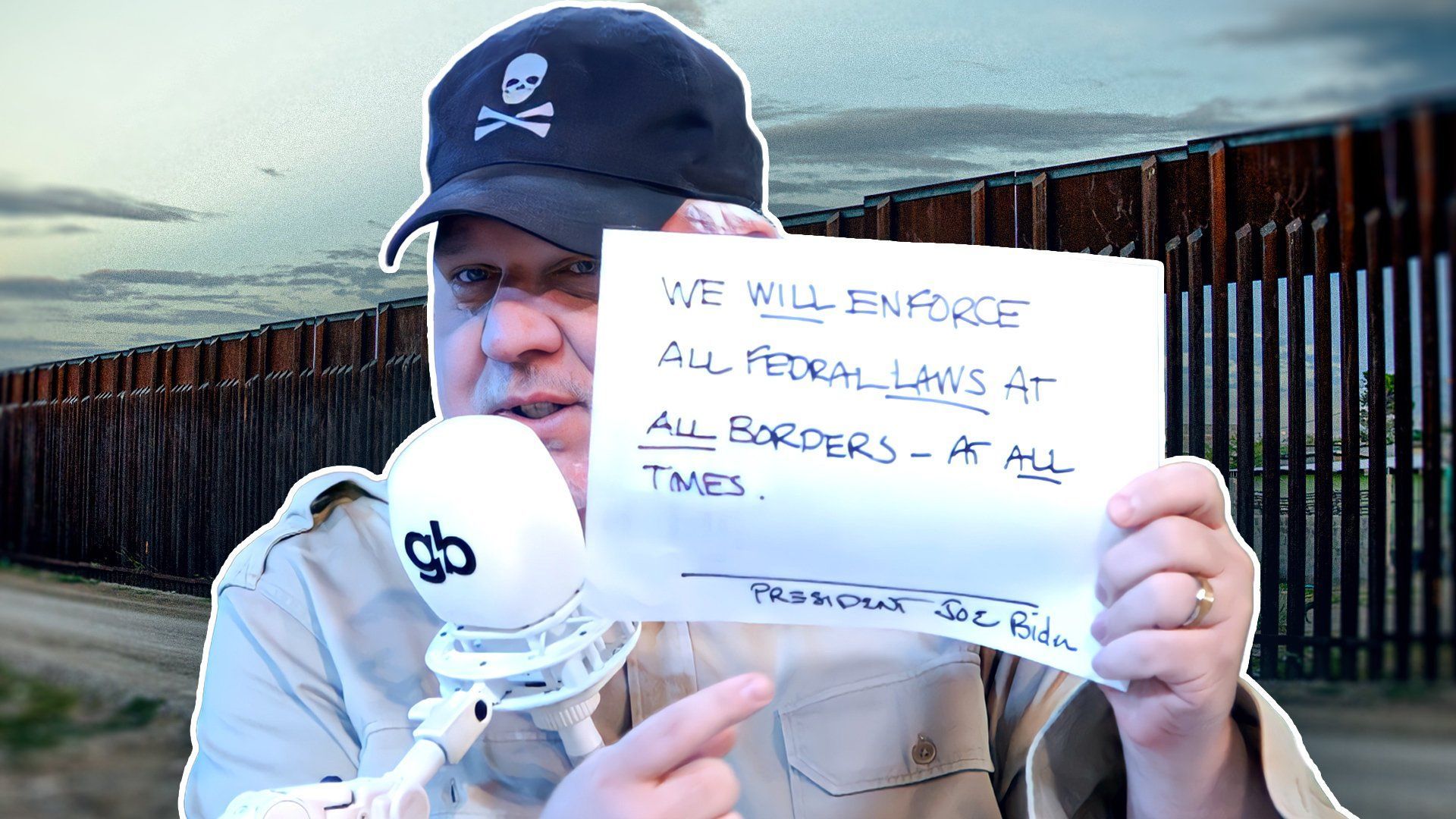
THIS is the ONLY bill Biden needs to sign to secure the border


In a shocking twist, President Biden suddenly cares about the invasion at the border.

After years of denying a border crisis, the president has promised to “shut down the border right now” if given new emergency powers in a bill passed by Congress.

However, Glenn Beck isn’t so sure new emergency powers are what Biden needs — nor does he believe the President is actually concerned for the people immigration is affecting the most.

“I just don’t think that we need any of those special emergency powers,” Glenn says, noting that NBC compared the emergency powers to those introduced during COVID.

In Biden’s hands, those new emergency powers could do more harm than good, especially as he’s doing whatever he can to punish those who have been fighting for the border to close all along: Texans.

The state has refused to back down and hand over control of Shelby Park in Eagle Pass, Texas, to federal authorities. Over 20 other states have shown support for Texas as its citizens fight to stop the invasion.

However, on Friday, Biden then banned all new liquid natural gas export approvals, which will greatly hurt Texas’ economy.

“I want to make things better for the people in Texas, that’s why I’m going to shut down 30% of all of America’s supply just coming out of Texas,” Glenn mocks.


Want more from Glenn Beck?

To enjoy more of Glenn’s masterful storytelling, thought-provoking analysis, and uncanny ability to make sense of the chaos, subscribe to BlazeTV — the largest multi-platform network of voices who love America, defend the Constitution, and live the American dream.