Your Son Doesn’t Want You To Complain About His Deployment
 'They didn't sign up to be on a ship in the middle of the ocean with no port calls, no feet on the ground.'
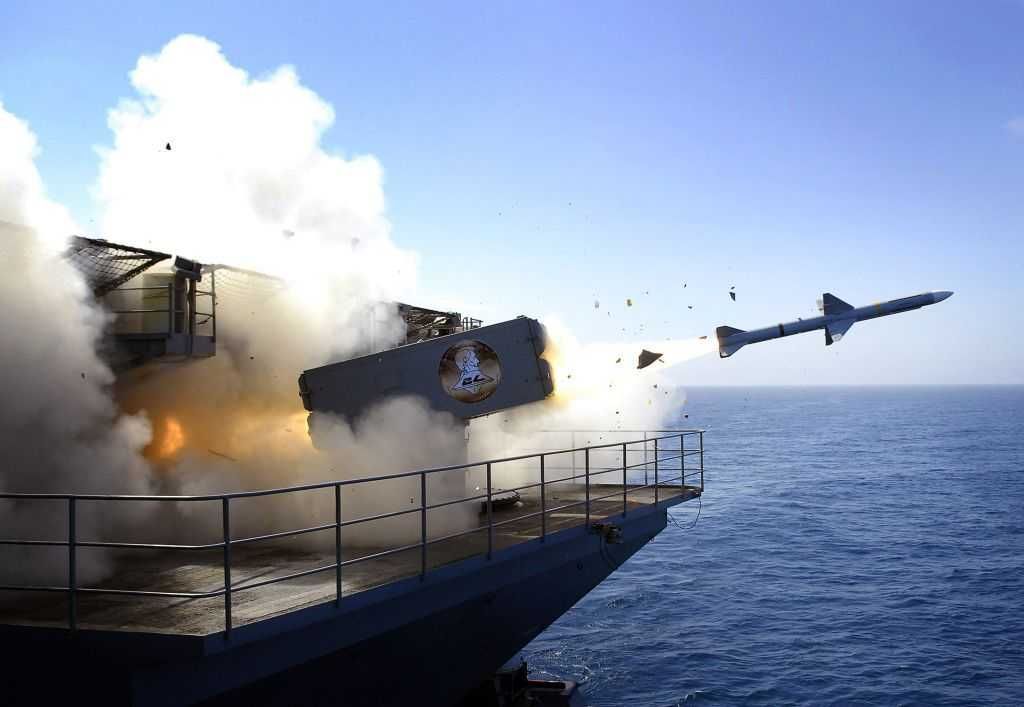
For the past two years, one image has circulated among defense analysts: a U.S. Navy destroyer firing a Standard Missile-2, which costs about $2.1 million, to intercept a Houthi drone that likely cost $2,000.
Nobody in that chain made a bad decision. The ship had to be defended. But the Navy has now fired more than 200 such missiles in the Red Sea since late 2023 at a cost of hundreds of millions of dollars. Project that math onto future conflicts — Taiwan, the Baltics, the Persian Gulf — and the picture gets alarming fast.
Sophistication matters. Volume matters more. Flexibility may matter most of all.
The standard answer is to demand better technology: lasers, interceptor drones, smarter jamming. But that misses what Ukraine has shown over three years of the largest sustained drone war in history. Much of the technology needed to defeat cheap drones at reasonable cost already exists. What America lacks is the doctrine, procurement flexibility, and industrial base to field it at scale.
What defenders need is simpler: distributed sensors, disciplined targeting, and layered defenses that match the cheapest effective response to each threat.
Ukraine now produces about 1,500 interceptor drones per day. They cost $1,200 and $4,700 apiece, a fraction of the $29,100 to $46,520 Shahed drones they destroy. One in three Russian aerial threats over Ukraine is now brought down by an interceptor drone rather than a missile. Ukraine’s overall interception rate sits around 80%, achieved not through Patriot batteries alone but through layers of cheap, rapidly iterated hardware built by 450 domestic manufacturers.
Ukraine’s advantage is not just volume. It is decentralization. Units, volunteers, and defense-tech firms operate in a flexible ecosystem that lets them adapt systems to terrain, weather, and enemy tactics as conditions change.
The American model moves the other way: centralized requirements, standardized programs, and long acquisition cycles. That system can produce extraordinary weapons. It cannot adapt when the battlefield changes faster than the program office. The United States faces different constraints, especially at sea and across global commitments, but the underlying economics do not change.
As of 2022, the United States was producing roughly 500 to 600 Patriot missiles per year. That stock can be burned through in weeks during a high-intensity conflict. This is not a missile-design flaw. It is the result of three decades of underinvestment in manufacturing capacity and a procurement system optimized for sophistication over volume. America still buys platforms better than it buys kill chains — the linked system of sensors, decisions, and interceptors — and counter-drone defense demands the reverse.
Meanwhile, Russia, working from Iranian Shahed blueprints, scaled launches to more than 44,000 in the first 10 months of 2025, four times the previous year’s rate. The United States is now in an industrial competition and, on current trajectory, losing it on volume.
RELATED: The combination that can renew America’s defense industry
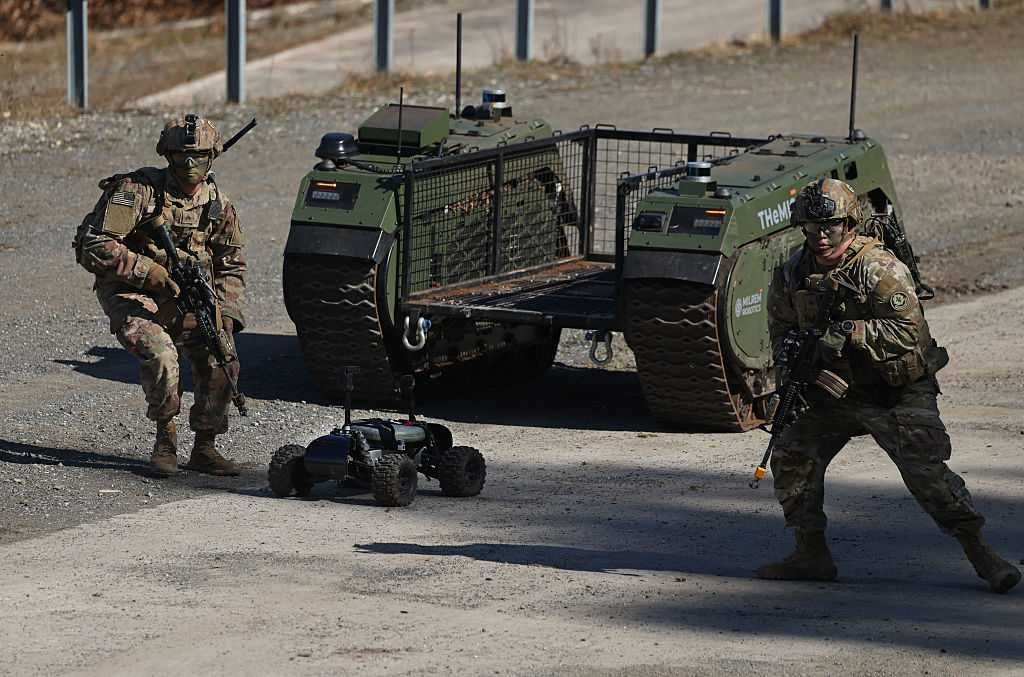
The tactical lessons from Ukraine are hardly mysterious. Detect early, match the weapon to the threat, and keep defenses mobile. Ukraine’s mobile fire groups — pickup trucks with machine guns and thermal imagers — proved effective enough that Russia rushed to copy them, with limited success. Israel’s Iron Beam laser intercepts threats at roughly $2 to $5 per shot. These systems work.
The problem is that “works in Ukraine” and “enters U.S. inventory at scale” are separated by an acquisition process that takes years, prizes exquisite performance over adequate volume, and was never designed for six-week innovation cycles.
The 2020 war in Nagorno-Karabakh offers another warning. Armenia’s air defenses collapsed not because drones are invincible, but because Armenia lacked modern, layered defenses. Institutional neglect, not technological inevitability, proved decisive.
None of this means expensive interceptors are obsolete. Advanced threats still require advanced interceptors. And as CSIS has noted, a $2 million missile protecting a $2 billion ship and its crew is rational. The point is not to abandon high-end systems. It is to stop treating them as the first and only answer to every aerial threat and to build the lower tiers of the defense stack with the same urgency we bring to the top.
That means procurement reform that many defense insiders regard as somewhere between very hard and politically impossible. It means accepting lower unit performance in exchange for higher production volume, a trade the Pentagon’s acquisition culture instinctively resists. It means pressuring major defense contractors to share production with smaller, faster manufacturers.
Sophistication matters. Volume matters more. Flexibility may matter most of all.
Ukraine learned that lesson under bombardment, because it had no choice. The United States still has the luxury of learning it in advance.
The danger is that luxury breeds delay.
With Brent crude futures surging past $115 a barrel, President Trump’s rejection of Iran’s latest Strait of Hormuz proposal is a test of whether Washington elites understand what ordinary Americans actually want: energy stability, not another forever war in the Gulf.
Iranian Foreign Minister Abbas Araghchi, through Pakistani mediators in the ongoing Islamabad process, recently floated a phased 14-point plan: reopen the Strait of Hormuz if the U.S. lifts its blockade, with nuclear talks deferred to a later stage.
Trump dismissed the offer as not acceptable, yet the real story is not Tehran’s maneuvering, but the widening gap between Beltway hawks who see confrontation as inevitable and voters who see confrontation as unaffordable.
Younger voters, already skeptical of 'forever wars,' view the Iran standoff as another distraction from domestic priorities.
As the administration officially activates Project Freedom — a mission utilizing U.S. naval assets to guide trapped commercial vessels — Washington is attempting a middle-path maneuver.
This operation is a band-aid on a bullet wound. Reports of U.S. helicopters destroying Iranian small boats and retaliatory missile fire toward UAE ports underscore the volatility. The public is not clamoring for a demonstration of strength; people are clamoring for relief at the pump.
Polling backs this up. The March 2026 Pew survey shows that foreign policy hawkishness is declining, with only 28% of Americans labeling China an “enemy” and similar fatigue evident in attitudes toward Middle Eastern entanglements.
Trump’s rejection of Iran’s deal, though well intentioned, misreads the electorate. Americans are not demanding another Gulf showdown that could shatter the current truce. They are demanding a pragmatic path to lower energy costs and a reprieve from endless deployments.
Iran’s offer was piecemeal, but it reflected a truth Washington ignores: Maritime choke points like the Strait of Hormuz are arteries of global commerce. Blocking them — or relying on risky naval escorts — is a gamble with the global economy.
Traders and shippers see the blockade as a distortion that ripples through supply chains. The attempt to isolate Iran has produced logistical chaos that even Project Freedom will struggle to untangle.
Americans feel this chaos in their wallets. Every increase translates to higher gasoline prices, higher shipping costs, and inflationary pressure. Younger voters, already skeptical of “forever wars,” view the Iran standoff as another distraction from domestic priorities.
The youth vote is not demanding ideological purity; it is demanding pragmatic management of global risks. By rejecting Iran’s offer outright, Trump risks alienating the very demographic that could give him cover for a diplomatic breakthrough.
RELATED: Trump administration establishes ‘red, white, and blue dome’ to allow safe passage through Strait of Hormuz

The Islamabad process — where U.S. and Iranian delegations are quietly exploring trilateral peace — reflects a regional appetite for pragmatic de-escalation. The same mood exists in the American electorate. Voters are tired of containment strategies that yield no domestic dividend.
The coming few weeks will be decisive. If the blockade continues, price spikes will drag inflation into the midterm season. If Trump pivots toward a phased maritime deal, he could claim a win that stabilizes the markets.
Washington elites may sneer at piecemeal diplomacy, but such diplomacy is often how to achieve real stability. The electorate understands this better than the pundits.
The American people are no longer the obstacle to pragmatic engagement; they are the engine of it. Rejecting Iran’s offer may satisfy Beltway hawks, but it risks alienating voters.
The smarter path is managed friction — accepting partial deals that stabilize markets while deferring ideological battles. The world does not need another forever war in the Gulf. It needs a recognition that energy stability is the foundation of strategic strength.
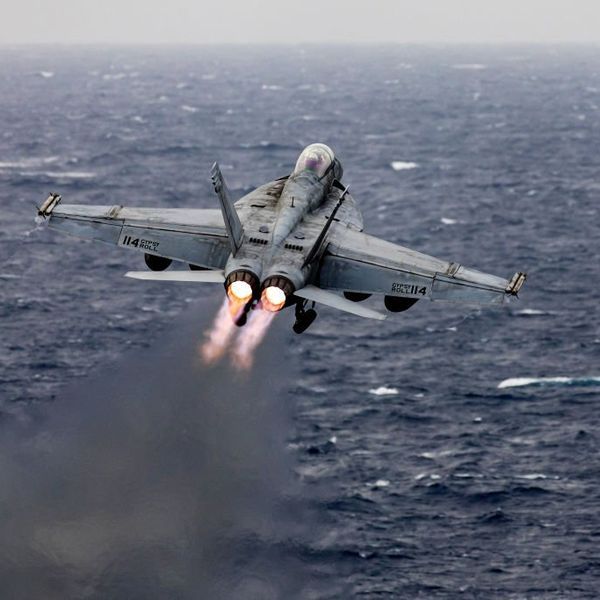
The U.S. Navy apparently shot down one of its own two-seat F/A-18F Super Hornets over the Red Sea on Sunday around 3 a.m. local time. Although one of the pilots was injured, U.S. Central Command indicated that both were safely rescued.
CENTCOM did not provide an indication of the American F/A-18's mission prior to being shot down; however, U.S. forces in the area have recently been conducting airstrikes against Iran-backed Houthi militants and their facilities in Yemen as well as taking out ISIS targets in Syria.
Over the weekend, U.S. Air Force and U.S. Navy assets reportedly shot down multiple Houthi drones and an anti-ship cruise missile and also conducted strikes against a missile storage facility and a command-and-control facility in Sana'a, Yemen. Days earlier, CENTCOM whacked ISIS leader Abu Yusif aka Mahmud via a precision airstrike in the Dayr az Zawr province.
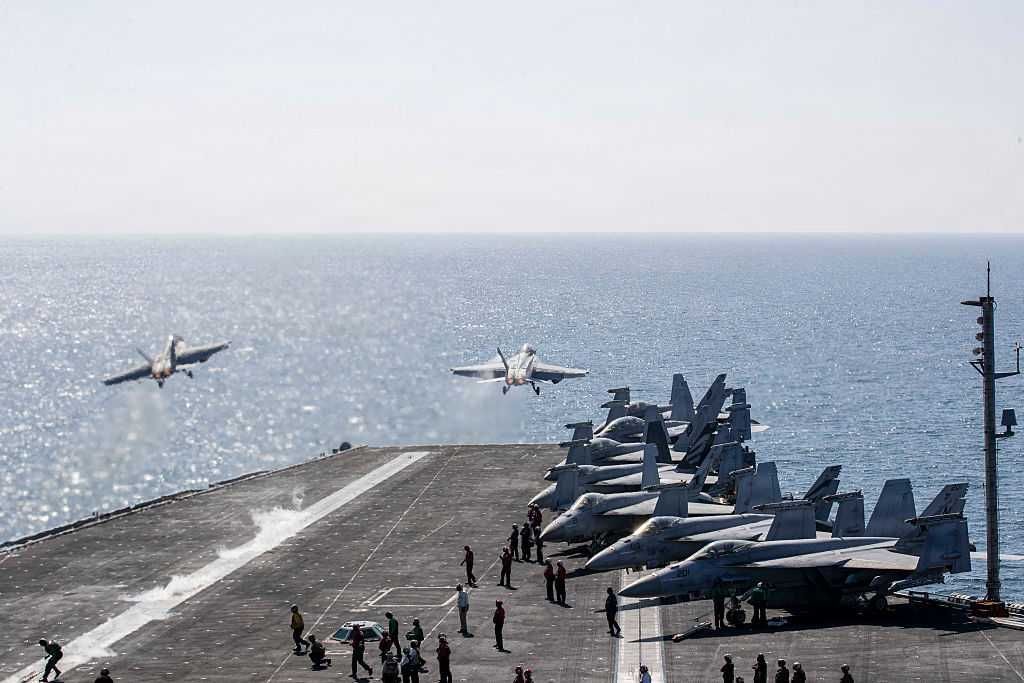
A Navy official told U.S Naval Institute News that the downed F-18 was assigned to Carrier Air Wing One and embarked aboard the Nimitz-class aircraft carrier USS Harry S. Truman, which entered the CENTCOM area of responsibility on Dec. 14.
'Another indicator of how pathetic a state of readiness our military is in.'
USNI indicated that the crew are most likely with the Red Rippers of Strike Fighter Squadron 11 from Naval Air Station Oceana, Virginia.
The strike group, part of Operation Prosperity Guardian, is presently focused on razing Houthi military installations and protecting merchant traffic and American vessels in the southern Red Sea, Bab al-Mandeb, and Gulf of Aden from attack.
CENTCOM said in a statement that the Ticonderoga-class guided-missile cruiser USS Gettysburg, commanded by Alaska native Captain Justin Hodges, "mistakenly fired on and hit the F/A-18" fighter craft that was flying off the USS Harry S. Truman, confirming that "this incident was not the result of hostile fire."
The Associated Press suggested that earlier Houthi drone and missile attacks may have been responsible for the confusion that led to the alleged friendly fire.
Yahya Saree, a spokesman for the Houhi militants, claimed without evidence that Houthis shot down the F/A-18.
Retired Army Col. Douglas Macgregor noted, "Yes, we shot down our own plane. If this doesn't put a cap on the worst Presidency of modern history, I'm not sure what does."
"This is another indicator of how pathetic a state of readiness our military is in, especially our U.S. Navy," tweeted retired U.S. Army Lt. Gen. Michael Flynn.
According to a 2024 Government Accountability Office report, "47 of the 49 aircraft we reviewed did not meet DOD's mission capable goals." A previous GAO report noted that between 2011 and 2021, the Navy and Marine Corps F/A-18 jets under review almost always failed to meet their mission capable goal.
The Heritage Foundation concluded in its 2024 index of military strength that "as currently postured, the U.S. military is at significant risk of not being able to defend America's vital national interests."
Like Blaze News? Bypass the censors, sign up for our newsletters, and get stories like this direct to your inbox. Sign up here!
 www.theblaze.com
 www.theblaze.com
 www.theblaze.com
Oprah and The Rock are facing MAJOR BACKLASH over THIS