Canadian leader blinks first, calls off anti-tariff ads after Trump terminates trade talks


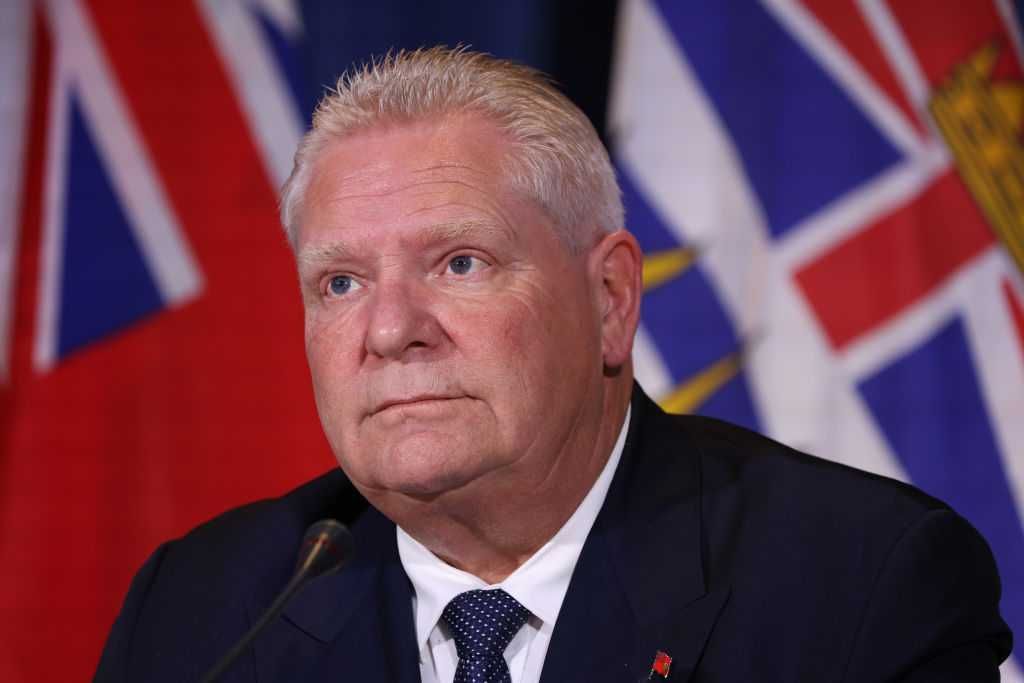
President Donald Trump announced late Thursday evening that he was terminating all trade negotiations with Canada on account of a $75 million anti-tariff advertising campaign initiated last week by Ontario Premier Doug Ford.

Trump leaned into his criticism of Canada Friday morning, stating, "CANADA CHEATED AND GOT CAUGHT!!!" and accused the northern nation of using the ad "to illegally influence the United States Supreme Court in one of the most important rulings in the history of our Country."

The purpose of the ad, which featured excerpts from former President Ronald Reagan's April 25, 1987, radio address regarding the benefits of free trade and downsides of protectionism, was to make the case against American tariffs on Canada to Republican voters.

Ford evidently figured the ad was not worth the cost.

The premier said in an X post on Friday afternoon that after speaking to Prime Minister Mark Carney, his government "will pause its U.S. advertising campaign effective Monday so that trade talks can resume."

'Let's work together to build Fortress Am-Can and make our two countries stronger.'

"Our intention was always to initiate a conversation about the kind of economy that Americans want to build and the impact of tariffs on workers and businesses," Ford wrote. "We've achieved our goal, having reached U.S. audiences at the highest levels."

While the ad will not run as planned next week, Ford indicated that he has directed his team to "keep putting our message in front of Americans over the weekend so that we can air our commercial during the first two World Series games."

The Toronto Blue Jays host the L.A. Dodgers for Game 1 on Friday night and Game 2 on Saturday.

RELATED: Trump says he's killing trade talks with Canada for 'trying to illegally influence' SCOTUS with anti-tariff ad

Photo by EVAN VUCCI/POOL/AFP via Getty Images
"The people elected our government to protect Ontario — our workers, businesses, families and communities," Ford continued. "That's exactly what I'm doing. Like I said earlier today: Canada and the U.S. are neighbors, friends and allies. We're so much stronger when we work together. Let's work together to build Fortress Am-Can and make our two countries stronger, more prosperous and more secure."

While Ontario is backing down, at least one other provincial leader appears eager to poke the bear.

The leftist premier of British Columbia, David Eby, revealed on Friday that his province was similarly making anti-tariff ads, stating, "Our wood faces higher US tariffs than Russia. Absurd. Truth will win!"

The Trump administration's tariffs on Canadian softwood lumber were recently brought up to a combined 45%.

The Canadian Industry Minister Melanie Joly later told reporters, "We need to make sure that we reduce our dependency on the U.S. and that we support our businesses."

Like Blaze News? Bypass the censors, sign up for our newsletters, and get stories like this direct to your inbox. Sign up here!

Canada holds no cards in the trade war


President Theodore Roosevelt famously said, “Speak softly and carry a big stick.” Ontario Premier Doug Ford ignored this wisdom, threatening a 25% tariff on electricity exports to the United States.

President Trump responded with threats of tariffs of his own on Canadian steel and aluminum.

Based on Ontario, Canada, placing a 25% Tariff on “Electricity” coming into the United States, I have instructed my Secretary of Commerce to add an ADDITIONAL 25% Tariff, to 50%, on all STEEL and ALUMINUM COMING INTO THE UNITED STATES FROM CANADA, ONE OF THE HIGHEST TARIFFING NATIONS ANYWHERE IN THE WORLD. This will go into effect TOMORROW MORNING, March 12th... If other egregious, long time Tariffs are not likewise dropped by Canada, I will substantially increase, on April 2nd, the Tariffs on Cars coming into the U.S. which will, essentially, permanently shut down the automobile manufacturing business in Canada. Those cars can easily be made in the USA!

Not only does Ford speak loudly, but he carries a very tiny stick. The reality is that Canada profits enormously from trade with America and accordingly has no leverage in a trade war. President Trump should use this fact to realign trade with Canada to serve America’s best interests.

Know when to fold ’em

President Trump this week imposed a 25% tariff on Canadian steel and aluminum exports. These are no idle threats — they are existential threats to Canadian industry. This is because Canada’s steel and aluminum industries only exist to serve America’s market.

Consider that Canada exports 10 million tons of steel to the United States. This represents 82% of all Canadian steel. Canada’s aluminum industry is even more dependent on America: Some 90% of Canadian aluminum is shipped to America. Without access to America’s consumer market, Canada’s steel and aluminum industries will die — and along with them tens of thousands of lucrative jobs.

Canada’s politicians should be painfully aware of these obvious facts, but evidently, they are more concerned with scoring cheap political points than serving their people. Although we can empathize — decades of U.S. presidents from Bill Clinton to Joe Biden likewise sold out the American people — this does not mean Trump should cut Canada a break.

For decades, Canada has profited from America by engaging in predatory and parasitical trade policies — sometimes engaging in free trade and other times raising massive tariffs on American products. The policy depends on what benefits Canada the most.

For example, the North American Free Trade Agreement and its successor, the U.S.-Mexico-Canada Agreement, provide for “free trade” on many products — particularly industrial and manufactured goods. These agreements have benefited Canada at America’s expense. Why? Market asymmetries.

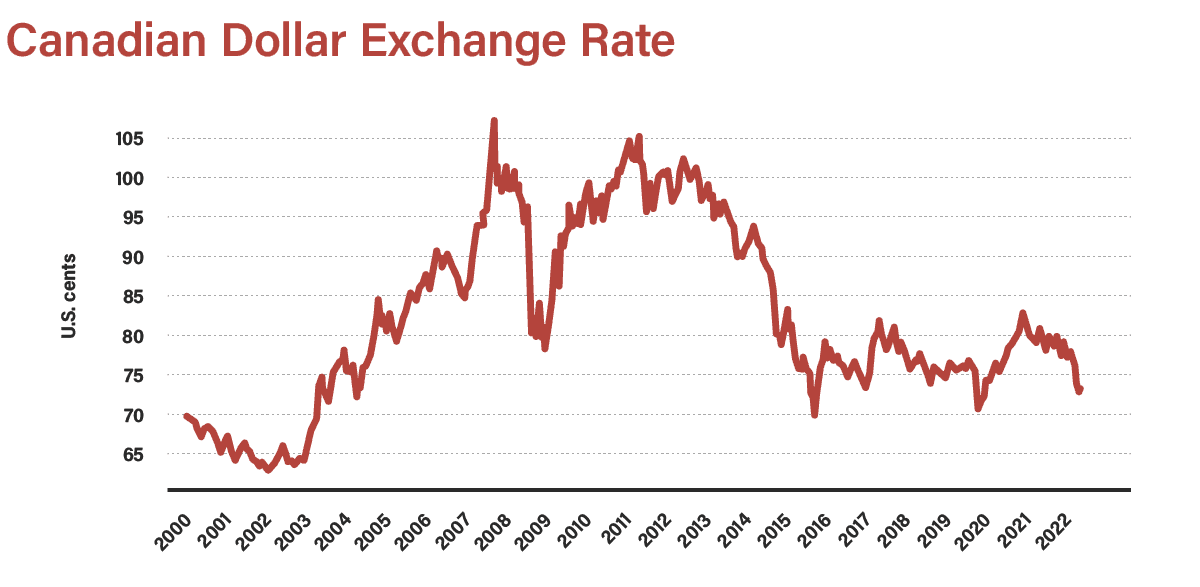
The cost of doing business in Canada is lower than in America, largely because the Canadian dollar is chronically weaker than the greenback. This means that American businesses can get more “bang for their buck” by building and operating factories in Windsor than in Detroit. Accordingly, “free trade” with Canada has led to the offshoring of many American factories.

Studies estimate that some 950,000 manufacturing jobs were displaced from the United States to Mexico and Canada. On top of this, at least 1 million other service jobs died when the factories moved. This is because factories — like farms or mines — are anchor industries upon which predicate industries depend.

Making matters worse, when “free trade” does not benefit Canada, the Canadian government levies huge protective tariffs. As President Trump has pointed out, these tariffs can be in the hundreds of percent, as is the case with Canadian dairy.

Trump is right: Canada cannot have it both ways. Either the two nations will work out a mutually beneficial deal, or America ought to look after its own self-interests by imposing tariffs to protect American industry and reshore America’s factories.

Lament for a nation

In “Lament for a Nation,” Canada’s greatest political philosopher, George Grant, presciently described the transformation of Canada from a highly industrialized and culturally independent bastion of traditional British civilization in America into a “branch plant” of America’s economy. That transformation is effectively complete.

The reality is that Canada’s economy is geared toward serving America. Not only are 77% of Canada’s exports destined for the United States, but Canada’s provinces actually trade more freely with their adjacent American states than they do with one another — an atavism of Canada’s constitution and somewhat archaic common law. Ontario, for example, has deeper economic ties to Michigan and Ohio than to Quebec or Alberta.

So where does this leave us? Assuming President Trump does not simply annex Canada, what does an America First trade policy look like going forward?

As I describe in my book “Reshore: How Tariffs Will Bring Our Jobs Home and Revive the American Dream,” new technologies drive long-run economic growth. Therefore, our trade and industrial policy should be geared toward concentrating as much technologically advanced — and capital-intensive — industry in America as possible. Further, we need to make sure that we have control over whole supply chains, to maximize our cut of value-added production and to protect us from an O-ring-style economic collapse.

The best approach is to impose high tariffs on all imports except raw materials or luxury goods that the U.S. cannot produce or obtain at steep discounts without risking self-sufficiency. This strategy would prioritize domestic industry while securing access to cheap resources from countries like Canada.

For example, Alberta oil trades at a steep discount because Justin Trudeau refused to build pipelines to the coasts. We should be happy to buy as much cheap oil as possible. However, we can build our own cars in Detroit, thank you very much.

Where does that leave Canada? That’s the wrong question. America’s trade policy should put American interests first — not Canada’s, not Mexico’s, and certainly not China’s. Reshoring factories and reviving the American dream depend on it.

“Ooooh I’m So Scared’: Mexican President Mocks Biden’s Trade Threats

We are hopeful that we can reach an amicable solution with Mexico

Trump’s Biggest Accomplishments Part 3: Trump Gets Tough On Trade

Trump brokered two groundbreaking trade agreements

Fact Check: Joe Biden Falsely Claims GOP Kept Obama from Renegotiating NAFTA

Former Vice President Joe Biden argued on Thursday that during the Obama administration, Democrats were hampered in their promise to renegotiate NAFTA by Republicans in Congress.

Donald Trump: Joe Biden Never Got It on Trade, and Still Doesn't Get It

President Donald Trump again criticized former Vice President Joe Biden's understanding of trade policy in the United States.