Mental illness has become a political identity — and SURPRISE, it's on the left: Study


There have been numerous studies in recent years highlighting correlations between political affiliation and mental health.

A 2021 study published in the journal SSM-Mental Health, for instance, concluded — on the basis of an analysis of depressive attitudes among conservative and liberal 12th graders from 2005 to 2018 — that "conservatives reported lower average depressive affect, self-derogation, and loneliness scores and higher self-esteem scores than all other groups."

'These findings have far-reaching consequences.'

A 2023 study conducted by Gallup on behalf of the Institute for Family Studies found that adolescents with "very conservative parents are 16 to 17 percentage points more likely to be in good or excellent mental health compared to their peers with very liberal parents."

A 2025 study published in the journal PLOS One found that "even after accounting for a variety of other factors, there is a clear propensity of conservatives to provide more positive assessments of their mental health in comparison to liberals" — although the researchers ultimately attempted to credit this tendency to stigma or survey terminology.

The American left's mental health issues show no signs of clearing up. In fact, while conservatives continue to enjoy relatively superior mental health, the sickness on the other side appears to be attracting sufferers into a political identity all its own.

In a study strongly recommending "replication and further exploration" that was recently published in the journal Political Behavior, Lauren Van De Hey of Utah State University found that "mental health identity has begun to function as a political identity for some individuals," particularly among "younger (Gen Z) and more liberal Americans."

RELATED: Actress Elliot Page mocked ruthlessly after trying to define 'healthy masculinity'

Samuel Corum/Getty Images

Utilizing data from the national Cooperative Election Study administered by YouGov in 2022, the Utah researcher determined that a great many people now "categorize themselves as having had a mental illness, the vast majority of whom view mental illness identity and mental illness alienation as important to their sense of self."

"People who have experienced mental illness feel close to others who have experienced mental illness," wrote Van De Hey. "They are also likely to self-categorize as having or having had a mental illness, share a sense of group consciousness with others who have or had mental illness, and recognize the need to work together to change laws that are unfair to people with mental illness."

This obviously has political implications, explained the researcher, as it correlates with "support for increased state spending on health care, education, and welfare."

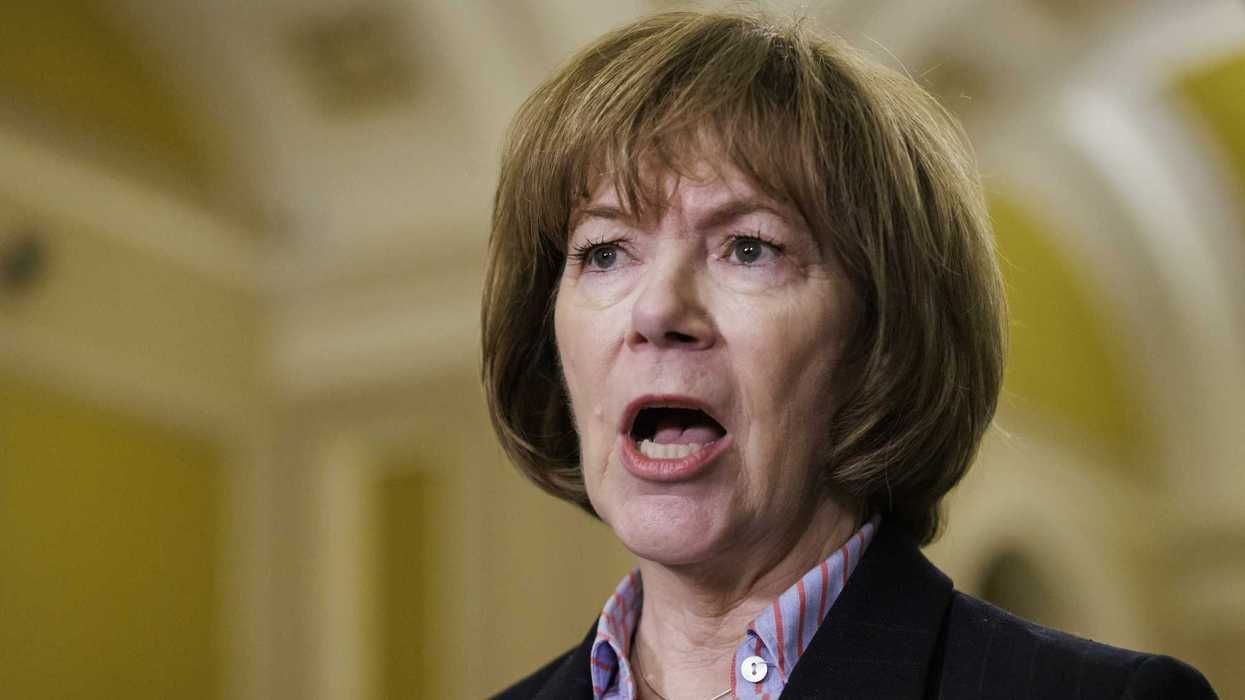
The study cited Sen. Tina Smith (D-Minn.) as an example of a political elite for whom mental health appears to have become a "politicized identity."

Smith has on numerous occasions discussed her past experiences with depression, grouped herself with sufferers, and identified "mental health parity" as a legislative priority.

"Those more likely to categorize as having a mental illness are more likely to have a college degree; be a Democrat, liberal, and white; and have slightly lower family income," said the study. "For both the [Mental Illness] Identity and [Mental Illness] Alienation scales, the only consequential variable is ideology: Those with higher MI identification or MI Alienation are more likely to be liberal."

Van De Hey concluded, "These findings have far-reaching consequences for mental health advocacy and the role mental health identity will play in the political sphere — especially as Gen Z matures as a cohort."

Dealing with a sample of 860 respondents, Van De Hey found that 26% categorized themselves as having had a mental illness in their lifetime, 22% categorized themselves as having had a physical disability, and 168 categorized themselves as having had a serious chronic physical illness.

Of the 220 respondents who said they had mental illness in their lifetime, 70% identified as "liberal" or "very liberal," 24% identified as "moderate," and 32% identified as "conservative" or "very conservative."

Of the same 220 respondents, about half stated that their identity as a person with a mental health illness was "important" or "very important to them."

Like Blaze News? Bypass the censors, sign up for our newsletters, and get stories like this direct to your inbox. Sign up here!
How a Lego dispute became a First Amendment fight


I grew up playing with Legos, and so did my kids. But when I told them the story of Bryan Mansell, Star Wars Legos, and Bricks & Minifigs, it sounded too strange to be true. It sounds like something written by a committee of internet pranksters, small-town cops, corporate lawyers, Lego collectors, and Kafka.

I did not expect this story at the start of the summer.

Where are the Legos? Who owes the Mansell family? And why did it take an internet firestorm to get anyone to listen?

At the center of it is not a culture-war symbol, a presidential scandal, classified documents, or some new university ideology. It is a Star Wars Lego collection.

And somehow, around this collection of plastic bricks, we now have lawsuits, arrests, temporary restraining orders, allegations of corporate misconduct, allegations of harassment, a YouTuber reportedly fleeing to Mexico, a police department under national scrutiny, and a family still asking the question that started the whole mess: Where are the Legos?

The collection

Act 1 begins in Keizer, Oregon.

Bryan Mansell says he took his 83-year-old father’s prized Star Wars Lego collection to a Bricks & Minifigs retail location in late 2023. His father was battling cancer, and the family wanted to sell the collection to help with medical expenses.

This was not a box of random toys found in an attic. By Mansell’s account, it was a massive collection assembled over many years, with hundreds of sets and more than a thousand minifigures. Some estimates put the value between $150,000 and $200,000. Some collectors described it as one of the most impressive private Star Wars Lego collections in the region.

The arrangement, according to reporting that reviewed the documents, was a written consignment agreement. The store would sell the collection, take its percentage, and pay the Mansell family. The important point is simple: Under the agreement, the collection remained Mansell’s property until sold.

Then the store changed hands. Records became contested. Corporate Bricks & Minifigs says the consignment arrangement was unauthorized, poorly disclosed, and mishandled before corporate officials or later owners had enough information to sort it out. Former franchise owners dispute parts of that account. Mansell says much of the collection was not returned and he was not properly paid.

That should have been a civil dispute. It might have been messy, but it should have been boring: contracts, inventory, accounting, receipts, lawyers, and maybe a settlement.

The YouTuber

Instead, Act 2 arrived in the person of Benjamin “Reckless Ben” Schneider.

Schneider is a YouTuber, which meant the story would not stay in the file cabinets. He began making videos about the dispute and tried to help Mansell recover what he claimed was owed. Millions watched. A local disagreement about consignment inventory became an internet crusade.

Then the saga became even stranger.

Schneider went to Utah, where Bricks & Minifigs is based, and tried to confront or serve people connected to the company. American Fork police got involved. Schneider was arrested twice and later charged with stalking and targeted residential picketing. Bricks & Minifigs and its owners also filed a civil lawsuit accusing Schneider, Mansell, and others of defamation, disparagement, conspiracy, stalking, trespass, and intentional infliction of emotional distress.

RELATED: ‘Backrooms’ is horror for a self-justifying age

A24

Then came the temporary restraining order. On May 28, a Utah judge ordered that videos related to the underlying dispute and allegedly defamatory or unlawful content be taken down. The order also restricted contact with Bricks & Minifigs employees and prohibited conduct such as threats, doxxing, trespass, and interference with the business.

That raises an obvious constitutional problem. Courts can punish defamation after proper process. They can restrain threats and harassment. They can enforce trespass laws. But when a court orders videos removed before a final judgment, and when the surrounding legal process appears unclear to the public watching online, ordinary Americans have reason to ask whether the case has drifted into something darker.

We are not talking about a terrorist cell. We are talking about a YouTuber and a Lego dispute. Yet suddenly there are allegations of prior restraint, questions about due process, and a police response many viewers found hard to square with ordinary law enforcement neutrality.

Schneider reportedly fled to Mexico, while the online world tried to piece together what was happening. It is the kind of plot turn that would get rejected by a screenwriter for being too ridiculous. “The YouTuber investigating the missing Star Wars Lego collection fled the country after Utah police arrested him.”

That sentence should not exist. Yet here we are.

The cleanup

Act 3 is the attempted corporate cleanup.

Bricks & Minifigs has now closed the Salem-area store and parted ways with the most recent franchise owners. CEO Ammon McNeff has said he wants to sit down with Mansell, review the spreadsheets, consignment agreement, and point-of-sale data, return any remaining Star Wars Lego items in the store, and compensate Mansell for anything shown to be unaccounted for.

That sounds like progress. It also raises the central question again: Where are the Star Wars Legos?

If they were mostly sold, where is the full accounting? If some remain, why has it taken this long to identify and return them? If the consignment agreement was unauthorized, why should that eliminate the duty to account for property that belonged to someone else? If multiple versions of inventory records exist, who created them, and why do they differ? If corporate now says it wants to make Mansell whole, why did that require months of public pressure, lawsuits, arrests, and internet outrage?

The guardrails

Here is the larger question: Why did a Lego dispute produce behavior that looks to many observers like constitutional overreach? What was really at stake in this collection that allowed a consignment dispute to spiral into lawsuits, arrests, and First Amendment questions?

America is supposed to have guardrails. Police are not supposed to look like private security for the well connected. Courts are not supposed to silence speech merely because it embarrasses a company. Citizens are supposed to know the charges against them. Journalists, creators, and ordinary people are supposed to be able to ask uncomfortable questions without being treated like criminals.

Of course, there are limits. No one has a right to threaten, stalk, trespass, or defame. If Schneider or anyone else crossed those lines, the law can address it. But the same standard must apply in the other direction. If police abused their authority, if a court order went too far, or if a company used litigation to silence criticism rather than answer legitimate questions, that also demands accountability.

RELATED: Rainbow Batman from LEGO sparks outrage: ‘We don’t need gay Batman!’

Mark Kerrison/In Pictures/Getty Images

The question

The Bricks & Minifigs saga is not over. It may still end with a full accounting, a settlement, and the Mansell family receiving what it is owed.

But the damage has already been done.

A family tried to sell a beloved collection to help an elderly father with medical bills. A YouTuber turned the dispute into a national spectacle. A company tried to contain the fallout. Police and courts entered the story. Now everyone is asking what should have been answered at the beginning.

Where are the Legos?

Who owes the Mansell family?

And why did it take an internet firestorm to get anyone to listen?

Utah Valley University is working VERY hard to hide the truth about Charlie Kirk's assassination


Utah Valley University has given excuse after excuse in response to public records requests for the UVU Police Department in the months since Turning Point USA founder Charlie Kirk was assassinated on the UVU campus on September 10, allegedly by Tyler Robinson.

'I got you covered.'

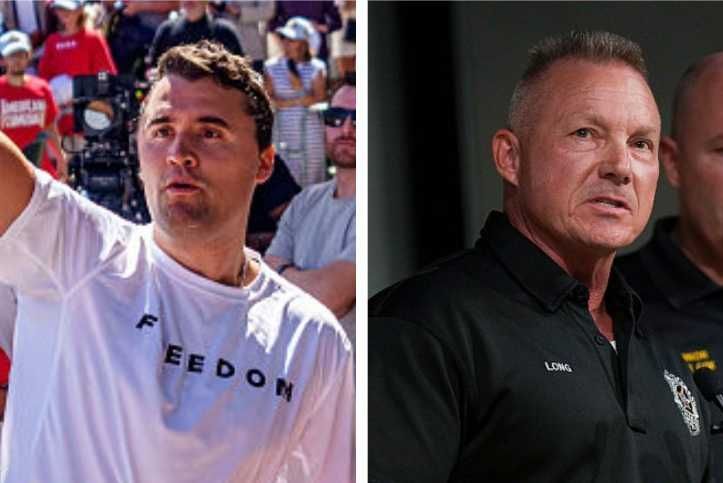
Like other concerned Americans, Blaze News wanted to better understand the security measures that were put in place in the lead-up to the TPUSA college tour event that fateful day. Our concerns were heightened after Kirk's former head of security, Brian Harpole, suggested to podcast host Shawn Ryan in November that UVU police, including Chief Jeff Long, had failed to implement certain security measures before Kirk's murder and then went dark after it.

RELATED: 'Horrific choice': Utah Valley University nailed with backlash for choosing Charlie Kirk critic as commencement speaker

- YouTube

Harpole claimed that the UVU amphitheater setting was too exposed and that UVUPD neglected to reach out to other local law enforcement agencies to ensure that they had enough officers on the ground and resources like drones to secure the area, especially considering the anticipated size of the crowd.

According to an alleged text exchange between Harpole and Chief Long — an image of which can be seen at the 56:19 mark of the podcast episode — Harpole had also identified specific concerns about "roof access" two days prior to the deadly shooting, but Long had assured him, "I got you covered."

After the shooting, Harpole claimed that he and his team reached out to Long, but "he's never called us back."

So long ago and so much effort: UVU can't be bothered

Harpole also suggested that individuals and/or the media submit public records requests under the federal Freedom of Information Act for all the messages Long sent and received on state-issued devices. Blaze News took that advice — but has been stonewalled at every turn.

On November 24, Blaze News first submitted a FOIA request — called GRAMA in Utah, for the Government Records Access and Management Act — for all of Long's messages on any messaging or social media platform between September 3 and September 11, 2025. That request was denied on December 4 because a "person's name; mailing address; email address; and daytime telephone number" from Blaze News was allegedly not included.

Of note, Blaze News has a GRAMA account for UVU with that information stored, though when it was stored cannot be verified.

'The time frame "September 3, 2025, to September 11, 2025" passed a considerable time ago.'

Blaze News then resubmitted the request on two occasions. The first was received on January 14. On February 5, UVU claimed it needed "additional time to fulfill" the request because of the "extraordinary circumstance" but that the request would be fulfilled within 10 business days.

On February 19, UVU said it needed an additional 10 business days.

On March 5, UVU said it needed yet another 10 business days.

Finally, on March 17, Blaze News received 14 heavily redacted Microsoft Teams messages, most of which were not useful. None of the speakers are identified by name, so it is unknown whether any of these statements can be attributed to Chief Long.

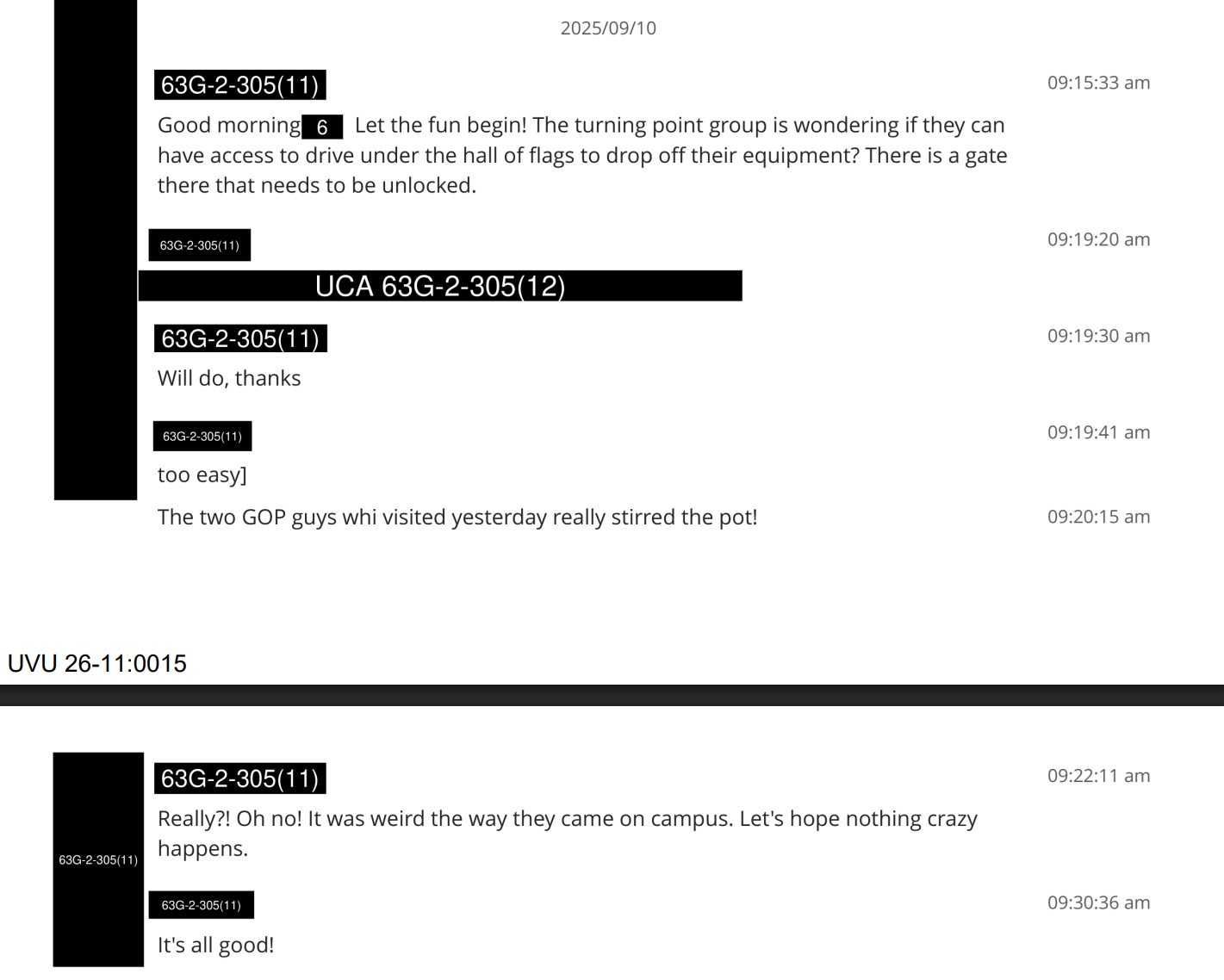
The most insightful exchange came at 9:15 a.m. on September 10, the day of the shooting.

A person identified as 63G-2-305(11) says: "Let the fun begin! The turning point group is wondering if they can have access to drive under the hall of flags to drop off their equipment? There is a gate there that needs to be unlocked."

Part of the response from person 63G-2-305(12) is redacted, but 63G-2-305(12) continues, "The two GOP guys whi [sic] visited yesterday really stirred the pot!"

63G-2-305(11) then says with unwitting foreboding: "Really?! Oh no! It was weird the way they came on campus. Let's hope nothing crazy happens." The person believed to be responder 63G-2-305(12) replies: "It's all good!"

RELATED: ‘This one’s for you, Charlie’: TPUSA’s ‘All-American Halftime Show’ draws millions of viewers during Super Bowl

Screenshot of documents sent to Blaze News

Even though UVU had granted itself three extensions for this request, in its response, UVU refused to provide Blaze News with any text messages from Long's phone between September 3 and September 11 on the grounds that too much time had passed since the shooting and that finding the messages would involve too much work:

For the University to conduct a search for text messages, the employee would have to open and review each text message thread on their phone to see if that thread includes the date range you specified. Then the employee would have to determine if it was a personal text or public record. If the text was a public record, the employee would have to screenshot the entire thread for the period and compile those screenshots to a form that can be shared. In addition, seeing as the time frame “September 3, 2025, to September 11, 2025” passed a considerable time ago, this search process would be a time-consuming interference from the employee’s day-to-day operations and responsibilities to maintain the safety of the University.

UVU gave the same reason for denying the request for Long's texts Blaze News submitted on April 1. When Blaze News reminded UVU that all of Long's messages are presumed public unless a specific GRAMA exemption applies and that inconvenience and the personal nature of some messages were not exemptions under the statute, two weeks later, Blaze News received 19 screenshots — of almost no investigatory value.

Eight of the screenshots were of text alerts about the shooting that were presumably sent campus-wide.

One was a message from a reporter from a local Utah outlet requesting an interview with Chief Long.

Three screenshots contain expressions of concern about people, presumably Long or other members of UVUPD, who had to endure the stress of the event, both in the planning stages immediately before it and in the aftermath of the shooting.

Three others relate to a single conversation about U.S. Sens. Mike Lee (R-Utah) and John Curtis (R-Utah) possibly attending the event.

Just two screenshots reveal interesting information. In one conversation that took place only a half-hour before Kirk was fatally shot, someone, presumably Long, estimated that the crowd had swelled to 3,000.

"Woah! That is pretty good! Is it okay?" the interlocutor replied.

"Do you think there are more in support or against," the interlocutor added, but to no reply.

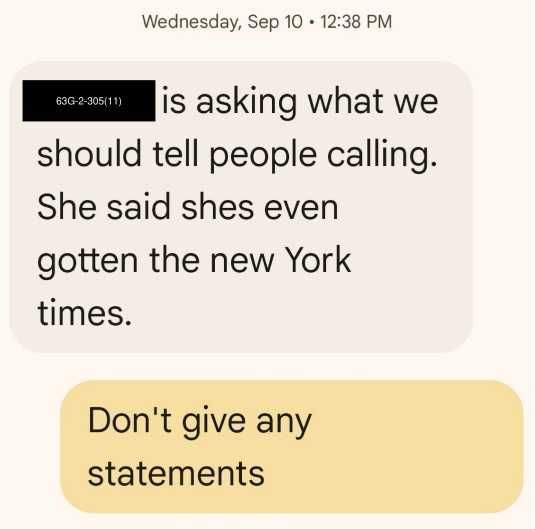
Then 15 minutes after the shooting, someone asked what they should tell the "people calling." "She said shes even gotten the new York times [sic]," the person added.

"Don't give any statements," was the reply, presumably from Long.

The text messages Harpole claimed to have exchanged with Long were not included in any of the documents UVU sent to Blaze News. Efforts to reach Harpole for comment were unsuccessful.

RELATED: Elderly man who falsely confessed to shooting Charlie Kirk sentenced to prison

Screenshot of documents sent to Blaze News

In its response to Blaze News, UVU justified not disclosing other messages on Long's phone because doing so:

  • "could reasonably be expected to jeopardize the life or safety of an individual";
  • "would jeopardize the security of public property, buildings, or systems"; and
  • "would constitute a clearly unwarranted invasion of personal privacy."

Even the suspected murderer gets a say?

Blaze News is apparently not the only outlet frustrated by UVU's limited compliance with public records requests about Kirk's murder.

In an article titled "Utah Valley University continues to deny request for documents in Charlie Kirk shooting" dated February 17, KSTU reported not only the denials from UVU but that suspect Tyler Robinson and his attorneys had even weighed in on its GRAMA request. The outlet said it received "a letter from Tyler Robinson and his attorneys in support of the university's decision to deny the release of the security plan."

KSTU appeared unfazed by the denials for public records from UVU, claiming that they are "typical of the public records process." However, the outlet noted that this letter from the suspect and his legal team was "unusual."

Back in April, the Daily Caller News Foundation similarly reported that in response to its public records request, UVU had "heavily redacted files and withheld others entirely."

UVUPD did not respond to a request for comment from Blaze News about this lack of transparency.

'These things ... unfortunately they happen'

Long joined the UVUPD as deputy chief in 2022 and was named chief in December 2024. Government disclosure documents show that Long earned more than $125,000 in wages and benefits from taxpayers in 2024 alone.

And the most popular conservative activist in America was shot and killed on his watch.

Just hours after the shooting, Long and other officials appeared at a press conference, where Long professed to be "devastated" and described the deadly shooting as "a police chief's nightmare."

"We train for these things, and you think you have things covered, and um, you know, these things, um, you know, unfortunately they happen," he continued. "You try to get, you try to get your bases covered, and unfortunately today we didn't. And because of that we had this tragic incident."

Long has not made any public comments about the shooting since.

Harpole indicated to Shawn Ryan that Long bears considerable responsibility for the ongoing questions and speculation about UVU security that day.

"Why he won't stand up like a man and admit this, I don't know," Harpole said of Long, "but he's watching a bunch of men lose their careers.

"And he's okay with it."

Like Blaze News? Bypass the censors, sign up for our newsletters, and get stories like this direct to your inbox. Sign up here!

'America's Government Teacher' who maligned Charlie Kirk right after his assassination wants you to know she's the victim


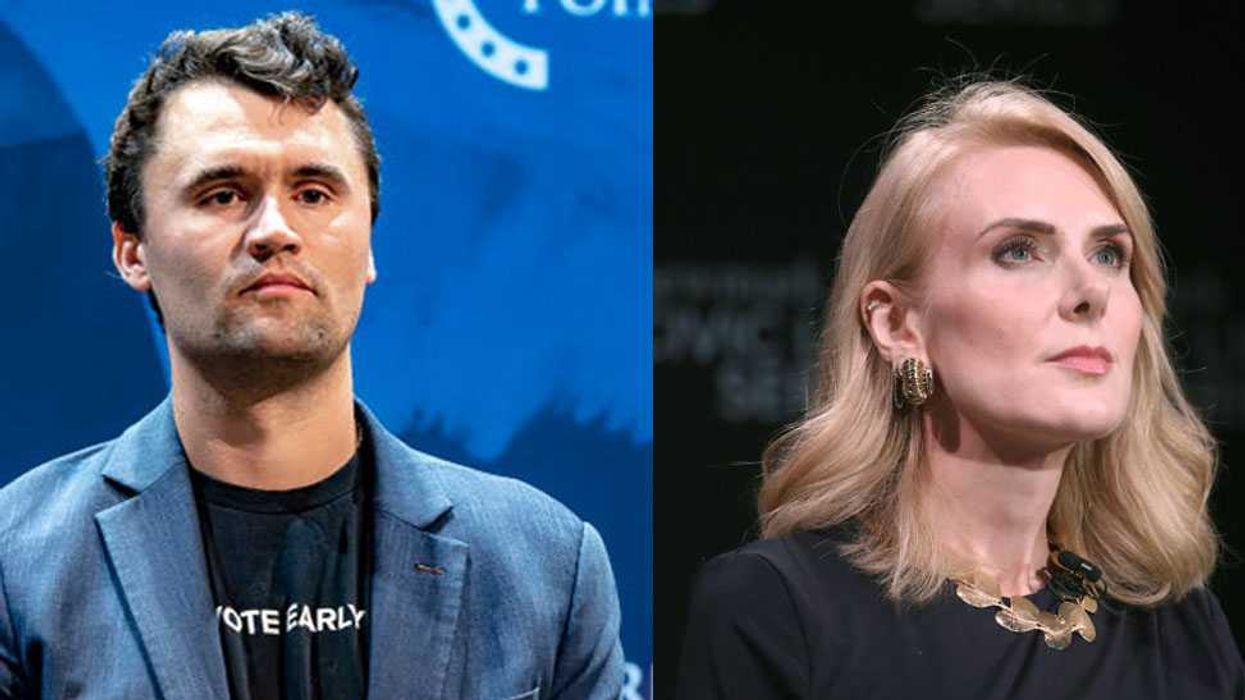
A liberal author who refers refers to herself online as "America's Government Teacher" was asked to give the 2026 commencement speech at Utah Valley University. Sharon McMahon's invitation to speak was, however, rescinded last month following significant backlash over her criticism of Turning Point USA founder Charlie Kirk in the immediate aftermath of his assassination.

McMahon has since gone on a media tour in an apparent effort to convince the American public that she's not just a free-speech warrior but the victim of conspiring forces.

How it started

Two days after Kirk's Sept. 10, 2025, assassination at Utah Valley University, McMahon joined other radicals in maligning the murdered father of two.

'She is a force of nature.'

McMahon — a middle-aged former high school teacher who purportedly fights "misinformation" and routinely criticizes conservatives and conservative initiatives — shared a series of de-contextualized quotes from Kirk on social media, then stated, "These aren’t sound bites taken out of context. Millions of people feel they were harmed, and the murder that was horrific and should never have happened does not magically erase what was said or done."

McMahon proceeded to accuse the just-murdered conservative of advancing "bigoted ideas on a stage that reached tens of millions."

While acknowledging that Kirk's assassination was a tragedy, she emphasized that the bloodletting "does not erase the harm many experienced from his words, and the ensuing actions his followers took."

On March 26, Utah Valley University announced that McMahon would keynote its annual commencement ceremony on April 29 and receive an honorary doctorate of education.

"Sharon McMahon is an original. She is a force of nature and a force for good," stated the university's then-president, Astrid Tuminez, who stepped down last week. "She underlines how each of us can contribute to a vibrant democracy and how strength comes from knowledge, kindness, and collective action."

RELATED: Judge APOLOGIZES to suspected would-be Trump assassin — and compares him to Jan. 6 defendants

Trent Nelson/Salt Lake Tribune/Getty Images

That a woman who maligned Kirk would feature as the commencement speaker at the very institution where the young father of two was murdered did not sit well with members of the school's TPUSA chapter, some Republican lawmakers, and other conservatives.

'Why does UVU think this is okay? It’s not.'

Caleb Chilcutt, president of the school's TPUSA chapter, stated, "Hours immediately after Charlie's assassination, Sharon McMahon posted a now deleted series of out-of-context quotes from Charlie in an effort to tarnish his name and minimize the tragedy, rather than offering condolences or condemning political violence."

"Platforming someone who treated a historic and tragic political assassination not as a moment to grieve but as an opportunity to create content is tone-deaf and disrespectful to those still affected, especially on campus," continued Chilcutt. "There are countless better alternatives, and the fact that the university is choosing McMahon is entirely disappointing to all of us still reeling from his loss."

Former Republican Utah Rep. Jason Chaffetz told Fox News that McMahon was a "liberal hack" and a "horrific choice" for commencement speaker.

Utah Sen. Mike Lee (R) also blasted the decision, writing, "What if Charlie Kirk had been a beloved figure on the left, rather than among conservatives? And what if Sharon McMahon were a conservative — one who had defamed Charlie Kirk immediately after his horrific assassination at UVU? Would UVU have scheduled her to speak at commencement? Not in a million years. Not in ten million years. So why does UVU think this is okay? It’s not."

Republican state Rep. Trevor Lee cited McMahon's planned speech as cause to "withhold taxpayer funds from UVU."

The university evidently had a change of heart amid the scrutiny of McMahon's past remarks.

"Due to increased safety concerns related to the speaker and in consultation with public safety professionals and Sharon McMahon, Utah Valley University has decided to proceed without a featured commencement speaker for this year’s ceremony," UVU announced on April 16.

How it's going

Last month, McMahon told her sob story to the New York Times, then complained in subsequent interviews with the Minnesota Star Tribune and Newsweek's "The 1600" podcast about her "cancellation" and Republican officials' alleged "concerted effort" to silence her speech.

The Free Press, the neocon blog founded by Bari Weiss, rolled out the red carpet this week — just days after the Salt Lake Tribune published the speech she allegedly planned to give at UVU — for McMahon to push her victimhood narrative in full.

McMahon claimed in a lengthy and self-aggrandizing opinion piece that the university's decision to cancel her speech "is so serious" and a "lesson for everyone who cares about freedom of speech."

After defending her criticism of Kirk — writing both "that condemning Charlie Kirk’s assassination did not require treating his public record as untouchable" and that she was trying to "educate those who had never thought of Kirk as anything but a positive force in the world" — McMahon said that her disinvitation to give the UVU commencement speech was the result of the government "using its power to punish protected speech."

While McMahon accepted the grounds for her speech's cancellation, acknowledging that there were "real and visceral" safety concerns, she blamed "government officials and Turning Point USA" — those who, exercising their own free speech, questioned the university's speaker selection — for helping to supposedly create the "danger."

"America's Government Teacher" leaned harder into the victimhood narrative toward the end of her piece, suggesting that her disinvitation "should concern people who loved Charlie Kirk" and painting herself as something of a free speech canary in the coal mine.

Like Blaze News? Bypass the censors, sign up for our newsletters, and get stories like this direct to your inbox. Sign up here!

Forensic Analysis Debunks Media Frenzy Claiming Charlie Kirk Bullet Didn’t Match Gun

Contrary to headlines, a forensic analysis expressly refutes the idea that the bullet found in Charlie Kirk’s body ‘did not match the gun.’